
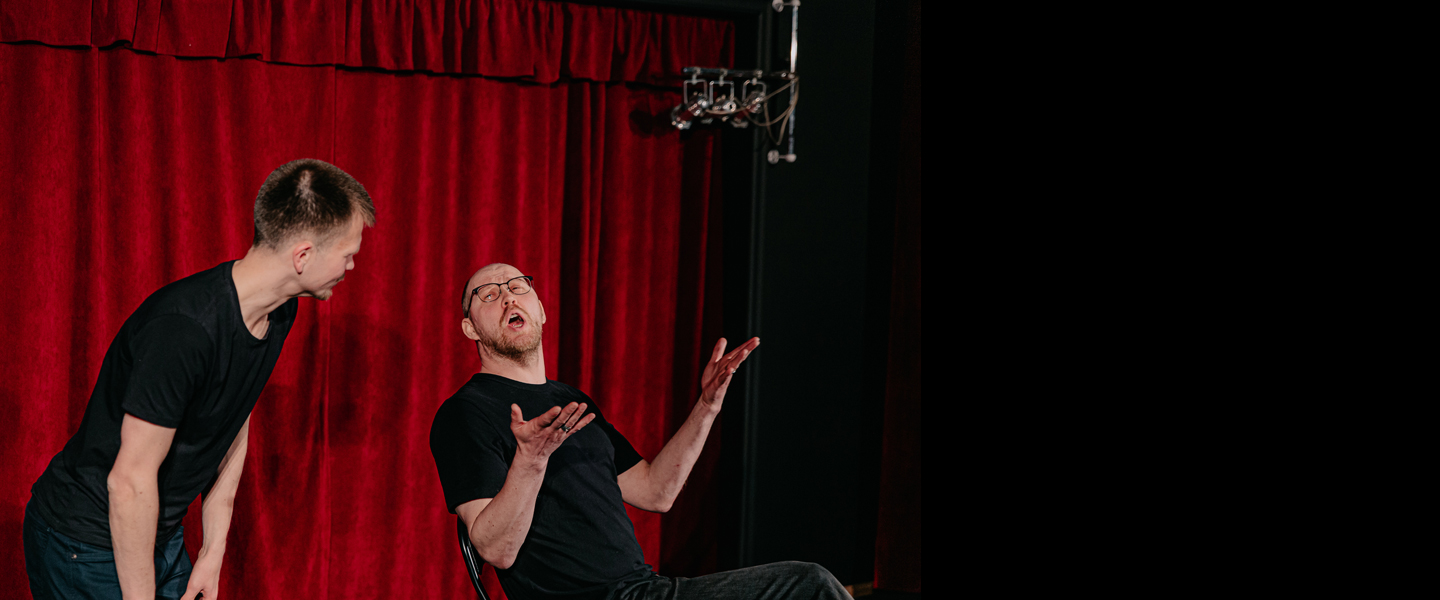
On Friday, 9 October, from 11:00 to 12:30 (EEST), the public peer review of Art and Design doctoral student and junior researcher Martinus Klemet’s first case study, “Characters – Blending Improv Acting and Different Animation Techniques,” will take place online via Zoom (Meeting ID: 683 8536 4388, Passcode: 069330).
Supervisor: Eliane Gordeejeff, PhD (University of Lisbon)
Reviewers: Prof. Ülo Pikkov (Estonian Academy of Arts), Mihkel Seeder (Theater Junge Genera-tion, Dresden)
Introduction to the case study
Animation and improvisational theatre differ significantly in their creative processes. Animation is typical-ly slow, painstaking, and often solitary, as an animated world often must be constructed from scratch. Improvisational theatre is immediate, collaborative, and spontaneous, with performers creating narratives in real time. This practice-led doctoral research explores the relationship between these two processes, asking how the quick thinking of improvisation can influence animation and how the slow production of animation can affect improvised narrative.
The research follows an action research methodology, with the researcher working simultaneously as practitioner and researcher. The practical component consists of three experiments. Experiment I focuses on creating animated characters from improvised performances. Experiment II will use improvisation with established characters to develop narratives and transform the resulting material into animatics (moving storyboards). Experiment III will combine selected characters, ideas, and storylines from the previous ex-periments into a short animated film.
In Experiment I, Tallinn-based improvisers participated in recorded interview-based improvisation ses-sions in which they developed characters from prompts from the audience. Approximately 30-second sec-tions of selected performances were then transformed into animated character clips using different anima-tion techniques.
The analysis examines how quick and slow thinking operate at different stages of this process. Character creation during improvisation relies largely on quick thinking, while selecting suitable performance mate-rial involves more deliberate analysis. Animation ideas may emerge intuitively and rapidly, whereas pro-ducing the final clips requires extended, technically demanding work associated with slow thinking. The experiment also examines how differences in performers’ experience affect character embodiment and how the animator’s choices of framing, movement, character design, animation technique, and metamor-phosis transform improvised live-action performance into animated form.