
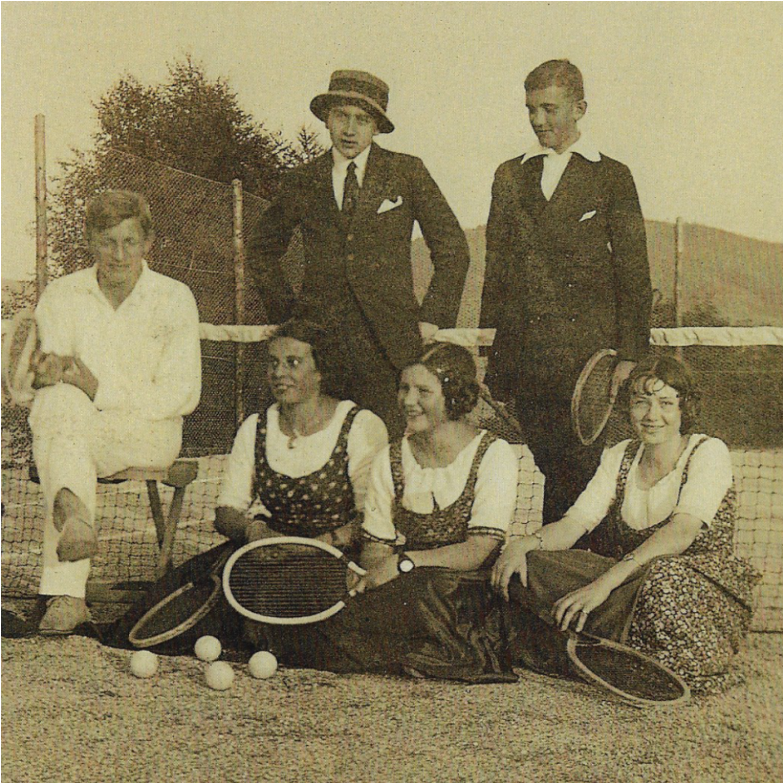
In the 1930s, German-style folk fashion, especially the dirndl dress, became a worldwide sensation. Interchangeably called “fashion á la Tyrolienne” and “dirndl- style,” the dress, with a tight bodice, a flowing skirt, and a white blouse, was understood as a fashion version of folk dress from German-speaking Central Europe, considered to be particularly suitable in an era that embraced femininity following the androgynous lines of the 1920s. At the same time, the dirndl, in both its fashionable and traditional variations, attracted the attention of German nationalists, who sought to preserve it and reinvent it as a contemporary folk costume representing national (socialist) politics. Yet while those involved in the renewal and standardisation of folk dress were adamant that there ought to be a clear distinction between fashion and folk sartorial practices, popular responses, especially among young designers and wearers of the dirndl, show that the line was much more blurred. Taking this point of departure, my paper focuses on dirndl-wearing, – preservation, and -making practices in a region where German-style dress was particularly contested: the German-speaking areas of 1930s Czechoslovakia. By considering the interplay between ethnography and fashion, and their contestations at a time when many Sudeten Germans sought to join the Third Reich, this paper positions the dirndl as a contested form of heritage that became a highly visible form of public political participation in local and transnational contexts. Rather than treating this aspect separately from the dirndl’s presence as “fashion”, the paper argues that the two must be understood alongside each other: ultimately, it is in the space between these poles that the dirndl comes to the fore as a garment that popularly represented some of the core debates of modernity in 1930s Central Europe.
Julia Secklehner is a cultural historian specialising in modernist art, design and visual culture, with a focus on non-urban spaces, gender, and minority identities. She is a Visiting Associate Professor at the Institute of Art History and Visual Culture (KVI). She currently researches handicraft and textile production in Central Europe, the role of folk culture, and the history of fashion and textiles in the region in the twentieth century. She is also interested in social documentary photography, particularly activist youth groups in rural Czechoslovakia and Hungary.