
EKA website, before and now
We rebuilt the website’s technical foundations and all EKA theme page templates while keeping the familiar visual identity. The comparisons below show selected examples from across the site.
Why did the website change?
-
Speed
Pages and images should open quickly, including on a phone. We reduced downloads and improved how images and fonts load.
-
Security
The website needs to be safe to use and maintain. We updated software and strengthened access and release checks.
-
Accessibility
Menus, forms and galleries need to work with keyboards and screen readers. We improved their usability; manual checks continue.
What changed?
Menus, courses, the calendar and galleries already existed in the 2017 theme. Below we compare screenshots of these familiar sections and the results of mobile loading tests. Both themes were captured on the public website in September 2026.
Homepage
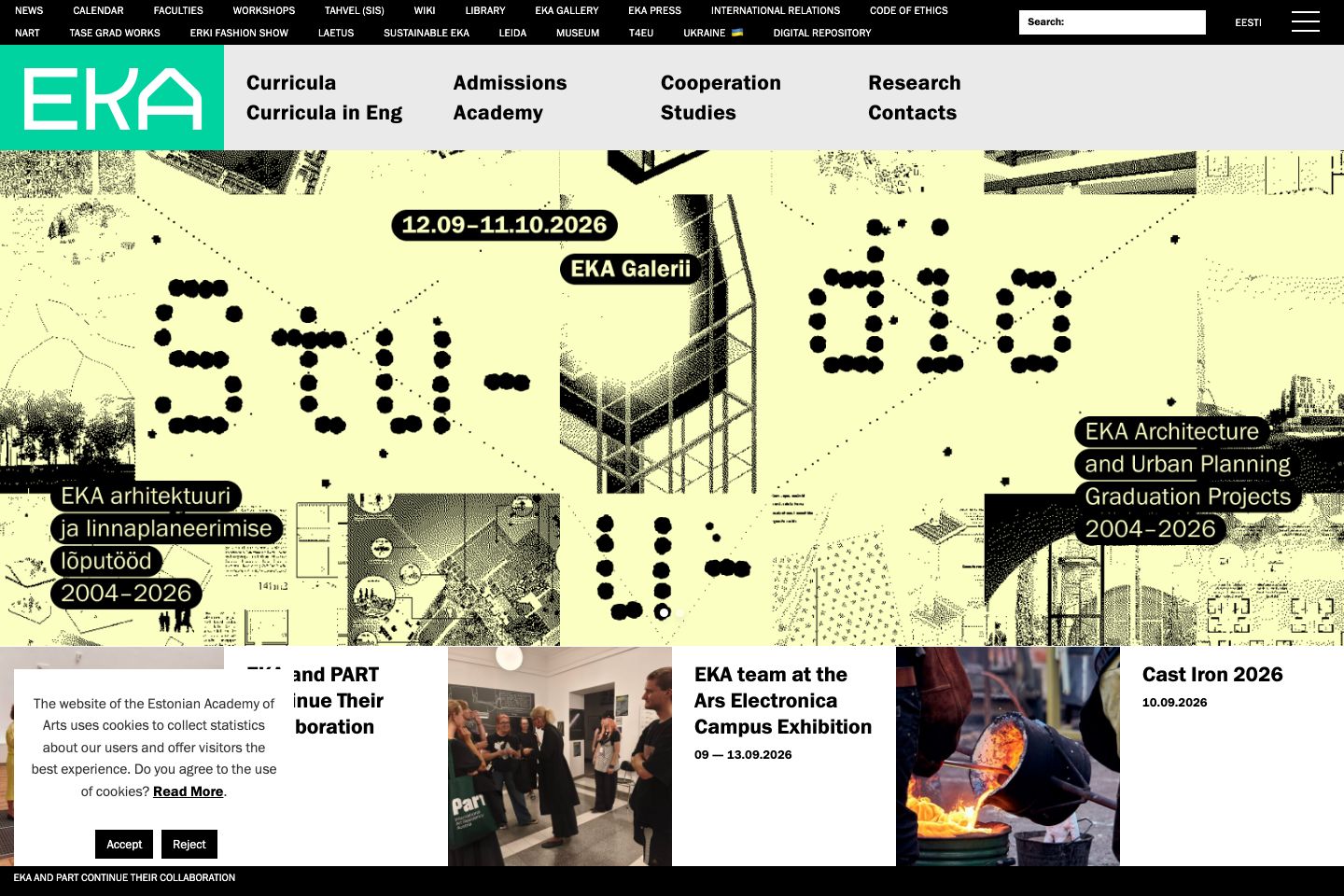
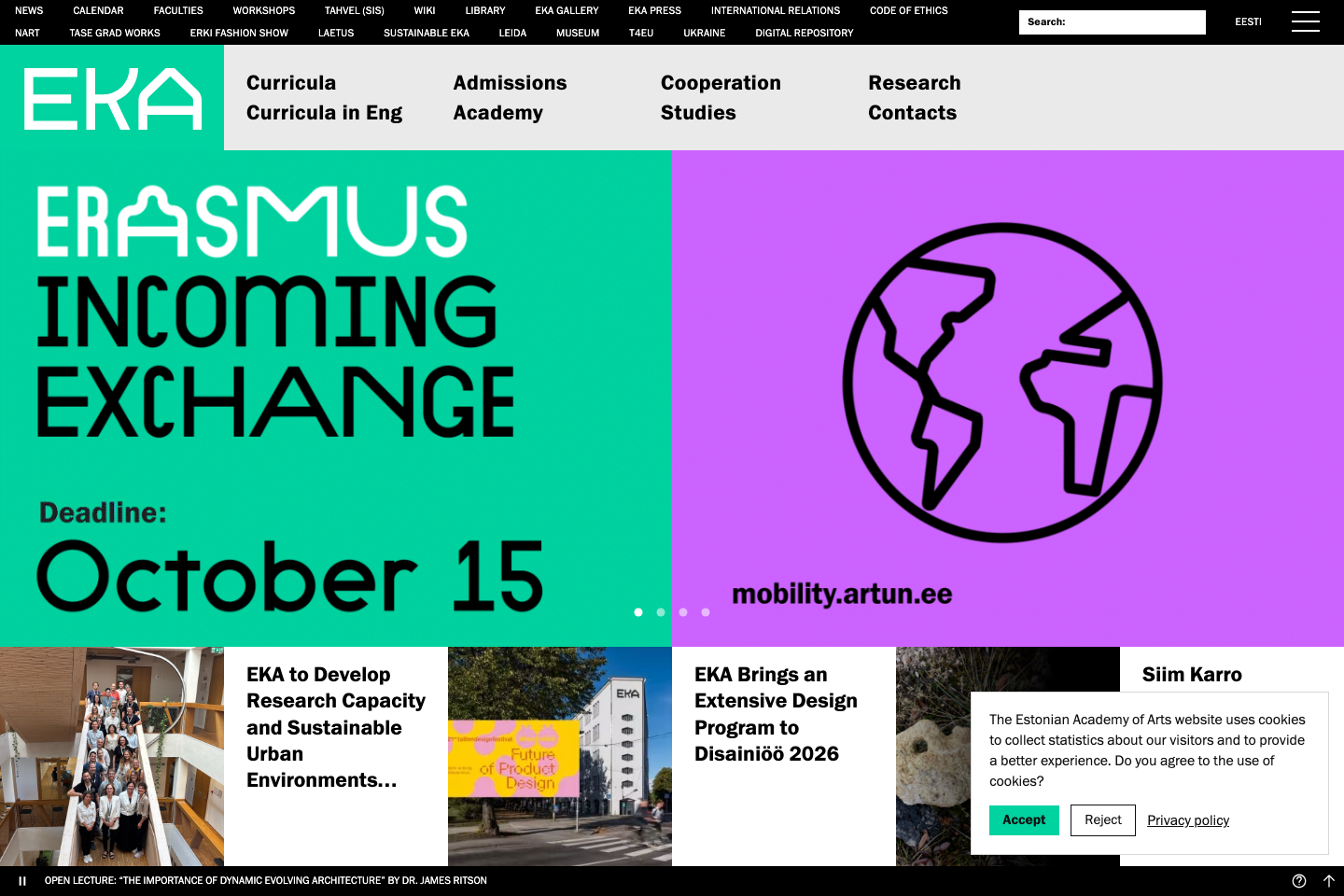
The homepage’s large opening image, with news and events below. Featured content has changed between captures.
In the 2026 homepage mobile test, transferred data fell from 7.08 MB to 2.48 MB and the main content appeared in 2.34 seconds instead of 16.26. Image and font loading now target what the page needs.
Mobile loading test
Scores are out of 100: higher is better. Shorter loading times and smaller downloads are better.
| Measurement | 2017 | 2026 |
|---|---|---|
| Performance / 100 | 59 | 98 |
| Accessibility / 100 | 75 | 100 |
| Best practices / 100 | 73 | 100 |
| SEO / 100 | 77 | 100 |
| Main content appears | 16.26 s | 2.34 s |
| Data downloaded | 7.08 MB | 2.48 MB |
Menus and navigation
The menu button exposes its open state to screen readers, and closing the menu returns keyboard focus to the opener. The open-menu view has no separate speed score; the homepage result covers initial page loading.
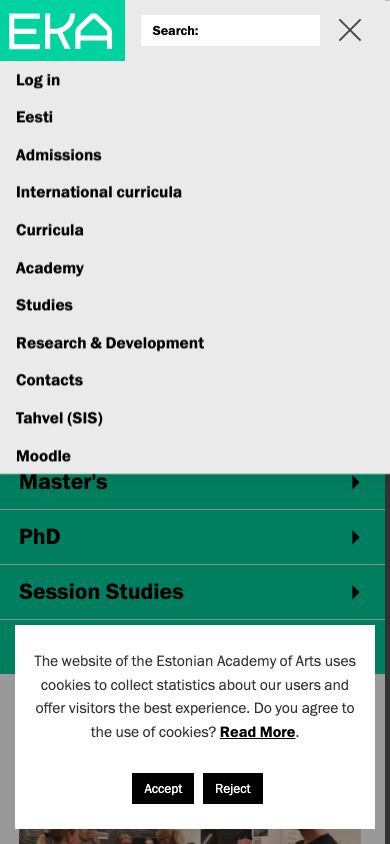
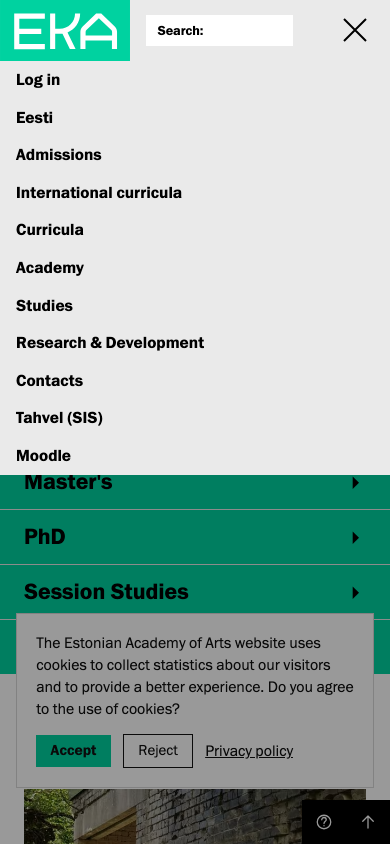
The open phone menu, leading to the main website sections.
Open Academy
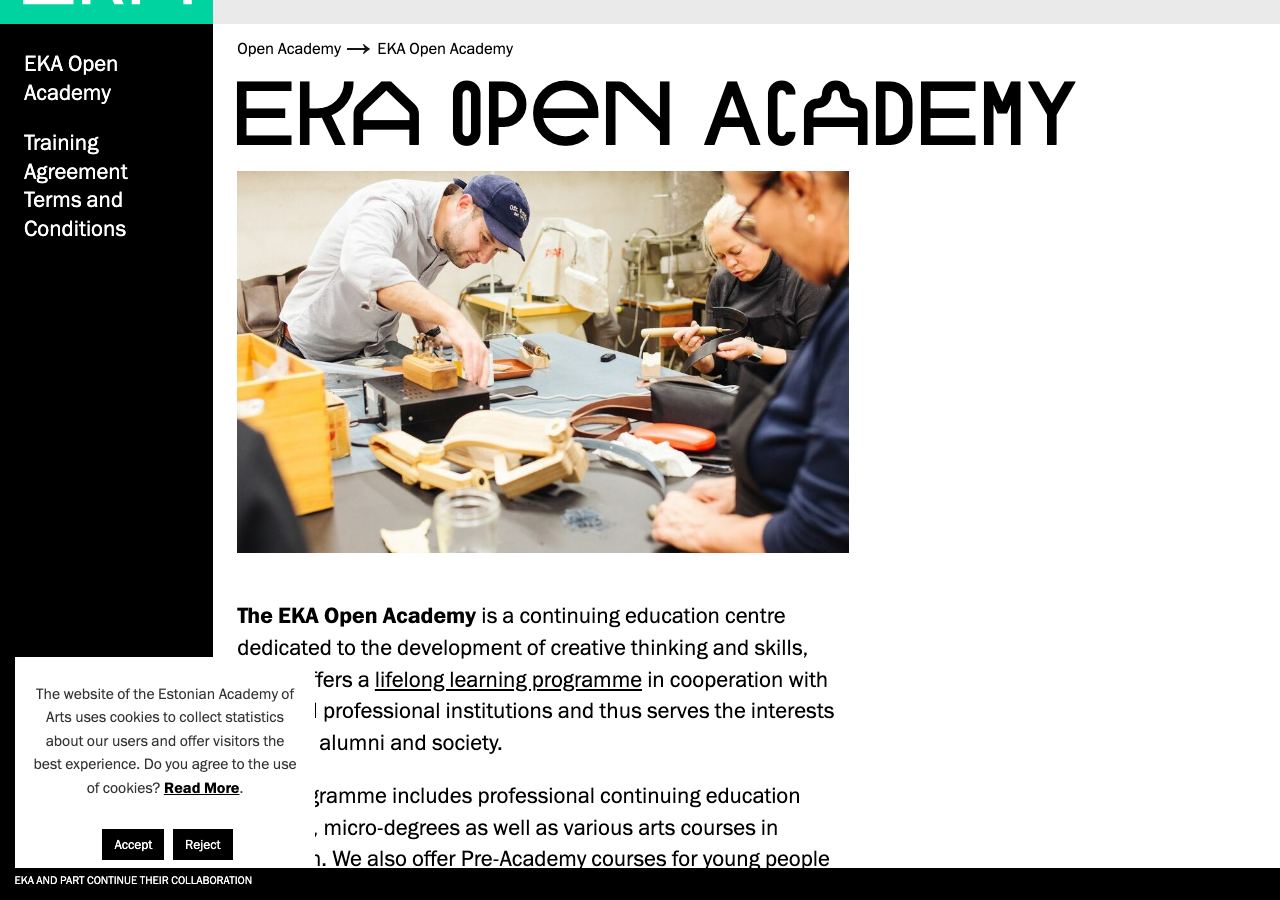
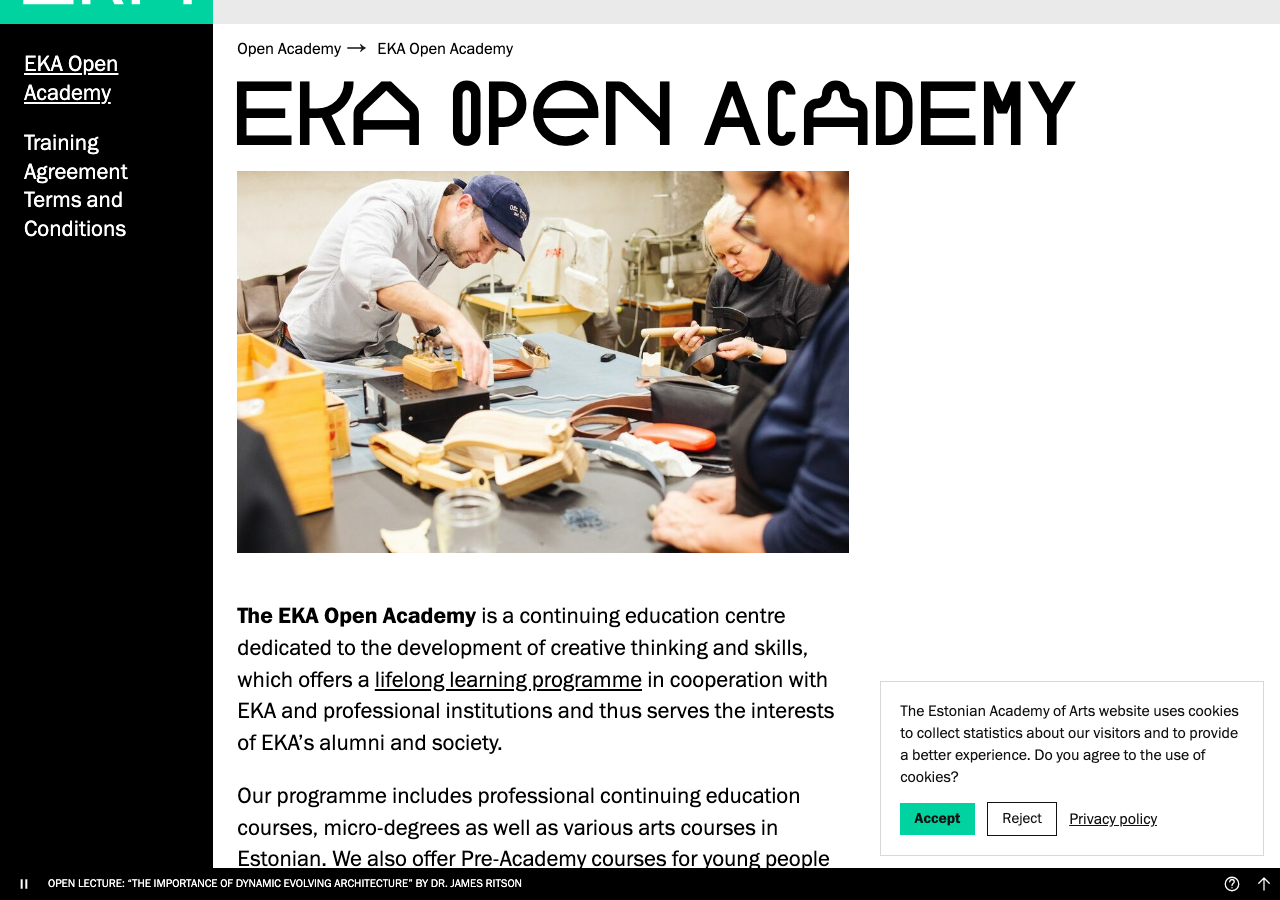
The Open Academy introduction and sidebar links leading to courses.
The Open Academy landing page’s main content appeared in 2.57 seconds in the 2026 mobile test; the earlier result was 5.43 seconds. The complete registration journey needs a separate check.
Mobile loading test
Scores are out of 100: higher is better. Shorter loading times and smaller downloads are better.
| Measurement | 2017 | 2026 |
|---|---|---|
| Performance / 100 | 68 | 97 |
| Accessibility / 100 | 83 | 100 |
| Best practices / 100 | 77 | 100 |
| SEO / 100 | 92 | 100 |
| Main content appears | 5.43 s | 2.57 s |
| Data downloaded | 1.91 MB | 1.07 MB |
Curricula
The curricula page’s main content appeared in 2.04 seconds in the 2026 mobile test compared with 10.88 seconds earlier. The automated accessibility scores were 100 and 87 respectively. We also checked the study-level tabs with a keyboard.
Mobile loading test
Scores are out of 100: higher is better. Shorter loading times and smaller downloads are better.
| Measurement | 2017 | 2026 |
|---|---|---|
| Performance / 100 | 62 | 96 |
| Accessibility / 100 | 87 | 100 |
| Best practices / 100 | 77 | 100 |
| SEO / 100 | 85 | 100 |
| Main content appears | 10.88 s | 2.04 s |
| Data downloaded | 1.34 MB | 0.23 MB |


Study-level tabs and the programme list on EKA’s green background.
Research, development and collaboration
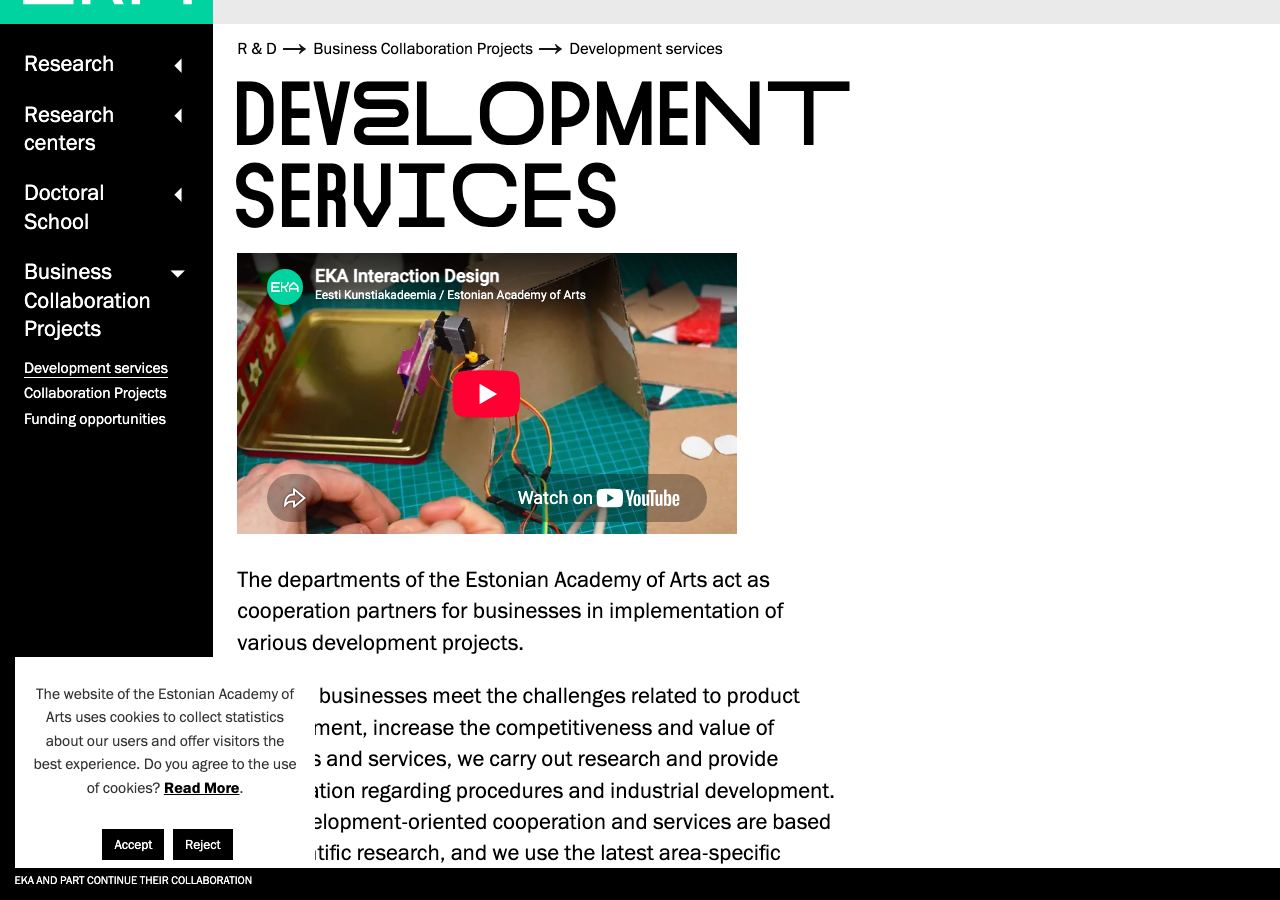
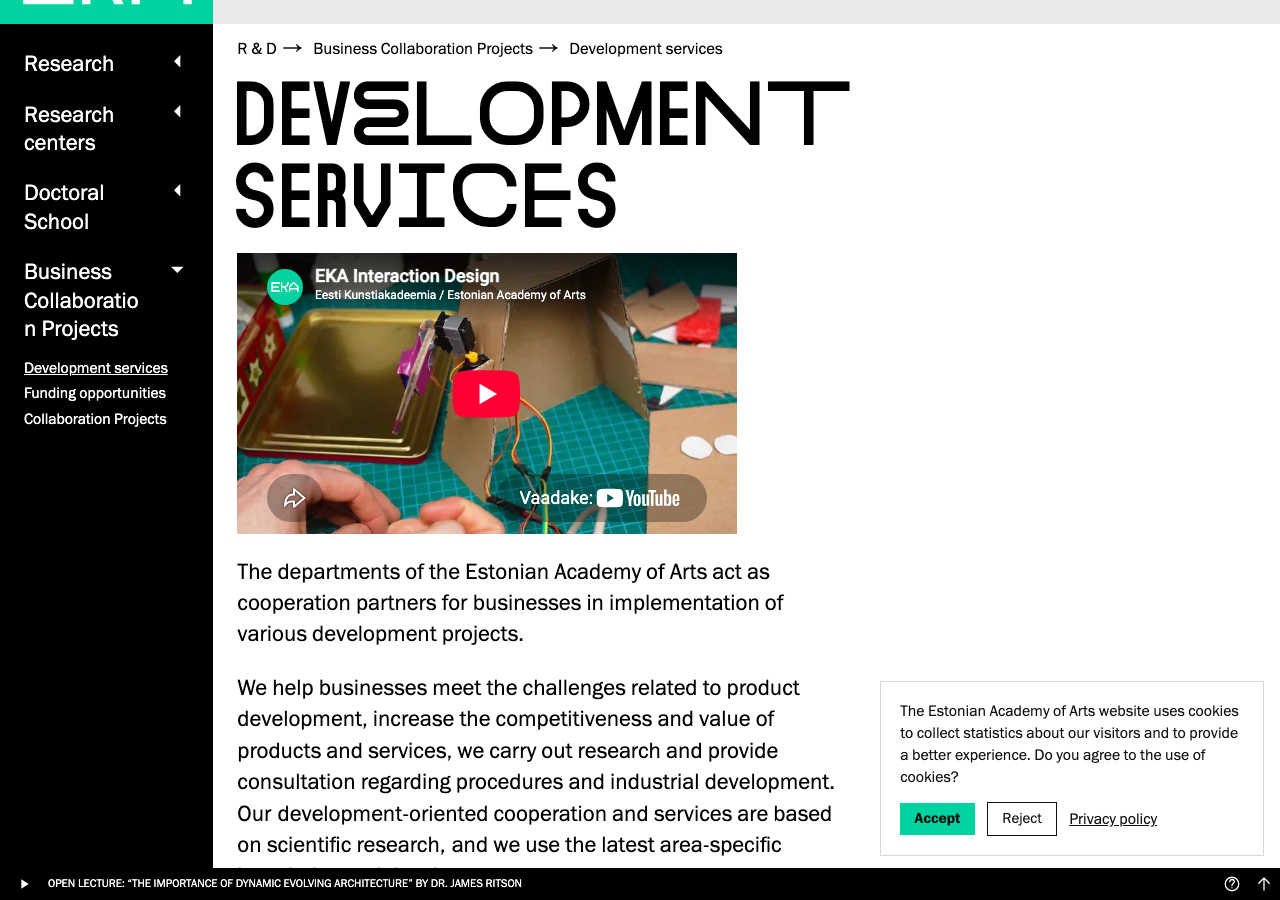
The collaboration page’s photograph, introduction and research sidebar.
The collaboration page’s mobile test transferred 1.35 MB in the new version, down from 2.50 MB. The expanded state of submenus is exposed to screen readers, and keyboard navigation was checked.
Mobile loading test
Scores are out of 100: higher is better. Shorter loading times and smaller downloads are better.
| Measurement | 2017 | 2026 |
|---|---|---|
| Performance / 100 | 59 | 93 |
| Accessibility / 100 | 77 | 99 |
| Best practices / 100 | 77 | 96 |
| SEO / 100 | 92 | 100 |
| Main content appears | 14.92 s | 2.80 s |
| Data downloaded | 2.50 MB | 1.35 MB |
Staff contacts
The staff directory’s main content appeared in 1.96 seconds in the new mobile test instead of 10.89 seconds earlier. Transferred data fell from 1.32 MB to 0.25 MB.
Mobile loading test
Scores are out of 100: higher is better. Shorter loading times and smaller downloads are better.
| Measurement | 2017 | 2026 |
|---|---|---|
| Performance / 100 | 59 | 99 |
| Accessibility / 100 | 90 | 100 |
| Best practices / 100 | 77 | 100 |
| SEO / 100 | 85 | 92 |
| Main content appears | 10.89 s | 1.96 s |
| Data downloaded | 1.32 MB | 0.25 MB |
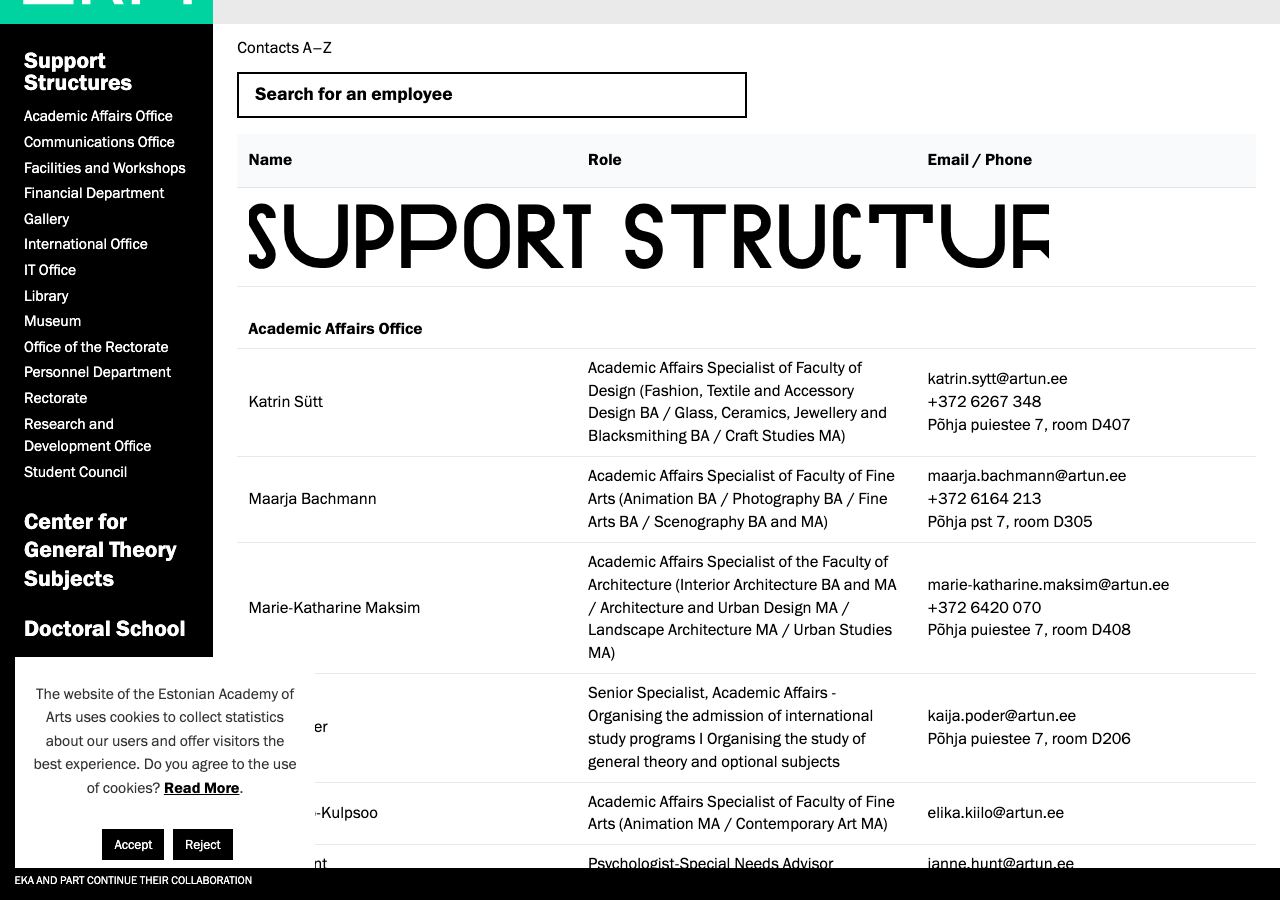
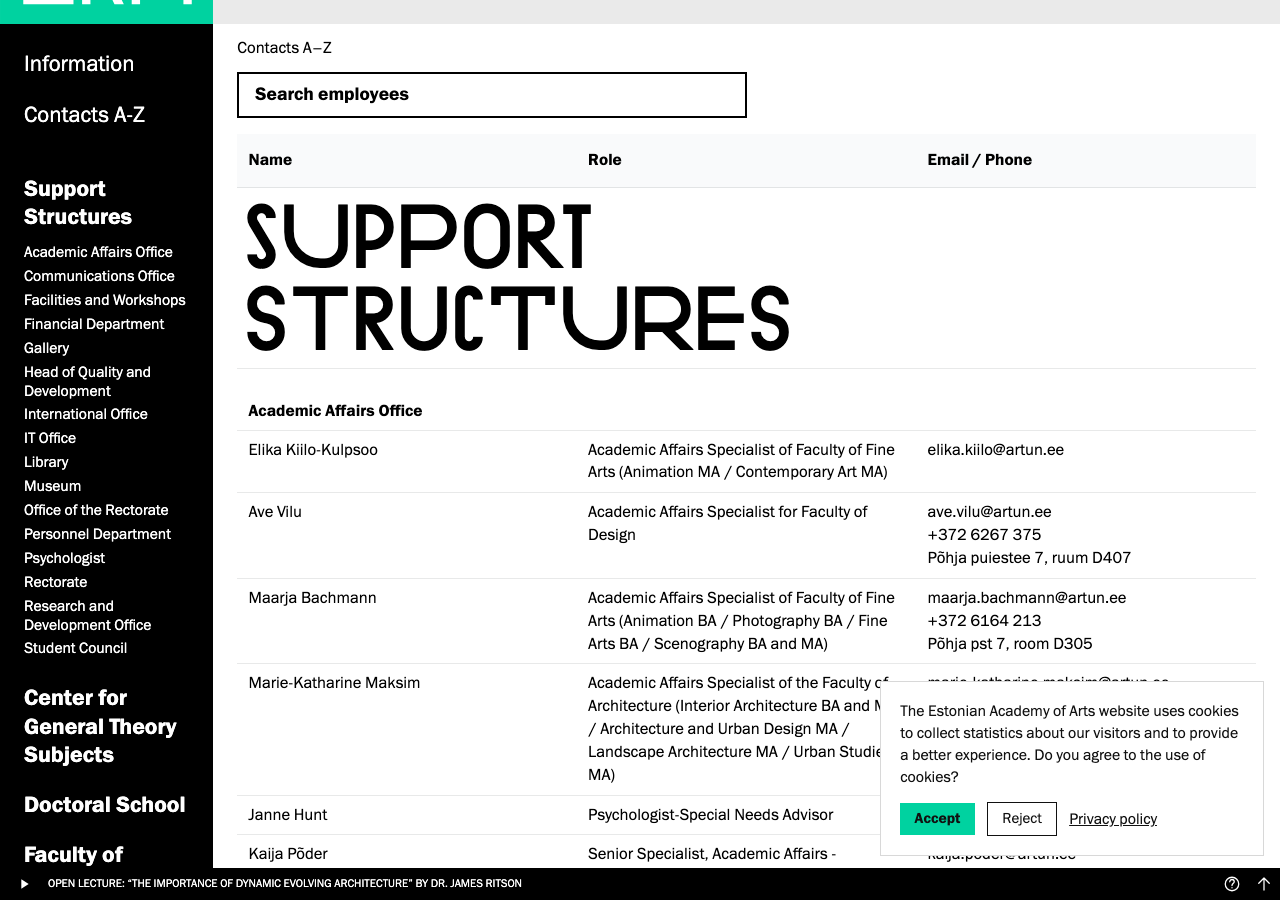
Staff names and contact details in the directory.
News and photographs
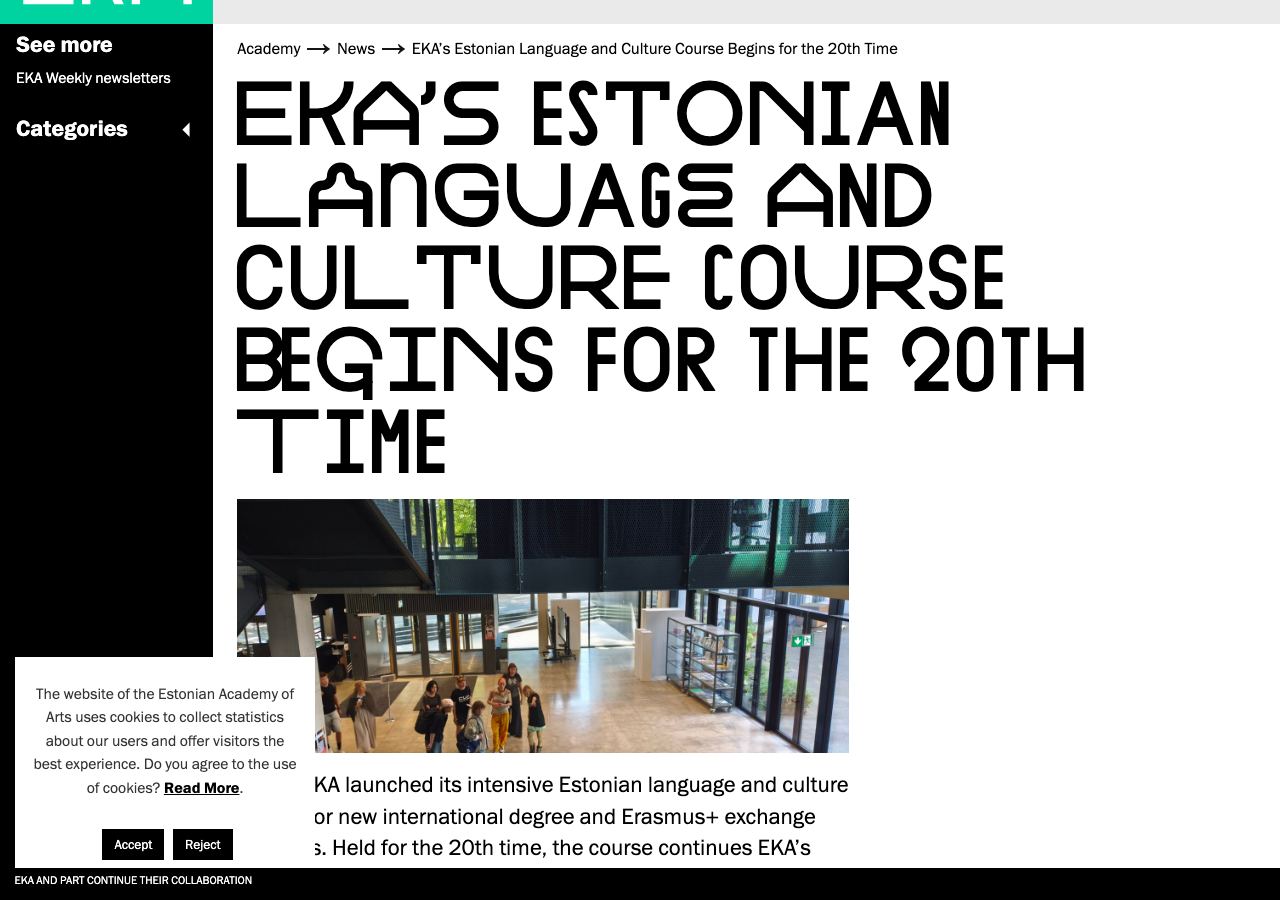
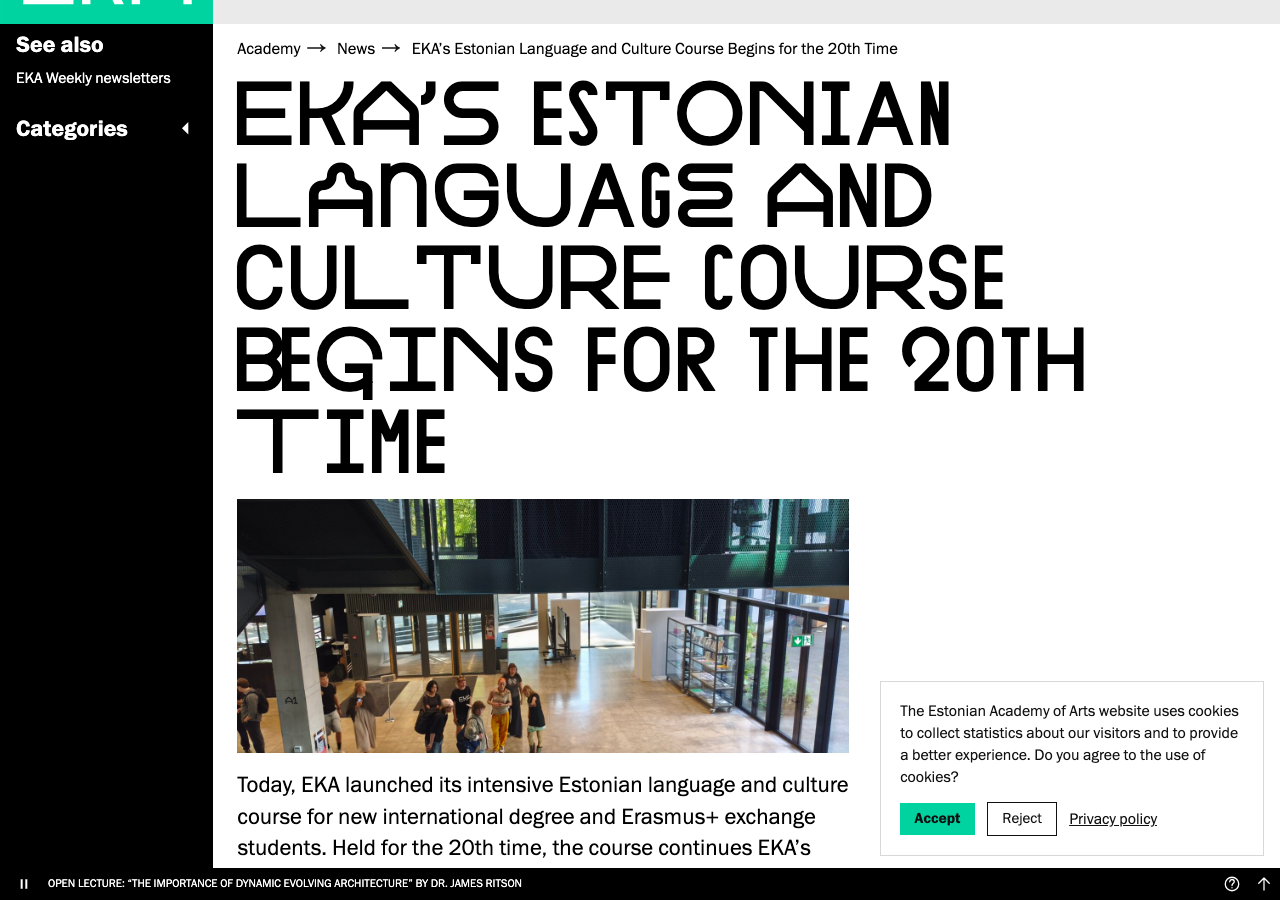
The language and culture course article’s headline and featured photograph.
This article’s main content appeared in 1.96 seconds in the 2026 mobile test instead of 11.84 seconds earlier. We also checked image processing and responsive size selection so photographs reach readers at suitable quality.
Mobile loading test
Scores are out of 100: higher is better. Shorter loading times and smaller downloads are better.
| Measurement | 2017 | 2026 |
|---|---|---|
| Performance / 100 | 59 | 99 |
| Accessibility / 100 | 85 | 100 |
| Best practices / 100 | 77 | 100 |
| SEO / 100 | 92 | 100 |
| Main content appears | 11.84 s | 1.96 s |
| Data downloaded | 2.51 MB | 1.92 MB |
Calendar events and galleries
In the Cast Iron mobile test, transferred data fell from 1.98 MB to 0.45 MB and the main content appeared in 2.94 seconds instead of 5.84. The gallery keeps its image order; we checked small-screen and keyboard use.
Mobile loading test
Scores are out of 100: higher is better. Shorter loading times and smaller downloads are better.
| Measurement | 2017 | 2026 |
|---|---|---|
| Performance / 100 | 66 | 94 |
| Accessibility / 100 | 85 | 100 |
| Best practices / 100 | 77 | 100 |
| SEO / 100 | 92 | 100 |
| Main content appears | 5.84 s | 2.94 s |
| Data downloaded | 1.98 MB | 0.45 MB |
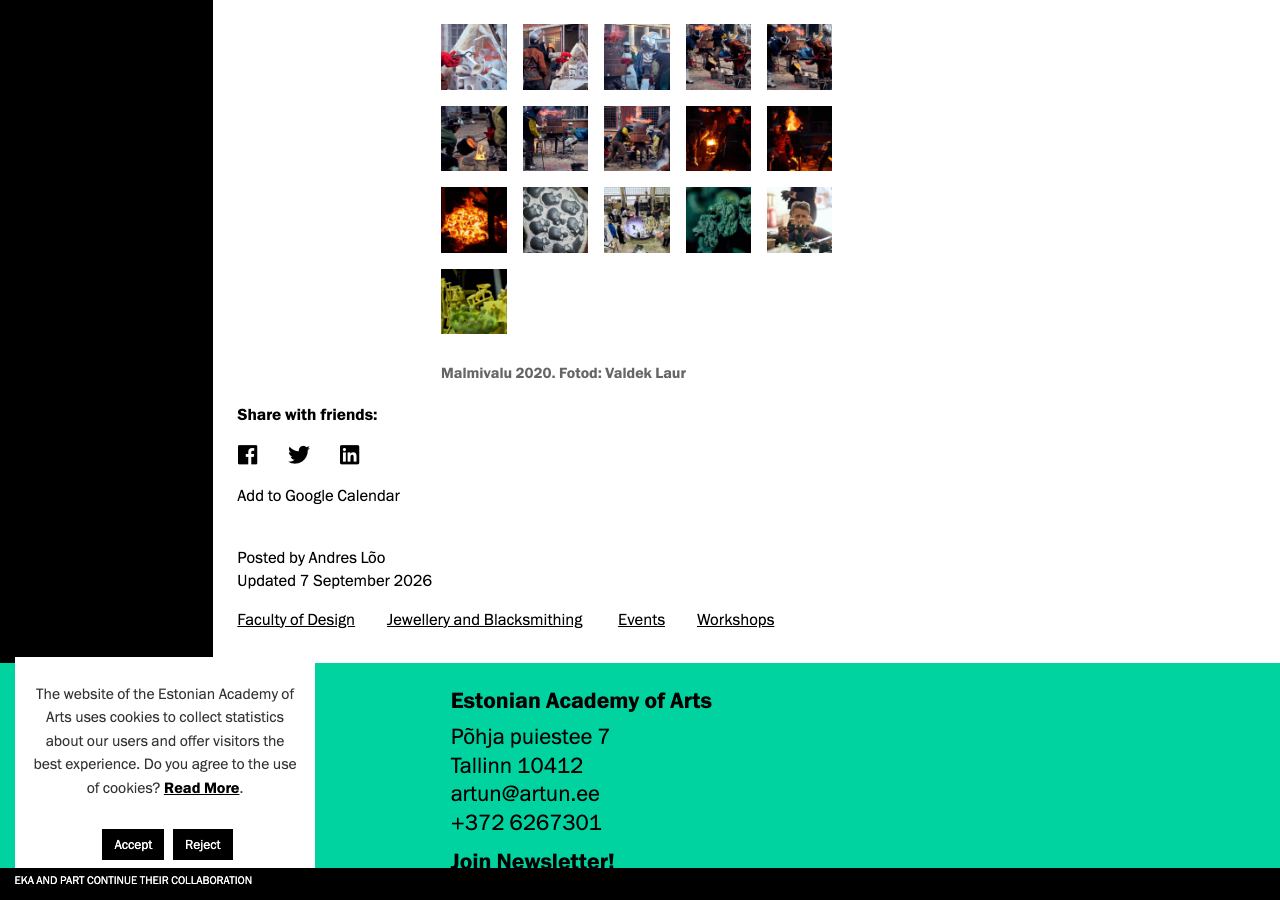
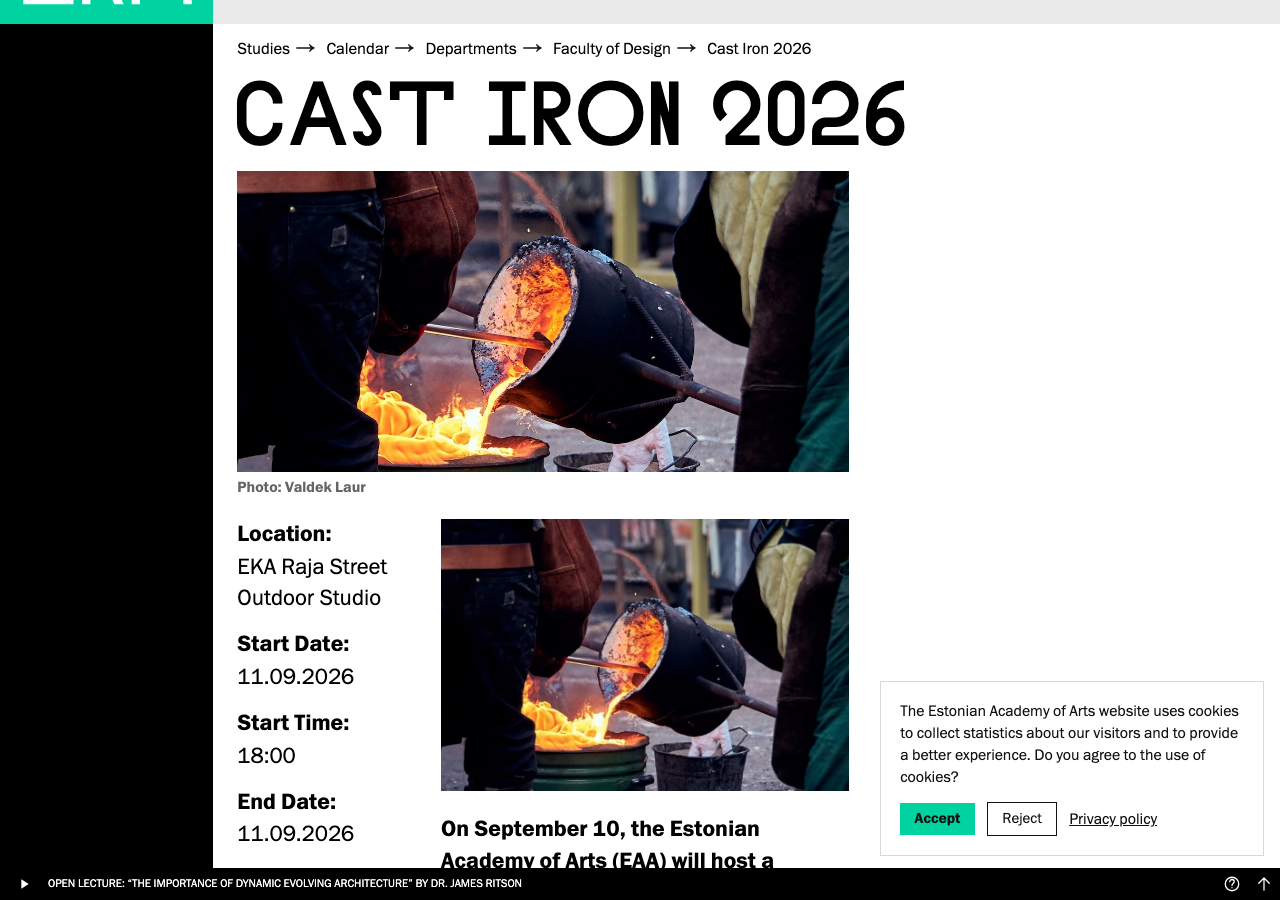
The opening of the Cast Iron event page. Its photo gallery is farther down the page.
Library
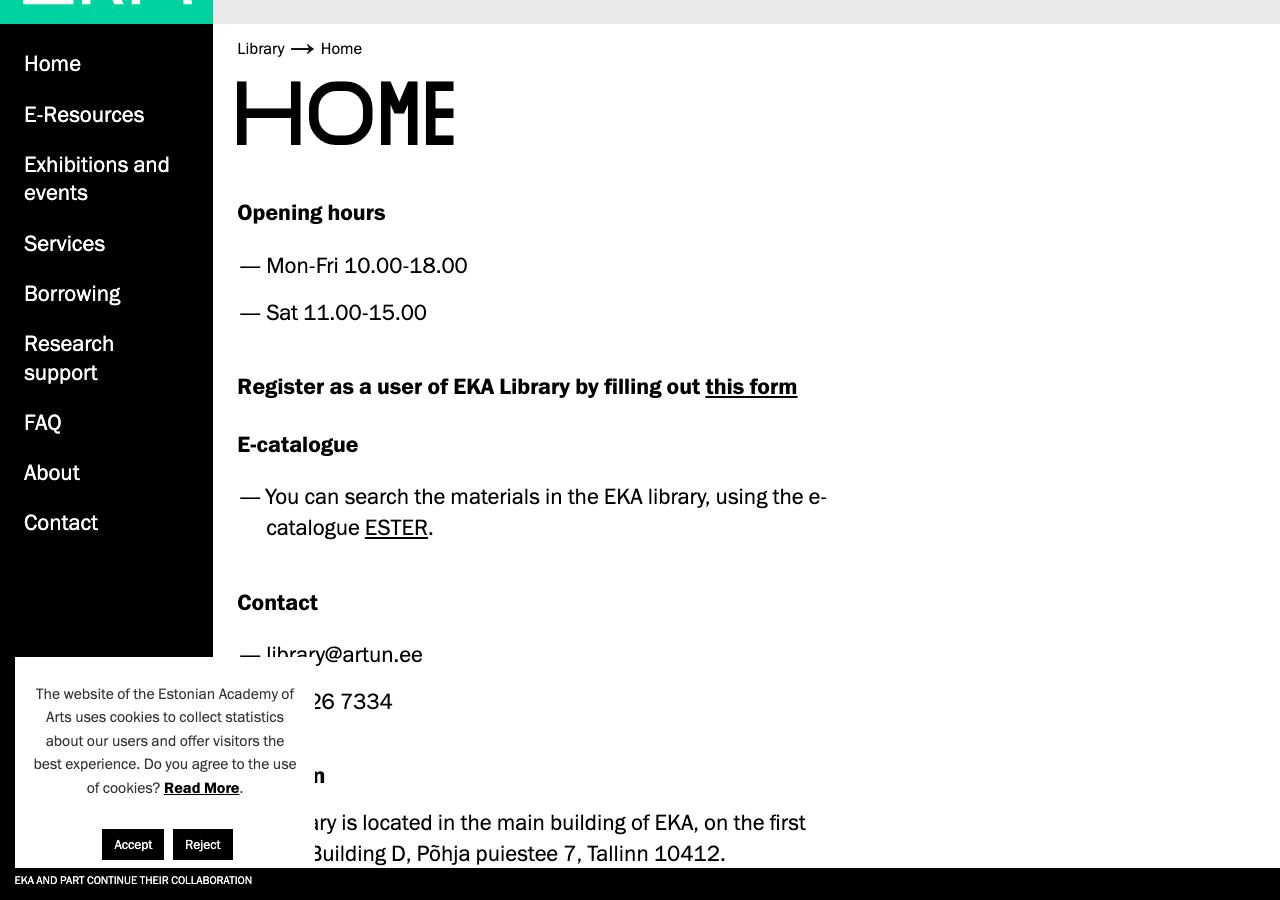
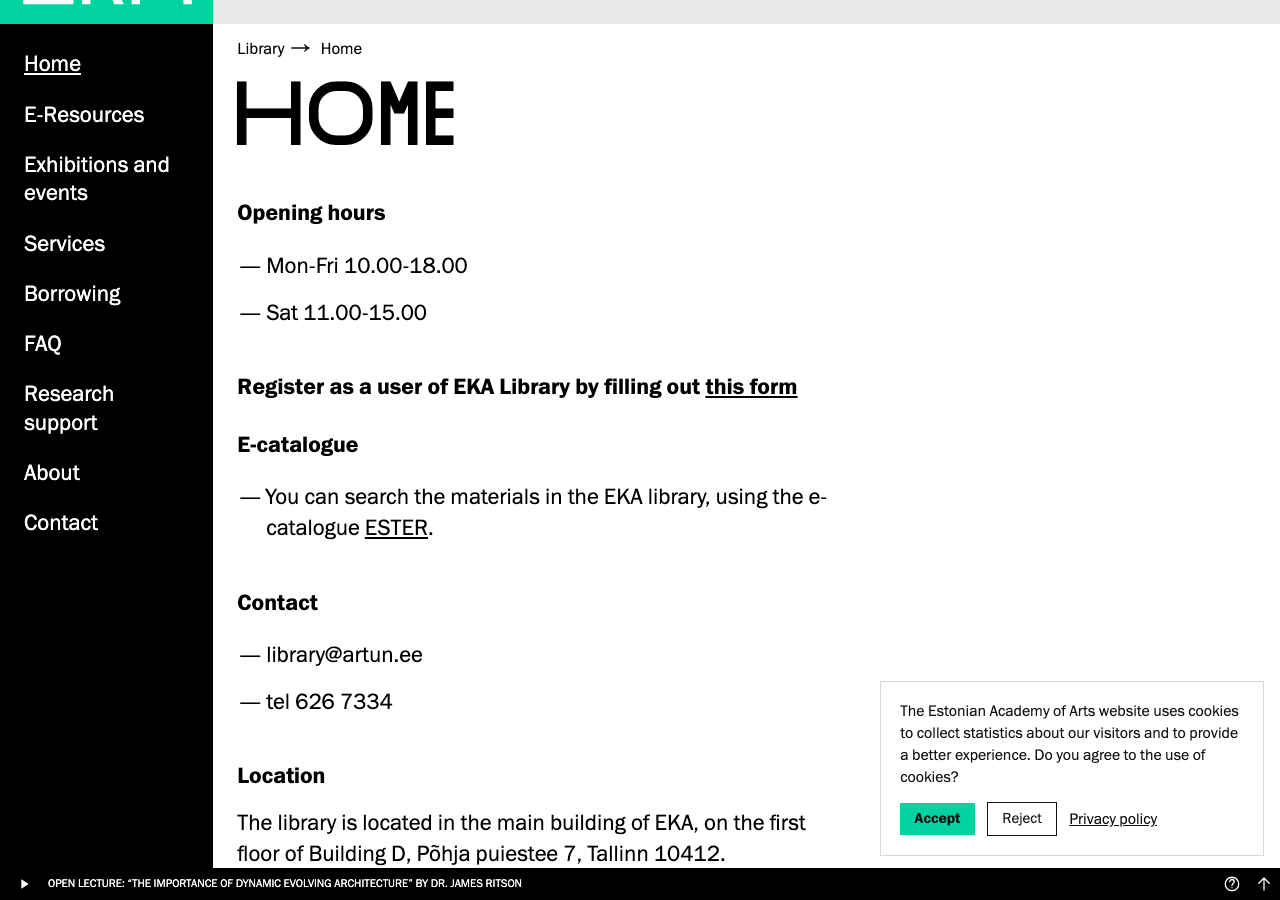
The library homepage with its services menu and practical information.
On the library page, the main content appeared in 2.35 seconds in the 2026 mobile test; the earlier result was 10.90 seconds. Faster loading therefore extends beyond the homepage.
Mobile loading test
Scores are out of 100: higher is better. Shorter loading times and smaller downloads are better.
| Measurement | 2017 | 2026 |
|---|---|---|
| Performance / 100 | 60 | 98 |
| Accessibility / 100 | 83 | 100 |
| Best practices / 100 | 77 | 100 |
| SEO / 100 | 85 | 100 |
| Main content appears | 10.90 s | 2.35 s |
| Data downloaded | 1.34 MB | 0.24 MB |
More choice for featured images
Editors now have named FHD 16:9 and larger 2:3 portrait presets for featured photographs. The square and earlier sizes remain available. The portrait preset can retain more detail on large screens when the source image allows it; existing photographs are not resized.
The public page selects an image file suited to the visitor’s screen. A phone therefore need not download the largest version of a photograph chosen for a wide display.
Website accessibility
Keyboard controls, menus, galleries and small-screen layouts were part of this work. Older documents, meaningful image descriptions and complete screen-reader journeys still need review.
The Estonian Academy of Arts wants artun.ee to be accessible to every visitor. We develop the website with reference to EN 301 549 and the WCAG 2.1 AA success criteria.
Compliance status
The website is partially compliant with the accessibility requirements. The main functions and the 2026 design have undergone automated and manual checks, but the complete historical content archive has not yet been fully audited.
Known limitations
- Some historical PDF and office documents may not be fully usable with a screen reader.
- Older images may not have a meaningful text alternative.
- The accessibility of third-party video, social-media and form services is not fully controlled by EKA.
- Some older content may contain inconsistent heading structures or link text.
We correct these issues as content is updated and prioritise problems that prevent access to a service.
Feedback and contact
If you encounter an accessibility problem, email info@artun.ee. Please identify the page, describe the problem and mention any assistive technology used. We will respond as soon as possible.
Enforcement
If you are not satisfied with our response, you may contact the Estonian Consumer Protection and Technical Regulatory Authority.
Preparation of this statement
This statement was prepared on 23.08.2026 using self-assessment, source review and automated testing. It is reviewed at least annually and after significant technical changes.
Data and environmental impact
The download sizes beside each page show how much data its loading test transferred. Smaller images and code files reduce that transfer. This measure alone does not show the website’s energy use or EKA’s total environmental footprint.
How did we do it?
The new theme, updated software and more focused loading work together. We use repeatable checks to follow their effects.
How to read these results
The screenshots show page layouts. The scores beside them describe mobile loading tests using Lighthouse 13.4.1. Each displayed result is the middle-scoring run of three; loading time and download size come from that same run. All three runs are retained, including slower results.
Earlier measurements: 12.09.2026. New production measurements: 26.09.2026. The content, server configuration and browser version can differ between dates. These are comparisons of the deployed websites; they do not isolate the theme’s effect.
Each run uses a fresh browser profile and Lighthouse’s default simulated mobile conditions. Server caches may be warm. Visitors’ devices, connections and signed-in sessions produce different experiences. The news example is in English in both versions of this page.
Accessibility scores cover automated checks. A score of 100 does not establish full accessibility. Lighthouse best-practice checks also have a limited scope and do not certify security.
Security and maintenance
The work includes software updates, browser security policies and repeatable release checks. We continue to review the website’s security and maintenance.
Technical foundations
Technical inventory checked on .
We rebuilt the theme and its publishing workflow while keeping WordPress and the EKA visual identity. The earlier versions listed here come from the maintained legacy code and the server inventory before the 2026 transition.
- Changed: the theme architecture, CSS and JavaScript build, WordPress and PHP versions, persistent object caching, media delivery and release checks.
- Retained: WordPress/Bedrock as the platform, existing content and translations, search and service integrations, and the installed Ubuntu, MariaDB and Nginx versions. The configuration changed while these versions remained in use.
- Pending: further maintenance, manual accessibility checks and editorial acceptance work.
Theme architecture: Sage 9 → Sage 11
The retained eka2017 theme uses Sage 9, sage-lib and Sober Controller. The separate eka2026 theme is built on Sage 11 with Acorn. Both themes use Blade templates. The new structure separates templates, view composers, services and asset loading so that presentation and data handling can be maintained and tested independently.
Styles: Semantic UI / LESS → Tailwind CSS 4
The legacy theme uses Semantic UI LESS and a Webpack-based stylesheet pipeline. The new theme builds with Tailwind CSS 4 alongside EKA-specific component CSS. Colours, fonts and breakpoints are defined centrally; the build scans PHP, Blade and JavaScript sources for utility classes. Tailwind prepares the CSS during the build. The design continues to follow the EKA typography, colour palette, navigation and page proportions.
Build tools: Webpack 4 → Vite 8
Webpack and the legacy loader chain were replaced as the active theme build by Vite, the Tailwind Vite plugin and Roots WordPress integration. Versioned assets and a build manifest connect templates to the correct CSS and JavaScript files. Editor, quality-report and walkthrough styles have separate entry points. The old theme and its compiled assets remain in the repository, but its legacy build is not run during normal eka2026 deployment.
Browser interactions: smaller, page-specific modules
The legacy frontend relies on jQuery and bundled libraries for features such as calendars, slideshows and video. The new theme uses native JavaScript modules and the WordPress Interactivity API where appropriate, loading modules for the features present on a page. Forms, navigation, galleries and the homepage slider have dedicated modules. The WordPress administration interface and plugins may still need jQuery.
Content and editing
WordPress and the Bedrock/Composer project structure remain in use. Editors continue working with existing posts, pages, ACF fields and Polylang translations. The WordPress core was updated during the 2026 maintenance work. Bedrock keeps application configuration, core files and content separate, while Composer manages declared packages.
Trellis and the server: what actually changed
Trellis/Ansible was already in use. Its configuration and EKA deployment steps were updated, and production moved to a newer PHP runtime. Redis now provides persistent WordPress object caching. The repository keeps infrastructure settings repeatable.
Ubuntu, MariaDB and Nginx remained in use while their configuration was adjusted. Further infrastructure upgrades are separate work. Image conversion currently uses GD.
Performance: complementary caches and better media delivery
Nginx caches eligible public HTML responses, while Redis caches WordPress objects and query results. Logged-in pages bypass public HTML caching and remain private. The theme also uses responsive image candidates, versioned WebP/AVIF derivatives, deferred optional image processing and targeted font loading. These changes address different bottlenecks; neither Tailwind, Redis nor a newer server by itself guarantees a Lighthouse score of 100.
Retained content integrations: fields and languages
ACF Pro provides structured editorial fields and Polylang Pro manages multilingual content. Their fields and translation relationships remain part of the website. The new theme adapts their output and editor controls within the existing content model.
Retained search and SEO
WP Search with Algolia remains the search integration, and The SEO Framework manages search-engine metadata. Search UI, theme markup and redirects are maintained separately from these services. Staging edits are kept out of the production search index.
Retained services with targeted repairs
The site continues to use MailerLite forms, Crisp and PDF Embedder; Google Forms is an external embedded service. We repaired reported display and loading problems in these integrations. The newsletter builder runs as a separate legacy application.
What we will check next
We welcome staff feedback on the new image sizes and editing workflows. Manual accessibility checks and further server maintenance continue. If something gets in your way, please send the page address and a short description to info@artun.ee