
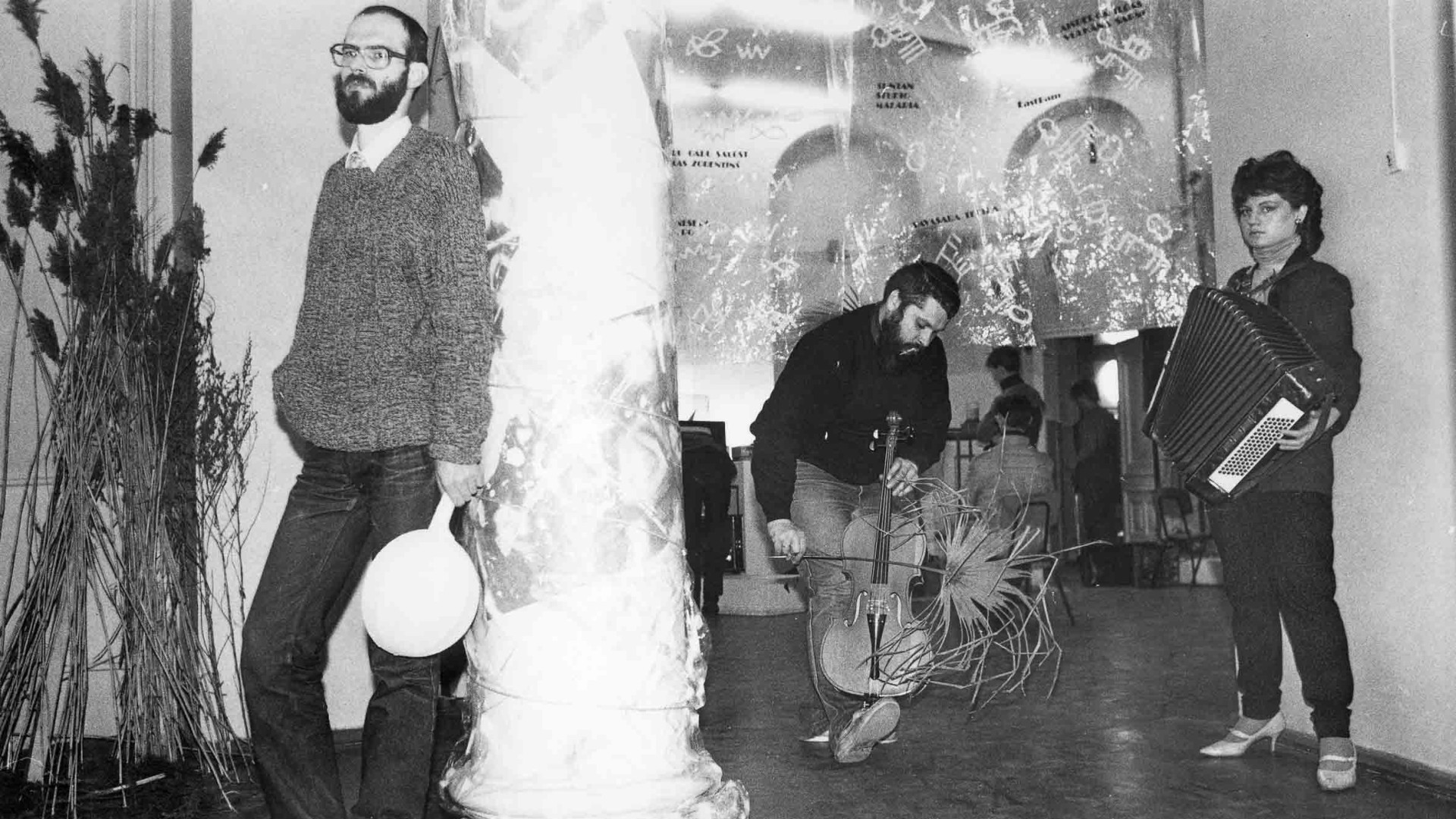
Although the artists’ and musicians’ collective Nebijušu Sajūtu Restaurēšanas Darbnīca (Workshop for the Restoration of Unfelt Feelings) gained wider popular recognition in Latvia already in the mid-1980s, historicization of its activities on the basis of artists’ archives began around 2005. Since then, there has been a growing volume of research publications and
exhibitions featuring the collective’s work in visual art, music and architecture. The talk will address different aspects of the process of canonization of NSRD – from expanding the geographical and disciplinary canons of art to questions regarding the “unofficial” status of NSRD, from tools used to mediate the group’s practice through exhibitions to the grassroots contributions of its followers and the preservation of its legacy. What brings a legend into a canon and what can get lost along the way?
Māra Traumane is an art historian, curator and researcher at Art Academy of Latvia. Her research focuses on artistic practices in Eastern Europe after WWII. From 2014 till 2017 she was a research fellow of the project Literatur und Kunst vor Gericht: Fokus Osteuropa (Art and Literature on Trial: Focus Eastern Europe) at the University of Zürich and co-editor
(with Sandra Frimmel) of the anthology Kunst vor Gericht: Ästhetische Debatten im Gerichtssaal (Matthes&Seitz 2018). Her articles on interdisciplinary art and performance in Eastern Europe, feminist reading of legacies of women artists and Socialist Realism in Latvia had been published in several international volumes as well as in the journal ARTMargins.