Master’s programme
Programme title: Art History, Museology and Curating
Level of study: MA
Language of instruction: Estonian
Credits: 120 ECTS
Duration: 2 years
Curriculum link (Tahvel): https://tahvel.edu.ee/#/curriculum/3948
Curriculum code: 212
Faculty: Faculty of Art and Culture
Tuition fee: free of charge
The Institute of Art History and Visual Culture is Estonia’s leading centre for research and education in art history, offering a diverse, innovative, and inspiring environment for study and research. Here, art history and theory are studied within a broader cultural-historical and societal context, providing a wide-ranging humanities education and skills for professional self-realisation.
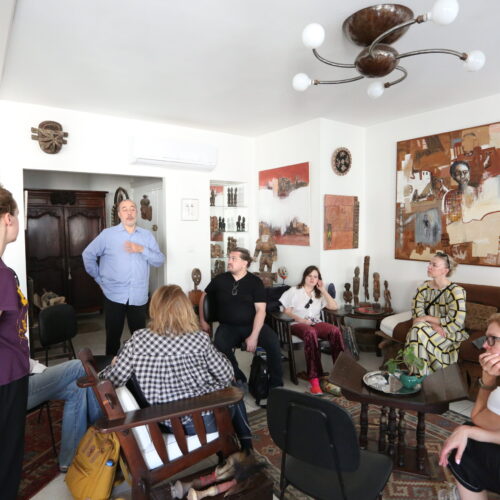
The Master’s programme provides in-depth disciplinary knowledge and encourages critical analysis of the surrounding visual and spatial environment. The study of art, architecture, and design helps to understand both the past and the present in their historical context. The curriculum places strong emphasis on acquiring art-theoretical approaches and methodologies. Studying at the same university alongside art students creates opportunities for collaborative projects and fosters cooperation with artists, designers, and architects.
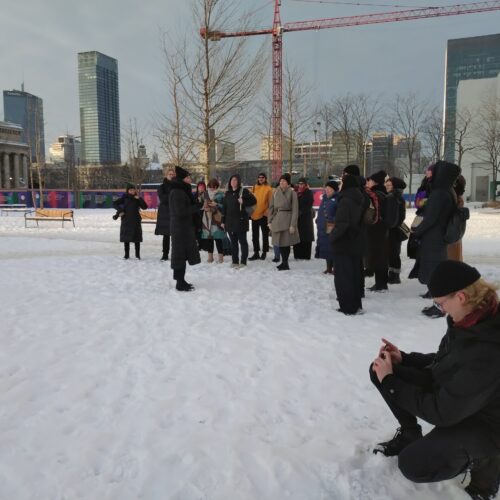
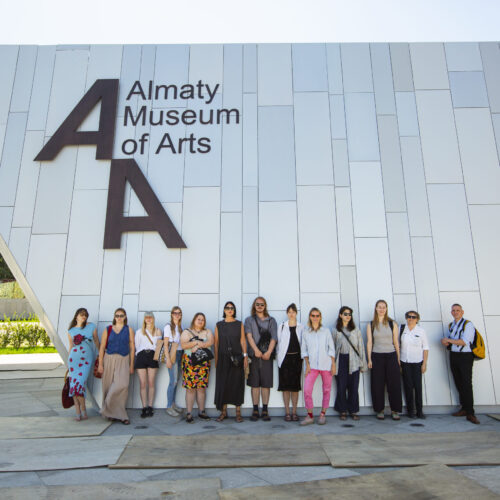
The teaching staff and researchers of the institute are highly respected specialists in their fields, valuing an individual approach to students, seminar discussions, and the supervision of student projects and research. In addition, experts from Estonia and abroad are involved in teaching, and the programme is enriched by diverse study trips. Alumni of the institute include many of Estonia’s most influential art historians, critics, and curators.
Through elective courses, students can shape their own professional profile, focusing on art history, museology, curating, or combining these directions.
Art History electives
The aim of the art history electives is to prepare researchers in art, visual culture, design, and architecture who may continue to doctoral studies and are primarily interested in academic research, or who wish to work in text-based fields (such as criticism or editing). The focus is on advanced theoretical and methodological training, defining one’s research field, and developing independent research competencies within a broader humanities context.
The work of an art historian centres on research in its various stages and outputs: identifying research problems, planning and conducting research, presenting results, and engaging in scholarly discussion. More practice-oriented courses include seminars in art criticism and editorial practice, where students develop skills in writing and editing different types of texts.
These electives are complemented by specialised courses focusing on specific research problems, their historiography, and contemporary approaches, as well as courses by visiting lecturers that introduce the international context of research.
Museology electives
The aim of museology electives is to provide practical skills and theoretical knowledge for working in museums and to encourage creative and critical reflection on the role and purpose of museums in the contemporary cultural field. The studies focus on the history and preservation of museum collections, curating in museum contexts, as well as exhibition communication and the development of public and educational programmes.
Part of the studies and museum practice takes place in various Estonian museums (exhibition spaces, storage facilities, educational centres). While museology broadly addresses all types of museums, at EKA the focus is mainly on art museums and their specific characteristics. The programme provides initial preparation for positions such as collections assistant, exhibition coordinator, or curator of public programmes.
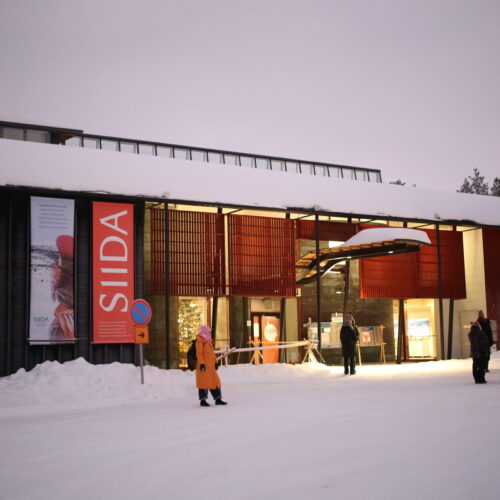
Museology electives are complemented by specialised courses and an international study placement, during which students gain in-depth knowledge of the museums of a particular city or region. Additionally, students may choose to take the joint EKA–Tallinn University course “Didactics of Museum Education.”
Curating electives
Curating electives focus on exhibition-making in the broadest sense. Curating involves staging relationships between artworks, activating and interpreting the space between them, and mediating encounters between the artist, the artwork, and the viewer. Institutional curators develop programmes for museums, art halls, and galleries, but curating can also extend to video and film programmes, festivals, lecture series, residencies, and more. Curators may also create new institutions and formats for presentation.
Curators conceptualise processes and events but are also responsible for their practical realisation (production, funding, etc.). Therefore, the programme addresses both the conceptual and practical aspects of curatorial work (including project writing, exhibition installation, etc.). The gallery studies course introduces the functioning of the art world and the rules of the art market.
These electives are complemented by specialised courses and study trips to major international art events (such as biennials). The programme is partly conducted in collaboration with the EKA Fine Arts Master’s programme.
Master’s thesis
The Master’s thesis may take the form of either a theoretical research project or a practical project (such as a curatorial project, educational programme, or a museum-related project), accompanied by a theoretical written component.
The head of the programme is Dr Anu Allas.
Students may also apply to the joint Master’s programme of EKA and Tallinn University’s Institute of Humanities, Literature, Visual Culture and Film Studies, or take courses from that programme.
MA programme until 2025
During the first semester of study in the MA programme, the student will choose between the Art History and Visual Culture, Museology or Curatorial Studies areas of specialization.
The MA programme offers more thorough professional knowledge and skills: a greater emphasis is placed on methodological and theoretical approaches as well as specific research issues. Additional focus lies in teaching the history and theory of art, semiotics and sociology of art. MA studies in Institute of Art History and Visual Culture are based on multi-faceted support for the student’s individual interests, choices and development. Students can shape the course of their studies according to their personal interests, selecting from several areas of specialization and elective subjects available. The theoretical subjects are largely taught in seminar format, fostering active participation in the study process. Theoretical subjects are supported by study trips and practical assignments. The MA programme also includes editorial internships, which allows the students to try their hand at working as art or architecture critics with newspapers and magazines. The programme will end with defending a master’s thesis that proves the professional maturity of the graduate as an art historian or curator.
From 2017 the Institute participates in a joint English-language MA program with Tallinn University in Literature, Visual Culture and Film Studies.
The head of the Institute of Art History and Visual Culture’s MA curriculum is dr. Anu Allas, the Museology area of specialization is led by Liza Sedler, the Curatorial Studies area of specialization by Anders Härm, and the Literature, Visual Culture and Film Studies MA curriculum is headed by Mari Laaniste.