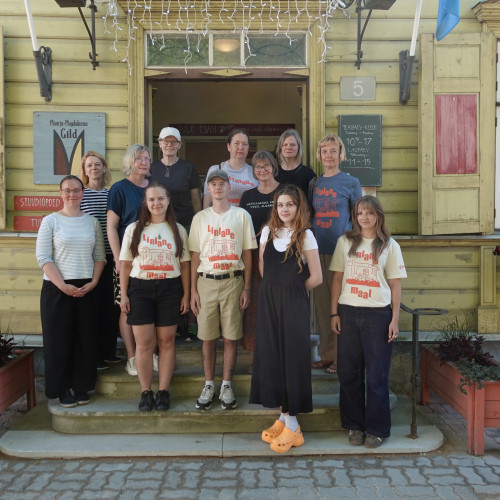
The Institute of Art History and Visual Culture (in Estonian KVI) is the only research institute in art history (Kunstwissenschaft) in Estonia, and a leading one in the Baltic States, covering a wide range of fields of study, from the medieval period to contemporary art.  KVI is a member of the International Association of Research Institutes in the History of Art, RIHA. The Institute was founded in 1992 as the Institute of Art History of the Tallinn Art University.

The Institute of Art History and Visual Culture serves both as a research and teaching institution, conducting major research projects in art history and providing education in all three academic levels.

The professors and faculty members in our Institute are top specialists in their fields and recognized experts; our graduates include Estonia’s leading younger generation curators, critics and art theoreticians. The Institute’s curriculum combines historical and object-centred approaches to art with excellent knowledge of theoretical viewpoints. Visual culture studies explore the pictorial and spatial environment, the connections between them, and their functioning society. The curriculum is supplemented by study trips and practical training.

The Institute’s MA programme offers three areas of specialization: Art History and Visual Culture Studies, Museology or Curatorial Studies. The goal of the doctoral programme is to prepare high-level professionals who are able to work both as teaching or research staff members in the academic sphere and as top-level specialists outside it.

The aim of the Institute of Art History and Visual Culture is to offer a diverse, innovative and inspirational environment for study and research. Training in the speciality is supported by research conducted in the Institute, our research projects, conferences and publications.
1992 – an art history programme was opened at the Tallinn Art University (established in 1914 as the Estonian Art Society’s Tallinn School of Arts and Crafts). The first entrance examinations were held that summer. The art history department was renamed the Institute of Art History.

1995 – the first doctoral dissertations were defended (Juhan Maiste and Rein Zobel).

1996 – the first graduates in the BA programme.

1998 – the first state-funded research grant was received for beginning the compilation of the series of volumes “Eesti kunsti ajalugu” (The History of Estonian Art).

29 March 2016 – the Institute of Art History was renamed the Institute of Art History and Visual Culture.

In 2019, KVI became a member of the International Association of Research Institutes in the History of Art (RIHA).

See also about the prehistory and formation:

Jaak Kangilaski, The Teaching of Social Sciences and Art History at the State Art Institute of the Estonian SSR 1944–1989. –  Kunsttööstuskoolist Kunstiakadeemiaks. 100 aastat kunstiharidust Tallinnas / From the School of Arts and Crafts to the Academy of Arts. 100 Years of Art Education in Tallinn. Toim Mart Kalm. Tallinn: Eesti Kunstiakadeemia Kirjastus, 2014, lk 396–411 [pdf]


Heads of KVI:

1992-1994 associate prof. Helli Sisask

1994-2007 prof. Mart Kalm

2007-2012 prof. Katrin Kivimaa

2012-2017 prof. Andres Kurg

2017-2023 prof. Virve Sarapik

2023-2025 senior researcher dr. Epp Lankots

since 2025 prof. Andres Kurg


News and events

Collected relationships: The Sámi–Finno-Ugric–Estonian nexus

The book accompanies the exhibitions no beginning, no end: Decolonial Gestures in Sámi Worldbuilding and Expedition: Finno-Ugrians and the Power of Images. Born out of dialogue, the two exhibitions share a concern with the connections between knowledge, images, and power. Simultaneously, they are motivated by a desire to highlight the potential that art and heritage offer for activism. The ...
Cultural Heritage and Conservation Faculty of Art and Culture Institute of Art History and Visual Culture

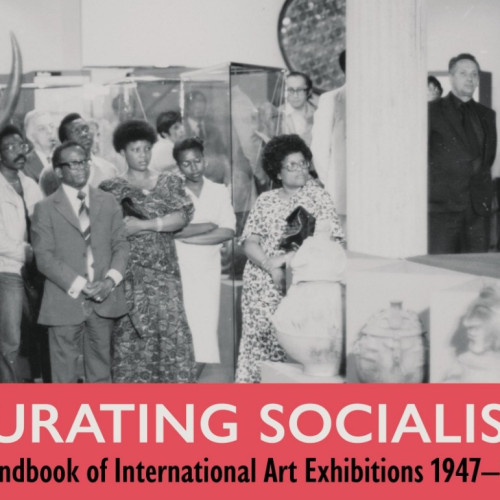
KVI Open Lecture: Sven Spieker & Anders Härm “Curating Socialism”

The starting point for the discussion is the recently published book Curating Socialism: A Handbook of International Art Exhibitions 1947–1989 (University of Toronto Press, 2026), which examines international art exhibitions organised by socialist states and curatorial practices during the Cold War. In this context, exhibitions are understood not merely as instruments of diplomacy and ...
Cultural Heritage and Conservation Faculty of Art and Culture Institute of Art History and Visual Culture

5th Conference of Baltic Art Historians: Art History in Uncertain Times

Conference of The Estonian Society of Art Historians and Curators 8–9 October, 2026 Estonian Academy of Arts, Põhja pst 7, Tallinn Room A101 The conference aims to explore the voice of art history in relation to both contemporary and historical cultural, social, and political processes. We encourage participants to reflect on the role of art history as a discipline, as well as on the ...
Institute of Art History and Visual Culture

Conference “Giving Voice to Museum Collections: Finno-Ugric and Sámi Heritage Today”

The collections of Finno-Ugric and Sámi heritage in Estonian museums are shaped by long and sometimes contested histories. They preserve not only material objects, but also forgotten narratives: Indigenous knowledge, relationships and voices that have largely remained undocumented or marginalised. This conference seeks to examine the histories of these collections, and, most importantly, to ...
Institute of Art History and Visual Culture

KVI Open Lecture: Baiba Vanaga “From Amateurs to Professionals: Women Artists in Latvia in the 19th Century and Early 20th Century”

The lecture offers and overview of women artists who were active in Latvia in the late 19th and early 20th centuries, focusing on their education both in Latvia and abroad, their participation in exhibitions, and the reception of their work. The first professionally trained women artists began working in Latvia as early as the 1820s, and several of them participated in art exhibitions in Riga ...
Institute of Art History and Visual Culture

Conference: Giving Voice to Museum Collections: Finno-Ugric and Sámi Heritage Today

The collections of Finno-Ugric and Sámi heritage in Estonian museums are shaped by long and sometimes contested histories. They preserve not only material objects, but also forgotten narratives: Indigenous knowledge, relationships and voices that have largely remained undocumented or marginalised. This conference seeks to examine the histories of these collections, and, most importantly, to ...
Faculty of Art and Culture Institute of Art History and Visual Culture Museology

KVI Open Lecture: Baiba Vanaga “From Amateurs to Professionals: Women Artists in Latvia in the 19th Century and Early 20th Century”

The lecture offers and overview of women artists who were active in Latvia in the late 19th and early 20th centuries, focusing on their education both in Latvia and abroad, their participation in exhibitions, and the reception of their work. The first professionally trained women artists began working in Latvia as early as the 1820s, and several of them participated in art exhibitions in Riga ...
Faculty of Art and Culture Institute of Art History and Visual Culture

Seminar: How Should We Commemorate the Tartu Concentration Camp?

**Please take note: this event is in Estonian only, no translation provided on location** How should a concentration camp and its victims be commemorated in the urban landscape of Estonia today? During the German occupation, between 3,500 and 4,000 people were executed at the Tartu concentration camp. The victims included people who had collaborated with the Soviet authorities, Jewish and ...
Cultural Heritage and Conservation Faculty of Art and Culture Institute of Art History and Visual Culture

Archive

Help and search