
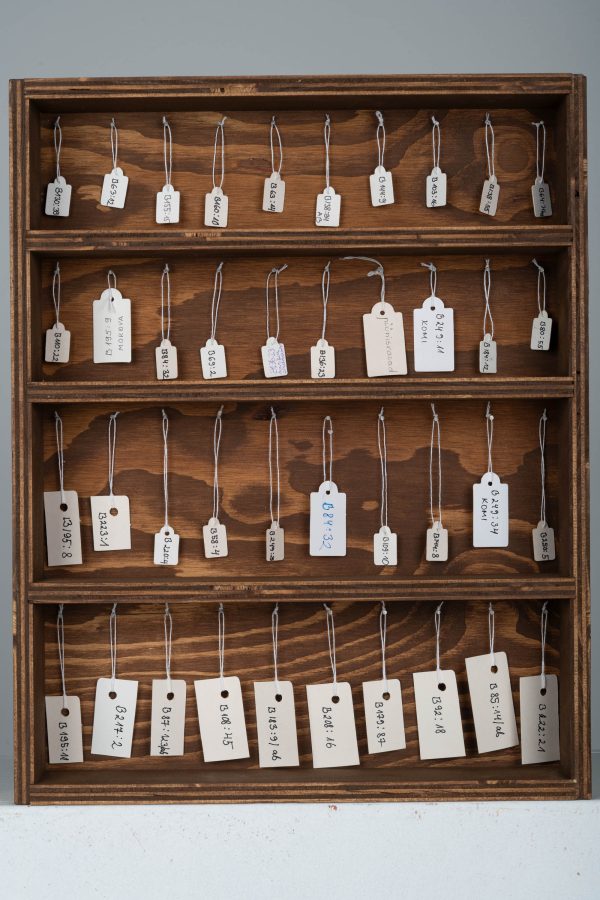
The collections of Finno-Ugric and Sámi heritage in Estonian museums are shaped by long and sometimes contested histories. They preserve not only material objects, but also forgotten narratives: Indigenous knowledge, relationships and voices that have largely remained undocumented or marginalised.
This conference seeks to examine the histories of these collections, and, most importantly, to explore their future: how they can be activated in new and empowering ways to uncover hidden stories, amplify marginalised voices, and generate new knowledge.
We aim to create a space for discussion on rethinking collections and their futures. Particular attention will be paid to the authors, donors, and collecting practices behind the objects, as well as on consciously engaging with institutional and cultural amnesia.
How can the collections be used as a starting point for exploring new possibilities and horizons? How can we develop new ways of knowledge creation, grounded in context-sensitive and collaborative thinking, and enabling more inclusive and non-hierarchical engagement with Finno-Ugric and Indigenous themes?
A central focus of the conference is a comparative approach to decolonisation, addressing its meanings and practices across different contexts, including Sámi, Estonian and broader Eurasian frameworks, as well as in relation to specific Finno-Ugric collections. By bringing these perspectives into dialogue with global decolonial theory and practice, we seek to highlight regional particularities and to explore how this region can contribute to expanding and diversifying understandings of colonial histories and decolonial thought.
Special attention is given to the creators of the works held in museum collections and to artistic research as a practice for exploring how interdisciplinary approaches can help spotlight marginalised voices and open up new ways of engaging with and interpreting collections.
The three-day conference is organised into thematic sections, in which scholars and artists from different fields address the historical and contemporary meanings of collections, and creating and communicating future-oriented knowledge.
The conference is being jointly organised by the Estonian Academy of Arts, the Art Museum of Estonia and the Estonian National Museum.
Programme
1 October
Venue: Kumu Art Museum (Weizenbergi 34 / Valge 1, Tallinn)
18:00 Opening of the exhibition Expedition: Finno-Ugrians and the Power of Images in the atrium of the Kumu Art Museum and book launch for the reader accompanying the exhibition
2 October
Venue: Estonian Academy of Arts (Põhja pst 7, Tallinn), A-101 auditorium
10:00–10:15 Opening remarks
Panel I
10:15–11:45 Collaborating with Collections
Svetlana Karm (Estonian National Museum) and Piret Koosa (Estonian National Museum). Materialising Kinship? Ambivalences in Finno-Ugric Collecting Laur Vallikivi (University of Tartu). Gods, Idols, and Museum Objects: The Lives of khekheq in the Nenets Tundra
Bart Pushaw (University of Tennessee at Chattanooga). From Reactive to Reciprocal: Indigenous Belongings and the Past-Present-Future
Discussant and moderator: Linda Kaljundi (Estonian Academy of Arts)
Panel II
12:00–13:00 Ethnographic Film
Stephan Dudeck (University of Tartu, University of Lapland, Vilnius University, Foundation for Siberian Cultures) and Liivo Niglas (University of Tartu). Collaborative Practices in the Lennart Meri Film Project The Sons of Torum
Alo Paistik (Film-maker and researcher, Goethe-Universität Frankfurt). Archival Isthmus, Notes on Returning Images
Discussant and moderator: Terje Toomistu (University of Tartu, Tallinn University)
13:00–14:00 Lunch Break
Panel III
14:00–14:45 Oil Landscapes: Extraction, Labour and Indigenous Struggle
Katherine Zubovich (University of Buffalo). Late Soviet Petroscapes: Estonian Materials and Builders in the Oil Town of Kogalym
Discussant and moderator: Andres Kurg (Estonian Academy of Arts)
14:45–15:00 Coffee break
15:00–15:30 Anders Kreuger (Kunsthalle Kohta, Helsinki) Is there a future for ethno-futurism?
Panel Discussion 15:30–17:00: Practices of Change: Art – Research – Activism
Marika Alver (Artist group SLED)
Jaanika Vider (Tallinn University)
Eero Ehanti (National Museum of Finland)
Discussant and moderator: Anders Kreuger (Kunsthalle Kohta, Helsinki)
3 October
Venue: Estonian National Museum (Muuseumi tee 2, Tartu), Moora auditorium
15:45–16:45 Panel discussion: What is an artist doing in collections? Practices, prospects and problems
Artists, film-makers and researchers:
Karl Joonas Alamaa
Jaanus Samma
Alo Paistik
Discussant and moderator: Eva Toulouze (University of Tartu)