
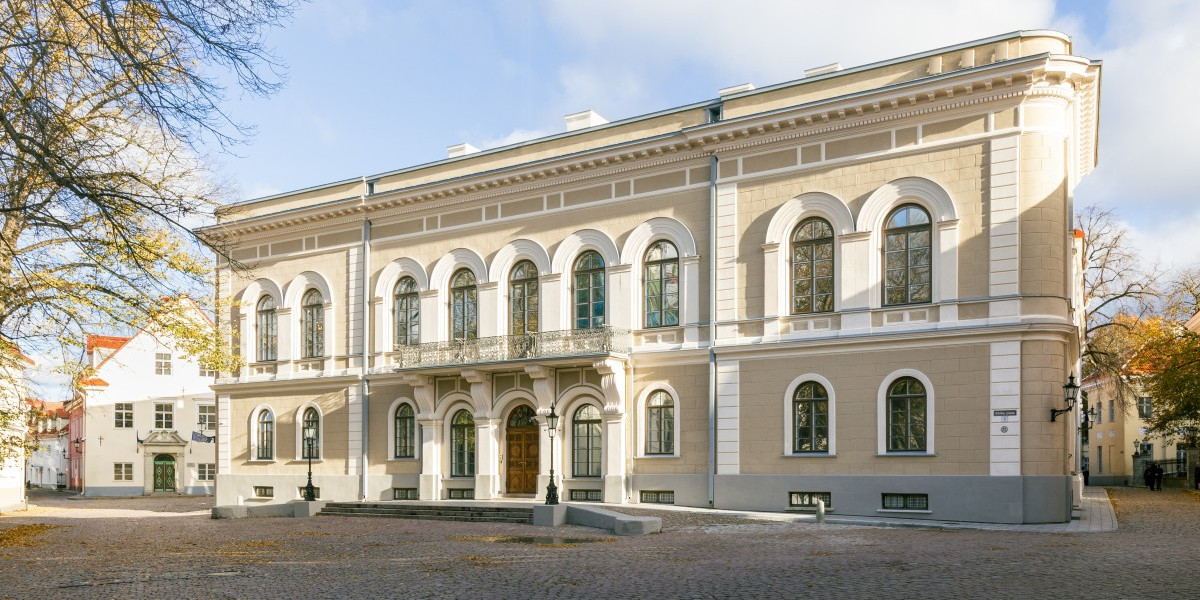
On 9 October, Tallinn will host the 2026 Annual Conference of the Baltic Technology Transfer Network, bringing together experts in university knowledge transfer, intellectual property and research commercialisation from across Europe. EKA is co-organising the conference alongside Estonia’s major universities, with our Head of Knowledge Transfer, Sven Idarand, serving as one of the event’s hosts.
Held at the historic Estonian Knighthood House in Tallinn, the conference, “Navigating the Next Era of Knowledge Transfer: AI, Commercialisation and Beyond,” will explore the future of knowledge transfer: how artificial intelligence is transforming knowledge transfer at universities, how research results can generate societal and economic value, and what opportunities and challenges arise from research commercialisation, the creation of spin-off companies and the strategic management of intellectual property.
For EKA, as a small university, a broad network of partners is particularly important in supporting the wider application of knowledge generated in art, design and architecture, both in society and in business.
The conference is organised by the Estonian Technology and Knowledge Transfer Network, which brings together the Estonian Academy of Arts, TalTech, Tallinn University, University of Tartu, Estonian University of Life Sciences and Estonian Academy of Music and Theatre. The event is supported by the Estonian Patent Office, the Estonian Business and Innovation Agency and the Estonian Research Council, and co-funded by the European Union.
International Perspectives: From Artificial Intelligence to University Spin-offs
The conference keynote, “Knowledge Transfer in the Age of AI: Opportunities, Risks and Strategic Choices for Universities,” will be delivered by Risto Uuk (Future of Life Institute, KU Leuven). It will be followed by a panel discussion exploring new opportunities and challenges that artificial intelligence presents for knowledge transfer.
In a separate presentation, Renato Calzone (Eindhoven University of Technology) will discuss how to turn research results into commercial value. This will be followed by a panel discussion focusing on building successful university spin-offs in the Baltic countries.
In the afternoon, Dr Florian Kirschenhofer (Max Planck Innovation) will address state aid regulations and the challenges they pose for knowledge transfer.
EKA as Part of Estonia’s Knowledge Transfer Network
The conference will be opened on behalf of the Estonian Technology and Knowledge Transfer Network by Kadri Aua, Legal Adviser for Business Cooperation at Tallinn University, and Sven Idarand, Head of Knowledge Transfer at EKA. Opening remarks will also be delivered by Janne Andresoo, Director General of the Estonian Patent Office, and Erik Puura, Vice-Rector for Entrepreneurship at TalTech.
“EKA is making significant strides in knowledge transfer, and the opportunity to organise this conference together with other Estonian universities is a recognition of the work our faculties have accomplished so far. What I particularly appreciate is the openness of our network – we share good practices and experiences, learning from both our successes and our mistakes. Being involved in organising an international event of this scale is both a great honour and a responsibility for EKA,” says Sven Idarand, Head of Knowledge Transfer at EKA.
For EKA, co-organising the conference is part of a broader effort to strengthen knowledge transfer in art, design and architecture and expand cooperation with businesses, the public sector and other research institutions. The international network provides opportunities to draw on the experiences of other European universities while also raising the visibility of EKA’s expertise and collaboration opportunities beyond Estonia.
EKA’s contribution to the event is supported by the EKA LOOVKÄRG+ project, co-funded by the European Union.