
Exhibitions
04.10.2026 — 11.10.2026 Kristen Punger “At the End of the Storm, There’s a Golden Sky” @ KESKPUUR Sunday 04 October, 2026 — Sunday 11 October, 2026 Faculty of Fine Arts
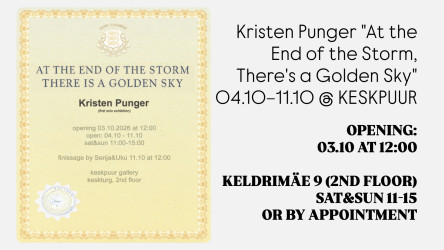
The opening of Kristen Punger’s first solo exhibition will take place on October 3 at 12:00. Drinks for the opening will be provided by Põhjala.
Keskpuur Gallery, Keldrimäe 9(2nd floor)
Sat&Sun 11-15 or by appointment: senja.keskpuur@gmail.com
*opening hours might differ*
Throughout my high school years, I have accumulated an entire cabinet full of scraps of paper: drawings, reminders, homework, and other paper materials containing personal information. Now, as I begin a new chapter of my life by entering university, I feel the need to make space at home and let go of the past.
In order to make space, leave the past behind, and start with a fresh piece of paper figuratively, I decided to get rid of old pieces of papers literally. Yet they still hold significance – they carry memories, traces of my artistic development, and recollections of my difficult years of high school. That is precisely why simply throwing them away felt wrong. This exhibition tries to give a proper farewell to those papers and with them to my high-school years, helping me to finally let go.
After the exhibition, all the papers will be burned, freeing the space for the future.
…
Kristen Punger (2007) is a young independent artist based in Tallinn, working with installation and spatial practices. In 2026, he graduated from Tallinn Art Gymnasium and began studying blacksmithing at the Estonian Academy of Arts.
Kristen’s practice explores the relationship between personal experience, memory, and physical space, often transforming unwanted materials and environments into immersive and interactive installations. His work is influenced by an interest in political activism, an earlier involvement with street art, and possibilities of how personal and collective stories can occupy space.
He also works as an assistant at Keskpuur Gallery and is independently developing his own gallery space, „Pink”, which will open soon.
…
The exhibition’s finissage will take place on 11 October, curated by Senja Savtšenko & Uku Õunapuu, with space design by Anastasija.
The day will begin at 12:00 with a DJ set by uju (Uku Õunapuu), who will also be making waffles for visitors — so come early!
From 13:00–13:30, the Italian trio CANETAMBURO (Elia Dell’Orco, Eugenio Cecchini, and Gabriele Teti) will present a live electroacoustic set.
Following the performance, the programme will continue with ambient music and conversations until around 16:00.
The finissage will mark the closing of Kristen’s exhibition and the opening transition towards the next exhibition by Beate & Jegor, on view from 17 October to 15 November.
The event also marks the beginning of a new chapter for the space. We look forward to introducing our new team and sharing more about our vision and programme with you. More information coming soon!
06.10.2026 — 24.10.2026 Mirjam Varik and Juulia Aleksandra Mikson “Luht /(Flood) Meadow” Tuesday 06 October, 2026 — Saturday 24 October, 2026 Graphic Art
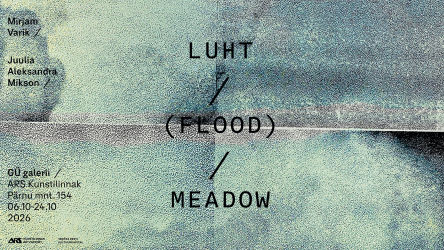
Mirjam Varik’s and Juulia Aleksandra Mikson’s exhibition focuses on a landscape familiar to both artists: Matsalu. Together, they observe the quiet movement of nature, which may, at first glance, appear to be a state of stillness. A flower grows in the garden bed, junipers spread along the edge of the meadow, a cloud lingers in the sky, and visible movement has come to a halt as the stillness of summer takes hold.
Both Varik and Mikson work with the medium of screen printing. They depict nature as a marker of time and space, weaving the local heritage of the Matsalu region through generations. The environment from which we have come and into which we disappear is only like this for a moment, until a ray of sunlight flashes from beyond the clouds and the Earth is once again different. The relief-like images, both in clay and on paper, refer to forms characteristic of Matsalu: clayey soil and the wind-exposed landscape, where views of the clouds are in constant flux. On the one hand, the surroundings are in perpetual transformation; on the other, they may seem uneventful to the human observer. In such a place, adaptation begins only when the viewer merges with the environment and learns to sense its natural rhythm.
ABOUT THE ARTISTS:
Mirjam Varik (1990) studied photography at the Tartu Art College (2014) and as an exchange student at the University of Arts Linz. She graduated from the Estonian Academy of Arts with a degree in Graphic Design (2021), followed by a Master’s degree in Contemporary Art (2024). Since 2023, she has worked with screen-printing in the Department of Printmaking.
In her artistic practice, Varik articulates seemingly insignificant moments that have a lasting impact on the formation of a person. Through photography, video and installation, she explores childhood experiences and identity in a narrative manner, focusing on memories, places and phenomena.
Juulia Aleksandra Mikson (1998) studied Textile Design at the Estonian Academy of Arts (2022). She has also furthered her studies in fashion and styling in Cyprus and at a plant-dyeing laboratory in Italy. She completed her Master’s degree in Craft Studies at the Estonian Academy of Arts (2025). Since 2022, she has worked as a screen-printing studio technician in the Department of Textile Design.
Juulia Aleksandra Mikson is a textile artist who explores the boundaries between materials. Her working process stems from the properties of the material, allowing the material itself to become a guide that shapes the dynamics of creation. In her liminal practice, she has combined textiles with clay as well as metal with textiles, discovering new layers in the relationships between materials. For Mikson, themes concerning the relationships between humans, the Earth and nature are of particular importance.
Graphic design: Martin Pedanik
With thanks to: EKA Department of Textile Design, EKA Department of Printmaking, Craftrag, Martin Mikson
Supported by: Cultural Endowment of Estonia, Põhjala Brewery
01.10.2026 — 28.11.2026 Group Exhibition “The Motorway is Clearly Audible Even with the Curtains Drawn” Thursday 01 October, 2026 — Saturday 28 November, 2026 Faculty of Fine Arts
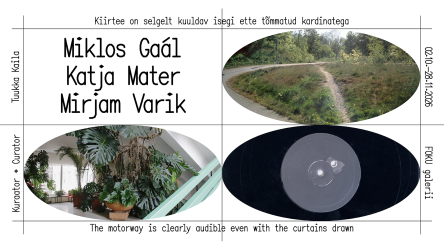
On Thursday, 1 October, at 6:00 PM, the international group exhibition The Motorway is Clearly Audible Even with the Curtains Drawn will open at the FOKU Gallery, featuring artists Miklos Gaál (FI/NL), Katja Mater (BE/NL), and Mirjam Varik (EE). The curator of the exhibition is Tuukka Kaila (FI/EE).
The exhibition proposes an understanding of space as actively produced by those who experience it. Both intentionally and unconsciously, space is shaped through individual acts as well as shared patterns of behaviour. Rather than an empty container or passive stage, space is regarded here as an ever-changing social construct, a negotiation between its physical characteristics and their subjective interpretation.
The title of the show The motorway is clearly audible even with the curtains drawn quotes an Airbnb user review. On the platform, users share their experiences of the listed spaces with the purpose of helping others imagine what it’s like to spend time in them.
The exhibition will remain open at the FOKU Gallery until 28 November 2026.
FOKU Gallery is a gallery-showroom focused on contemporary lens-based art. FOKU Gallery is run by the Estonian Union of Photography Artists (FOKU).
Supporters:
Cultural Endowment of Estonia
Alfred Kordelin foundation
Partner:
Rüki galerii
Opening drinks by:
Mikkeller
22.09.2026 — 14.11.2026 LLRRLLRR Exhibition “Loose Knots” in Prague Tuesday 22 September, 2026 — Saturday 14 November, 2026 Architecture and Urban Design
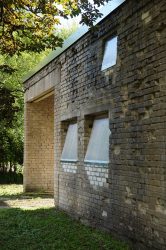
On Tuesday, 22 September, an exhibition titled Loose Knots by the Estonian architecture practice LLRRLLRR opens at the architecture gallery VI PER in Prague.
Laura Linsi and Roland Reemaa (LLRRLLRR) present three projects that draw inspiration from traditional practices of reuse and adaptation, the robustness characteristic of the Baltic landscape, and collectively emerging pedagogies. The exhibition explores alternative paths to the norms established within the architectural profession. Through their projects, LLRRLLRR seek to question prevailing tastes, funding models, and established practices of architectural competitions and commissioning processes, which have become central to shaping architectural practice.
In addition to the duo’s projects, the exhibition presents the works produced during Paraply, an architecture summer workshop that Laura and Roland led in Copenhagen. The exhibition features works by Estonian textile artist Johanna Ulfsak and English-Belgian artist Chris Evans, with whom the architects collaborate closely on numerous projects.
Laura Linsi and Roland Reemaa teach diploma studios at the Estonian Academy of Arts and at Central Saint Martins, University of the Arts London. Roland is a visiting professor at the Estonian Academy of Arts, while Laura is editor-in-chief of the Estonian architecture magazine MAJA. Both practise as architects and work across the expanded field of spatial practice.
The exhibition is supported by the Cultural Endowment of Estonia and the Embassy of Estonia in Prague.
Web:
https://www.vipergallery.org/en/exhibition/llrrllrr-loose-knots
https://llrrllrr.com
Instagram:
@llrrllrr_studio
@vipergallery
25.09.2026 — 26.09.2026 Tartu Illustration Festival 2026 Friday 25 September, 2026 — Saturday 26 September, 2026 Faculty of Design


Tartu Illustration Festival (TIF) is taking place for the third time this year and, for the first time, as a two-day festival on September 25–26 at Aparaaditehas in Tartu.
The festival brings together illustrators, designers and visual artists from Estonia and elsewhere in Europe, welcoming professionals, students and anyone interested in illustration. TIF 2026 focuses on playful patterns, exploring textures, repetition and rhythm while encouraging experimentation with different techniques, materials and approaches. Over the two days, the programme includes hands-on workshops, talks and a panel discussion, with opportunities to create a board game using screen printing, make collages inspired by the architecture of Annelinn, take part in a croquis drawing session with dogs, and join a speed-meeting event for writers and illustrators.
Visitors can also explore the international exhibition “A Bright Memory” and an illustration market. Among the festival guests are Finnish pattern designer Lotta Maija, British illustrator and designer Ryan Chapman, and Slovenian picture-book illustrator Damijan Stepančič.
TIF is a meeting place where professionals and curious visitors can come together to explore the possibilities of visual storytelling and illustration.
More information: illustrationfestival.com
09.09.2026 — 13.09.2026 EKA team at the Ars Electronica Campus Exhibition Wednesday 09 September, 2026 — Sunday 13 September, 2026 Faculty of Design
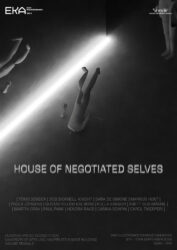
House of Negotiated Selves
Estonian Academy of Arts (EE)
Ars Electronica campus exhibition
Linz University of the Arts, Hauptplatz 8 (West Building)
House of Negotiated Selves explores the boundary between human autonomy and machine representation. As artificial intelligence becomes increasingly prevalent in mediating and shaping our interactions, creation, and decision-making, there is a constant negotiation taking place.
In response to the 2026 theme “NEGOTIATING HUMANITY – THE FUTURE BEGINS”, House of Negotiated Selves frames this negotiation as an embodied experience. Through the metaphor of the distorted mirrors of an amusement park, our own reflections appear similar, but ultimately deceive us. The installation asks when our reflection becomes a substitute and when a machine begins to speak for us.
Visitors enter a world where their presence is perceived and interpreted. At first, the system seems to be a mirror of their true selves and presence. Gradually, the reflection begins to wander, predicting, distorting, and misrepresenting the visitor. What begins as recognition becomes ambiguity and displacement. Rather than correcting one form of distortion, the work allows it to emerge, revealing to the visitor a disturbing experience of representation that no longer belongs to them.
House of Negotiating Selves explores AI-mediated representation and the erosion of human agency. Situated at the intersection of interaction design, critical AI research, and sensory art, the project translates an abstract discussion into a tangible experience that is not about what AI is, but rather how it will come to represent us, whether we agree with it or not.
//
DANUBEN TRIANGLE
This year’s Ars Electronica team (Product Design + ixd students):
Paula Jürgens
Martin Orav
Tõnis Bender (IXD)
Kulla Kangur
Anett Elis Männil
Carina Schipai
Hendra Raud (IXD)
Sara De Simone (IXD)
Paul Pank
Markus Hunt
Gustav Villem Kalberg
Supervisors: Carol Tikerperi and Bob Bicknell-Knight
Support and assistance: Björn Koop, Kätlin Leokin, Kaspar Pulk
11.09.2026 — 24.10.2026 Banasińska, Kaubi, Januševičiūtė “Familiar Stranger” Friday 11 September, 2026 — Saturday 24 October, 2026 Faculty of Fine Arts
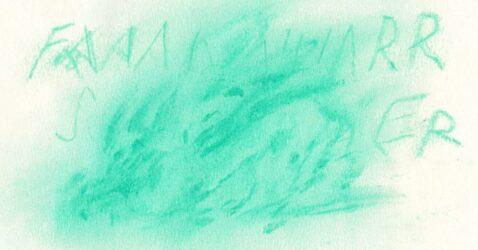
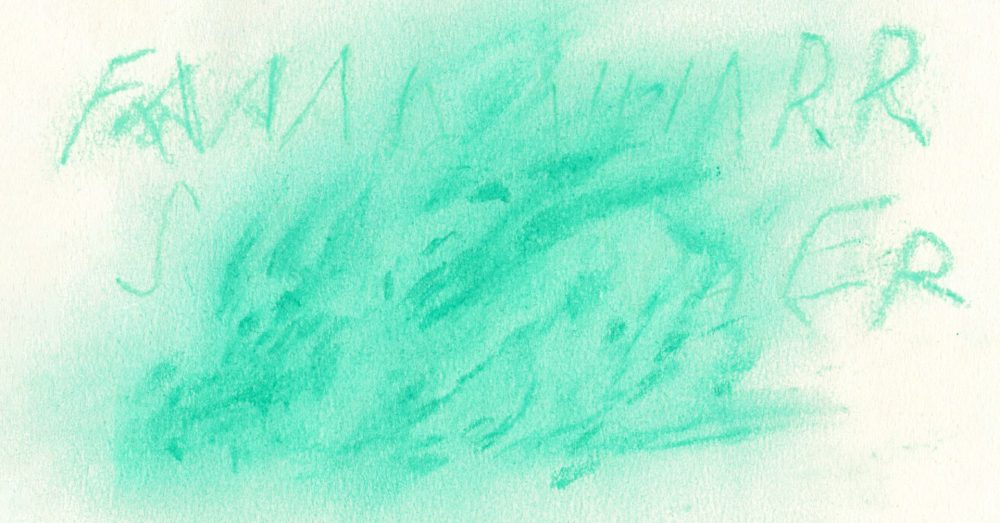
On Friday, 11 September, at 6pm, Editorial (Latako 3, Vilnius) will open the exhibition Familiar Stranger, curated by Milda Januševičiūtė. The exhibition is part of the Vilnius Gallery Weekend programme.
Familiar Stranger brings together works by Zuza Banasińska, Loora Kaubi, Sarah Neumann and Milda Januševičiūtė, to look at memory as an unstable process through which personal and collective identities are continually reconstructed. The exhibition lingers between family histories, inherited images, bodily memory and digital archives, asking what happens when the past reaches out through fragments: a story repeated by relatives, an image whose details no longer agree, a gesture inherited without explanation, or a file stored somewhere in the clouds. Memory here is less an archive of what happened, and more an ongoing negotiation between what is remembered, forgotten, altered and passed on.
The exhibition is interested in the shift between embodied and externalised memory. What was once held in stories, objects and bodies increasingly also exists on corporate servers, accessible through passwords, subscriptions and infrastructures that we rarely see. Forgetting may be a basic condition of being human; data storage has made it into a service.
Rather than treating memory as reliable evidence, Familiar Stranger considers how remembering is shaped by repetition, omission, technology, and the moment from which it looks back. The familiar can return slightly changed; someone else’s memory can quietly enter our own; an inherited story can feel simultaneously intimate and strangely foreign. The exhibition does not propose the recovery of an original, intact past. Instead, it asks how to live with what remains, what has already been rewritten, and what we choose, or allow other systems, to remember for us.
The exhibition can be seen at Editorial (Latako 3, Vilnius) until 24 October.
Familiar Stranger
Artists: Zuza Banasińska, Milda Januševičiūtė, Loora Kaubi, Sarah Neumann
Curator: Milda Januševičiūtė
Architect: Ona Juciūtė
Designer: Monika Janulevičiūtė
Language Editor: Joseph Everatt
The exhibition is funded by the Lithuanian Council for Culture
The exhibition will be accompanied by a programme of events: follow us for updates at www.editorial.lt.
04.09.2026 — 04.10.2026 Loora Kaubi and Erik Hõim “Cobbled Together, Stumbling” Friday 04 September, 2026 — Sunday 04 October, 2026 Contemporary Art
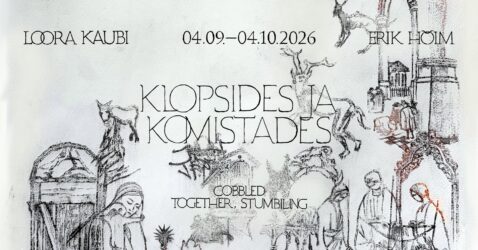
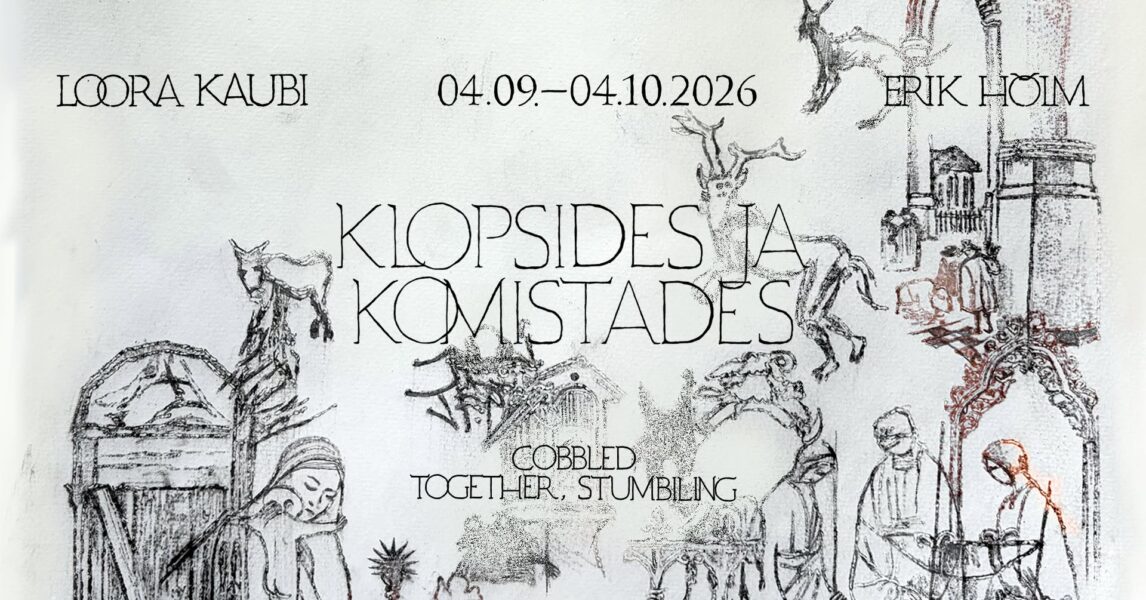
Loora Kaubi’s and Erik Hõim’s joint exhibition “Cobbled together, stumbling” is open till October 4th in the Monumental Gallery of the Tartu Art House.
The exhibition is inspired by memories of various places and stories. These stories speak to age-old needs: how to be with people when they can no longer be with us, and how to say the words that have come too late.
We believe in that which we hope for. We believe that our memory will always shine with the same brightness. We believe that we will forever hold a place in this rapidly changing, aching world. Faith is a small and stubborn thing. It is a load which we bear. This faith can become a chapel-shaped house, not built in memory of a single person, but as a tribute to all those who have ever been longed for.
It is hard to say why mortal humans build houses for those who are no longer here, shelters in which one can continue to believe in the possibility of good, quiet worlds, filled with small gestures for humanity, cobbled together bit by bit from whatever happens to be at hand, without trying to adorn that which we still do not know, or force any meaning onto anything. But still, small stones, lines, pieces from familiar places say: someone was here. They did exist. And maybe in the end that is the meaning of faith: we hope that something stays.
Loora Kaubi (b. 1998) is an artist working in Tallinn. Her work explores themes of sleep, personal and collective memory and fatigue. Kaubi holds an MA in fine arts from the LUCA School Of Arts, a BA degree from the painting department of the Estonian Academy of Arts, has completed a portion of her studies in the Vienna Academy of Arts and did an internship in Mexico City.
Erik Hõim (b. 2001) has a bachelor’s degree in photography from the Estonian Academy of Arts and has furthered his studies in photography in Prague, at FAMU. He has received the Estonian Youth Contemporary Art Association’s weekly award, the audience award of the Summer Exhibition and has participated in exhibitions in Tallinn, Võru, Urbino and Prague. He is part of the fictional artist Uru Valter and a member of the Estonian Youth Contemporary Art Association.
Graphic design: Diandra Rebase
Thanks: Hanna Samoson, the Contemporary Art Museum of Estonia, António Tainha, Mette Mari Kaljas and Deviis OÜ
The exhibition is being supported by the Cultural Endowment of Estonia.
01.09.2026 — 01.10.2026 “Plastic Archive”, curator Marite Kuus-Hill Tuesday 01 September, 2026 — Thursday 01 October, 2026 Library
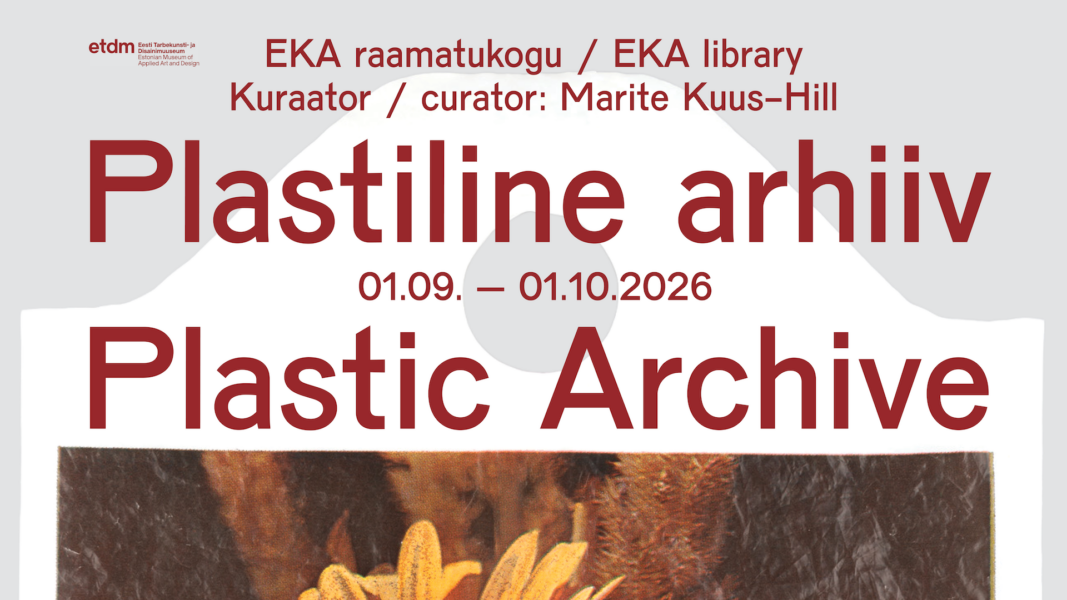
Plastic bags are nowaday’s symbols of disposability, an object we associate with overconsumption and wastefulness. The plastic bag’s association with Western consumerism is precisely what made it an object of value during the Soviet period in Estonia. Behind the iron curtain, anything linked to the West was desirable because it signified modernity and freedom. The plastic bag thus became a currency, an accessory, a collectible and now, it’s a documentation of a bygone era.
The bags in this exhibition are originally from private collections and most of them are now in the collection of the Estonian Museum of Applied Arts and Design. They are examples of Estonian product design and applied graphic art, yet their designs also illustrate the daily culture of Soviet life in Estonia. The value that was attached to these bags was a reflection of its time which is remembered for its scarcity and repression. Our shift in perspective towards plastic bags reflects the shift in the world around us, both in everyday realities as well as political ideology. Plastic is known for its plasticity, its ability to shapeshift and morph. The reputation of plastic bags is plastic – it has changed from revolutionary wonder-material and object of desire to useless, disposable trash, associated with deteriorating over-production. In a way, every archive is plastic, because the way we see the objects is ever changing.
The texts of the exhibition are based on the supporting materials of the exhibition “Kile kotti! / Plastic into Bag!” which was shown at the Estonian National Museum and Estonian Museum of Applied Art and Design in 2004 and 2005, especially the interviews conducted by Kristi Kaljumägi and the exhibition text written by Pille-Triin Männik.
Thank you to Helen Adamson, Kristi Kaljumägi, Marvi Meriniit, Anu Järs, Chloé Gourvennec, Eva Mahhov, Marit Hololei and Katri Kuus. Research for this project has been supported by the Estonian Cultural Endowment.
Graphic design by Chloé Gourvennec.
27.08.2026 — 26.09.2026 Urmo Vaikla “An Island Is Not an Island. Shades of Dark Heritage” Thursday 27 August, 2026 — Saturday 26 September, 2026 Doktorikool
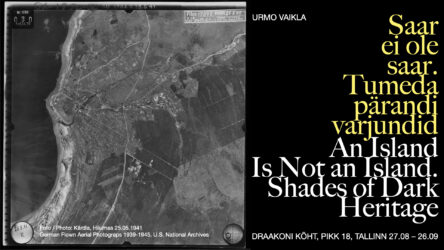
27.08 – 26.09.2026
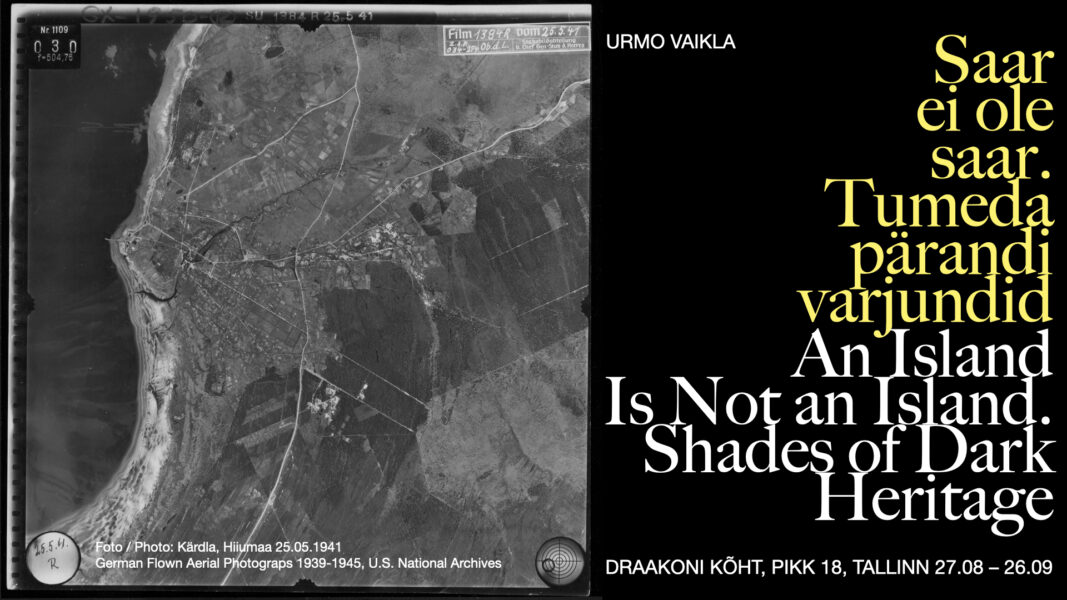
Opening 27.08. 18:00
“An Island Is Not an Island. Shades of Dark Heritage” is the first exhibition of Urmo Vaikla’s practice-based doctoral research. It explores military architectural heritage in the context of Hiiumaa and its impact on the island’s landscape, local community, and collective memory.
Although island may appear separate and isolated, it has always been influenced by global political processes. Defensive lines and military installations were built on the Hiiumaa both before and during the First and Second World Wars. A rich military heritage also dates from the 50-year period of Soviet occupation, when the island was the westernmost border zone of the Soviet Empire. Traces of this history remain visible: boundary strips once ploughed and raked through the coastal forests, defensive trenches branching out like a capillary network, and barbed wire still scattered here and there. Countless bunkers, cannon positions of coastal batteries, border guard towers, and training grounds remain abandoned in the landscape, evoking a dark history embedded in the island’s natural environment.
Urmo Vaikla’s research focuses on spatial conditions in the aftermath of trauma, examining the persistence and adaptation of architectural heritage in the context of social and political change. The aim is to map and investigate spatial values and to seek answers to the questions of whether, and how, dark heritage can be interpreted and (re)used.
Methodologically, the exhibition project draws on two curated international creative residencies addressing military heritage—Time Lap and Pinhole—which took place at Kordon Art Residency on Hiiumaa between 2024 and 2026. The residency programmes explored political trauma through embodied (somatic) experience, personal objects, and individual experience. The exhibition is a visual and poetic synthesis of the material gathered and experienced during the residencies, together with the creative projects.
Artists participated in the residency program: Selina Bonelli, Thomas Reul , Alexander Petrounine, Anna Underowicz, Anu Pennanen, Kaisa Karvinen, Jona Kleinlein, Nelly Haag
Residency Program Curators: Urmo Vaikla, Tüüne-Kristin Vaikla
The exhibition is supported by: Eesti Kultuurkapital, Eesti Sisearhitektide Liit, ühendus Ruum ja Vorm