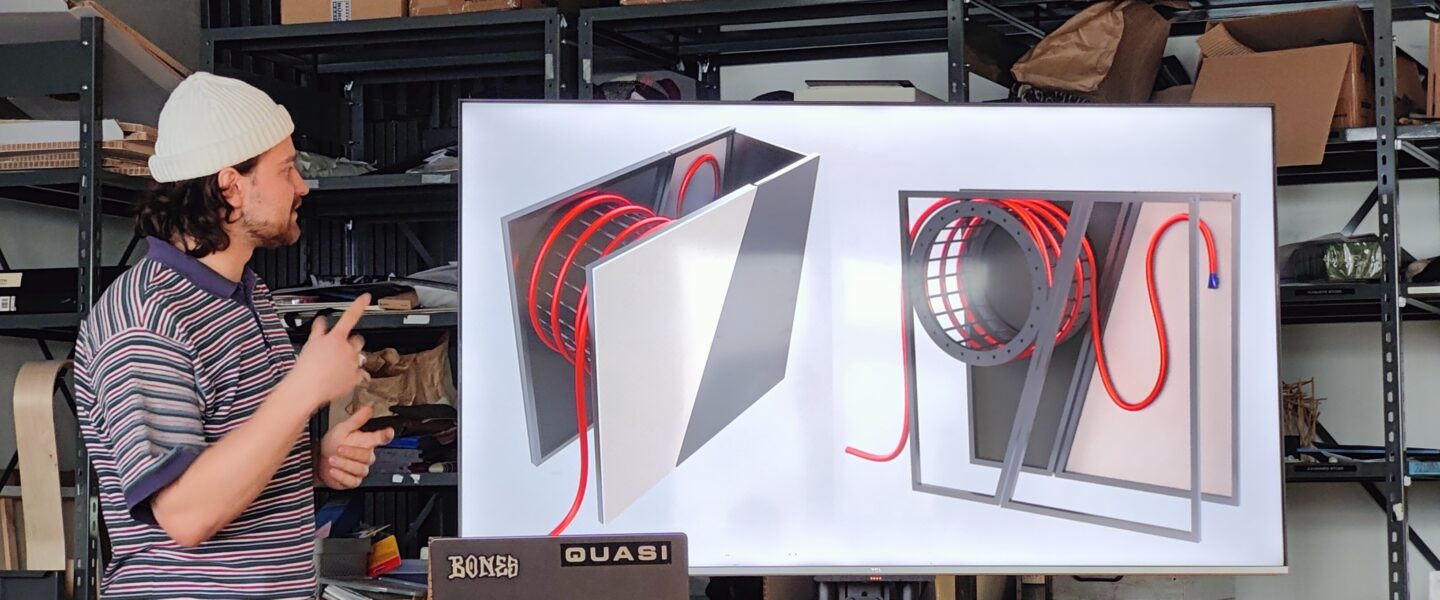
EKA product design students set out to solve how to deliver electricity to ships in the city center.
Our recently held Design Diagnostics masterclass brought together product design students from the Estonian Academy of Arts and engineers from Estonian maritime technology company ShoreLink to tackle an increasingly relevant challenge in urban ports: how to deliver electricity from the quay to a ship in a way that combines technical excellence with urban-compatible design.
Harbours are no longer located on the outskirts of cities—today, they are often situated directly in city centers or at their edges, such as Tallinn’s Cruise Harbour. This means that every new technical solution must consider not only functionality but also its visual and spatial impact. Contemporary ships that arrive in city centers are able to switch off their engines and generators thanks to shore power connections, reducing both emissions and urban noise. Already two years ago, passenger ferries in Tallinn Old City Harbour used shore power 63% of the time, and the demand for smart shore power solutions continues to grow.
ShoreLink develops and manufactures shore power and charging solutions for ships in ports, including electrical dispensers—technical systems that deliver high-power cables from the quay to a ship’s connection point. While ShoreLink’s engineering solutions are strong, their clients—ports—also expect these systems to fit into modern urban environments, complement them, and stand out with a distinctive and memorable design.
“Clients increasingly expect well-thought-out and high-quality design solutions,” noted ShoreLink CEO Martin Mehilane on the opening day of the masterclass. This created an opportunity for collaboration with EKA, bringing product design students alongside engineers, to meet the growing demand for holistic solutions.
An Intensive Weekend Sprint Toward New Solutions
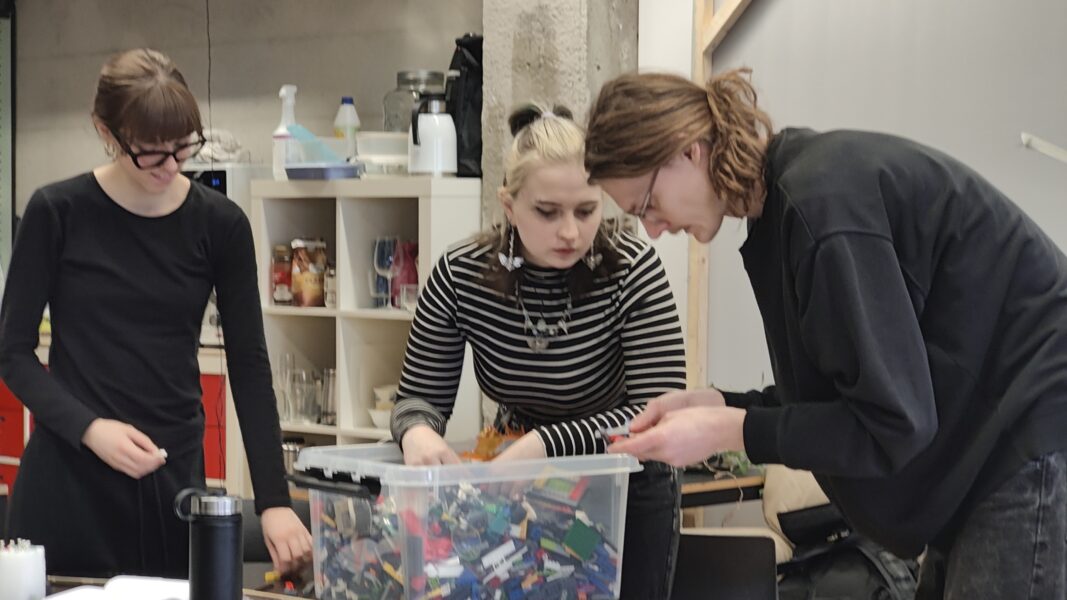
The masterclass began on Friday with a visit to ShoreLink’s production facilities. Students gained insight into the company’s workflows, technological constraints, and the specifics of maritime engineering. In the afternoon, the design brief was defined: to create a shore power solution that is technically functional, durable, and adaptable to the evolving spatial language of ports around the world.
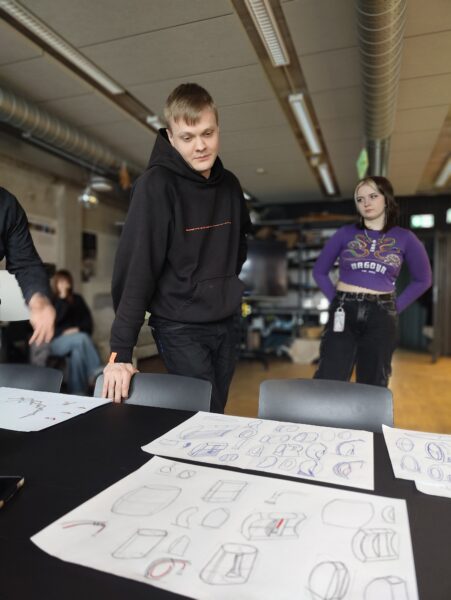
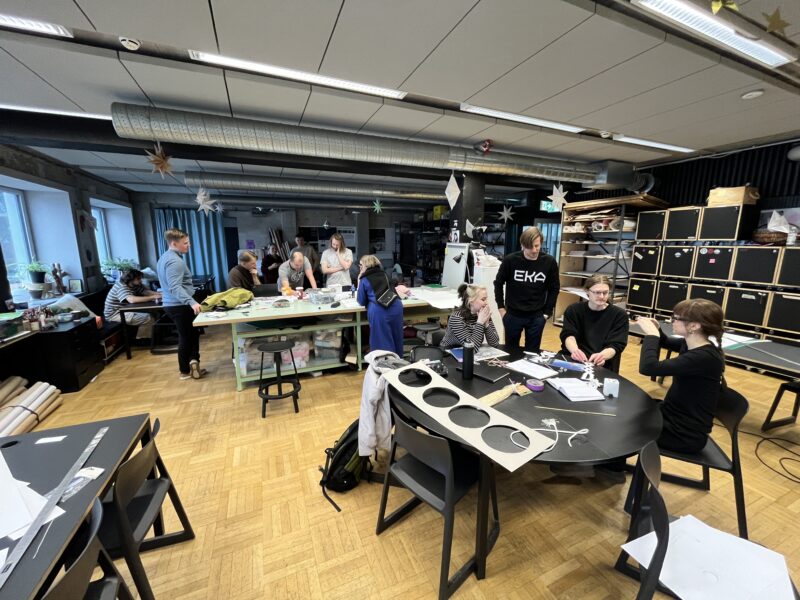
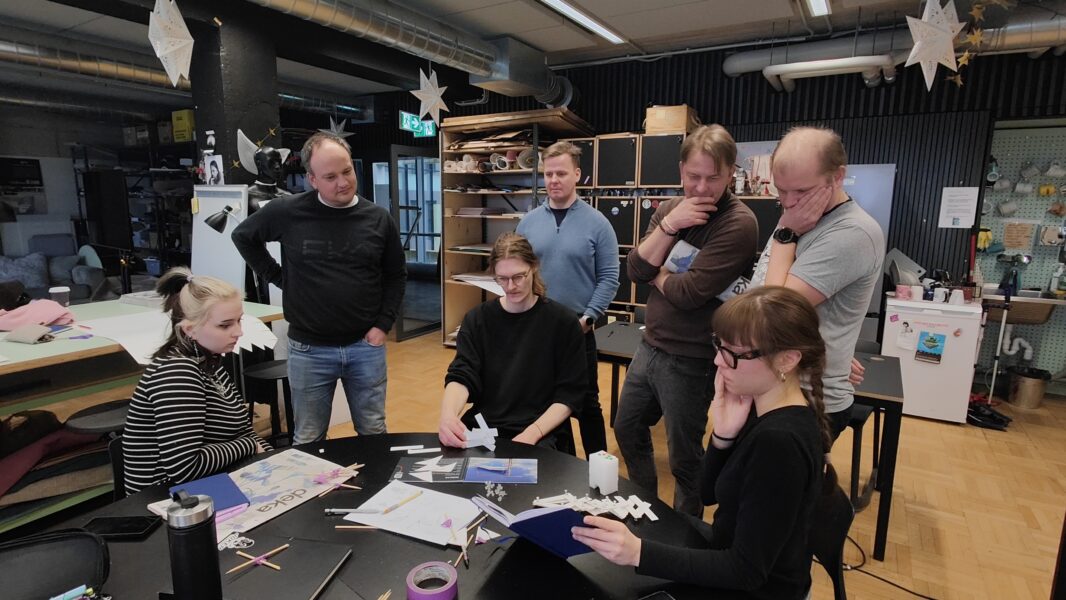
Work continued on Saturday at the EKA studio. While developing design concepts, students consulted both their supervisor, Head of Industrial Design Lauri Hirvesaar, and ShoreLink engineers. A clear contrast—and complementarity—emerged between the two disciplines: engineers tend to focus immediately on technical details such as cable management or the geometry of moving parts, working from the inside out. Meanwhile, design students approached the problem from the outside in, considering the surrounding environment and seeking an appropriate aesthetic. Our collaboration demonstrated how combining perspectives leads to faster and better results.
“Having worked with design in technology companies for years, I’ve seen how aligning engineering and design can be a challenging process—primarily due to a lack of collaboration experience. That’s why I’m very pleased that students had the opportunity to engage with a serious industrial company and its engineers already during their studies. I believe it was a valuable experience for both sides. Engineers and project managers saw how and when it is appropriate to involve designers, and students demonstrated what they can offer. Based on first impressions, the workshop was successful, and I believe that some of the concepts may lead to further collaboration,” said Lauri Hirvesaar.
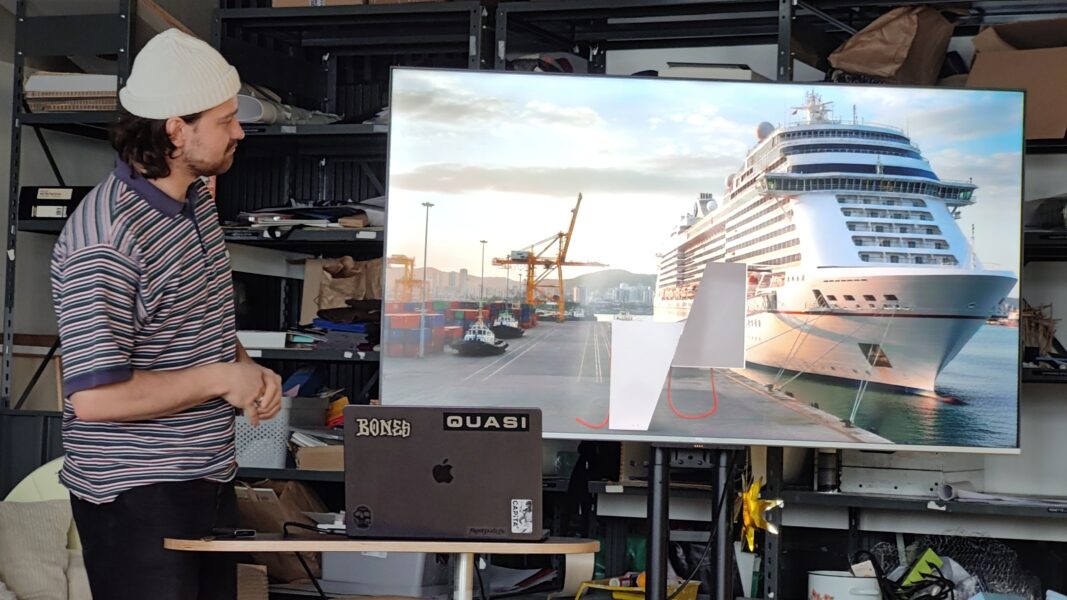
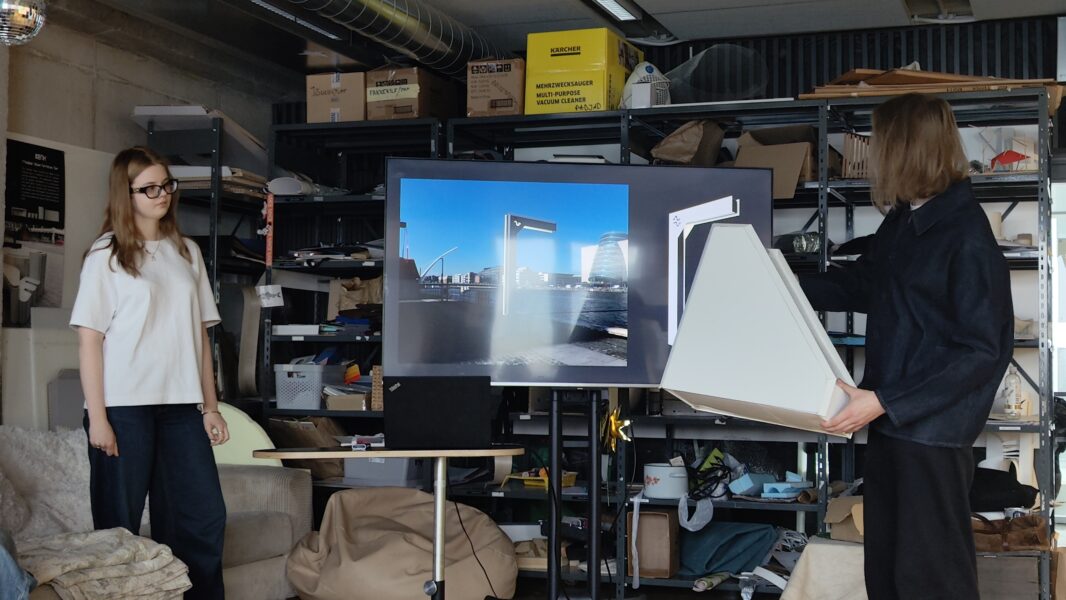
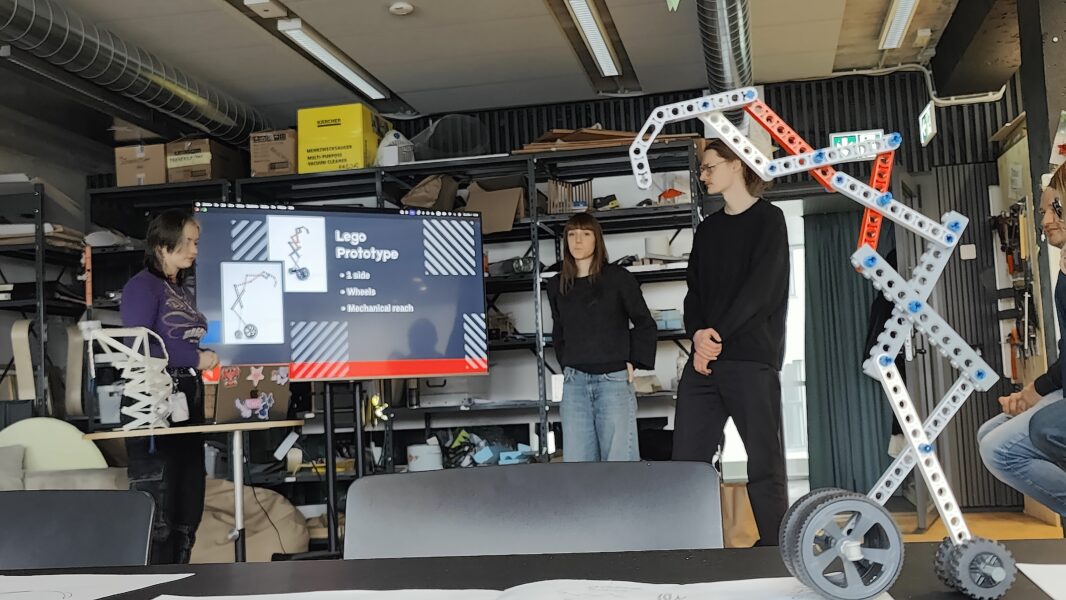
On Sunday, student teams presented their concepts to the partner. The results ranged from modular systems that adapt to changing quay needs to solutions that treat shore power devices as part of the architectural identity of urban space.
“ShoreLink seemed very interesting and operates in a field I don’t usually encounter or even notice. As a designer, my role in this workshop was quite challenging because the field is highly technical and complex. At the same time, I feel I contributed with interesting ideas and perspectives that helped approach the problem from a different angle and think outside the box. I believe this kind of collaboration can be beneficial in the future—I had the chance to get noticed by the company and build new professional connections,” said third-year product and environment design student Silver-Den Vahtras after the presentations.
Alide Zvorovski, who leads ShoreLink’s visual identity, summarized the collaboration as follows: “More thoroughly designed ShoreLink products help differentiate us in the market, and aesthetics play an important role in a holistic solution, especially as part of public space. This is a great collaboration where Estonian engineering and industrial design meet. ShoreLink believes in these values and is ready to continue investing in them.”
Design as a Competitive Advantage for Industry
EKA’s Design Diagnostics masterclass brings students into companies to broaden their practical experience while offering Estonian businesses fresh perspectives on product development challenges—supporting knowledge transfer from universities to society.
The decarbonization of ports is no longer a future scenario but an ongoing process. As ships become quieter and cleaner, the infrastructure that serves them must also evolve. The question is no longer just whether electricity reaches the ship, but how it does so—with what form, what user experience, and what impact on urban space.
Design and engineering are natural partners—product design always involves engineering, and engineering always involves design. Over the course of this weekend, the collaboration between EKA and ShoreLink took on a clear and tangible form in shaping the future.
What are EKA Design Diagnostics Masterclasses?
The goal of EKA Design Diagnostics masterclasses is the mutual exchange of knowledge and experience between companies and the university. Through this collaboration, partners gain experience with design-driven development methodologies, while EKA students apply their knowledge in a real business environment.
To give students the opportunity to engage with practical aspects of their field and expand their skillsets, we organize design sprints that include company visits, знакомства with production, technologies, and workflows, and solving real-world design challenges.
The masterclasses are supported by the EKA LOOVKÄRG+ project mini development grant, co-funded by the European Union.
Design Diagnostics Masterclasses Continue – What’s Next?
Which field should EKA product design students explore next? Which industry or technological sector needs fresh thinking and bold design approaches? If you have an idea or challenge waiting to be solved, get in touch—we bring design where it is needed most.
More information:
Piret-Klea Velleste
Masterclass Coordinator
piret.velleste@artun.ee