
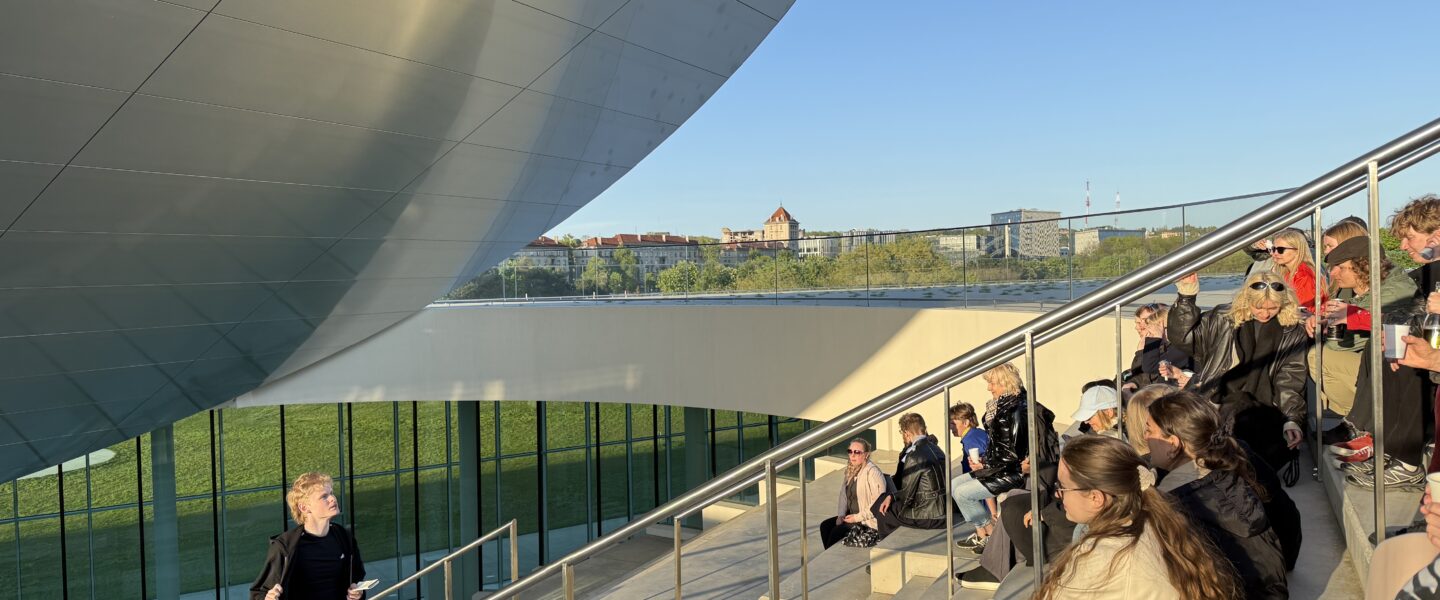
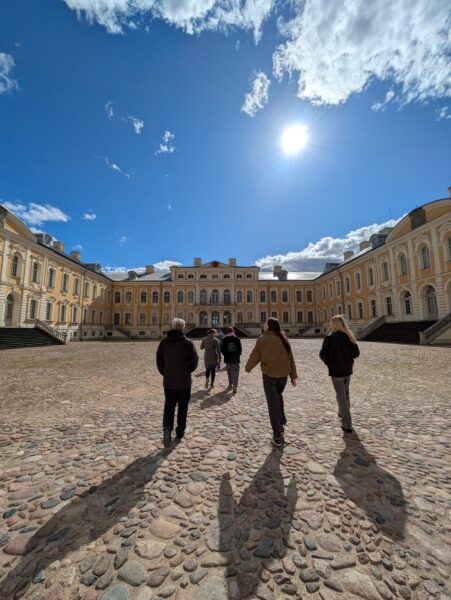
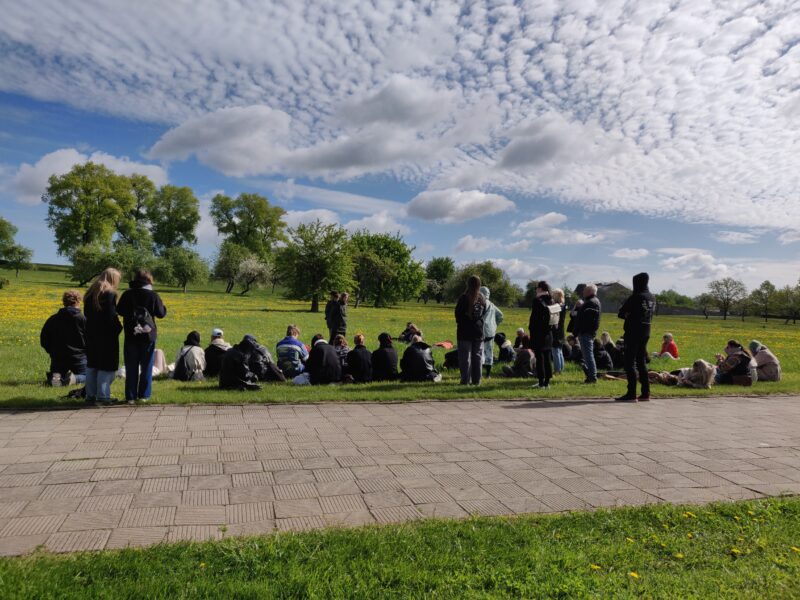
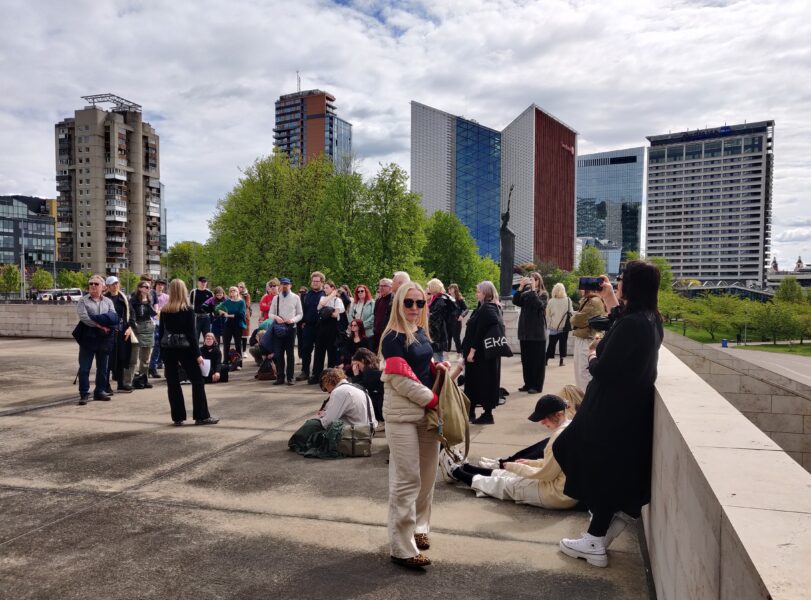
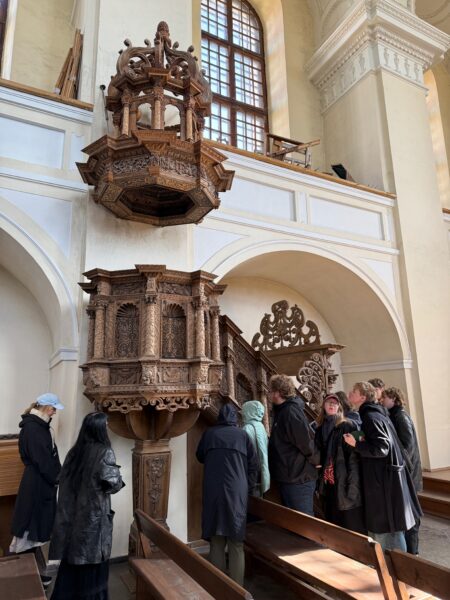
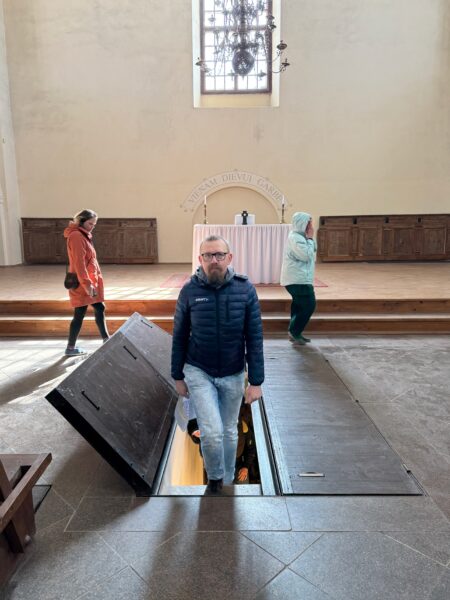
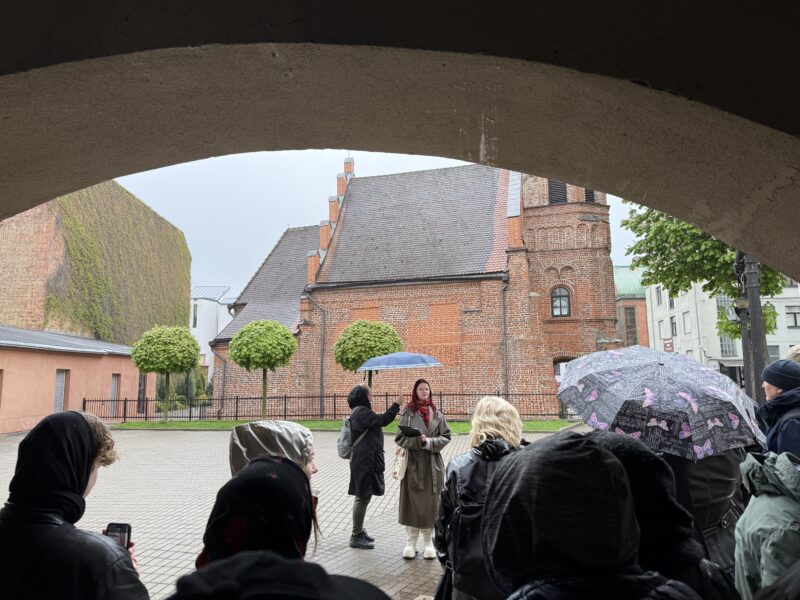
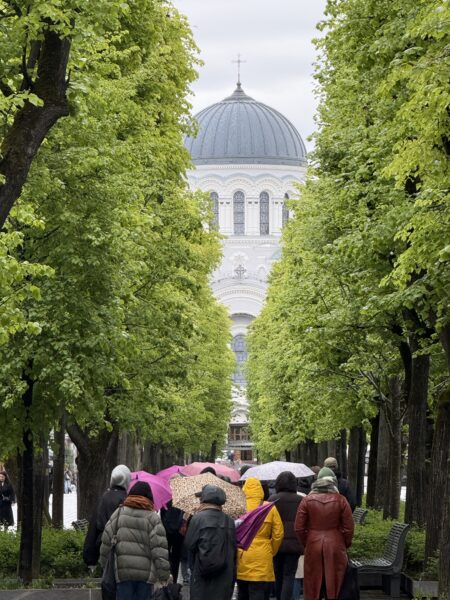
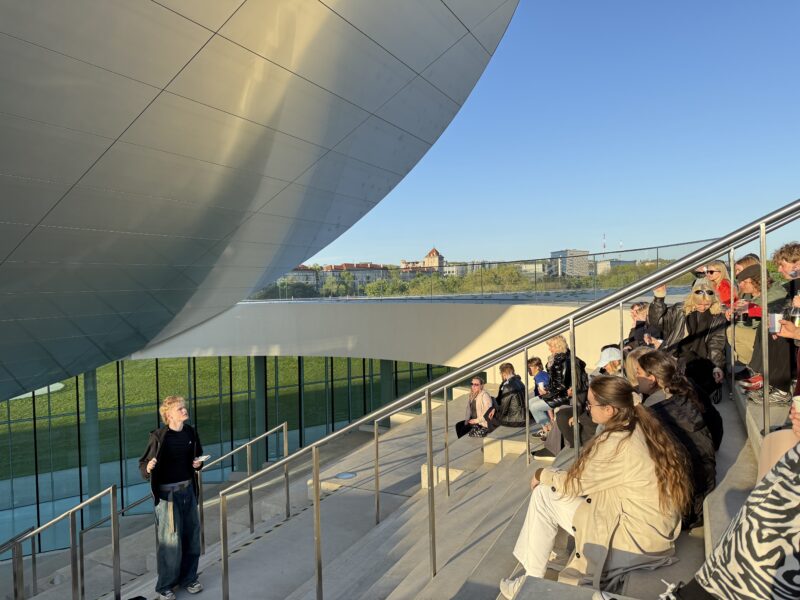
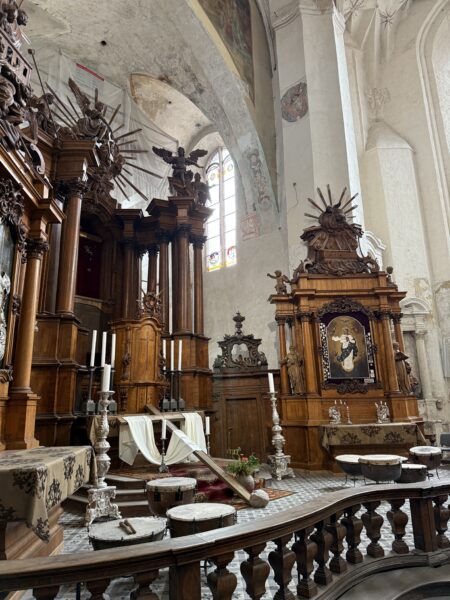
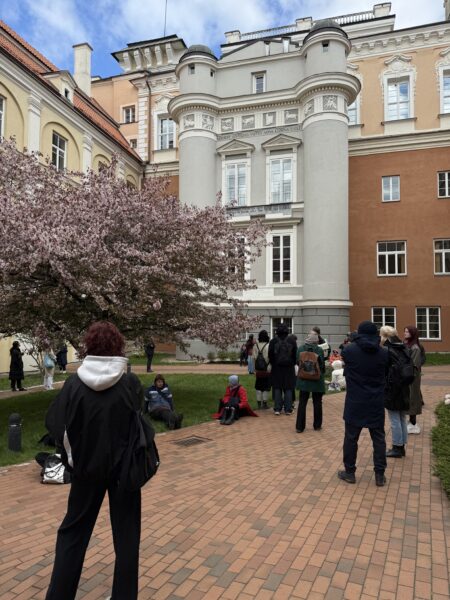
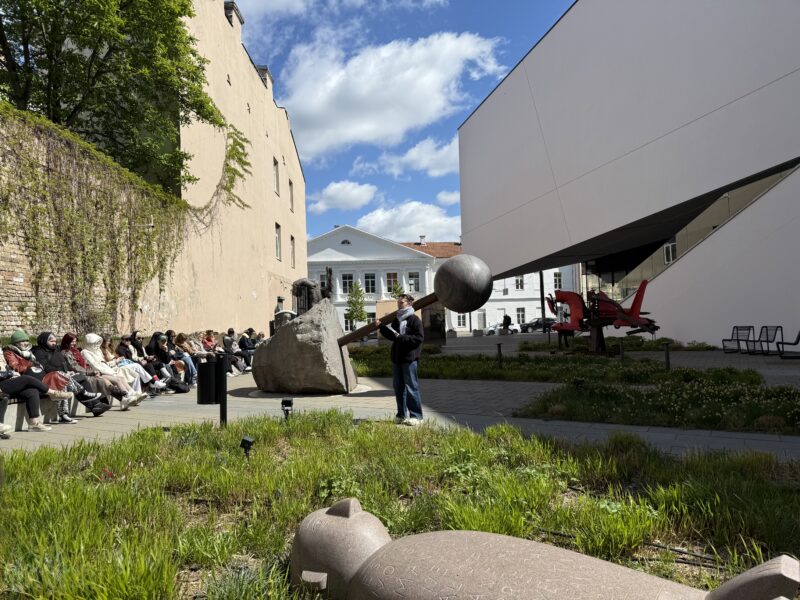
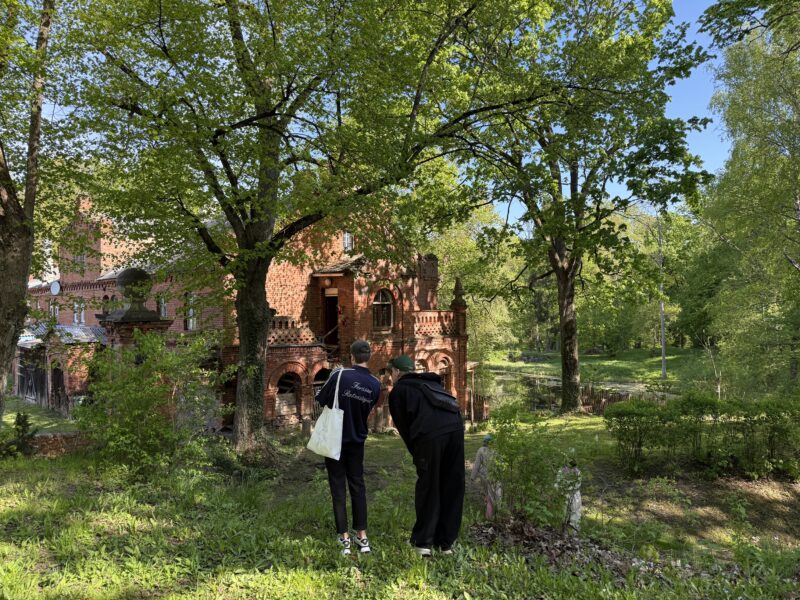
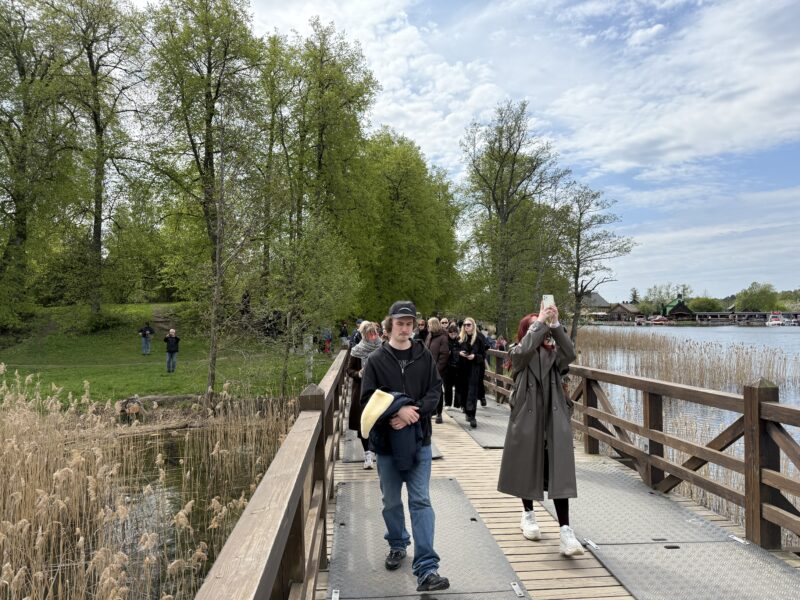
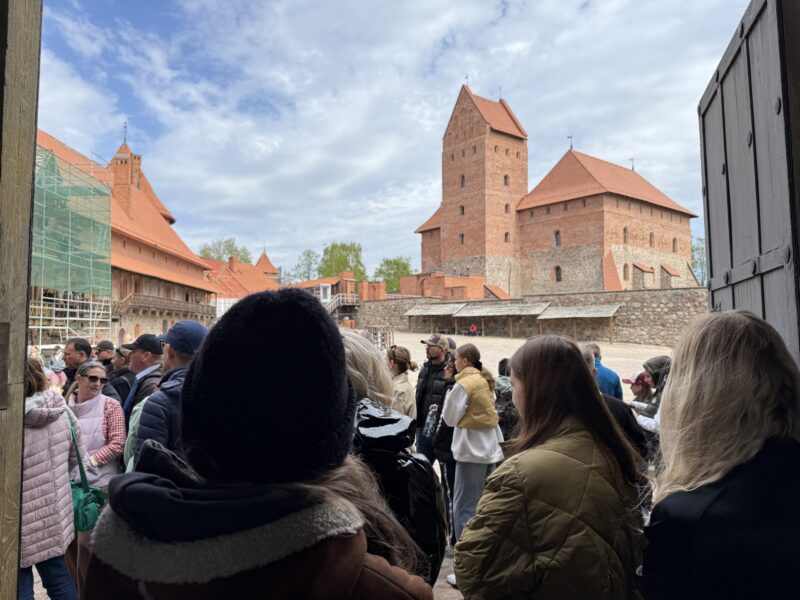
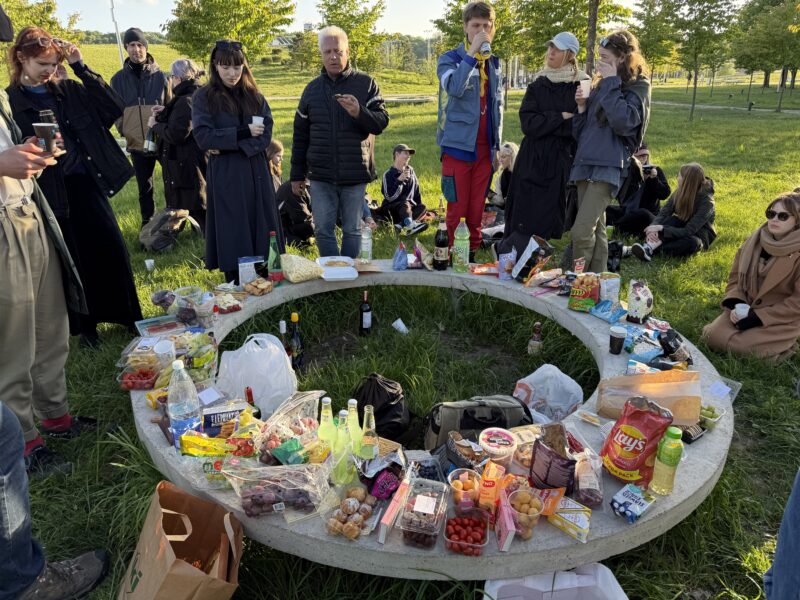
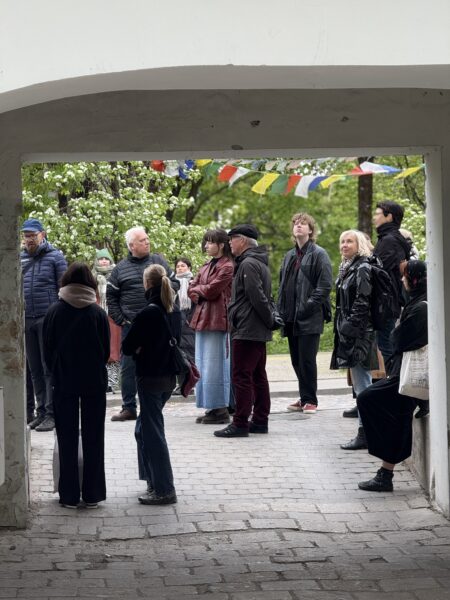
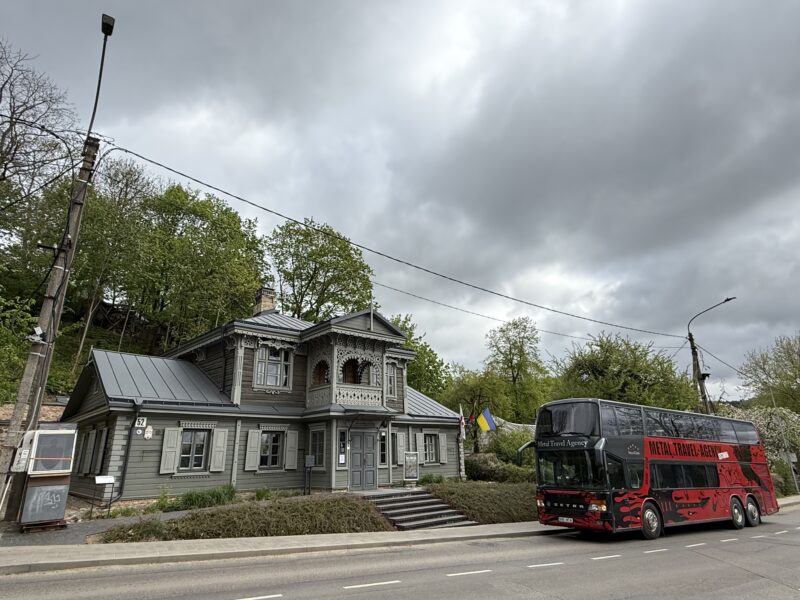
The annual spring study trip in the history of foreign art for students of Art History and Visual Culture and Heritage and Conservation in late April and early May of 2025 took us to Lithuania. The overall aim of the trip was to explore the architectural, artistic and cultural heritage of a region which, geographically and in terms of historical experience, might seem relatively close to Estonia, but where, on closer inspection and comparison, numerous and wide-ranging instructive differences emerge. What is learnt through the analysis of the architectural and artistic works seen during the trip will, on the one hand, help to create a broader understanding of the art history of the neighbouring region and, on the other hand, the juxtaposition with Lithuania will certainly help to put into perspective the knowledge of Estonia’s architectural heritage, the organisation of art institutions, conservation and restoration practices, etc., as well as encourage reflection on the similarities and differences between the neighbours’ perceptions of history.
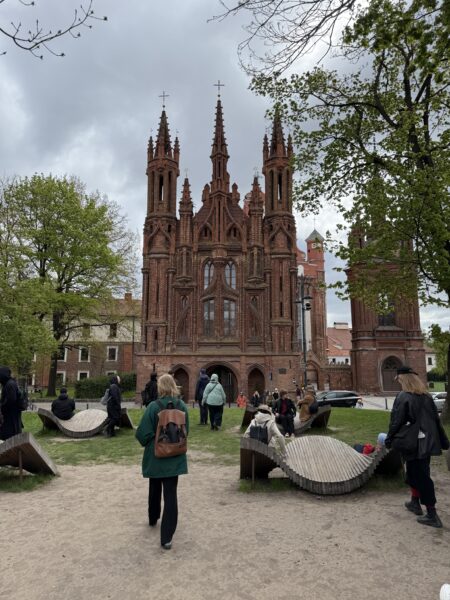
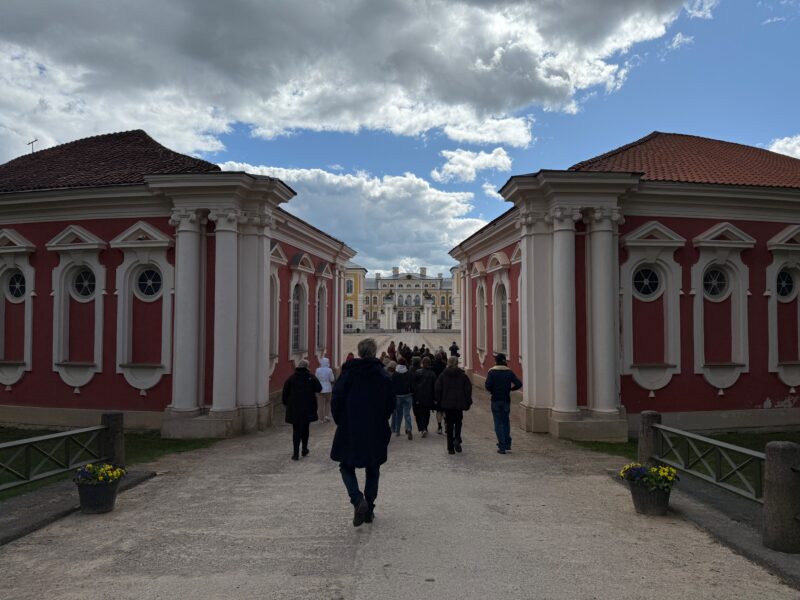
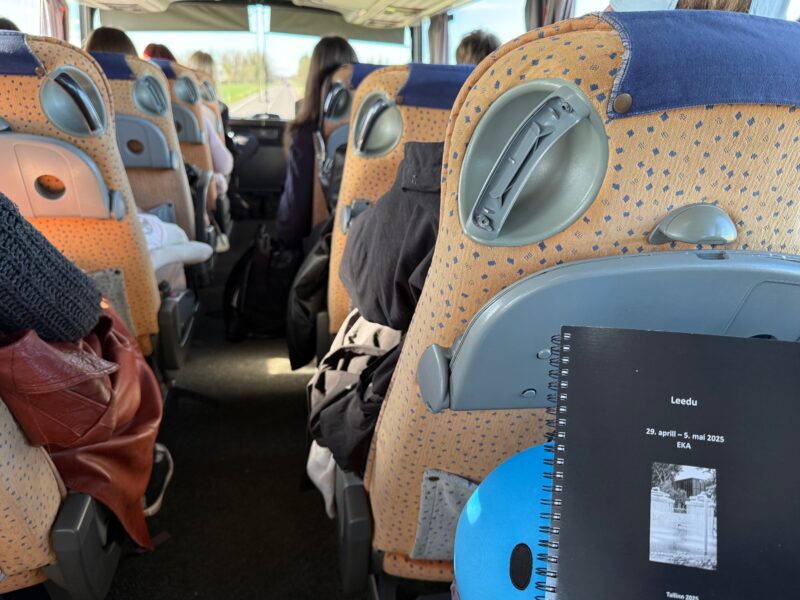
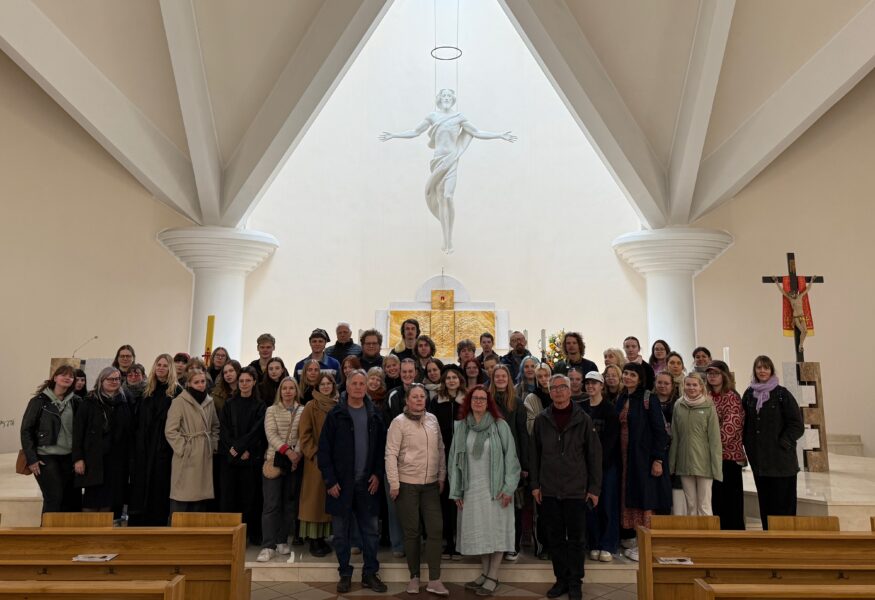
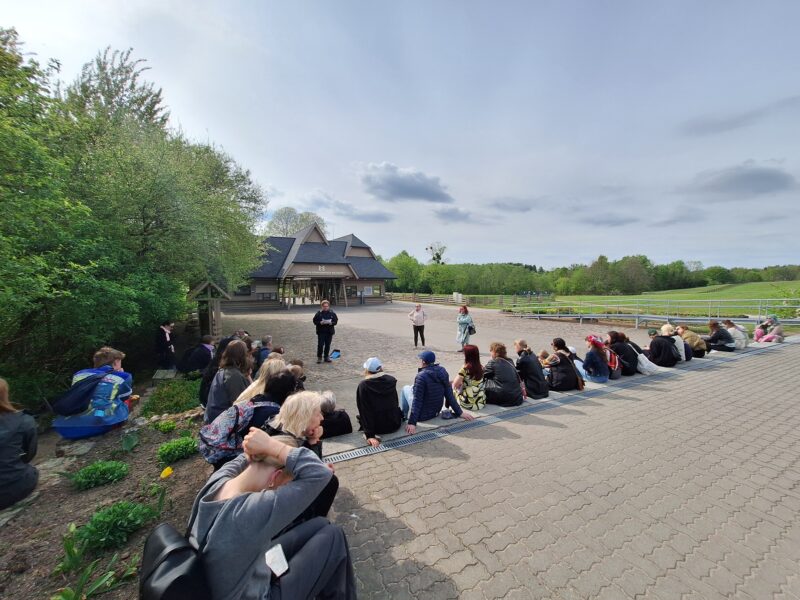
The closer-than-usual destination made it possible to organise the study trip a little greener this time, as the whole journey was made by bus. The programme of the trip was organised according to the principle of time-space optimisation of the daily itineraries, which meant that almost every day included a cross-section of Lithuanian art and architectural history through the centuries. The sites ranged from the magnificent late medieval brick Gothic (Church of St. Anna in Vilnius and the Perkunas merchant house in Kaunas) to the most recent architecture (the most recent site visited was the Mokslo Sala Science Museum in Kaunas, which was completed at the end of 2024). The itinerary was broadly three nights in Vilnius and three nights in Kaunas, but there were a number of other smaller settlements and destinations visited both on the way there and back and between the two cities, such as the Baroque palace and park of Rundale in Latvia, and one of Lithuania’s most famous tourist attractions, the extensively reconstructed and themed Trakai Fortress. Among the lesser-known attractions for the general public were the unique churches of the historic small town of Kėdainiai, the open-air museum of Rumšiškėse, which exhibits Lithuania’s oldest rural and small-town architecture, the baroque nunnery complex of Pažaislis and the 20th-century monastery of St. George. The town of Elektrėnai, which dates back to the second half of the 20th century and whose impressive post-modernist church building, completed in 1996, was voted the most impressive of the sites visited by travellers.
The city of Vilnius will be remembered as an exciting, dynamic and sometimes contradictory environment, where ambitious 21st century urban renewal seeks to manage contrasts between neighbourhoods, different historical layers and interests. In the Šnipiškės district, the gleaming glass towers and shopping malls of the new skyscrapers stand side by side with tiny wooden agglomerations, while across the city there are lush Baroque churches (e.g. St. Peter and Paul’s) and no less ambitious, but in some places very poor condition, Soviet-era mega-buildings (e.g. the concert and sports palaces). The friction of interests between gentrification and the preservation of the milieu is certainly comparable with Tallinn, as in the case of the bohemian district of Uzhupis, as is the Old Town, with its various historical interruptions and gaps ranging from Stalinist to ultra-modern, which has been gentrified to make it tourist-friendly. Perhaps more curious is the oblique and sometimes artificial recreation of historical splendour in the example of the restored Grand Ducal Palace.
A slightly sleepier but also more relaxed impression was left by Kaunas, architecture lovers were particularly struck by the layers of modernist architecture from the inter-war metropolitan era, such as the white Art Deco Church of the Resurrection of Christ, which looms over the city. The 9th Fort Museum, which deals with dramatic historical events and difficult memories, with its surrounding memorial park dedicated to the Holocaust and the repression, is also impressive, and somewhat comparable to the Maarjamäe memorial field in Tallinn. There was also some time to visit museums and galleries in both cities, for example the National Gallery’s exhibitions of Lithuanian 20th-century art offered interesting comparisons with KUMU’s exhibitions of the same period.
In preparation for the study trip, the participating students wrote presentations on the sites to be visited and important background topics, which were edited and published in a comprehensive guidebook. During the trip, they presented their topics in the form of presentations both at the sights and on the bus during the journey, with additional input and comments from the lecturers.
Faculty lecturers Mari Laaniste, Oliver Orro, Mart Kalm, Anneli Randla, Merike Kallas, Johannes Saar, Liisa-Helena Lumberg-Paramonova, Anu Allas, Epp Lankots and Andrus Laansalu assisted in various tasks.
The review was written by Mari Laaniste, photos by Herman Hendrik Jõgeva, Valve Saarma, Mari Laaniste, Triinu Rannula, Hedvig Ehrlich.
The study trip was funded by
