
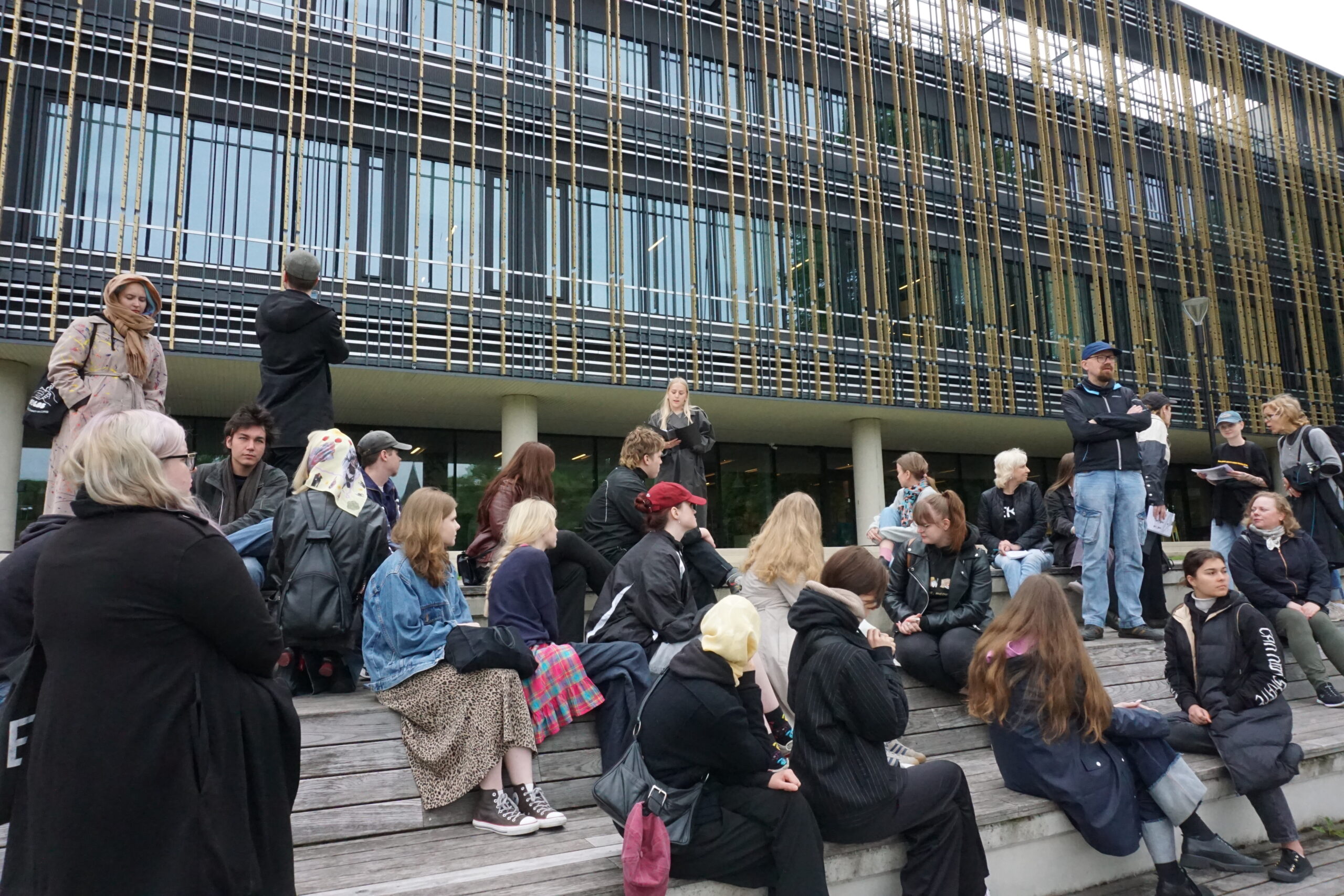
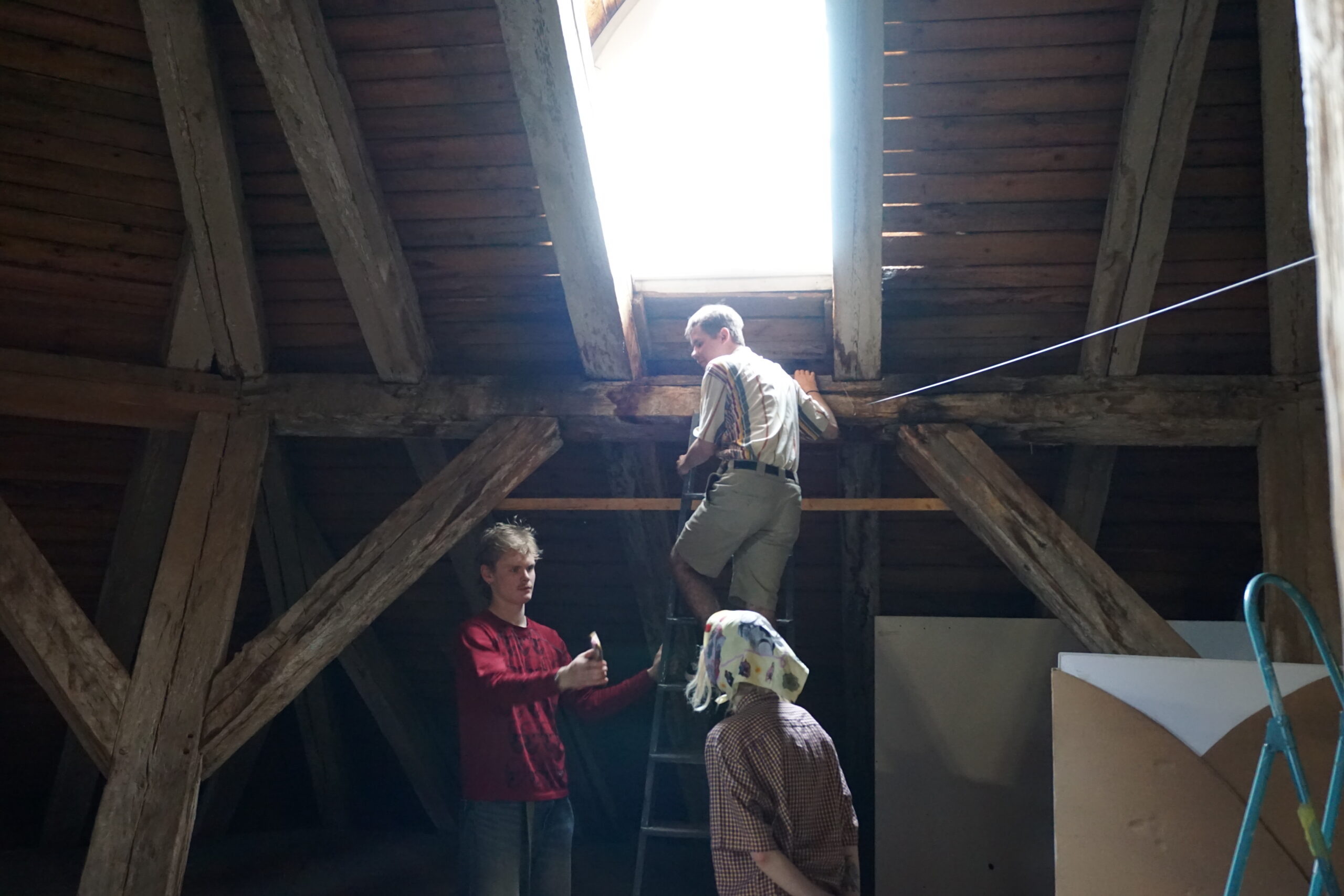
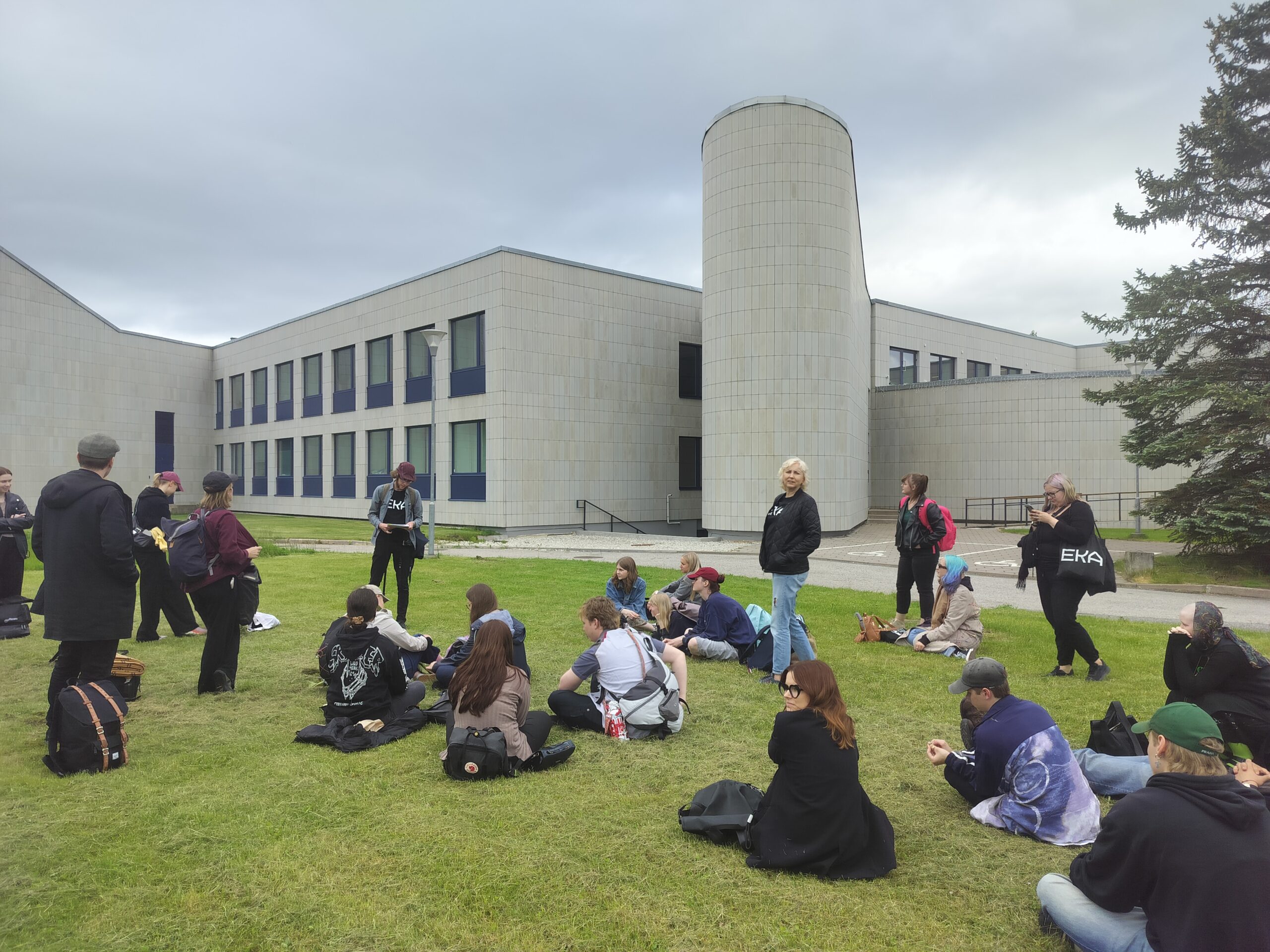
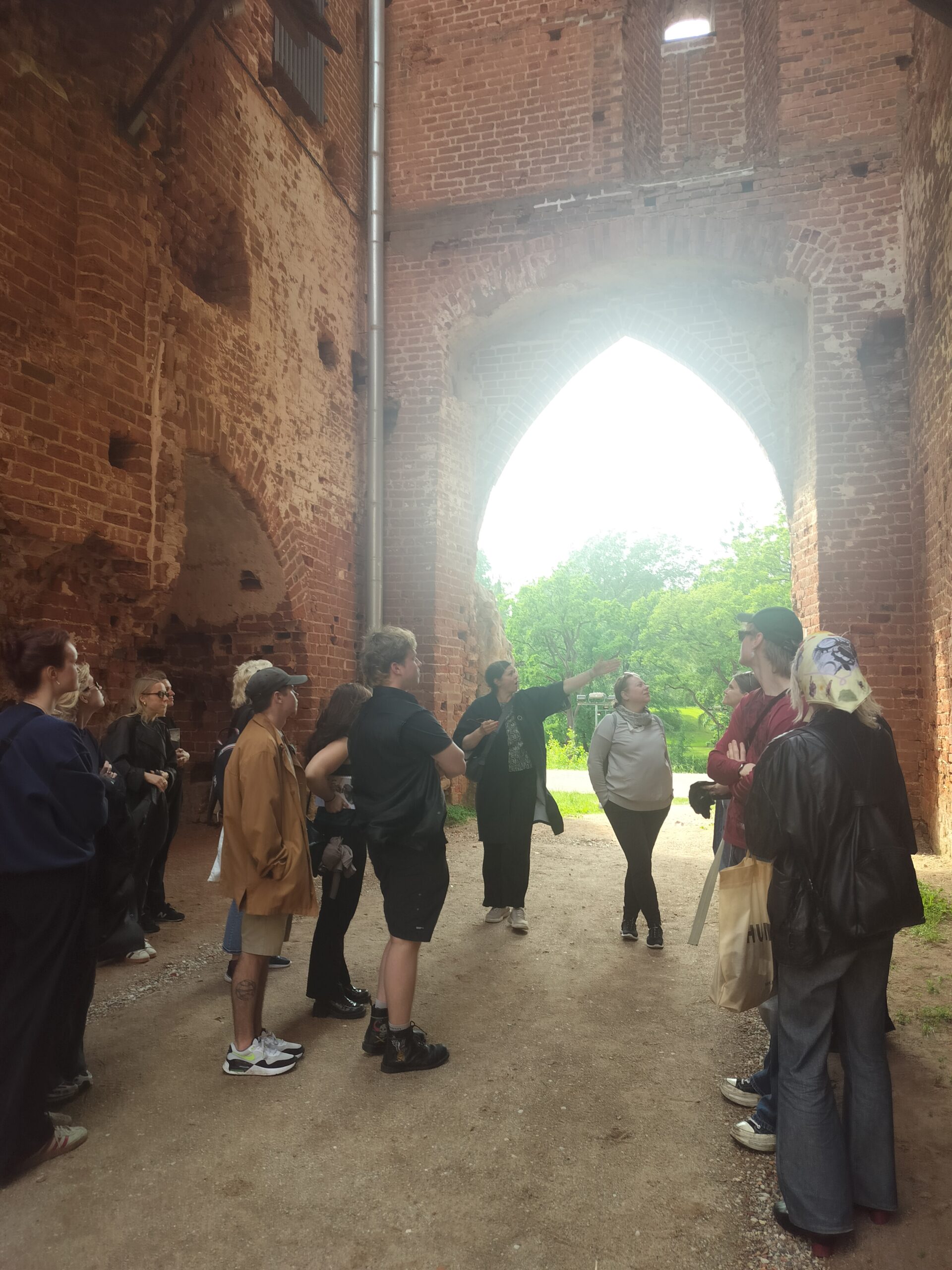
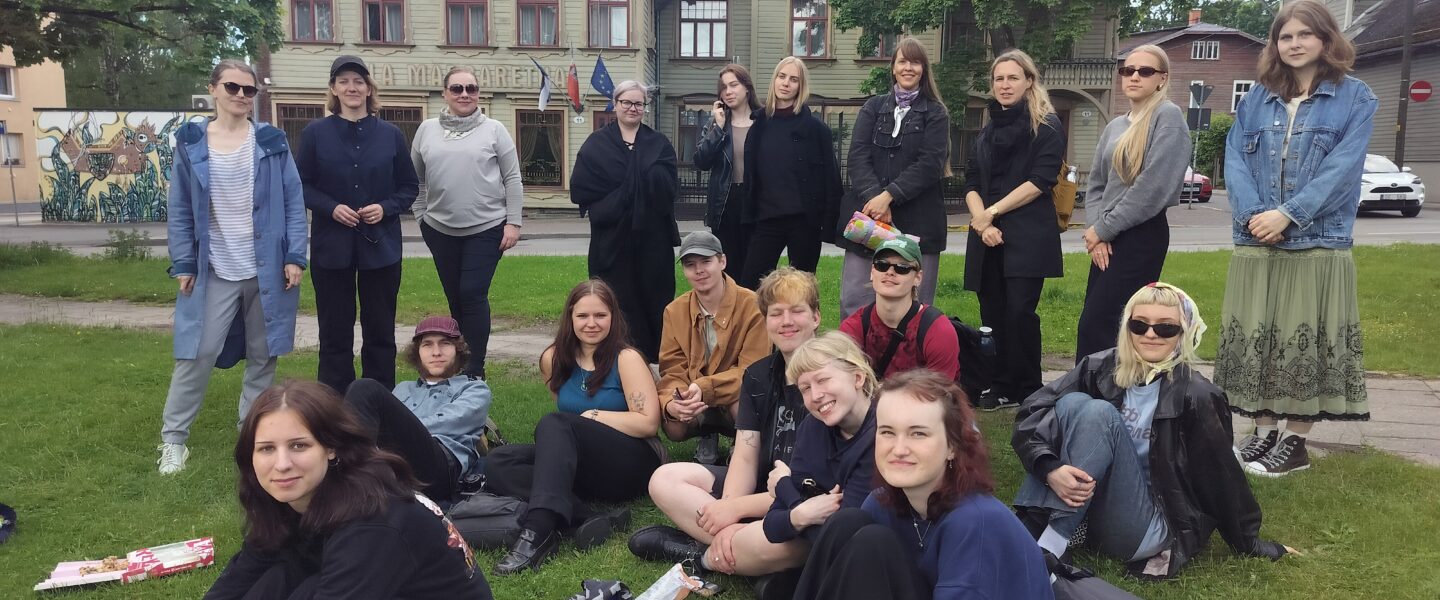
During the Estonian art history study trip on June 6-7, instead of touring the counties, we explored the city of Tartu. Of course, there is a lot to see in Tartu and a wealth of different historical layers.
On this trip, certain topics stood out, which we explored in more depth through several site visits and presentations. These included urban planning – Tartu’s Annelinn district, but also indirectly the plots of land created by the redistribution of manor lands, where the buildings of the Maarjamõisa Clinic and Tähtvere Manor were built. We also heard many interesting things about the location of the current Defense Forces Academy from an urban planning perspective.
The University has always been and remains the most important part of Tartu’s identity. Therefore, the University campus and student culture, old and new, were a separate topic. We visited the Delta building, several dormitories, and selected buildings on the University campus. We also got acquainted with Tartu’s other important educational institution – the multi-layered campus of the University of Life Sciences.
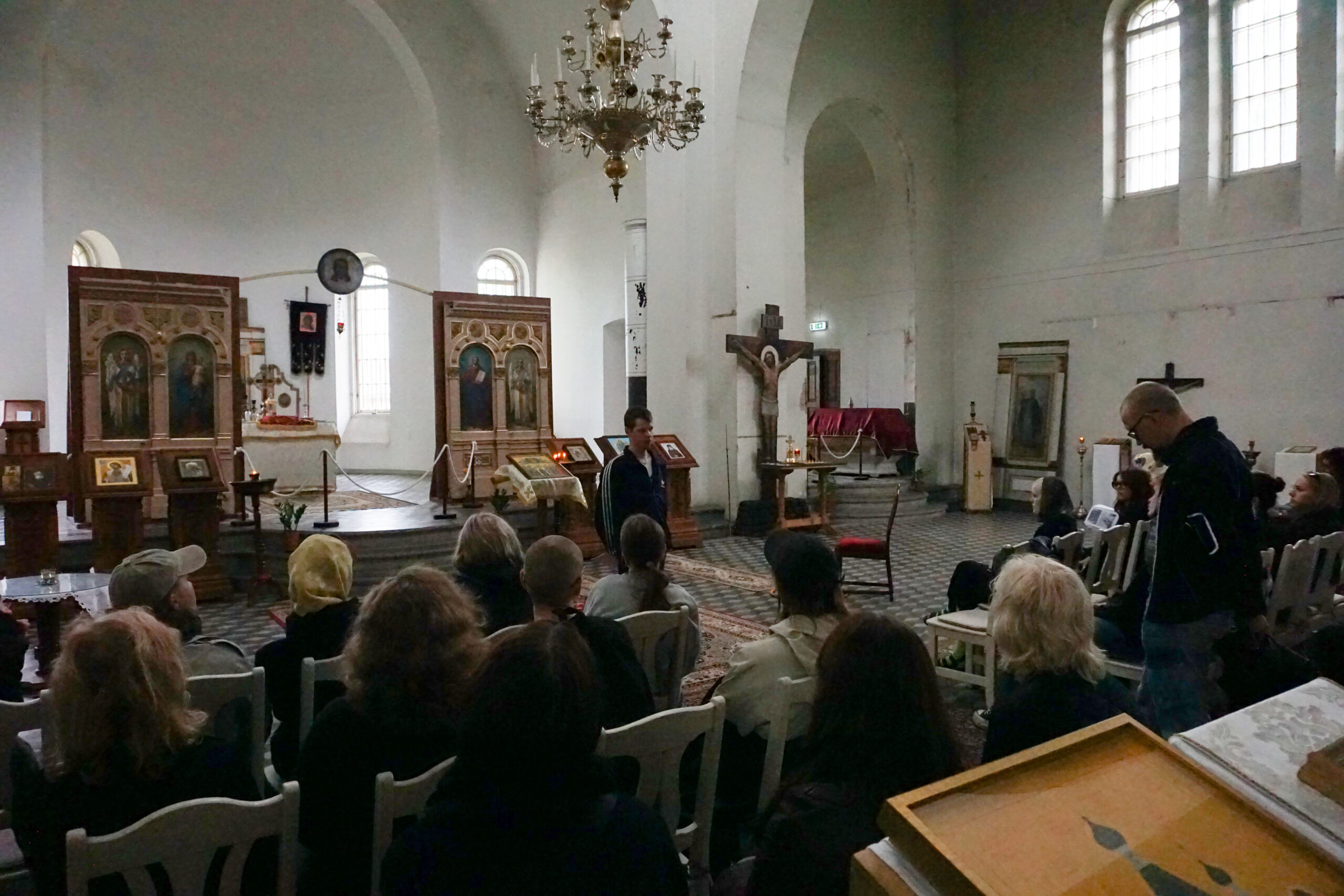
Tartu also offers a good overview of church architecture, from the oldest St. John’s Church to the newer St. Luke’s Church, and Orthodox Church of St. Alexanders, which was particularly interesting. Almost as important as university culture, street art has been an important part of Tartu’s visual culture since the 1990s.
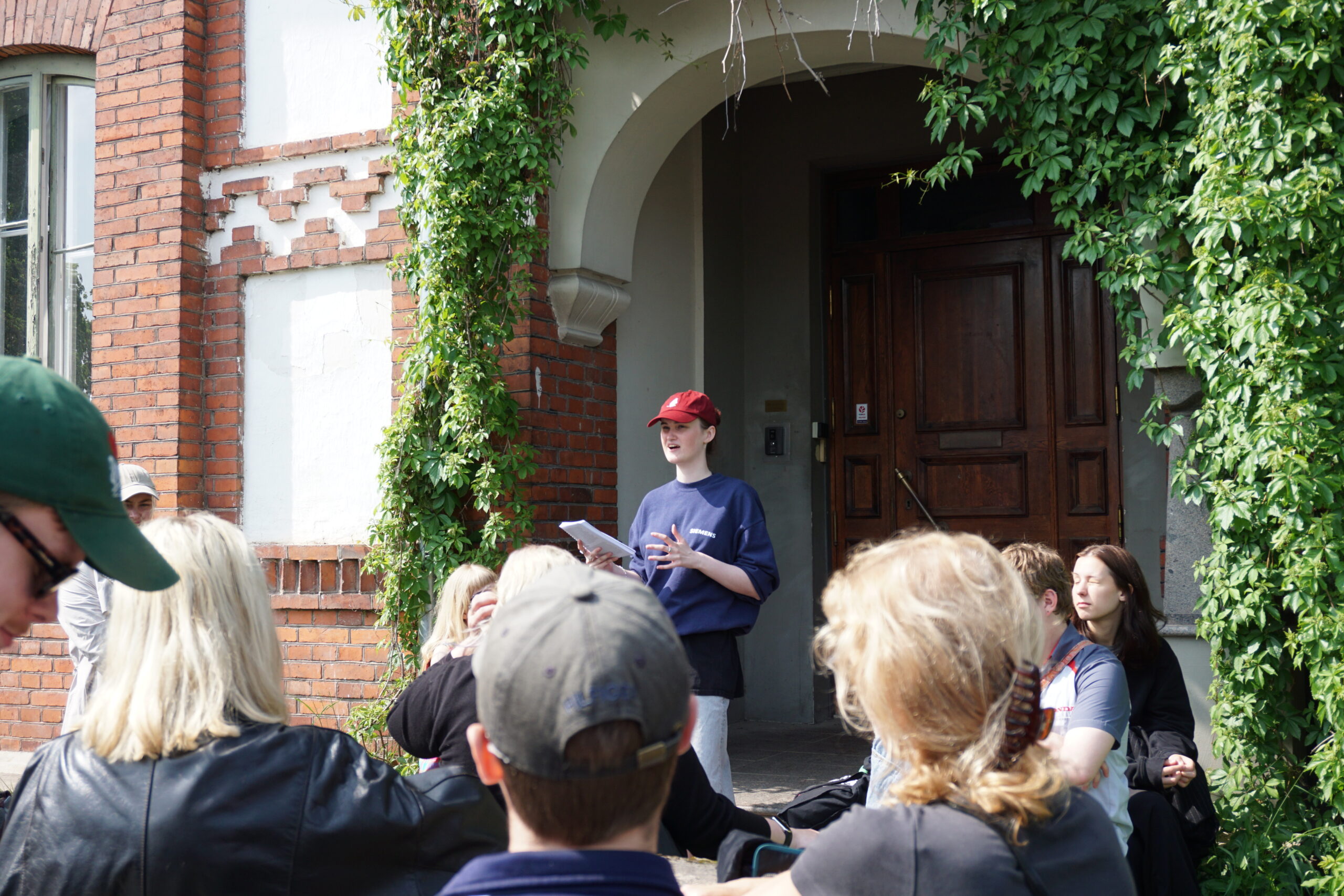
This year’s annual KVI field trip was particularly extensive. Over the course of two days, we visited 28 sites. The aim of the trips is to supplement knowledge of Estonian art and architectural heritage, develop skills in observing and analysing works and giving oral presentations, promote the acquisition of professional vocabulary, and practice writing concise, informative texts based on carefully selected sources. No trip would be complete without a lively picnic, this time in the legendary Pirogov park.
The trip was led by Ragne Soosalu.
Photos by Herman Hendrik Jõgeva and Ragne Soosalu