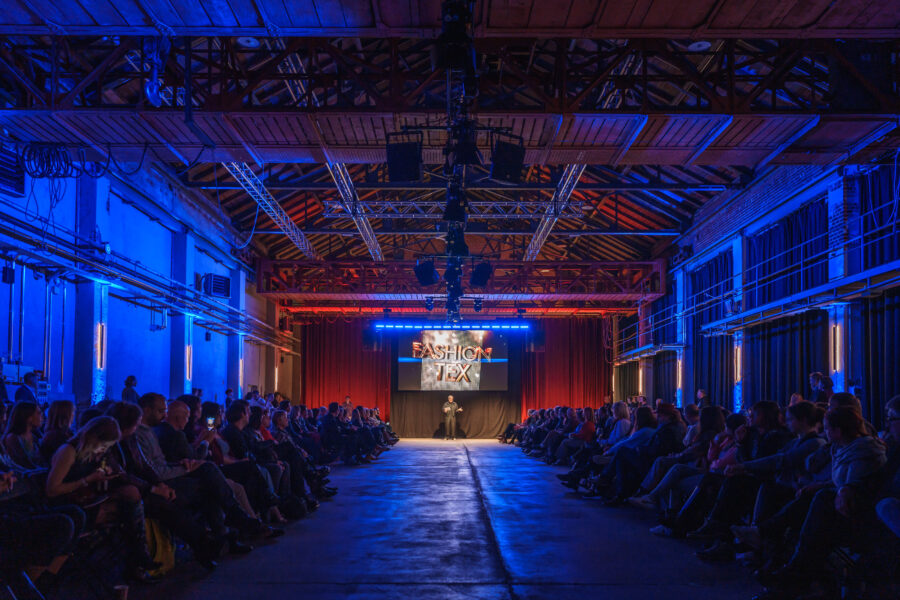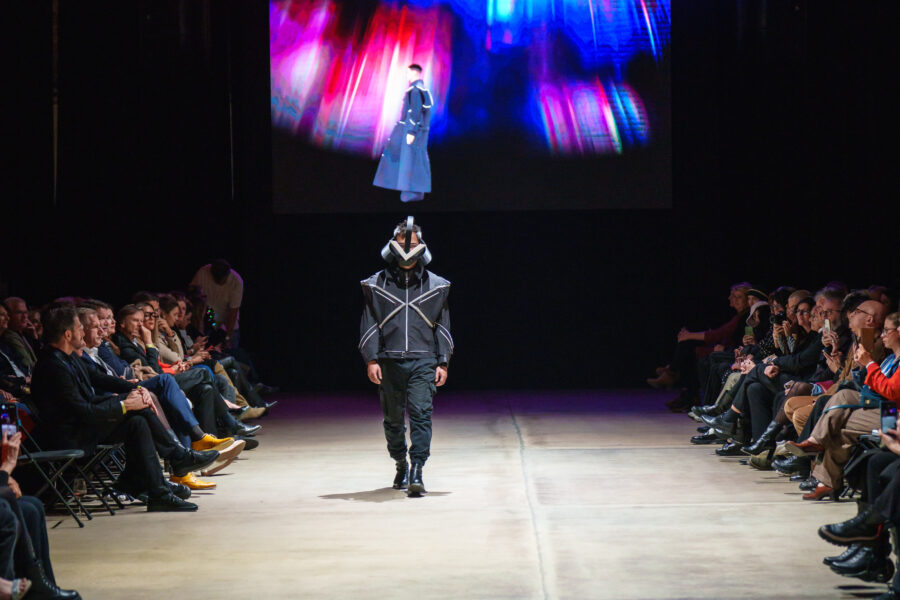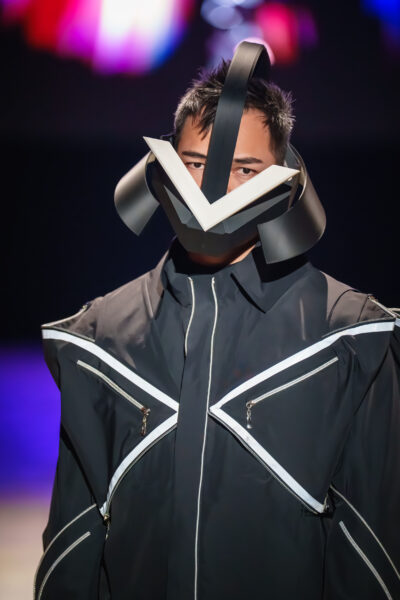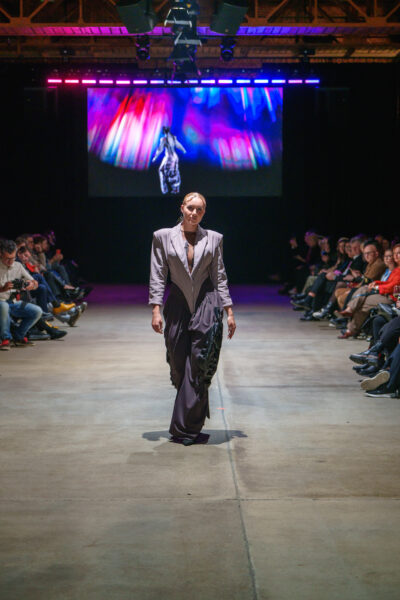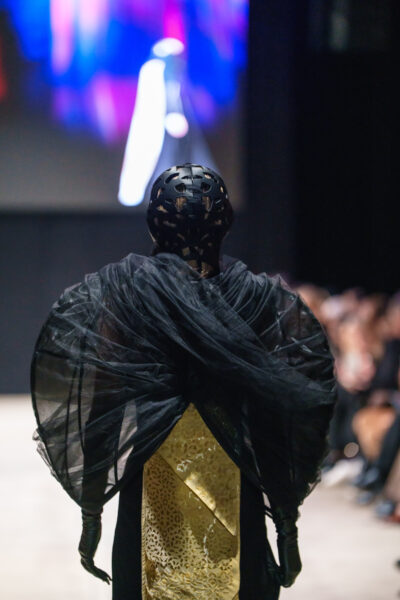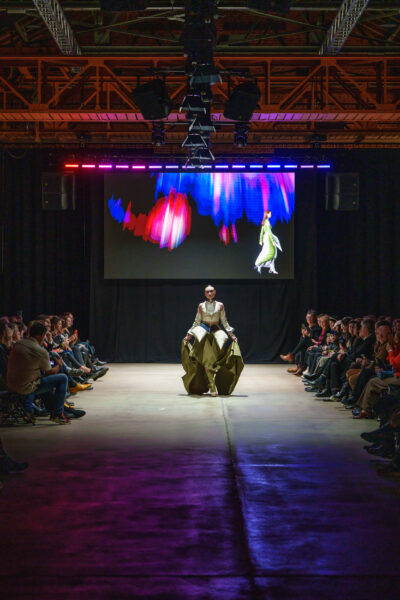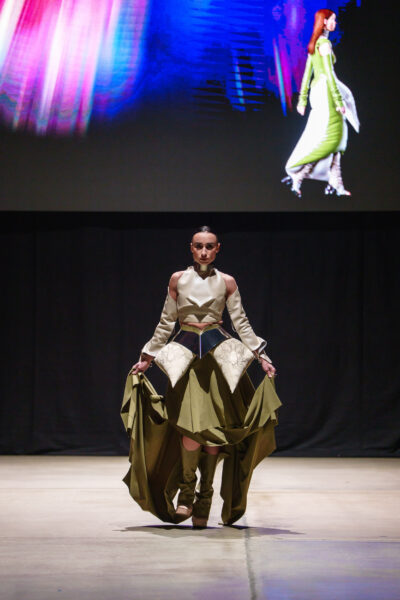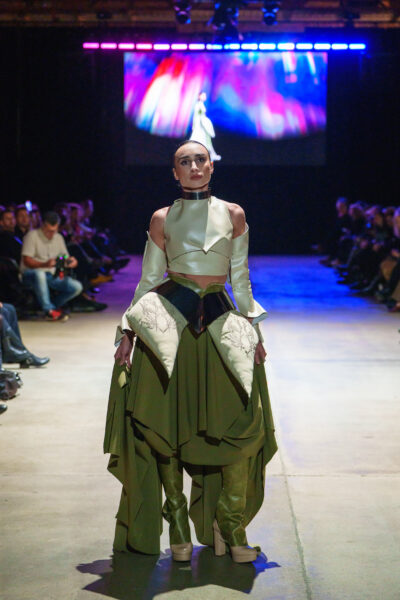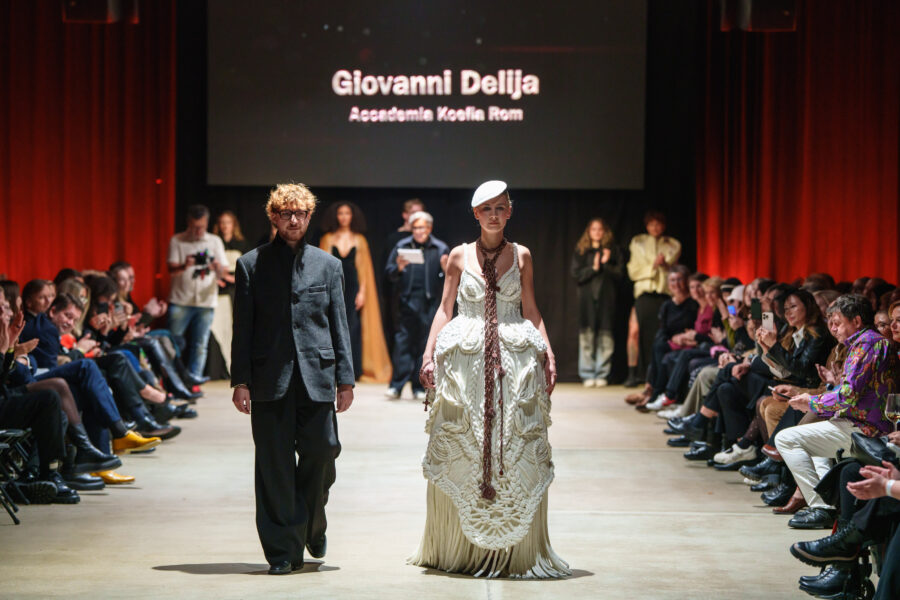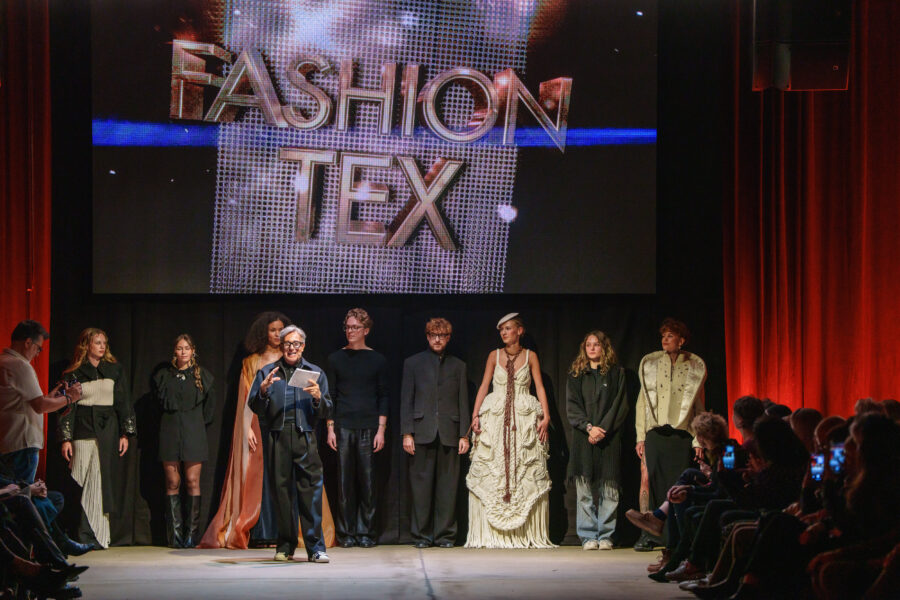
The two-day FashionTEX fashion festival concluded on November 7 with a spectacular fashion show at die Fabrik Chemnitz, where 24 international fashion students from across Europe presented their creations to a high-profile jury.
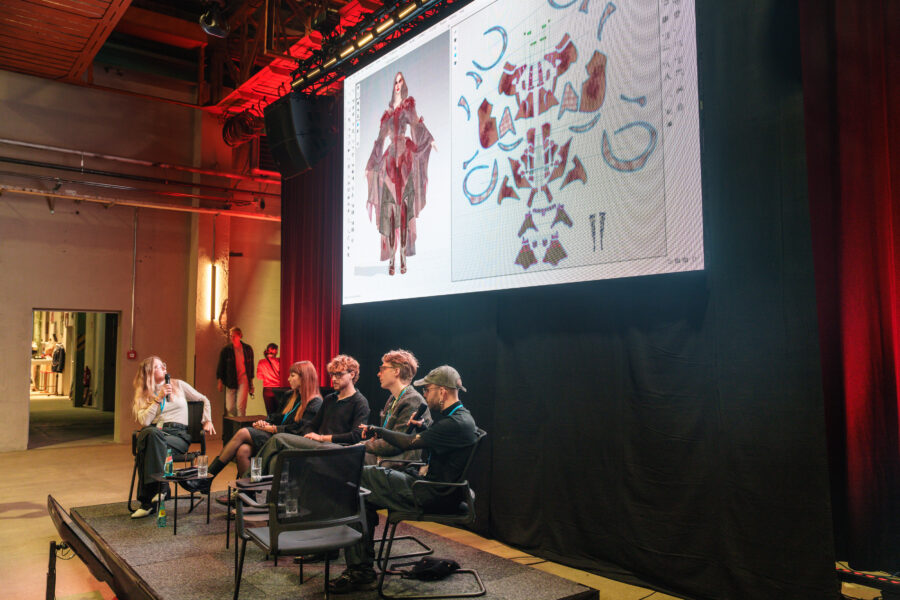
Representing Estonia with great success, each of the three students from the Estonian Academy of Arts submitted a physically handcrafted outfit created using contemporary technologies, accompanied by a virtual counterpart (digital twin) that complemented or was in creative dialogue with the physical piece. Both the physical garments and digital twins were created using the digital fashion software CLO3D.
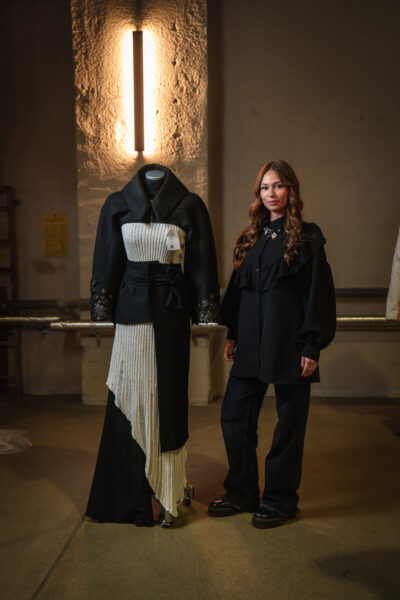
Joanne-Heleene Sõrmus, a second year master’s student from the Craft Studies, a third-year fashion design student Roosi Mändmaa and Katriin Raudsepp, a third-year accessory design student were representing Estonia in Chemnitz.
Winners
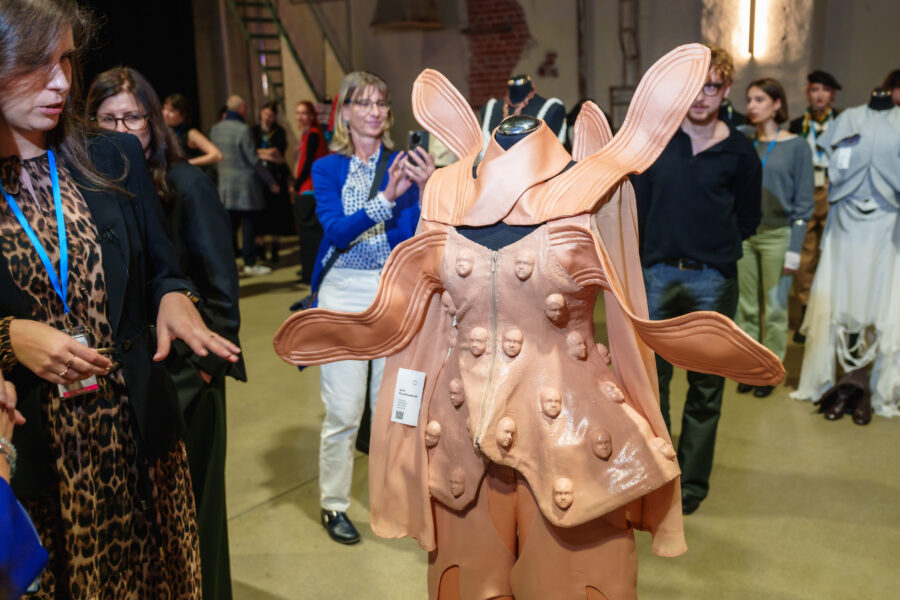
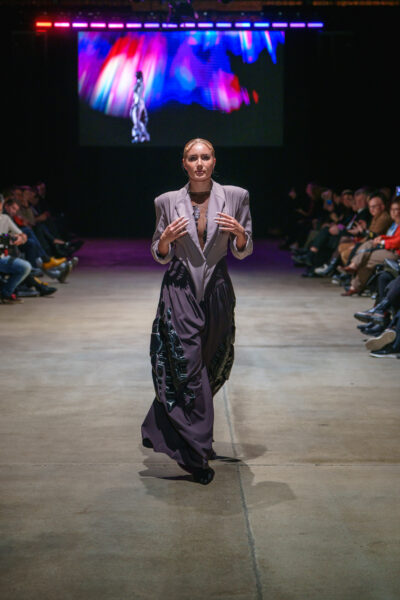
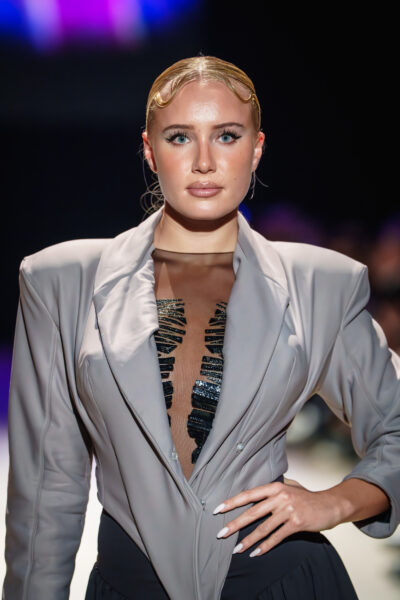
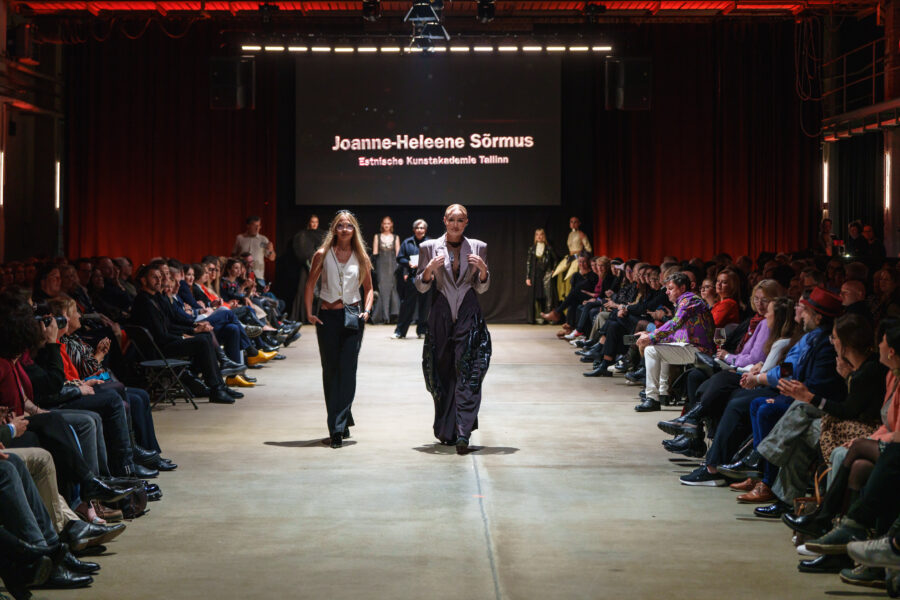
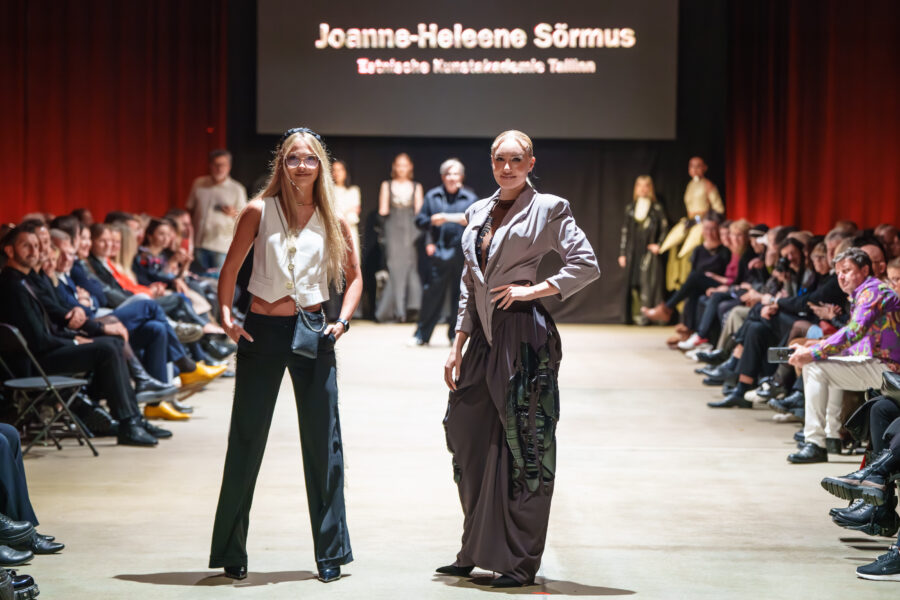
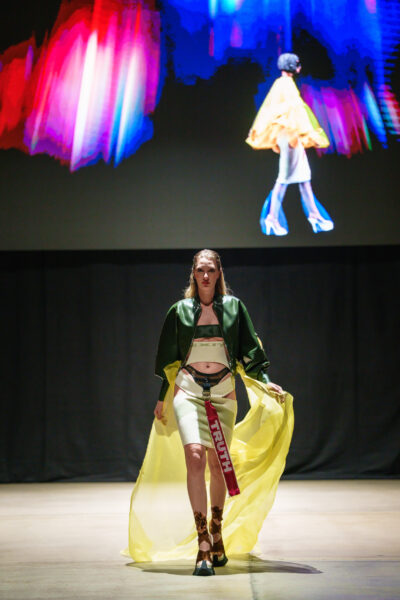
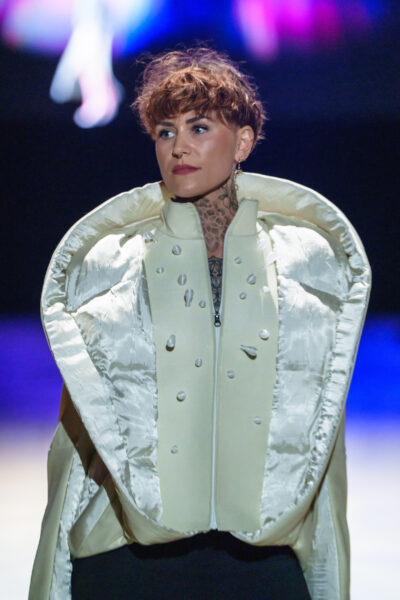
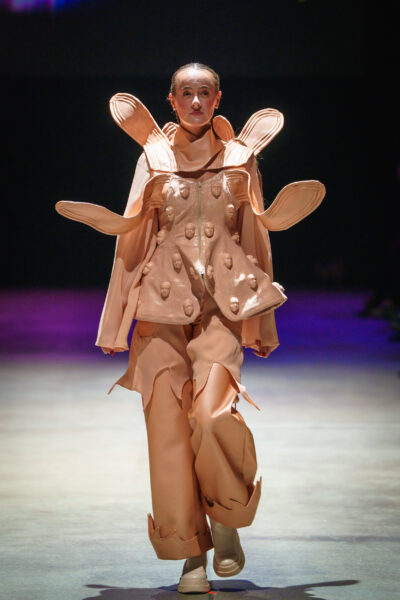
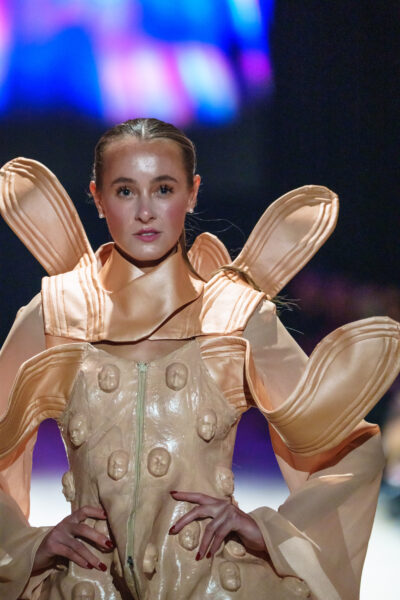
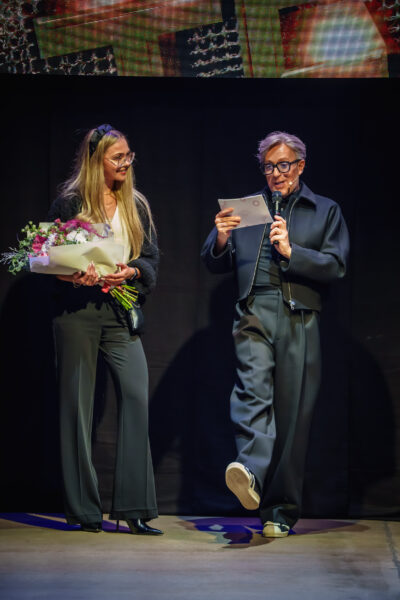
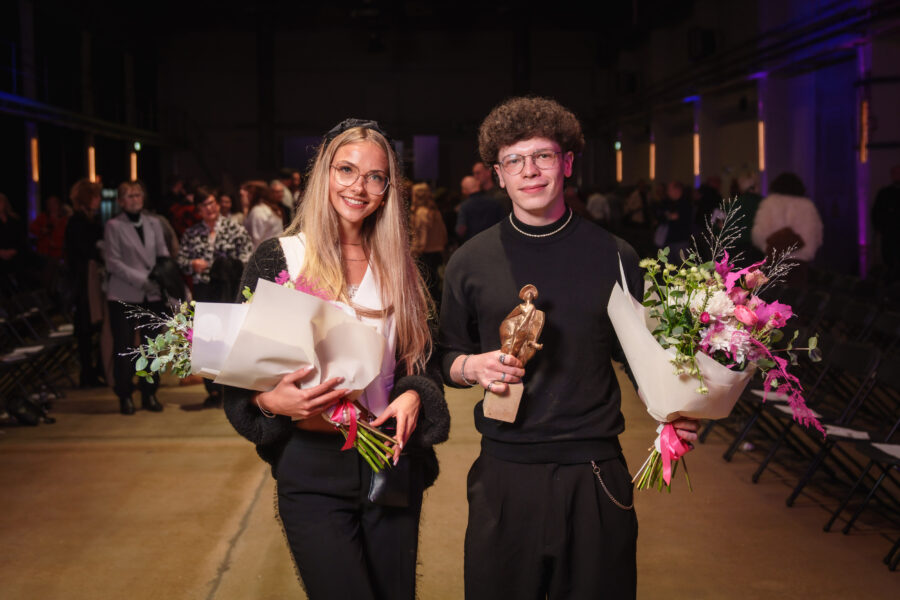
At the award ceremony following the fashion show, the winners of the “European Next Generation – Fashion Award 2025” were announced. Vincent Röse from Germany took first place, while Joanne-Heleene Sõrmus from EKA’s Faculty of Art won the prestigious second prize for her outfit “I Don’t Know Who I Am, but I Have a Six-Pack.”
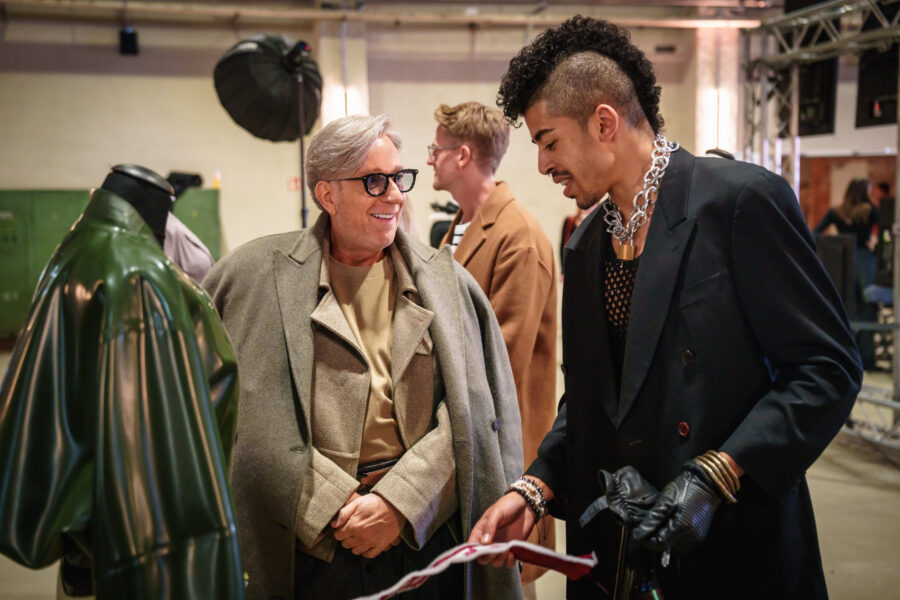
The fashion show directed by local star designer Thomas Rath drew significant media attention and was attended by hundreds of guests. It was part of Chemnitz 2025 European Capital of Culture’s official program.
Introduction of Estonian Participants
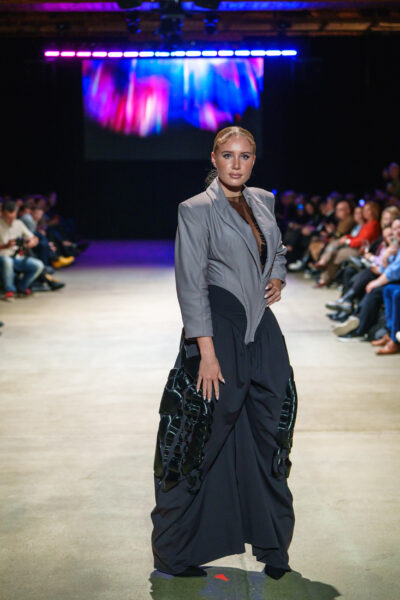
The outfit I don’t know who I am, but I have a six-pack by Joanne-Heleene Sõrmus, unites the body, technology, and material research. The title is a self-ironic yet profound reflection on identity caught between discipline and digital transformation. “I wanted to make my life-style visible. Bodybuilding and fitness are not just sports for me – they are part of my creative thinking,” says Joanne-Heleene Sõrmus. Starting from anatomical structures, she developed surface layouts inspired by muscle textures and fat layers, which were transformed into three-dimensional reliefs and printed directly onto fabric using a self-developed technique that she has researched for over three years. “| see the body as a kind of sculpture that I shape, study, and observe every day. This physical engagement defines my work as a designer.” The outfit is made of elastic Lycra fabric and TPU filament. The goal was to translate athletic materials into everyday silhouettes – garments that feel like a second skin and combine freedom of movement with futuristic design. “I want fashion to feel like an extension of the body, not a shell but an organic continuation, says Joanne-Heleene Sõrmus. Her method of printing directlv onto stretchable fabrics without additional heat processing is particularly innovative. This allows filament and textile to merge into a flexible, breathable surface that moves with the body. “This project showed me that technology is more than just a tool for me – it is part of my artistic language.”
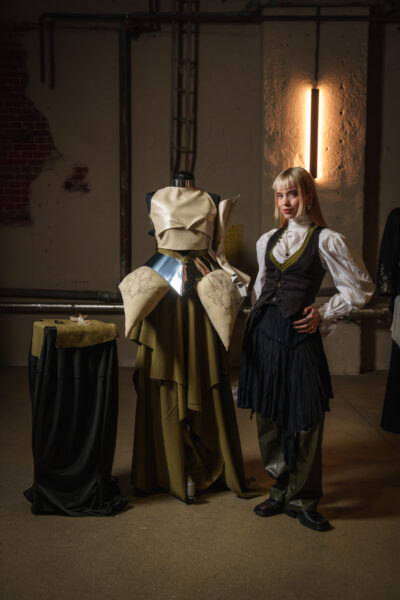
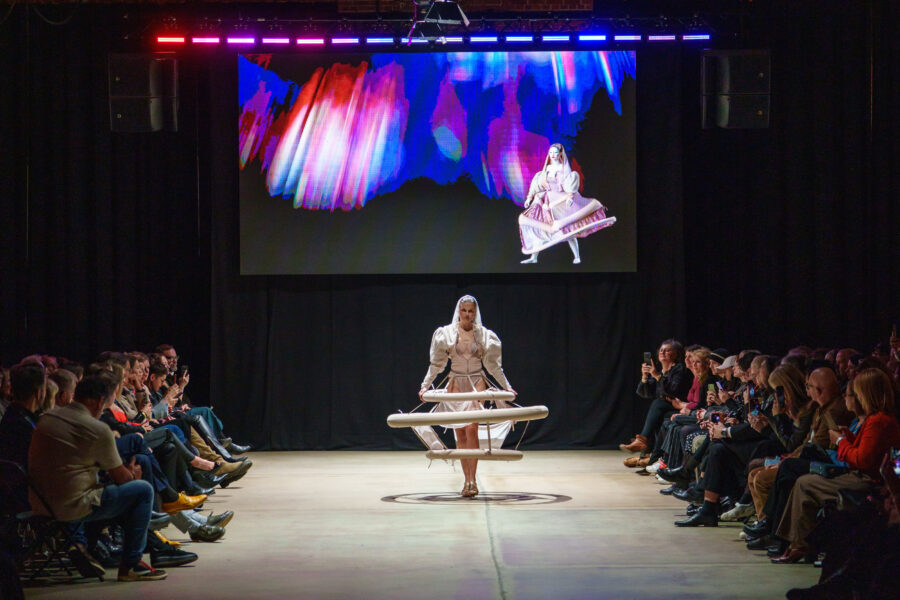
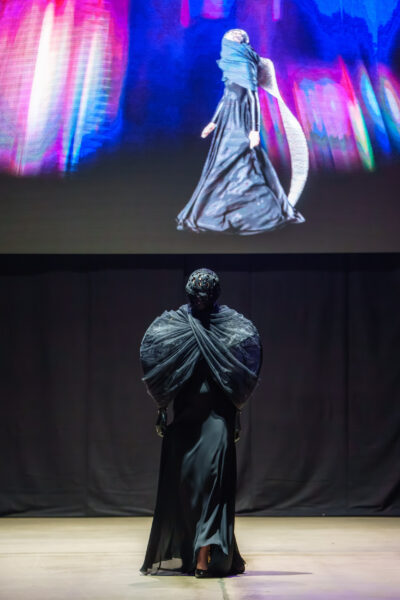
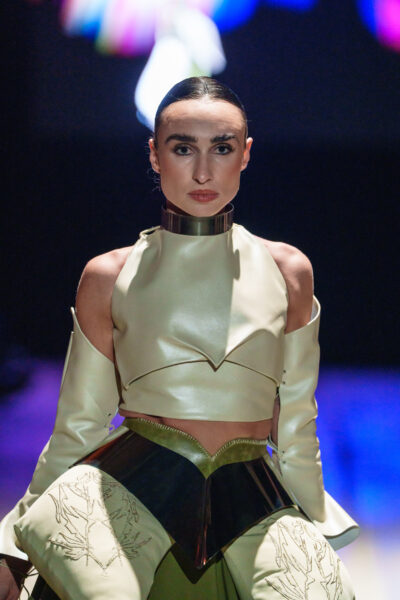
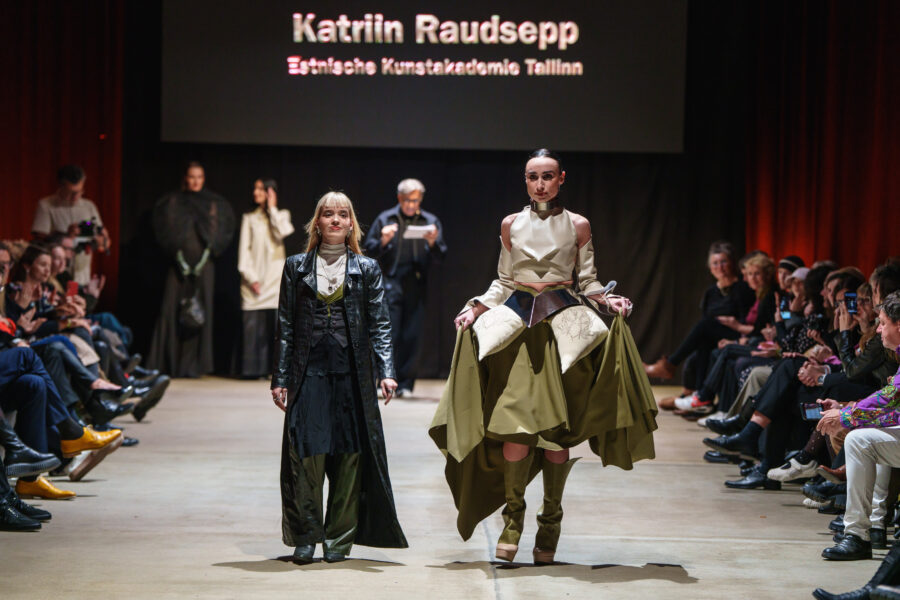
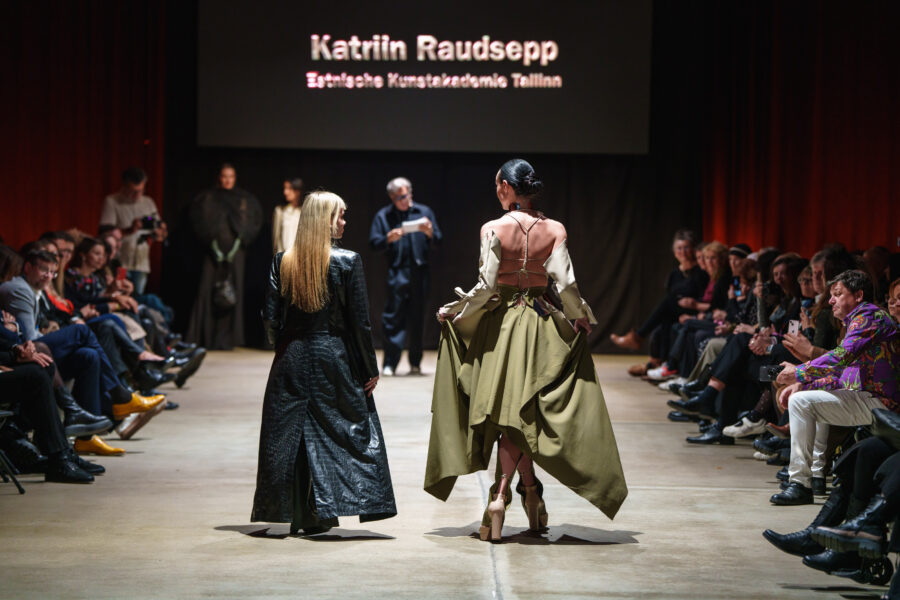
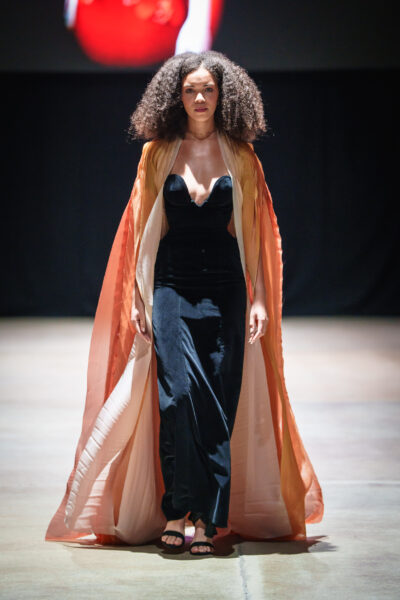
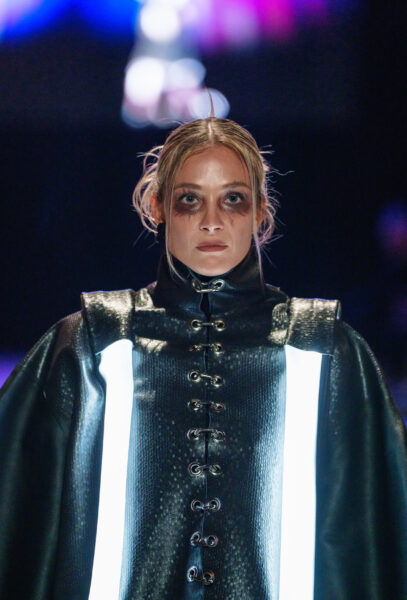
Katriin Raudsepp dedicates her project “Nayo” to women, to their strength and quiet resilienc. Her design is an ode to the duality of femininity – to softness and hardness at once. It embodies protection, vulnerability, and self-assertion. The silhouette is both archaic and futuristic. Floating side panels frame the body like armor made of fangs They protect, yet they also threaten. This interplay of danger and beauty runs throughout the entire design. At its center lies a reflective metal corset that wraps tightly around the body. It represents the silence and selflessness imposed on women from an early age, a shining yet uncomfortable shell that both restrains and protects. “I wanted to show how women are forced to hide their gentleness and how they turn that gentleness into strength,” says Katriin Raudsepp. The ensemble is deeply rooted in Estonian culture and folklore. Katriin Raudsepp drew inspiration from traditional metal brooches and mythical female figures in folk art that symbolize courage, sacrifice, and perseverance. Ethnographic forms and motifs are transformed into a contemporary expression of female identity. The material concept combines traditional craftsmanship with modern technology. Embroidered fabric panels, molded leather, metal plates, and padded structures merge into an organic kind of armor. The designer uses machine embroidery, hammering, metalworking, and 3D printing to reveal both strength and delicacy. The result is an armor of emotion, a garment that not only protects but also tells a story. It feels like an heirloom from that has found new meaning in the present.
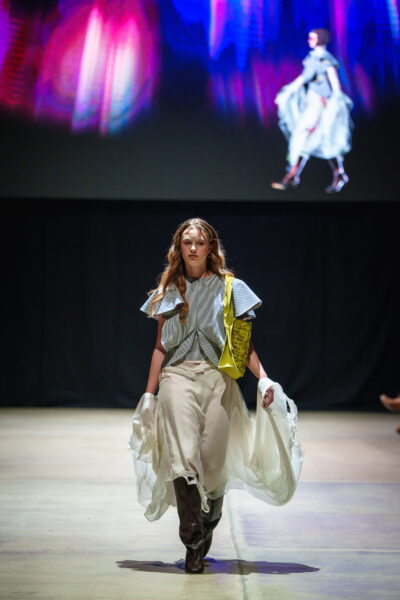
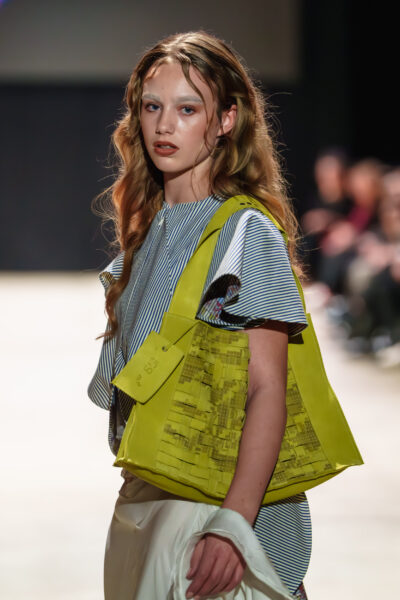
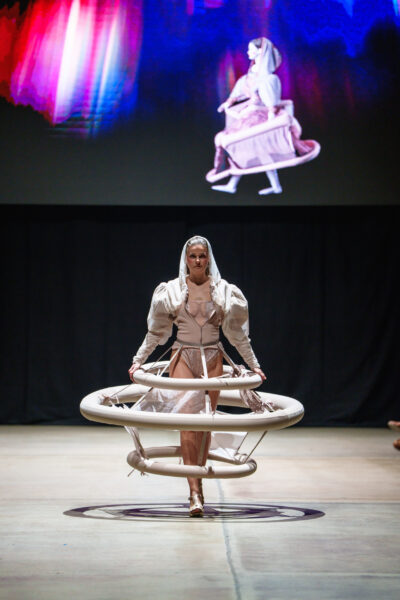
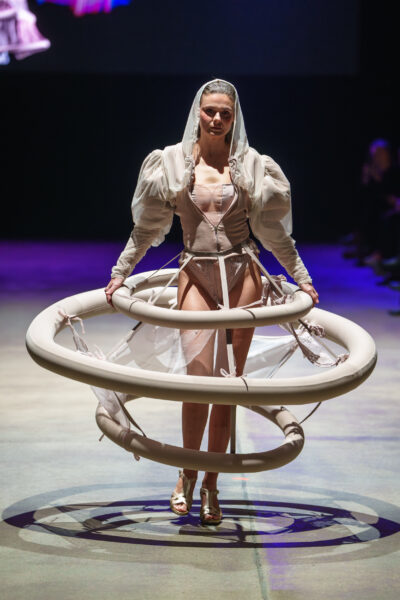
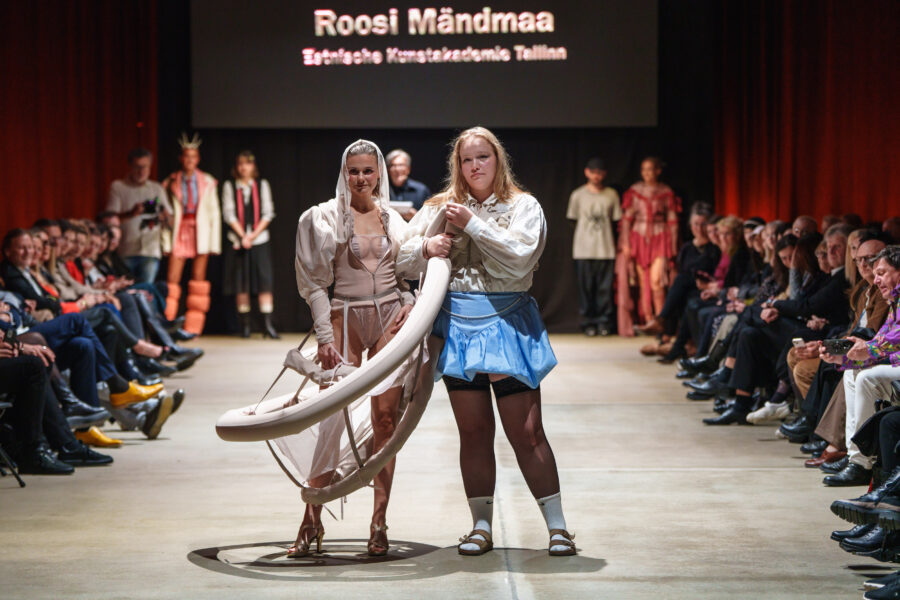
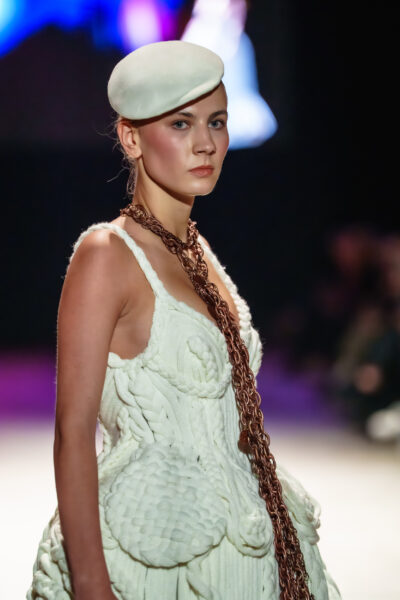
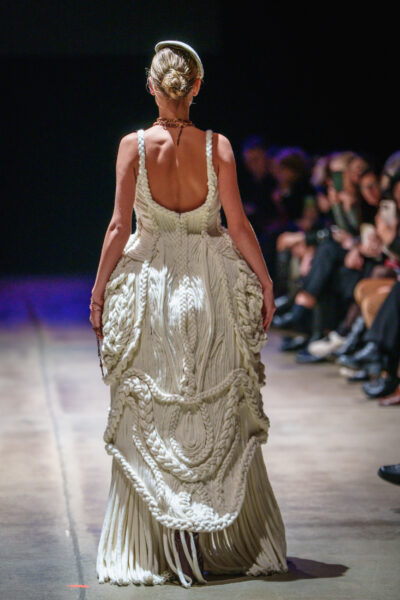
Roosi Mändmaa dedicates her project “Seven Layers of Skin” to the skin as a boundary, an archive and a symbol of human existence. The title sounds like a fairytale, and indeed the dress tells a story of protection, memory and identity. “Our skin is the most honest archive of our lives. It records sunlight, wounds, scars, and touch – everything we have experienced,” says Roosi. The design resembles a modern armor of transparency and fragility. The voluminous, floating silhouette evokes the garment of a mythical figure – light, airy, yet protective. It symbolizes an eighth layer of skin that humans create for themselves, clothing as both emotional and physical protection. The inflatable framework forms the heart of the design, giving the dress adaptability and movement, much like skin itself. For its construction, Roosi Mändmaa uses recycled PVC material from old swimming pools, welded and shaped into a flexible structure. Layered above are transparent fabrics in varying skin tones, overlapping to resemble the layers of human skin. Roosi Mändmaa experiments with skin-like surfaces, using 3D printing to transfer details such as moles, scars, and fine hairs directlv onto the fabrics. The result is a dress that neither conceals nor idealizes the body but celebrates its diversity and vulnerability. Through heat sealing, UV stitching, and digital texturing, she combines traditional craftsmanship with contemporary technology. Seven Layers of Skin is a manifesto of self-acceptance and naturalness.
Focus on change in the fashion industry
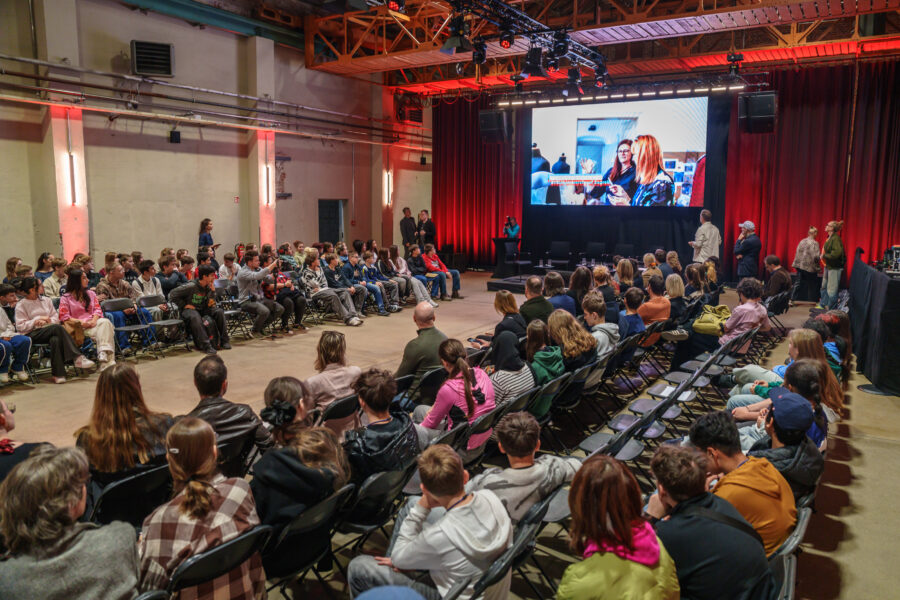
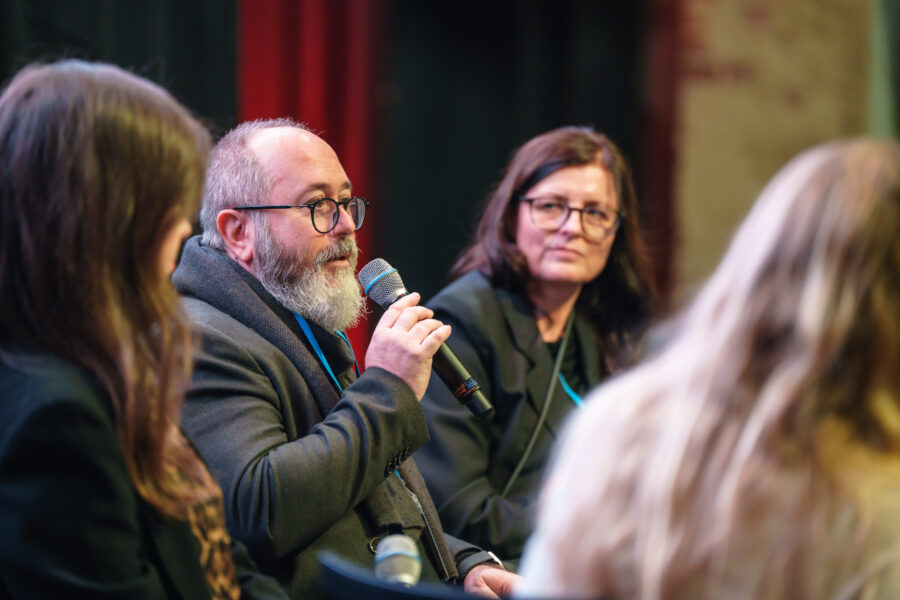
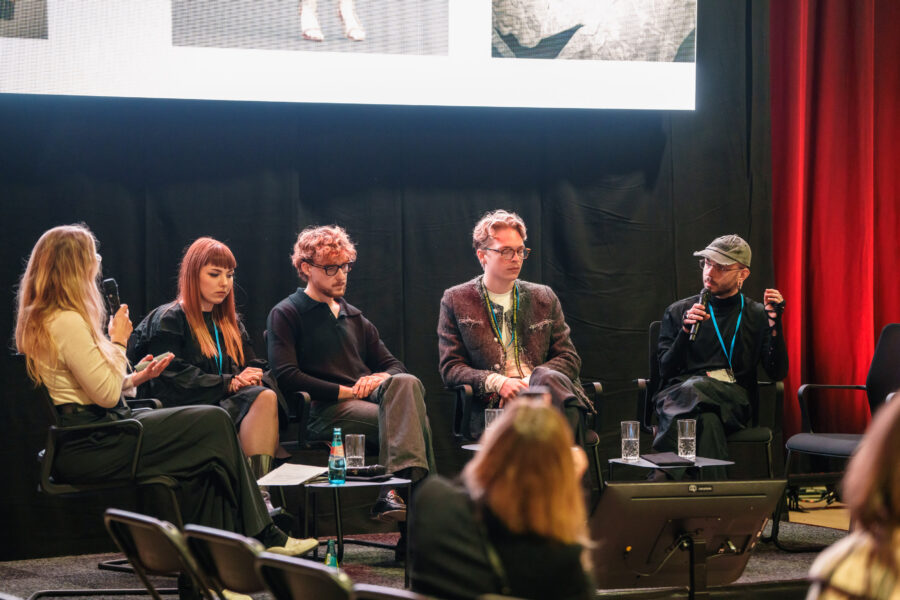
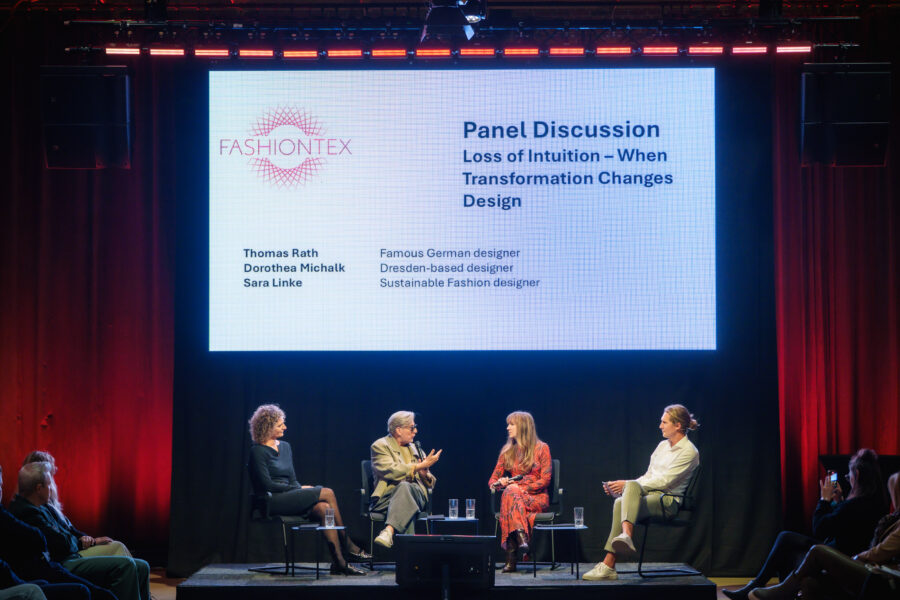
The international fashion event FashionTEX focused primarily on the profound change in the fashion industry, which is characterized by comprehensive digitalization, innovative textiles and the use of artificial intelligence. For two days, Chemnitz became the hotspot of European fashion. In almost 20 discussion rounds over two days, internationally renowned fashion experts debated the challenges and opportunities facing the entire industry. The two-day event attracted a great deal of media interest. On the first day of the festival, Saxony’s Ministers of State Barbara Klepsch and Conrad Clemens were guests.
Innovation exhibition & smart partners
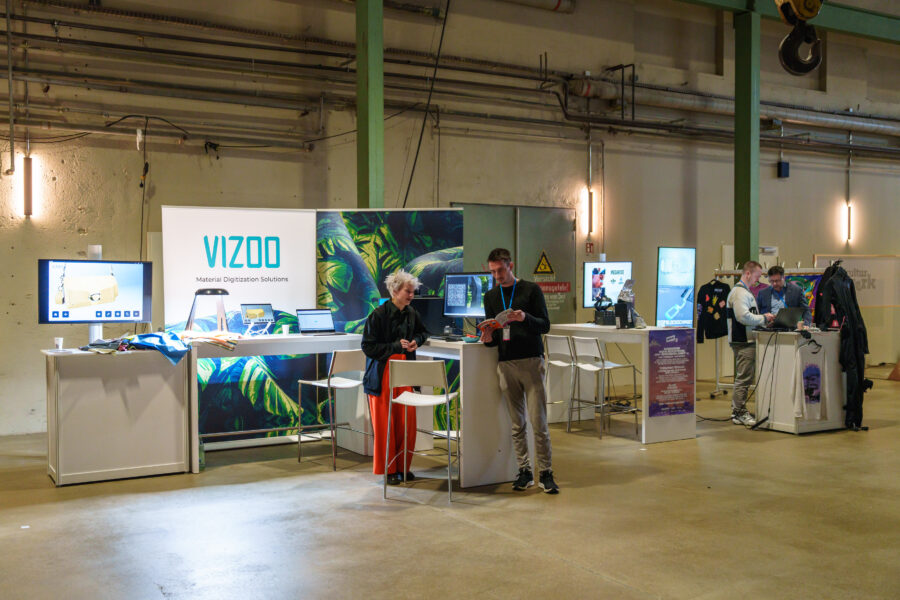
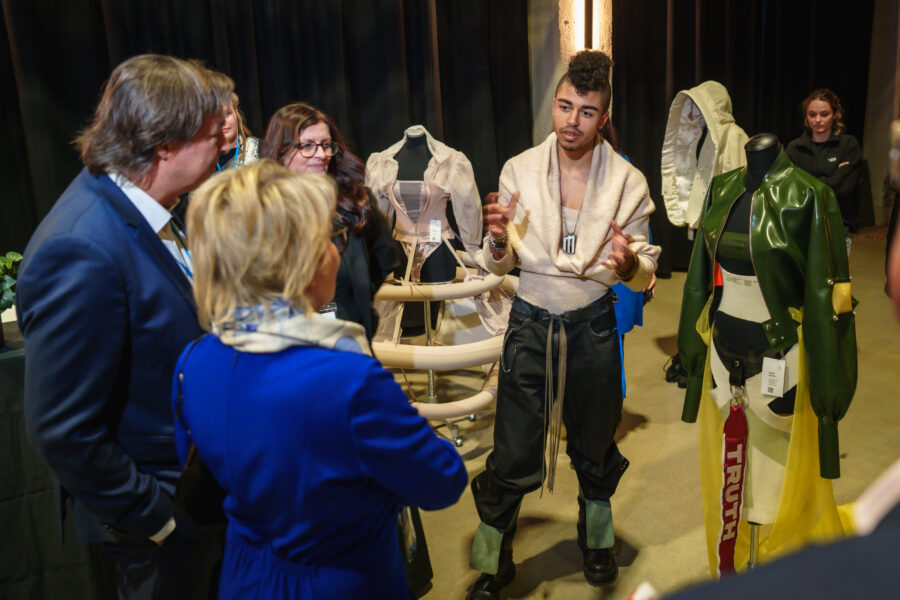
Leading companies, start-ups and research institutes presented their latest developments in textile technology, digitalization and sustainable design.
• Deutsche Telekom – innovation driver for digital education & AI expertise
• Hohenstein Laboratories GmbH – textile testing, sustainability & smart textiles
• Vizoo GmbH – Pioneer in material digitalization with xTex technology
• Botspot Berlin – High-end 3D scanning for fashion, fit & avatars
• CLO 3D – Real-time 3D visualisation & virtual prototypes
• Modespitze Plauen GmbH – Craftsmanship meets AI in embroidery
The diverse exhibition brought digital transformation to life – from interactive avatars and intelligent fabrics to virtual catwalks and sustainable production solutions.
About FashionTEX
FashionTEX is a European Union-funded university project on digital transformation in fashion education. Eleven universities from ten countries are jointly developing new curricula, digital tools and hybrid learning environments. The focus is on 3D design, virtual collaboration, sustainability & circular economy, and critical reflection on technological developments. At the heart of the project are makerspaces where students work with tools such as CLO3D, AR/VR, 3D scanning and AI-based design. The annual FashionTEX Festival presents these results and promotes exchange between industry, politics and education.
www.fashiontex.eu
https://www.instagram.com/fashiontex_europe/