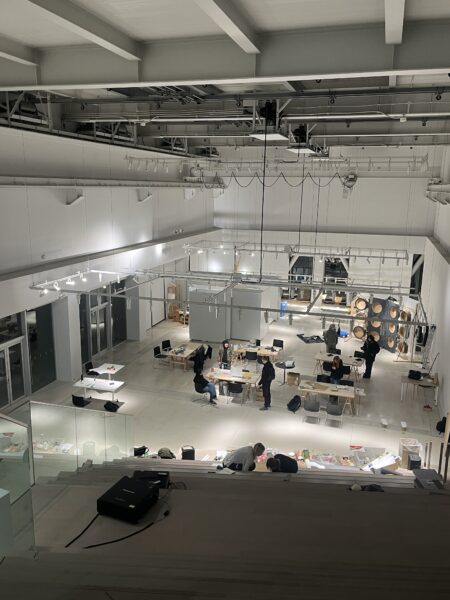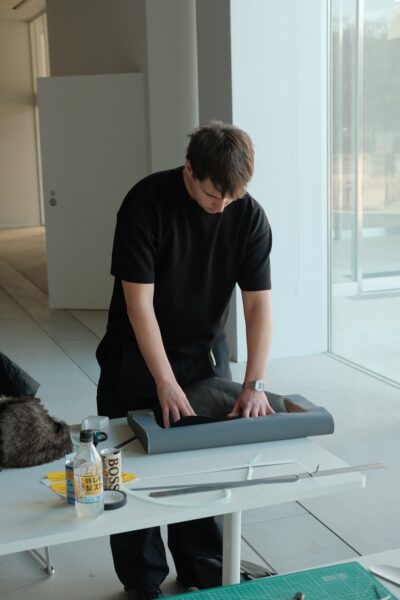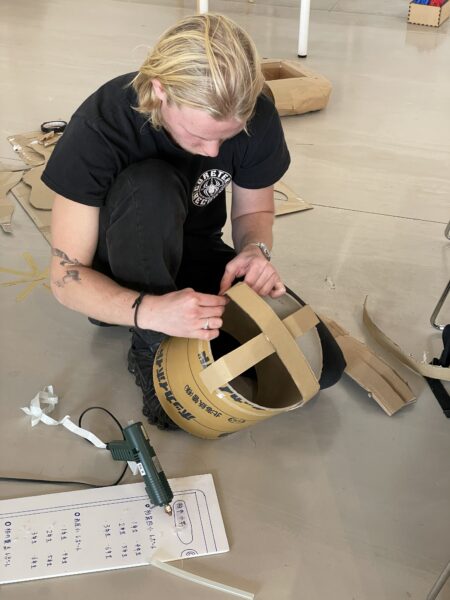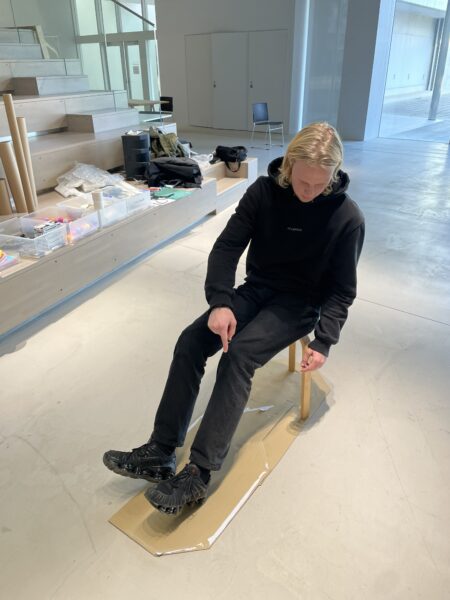
Tootedisaini tudengid DLX Lab töötoas Tokyo Ülikoolis
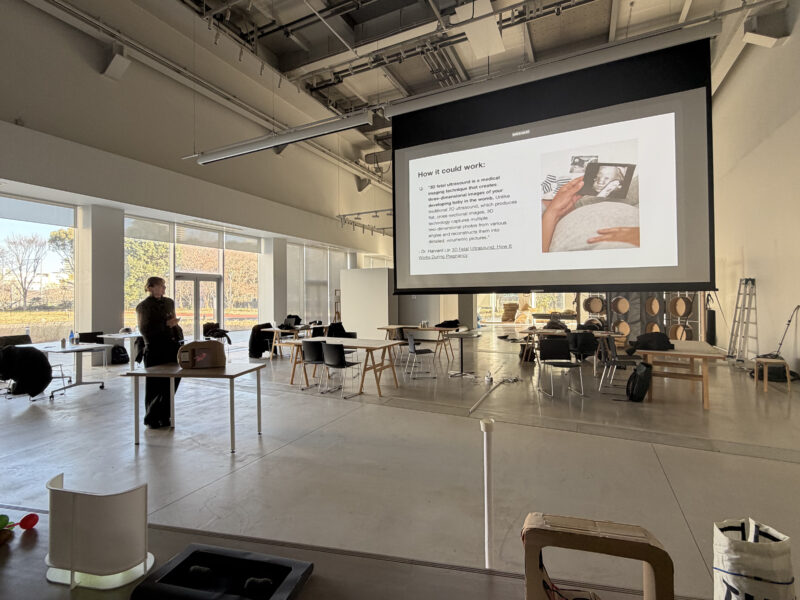
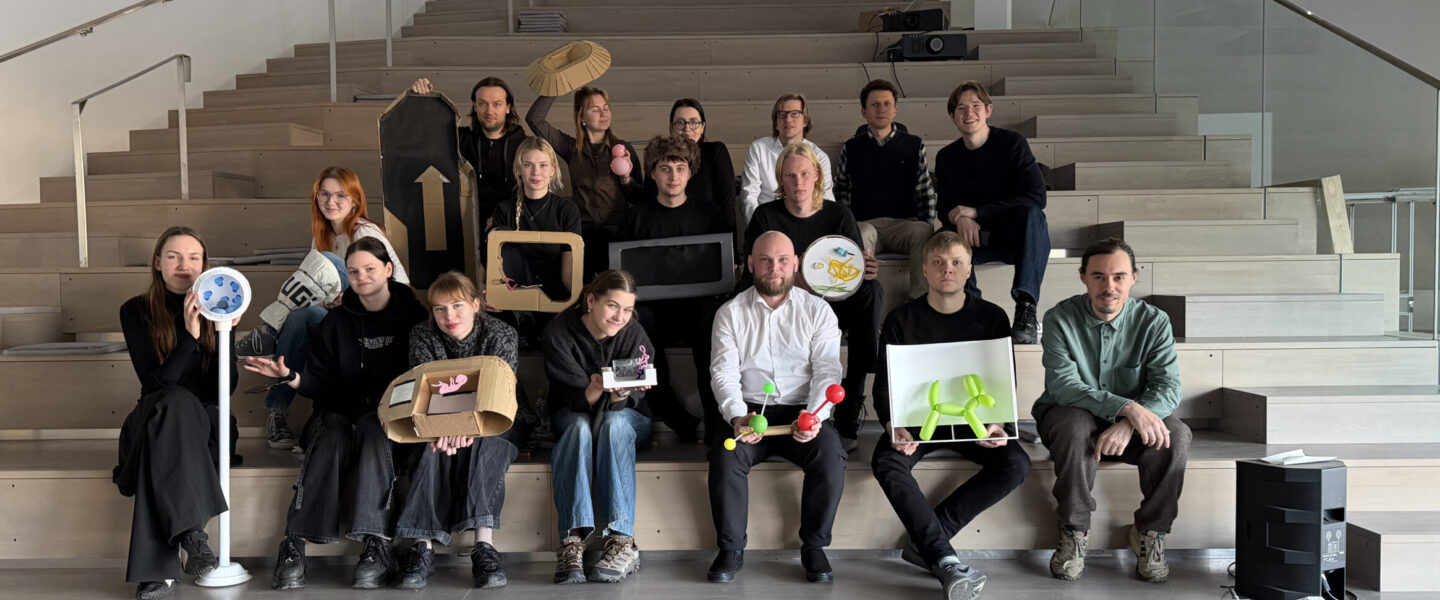
In mid-January, 12 EKA product design students boarded a plane with more questions than answers and a rather vague idea of what awaited them. Their destination was the DLX Design Lab at the University of Tokyo, a place where design and science merge in a creative yet practical way, and where they’d get to jump into the hands-on workshop.
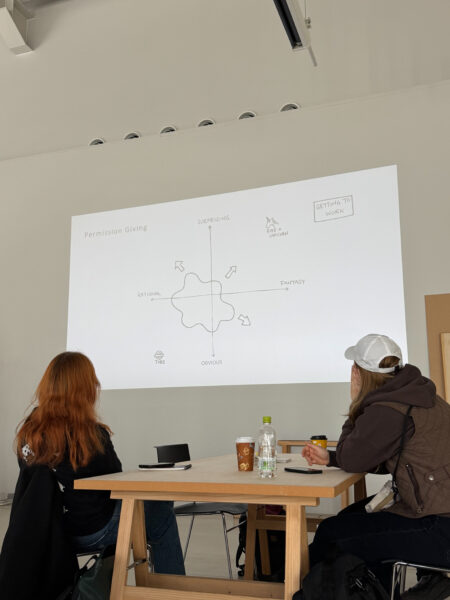
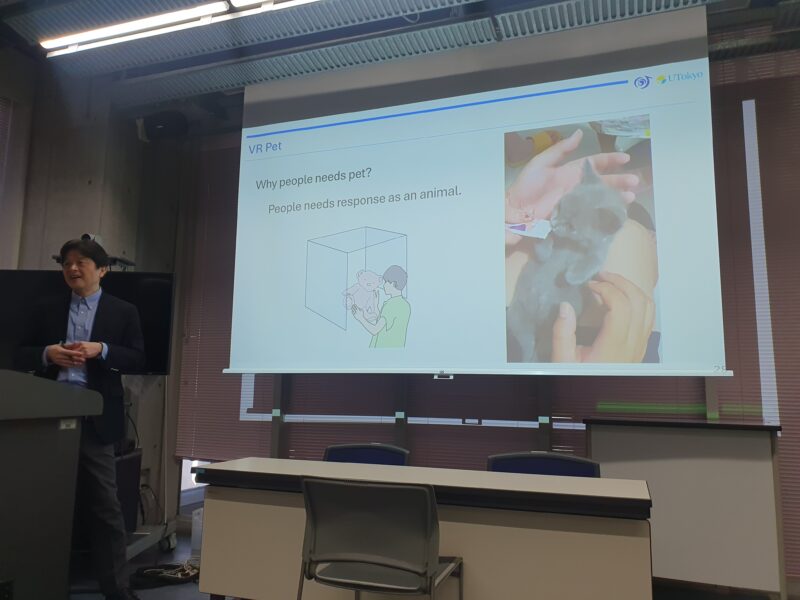
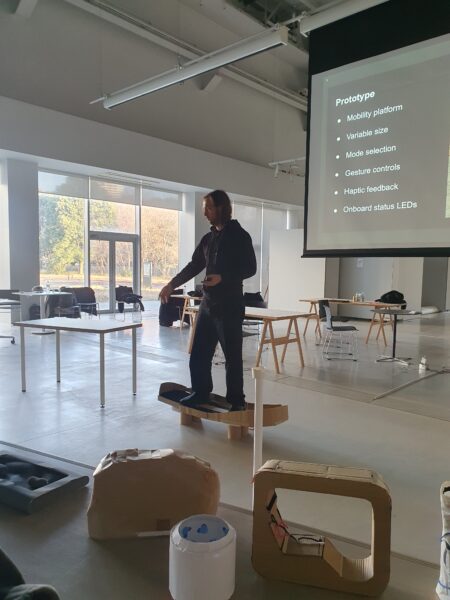
This is an international design research lab where the role of design is, among other things, to bridge the gap between academia and society by collaborating closely with scientists. The lab’s work and research directions were introduced by the lab’s co-directors, Federico Trucchia and Yuri Klebanov. The workshop was led by Max Fischer, under whose guidance it quickly became clear that the goal of this week was not to find ready-made answers, but to formulate exciting questions that no one has asked yet. And all this through speculative thinking and rapid prototyping.
Treasure hunt in the research laboratory
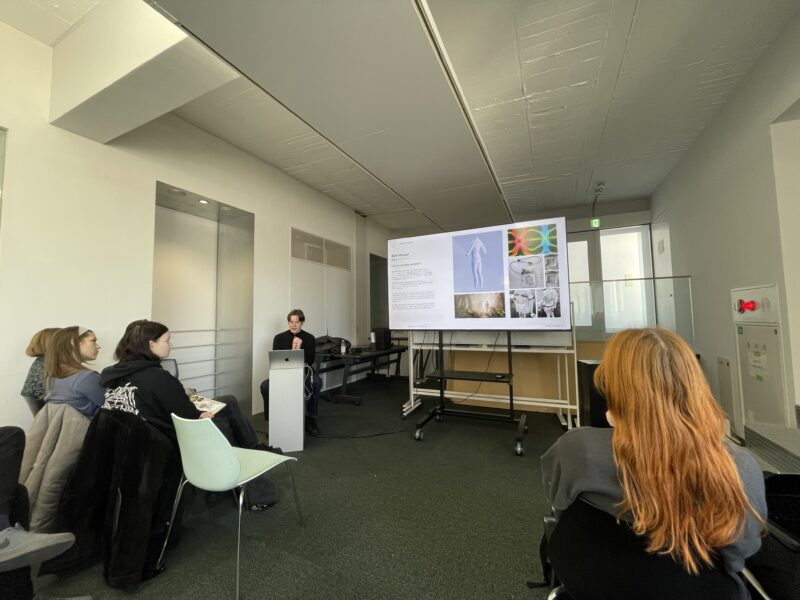
The framework of the week was the Treasure Hunting methodology developed by DLX Lab. This differs from the familiar traditional design process, where one starts with a problem and moves step by step towards a solution. In the case of Treasure Hunting, the starting point and trigger of the work is not the problem, but scientific research and its future possibilities.
The designer’s task is to enter the laboratory, get acquainted with the ongoing research projects and look for possible applications and development directions hidden there. Often, the possibilities found cannot be realized today, but open up new ways of thinking and future scenarios. Design here plays the role of input rather than output, i.e. a way to look at the research work from new perspectives, offering it new narratives and uses.
All this also requires a different mindset. You don’t go to the laboratory ready to look for solutions, but to learn to notice something that is not yet visible or formulated. Scientists often work with phenomena that have no clear application vision today. Maybe not even in 5 or 10 years. There is might be just a general direction and a vague vision, at some point also a theoretical possibility, and then hopefully also an applied possibility outside the research laboratory.
The role of a designer is to observe and support these processes. This means the ability to notice potential where it is still developing. Then, seeds of ideas and possible futures are born from this, which can be further developed in the direction of both product design and science.
Technology experienced with the body
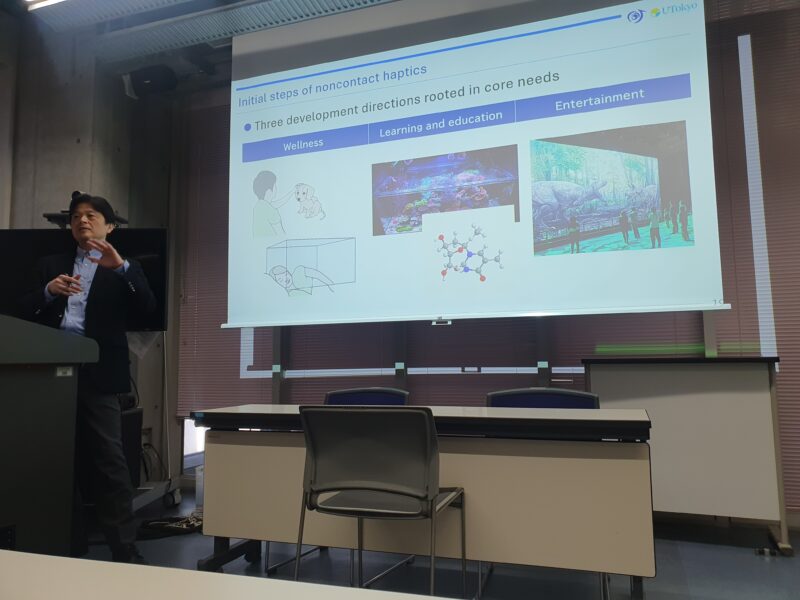
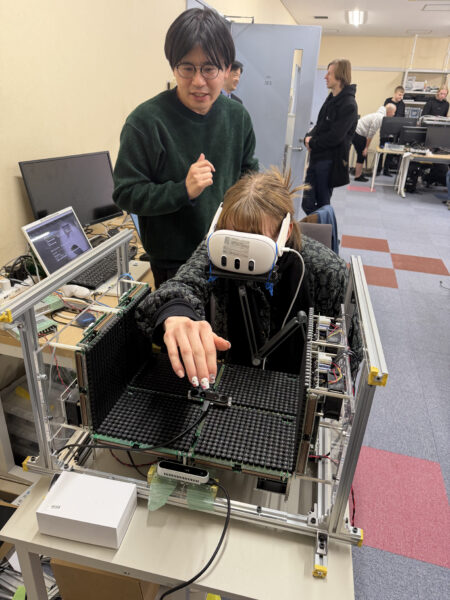
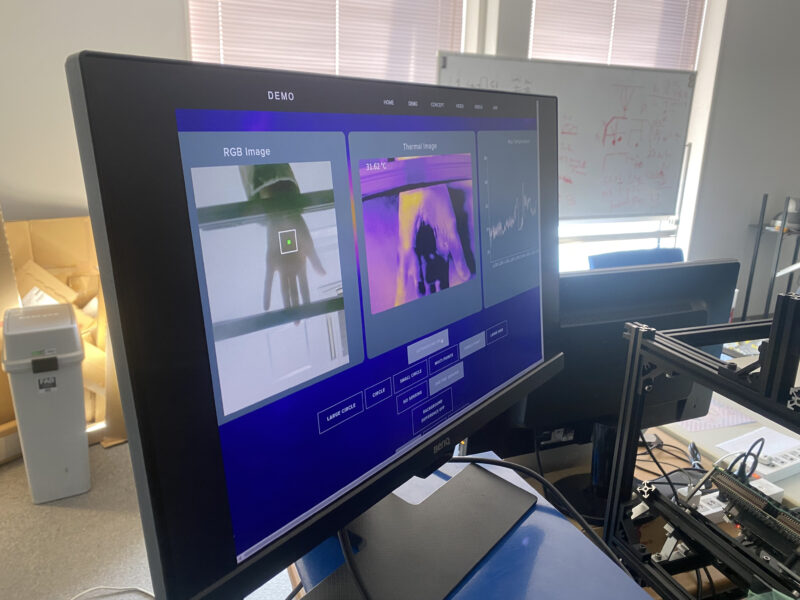
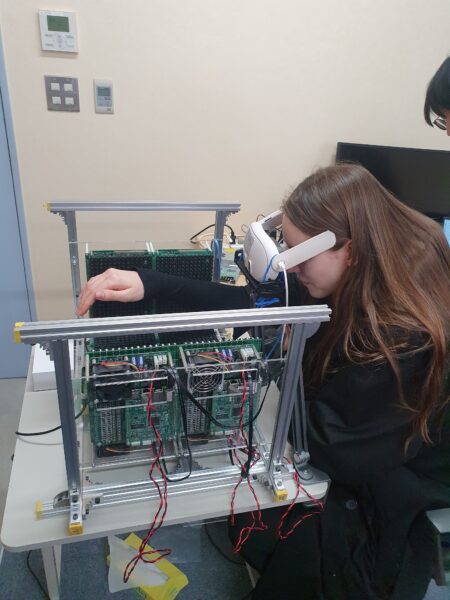
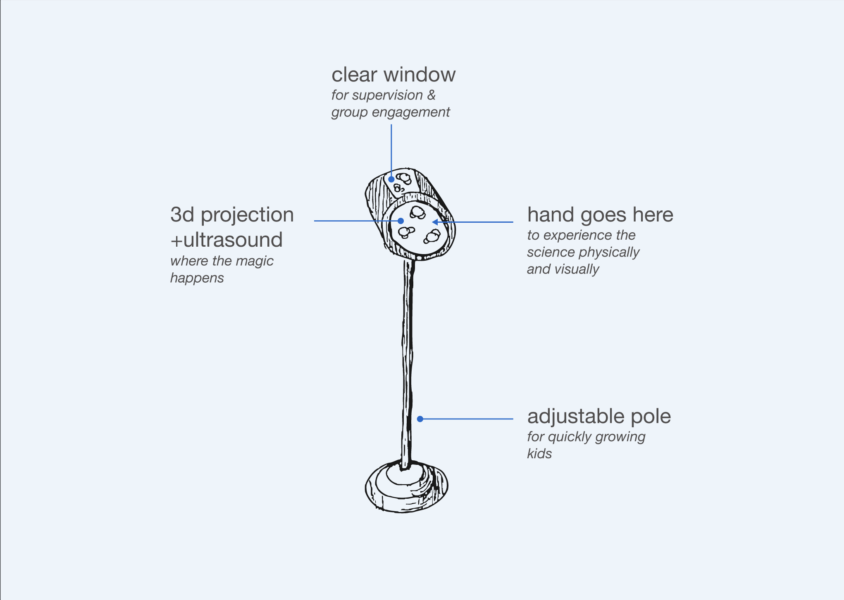
A significant part of the week was spent in the Shinoda & Makino research laboratory, where haptic and multisensory technologies are developed. The focus was on ultrasound-based haptics, or systems that allow you to create the feeling of touch without physical contact.
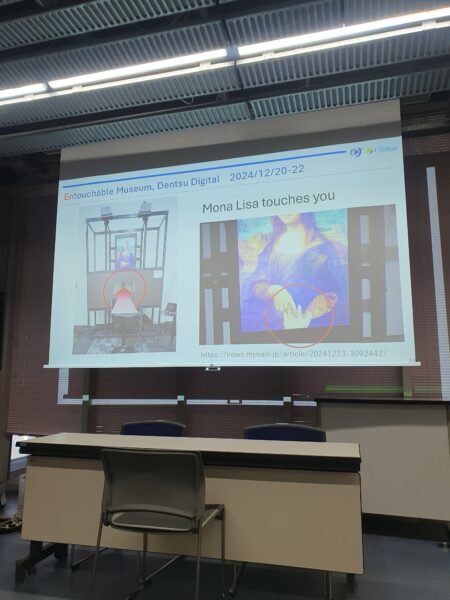
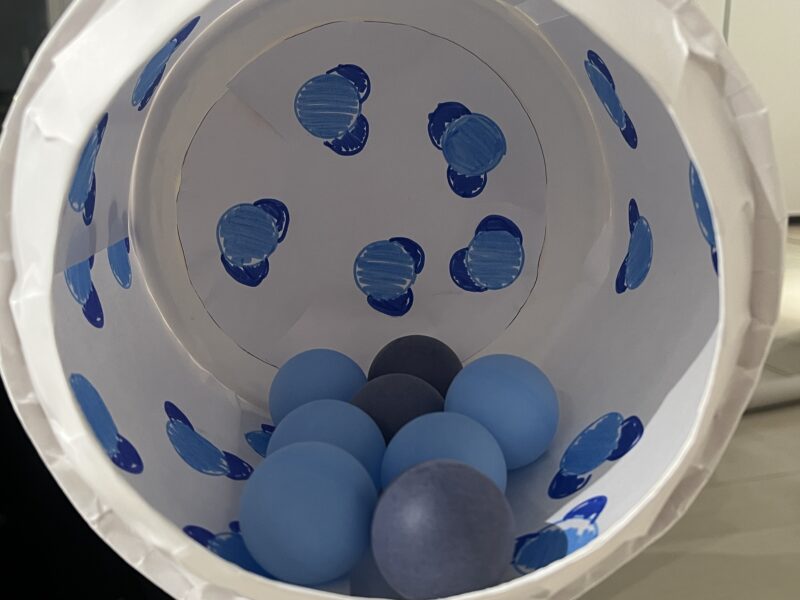
The hand moves over the device and perceives pressure, texture, heat, vibration, but at the same time nothing touches the hand. This is not an illusion, but still an experimental technology, the potential of which to change our interaction with the world around us. If today’s technology can generate different sensations in a limited “box”, then in the future this box may be an entire room or even an environment without boundaries. If today an ultrasound wave keeps a ping-pong ball in the air, then “flying machines” of the future are no longer science fiction, but a theoretically possible future.
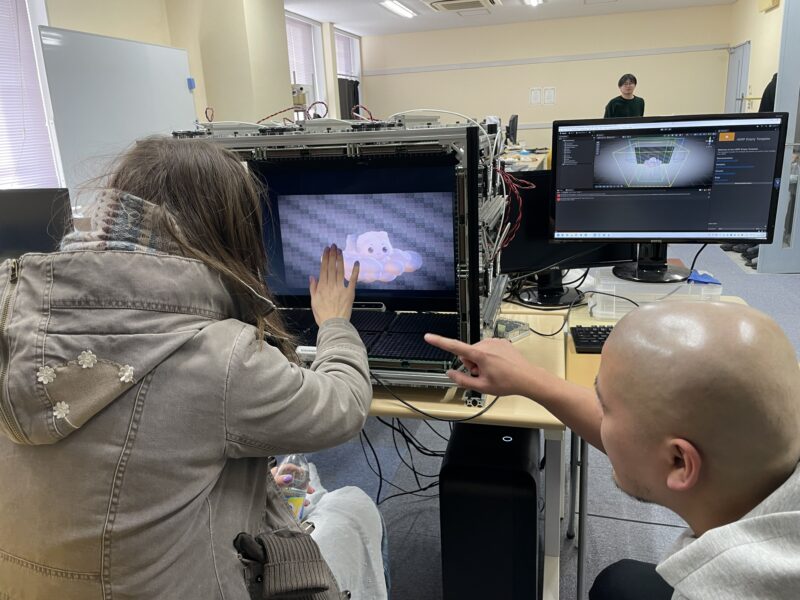
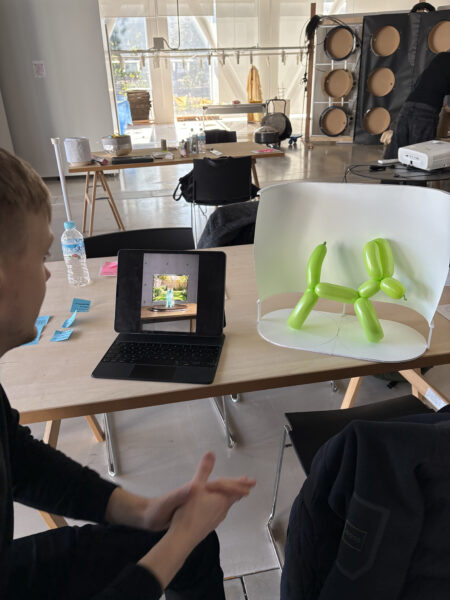
The students were able to test prototypes of various scientific projects themselves, while scientists explained their functioning and background. Such direct contact with laboratory science provides a different understanding of technology than any lecture or scientific article, because it highlights both its possibilities and limitations. And direct communication with scientists is good grounds for searching for the seeds of design solutions.
By moving between projects and testing different solutions, the students tried to understand where the value and opportunity lie, which the scientists themselves may not yet see as an application or possibility. It is precisely this approach that shifts the understanding of the design process: it does not always start with a problem, but often with a technology or phenomenon whose value is still developing.
Speculation as a tool
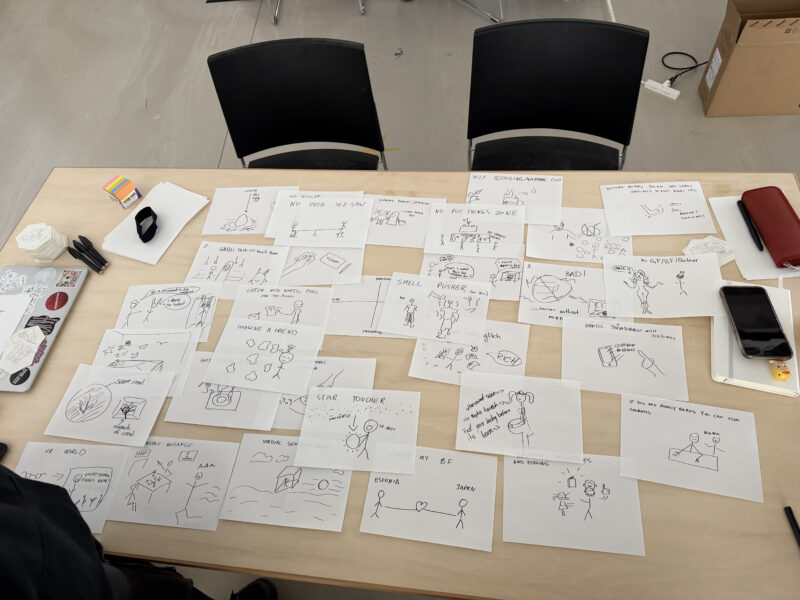
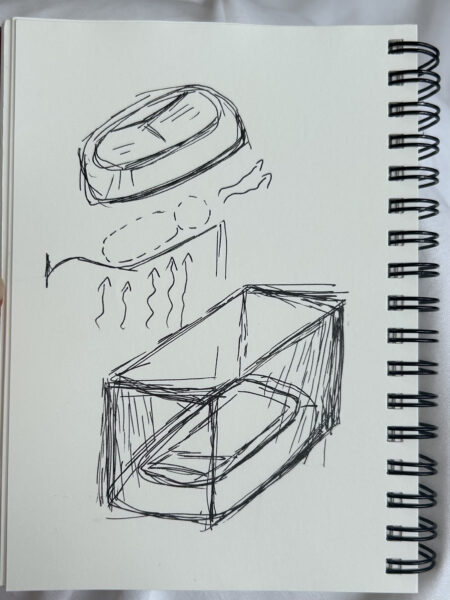
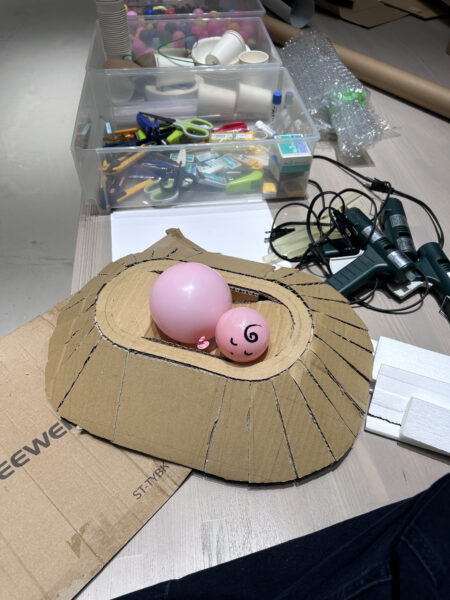
After getting acquainted with the laboratory, the work moved on to creating speculative applications. The goal was not to solve an existing problem or meet market expectations or demands. The focus was on the question: where could this technology go if the current practical limitations and constraints were removed?
This quickly highlighted how difficult it is to think outside of existing use cases. It also became clear that without an understanding of the science, it is not possible to design. Speculation is not fantasy or a fairy tale, but requires a very precise understanding of the starting point in order to offer possible plausible future narratives and possibilities.
Solutions
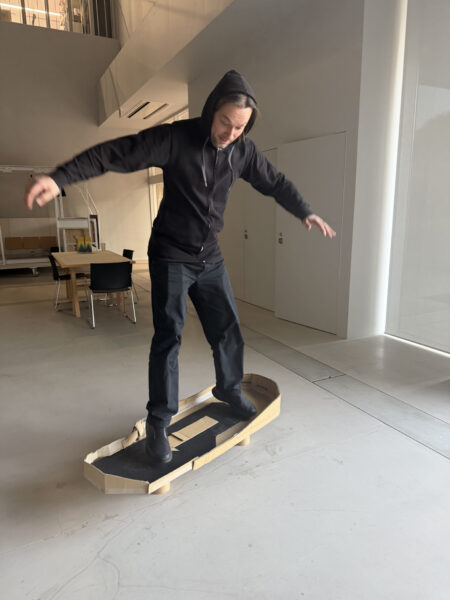
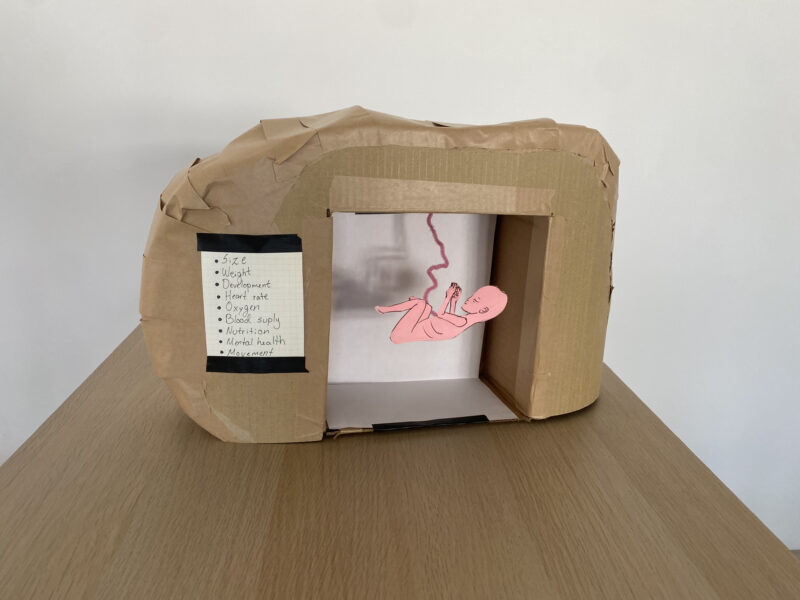
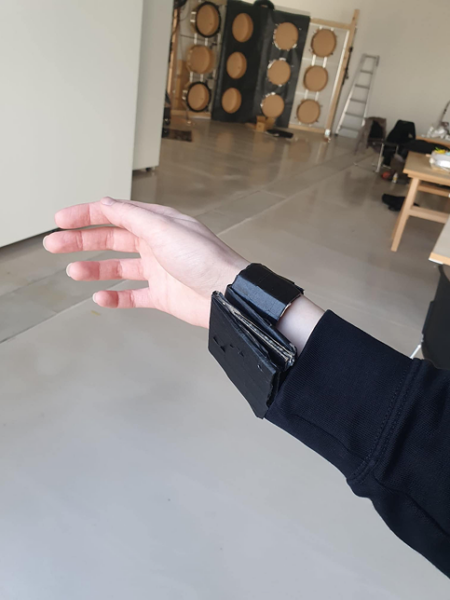
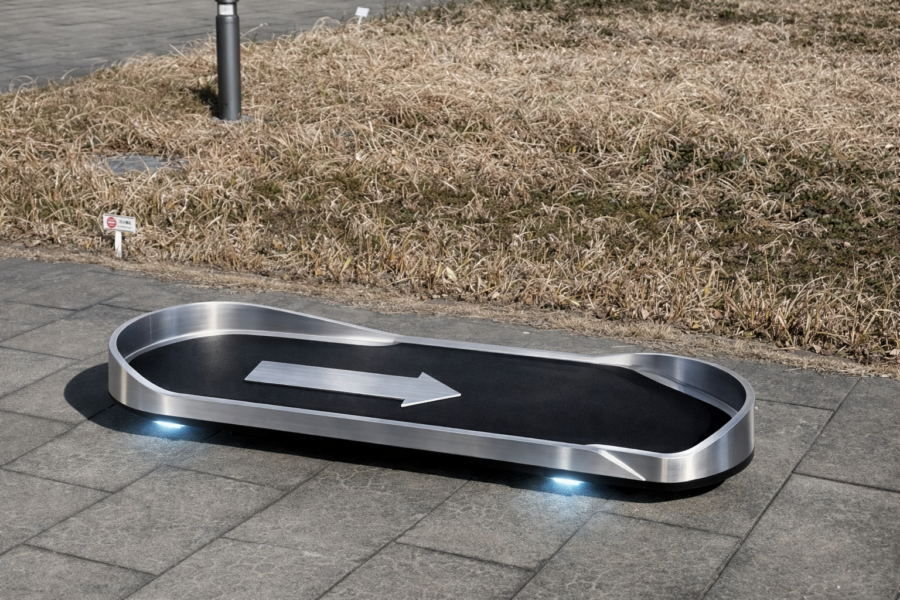
The concepts opened up a wide range of possible use cases. For example, they explored how visually impaired people could experience the world around them through haptic perception. Another project imagined an ultrasound-based hoverboard where movement and bodily feedback form a unified experience.
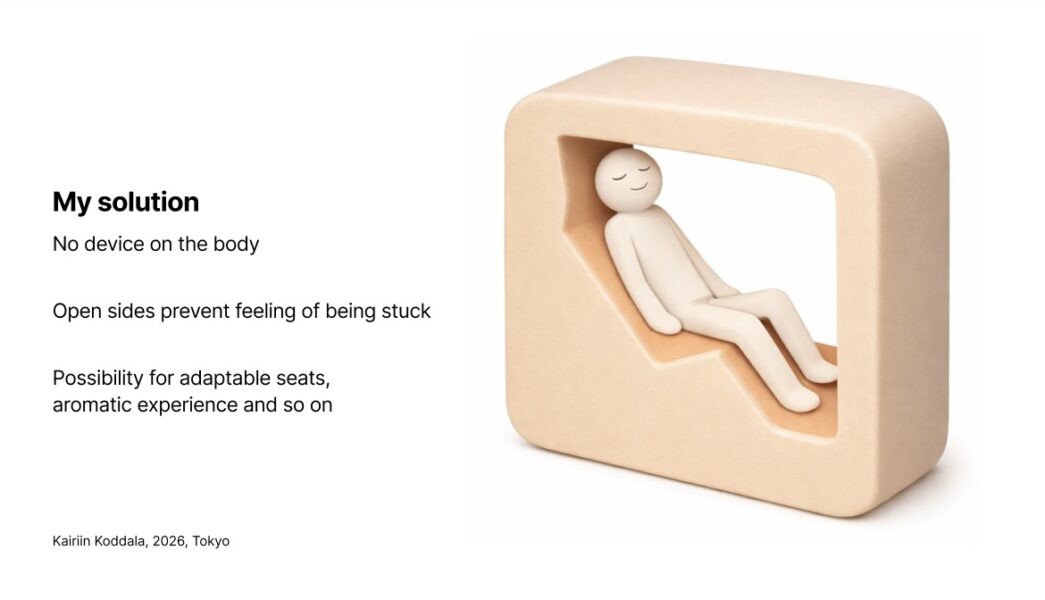
Several ideas also moved into the field of health and well-being: they offered therapy solutions based on haptic feedback, supported closeness between child and parent in situations where physical contact is limited, and rehabilitation solutions for the elderly were developed that help strengthen the sense of security and encourage activity.
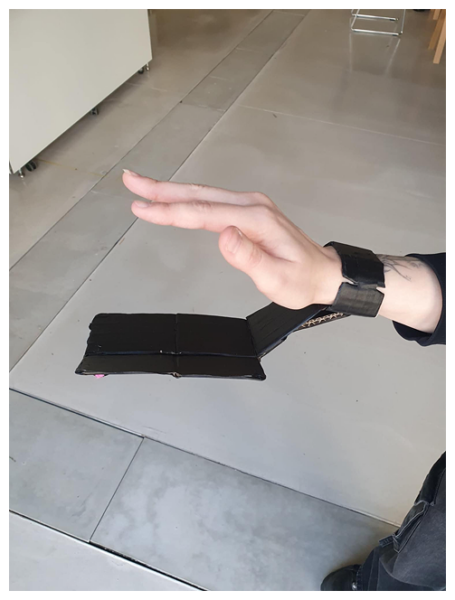
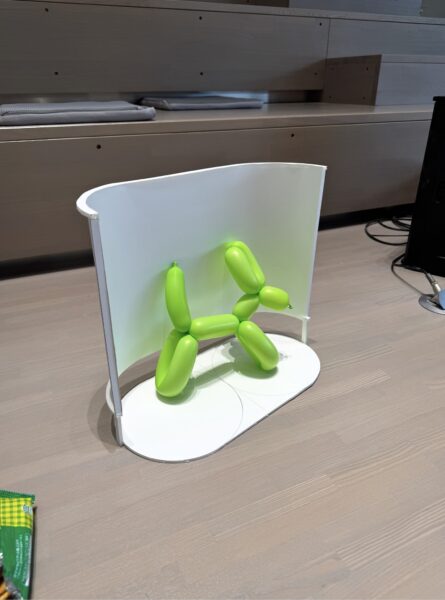
A shoe-trying solution was also developed, which allows you to feel materials and movement on different surfaces without a physical product. One project focused on creating music through hand movements, linking sound directly to bodily experience. In addition, they explored how to bring haptic experience to the world of pets and how to enrich learning, both in formal education and in playful leisure contexts.
The future as a starting point
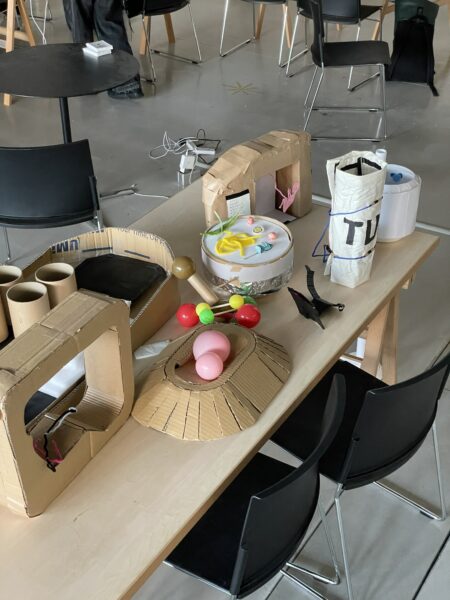
Such an experience shifts the understanding of what design is and where it begins. The next step is to connect what we learned with studio work and create collaborations with local research institutions, which means more experimentation and exploration and less quick, ready-made answers.
It also opens up the role of design as a tool through which it is possible to bring complex science, which is often confined to laboratory walls, into a wider space of understanding. Through design, these ideas can be interpreted, visualized and played out as possible applications, helping science move faster from abstract research to perceptible experiences.
The workshop was attended by: Erik Lond, Kenneth Pert, Kairiin Koddala, Paul Pank, Mia Saar, Erik Pirn, Heli Salmela, Karoliine Hirmat, Alex Kristjan Lumi, Hanna Milk, Mia-Mai Roosberg, Karoliina Kalmo.
EKA mentros: Carol Tikerperi, Björn Koop
The study trip was funded by Erasmus+