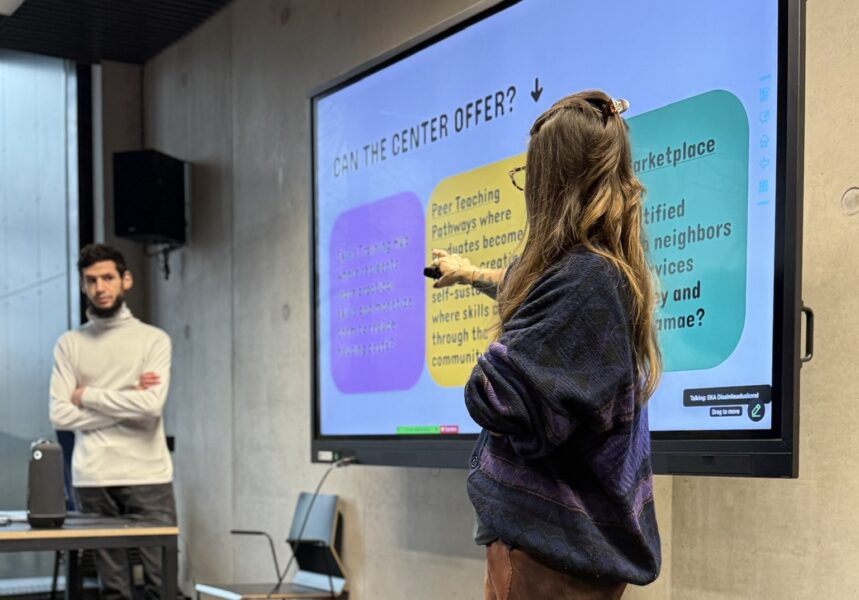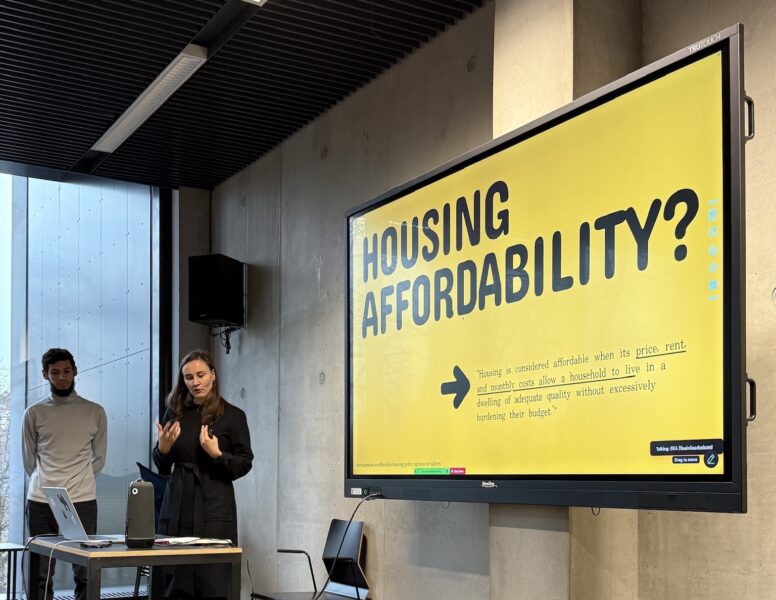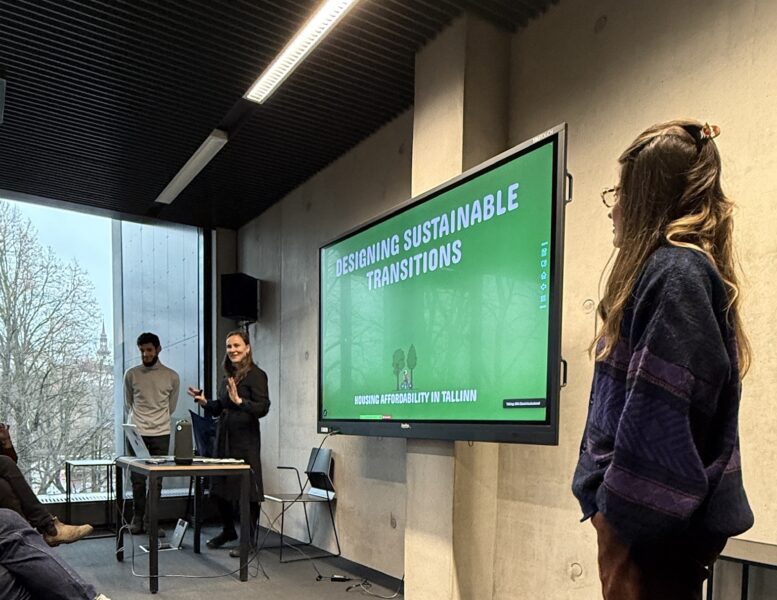
On the 9th of December, our SDSI students at the Estonian Academy of Arts presented their research results and design proposals for a wicked problem: #housing_affordability as part of Prof. Jörn Frenzel’s studio course “Designing Sustainable Transitions”.
Three teams went through a #systems_oriented approach to a multifactorial problem with opposing interests. The results were accordingly comprehensive and versatile, linking direct action for residents with concepts tapping into the #commons and policy proposals for the city administrators.
Thanks to Helena Männa and @AiriAndresson from our partner organisation City of Tallinn strategy centre, the studio’s co-teachers Mari Suoheimo of Arkitektur- og designhøgskolen i Oslo (AHO) and Johanna Vallistu, as well as Andres Sevtsuk of Massachusetts Institute of Technology for on-point critique at the finals.
And of course our smart and hard working students:
Flávia Dutra
Amanda Strīģele
Margarita Cajas
Spencer Foxworth
Kristen Kennedy
Abhijit Balaji
Sobia Iqbal Farooqui
Tooba Tul Muntaha
Chaynika Gujela
Lokman Hamek
Evan Palmejar
Nada Jouibli
Itzli Hernandez Niño
Pooja Singh
Em King
Daiga Strenga
__________
Designing Sustainable Transitions
Housing affordability in Tallinn
in cooperation with Tallinn Strategic Management Office
Course instructors at EKA
Prof. Jörn Frenzel, EKA – Main instructor and head of curriculum
Johanna Vallistu, ETUI.ee (PhD) – futures design tools
Prof. Mari Suoheimo, AHO Oslo (PhD) – System-oriented service design tools
Team 1
Regenerative Housing.
A systems solution for sustainable affordability in Tallinn
Students:
Kristen Kennedy, Amanda Strigele, Sobia Faroqui, Abhijit Balaji, Margarita Cajas
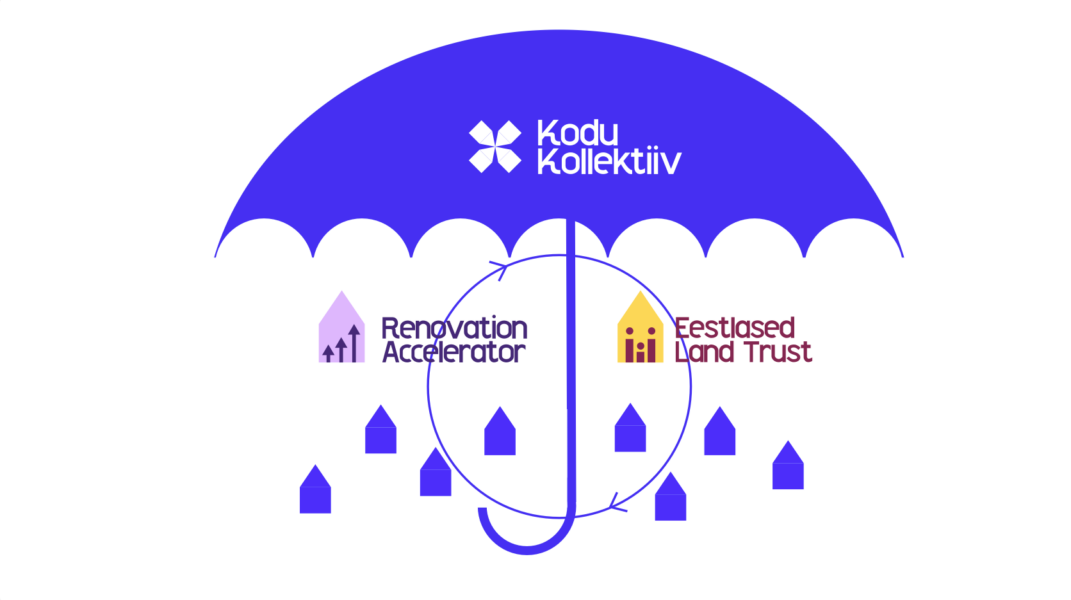
The project brings together three distinct proposals to jointly address housing affordability in Tallinn. The three partial proposals – The Renovation Accelerator, The Eestlased Land Trust and the Kodu Kollektiiv – are modular solutions acting together to act on the major Tallinn affordability issues; lack of speed and scaling effects in energetic housing renovations, a lack of structured and applicable alternative housing models and the need for joint multi-stakeholder action in the field. The “kodu kollektiiv” (engl. “home collective”) is an answer to the question: How might we develop Tallinn’s stakeholder ecosystem with players that bridge the gap between citizens and the government? The organisation provides a network of key Tallinn voices, advocacy of policies and practices, education translating complex housing issues into broadly accessible knowledge and a platform for community innovation: Accelerating new architectural, technological, and social models that reimagine how homes are built, owned, and lived in.
Under this umbrella of the “kodu kollektiiv” two distinct projects – The Renovation Accelerator and The Eestlased Land Trust – bring boots to the ground and roll up the sleeves for action. A Community Land Trust is a non-profit land stewardship model where the community or municipality owns the land, and homes on top stay permanently affordable. By contrast, the Renovation Accelerator is delivering smart tools that empower residents, support apartment associations, and scale the housing market.
Team 2
Circular Skills ecosystem for Tallinn Lasnamäe
Students: Tooba Tul Muntaha, Lokman Hamek, Nada Jouibli, Flavia de Moraes Dutra, Pooja Mahendra Pratap Singh, Daiga Strenga
The Circular Skills ecosystem for Lasnamäe, a Tallinn panel housing district accommodating a quarter of the city’s population, takes a deep dive into the social dimension of housing affordability: non-housing consumption, public amenities and neighbourhood quality. Housing affordability may be addressed directly and indirectly; directly, by focussing on cost, energy and material KPI’s such as housing cost, building cost, planning cost, material and energy use etc. Indirectly, by looking at people’s available income as regards not just hosing expenditure but overall residual living cost.
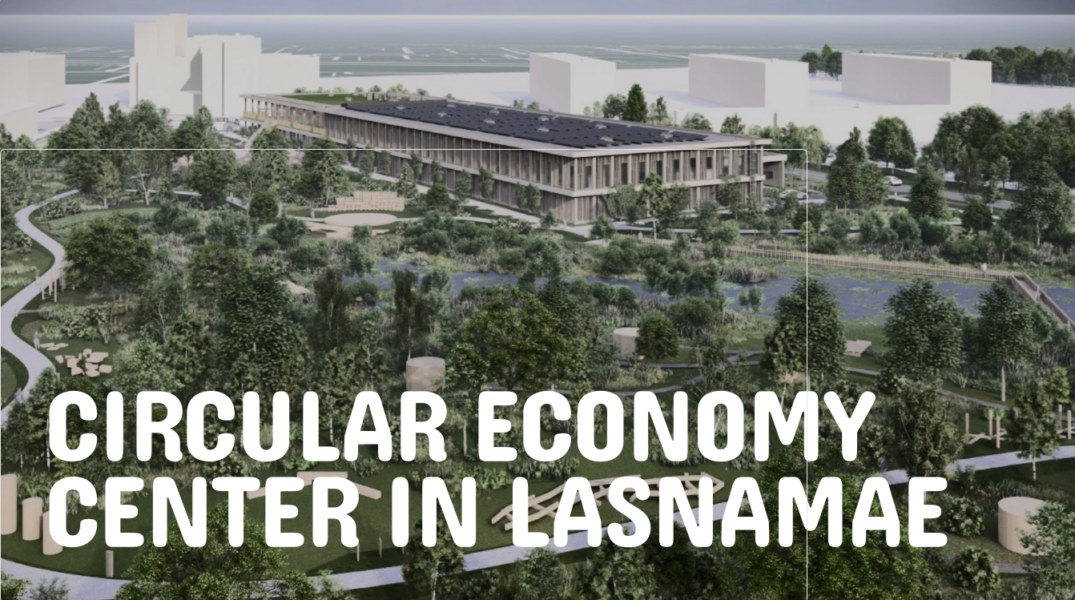
This project tries to tap into existing socio-economic infrastructure, the new Circular Economy Centre in Lasnamäe currently under construction, as a “trojan horse” to introducing and amplifying circular economy skills into the urban fabric by way of building an ecosystem of capacity building, trading and exchanging materials, time, skills etc. The project draws on undertones of alternative communal currencies, decentralisation and de-growth.
The proposal seeks to kick-start capacity and skill building of local communities, especially local youth to then be monetised or capitalised upon in alternative ways: to raise one’s micro-income, benefit neighbours and/ or invest the material flows of affordable housing with new circular meaning.
Team 3
Tallinn 2035 Affordability Framework
Students: Chaynika Gujela, Spencer Edmond Foxworth, Evan Billones Palmejar, Itzli Hernandez Niño, Emilia Xingzhi King
Tallinn has changed. But for whom?
This question is the starting point of a the team’s take on affordable housing from a policy perspective, policies that protect those in need of protection in a thriving city shaped by free-market growth.
The main diagnosis of this project – that housing decisions are system-wide, but coordination is weak – identifies the following weak links in Tallinn policy making:
Planning ↔ Welfare = poor coordination
Government ↔ Developers = opposing problem definitions
Citizens ↔ System = almost zero influence
At a macro level of systems analysis, the project tackles three emerging themes:
1. “Representation”: fulfilment depends on the needs of people and place
2. “Unified action”: homes measurably fulfil people’s needs.
3. “Policy”: people themselves participate in defining what “fulfilling” means.
Based on the existing “Tallinn 2035 development strategy” the team introduces a strategic framework that consists of design principles for “fulfilling housing”, goals & indicators and action programs.
Affordable housing means Tallinn’s residents can live well without excessive economic pressure, letting them more fully participate in the life of the city.
By systematically and consistently measuring affordability, policymakers can make decisions that better serve Tallinn’s residents, poor and wealthy alike.
By transparently sharing responsibilities and information, Tallinn’s government, residents and private developers can work together toward a common goal.