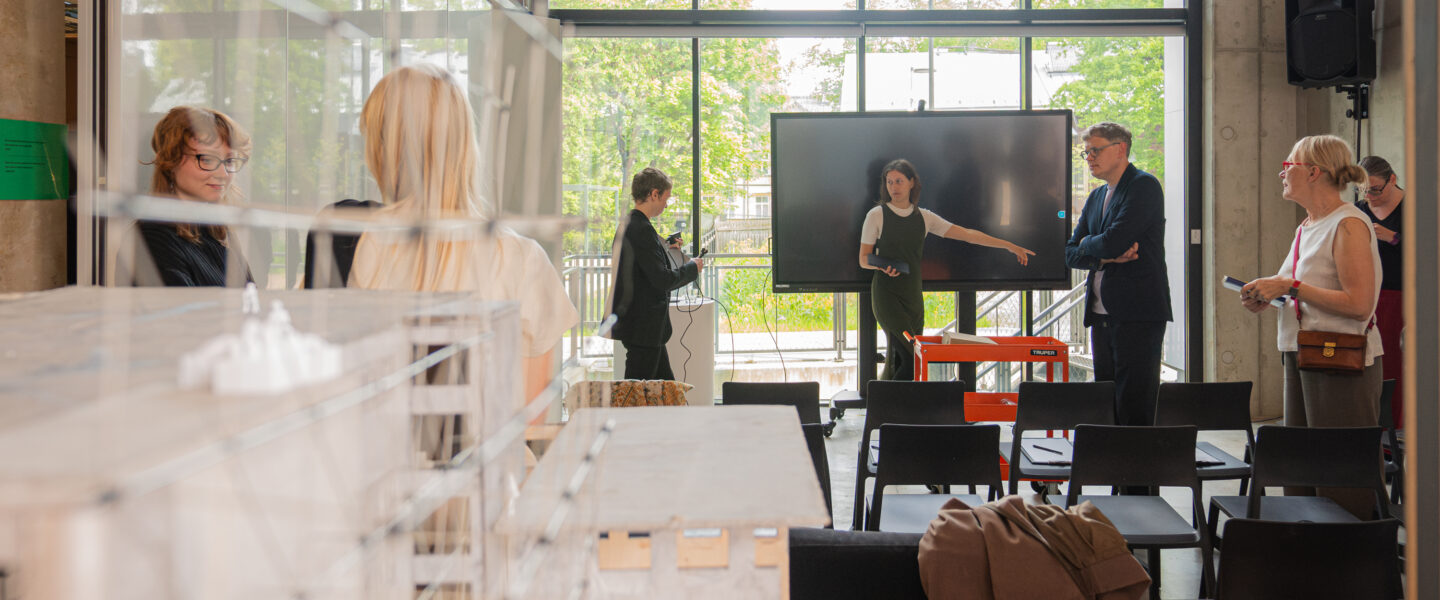
The public defenses of the 2026 bachelor’s theses from the Department of Interior Architecture took place on June 2 at the EKA White House.
As part of the thesis, students develop themes arising from their individual creative interests in parallel with the creation of their portfolios. An exhibition is organized from the developed projects.
Supervisors: Aadam Kaarma and Martin Merirand (portfolio), Ville Lausmäe (project development), Veiko Liis (project development).
The bachelor’s theses were evaluated by a committee consisting of: Mariann Drell (committee chair), Hillar Mänd, Eeros Lees, Maarja Varkki, and Aimur Takk. The committee secretary is Marie-Katharine Maksim.
***
Emily Ann Marin
Portfolio
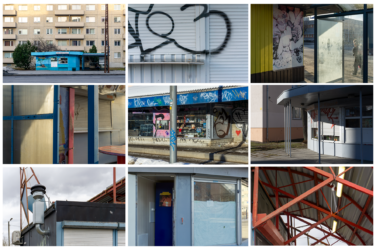
Development project “Meet You in Front of the Kiosk”
A kiosk operates according to its own rhythm and rules. It is a kind of borderline space where interaction takes shape through a window. The quiet presence of a kiosk shifts the way people perceive and move through their surroundings.
Through mapping, observation, and documentation, I explore the spatial value of the kiosk at a time when such small-scale forms are disappearing from the streetscape. Is it possible to reinterpret the kiosk in a way that preserves or restores architecture’s ability to mediate immediate and spontaneous social interaction in the public space?
The form of the installation grew out of the kiosk’s most fundamental spatial feature: the window as a threshold for interaction. The goal was to create a spatial situation in the city that would invite people to pause, engage, and connect with each other.
***
Karl Oskar Palo
Portfolio
Development project “Provocator”
What is a provocateur? It is neither trash nor art, but an object that defies categorization. A provocateur is an object that attempts to create tension between the viewer, the space, and itself. To create this tension, it must be an object unrelated to its environment, one that plants questions in the viewer’s mind about its placement and origin. I have attempted to provoke thought by separating the object from its context and through its spatial arrangement. The provocative object can be almost anything, but for my exhibition I have decided to use an ordinary firewood log. I invite visitors to the exhibition to create their own provocateur—an object that has no value, function, or meaning. The exhibition is divided between the EKA courtyard and the third floor of the White House. I invite you to stimulate the space.
***
Linda Marie Zimmer
Portfolio
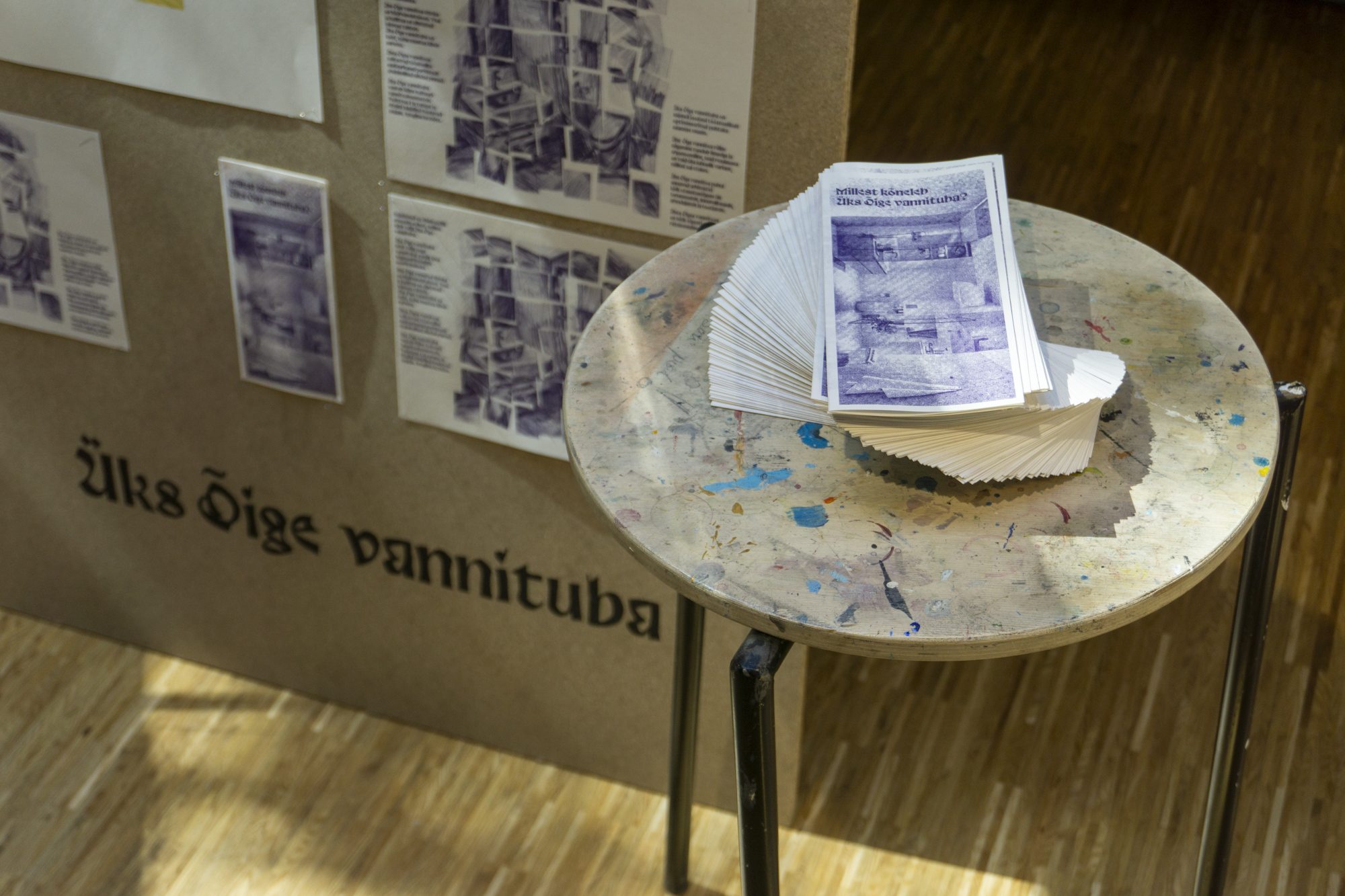
Development project “A Proper Bathroom”
The practical, new development style bathroom illustrates how societal perceptions of proper space evolve. Every element is designed to fulfill its role: toilet, shower, sink, mirror. Gray floor tiles hide dirt, while white porcelain ensures a sense of cleanliness. All basic needs are taken care of—nothing more, nothing less. The widespread prevalence of such a streamlined space sounds an alarm: a well-trodden path of spatial design has formed, one that constantly reproduces the same notions of universality and human needs. Should we divert the path? Where to even start?
***
Madli Bulgarin
Portfoolio
Development project “The Handbook of Spatial Subversion”
The modern interior architect is a manipulator: through spaces, they guide our senses, yet operate within the client’s parameters. Commercial spaces use design to amplify consumption and obscure the passage of time, while public spaces become overcrowded and standardized. Overstimulation, visual noise, and introverted buildings deepen social fragmentation and impoverish authentic experiences. The project asks how an interior architect can take on the role of a trickster: to notice the systems that shape the present, to disrupt the brand and the spectacle, and to create spaces that open up room for interpretation, surprise, and critical thinking. Through trickster and metis thinking, they can transform space into a tool for critical thinking: to disrupt and sabotage the spectacle, to restore aimlessness and the flâneur. A good space offers slowness and surprises—a breath of fresh air in a world where experience swells but meaning dwindles. This is a call to restore space as a form of experience, not consumption.
***
Reigo Raal
Portfolio
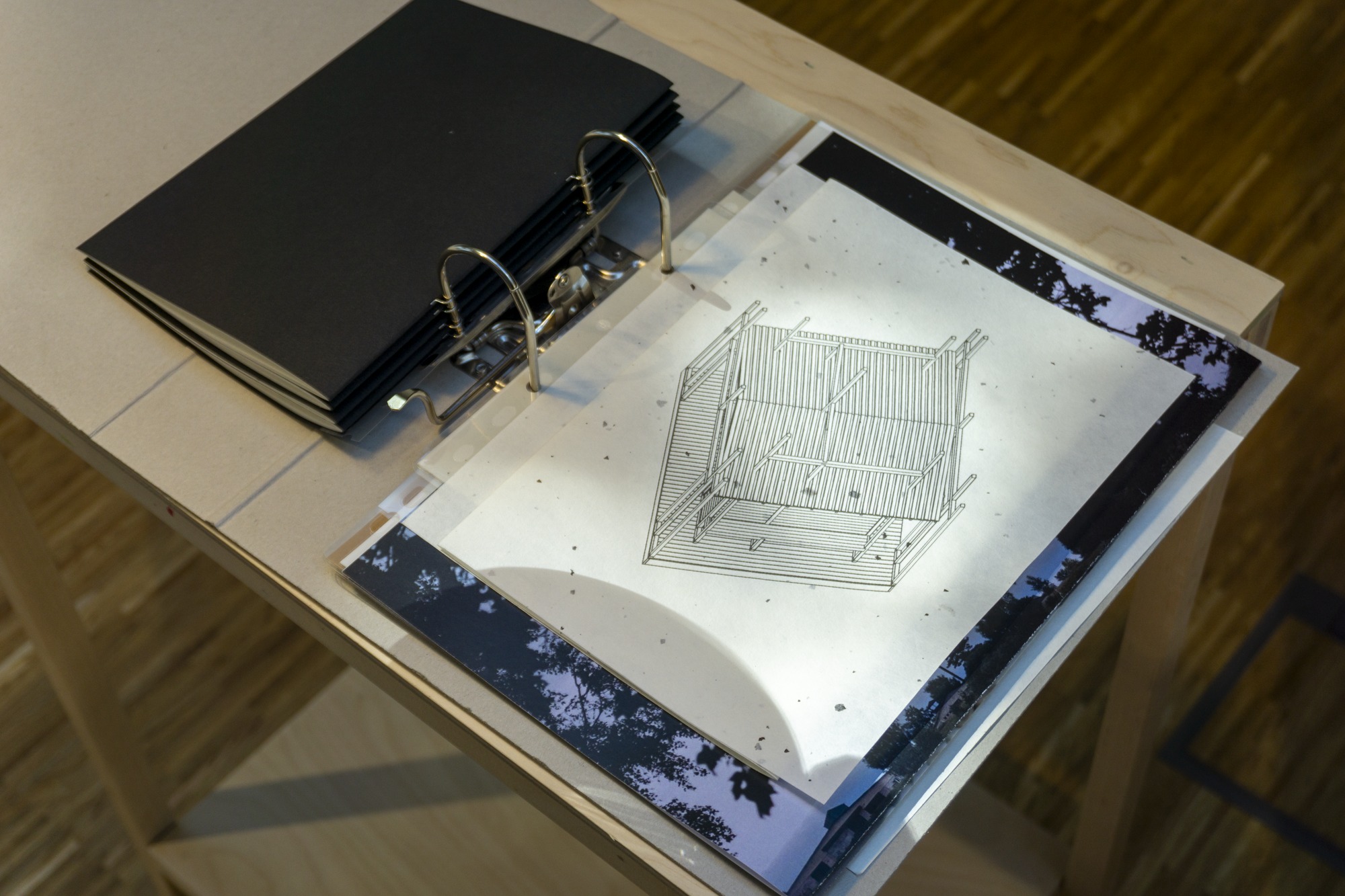
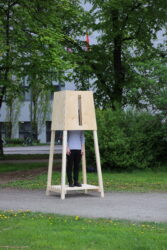
Development project “Neutral observation stop: city observation hut”
How should we view the city? When we stop to look around, we often observe other people’s activities and goings-on, but when was the last time you looked closely at an object on the street? By looking away, we miss out on a large part of the interesting compositions and combinations of objects in the urban landscape. The tension that makes cities rich disappears from our view; the aim of my work is not to encourage people to peek, but to bring back a neutral form of observation that does not intrude on anyone yet amplifies the objects and scenes within the urban space. In an urban environment, there is a need for a place that guides people to watch and observe, offers privacy, yet also exposes a conscious decision to observe. This is the cube; it is located in a place filled with objects. To better immerse yourself in what you’re observing, step into the cube. It does the work for you and frames the view. Every passerby sees that inside the cube is a curious observer who is, paradoxically, both the observer and the observed. Just standing there on the street, some might think you’ve gone mad.
***
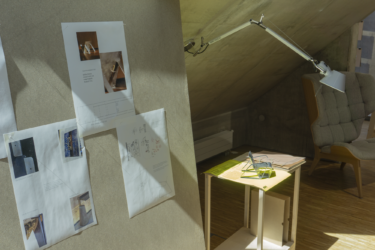
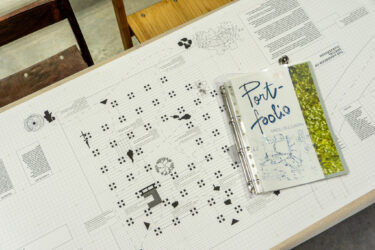
The portfolio consists of three bound notebooks that reflect each course in the interior architecture program. The design project explores the junctions between metal and wood; as part of this project, I developed two chairs, and explanatory information is included in the form of drawings.