
Exhibitions
30.05.2025 — 15.06.2025
Objects or Things II
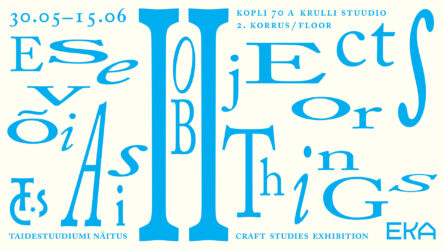
An end-of-the-year exhibition by Craft Studies first year MA students showcasing a broad spectrum of material-led practices.
In the first semester of the studies, we discuss at length the difference between objects and things — what makes something an object and another a thing? Wikipedia encourages their editors to be “straightforward, just-the-facts, instead of essay-like, argumentative, or opinionated” when explaining and describing the subject at hand. This exhibition is precisely not that. The works in this exhibition are both, neither and in-between. We encourage you, the visitor, to think about the works you see in essay-like, argumentative and opinionated ways, doubting and departing, considering thingness and objectness as up for discussion.
Object or Things II takes place in the studio of the Craft Studies programme at Kopli 70a, Krulli Kvartal, 2nd floor. The opening is on May 30 at 18:00. Visitors are welcome from 13–19:00 on May 31 and June 1,2,3, or by appointment.
For more information, please get in touch with Marite Kuus marite.kuus@artun.ee
Participants: Sylvia Whananaki Treep Burgess, Lap Chun Chow, Margus Elizarov, Maia Margareta Hellman, Nele Kurvits, Marite Kuus, Lyly Letzer, Peixuan Lin, Mariam Mestvirishvili and Joanne-Heleene Sõrmus.
Curators: Juss Heinsalu and Kärt Ojavee
Objects or Things II
Friday 30 May, 2025 — Sunday 15 June, 2025
An end-of-the-year exhibition by Craft Studies first year MA students showcasing a broad spectrum of material-led practices.
In the first semester of the studies, we discuss at length the difference between objects and things — what makes something an object and another a thing? Wikipedia encourages their editors to be “straightforward, just-the-facts, instead of essay-like, argumentative, or opinionated” when explaining and describing the subject at hand. This exhibition is precisely not that. The works in this exhibition are both, neither and in-between. We encourage you, the visitor, to think about the works you see in essay-like, argumentative and opinionated ways, doubting and departing, considering thingness and objectness as up for discussion.
Object or Things II takes place in the studio of the Craft Studies programme at Kopli 70a, Krulli Kvartal, 2nd floor. The opening is on May 30 at 18:00. Visitors are welcome from 13–19:00 on May 31 and June 1,2,3, or by appointment.
For more information, please get in touch with Marite Kuus marite.kuus@artun.ee
Participants: Sylvia Whananaki Treep Burgess, Lap Chun Chow, Margus Elizarov, Maia Margareta Hellman, Nele Kurvits, Marite Kuus, Lyly Letzer, Peixuan Lin, Mariam Mestvirishvili and Joanne-Heleene Sõrmus.
Curators: Juss Heinsalu and Kärt Ojavee
27.05.2025
“Root Tooters “
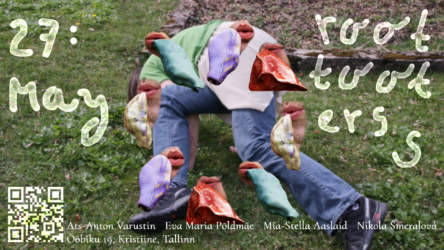
On May 27 from 15:00 to 19:00, an abstract-form-melodic* expedition will take place in the garden of Ööbiku 19, where life forms, perspectives, and fields converge.
*abstract, formal and melodic
In the garden, things clink and clatter, everyone has their own dance and whistle.
Each with their own character and their own sense of humor.
Some seek shelter from the outside, some seek vastness within the wrap.
Where does the neighbor fly, where does the cable run?
Who owns the field of view
and what crackles in the background?
Root Tooters Ensemble: Ats-Anton-Varustin, Eva Maria Põldmäe, Mia-Stella Aaslaid, Nikola Šmeralová
((It can also be added that:)This is an exhibition by students of the sculpture department, supervised by Laura Põld. If you have any questions, please read the event’s Facebook page, which can be found in the bio of @eka.installation.sculpture or contact us on Instagram.)
“Root Tooters “
Tuesday 27 May, 2025
On May 27 from 15:00 to 19:00, an abstract-form-melodic* expedition will take place in the garden of Ööbiku 19, where life forms, perspectives, and fields converge.
*abstract, formal and melodic
In the garden, things clink and clatter, everyone has their own dance and whistle.
Each with their own character and their own sense of humor.
Some seek shelter from the outside, some seek vastness within the wrap.
Where does the neighbor fly, where does the cable run?
Who owns the field of view
and what crackles in the background?
Root Tooters Ensemble: Ats-Anton-Varustin, Eva Maria Põldmäe, Mia-Stella Aaslaid, Nikola Šmeralová
((It can also be added that:)This is an exhibition by students of the sculpture department, supervised by Laura Põld. If you have any questions, please read the event’s Facebook page, which can be found in the bio of @eka.installation.sculpture or contact us on Instagram.)
23.05.2025 — 17.06.2025
Zwaantje Kurpershoek & Indrė Liškauskaitė “Pastel Paws and Resting Rafts” EKA Gallery 24.05.–17.06.2025
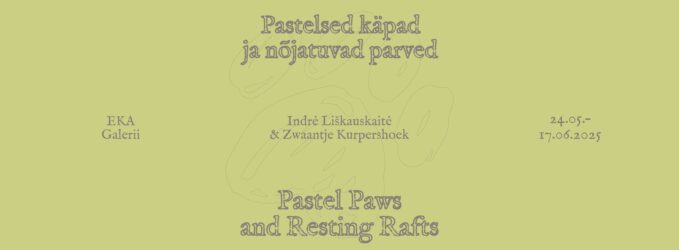
Zwaantje Kurpershoek & Indrė Liškauskaitė
“Pastel Paws and Resting Rafts”
EKA Gallery 24.05.–17.06.2025
Guided tour: 23.05.2025 at 5 pm
Opening: 23.05.2025 at 6 pm
Open Tue–Sat 12–6 pm Sun 12–4 pm, free entry
NB! EKA Gallery is closed during Pentecost on June 8!
The exhibition “Pastel Paws and Resting Rafts” is the first joint exhibition by Dutch artist Zwaantje Kurpershoek and Lithuanian artist Indrė Liškauskaitė. Both artists have spatial practice: the work of Zwaantje Kurpershoek comes from an interaction between physical materials and fictional stories resulting in mainly paintings and installations, Indrė Liškauskaitė creates drawings that she weaves with everyday found objects and that occupy the exhibition space in unconventional ways.
The selected works offer a glimpse into the personal relationships the artists have with their four-legged companions. Zwaantje Kurpershoek observes and depicts in her painting series the differences and points of contact between two living beings sharing a living space. How, in passing moments, she becomes close with her cat Nami, then distant once again. Her second work is an installation of pastel colored sculptures — part toy, part survival tool — that guides the viewer through a landscape evoking a mythical, ambiguous feeling of childhood. Indrė Liškauskaitė, who researches dog-human play and train dog agility sport with her non-human companions Delta and Delfina, suspends her four-legged collaborators’ toys and leashes within the exhibition space, also making her drawings go through obstacle course-like physical objects.
Artists: Zwaantje Kurpershoek & Indrė Liškauskaitė
Curator: Kaisa Maasik
Graphic design: Fatima-Ezzahra Khammas
Technical support: Karmo Migur
Exhibition is supported by the Cultural Endowment of Estonia, Erasmus+ Mobility Programme and Sadolin Estonia.
Opening drinks from Põhjala Brewery.
Zwaantje Kurpershoek & Indrė Liškauskaitė “Pastel Paws and Resting Rafts” EKA Gallery 24.05.–17.06.2025
Friday 23 May, 2025 — Tuesday 17 June, 2025
Zwaantje Kurpershoek & Indrė Liškauskaitė
“Pastel Paws and Resting Rafts”
EKA Gallery 24.05.–17.06.2025
Guided tour: 23.05.2025 at 5 pm
Opening: 23.05.2025 at 6 pm
Open Tue–Sat 12–6 pm Sun 12–4 pm, free entry
NB! EKA Gallery is closed during Pentecost on June 8!
The exhibition “Pastel Paws and Resting Rafts” is the first joint exhibition by Dutch artist Zwaantje Kurpershoek and Lithuanian artist Indrė Liškauskaitė. Both artists have spatial practice: the work of Zwaantje Kurpershoek comes from an interaction between physical materials and fictional stories resulting in mainly paintings and installations, Indrė Liškauskaitė creates drawings that she weaves with everyday found objects and that occupy the exhibition space in unconventional ways.
The selected works offer a glimpse into the personal relationships the artists have with their four-legged companions. Zwaantje Kurpershoek observes and depicts in her painting series the differences and points of contact between two living beings sharing a living space. How, in passing moments, she becomes close with her cat Nami, then distant once again. Her second work is an installation of pastel colored sculptures — part toy, part survival tool — that guides the viewer through a landscape evoking a mythical, ambiguous feeling of childhood. Indrė Liškauskaitė, who researches dog-human play and train dog agility sport with her non-human companions Delta and Delfina, suspends her four-legged collaborators’ toys and leashes within the exhibition space, also making her drawings go through obstacle course-like physical objects.
Artists: Zwaantje Kurpershoek & Indrė Liškauskaitė
Curator: Kaisa Maasik
Graphic design: Fatima-Ezzahra Khammas
Technical support: Karmo Migur
Exhibition is supported by the Cultural Endowment of Estonia, Erasmus+ Mobility Programme and Sadolin Estonia.
Opening drinks from Põhjala Brewery.
26.05.2025
Urban Studies Thesis Presentations and Defence
Visit Peru, Sicily, Słubice and more on May 26: Urban studies thesis presentations and defence
Urban Studies students will present and defend their thesis projects on May 26, 10–18 (A501).
This year’s projects explore a real kaleidoscope of places and themes: urban creativity and cooptation in Ljubljana; post-disaster reconstruction in Hatay, Turkey; urban river regulation in Vienna; anti-gentrification movements in Lisbon; an informal market at the Polish-German border; fishermen and urban NGOs vying to shape a Peruvian coastal community; and a housing speculation scheme in Sicily.
Come join us on this journey and support the students—the final review is open to the public.
Follow our channels for further details.
Urban Studies Thesis Presentations and Defence
Monday 26 May, 2025
Visit Peru, Sicily, Słubice and more on May 26: Urban studies thesis presentations and defence
Urban Studies students will present and defend their thesis projects on May 26, 10–18 (A501).
This year’s projects explore a real kaleidoscope of places and themes: urban creativity and cooptation in Ljubljana; post-disaster reconstruction in Hatay, Turkey; urban river regulation in Vienna; anti-gentrification movements in Lisbon; an informal market at the Polish-German border; fishermen and urban NGOs vying to shape a Peruvian coastal community; and a housing speculation scheme in Sicily.
Come join us on this journey and support the students—the final review is open to the public.
Follow our channels for further details.
22.05.2025 — 15.06.2025
Painting Students’ Group Exhibition “Kata-stroofe / Catastrophes”
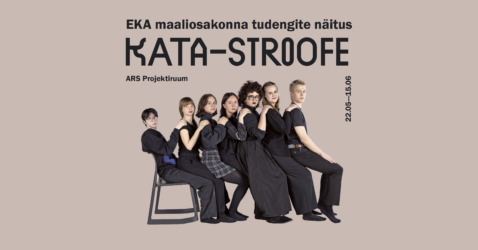
Kata-stroofe / Catastrophes is the group exhibition of the second year painting students of the Estonian Academy of Arts, opening Thursday, 22nd of May in ARS Project Space (Pärnu mnt. 154, Tallinn).
The participating artists are Aleksander Kiigemägi, Alec Hales, Kirke Kits, Marit Loitmets, Liisa Nurklik, Veronika Pavliuk, Elery Sallert, Polina Solovjova.
This exhibition brings together the works of eight different young painters who are connected by a shared studio space, common studies and the era into which they have been born. In addition, the works on display are connected by their format, the starting point of these paintings was a large blank canvas, mostly measuring around 2 x 3 metres in size. Such a surface challenges a painter in various ways, expecting sufficient planning and an ability to keep a freshness throughout the whole process.
Painting big is like running a marathon, with the performer needing to keep the spark until the end, knowing and preparing in advance for the idea and resources to last for a longer time and a wider brushstroke.
The resulting artworks variate between figuration and abstraction, predominantly being poetic and introspective. The artists themselves comment on the following:
Here on the walls we have verses made of frames, canvas, paint and something else in between. We have reached for what appeals to us, haunts, nourishes, questions without giving an answer. What ought to be the answer, instead turns out to be a pair of opposites divided by a slash. Control/trust, something/nothing, serious/absurd, emptiness and fulfillment, individuality and hiding oneself.
The exhibition remains open until the 15th of June, Wed-Sat 12-18, Sun 12-16.
The students were supervised by Sirja-Liisa Eelma, Alice Kask and Holger Loodus.
Graphic design by Pärtel Eelmere, photography by Mikk Keis.
The exhibition is supported by the painting department of the Estonian Academy of Arts, Rott/Rat, Estonian Academy of Arts, Estonian Artists’ Association, ARS Art Factory, Põhjala Brewing AS, Kulinaaria OÜ, Punch Club OÜ.
The exhibition is held by the painting department of the Estonian Academy of Arts and is a part of the Estonian Academy of Arts Grad Show TASE’25 satellite programme.
Contact: sirja-liisa.eelma@artun.ee, holger.loodus@artun.ee
Catastrophes
Hello, dear person – you are so welcome in our space. Here on the walls we have verses made of frames, canvas, paint and something else in between. We have reached for what appeals to us, haunts, nourishes, questions without giving an answer. What ought to be the answer, instead turns out to be a pair of opposites divided by a slash. Control/trust, something/nothing, serious/absurd, emptiness and fulfillment, individuality and hiding oneself.
Should we consider this lack of one certain answer a catastrophe of multitudes? See the absence of one final and definitive confirmation as a failure of the question itself? If we truly believed in that, we would have covered up our stanzas and left this room.
The exhibition’s title comes from a poem of the same name by Artur Alliksaar. In this poem, the following line can be found: “Why won’t you believe in the doors you have not unlocked? Why?!” Thank you, our guest, for taking the step towards our door. We’ll now lead you to more than one window.
Painting Students’ Group Exhibition “Kata-stroofe / Catastrophes”
Thursday 22 May, 2025 — Sunday 15 June, 2025
Kata-stroofe / Catastrophes is the group exhibition of the second year painting students of the Estonian Academy of Arts, opening Thursday, 22nd of May in ARS Project Space (Pärnu mnt. 154, Tallinn).
The participating artists are Aleksander Kiigemägi, Alec Hales, Kirke Kits, Marit Loitmets, Liisa Nurklik, Veronika Pavliuk, Elery Sallert, Polina Solovjova.
This exhibition brings together the works of eight different young painters who are connected by a shared studio space, common studies and the era into which they have been born. In addition, the works on display are connected by their format, the starting point of these paintings was a large blank canvas, mostly measuring around 2 x 3 metres in size. Such a surface challenges a painter in various ways, expecting sufficient planning and an ability to keep a freshness throughout the whole process.
Painting big is like running a marathon, with the performer needing to keep the spark until the end, knowing and preparing in advance for the idea and resources to last for a longer time and a wider brushstroke.
The resulting artworks variate between figuration and abstraction, predominantly being poetic and introspective. The artists themselves comment on the following:
Here on the walls we have verses made of frames, canvas, paint and something else in between. We have reached for what appeals to us, haunts, nourishes, questions without giving an answer. What ought to be the answer, instead turns out to be a pair of opposites divided by a slash. Control/trust, something/nothing, serious/absurd, emptiness and fulfillment, individuality and hiding oneself.
The exhibition remains open until the 15th of June, Wed-Sat 12-18, Sun 12-16.
The students were supervised by Sirja-Liisa Eelma, Alice Kask and Holger Loodus.
Graphic design by Pärtel Eelmere, photography by Mikk Keis.
The exhibition is supported by the painting department of the Estonian Academy of Arts, Rott/Rat, Estonian Academy of Arts, Estonian Artists’ Association, ARS Art Factory, Põhjala Brewing AS, Kulinaaria OÜ, Punch Club OÜ.
The exhibition is held by the painting department of the Estonian Academy of Arts and is a part of the Estonian Academy of Arts Grad Show TASE’25 satellite programme.
Contact: sirja-liisa.eelma@artun.ee, holger.loodus@artun.ee
Catastrophes
Hello, dear person – you are so welcome in our space. Here on the walls we have verses made of frames, canvas, paint and something else in between. We have reached for what appeals to us, haunts, nourishes, questions without giving an answer. What ought to be the answer, instead turns out to be a pair of opposites divided by a slash. Control/trust, something/nothing, serious/absurd, emptiness and fulfillment, individuality and hiding oneself.
Should we consider this lack of one certain answer a catastrophe of multitudes? See the absence of one final and definitive confirmation as a failure of the question itself? If we truly believed in that, we would have covered up our stanzas and left this room.
The exhibition’s title comes from a poem of the same name by Artur Alliksaar. In this poem, the following line can be found: “Why won’t you believe in the doors you have not unlocked? Why?!” Thank you, our guest, for taking the step towards our door. We’ll now lead you to more than one window.
26.05.2025
Photography students’ shorts in Cinema Sõprus
Public screening of the short films by the 2nd year students of the department of photography at the Estonian Academy of Arts will take place at 10:00AM on Monday, May 26th in Cinema Sõprus (Vana-Posti Street 8, Tallinn).
Films were made during the Art Project 3 course, supervised by Paul Kuimet, Lauri Laasik, Mattias Veermets and Jevgeni Berezovski.
The screening is free and everyone is welcome!
More info: Paul Kuimet, paul.kuimet@artun.ee
Photography students’ shorts in Cinema Sõprus
Monday 26 May, 2025
Public screening of the short films by the 2nd year students of the department of photography at the Estonian Academy of Arts will take place at 10:00AM on Monday, May 26th in Cinema Sõprus (Vana-Posti Street 8, Tallinn).
Films were made during the Art Project 3 course, supervised by Paul Kuimet, Lauri Laasik, Mattias Veermets and Jevgeni Berezovski.
The screening is free and everyone is welcome!
More info: Paul Kuimet, paul.kuimet@artun.ee
20.05.2025 — 21.05.2025
Co(h)e(r)cion: Between the Ruined and the Rooted
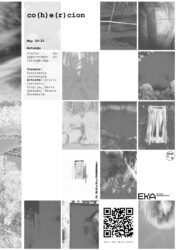
20.05–21.05
EKA Artists Reclaim Forgotten Military Ruins in Astangu, Tallinn
Co(h)e(r)cion is a site-specific group exhibition by Contemporary Art MA (MACA) students of the Estonian Academy of Arts, held in the historic ruins of the ammunition tunnels in Astangu, Tallinn. Once part of a Tsarist-era military complex and later a highly protected Soviet ammunition site, this area is now largely forgotten and abandoned.
Four international contemporary artists :
Fausta Norekaite (LT), Denis Lebedev (DE), Giulio Cusinato (IT), and Kroplya (BY) – mediate the layered histories of this unique landscape through sound, language, ecology, image, and interactive elements.
The title Co(h)e(r)cion is a wordplay, reflecting the site’s ambiguous nature and the emotions it evokes – blending cohesion, coercion, and erosion.
The mysterious ambience of Astangu inspired the artists to explore concepts that extend beyond human consciousness.
Co(h)e(r)cion invites you to experience these artistic incarnations of loss, presence, absence, and natural forces firsthand.
This exhibition also raises awareness about the role of ruins in post-humanist art ethics — exploring the potential for artistic intervention in more cohesive, integrated, and thoughtful ways.
From May 20 to 21, Co(h)e(r)cion dares visitors to immerse themselves in the secret realm of the unspeakable and the unseen.
Curated by Anastassia Janovskaja
Location
The exhibition takes place in Astangu forest, Haabersti, Tallinn.
Coordinates: 59°23’50.6″N 24°37’35.0″E
You can find the exact location by scanning the QR code provided or clicking the link below:
https://maps.app.goo.gl/UiC3KA5CYYYknW3u5 .
The map is also available on our flyer for your convenience.

Co(h)e(r)cion: Between the Ruined and the Rooted
Tuesday 20 May, 2025 — Wednesday 21 May, 2025
20.05–21.05
EKA Artists Reclaim Forgotten Military Ruins in Astangu, Tallinn
Co(h)e(r)cion is a site-specific group exhibition by Contemporary Art MA (MACA) students of the Estonian Academy of Arts, held in the historic ruins of the ammunition tunnels in Astangu, Tallinn. Once part of a Tsarist-era military complex and later a highly protected Soviet ammunition site, this area is now largely forgotten and abandoned.
Four international contemporary artists :
Fausta Norekaite (LT), Denis Lebedev (DE), Giulio Cusinato (IT), and Kroplya (BY) – mediate the layered histories of this unique landscape through sound, language, ecology, image, and interactive elements.
The title Co(h)e(r)cion is a wordplay, reflecting the site’s ambiguous nature and the emotions it evokes – blending cohesion, coercion, and erosion.
The mysterious ambience of Astangu inspired the artists to explore concepts that extend beyond human consciousness.
Co(h)e(r)cion invites you to experience these artistic incarnations of loss, presence, absence, and natural forces firsthand.
This exhibition also raises awareness about the role of ruins in post-humanist art ethics — exploring the potential for artistic intervention in more cohesive, integrated, and thoughtful ways.
From May 20 to 21, Co(h)e(r)cion dares visitors to immerse themselves in the secret realm of the unspeakable and the unseen.
Curated by Anastassia Janovskaja
Location
The exhibition takes place in Astangu forest, Haabersti, Tallinn.
Coordinates: 59°23’50.6″N 24°37’35.0″E
You can find the exact location by scanning the QR code provided or clicking the link below:
https://maps.app.goo.gl/UiC3KA5CYYYknW3u5 .
The map is also available on our flyer for your convenience.
22.05.2025
Kino: Nathaniel Kahn “My Architect”
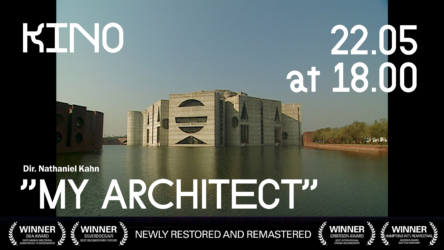
On May 22nd at 6:00 PM, filmmaker Nathaniel Kahn will present the film “My Architect” at the Estonian Academy of Arts about his father, the world-famous Estonian born architect Louis Kahn, and his work.
There will also be a conversation with Nathaniel on site and an opportunity to ask questions.
Trailer and information:
https://www.imdb.com/title/tt0373175/
“Astonishingly, this personal saga blossoms into a “Citizen Kane”-like meditation on whether anyone is truly knowable – but the showpiece is Kahn the younger’s spellbinding photography, which shows off his dad’s buildings’ epic grandeur as well as their spiritual intimacy.”
– Robert Kolker, New York Magazine
“One of the best films of this, or any, year.”
–Leonard Maltin, Hot Ticket
“For gripping drama and suspense, there are few fictional movies that can hold a candle to Mr. Kahn’s odyssey through time and space.”
–Andrew Sarris, The Observer
Louis I. Kahn, who died in 1974, was one of the greatest architects of the twentieth century, creating a handful of buildings that, in the words of the L.A. Times, “change your life.” But he left behind an illegitimate son, Nathaniel, and a personal life of secrets and broken promises. “My Architect” takes us on a heartbreaking yet humorous journey as Nathaniel attempts to reconnect with his deceased father. The riveting narrative takes us from the men’s room in Penn Station, where Kahn died bankrupt and alone, to the bustling streets of Bangladesh and the inner sanctums of Jerusalem politics, as well as through unforgettable encounters with the world’s most celebrated architects. In a documentary with all the emotional impact of a dramatic feature film, Nathaniel’s journey becomes a universal investigation of identity—and a celebration of art and, ultimately, life itself.
Kino: Nathaniel Kahn “My Architect”
Thursday 22 May, 2025
On May 22nd at 6:00 PM, filmmaker Nathaniel Kahn will present the film “My Architect” at the Estonian Academy of Arts about his father, the world-famous Estonian born architect Louis Kahn, and his work.
There will also be a conversation with Nathaniel on site and an opportunity to ask questions.
Trailer and information:
https://www.imdb.com/title/tt0373175/
“Astonishingly, this personal saga blossoms into a “Citizen Kane”-like meditation on whether anyone is truly knowable – but the showpiece is Kahn the younger’s spellbinding photography, which shows off his dad’s buildings’ epic grandeur as well as their spiritual intimacy.”
– Robert Kolker, New York Magazine
“One of the best films of this, or any, year.”
–Leonard Maltin, Hot Ticket
“For gripping drama and suspense, there are few fictional movies that can hold a candle to Mr. Kahn’s odyssey through time and space.”
–Andrew Sarris, The Observer
Louis I. Kahn, who died in 1974, was one of the greatest architects of the twentieth century, creating a handful of buildings that, in the words of the L.A. Times, “change your life.” But he left behind an illegitimate son, Nathaniel, and a personal life of secrets and broken promises. “My Architect” takes us on a heartbreaking yet humorous journey as Nathaniel attempts to reconnect with his deceased father. The riveting narrative takes us from the men’s room in Penn Station, where Kahn died bankrupt and alone, to the bustling streets of Bangladesh and the inner sanctums of Jerusalem politics, as well as through unforgettable encounters with the world’s most celebrated architects. In a documentary with all the emotional impact of a dramatic feature film, Nathaniel’s journey becomes a universal investigation of identity—and a celebration of art and, ultimately, life itself.
30.05.2025 — 31.08.2025
COCOON
Opening:
30.05.2025 at 17:00
Location: Paks Margareeta, Pikk tn 70, 10133 Tallinn
Curator: KITKIT PARA
Artists: Andre Joosep Arming, Zody Burke, Laura De Jaeger, DOKK (Liina Leo, Eugenio Marini, Ingrid Helena Pajo), Kadi Estland, Maria Kapajeva, Ando Naulainen & Pire Sova, Sarah Nõmm, Mari Volens
As questions of care and belonging become ever more entwined with vulnerability and fragility, the group exhibition COCOON examines how contemporary artists engage with the theme of protection through diverse perspectives. Set within the historic walls of Fat Margaret, a 14th-century defensive tower in Tallinn’s Old Town, the exhibition connects the history of medieval fortification to reflections on land, water, borders, and the fluidity of identities. Tracing the shifting nature of place, where land holds memory, water signals change, and borders reveal evolving cultural and political lines, while identities are explored as fluid and ever-changing, shaped by adaptation, exchange and context.Featuring nine artists, duos, and collectives based in Estonia, the exhibition includes video, sculpture, photography, photographic prints, and site-specific installations, displayed throughout the museum to engage with the building’s historical architecture and existing artifacts, creating a dialogue between past, present, and future. COCOON explores the evolving meaning of protection amid ecological, political, and cultural shifts and questions what it means to protect and care for ourselves, for one another, and for the stories we carry.
Graphic design: Fatima-Ezzahra El Khammas
Translator: Kristiina Arna
Special thanks to Põhjala Brewery, Hansas Plaadimaailm OÜ, Mihkel Karu, Hanna Samoson
Supported by Cultural Endowment of Estonia and Estonian Maritime Museum
COCOON
Friday 30 May, 2025 — Sunday 31 August, 2025
Opening:
30.05.2025 at 17:00
Location: Paks Margareeta, Pikk tn 70, 10133 Tallinn
Curator: KITKIT PARA
Artists: Andre Joosep Arming, Zody Burke, Laura De Jaeger, DOKK (Liina Leo, Eugenio Marini, Ingrid Helena Pajo), Kadi Estland, Maria Kapajeva, Ando Naulainen & Pire Sova, Sarah Nõmm, Mari Volens
As questions of care and belonging become ever more entwined with vulnerability and fragility, the group exhibition COCOON examines how contemporary artists engage with the theme of protection through diverse perspectives. Set within the historic walls of Fat Margaret, a 14th-century defensive tower in Tallinn’s Old Town, the exhibition connects the history of medieval fortification to reflections on land, water, borders, and the fluidity of identities. Tracing the shifting nature of place, where land holds memory, water signals change, and borders reveal evolving cultural and political lines, while identities are explored as fluid and ever-changing, shaped by adaptation, exchange and context.Featuring nine artists, duos, and collectives based in Estonia, the exhibition includes video, sculpture, photography, photographic prints, and site-specific installations, displayed throughout the museum to engage with the building’s historical architecture and existing artifacts, creating a dialogue between past, present, and future. COCOON explores the evolving meaning of protection amid ecological, political, and cultural shifts and questions what it means to protect and care for ourselves, for one another, and for the stories we carry.
Graphic design: Fatima-Ezzahra El Khammas
Translator: Kristiina Arna
Special thanks to Põhjala Brewery, Hansas Plaadimaailm OÜ, Mihkel Karu, Hanna Samoson
Supported by Cultural Endowment of Estonia and Estonian Maritime Museum
22.05.2025 — 08.06.2025
“MÕJU”
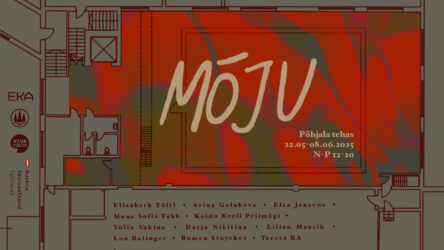
“MÕJU”, a group exhibition by students of the Glass and Ceramics departments at the Estonian Academy of Arts (EKA), opens on Thursday, May 22 at 18:00 in the Põhjala Tehas Cultural Centre, Marati 5, Tallinn.
From May 22 to June 8, the the exhibition presents works by eleven emerging artists who each explore the concept of “influence” — the meaning of the Estonian word “mõju” — through personal interpretations and diverse material approaches.
A shared conceptual approach ties the diverse works together. Here, influence moves quietly – through gestures, fragments, and the gentle persistence of repetition. It resides in the body, in memory, in material – often unnoticed until something shifts, suddenly becoming impossible to ignore. A surface cracks. A pattern breaks. A new perspective emerges.
At MÕJU, influence is not a force to be imposed but a presence to be sensed. It resists definition, yet leaves a trace. A mark. A memory. A motion repeated until it becomes something else.
Exploring themes such as language, memory and music—the artists employ materials ranging from glass and ceramics to photography and site-specific or ephemeral works.
Participants: Arina Golubeva, Darja Nikitina, Elisabeth Töltl, Elza Jenzena, Koidu K. Priimägi, Lilian Maasik, Lou Bolinger, Mona Sofia Tahk, Rumen Stoychev, Teresa RA, Yulia Vakina
Supervisors: Kaja Altvee, Ingrid Allik, Kateriin Rikken
Graphic design: Koidu K. Priimägi, Elisabeth Töltl
The exhibition is supported by the Estonian Academy of Arts, Vivacolor, Põhjala Tehas and
Embassy of Austria.
The exhibition opening is supported by Põhjala Brewery.
“MÕJU”
Thursday 22 May, 2025 — Sunday 08 June, 2025
“MÕJU”, a group exhibition by students of the Glass and Ceramics departments at the Estonian Academy of Arts (EKA), opens on Thursday, May 22 at 18:00 in the Põhjala Tehas Cultural Centre, Marati 5, Tallinn.
From May 22 to June 8, the the exhibition presents works by eleven emerging artists who each explore the concept of “influence” — the meaning of the Estonian word “mõju” — through personal interpretations and diverse material approaches.
A shared conceptual approach ties the diverse works together. Here, influence moves quietly – through gestures, fragments, and the gentle persistence of repetition. It resides in the body, in memory, in material – often unnoticed until something shifts, suddenly becoming impossible to ignore. A surface cracks. A pattern breaks. A new perspective emerges.
At MÕJU, influence is not a force to be imposed but a presence to be sensed. It resists definition, yet leaves a trace. A mark. A memory. A motion repeated until it becomes something else.
Exploring themes such as language, memory and music—the artists employ materials ranging from glass and ceramics to photography and site-specific or ephemeral works.
Participants: Arina Golubeva, Darja Nikitina, Elisabeth Töltl, Elza Jenzena, Koidu K. Priimägi, Lilian Maasik, Lou Bolinger, Mona Sofia Tahk, Rumen Stoychev, Teresa RA, Yulia Vakina
Supervisors: Kaja Altvee, Ingrid Allik, Kateriin Rikken
Graphic design: Koidu K. Priimägi, Elisabeth Töltl
The exhibition is supported by the Estonian Academy of Arts, Vivacolor, Põhjala Tehas and
Embassy of Austria.
The exhibition opening is supported by Põhjala Brewery.