
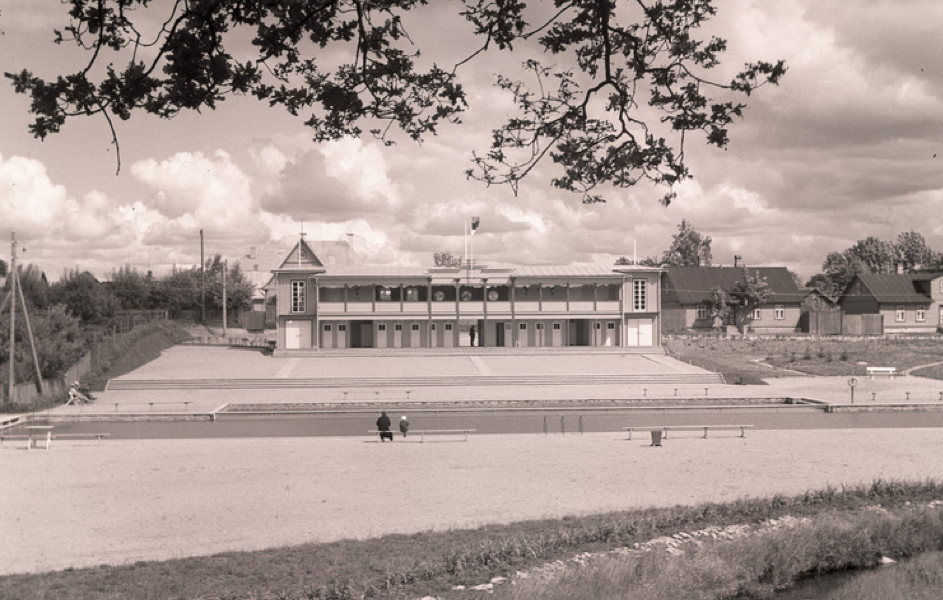
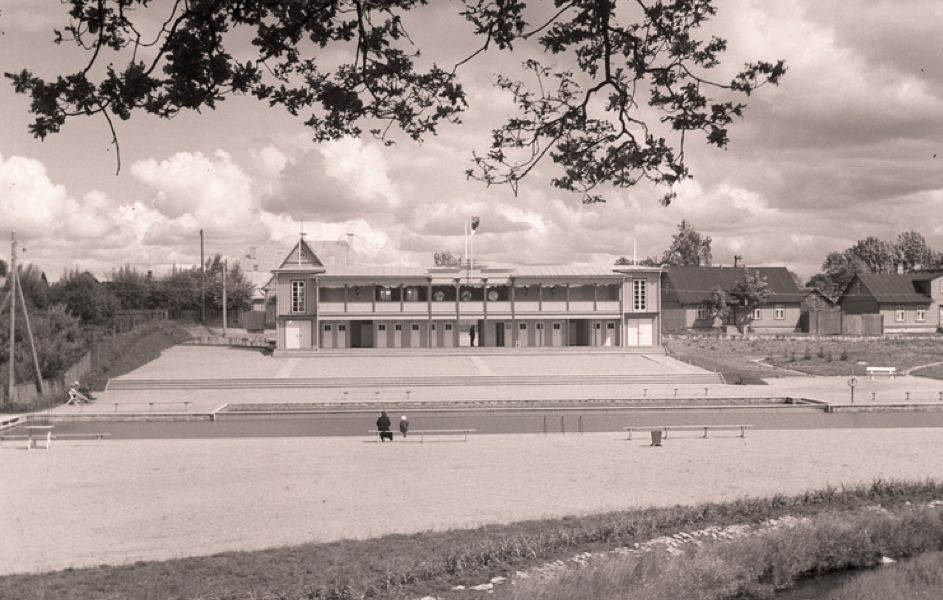
Rakvere Swimming Pool ca 1938. L.Koidula 30, Rakvere. Photo: Carl Sarap
The first-year master’s degree student’s special studio “Development Direction 2” will be dedicated to historical interiors in the spring semester of 2024. Under the guidance of lecturer Liina Langemets, the students will examine the Rakvere Bathhouse (architect Tõnis Mihkelson), completed in 1937, where a nursing home currently operates.
Interior space is something that is constantly changing, moving with history. How much do we have to take into account the past when solving interiors in existing buildings? What is inevitable about it, what is not? The origins of any later style are mostly in classicism, the cradle of modern architecture. It is important to see these proportions, perceive the patterns of solutions through different styles, and choose the right techniques when adding new ones. By the end of the course, the student should be able to ask questions, because an interior architect does not only come into contact with new buildings in his work, but also has to do more and more projects in old ones. Sensitive solutions must be found for ventilation, lighting and furnishings that meet modern standards.
The course will design the main interior architecture project for the Rakvere beach building, built in 1937, at Koidula 30. The building represents wood functionalism, architect Tõnis Mihkelson. The owner of the building wants to find a new, functional use for the building (currently the building is used as a retirement home). To this end, students can offer their own vision.