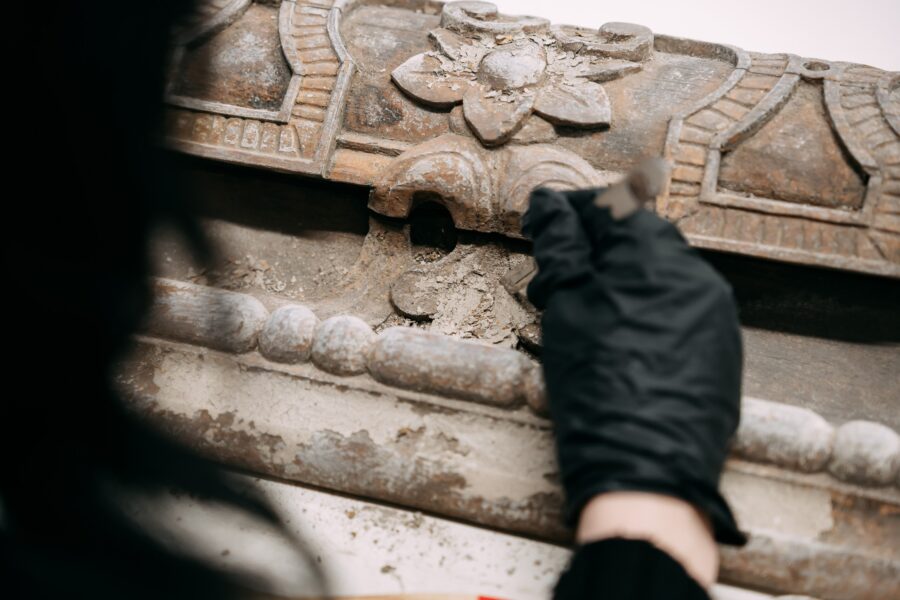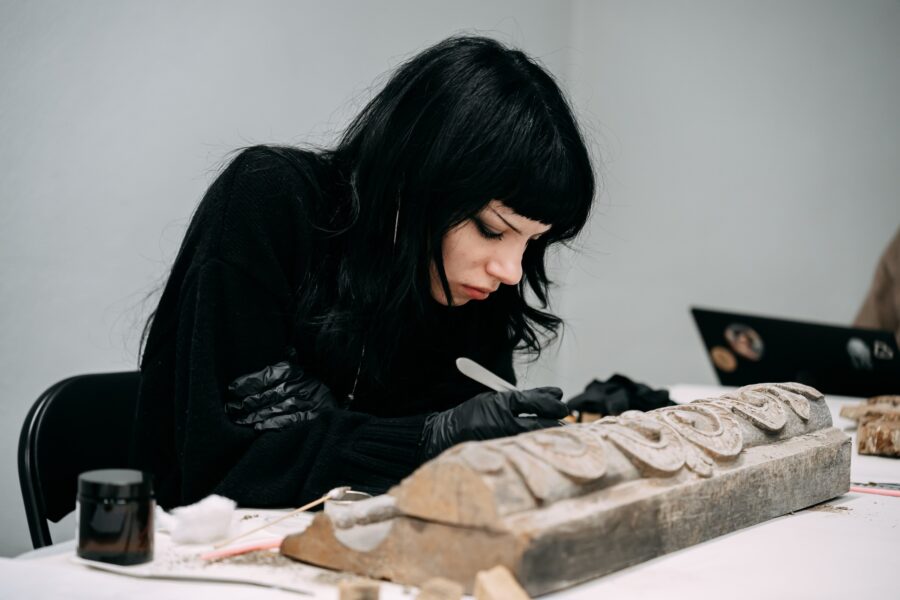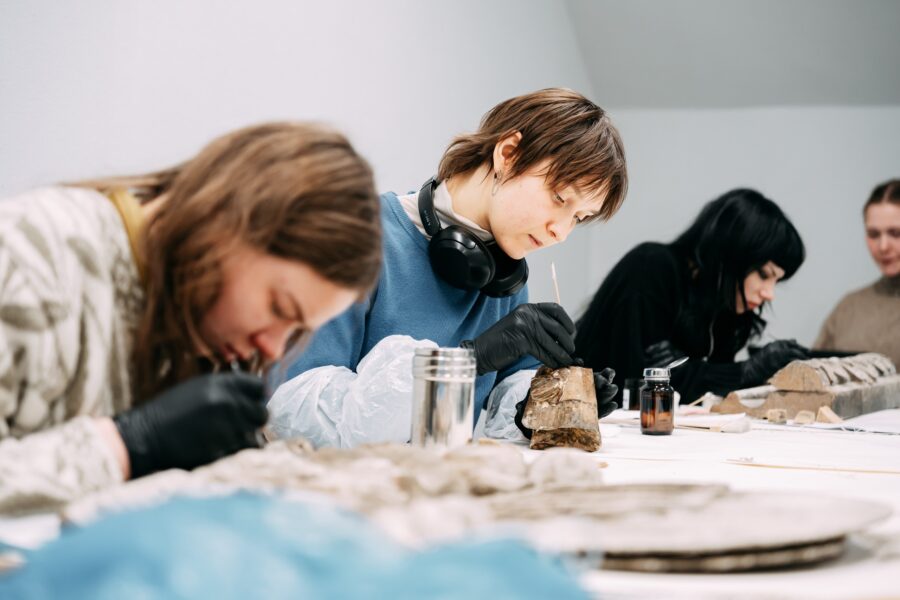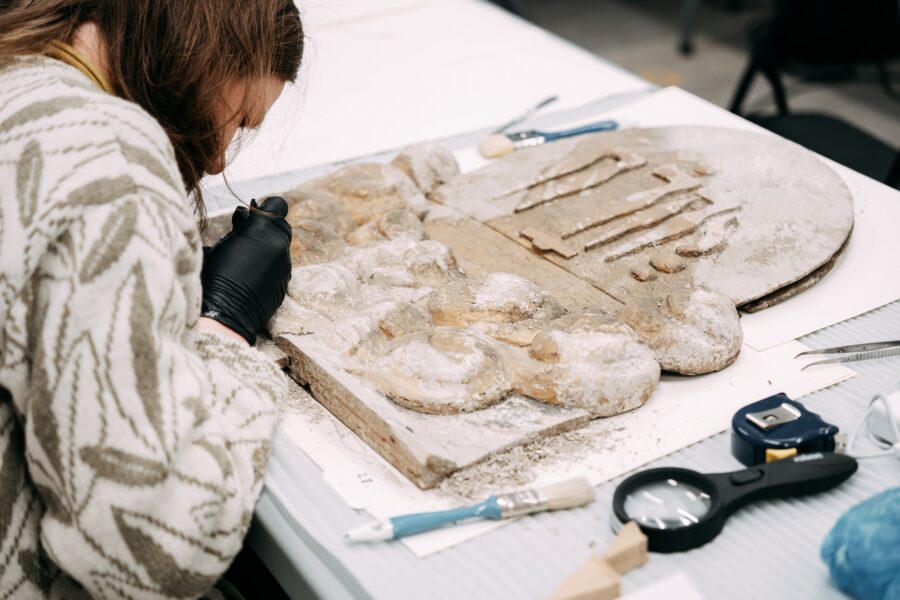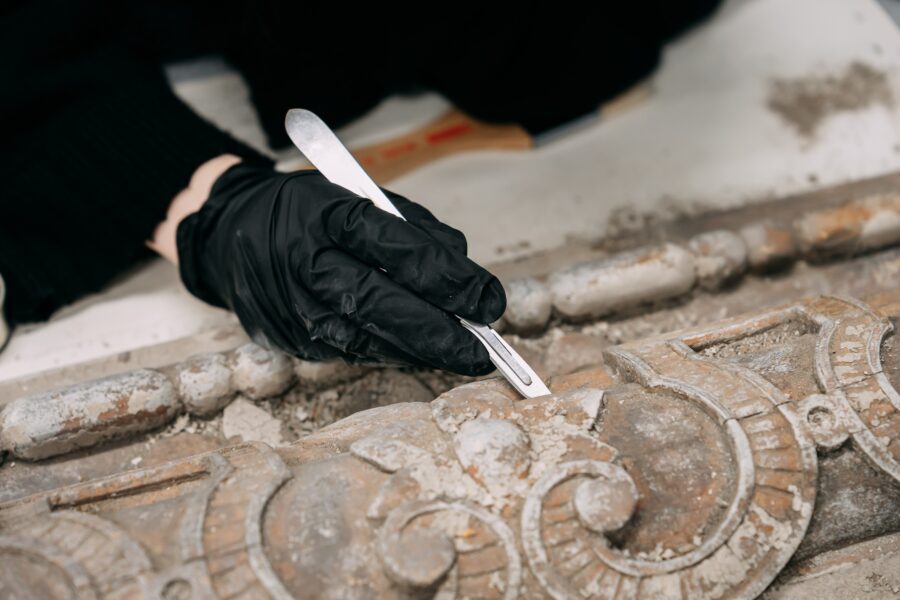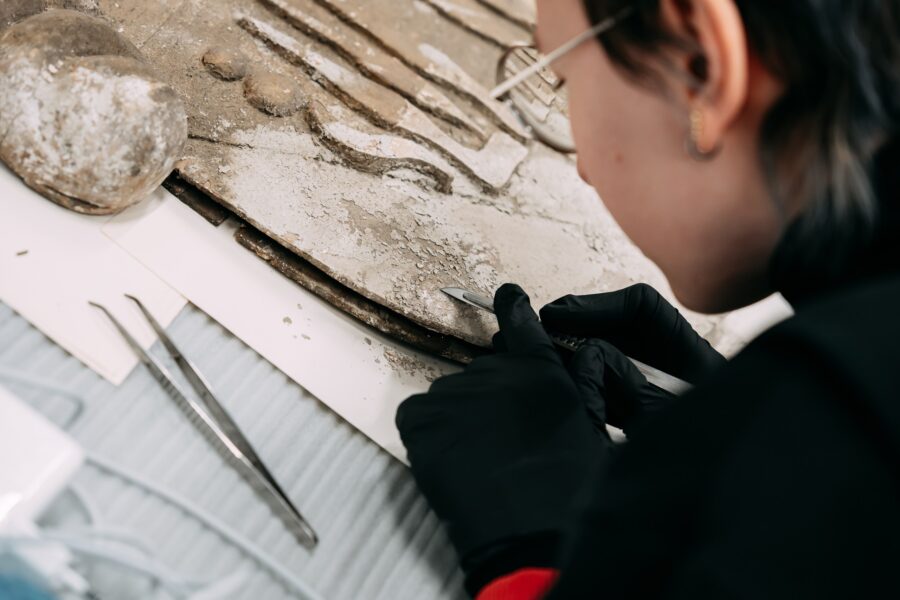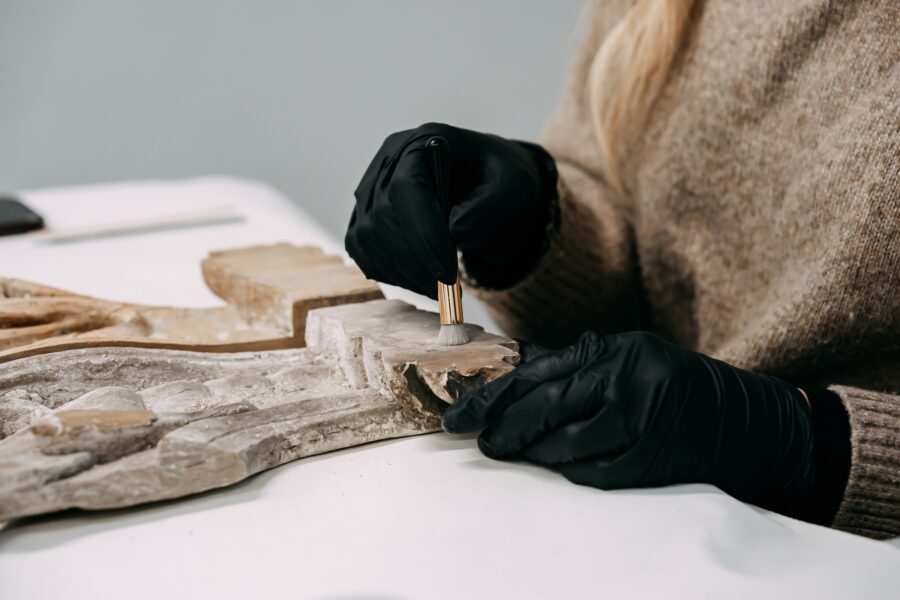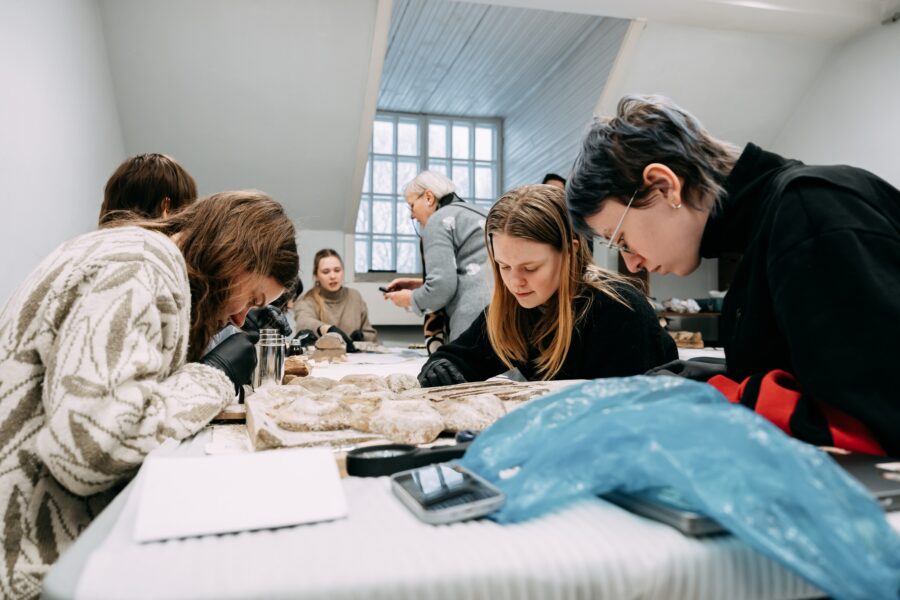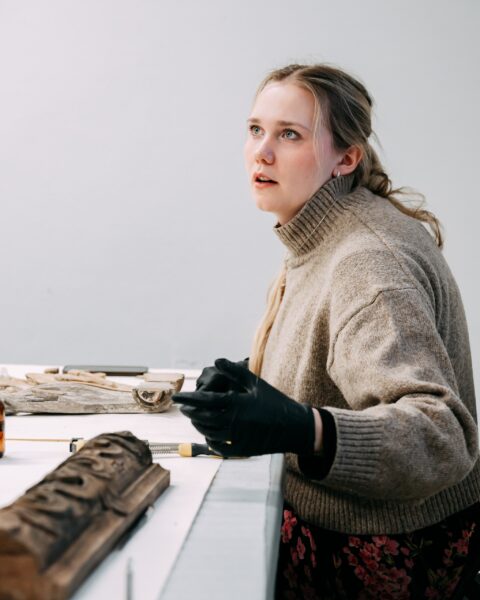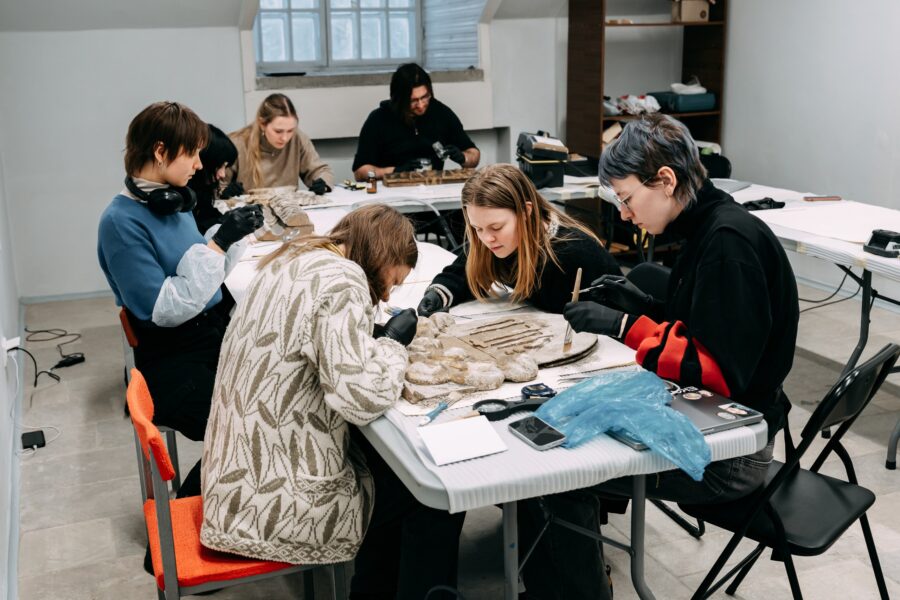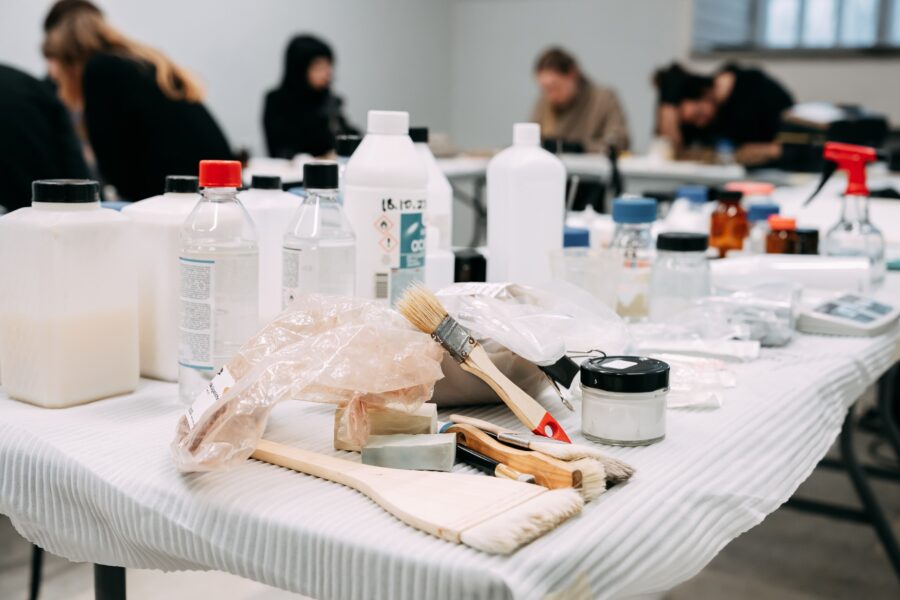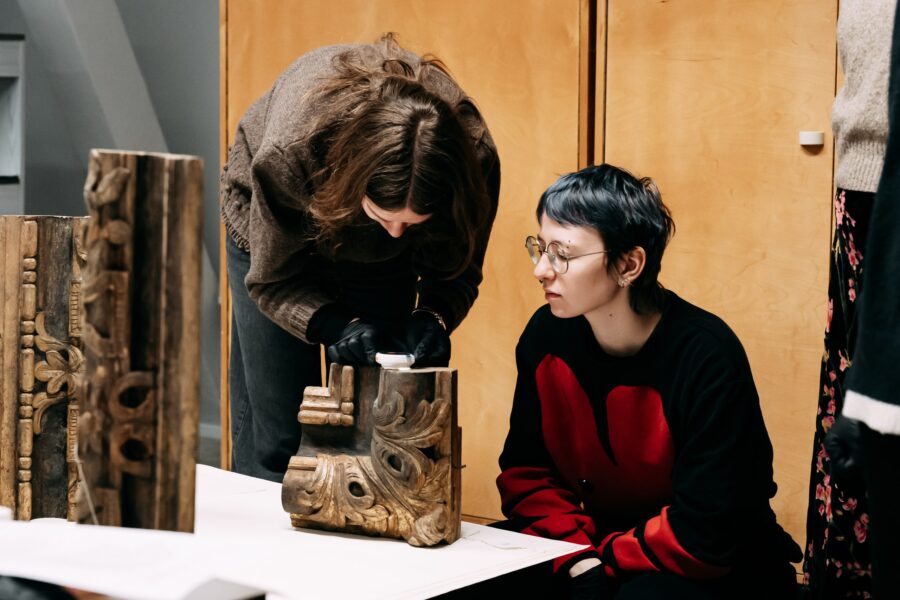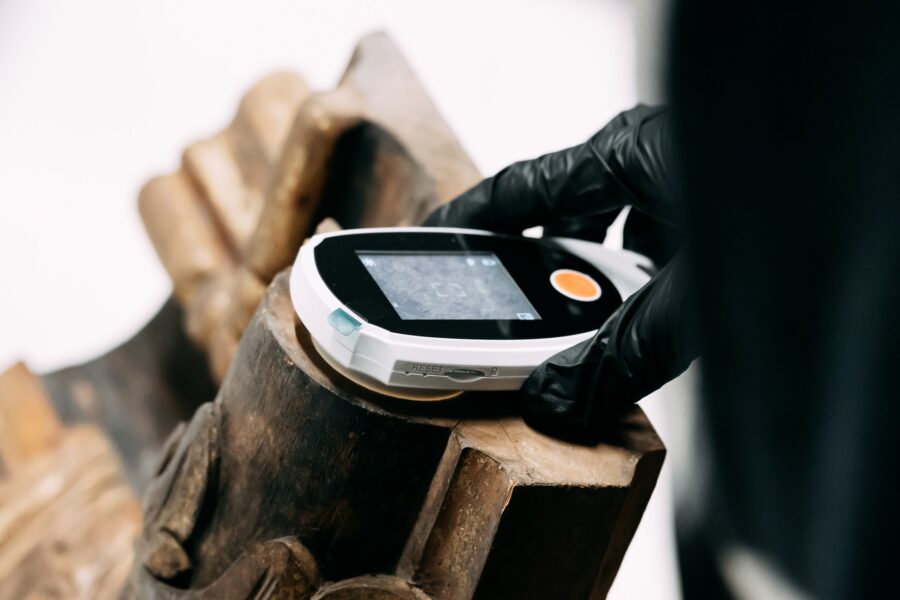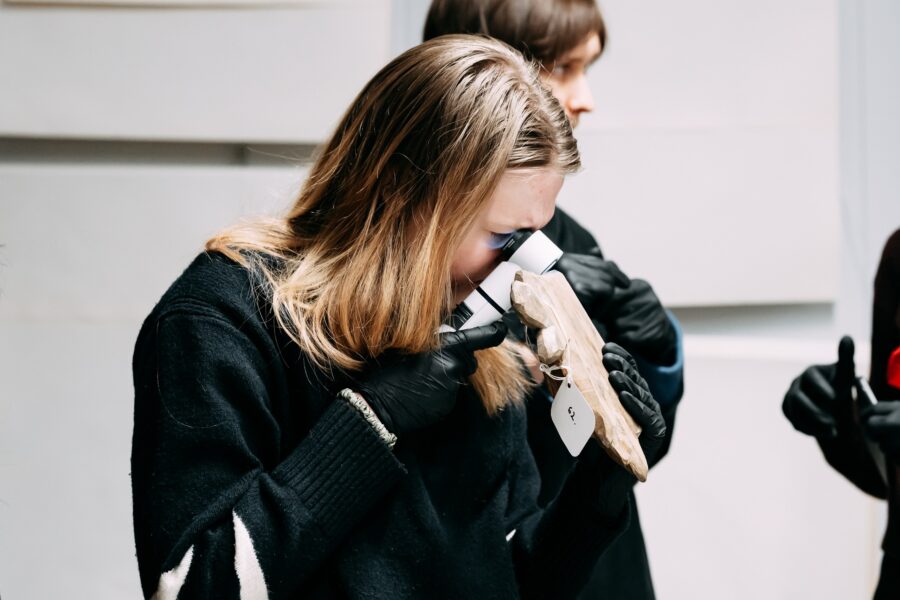
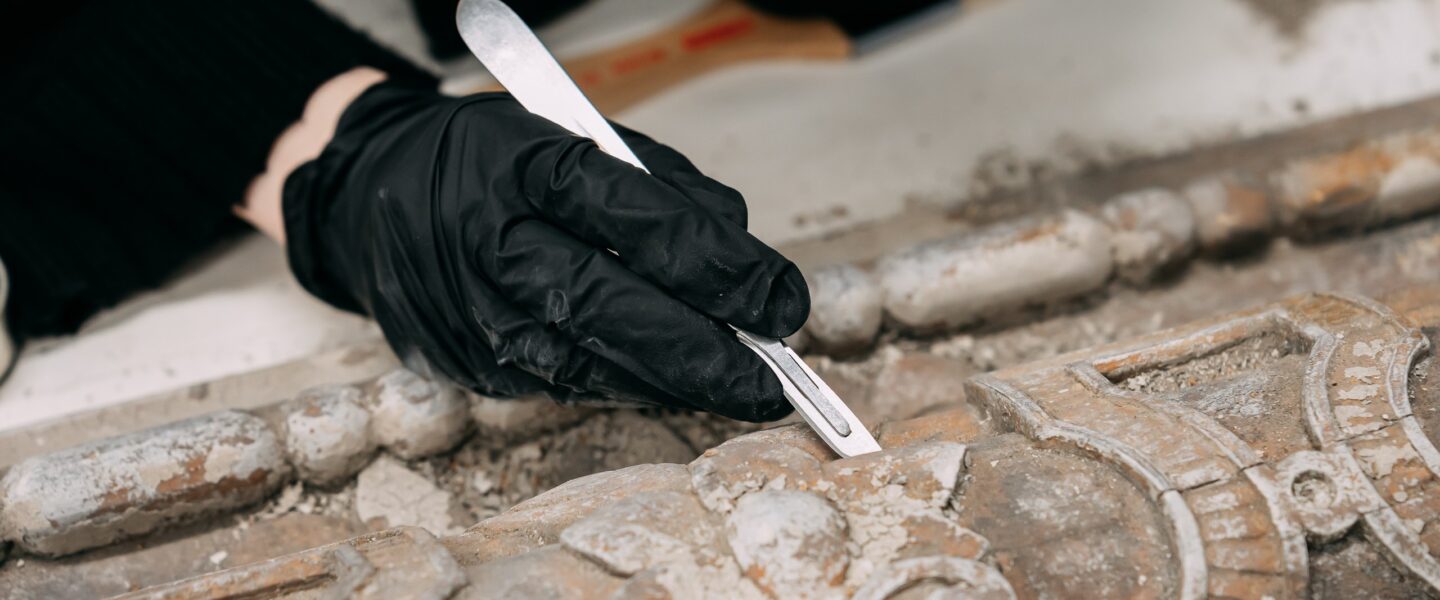
Students from the Department of Cultural Heritage and Conservation at the Estonian Academy of Arts (EKA) once again spent a week at the Narva Museum from 26–30 January, carrying out practical conservation work on polychrome wooden Baroque elements. This marks the third stage of the cooperation project “Narva Wooden Baroque”, launched in 2023 by the Narva Museum and the Estonian Academy of Arts, which focuses on the study of the museum’s collection of 17th–18th-century Baroque wooden sculpture and ornamental fragments. These works, with a history of more than 300 years, have not been exhibited for over 70 years and have until now been kept in the museum’s storage facilities. In 2023, this valuable collection of fragments was presented to the public for the first time.
During the earlier stages of the project (“Narva Wooden Baroque” I and II), work focused on the inventorying of the fragments, initial conservation, and material studies. The first stage revealed that the majority of the fragments originate from monumental picture frames from St John’s Church in Narva and from the altar of the Narva Cathedral of the Transfiguration of Our Lord. These works had previously been considered completely destroyed.
The third stage of the project focused on fragments of wooden frames originating from St John’s Church in Narva. The aim was to identify which elements belong together and to determine the original frames to which they belonged, thus taking a step closer to the future exhibition of the wooden Baroque collection. As part of this stage, wood analysis was carried out, beginning with the identification of wood species. The research was conducted by Alar Läänelaid, Professor Emeritus at the Institute of Ecology and Earth Sciences of the University of Tartu, and Kristina Sohar, Research Fellow in Physical Geography, who also taught students basic methods for identifying wood species. The students’ conservation practice was supervised by Maria Väinsar.
As part of the project, the traditional lecture series continued and is available on the Narva Museum’s YouTube channel, together with lectures from previous stages of the project and other activities of the museum.
Documentation of the works conserved by the students is available in the digital repository of the EKA Department of Cultural Heritage and Conservation.
In 2025, Jüri-Martin Lepp defended a master’s thesis at the EKA Institute of Art History and Visual Culture, examining and contextualising the destroyed ensembles of two paintings from St John’s Church in Narva and the altarpiece wall of Medieval Town Church. The thesis is available in the EKA digital repository.
Photos: Jelizaveta Gross