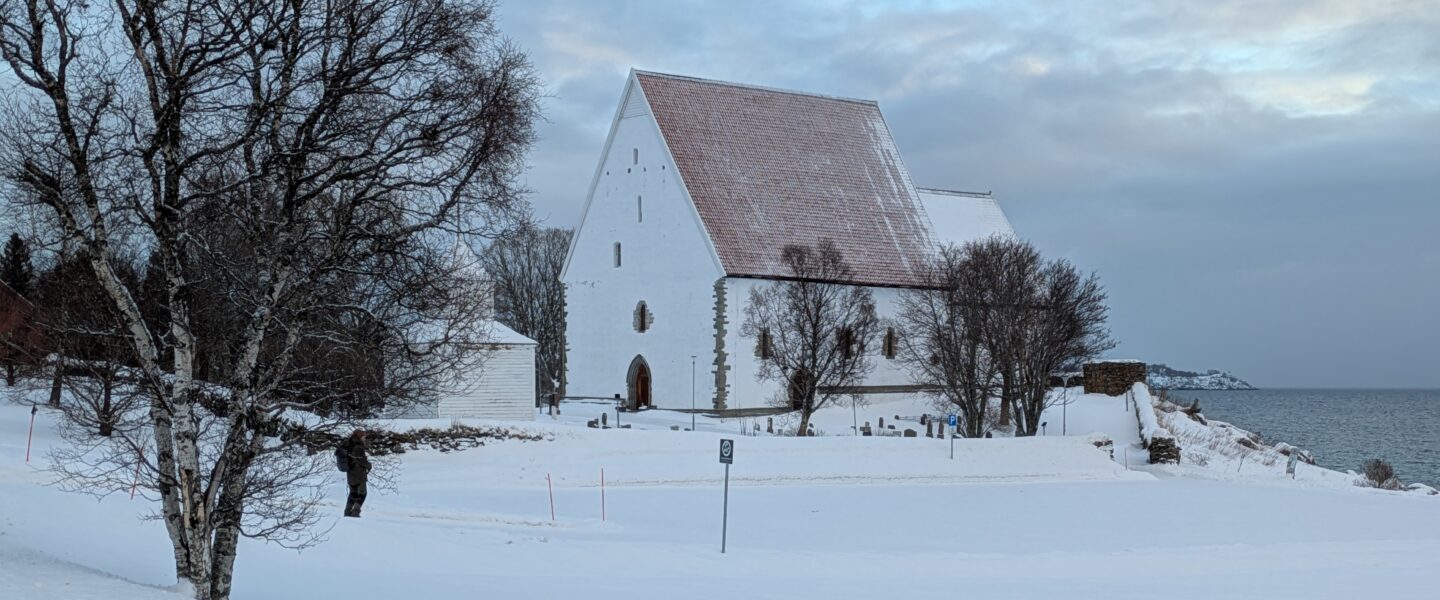
The world’s northernmost medieval stone church in Trondenes. Photo: Maris Veeremäe
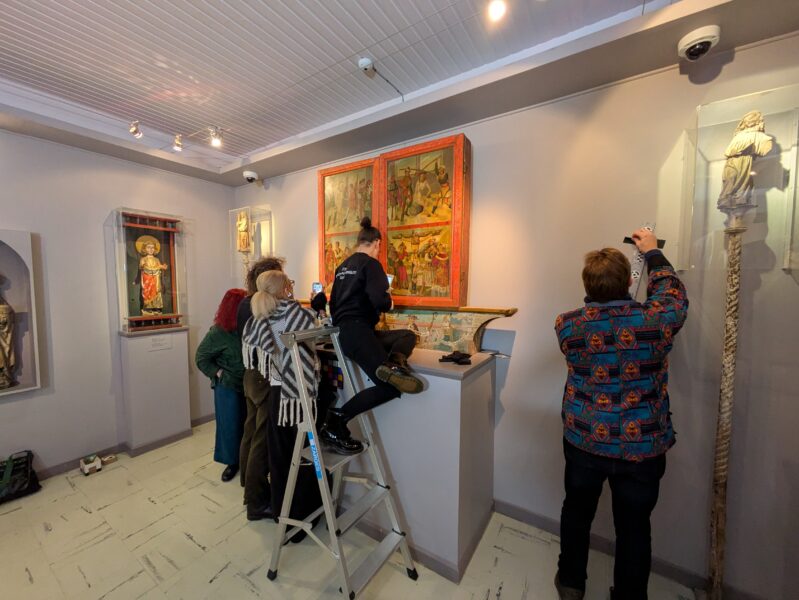
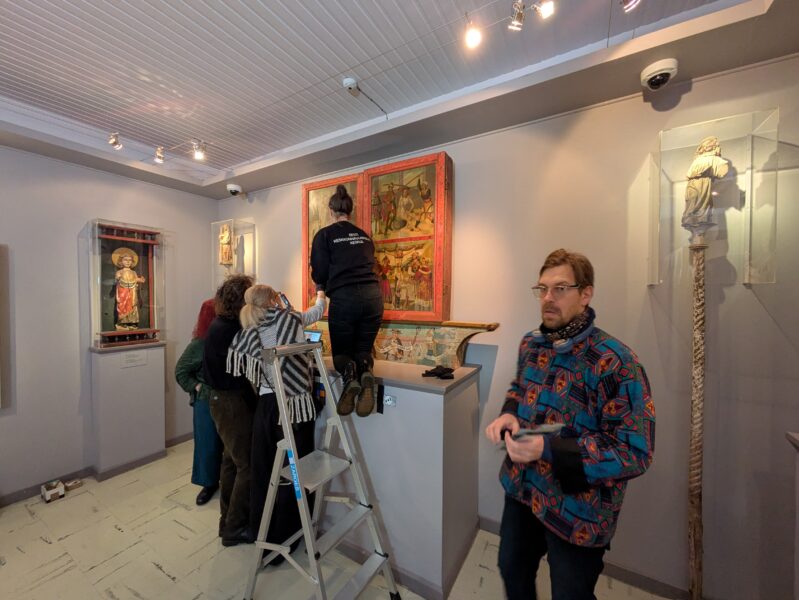
From 1–5 February, a fully equipped working group from MUKOLA, the Cultural Heritage and Conservation Lab of EKA, stayed in Northern Norway beyond the Arctic Circle to study the late medieval altarpieces of Andenes and Trondenes churches using contemporary imaging technologies.
In Northern Norway, there is church art that arrived there through the trade networks of the Hanseatic League. The main export commodity of Hanseatic trade was dried cod (tørrfisk), and the income from its sale enabled local communities to acquire valuable works of art.
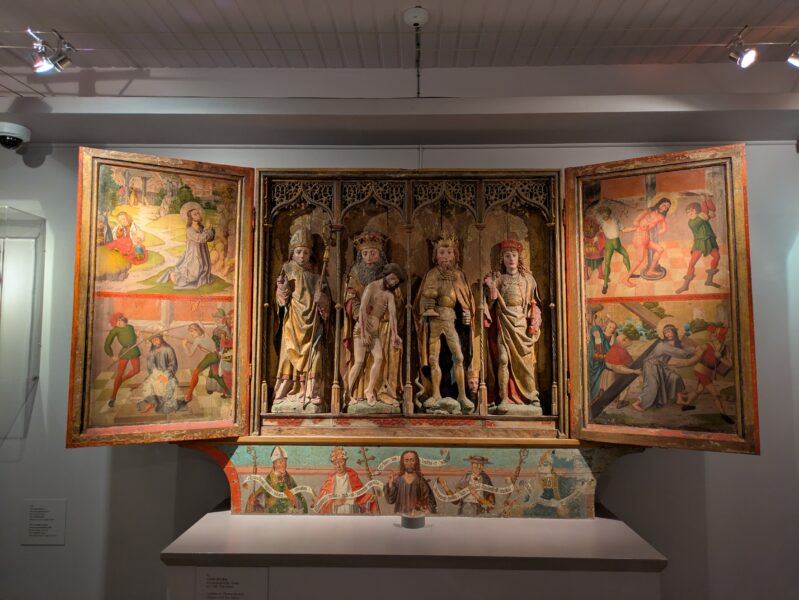
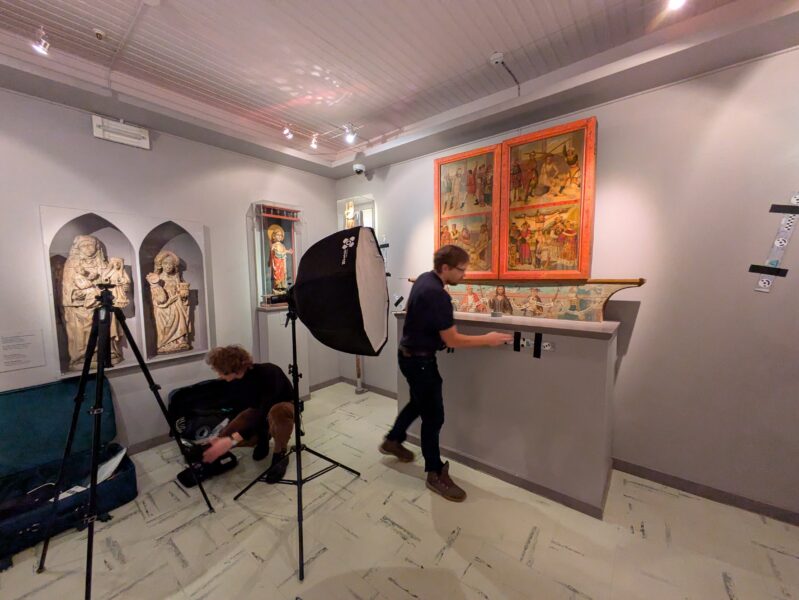
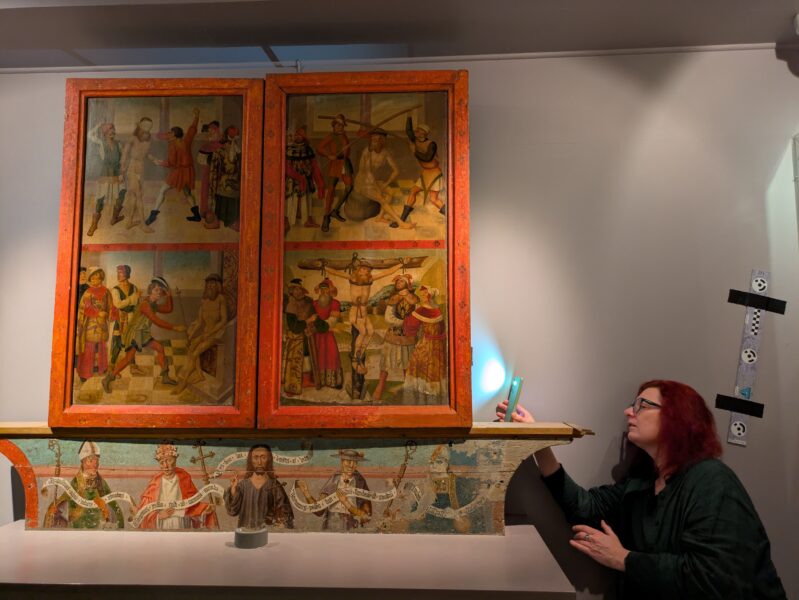
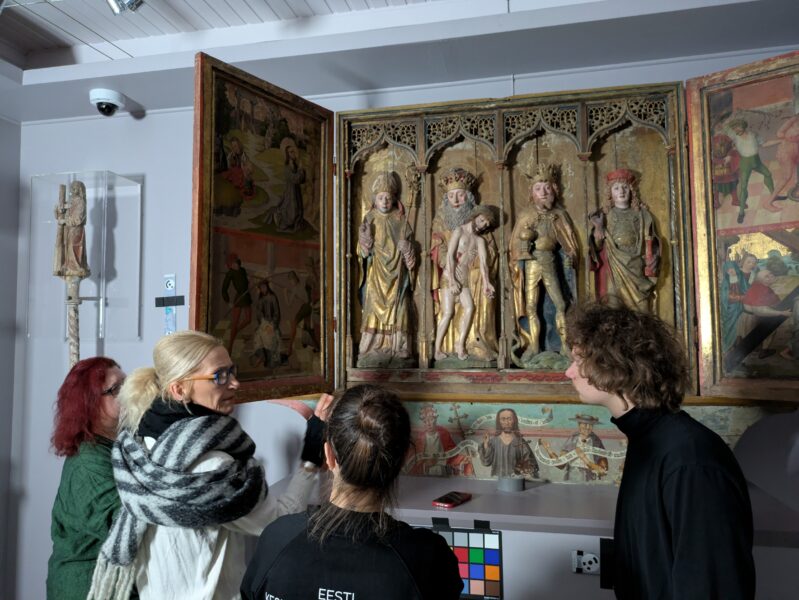
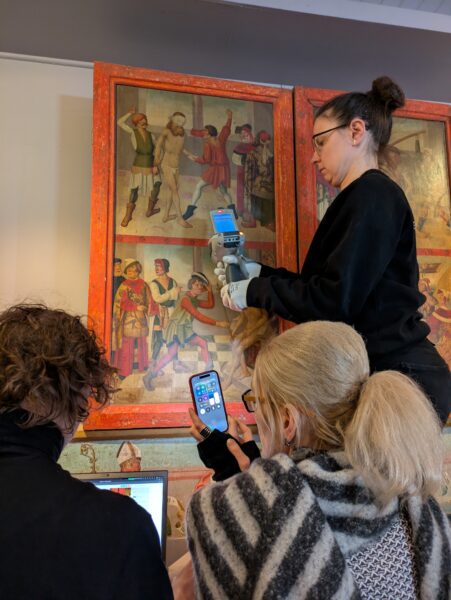
In Tromsø, at the Arctic University Museum of Norway, technical examinations were carried out on the altarpiece originating from Andenes Church. The altarpiece (c. 1500), from a church located on the island of Andøya in Nordland County and demolished in 1876, is among the most valuable objects in the museum’s collection of ecclesiastical art. At the time of its creation, Andenes was a relatively prosperous fishing village with a growing population, and the church furnishings clearly reflected its strong economic standing.
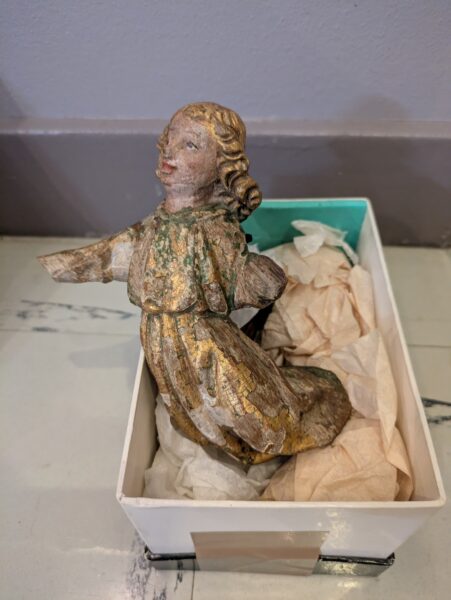
The central section of the altarpiece features sculptures: a holy bishop (Nicholas?), the Throne of Mercy (God the Father with the crucified Christ), Saint Olaf, and Saint Magnus, Earl of Orkney. The inner wings depict four scenes from the Passion of Christ, while the outer wings show four scenes from the martyrdom of Saint Olaf. The predella presents Christ surrounded by the Church Fathers (Saints Augustine, Gregory, Jerome, and Ambrose). The sculptural ensemble likely also included a miniature angel now lying in the museum’s storage, which fits well with the rest of the group.
The authorship of the work remains unidentified. Masters such as Hermen Rode, Bernt Notke and others have been proposed, yet no convincing evidence has been found to attribute the artwork to a specific individual. The oak wood, refined carving, high-quality painting technique, and overall style of execution likely point to a workshop in Lübeck.
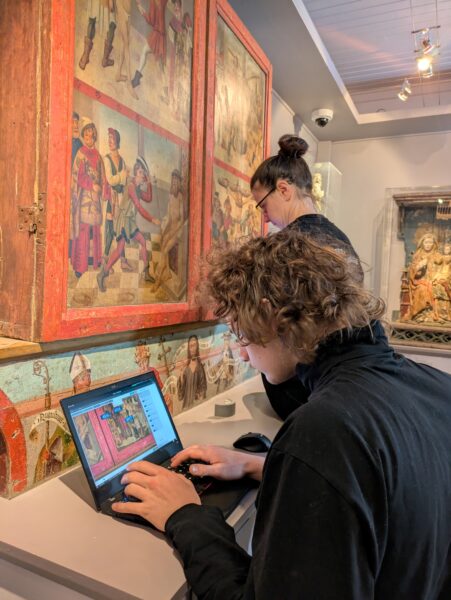
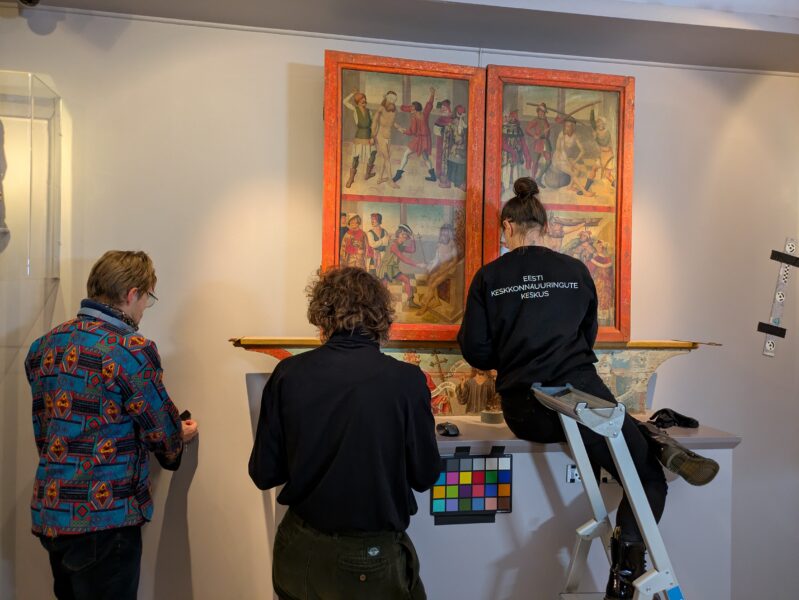
The MUKOLA team conducted a thorough photogrammetric survey of the altarpiece and captured high-resolution visible-light photographs, as well as near-infrared and ultraviolet images. Through these combined methods, valuable data were gathered on the artwork’s structure, condition, and historical context.
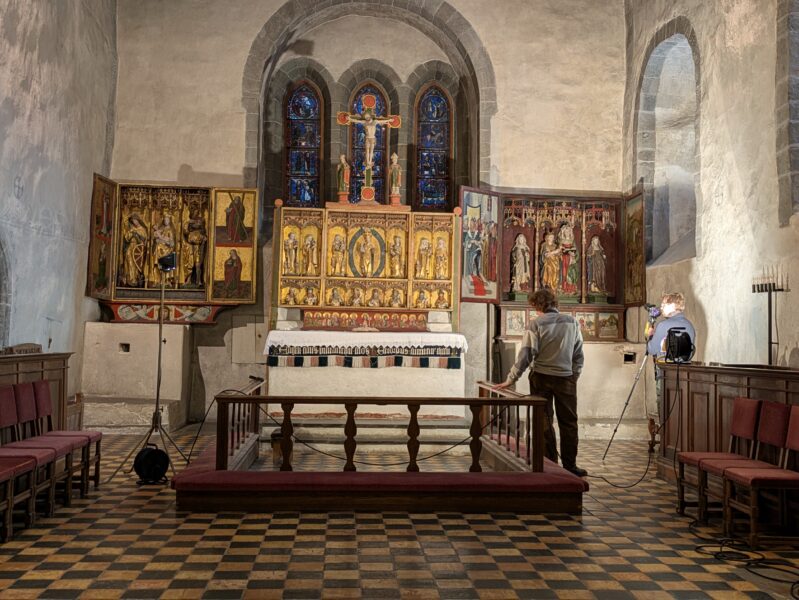
The research expedition also took the team to Trondenes on the island of Hinnøya, home to the world’s northernmost surviving medieval stone church (built 1180–1440). It is one of Norway’s largest medieval rural churches: its western gable rises 23 metres high, surpassed only by Nidaros Cathedral. Trondenes Church is exceptionally well preserved, having escaped the 19th-century wave of demolishing old churches and constructing new ones. The church is situated by a fjord with picturesque views of the sea; it was the sea that brought prosperity to the area and connected it to Atlantic trade routes.
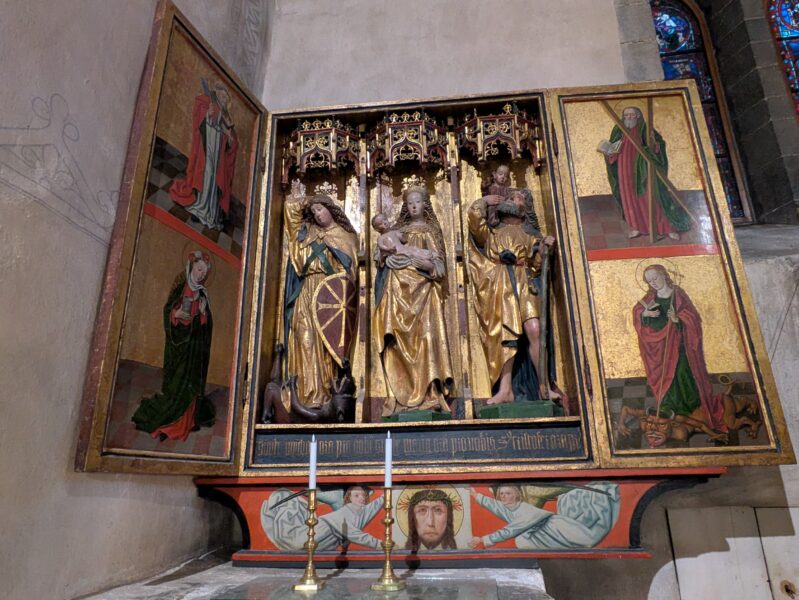
Among the church’s most valuable treasures are three late medieval altarpieces, two originating from Northern Germany and one from the Netherlands. The St Mary cabinet altarpiece (1490–1500), depicting the Virgin Mary with Saint Michael and Saint Christopher, has been attributed to the workshop of Bernt Notke in Lübeck. It is known that in the Middle Ages the church interior contained as many as eight altars.
The MUKOLA team carried out initial photogrammetric documentation and technical examinations of the altarpieces using both visible-light and near-infrared photography.
The studies were conducted within the framework of the Bernt Notke research project. We thank the Arctic University Museum and the Trondenes Historical Center for their cooperation.