Peer-review of Kristina Norman’s performance “The Dew Point”

18.03.2026

Peer-review of Kristina Norman’s performance “The Dew Point”

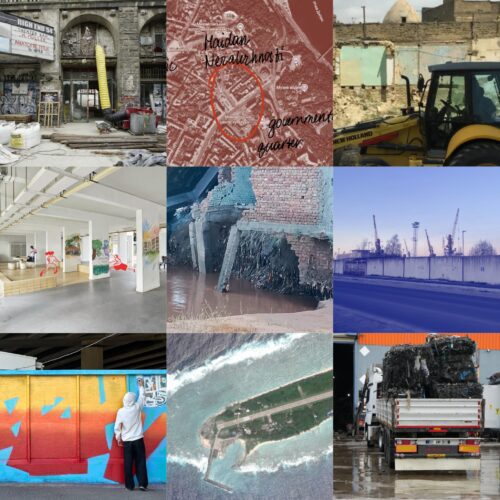
Kristina Norman invites audiences to the English-language version of her performance The Dew Point at Kanuti Gildi Saal on 18 and 19 March at 19:30. The performance on 18 March will be followed by a public pre-review of the work as part of the artist’s doctoral project, provisionally titled Making strategic entanglements and inhabiting heterotopia within creative practice as research.

Reviewers: Victoria Donovan and Madli Pesti
Doctoral supervisor: Dr. Linda Kaljundi (Estonian Academy of Arts)

The central question of Norman’s research concerns the emancipatory potential of strategically interweaving life stories and spaces as a structure-generating method within her artistic practice. In her doctoral work, Norman aims to analyse and conceptualize how these entanglements of spaces and voices emerge and are activated through creative-practice-as-research, and how they contribute to the deconstruction and decolonization of existing narratives and environments.

The performance The Dew Point was developed around the concept of liminality, which has been extended to spatial and built environments, geographical contexts, everyday and historical experiences and practices, as well as collective historical memory. In this work, Norman employs the entanglement of testimonies and spaces connected to wars and militarism as a method for examining the enduring presence of Soviet militarism and its intergenerational impact.

Against the backdrop of ongoing and accelerating militarization, the piece explores the potential for creating shared sites of memory within a divided society by bringing together spatial environments and voices from different memory communities.


More information about the performance and tickets: https://saal.ee/en/performance/the-dew-point-2006/

Posted by Irene Hütsi — Permalink

Peer-review of Kristina Norman’s performance “The Dew Point”

Wednesday 18 March, 2026

Kristina Norman invites audiences to the English-language version of her performance The Dew Point at Kanuti Gildi Saal on 18 and 19 March at 19:30. The performance on 18 March will be followed by a public pre-review of the work as part of the artist’s doctoral project, provisionally titled Making strategic entanglements and inhabiting heterotopia within creative practice as research.

Reviewers: Victoria Donovan and Madli Pesti
Doctoral supervisor: Dr. Linda Kaljundi (Estonian Academy of Arts)

The central question of Norman’s research concerns the emancipatory potential of strategically interweaving life stories and spaces as a structure-generating method within her artistic practice. In her doctoral work, Norman aims to analyse and conceptualize how these entanglements of spaces and voices emerge and are activated through creative-practice-as-research, and how they contribute to the deconstruction and decolonization of existing narratives and environments.

The performance The Dew Point was developed around the concept of liminality, which has been extended to spatial and built environments, geographical contexts, everyday and historical experiences and practices, as well as collective historical memory. In this work, Norman employs the entanglement of testimonies and spaces connected to wars and militarism as a method for examining the enduring presence of Soviet militarism and its intergenerational impact.

Against the backdrop of ongoing and accelerating militarization, the piece explores the potential for creating shared sites of memory within a divided society by bringing together spatial environments and voices from different memory communities.


More information about the performance and tickets: https://saal.ee/en/performance/the-dew-point-2006/

Posted by Irene Hütsi — Permalink

06.03.2026 — 15.05.2026

EKA Print Exchange exhibition Looking Forward to Hearing From You

eka_design_1920x1080_2026-03-10T08-04-15_ENG

EKA library, 6.03.–15.05.2026

Dear friend,

It has been a long time since we last heard from you. Last time we spoke, you were working on some prints in the graphic arts workshop with a roller in your hand and ink on your fingers. How is it going? We would love to see some trials or progress pictures. At the moment we are also in the process of doing some tests. I have added a sample in the envelope. Check it out and tell us what you think!

Let’s keep in touch.

The exhibition shows works from the EKA Print Exchange project initiated by the department of Graphic Art at the Estonian Academy of Arts. Printmaking students from different universities were invited to take part and submit an original print edition. Each print was shipped to Tallinn, sorted and sent back to participants, so everyone received a random selection of ten prints.

The vision of this project was to create new connections between printmaking departments and students through collaboration and sharing physical works. So, we wrote to our penpals and were curious what students of other universities were up to. Depictions of current ideas, projects or any experiments were warmly welcomed as a response.

Four universities participated in the exchange: Estonian Academy of Arts (EKA),
Oslo National Academy of the Arts (KHiO), University of the West of England (UWE), The Eugeniusz Geppert Academy of Art and Design in Wrocław.

Exhibitions of the Print Exchange have taken place at the universities participating in the exchange, and the first presentation in Estonia took place in June-July 2025 at the TYPA Balcony Gallery in Tartu.


We would like to thank EKA graafika, TYPA, Anna Kodź, Aleksandra Janik and Angie Butler.

Organisers of the EKA Print Exchange: Alona Chuprina, Margarita Feofanova, Chantal Gerschuetz, Merit Himmelreich, Triin Mänd, Helena Pass, Marten Prei, Sandra Puusepp and our supervisor Charlotte Biszewski.

Exhibition design at the EKA library: Sandra Puusepp and Marten Prei. 

Posted by Rene Mäe — Permalink

EKA Print Exchange exhibition Looking Forward to Hearing From You

Friday 06 March, 2026 — Friday 15 May, 2026

eka_design_1920x1080_2026-03-10T08-04-15_ENG

EKA library, 6.03.–15.05.2026

Dear friend,

It has been a long time since we last heard from you. Last time we spoke, you were working on some prints in the graphic arts workshop with a roller in your hand and ink on your fingers. How is it going? We would love to see some trials or progress pictures. At the moment we are also in the process of doing some tests. I have added a sample in the envelope. Check it out and tell us what you think!

Let’s keep in touch.

The exhibition shows works from the EKA Print Exchange project initiated by the department of Graphic Art at the Estonian Academy of Arts. Printmaking students from different universities were invited to take part and submit an original print edition. Each print was shipped to Tallinn, sorted and sent back to participants, so everyone received a random selection of ten prints.

The vision of this project was to create new connections between printmaking departments and students through collaboration and sharing physical works. So, we wrote to our penpals and were curious what students of other universities were up to. Depictions of current ideas, projects or any experiments were warmly welcomed as a response.

Four universities participated in the exchange: Estonian Academy of Arts (EKA),
Oslo National Academy of the Arts (KHiO), University of the West of England (UWE), The Eugeniusz Geppert Academy of Art and Design in Wrocław.

Exhibitions of the Print Exchange have taken place at the universities participating in the exchange, and the first presentation in Estonia took place in June-July 2025 at the TYPA Balcony Gallery in Tartu.


We would like to thank EKA graafika, TYPA, Anna Kodź, Aleksandra Janik and Angie Butler.

Organisers of the EKA Print Exchange: Alona Chuprina, Margarita Feofanova, Chantal Gerschuetz, Merit Himmelreich, Triin Mänd, Helena Pass, Marten Prei, Sandra Puusepp and our supervisor Charlotte Biszewski.

Exhibition design at the EKA library: Sandra Puusepp and Marten Prei. 

Posted by Rene Mäe — Permalink

06.03.2026 — 15.05.2026

Estonian Academy of Arts Graphic Art Department Exhibition: “Artists’ Books”

eka_design_1920x1080_2026-03-10T08-00-58_ENG

3rd-year Graphic Art students are showcasing the artists’ book as an independent medium of visual art and an original artwork. The authors draw from personal experiences and memories, exploring themes of physicality, history, and ethical boundaries:

  • Aliisa Ahtiainen presents a grandfather’s life story in risography and a “breathing” book inspired by her grandmother’s experience in a tuberculosis sanatorium.
  • Jacqueline-Desiree Rosenthal exhibits a piece made of tattooed pigskin rawhide, raising questions about morality and the parallels between animals and humans.
  • Olga Dubrovskaja utilizes her background as an intensive care doctor to explore the experience of death through her own and her colleagues’ perspectives. In her second book titled Delight”, she focuses on the moments of life.
  • Adriana Jinmao Biosca Sánchez examines the volatility of memory through materiality and layers of printing.
  • Robin August Vöörmann deals with gender identity, drawing parallels with changes in nature.

Supervisors: Eve Kask, Eve Kaaret (binding) and Viktor Gurov. 

Exhibition dates: 6.03.–15.05.2025

Posted by Rene Mäe — Permalink

Estonian Academy of Arts Graphic Art Department Exhibition: “Artists’ Books”

Friday 06 March, 2026 — Friday 15 May, 2026

eka_design_1920x1080_2026-03-10T08-00-58_ENG

3rd-year Graphic Art students are showcasing the artists’ book as an independent medium of visual art and an original artwork. The authors draw from personal experiences and memories, exploring themes of physicality, history, and ethical boundaries:

  • Aliisa Ahtiainen presents a grandfather’s life story in risography and a “breathing” book inspired by her grandmother’s experience in a tuberculosis sanatorium.
  • Jacqueline-Desiree Rosenthal exhibits a piece made of tattooed pigskin rawhide, raising questions about morality and the parallels between animals and humans.
  • Olga Dubrovskaja utilizes her background as an intensive care doctor to explore the experience of death through her own and her colleagues’ perspectives. In her second book titled Delight”, she focuses on the moments of life.
  • Adriana Jinmao Biosca Sánchez examines the volatility of memory through materiality and layers of printing.
  • Robin August Vöörmann deals with gender identity, drawing parallels with changes in nature.

Supervisors: Eve Kask, Eve Kaaret (binding) and Viktor Gurov. 

Exhibition dates: 6.03.–15.05.2025

Posted by Rene Mäe — Permalink

31.03.2026

Book presentation and discussion: Jurriaan Benschop’s Why Paintings Work

Come to the book launch and panel discussion on March 31 at 6 PM!

Jurriaan Benschop’s Why Paintings Work was published in Estonian at the end of 2025 – now Kristi Kongi and Kaido Ole will discuss the book and painting, with the conversation moderated by Anu Allas. Everyone is welcome to listen and take part in the discussion.

In the book, Benschop navigates the multifaceted landscape of contemporary painting. By presenting the work of numerous contemporary painters, including Kaido Ole and Kristi Kongi, he seeks to answer the question of why a painting has an impact at all. In what way is it meaningful and convincing? He examines the visible aspects of painting, such as subject matter and use of color, and relates them to the invisible factors of art – the artist’s motivations, worldview, and background. The book touches on many themes that emerge when viewing contemporary painting: nature, the body, materiality, touch, identity, memory, and spirituality.

The book is published by the Estonian Academy of Arts, translated by Katrin Laiapea, edited by Neeme Lopp, and designed by Maria Muuk.

We will gather for the presentation and discussion in the new event corner of the EKA Library. We kindly ask you to sign up, so we know how many will be attending: https://forms.gle/h6aXonQvRpFiEHHW9

Time: March 31 at 6 PM
Place: EKA Library

The discussion will be held in Estonian, with no translation available.

Posted by Andres Lõo — Permalink

Book presentation and discussion: Jurriaan Benschop’s Why Paintings Work

Tuesday 31 March, 2026

Come to the book launch and panel discussion on March 31 at 6 PM!

Jurriaan Benschop’s Why Paintings Work was published in Estonian at the end of 2025 – now Kristi Kongi and Kaido Ole will discuss the book and painting, with the conversation moderated by Anu Allas. Everyone is welcome to listen and take part in the discussion.

In the book, Benschop navigates the multifaceted landscape of contemporary painting. By presenting the work of numerous contemporary painters, including Kaido Ole and Kristi Kongi, he seeks to answer the question of why a painting has an impact at all. In what way is it meaningful and convincing? He examines the visible aspects of painting, such as subject matter and use of color, and relates them to the invisible factors of art – the artist’s motivations, worldview, and background. The book touches on many themes that emerge when viewing contemporary painting: nature, the body, materiality, touch, identity, memory, and spirituality.

The book is published by the Estonian Academy of Arts, translated by Katrin Laiapea, edited by Neeme Lopp, and designed by Maria Muuk.

We will gather for the presentation and discussion in the new event corner of the EKA Library. We kindly ask you to sign up, so we know how many will be attending: https://forms.gle/h6aXonQvRpFiEHHW9

Time: March 31 at 6 PM
Place: EKA Library

The discussion will be held in Estonian, with no translation available.

Posted by Andres Lõo — Permalink

12.03.2026

Open Architecture Lecture: Eero Paloheimo

On March 12 at 6 pm, Finnish engineer, scientist and environmental researcher Eero Paloheimo will give a special lecture “Ecological city planning” in the EKA auditorium.

Eero Kalervo Paloheimo has defended his doctoral theses at the University of Munich and the University of Helsinki.

He worked at the company Eero Paloheimo & Matti Ollila from 1965 to 1994, and then was a professor (timber construction) at the Helsinki University of Technology from 1995 to 2000. In 2009, Paloheimo founded Eero Paloheimo EcoCity Ltd., a company specializing in the research and construction of eco-cities.

As a researcher of environmental problems and sustainable development opportunities, Paloheimo has traveled throughout Europe, Africa and Asia. Since 2007, he has consulted on the establishment of eco-cities in China, based on the ideas he originally presented in his book “Syntymättötien sukupolvien Eurooppa” (1996, in Estonian 2004 ). He has also repeatedly introduced the possibilities of establishing eco-cities in Estonia.

Paloheimo served as a representative of the Green Party Vihreä Liitto in the Finnish Parliament from 1987 to 1995 and has been a member of several authoritative international committees dealing with environmental problems.

He is the author of more than ten books on the nature and state of the world.

The lecture will be held in English and is free and open to all interested parties.

Posted by Tiina Tammet — Permalink

Open Architecture Lecture: Eero Paloheimo

Thursday 12 March, 2026

On March 12 at 6 pm, Finnish engineer, scientist and environmental researcher Eero Paloheimo will give a special lecture “Ecological city planning” in the EKA auditorium.

Eero Kalervo Paloheimo has defended his doctoral theses at the University of Munich and the University of Helsinki.

He worked at the company Eero Paloheimo & Matti Ollila from 1965 to 1994, and then was a professor (timber construction) at the Helsinki University of Technology from 1995 to 2000. In 2009, Paloheimo founded Eero Paloheimo EcoCity Ltd., a company specializing in the research and construction of eco-cities.

As a researcher of environmental problems and sustainable development opportunities, Paloheimo has traveled throughout Europe, Africa and Asia. Since 2007, he has consulted on the establishment of eco-cities in China, based on the ideas he originally presented in his book “Syntymättötien sukupolvien Eurooppa” (1996, in Estonian 2004 ). He has also repeatedly introduced the possibilities of establishing eco-cities in Estonia.

Paloheimo served as a representative of the Green Party Vihreä Liitto in the Finnish Parliament from 1987 to 1995 and has been a member of several authoritative international committees dealing with environmental problems.

He is the author of more than ten books on the nature and state of the world.

The lecture will be held in English and is free and open to all interested parties.

Posted by Tiina Tammet — Permalink

10.03.2026 — 14.03.2026

Spacetuning. A Practice of Co-Becoming

I am my own space. I will be space for you, and you for me. We will gather in this room to offer ourselves and the other a space that listens and responds. We meet the challenge of embodying a practice that shapeshifts with the participants’ body-selves. To respond and be response-able. We are aware that bodies materialize – become – within relations, that the body and space share a story of formation. Space and body tune and tone one another, hold one another. What kind of space are we crafting here with our presences and engagements, for oneself and for others? Space is always an affective doing. We invite into play on the porous boundary of self and space, where the self-process becomes part of the we-process and the other way around (if and when did they become separated?). If you dare to open the surfaces of your cells, diverse body tones field into space, touch others and re-form the boundaries of our practice and inform what becomes emergent. I add a heightened squeal. Here, space can also ooze into you. Re-pattern you. If you decide to let it. What kind of space do you need for becoming…?

***

From March 10–14, ARS Art Factory Studios 98 and 53 will transform into inclusive spaces for embodied being and engagement. Daily somatic artistic research sessions focused on contemporary embodiment – Spacetuning. A Practice of Co-Becoming – are held and open for joining.
Spacetuning. A practice of co-becoming is the 2nd artistic research project of Joanna Kalm’s doctoral studies at Estonian Academy of Arts.

Rooted in body-based self- and other-perception, the practice brings attention to the materialization process of body-selves in relation to the environment and offers possibilities for alternate ways of co-becoming. The practice is embodied by dance artists Helina Karvak, Joanna Kalm, Nele Kotli, Laura Kvelstein, and Rasmus Stenager Jensen. Together, they take on the challenge of embodying a space that listens and responds, capable of transforming alongside the body-selves present.

The practice welcomes diverse forms of participation guided by an individual’s perception of the moment, while inviting awareness of one’s role as a witness, experiencer, and co-creator.

Schedule of practice room:

10.03 3pm open space*, 4-6pm practice, 6pm open space

11.03 3pm open space, 4-6pm practice, 6pm open space

12.03 11am open space, 12-2pm practice, 2pm break, 3pm open space, 4-6pm practice, 6pm open space
13.03 3pm open space, 4-6pm practice, 6pm open space

14.03 11am open space, 12-2pm practice, 2pm break, 3pm open space, 4-6pm practice, 6pm open space

*The room is open one hour before and after practice in support of calm and gradual arrival into embodied presence and the space, affording free time for being-engaging and for becoming acquainted with the surroundings.

Register your participation: https://fienta.com/et/o/5991

 Spacetuning. A practice of co-becoming is based on somatic self- and other-awareness, supports embodied being-engagement and somatic sense-making, which in turn grounds the collaborative process of how the practice framework forms and is formed in relations. One of the key focuses of research and practice is response-ability – to one’s own process and to the group members as well as to spatial dynamics. Given that the body and the environment are co-emergent and in intra-active relationships, to what extent do we allow ourselves to truly participate in this co-becoming? Do we know how and dare to affect the becoming of the environment with our own processes? And to what extent is the environment (as a socio-material process) capable of considering and responding to the differences of its participants? Thus, this practice is an attempt to move beyond the invisible and silent boundary (is it real or habitual?) between oneself and space, where personal processes are kept within (to what extent is personal really personal?), and where the environment tends to perceive and respond only to a small extent. It is an attempt to move from embodied presence and awareness to engagement with – to inclusive action, response and co-becoming, where the body-self is more broadly involved.

Spacetuning. A practice of co-becoming is the 2nd artistic research project of Joanna Kalm’s doctoral studies at Estonian Academy of Arts. Kalm’s artistic research draws on somatic co- and self-regulation theory and is grounded in the organism’s capacity for self-organization—manifesting both at the level of the body-self and the group—with the aim of co-creating inclusive, body-based practices and spaces. One focus of the research is to examine the possible modes of materialization of the body-self, grounded in attentive somatic self-listening and the organically dynamic processes of the body-self (somatic agency). The second focus addresses the intra-active relationship between somatic embodiment and practice conceived (apparatus), asking: what kind of practice supports body-based co- and self-regulation, and how does creative somatic embodiment shape the functioning of practice and shared spaces? Kalm approaches somatic embodiment through posthumanist and new materialist philosophy, as well as through theories of cellular consciousness and organism-oriented ontology.

Posted by Irene Hütsi — Permalink

Spacetuning. A Practice of Co-Becoming

Tuesday 10 March, 2026 — Saturday 14 March, 2026

I am my own space. I will be space for you, and you for me. We will gather in this room to offer ourselves and the other a space that listens and responds. We meet the challenge of embodying a practice that shapeshifts with the participants’ body-selves. To respond and be response-able. We are aware that bodies materialize – become – within relations, that the body and space share a story of formation. Space and body tune and tone one another, hold one another. What kind of space are we crafting here with our presences and engagements, for oneself and for others? Space is always an affective doing. We invite into play on the porous boundary of self and space, where the self-process becomes part of the we-process and the other way around (if and when did they become separated?). If you dare to open the surfaces of your cells, diverse body tones field into space, touch others and re-form the boundaries of our practice and inform what becomes emergent. I add a heightened squeal. Here, space can also ooze into you. Re-pattern you. If you decide to let it. What kind of space do you need for becoming…?

***

From March 10–14, ARS Art Factory Studios 98 and 53 will transform into inclusive spaces for embodied being and engagement. Daily somatic artistic research sessions focused on contemporary embodiment – Spacetuning. A Practice of Co-Becoming – are held and open for joining.
Spacetuning. A practice of co-becoming is the 2nd artistic research project of Joanna Kalm’s doctoral studies at Estonian Academy of Arts.

Rooted in body-based self- and other-perception, the practice brings attention to the materialization process of body-selves in relation to the environment and offers possibilities for alternate ways of co-becoming. The practice is embodied by dance artists Helina Karvak, Joanna Kalm, Nele Kotli, Laura Kvelstein, and Rasmus Stenager Jensen. Together, they take on the challenge of embodying a space that listens and responds, capable of transforming alongside the body-selves present.

The practice welcomes diverse forms of participation guided by an individual’s perception of the moment, while inviting awareness of one’s role as a witness, experiencer, and co-creator.

Schedule of practice room:

10.03 3pm open space*, 4-6pm practice, 6pm open space

11.03 3pm open space, 4-6pm practice, 6pm open space

12.03 11am open space, 12-2pm practice, 2pm break, 3pm open space, 4-6pm practice, 6pm open space
13.03 3pm open space, 4-6pm practice, 6pm open space

14.03 11am open space, 12-2pm practice, 2pm break, 3pm open space, 4-6pm practice, 6pm open space

*The room is open one hour before and after practice in support of calm and gradual arrival into embodied presence and the space, affording free time for being-engaging and for becoming acquainted with the surroundings.

Register your participation: https://fienta.com/et/o/5991

 Spacetuning. A practice of co-becoming is based on somatic self- and other-awareness, supports embodied being-engagement and somatic sense-making, which in turn grounds the collaborative process of how the practice framework forms and is formed in relations. One of the key focuses of research and practice is response-ability – to one’s own process and to the group members as well as to spatial dynamics. Given that the body and the environment are co-emergent and in intra-active relationships, to what extent do we allow ourselves to truly participate in this co-becoming? Do we know how and dare to affect the becoming of the environment with our own processes? And to what extent is the environment (as a socio-material process) capable of considering and responding to the differences of its participants? Thus, this practice is an attempt to move beyond the invisible and silent boundary (is it real or habitual?) between oneself and space, where personal processes are kept within (to what extent is personal really personal?), and where the environment tends to perceive and respond only to a small extent. It is an attempt to move from embodied presence and awareness to engagement with – to inclusive action, response and co-becoming, where the body-self is more broadly involved.

Spacetuning. A practice of co-becoming is the 2nd artistic research project of Joanna Kalm’s doctoral studies at Estonian Academy of Arts. Kalm’s artistic research draws on somatic co- and self-regulation theory and is grounded in the organism’s capacity for self-organization—manifesting both at the level of the body-self and the group—with the aim of co-creating inclusive, body-based practices and spaces. One focus of the research is to examine the possible modes of materialization of the body-self, grounded in attentive somatic self-listening and the organically dynamic processes of the body-self (somatic agency). The second focus addresses the intra-active relationship between somatic embodiment and practice conceived (apparatus), asking: what kind of practice supports body-based co- and self-regulation, and how does creative somatic embodiment shape the functioning of practice and shared spaces? Kalm approaches somatic embodiment through posthumanist and new materialist philosophy, as well as through theories of cellular consciousness and organism-oriented ontology.

Posted by Irene Hütsi — Permalink

05.03.2026 — 12.04.2026

Jana Ribkina, Irmak Semiz “Soovikaev”

“To feel the pull of desire is to feel the presence of absence.”
-Anne Carson, “Eros The Bitterweet”

It was the gods’ punishment to separate the whole being into two, condemned to fit the chase of our ideal fullness into one lifetime — and pathetically, we turn back to gods to show us the ways we can be united again. Some say this love belongs only to gods themselves. Still, we defy that notion treacherously, and we face whatever form of divinity we believe in, to plea:
“I wish.”
To wish is to indulge in the lack. The lover does not only wish for the ephemeral sense of fulfillment, but eventually wishing itself serves to satisfy the lover’s hunger. The wish transforms into the sustenance and our appetite refuses to act as a form of weakness, but as devotion.
The exhibition “The Wishing Well” is simultaneously a practice ground and a receipt of reverence. Light a candle, throw a coin, count the petals and make your wish.

opening 05.03.2026 at 6PM

06.03. – 12.04.2026

open Wed-Sun 12.00-18.00

KETT gallery / Aparaaditehas, Kastani 42, Tartu

Irmak Semiz (b. 1997, Istanbul) is a multidisciplinary artist living in Tallinn, currently pursuing a master’s degree in contemporary art at the Estonian Academy of Arts. Working primarily through sculpture, installation, and animation, their practice focuses on expressing contradictory identities, decisions, and emotional states, processed through the lens of humor, connection, and myth-making.
Jana Ribkina (b. 1995, Riga) is a multidisciplinary artist living and working in Riga. Working primarily with ceramics, textiles, and illustration, she explores reflections from her daily life through a playful approach, while drawing inspiration from folklore and fantasy. Her work seeks to weave the personal and the mythical into one continuous thread.

Graphic design: Paul Graßler
The exhibition is supported by the City of Tartu and the Cultural Endowment of Estonia.

Posted by Andres Lõo — Permalink

Jana Ribkina, Irmak Semiz “Soovikaev”

Thursday 05 March, 2026 — Sunday 12 April, 2026

“To feel the pull of desire is to feel the presence of absence.”
-Anne Carson, “Eros The Bitterweet”

It was the gods’ punishment to separate the whole being into two, condemned to fit the chase of our ideal fullness into one lifetime — and pathetically, we turn back to gods to show us the ways we can be united again. Some say this love belongs only to gods themselves. Still, we defy that notion treacherously, and we face whatever form of divinity we believe in, to plea:
“I wish.”
To wish is to indulge in the lack. The lover does not only wish for the ephemeral sense of fulfillment, but eventually wishing itself serves to satisfy the lover’s hunger. The wish transforms into the sustenance and our appetite refuses to act as a form of weakness, but as devotion.
The exhibition “The Wishing Well” is simultaneously a practice ground and a receipt of reverence. Light a candle, throw a coin, count the petals and make your wish.

opening 05.03.2026 at 6PM

06.03. – 12.04.2026

open Wed-Sun 12.00-18.00

KETT gallery / Aparaaditehas, Kastani 42, Tartu

Irmak Semiz (b. 1997, Istanbul) is a multidisciplinary artist living in Tallinn, currently pursuing a master’s degree in contemporary art at the Estonian Academy of Arts. Working primarily through sculpture, installation, and animation, their practice focuses on expressing contradictory identities, decisions, and emotional states, processed through the lens of humor, connection, and myth-making.
Jana Ribkina (b. 1995, Riga) is a multidisciplinary artist living and working in Riga. Working primarily with ceramics, textiles, and illustration, she explores reflections from her daily life through a playful approach, while drawing inspiration from folklore and fantasy. Her work seeks to weave the personal and the mythical into one continuous thread.

Graphic design: Paul Graßler
The exhibition is supported by the City of Tartu and the Cultural Endowment of Estonia.

Posted by Andres Lõo — Permalink

04.03.2026 — 31.03.2026

Katariin Mudist “Temporary Solution”

5–31 March 2026

On Wednesday, 4 March at 18:00, Katariin Mudist’s exhibition “Temporary Solution”(Ajutine lahendus) will open at ARS Showcase Gallery.

“Temporary Solution” brings together doorholders collected from various institutions, mainly from Estonia’s cultural field. Doorholders are born out of necessity: something needs to be held open for a moment, something needs to be let through. Yet a temporary solution tends to become permanent without anyone noticing. In this way, an accidental form and material can become surprisingly universal.

The exhibition focuses on small moments of annoyance: when your bike tyre is flat again; when you forget your towel, but discover it at the gym; when you have to return the shirt you ordered; when the internet keeps buffering during a film; when someone explains something you already know; when, at the grocery store, the line you chose is the slowest, or when the doorholder is missing. This annoyance is a minor disturbance that, through repetition, begins to shape attention, movement, and one’s attitude toward space. A door has been kept open for years with the help of an apparently insignificant piece of material. But one day, arms full of things, that familiar wooden block is no longer there. There is a brief delay and mild irritation: something else is quickly found as a substitute, the door is held open again, and work continues. The moment passes and is very likely forgotten immediately.

Over the course of a year, the collected doorholders have held open different kinds of doors (main entrances, side doors, back doors, etc.) and operate according to different principles: as a wedge, as a threshold stopper, or as weight. What unites these objects is that they come from institutions where doors are not merely architectural elements but tools of access and work organisation. Doorholders are small, unofficial spatial interventions that make movement smoother and signal for whom a space “works. ” Removing them and gathering them into one room reveals a layer of temporary solutions on which institutional space quietly depends.

The door to the exhibition is always (temporarily) open.

Katariin Mudist is an interdisciplinary Estonian artist who believes that the most telling things are often those that usually remain behind the door. She is interested in small annoyances that arise, for example, when a door refuses to cooperate- whether it’s an automatic door that won’t open or a missing doorstop. Humour and irony run through her practice. She examines social norms and the practices and meanings of being an artist within the context of the cultural field and its institutions, using material and process-based approaches. She is currently studying in the Fine Arts Studio programme at the Estonian Academy of Arts, searching for common ground between visual and material-centred art. Mudist holds an MA in Contemporary Art (EKA, 2022) and a BA in Media and Advertising Design (Pallas University of Applied Sciences, 2018). She has received the Adamson-Eric Scholarship (2025) and the Young Sculptor Award (2025). In 2026, together with Keithy Kuuspu, she received the main prize of the Visual and Applied Arts Endowment for the exhibition “Unfortunately, You Were Not Selected This Time” (2025) and the performative Awards Gala (2025).

Exhibition team:
Exhibition design and production assistance: Alden Jõgisuu
Graphic design: Katariin Mudist
Supporters: Punch Club, Põhjala, Estonian Artists’ Association
Special thanks: Alan Voodla, Johanna Mudist, Eva Nava, Keithy Kuuspu, Maria Elise
Remme, Helena Pass, and all the institutions from which the collected doorholders originate.

Exhibition open:
5–31 March 2026
Mon–Fri 12–18, Sat 12–16

Posted by Andres Lõo — Permalink

Katariin Mudist “Temporary Solution”

Wednesday 04 March, 2026 — Tuesday 31 March, 2026

5–31 March 2026

On Wednesday, 4 March at 18:00, Katariin Mudist’s exhibition “Temporary Solution”(Ajutine lahendus) will open at ARS Showcase Gallery.

“Temporary Solution” brings together doorholders collected from various institutions, mainly from Estonia’s cultural field. Doorholders are born out of necessity: something needs to be held open for a moment, something needs to be let through. Yet a temporary solution tends to become permanent without anyone noticing. In this way, an accidental form and material can become surprisingly universal.

The exhibition focuses on small moments of annoyance: when your bike tyre is flat again; when you forget your towel, but discover it at the gym; when you have to return the shirt you ordered; when the internet keeps buffering during a film; when someone explains something you already know; when, at the grocery store, the line you chose is the slowest, or when the doorholder is missing. This annoyance is a minor disturbance that, through repetition, begins to shape attention, movement, and one’s attitude toward space. A door has been kept open for years with the help of an apparently insignificant piece of material. But one day, arms full of things, that familiar wooden block is no longer there. There is a brief delay and mild irritation: something else is quickly found as a substitute, the door is held open again, and work continues. The moment passes and is very likely forgotten immediately.

Over the course of a year, the collected doorholders have held open different kinds of doors (main entrances, side doors, back doors, etc.) and operate according to different principles: as a wedge, as a threshold stopper, or as weight. What unites these objects is that they come from institutions where doors are not merely architectural elements but tools of access and work organisation. Doorholders are small, unofficial spatial interventions that make movement smoother and signal for whom a space “works. ” Removing them and gathering them into one room reveals a layer of temporary solutions on which institutional space quietly depends.

The door to the exhibition is always (temporarily) open.

Katariin Mudist is an interdisciplinary Estonian artist who believes that the most telling things are often those that usually remain behind the door. She is interested in small annoyances that arise, for example, when a door refuses to cooperate- whether it’s an automatic door that won’t open or a missing doorstop. Humour and irony run through her practice. She examines social norms and the practices and meanings of being an artist within the context of the cultural field and its institutions, using material and process-based approaches. She is currently studying in the Fine Arts Studio programme at the Estonian Academy of Arts, searching for common ground between visual and material-centred art. Mudist holds an MA in Contemporary Art (EKA, 2022) and a BA in Media and Advertising Design (Pallas University of Applied Sciences, 2018). She has received the Adamson-Eric Scholarship (2025) and the Young Sculptor Award (2025). In 2026, together with Keithy Kuuspu, she received the main prize of the Visual and Applied Arts Endowment for the exhibition “Unfortunately, You Were Not Selected This Time” (2025) and the performative Awards Gala (2025).

Exhibition team:
Exhibition design and production assistance: Alden Jõgisuu
Graphic design: Katariin Mudist
Supporters: Punch Club, Põhjala, Estonian Artists’ Association
Special thanks: Alan Voodla, Johanna Mudist, Eva Nava, Keithy Kuuspu, Maria Elise
Remme, Helena Pass, and all the institutions from which the collected doorholders originate.

Exhibition open:
5–31 March 2026
Mon–Fri 12–18, Sat 12–16

Posted by Andres Lõo — Permalink

02.04.2026

EKA Doctoral School Conference

EKA Doctoral School Conference will take place on 2nd April 2026

Please register by 29th March.
Conference will be held in English.

PROGRAMME

08.40 Registration

09.00 Welcome by Prof. Linda Kaljundi (EKA Vice Rector for Research, Head of Doctoral School)


09.10 Opening Lecture
Moderator Prof. Linda Kaljundi

Dr. Anna Carolina Jensen “In-Between Chaos and Control”(EKA, postdoctoral researcher)

Abstract

In my talk I will present my doctoral thesis Encyclopedia of In-Betweenness: An Exploration of a Collective Artistic Research Practice (Aalto University, 2023) and my postdoctoral research project City Is the Thing Bodies and Time Move Through: Concrete Structures of In-Betweenness. While my doctoral thesis explored curating as a (collective) research method and through its form, encyclopedia, the multiplicity of networks and knowledges which constitute the practice, the postdoctoral research studies how environments, architectures, and leisure spaces perform, shape and structure historical layers, and in what ways does the past continue to haunt everyday life in the present. In my research I use Narva as a case study and perceive a city as a place that times and bodies, ideologies and societal systems move through, and consider methods and methodologies that happen in the space in-between chaos and control, knowledge and non-knowledge, language, translations and things and experiences that escape naming. By creating research situations that enable emergent events, practice-led artistic research embraces uncertainty as constitutive of knowledge, operating in the fertile tension between chaos and control, structure and openness.


Panel 1: Art History & Visual Culture
Moderator Prof. Andres Kurg


10.10 Rahul Sharma “Peripheral In-Between Identities on the Eastern Borderlands: Films of Eléonore de Montesquiou” (supervisors Dr. Mari Laanemets, Prof. Linda Kaljundi).

Abstract

The talk delves into liminal identity representations of the Russian-Estonian ethno-linguistic minority in works of the French-Estonian artist and documentary filmmaker Eléonore de Montesquiou (b. 1970), in particular focusing on Olga and Olga (2017) and Eksperiment Katja. (2020). I analyse how liminal border identities are affected by opposing notions of Euclidean and relational time-space, and the concept of the Möbius strip. Deploying close-textual analysis, I, then, analyse the formal characteristics of the films by close-reading the usage of cinematic apparatus and film processes to create varied layers of both bordered identities and the bordered spaces inhabited by the depicted characters. Finally, I reflect on de Montesquiou’s own ‘non-political subjectivised third-positionality’ via her gaze and epistemological construct that creates liminal and ambiguous layers of identities within her represented characters.


10.45 Mie Mortensen “A Philosophy of Sponges: The Influence of Ernst Haeckel on Ivan Leonidov” (supervisor Prof. Andres Kurg).

Abstract

Due to lack of description and information, Soviet architect Ivan Leonidov’s final project — a series of images with the alleged title City of the Sun (1942-59)is often interpreted in the light of the eponymous novel by Tomasso Campanella. While this Renaissance philosopher was indeed important to the architect’s thinking, Leonidov drew his inspiration from a wide range of disciplines. This presentation explores the particular case of the German zoologist Ernst Haeckel’s work on marine invertebrates vis-a-vis the architect’s projects. Not only do Leonidov’s plans and drawings contain patterns resembling Haeckel’s illustrations, as I try to demonstrate as part of my dissertation, Leonidov’s philosophy of architecture can be said to mirror the German zoologist’s theories of ontogenesis.


11.20 Coffee break


11.40 Anneli Porri “How to Explain Pictures… to Ourselves?
Mediating the Artwork and Supporting Meaning-Making in Art History Education” (supervisor Prof. Linda Kaljundi).

Abstract

In art history teaching at the general education level, factual knowledge and the complexity of historical context often dominate. Within a multilayered and demanding visual–verbal learning situation, there is a risk of losing the personal, emotional, and cognitively demanding experience of encountering art that supports the construction of meaning. In my teaching practice, I am interested in how foundational knowledge of art history can be combined with creative interpretation so that, through open-ended questions, visual noticing, comparison, and justification, learning in both general and extracurricular art education can support learners’ personal meaning-making. In this presentation, I introduce an action research project conducted in an extracurricular art school. Based on observation, students’ creative work, and their feedback, the study explores which strategies of cognitive activation can be applied in art history education and how these strategies influence the participation, sense-making, and development of visual competence among students aged 13–17.


12.15 Marten EskoThe Contemporary as Method: Use, Abuse, and Critical Afterlife” (supervisor Prof. Virve Sarapik).

Abstract

The presentation examines the contemporary as a critical-theoretical concept and as a potential methodological problem. Over the past two decades, the contemporary has become a widely circulating framework in art history, cultural studies, literary criticism, and social theory. Initially introduced to challenge linear modernity and historicism and to conceptualize the temporal complexity of the present, the concept has, over time, become an imprecise and diffuse signifier rather than a more concretely defined one—particularly in the context of contemporary art. However, before considering the abandonment of the term, the presentation—drawing on the ideas of Giorgio Agamben, Zsuzsa Barossi, Jacob Lund, Peter Osborne, and Lionel Ruffel—proposes understanding contemporaneity as a method: as a critical, non-modern relationship to time that is attentive to the coexistence of multiple temporalities, histories and historicities. Understood in this way, the contemporary no longer functions as a periodizing label or a marker of temporal novelty, but rather as a potential diagnostic tool for the critical analysis of contemporary art.


12.50 Rahel Aerin Eslas “The Aesthetics of Nature in Denis Diderot’s Philosophy and Art Criticism” (supervisors Prof. Krista Kodres, Prof. Frédéric Ogée).

Abstract

Denis Diderot (1713–1784) was a philosopher and encyclopedist in Enlightenment France, who believed that nature should act as the lead example in all areas of society and culture. In my dissertation, I am researching the role of nature in Diderot’s aesthetics in his works on philosophy and art criticism. In my presentation, I will introduce a chapter from my dissertation, “Nature in Diderot’s Language of Criticism,” which looks at how nature influenced the artistic terminology used by Diderot. Diderot thought that an accurate imitation of nature should be the main achievement for all artists, as through this skill of studying and understanding nature, the artist will have the ability to enhance the perception and experience of it. This chapter points out and elaborates on the instances when an aspect of painting must adhere to nature’s laws, and when the artist needs to distance themselves from nature by enhancing the traits they observe.


13.25 Lunch


Panel 2: Art & Design
Moderator Dr. Jaana Päeva


14.00 Kadri Liis Rääk “The Artist’s Body as a Sensory Threshold” (supervisor Dr. Liina Unt).

Abstract

In this presentation, the artist’s body is positioned as a sensory threshold, a porous membrane between the self and the world. I examine how the creation-in-making process is structured and how to pinpoint the tactile place of origin of art. Through a shift in habitual patterns and a withdrawal into performative artistic ascesis, the practice resists demands for constant productivity and visibility. This becomes an incision into the nature of the creative process, in which agency shifts from a maker of objects toward a mediator of attention. The threshold state is proposed as a specific mode of being that addresses openness, vulnerability, and an attentive co-existence with the more-than-human, while working with resistance and uncertainty.


14.35 Taavi Varm “Co-creative video game creation as a practice of care” (supervisors Dr. Varvara Guljajeva, Dr. Helen Uusberg).

Abstract

My research examines how the co-creative video game creation process can function as a practice of care that supports psychological well-being. Well-being is approached not as a fixed outcome, but as something that emerges through creative processes and reflective engagement. By focusing on the co-creative process, the study examines how care is enacted through collaboration, decision-making, and attention to lived experience within the creative process itself. Looking at game creation as an artistic practice, explained through a case study in project EVA Lab, my main thesis in the talk is that psychological wellbeing and creative sustainability can be understood as an emergent quality of creative processes, rather than solely as a measurable outcome.


15.10 Eva Liisa Kubinyi “Wondering Pathways Toward Community-Based Service Designing from Rõuge” (supervisor Associate Prof. Josina Vink).

Abstract

The Dominant Service Design phenomenon overemphasis step-by-step procedures led by design experts. While community-based design approaches exist, these strategies overlook the everyday struggle of detaching from modernist design legacies. Without a clearer understanding of how to move toward community-based modalities, the profession risks erasing otherness. Drawing on a nine-month programmatic research-through-design project in South-Eastern Estonia, this paper conceptualizes wondering pathways—simultaneous yet contradictory movements toward community-based practices. This research contributes to service design by demonstrating multiple directions to community-based approaches and building compassion for messy in-between spaces of transformation. Moving toward community-based approaches requires ongoing openness to resisting dominant design practices that often reveal themselves gradually and through practice.


15.45 Aman Asif “Beyond the Visible Spectrum: Algal Entanglements” (supervisor Prof. Kärt Ojavee).

Abstract

Positioned within a more-than-human design framework, this research asks: how might designers attune to microbial others (algal) through creative practices to explore conditions and values for multispecies thriving? This presentation focuses on insights developed from practice-led research analysing my design works from the peer review exhibition Algal Phycosphere. The findings are grounded in reflection-on-action to surface methods and considerations that are relevant for practicing attunement to microbes and designing with living systems. The analysis was conducted on eleven design works using guided questions along with written reflections to identify key themes. The research contributes to relational approaches and developing ethics for multispecies thriving in more-than-human design contexts.


16.20 Coffee break


Panel 3: Architecture & Urban Planning
Moderator Dr. Eik Hermann


16.40 Alvin Järving “The Value-Space of Extending Building Lifespans: Locating Architectural Practice in a Conflicted Field” (supervisor Dr. Siim Tuksam).

Abstract

This paper articulates the value-space of extending building lifespans and opens up positioning architectural creative practice within an interdisciplinary field of longevity. Building longevity is not a singular concept but a contested domain where legal, constructional, cultural, and urban values intersect. Moreover, architecture and buildings are not synonymous: discourses on design, reuse, adaptation, and preservation overlap and often conflict within a broad conceptual field. Through a structured literature review, the paper systematizes key concepts, terms and ideas related to building lifespan across architecture and adjacent disciplines to a conceptual map. The framework clarifies how architects can locate their practice within this field and identify operative vectors of agency through design decisions.


17.15 Jaak-Adam Looveer “Urban Planning in the Comfort Zone: The Case of Tallinn” (supervisors Dr. Siim Tuksam, Dr. Priit-Kalev Parts).


17.50 Roundtable: Dr. Eik Hermann, Prof. Andres Kurg, Prof. Linda Kaljundi, Dr. Jaana Päeva

Contact:

Aljona Gineiko aljona.gineiko@artun.ee

Ragne Soosalu ragne.soosalu@artun.ee

Posted by Triin Männik — Permalink

EKA Doctoral School Conference

Thursday 02 April, 2026

EKA Doctoral School Conference will take place on 2nd April 2026

Please register by 29th March.
Conference will be held in English.

PROGRAMME

08.40 Registration

09.00 Welcome by Prof. Linda Kaljundi (EKA Vice Rector for Research, Head of Doctoral School)


09.10 Opening Lecture
Moderator Prof. Linda Kaljundi

Dr. Anna Carolina Jensen “In-Between Chaos and Control”(EKA, postdoctoral researcher)

Abstract

In my talk I will present my doctoral thesis Encyclopedia of In-Betweenness: An Exploration of a Collective Artistic Research Practice (Aalto University, 2023) and my postdoctoral research project City Is the Thing Bodies and Time Move Through: Concrete Structures of In-Betweenness. While my doctoral thesis explored curating as a (collective) research method and through its form, encyclopedia, the multiplicity of networks and knowledges which constitute the practice, the postdoctoral research studies how environments, architectures, and leisure spaces perform, shape and structure historical layers, and in what ways does the past continue to haunt everyday life in the present. In my research I use Narva as a case study and perceive a city as a place that times and bodies, ideologies and societal systems move through, and consider methods and methodologies that happen in the space in-between chaos and control, knowledge and non-knowledge, language, translations and things and experiences that escape naming. By creating research situations that enable emergent events, practice-led artistic research embraces uncertainty as constitutive of knowledge, operating in the fertile tension between chaos and control, structure and openness.


Panel 1: Art History & Visual Culture
Moderator Prof. Andres Kurg


10.10 Rahul Sharma “Peripheral In-Between Identities on the Eastern Borderlands: Films of Eléonore de Montesquiou” (supervisors Dr. Mari Laanemets, Prof. Linda Kaljundi).

Abstract

The talk delves into liminal identity representations of the Russian-Estonian ethno-linguistic minority in works of the French-Estonian artist and documentary filmmaker Eléonore de Montesquiou (b. 1970), in particular focusing on Olga and Olga (2017) and Eksperiment Katja. (2020). I analyse how liminal border identities are affected by opposing notions of Euclidean and relational time-space, and the concept of the Möbius strip. Deploying close-textual analysis, I, then, analyse the formal characteristics of the films by close-reading the usage of cinematic apparatus and film processes to create varied layers of both bordered identities and the bordered spaces inhabited by the depicted characters. Finally, I reflect on de Montesquiou’s own ‘non-political subjectivised third-positionality’ via her gaze and epistemological construct that creates liminal and ambiguous layers of identities within her represented characters.


10.45 Mie Mortensen “A Philosophy of Sponges: The Influence of Ernst Haeckel on Ivan Leonidov” (supervisor Prof. Andres Kurg).

Abstract

Due to lack of description and information, Soviet architect Ivan Leonidov’s final project — a series of images with the alleged title City of the Sun (1942-59)is often interpreted in the light of the eponymous novel by Tomasso Campanella. While this Renaissance philosopher was indeed important to the architect’s thinking, Leonidov drew his inspiration from a wide range of disciplines. This presentation explores the particular case of the German zoologist Ernst Haeckel’s work on marine invertebrates vis-a-vis the architect’s projects. Not only do Leonidov’s plans and drawings contain patterns resembling Haeckel’s illustrations, as I try to demonstrate as part of my dissertation, Leonidov’s philosophy of architecture can be said to mirror the German zoologist’s theories of ontogenesis.


11.20 Coffee break


11.40 Anneli Porri “How to Explain Pictures… to Ourselves?
Mediating the Artwork and Supporting Meaning-Making in Art History Education” (supervisor Prof. Linda Kaljundi).

Abstract

In art history teaching at the general education level, factual knowledge and the complexity of historical context often dominate. Within a multilayered and demanding visual–verbal learning situation, there is a risk of losing the personal, emotional, and cognitively demanding experience of encountering art that supports the construction of meaning. In my teaching practice, I am interested in how foundational knowledge of art history can be combined with creative interpretation so that, through open-ended questions, visual noticing, comparison, and justification, learning in both general and extracurricular art education can support learners’ personal meaning-making. In this presentation, I introduce an action research project conducted in an extracurricular art school. Based on observation, students’ creative work, and their feedback, the study explores which strategies of cognitive activation can be applied in art history education and how these strategies influence the participation, sense-making, and development of visual competence among students aged 13–17.


12.15 Marten EskoThe Contemporary as Method: Use, Abuse, and Critical Afterlife” (supervisor Prof. Virve Sarapik).

Abstract

The presentation examines the contemporary as a critical-theoretical concept and as a potential methodological problem. Over the past two decades, the contemporary has become a widely circulating framework in art history, cultural studies, literary criticism, and social theory. Initially introduced to challenge linear modernity and historicism and to conceptualize the temporal complexity of the present, the concept has, over time, become an imprecise and diffuse signifier rather than a more concretely defined one—particularly in the context of contemporary art. However, before considering the abandonment of the term, the presentation—drawing on the ideas of Giorgio Agamben, Zsuzsa Barossi, Jacob Lund, Peter Osborne, and Lionel Ruffel—proposes understanding contemporaneity as a method: as a critical, non-modern relationship to time that is attentive to the coexistence of multiple temporalities, histories and historicities. Understood in this way, the contemporary no longer functions as a periodizing label or a marker of temporal novelty, but rather as a potential diagnostic tool for the critical analysis of contemporary art.


12.50 Rahel Aerin Eslas “The Aesthetics of Nature in Denis Diderot’s Philosophy and Art Criticism” (supervisors Prof. Krista Kodres, Prof. Frédéric Ogée).

Abstract

Denis Diderot (1713–1784) was a philosopher and encyclopedist in Enlightenment France, who believed that nature should act as the lead example in all areas of society and culture. In my dissertation, I am researching the role of nature in Diderot’s aesthetics in his works on philosophy and art criticism. In my presentation, I will introduce a chapter from my dissertation, “Nature in Diderot’s Language of Criticism,” which looks at how nature influenced the artistic terminology used by Diderot. Diderot thought that an accurate imitation of nature should be the main achievement for all artists, as through this skill of studying and understanding nature, the artist will have the ability to enhance the perception and experience of it. This chapter points out and elaborates on the instances when an aspect of painting must adhere to nature’s laws, and when the artist needs to distance themselves from nature by enhancing the traits they observe.


13.25 Lunch


Panel 2: Art & Design
Moderator Dr. Jaana Päeva


14.00 Kadri Liis Rääk “The Artist’s Body as a Sensory Threshold” (supervisor Dr. Liina Unt).

Abstract

In this presentation, the artist’s body is positioned as a sensory threshold, a porous membrane between the self and the world. I examine how the creation-in-making process is structured and how to pinpoint the tactile place of origin of art. Through a shift in habitual patterns and a withdrawal into performative artistic ascesis, the practice resists demands for constant productivity and visibility. This becomes an incision into the nature of the creative process, in which agency shifts from a maker of objects toward a mediator of attention. The threshold state is proposed as a specific mode of being that addresses openness, vulnerability, and an attentive co-existence with the more-than-human, while working with resistance and uncertainty.


14.35 Taavi Varm “Co-creative video game creation as a practice of care” (supervisors Dr. Varvara Guljajeva, Dr. Helen Uusberg).

Abstract

My research examines how the co-creative video game creation process can function as a practice of care that supports psychological well-being. Well-being is approached not as a fixed outcome, but as something that emerges through creative processes and reflective engagement. By focusing on the co-creative process, the study examines how care is enacted through collaboration, decision-making, and attention to lived experience within the creative process itself. Looking at game creation as an artistic practice, explained through a case study in project EVA Lab, my main thesis in the talk is that psychological wellbeing and creative sustainability can be understood as an emergent quality of creative processes, rather than solely as a measurable outcome.


15.10 Eva Liisa Kubinyi “Wondering Pathways Toward Community-Based Service Designing from Rõuge” (supervisor Associate Prof. Josina Vink).

Abstract

The Dominant Service Design phenomenon overemphasis step-by-step procedures led by design experts. While community-based design approaches exist, these strategies overlook the everyday struggle of detaching from modernist design legacies. Without a clearer understanding of how to move toward community-based modalities, the profession risks erasing otherness. Drawing on a nine-month programmatic research-through-design project in South-Eastern Estonia, this paper conceptualizes wondering pathways—simultaneous yet contradictory movements toward community-based practices. This research contributes to service design by demonstrating multiple directions to community-based approaches and building compassion for messy in-between spaces of transformation. Moving toward community-based approaches requires ongoing openness to resisting dominant design practices that often reveal themselves gradually and through practice.


15.45 Aman Asif “Beyond the Visible Spectrum: Algal Entanglements” (supervisor Prof. Kärt Ojavee).

Abstract

Positioned within a more-than-human design framework, this research asks: how might designers attune to microbial others (algal) through creative practices to explore conditions and values for multispecies thriving? This presentation focuses on insights developed from practice-led research analysing my design works from the peer review exhibition Algal Phycosphere. The findings are grounded in reflection-on-action to surface methods and considerations that are relevant for practicing attunement to microbes and designing with living systems. The analysis was conducted on eleven design works using guided questions along with written reflections to identify key themes. The research contributes to relational approaches and developing ethics for multispecies thriving in more-than-human design contexts.


16.20 Coffee break


Panel 3: Architecture & Urban Planning
Moderator Dr. Eik Hermann


16.40 Alvin Järving “The Value-Space of Extending Building Lifespans: Locating Architectural Practice in a Conflicted Field” (supervisor Dr. Siim Tuksam).

Abstract

This paper articulates the value-space of extending building lifespans and opens up positioning architectural creative practice within an interdisciplinary field of longevity. Building longevity is not a singular concept but a contested domain where legal, constructional, cultural, and urban values intersect. Moreover, architecture and buildings are not synonymous: discourses on design, reuse, adaptation, and preservation overlap and often conflict within a broad conceptual field. Through a structured literature review, the paper systematizes key concepts, terms and ideas related to building lifespan across architecture and adjacent disciplines to a conceptual map. The framework clarifies how architects can locate their practice within this field and identify operative vectors of agency through design decisions.


17.15 Jaak-Adam Looveer “Urban Planning in the Comfort Zone: The Case of Tallinn” (supervisors Dr. Siim Tuksam, Dr. Priit-Kalev Parts).


17.50 Roundtable: Dr. Eik Hermann, Prof. Andres Kurg, Prof. Linda Kaljundi, Dr. Jaana Päeva

Contact:

Aljona Gineiko aljona.gineiko@artun.ee

Ragne Soosalu ragne.soosalu@artun.ee

Posted by Triin Männik — Permalink

01.03.2026 — 31.03.2026

Natalia Mirzoyan’s exhibition “Winter in March”

On March 1st, Natalia Mirzoyan’s exhibition “Winter in March” will be opened in Telliskivi Container Gallery.

The art exhibition Winter in March is inspired by the short animated film Winter in March, created at the Estonian Academy of Arts and produced by film studio Rebel Frame. The film premiered at the Cannes Film Festival in May 2025 and has since won nearly twenty international awards at animation and film festivals around the world. It also received the Estonian Cultural Endowment’s annual award for Best Animated Film of 2025.

The exhibition expands the poetic and political world created in the film, exploring helplessness and existential fear experienced by individuals living under a repressive regime. The film tells the true story of a young couple from St. Petersburg, Kirill and Dasha. Russia’s invasion of Ukraine shakes their lives. Dasha finds the strength to protest, while Kirill withdraws into himself, sinking deeper and deeper into depression. They decide to leave their homeland and set off for Georgia. The journey is metaphysical the train travels along the Russian-Ukrainian border, where the landscape outside the window is filled with symbols of war. Meanwhile, fellow passengers behave as if nothing is happening. Through snowstorms and fear, the most painful moment arrives at the border: will they be allowed to continue? Although they eventually reach Georgia, their greatest fear catches up with them in another way — from an unexpected place.

The exhibition offers visitors the opportunity to immerse themselves in this world of imagery and emotional associations. The space is designed as a journey, leading the viewer from intimate memory fragments into a broader political and poetic dimension. The aim of the exhibition is to create an immersive experience that connects the film and the exhibition into one whole. It is also important to provide the audience with an opportunity to perceive the personal and collective experiences of war, repression, and migration, and thereby initiate discussion about democracy, memory, and resistance.

Artist Natalia Mirzoyan
Curator Santa Zukker
Artist Team: Rebecca Kruus, Alexander Toodu, Kadi Rebane, Annaliisa Lepik, Katrina Oll, Marina Hirv, Dashka Dementeva, Saskia Sikk

Posted by Andres Lõo — Permalink

Natalia Mirzoyan’s exhibition “Winter in March”

Sunday 01 March, 2026 — Tuesday 31 March, 2026

On March 1st, Natalia Mirzoyan’s exhibition “Winter in March” will be opened in Telliskivi Container Gallery.

The art exhibition Winter in March is inspired by the short animated film Winter in March, created at the Estonian Academy of Arts and produced by film studio Rebel Frame. The film premiered at the Cannes Film Festival in May 2025 and has since won nearly twenty international awards at animation and film festivals around the world. It also received the Estonian Cultural Endowment’s annual award for Best Animated Film of 2025.

The exhibition expands the poetic and political world created in the film, exploring helplessness and existential fear experienced by individuals living under a repressive regime. The film tells the true story of a young couple from St. Petersburg, Kirill and Dasha. Russia’s invasion of Ukraine shakes their lives. Dasha finds the strength to protest, while Kirill withdraws into himself, sinking deeper and deeper into depression. They decide to leave their homeland and set off for Georgia. The journey is metaphysical the train travels along the Russian-Ukrainian border, where the landscape outside the window is filled with symbols of war. Meanwhile, fellow passengers behave as if nothing is happening. Through snowstorms and fear, the most painful moment arrives at the border: will they be allowed to continue? Although they eventually reach Georgia, their greatest fear catches up with them in another way — from an unexpected place.

The exhibition offers visitors the opportunity to immerse themselves in this world of imagery and emotional associations. The space is designed as a journey, leading the viewer from intimate memory fragments into a broader political and poetic dimension. The aim of the exhibition is to create an immersive experience that connects the film and the exhibition into one whole. It is also important to provide the audience with an opportunity to perceive the personal and collective experiences of war, repression, and migration, and thereby initiate discussion about democracy, memory, and resistance.

Artist Natalia Mirzoyan
Curator Santa Zukker
Artist Team: Rebecca Kruus, Alexander Toodu, Kadi Rebane, Annaliisa Lepik, Katrina Oll, Marina Hirv, Dashka Dementeva, Saskia Sikk

Posted by Andres Lõo — Permalink