Academic Affairs OfficeAccessory DesignAnimationArchitecture and Urban DesignArt EducationCenter for Flat TechnologiesCeramicsContemporary ArtCultural Heritage and ConservationDepartmentsDesign and Technology FuturesDoctoral SchoolDrawingFacilities and WorkshopsFaculty of ArchitectureFaculty of Art and CultureFaculty of DesignFaculty of Fine ArtsFashion DesignFinancial DepartmentGalleryGlass ArtGraphic ArtGraphic DesignInstallation and SculptureInstitute of Art History and Visual CultureInternational OfficeIT OfficeJewellery and BlacksmithingLandscape ArchitectureLibraryLinnaehitus @enMaking SpaceNew MediaOffice of the RectorateOpen AcademyPaintingPerforming ArtsPhotographyProduct DesignRectorateResearch and Development OfficeScenographySupport UnitsTextile DesignUncategorizedUrban PlanningUrban Studies
Artist Talks: James Prevett and Maarit Bau
22.10.2025
Artist Talks: James Prevett and Maarit Bau
Faculty of Fine Arts
. 
Artist talks with James Prevett and Maarit Bau Mustonen on October 22 at 5:45 p.m. in room A501 at EKA
On October 22, 2025, at 5:45 p.m., artist talks with James Prevetti and Maarit Bau Mustonen will take place in room A-501 at EKA. The artists have been invited to conduct a master class for students in the EKA photography department. All interested parties are welcome to attend the talks!
James Prevett is a British artist and teacher living in Helsinki since 2013. His practice involves studio based making and social sculpture. Both explore the idea and experience of bodies, personal and/or collective, physical and/or metaphorical. He often works with other people to bring an open-ended poly-vocal approach to art making. This includes projects like the Nomadic Sculptures, Out of Office (OOO) Radio and The Organic Sound Society. His sees his teaching is a part of this process exploring practice-based and collective inquiries. He is a Lecturer in Sculpture at the Academy of Fine Arts of Uniarts Helsinki and spends his free time in radio, books and walking his dog Lulu.
Maarit Bau Mustonen is a visual artist and independent publisher based in Helsinki. Her practice encompasses text, installation, lens-based media, and performance, presented in the form of exhibitions and artist publications. With a background in literature and communication, she often explores themes of language, publishing and translation. By engaging with the materiality of text and its relation to image and body, her work enters into dialogue with poetry. Collaborations with other artists lead to multidisciplinary and polyphonic projects. She is the co-founder, together with graphic designer Arja Karhumaa, of Multipöly (2021–), a collective focused on experimental publishing.
https://maaritbaumustonen.com/
Posted by Andres Lõo — Permalink
Artist Talks: James Prevett and Maarit Bau
Wednesday 22 October, 2025
Faculty of Fine Arts
. 
Artist talks with James Prevett and Maarit Bau Mustonen on October 22 at 5:45 p.m. in room A501 at EKA
On October 22, 2025, at 5:45 p.m., artist talks with James Prevetti and Maarit Bau Mustonen will take place in room A-501 at EKA. The artists have been invited to conduct a master class for students in the EKA photography department. All interested parties are welcome to attend the talks!
James Prevett is a British artist and teacher living in Helsinki since 2013. His practice involves studio based making and social sculpture. Both explore the idea and experience of bodies, personal and/or collective, physical and/or metaphorical. He often works with other people to bring an open-ended poly-vocal approach to art making. This includes projects like the Nomadic Sculptures, Out of Office (OOO) Radio and The Organic Sound Society. His sees his teaching is a part of this process exploring practice-based and collective inquiries. He is a Lecturer in Sculpture at the Academy of Fine Arts of Uniarts Helsinki and spends his free time in radio, books and walking his dog Lulu.
Maarit Bau Mustonen is a visual artist and independent publisher based in Helsinki. Her practice encompasses text, installation, lens-based media, and performance, presented in the form of exhibitions and artist publications. With a background in literature and communication, she often explores themes of language, publishing and translation. By engaging with the materiality of text and its relation to image and body, her work enters into dialogue with poetry. Collaborations with other artists lead to multidisciplinary and polyphonic projects. She is the co-founder, together with graphic designer Arja Karhumaa, of Multipöly (2021–), a collective focused on experimental publishing.
https://maaritbaumustonen.com/
Posted by Andres Lõo — Permalink
15.10.2025
Slideshow #6: Grey Area: Dexter Sinister
Faculty of Design

Slideshow #6: Grey Area
Dexter Sinister
Wednesday, 15 October 2025, 17:30h
A-101
You find yourself somewhere in-between: a grey area on the mezzanine floor of a large public arts centre. The building was originally a sugar refinery, built in 1838. It evolved into low-cost housing occupied by factory workers and soldiers, artists and writers, and became a cultural hub. After falling into disrepair, the city of Ljubljana bought the property and restored it to its previous form, reopening as Cukrarna in 2021.
This intermediate space has lower ceilings than the white-cube gallery floors that sandwich it above and below. It wasn’t designed to be an exhibition space, but rather a place for events, conversations, gatherings, and other temporary activities. For the next year, it will be decorated and programmed by Dexter Sinister, the composite working name of David Reinfurt and Stuart Bertolotti-Bailey.
Look around: the room is lined with wall-to-wall medium-grey carpet and the walls are painted to match; windows are masked to modulate the sun and filter an even, grey light. It’s mostly empty except for a few bean bags and a couple of tables, all in matching grey as well. In this space, Dexter Sinister will present one video each month by a designer, artist, or group whose work exists somewhere in the middle of art and design, including a few of our own works.
As you enter on the left are a series of white rectangles, each painted according to a standard video aspect ratio. Projected into one of these, depending on when you are reading this, is a video.
About Dexter Sinister
Dexter Sinister is the compound working name of David Reinfurt and Stuart Bailey. In 2000 David formed the design studio O-R-G and Stuart co-founded the arts journal Dot Dot Dot. In 2006 they jointly established Dexter Sinister as a ‘just-in-time workshop and occasional bookstore’ on New York City’s Lower East Side. Together with Angie Keefer in 2011 they founded the publishing/archiving platform The Serving Library (www.servinglibrary.
About Slideshow
Slideshow is a lecture-to-book series inviting practicing graphic designers to talk about the research, references and working processes behind the making of their applied work. The series opens up the discussion and makes visible how graphic design practices engage in a research process. The series asks designers to unpack their work through reflecting on the material they engage with, informal encounters they might have, or processes they’ve experimented with. The series is organized and edited by Alexandra Margetic and Sean Yendrys, and published through the MA in Graphic Design at the Estonian Academy of Arts.
Posted by Andres Lõo — Permalink
Slideshow #6: Grey Area: Dexter Sinister
Wednesday 15 October, 2025
Faculty of Design

Slideshow #6: Grey Area
Dexter Sinister
Wednesday, 15 October 2025, 17:30h
A-101
You find yourself somewhere in-between: a grey area on the mezzanine floor of a large public arts centre. The building was originally a sugar refinery, built in 1838. It evolved into low-cost housing occupied by factory workers and soldiers, artists and writers, and became a cultural hub. After falling into disrepair, the city of Ljubljana bought the property and restored it to its previous form, reopening as Cukrarna in 2021.
This intermediate space has lower ceilings than the white-cube gallery floors that sandwich it above and below. It wasn’t designed to be an exhibition space, but rather a place for events, conversations, gatherings, and other temporary activities. For the next year, it will be decorated and programmed by Dexter Sinister, the composite working name of David Reinfurt and Stuart Bertolotti-Bailey.
Look around: the room is lined with wall-to-wall medium-grey carpet and the walls are painted to match; windows are masked to modulate the sun and filter an even, grey light. It’s mostly empty except for a few bean bags and a couple of tables, all in matching grey as well. In this space, Dexter Sinister will present one video each month by a designer, artist, or group whose work exists somewhere in the middle of art and design, including a few of our own works.
As you enter on the left are a series of white rectangles, each painted according to a standard video aspect ratio. Projected into one of these, depending on when you are reading this, is a video.
About Dexter Sinister
Dexter Sinister is the compound working name of David Reinfurt and Stuart Bailey. In 2000 David formed the design studio O-R-G and Stuart co-founded the arts journal Dot Dot Dot. In 2006 they jointly established Dexter Sinister as a ‘just-in-time workshop and occasional bookstore’ on New York City’s Lower East Side. Together with Angie Keefer in 2011 they founded the publishing/archiving platform The Serving Library (www.servinglibrary.
About Slideshow
Slideshow is a lecture-to-book series inviting practicing graphic designers to talk about the research, references and working processes behind the making of their applied work. The series opens up the discussion and makes visible how graphic design practices engage in a research process. The series asks designers to unpack their work through reflecting on the material they engage with, informal encounters they might have, or processes they’ve experimented with. The series is organized and edited by Alexandra Margetic and Sean Yendrys, and published through the MA in Graphic Design at the Estonian Academy of Arts.
Posted by Andres Lõo — Permalink
14.10.2025
A *Co-* Program for Graphic Design: David Reinfurt
Faculty of Design

A *Co-* Program for Graphic Design
David Reinfurt
Tuesday, 14 October 2025, 17:30h
A-501
From ancient Rome to outer space, A *Co-* Program for Graphic Design features contributions by Danielle Aubert, Tauba Auerbach, Barbara Glauber, Shannon Harvey, Adam Michaels, Philip Ording, Adam Pendleton, and others. This collective text expands David Reinfurt’s pragmatic and experimental pedagogy: weaving together multiple voices in a polyphonic approach to design history and teaching.
This book extends Reinfurt’s highly acclaimed A *New* Program for Graphic Design to include material from three new Princeton University courses. Designed for online teaching, these courses model a *co-*operative approach, taking on subjects from the Detroit Printing Co-op, Corita Kent, and Ray and Charles Eames to Enzo Mari, Marshall McLuhan, and Virgil Abloh.
A *Co-* Program for Graphic Design is published by Inventory Press, distributed by Distributed Art Publishers, and generously funded by the Barr Ferree Foundation Fund for Publications, Department of Art and Archaeology and the Lewis Center for the Arts, Princeton University.
About David Reinfurt
David Reinfurt is 1/2 of Dexter Sinister, 1/4 of The Serving Library, and 1/1 of O-R-G inc. Dexter Sinister began as a workshop on Manhattan’s Lower East Side and branched into projects with and for contemporary art institutions. The Serving Library publishes a journal, maintains an artwork collection, and circulates PDFs online. O-R-G is a small software company. Reinfurt was a 2010 USA Rockefeller Fellow and 2017 Rome Prize Fellow in Design. He is Professor of the Practice in Visual Arts at Princeton University.
This event is presented by the MA in Graphic Design at the Estonian Academy of Arts
Posted by Andres Lõo — Permalink
A *Co-* Program for Graphic Design: David Reinfurt
Tuesday 14 October, 2025
Faculty of Design

A *Co-* Program for Graphic Design
David Reinfurt
Tuesday, 14 October 2025, 17:30h
A-501
From ancient Rome to outer space, A *Co-* Program for Graphic Design features contributions by Danielle Aubert, Tauba Auerbach, Barbara Glauber, Shannon Harvey, Adam Michaels, Philip Ording, Adam Pendleton, and others. This collective text expands David Reinfurt’s pragmatic and experimental pedagogy: weaving together multiple voices in a polyphonic approach to design history and teaching.
This book extends Reinfurt’s highly acclaimed A *New* Program for Graphic Design to include material from three new Princeton University courses. Designed for online teaching, these courses model a *co-*operative approach, taking on subjects from the Detroit Printing Co-op, Corita Kent, and Ray and Charles Eames to Enzo Mari, Marshall McLuhan, and Virgil Abloh.
A *Co-* Program for Graphic Design is published by Inventory Press, distributed by Distributed Art Publishers, and generously funded by the Barr Ferree Foundation Fund for Publications, Department of Art and Archaeology and the Lewis Center for the Arts, Princeton University.
About David Reinfurt
David Reinfurt is 1/2 of Dexter Sinister, 1/4 of The Serving Library, and 1/1 of O-R-G inc. Dexter Sinister began as a workshop on Manhattan’s Lower East Side and branched into projects with and for contemporary art institutions. The Serving Library publishes a journal, maintains an artwork collection, and circulates PDFs online. O-R-G is a small software company. Reinfurt was a 2010 USA Rockefeller Fellow and 2017 Rome Prize Fellow in Design. He is Professor of the Practice in Visual Arts at Princeton University.
This event is presented by the MA in Graphic Design at the Estonian Academy of Arts
Posted by Andres Lõo — Permalink
14.10.2025
Open Lecture: “The Dye-World of the Past: Estonian Archaeological and Historical Textiles”
Faculty of Design

A new lecture series “Textile Dyes of the Past and Future: sharing the Colour4CRAFTS Experience” begins, initiated by the EU Horizon project Colour4CRAFTS.
First Webinar on October 14th, 16:00
Riina Rammo (Associate professor of Archaeology, Tartu University, Colour4CRAFTS) Liis Luhamaa (Textile specialist, Tartu University, Colour4CRAFTS)
“The Dye-World of the Past: Estonian Archaeological and Historical Textiles” (online)
In the first part of the lecture, Riina Rammo provides an overview of Estonian archaeological textile finds and the dyes used in them. The discussion begins with the Viking Age (800–1050), as the earliest finds date from this period, and continues up to the 17th century.
In the second part, Liis Luhamaa introduces the world of natural dyes and textile dyeing techniques based on written records and historical textiles from the 18th to 20th centuries. The talk will cover both local dyes and those that arrived from distant lands and found use here.
Liis Luhamaa, University of Tartu, Textile Specialist. Liis Luhamaa is a craft specialist and practical dyer with a background in biology and environmental technology. In addition, she holds a Master’s degree from the Department of Native Crafts at the Viljandi Culture Academy of the University of Tartu. She is also engaged with the topic of Estonian traditional costumes and conducts research on historical clothing. She is member of the EU Horizon project Colour4CRAFTS team.
Riina Rammo, University of Tartu, Associate Professor. Riina Rammo is an archaeologist working as an Associate Professor in the Department of Archaeology at the University of Tartu. Her primary research interest lies in archaeological textiles, with a particular focus on technology, clothing, and issues related to preservation. She is the leader of Colour4CRAFTS University of Tartu team.
The webinar series brings together EU Horizon project Colour4CRAFTS members and important guests to discuss and share their knowledge on textile dyes of the past and future. The series is brought together by the University of Tartu and Viljandi Culture Academy in collaboration with the Estonian Academy of Arts.
EU Horizon project Colour4CRAFTS combines a multidisciplinary team of experts from research institutes and R&D companies to carry out studies of bio-based textile colouration in traditional historic perspective and in combination with cutting-edge technologies of colourants biosynthesis and waterless applications techniques. Colour4CRAFTS members are the University of Helsinki, University of Lapland, University of Tartu, KIK-IRPA, University of Leeds and PILI Bio.
Posted by Andres Lõo — Permalink
Open Lecture: “The Dye-World of the Past: Estonian Archaeological and Historical Textiles”
Tuesday 14 October, 2025
Faculty of Design

A new lecture series “Textile Dyes of the Past and Future: sharing the Colour4CRAFTS Experience” begins, initiated by the EU Horizon project Colour4CRAFTS.
First Webinar on October 14th, 16:00
Riina Rammo (Associate professor of Archaeology, Tartu University, Colour4CRAFTS) Liis Luhamaa (Textile specialist, Tartu University, Colour4CRAFTS)
“The Dye-World of the Past: Estonian Archaeological and Historical Textiles” (online)
In the first part of the lecture, Riina Rammo provides an overview of Estonian archaeological textile finds and the dyes used in them. The discussion begins with the Viking Age (800–1050), as the earliest finds date from this period, and continues up to the 17th century.
In the second part, Liis Luhamaa introduces the world of natural dyes and textile dyeing techniques based on written records and historical textiles from the 18th to 20th centuries. The talk will cover both local dyes and those that arrived from distant lands and found use here.
Liis Luhamaa, University of Tartu, Textile Specialist. Liis Luhamaa is a craft specialist and practical dyer with a background in biology and environmental technology. In addition, she holds a Master’s degree from the Department of Native Crafts at the Viljandi Culture Academy of the University of Tartu. She is also engaged with the topic of Estonian traditional costumes and conducts research on historical clothing. She is member of the EU Horizon project Colour4CRAFTS team.
Riina Rammo, University of Tartu, Associate Professor. Riina Rammo is an archaeologist working as an Associate Professor in the Department of Archaeology at the University of Tartu. Her primary research interest lies in archaeological textiles, with a particular focus on technology, clothing, and issues related to preservation. She is the leader of Colour4CRAFTS University of Tartu team.
The webinar series brings together EU Horizon project Colour4CRAFTS members and important guests to discuss and share their knowledge on textile dyes of the past and future. The series is brought together by the University of Tartu and Viljandi Culture Academy in collaboration with the Estonian Academy of Arts.
EU Horizon project Colour4CRAFTS combines a multidisciplinary team of experts from research institutes and R&D companies to carry out studies of bio-based textile colouration in traditional historic perspective and in combination with cutting-edge technologies of colourants biosynthesis and waterless applications techniques. Colour4CRAFTS members are the University of Helsinki, University of Lapland, University of Tartu, KIK-IRPA, University of Leeds and PILI Bio.
Posted by Andres Lõo — Permalink
14.10.2025
Open Lecture: Saúl Baeza “What if We Kissed under the Watchful Eye of the Surveillance State?”
Faculty of Design

On October 14 at 16:00 in room A101, Saúl Baeza will give a public lecture titled “What if we kissed under the watchful eye of the surveillance state?”. The lecture is part of the Faculty of Design’s public lecture series “Public Lectures in Design: Adjusting Perspectives,” curated by Stella Runnel and Taavi Hallimäe.
The lecture will explore the creative intersections of algorithmic resistance and material cultures through two projects: DOES and VISIONS BY. Drawing on the work of DOES, Baeza will share his motivations for subverting biometric technologies, addressing matters such as agency, resistance, (dis)empowerment, identity, participation, discipline or desire, tailoring algorithms to suit my own demands, repurposing them for uses beyond their original intentions. Building on VISIONS BY Magazine, he will explore the social impact and perception of materials and their importance in activating and dynamizing cultures and socioeconomic systems through a critical and speculative research lens.
The public lectures are open to students, faculty, as well as anyone else interested in design!
Saúl Baeza is DOES and MAYBE Creative Director and VISIONS BY Magazine Founder and Editor-in-chief. While lecturing at Elisava Barcelona University of Design and Engineering he also researches functional and digital identities with the “Making With…” Research Group (TU Eindhoven Research) and “Futures Now” Research Group (Elisava Research). Saúl is the Co-Director of the Master in Design For Emergent Futures (MDEF), organised by the Institute for Advanced Architecture of Catalonia (IAAC) and Elisava Barcelona School of Design and Engineering, in collaboration with the Fab Academy. Saúl has been visiting professor and lecturer at international universities, educational institutions and cultural venues such as Harvard GSD, Central Saint Martins and London College of Communication (UAL), Institute for advanced Architecture of Catalonia (IAAC), RMIT University Melbourne, Rhode Island School of Design, Pascual Bravo University in Medellín, Sónar+D, Victoria&Albert Museum, BASE, CCCB and DHUB, among others.
Posted by Andres Lõo — Permalink
Open Lecture: Saúl Baeza “What if We Kissed under the Watchful Eye of the Surveillance State?”
Tuesday 14 October, 2025
Faculty of Design

On October 14 at 16:00 in room A101, Saúl Baeza will give a public lecture titled “What if we kissed under the watchful eye of the surveillance state?”. The lecture is part of the Faculty of Design’s public lecture series “Public Lectures in Design: Adjusting Perspectives,” curated by Stella Runnel and Taavi Hallimäe.
The lecture will explore the creative intersections of algorithmic resistance and material cultures through two projects: DOES and VISIONS BY. Drawing on the work of DOES, Baeza will share his motivations for subverting biometric technologies, addressing matters such as agency, resistance, (dis)empowerment, identity, participation, discipline or desire, tailoring algorithms to suit my own demands, repurposing them for uses beyond their original intentions. Building on VISIONS BY Magazine, he will explore the social impact and perception of materials and their importance in activating and dynamizing cultures and socioeconomic systems through a critical and speculative research lens.
The public lectures are open to students, faculty, as well as anyone else interested in design!
Saúl Baeza is DOES and MAYBE Creative Director and VISIONS BY Magazine Founder and Editor-in-chief. While lecturing at Elisava Barcelona University of Design and Engineering he also researches functional and digital identities with the “Making With…” Research Group (TU Eindhoven Research) and “Futures Now” Research Group (Elisava Research). Saúl is the Co-Director of the Master in Design For Emergent Futures (MDEF), organised by the Institute for Advanced Architecture of Catalonia (IAAC) and Elisava Barcelona School of Design and Engineering, in collaboration with the Fab Academy. Saúl has been visiting professor and lecturer at international universities, educational institutions and cultural venues such as Harvard GSD, Central Saint Martins and London College of Communication (UAL), Institute for advanced Architecture of Catalonia (IAAC), RMIT University Melbourne, Rhode Island School of Design, Pascual Bravo University in Medellín, Sónar+D, Victoria&Albert Museum, BASE, CCCB and DHUB, among others.
Posted by Andres Lõo — Permalink
14.10.2025
Greetings from Shtromka
Urban Studies
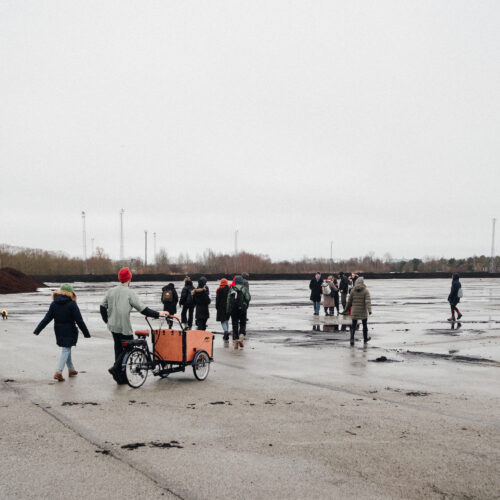
Next Tuesday (14 October), Urban Studies students are hosting their midterm event at “Shtromka”. It starts at 4 p.m. in the park across Pelguranna tn 57, Tallinn.
They invite you to a postcard workshop with food and drinks to learn more about Shtromka.
You are cordially invited to attend the event.
///
Hello there,
Greetings from Shtromka! At first glance, it seems like a holiday idyll between the sea, forest and wide meadows. But ask around and you will quickly learn about other stories and contradictions. Apparently, Shtromka has a somewhat negative image due to its history. Its identity is shaped by various experiences, prejudices and affiliations. What makes this multi-layered place special? And is Shtromka even a place or is it an imagination, a construct, a feeling?
You decide what image you have of Shtromka. Ours is just one of many. Which one do you see?
We welcome you to a workshop with food and drinks: design your own postcard of Shtromka and discover with us the diversity of narratives, images and characters of this place.
Warm regards from the beach benches
Posted by Andres Lõo — Permalink
Greetings from Shtromka
Tuesday 14 October, 2025
Urban Studies
Next Tuesday (14 October), Urban Studies students are hosting their midterm event at “Shtromka”. It starts at 4 p.m. in the park across Pelguranna tn 57, Tallinn.
They invite you to a postcard workshop with food and drinks to learn more about Shtromka.
You are cordially invited to attend the event.
///
Hello there,
Greetings from Shtromka! At first glance, it seems like a holiday idyll between the sea, forest and wide meadows. But ask around and you will quickly learn about other stories and contradictions. Apparently, Shtromka has a somewhat negative image due to its history. Its identity is shaped by various experiences, prejudices and affiliations. What makes this multi-layered place special? And is Shtromka even a place or is it an imagination, a construct, a feeling?
You decide what image you have of Shtromka. Ours is just one of many. Which one do you see?
We welcome you to a workshop with food and drinks: design your own postcard of Shtromka and discover with us the diversity of narratives, images and characters of this place.
Warm regards from the beach benches
Posted by Andres Lõo — Permalink
16.10.2025 — 15.11.2025
Kristel Saan “Scent of Humans” at Vaal Gallery
Ceramics
On Thursday, 16th of October at 6 pm, Kristel Saan’s solo exhibition “Scent of Humans” will open at Vaal Gallery.
The exhibition will remain open until 15th of November, Tue–Fri 12–6 pm and Sat 12–4 pm.
The exhibition “Scent of Humans” speaks of how our nose is always the primary introducer to our feelings. It gives us the initial information about whether we stay or move on whether we like something or are we reluctant to it, and ultimately determines our memories.
In our brain, smells and emotions are recorded as one memory. Therefore, childhood plays an important role in the formation of our smells, based on which we make decisions basically for the rest of our lives. So it is no wonder that the freshly mowed lawn brings to mind the grandparents and the scent of childhood cottage or the smell of clean linens, hot summer laundry day and the vastness of the World playing inside it.
“Scent of Humans” speaks of the journey and the memories and experiences in its way, and how everything that follows can only be built on its shoulders. The exhibition takes baby steps back to childhood, so as not to disturb the past too much, where it puts different generations to sit down together for a moment and lose the hierarchy. The works also reflect movement between cities, cultures, and countries, as well as movement through time and age, in a search of a place where one might perhaps linger a little longer.
The exhibition “Scent of Human” is curated by Merilin Talumaa.
The exhibition is supported by Cultural Endowment of Estonia, Pühaste Brewery, Lo Alto.
Kristel Saan (b 1985) is an artist living and working in Estonia. Her practice includes large-scale installations, ceramics, textile and painting, photography and video works. The work of the artist is often reminiscent of a wide variety of imaginary places where poetry and various unexpected organic materials intertwine, through which the perception of object, material and space becomes one of the fundamental aspects of his work. During the work process, both bodily sensations and the relationship between the body and the surrounding environment are the focus of the artist’s attention. Kristel Saan has obtained a bachelor’s and master’s degree in ceramics from the Faculty of Design of the Estonian Academy of Arts. In addition, she has studied fine arts at Central Saint Martins in London, visual arts during her master’s studies at Emily Carr University of Art and Design in Vancouver, Canada, and sculpture at the Rhode Island School of Design in the United States.
Merilin Talumaa (b 1986) is a curator and cultural manager who lives and works in Paris and Tallinn. She has graduated from the Department of Art History and Visual Culture at the Estonian Academy of Arts. She is also a graduate of Environmental studies from University of Tartu. Her practice has evolved around research about artists’ studio and work environments and notions of migration and belonging. Her recent on-going projects include Roots to Routes (since 2020) – a curatorial initiative gathering a community of artists, curators and cultural producers from Baltic states. Prior to the book „Your Time Is My Time”, Mousse Publishing, 2023, she compiled and edited the book „Artists’ spaces : 16 studio visits”, Estonian Academy of Arts Press, 2017 (both together with Annika Toots).
Posted by Andres Lõo — Permalink
Kristel Saan “Scent of Humans” at Vaal Gallery
Thursday 16 October, 2025 — Saturday 15 November, 2025
Ceramics
On Thursday, 16th of October at 6 pm, Kristel Saan’s solo exhibition “Scent of Humans” will open at Vaal Gallery.
The exhibition will remain open until 15th of November, Tue–Fri 12–6 pm and Sat 12–4 pm.
The exhibition “Scent of Humans” speaks of how our nose is always the primary introducer to our feelings. It gives us the initial information about whether we stay or move on whether we like something or are we reluctant to it, and ultimately determines our memories.
In our brain, smells and emotions are recorded as one memory. Therefore, childhood plays an important role in the formation of our smells, based on which we make decisions basically for the rest of our lives. So it is no wonder that the freshly mowed lawn brings to mind the grandparents and the scent of childhood cottage or the smell of clean linens, hot summer laundry day and the vastness of the World playing inside it.
“Scent of Humans” speaks of the journey and the memories and experiences in its way, and how everything that follows can only be built on its shoulders. The exhibition takes baby steps back to childhood, so as not to disturb the past too much, where it puts different generations to sit down together for a moment and lose the hierarchy. The works also reflect movement between cities, cultures, and countries, as well as movement through time and age, in a search of a place where one might perhaps linger a little longer.
The exhibition “Scent of Human” is curated by Merilin Talumaa.
The exhibition is supported by Cultural Endowment of Estonia, Pühaste Brewery, Lo Alto.
Kristel Saan (b 1985) is an artist living and working in Estonia. Her practice includes large-scale installations, ceramics, textile and painting, photography and video works. The work of the artist is often reminiscent of a wide variety of imaginary places where poetry and various unexpected organic materials intertwine, through which the perception of object, material and space becomes one of the fundamental aspects of his work. During the work process, both bodily sensations and the relationship between the body and the surrounding environment are the focus of the artist’s attention. Kristel Saan has obtained a bachelor’s and master’s degree in ceramics from the Faculty of Design of the Estonian Academy of Arts. In addition, she has studied fine arts at Central Saint Martins in London, visual arts during her master’s studies at Emily Carr University of Art and Design in Vancouver, Canada, and sculpture at the Rhode Island School of Design in the United States.
Merilin Talumaa (b 1986) is a curator and cultural manager who lives and works in Paris and Tallinn. She has graduated from the Department of Art History and Visual Culture at the Estonian Academy of Arts. She is also a graduate of Environmental studies from University of Tartu. Her practice has evolved around research about artists’ studio and work environments and notions of migration and belonging. Her recent on-going projects include Roots to Routes (since 2020) – a curatorial initiative gathering a community of artists, curators and cultural producers from Baltic states. Prior to the book „Your Time Is My Time”, Mousse Publishing, 2023, she compiled and edited the book „Artists’ spaces : 16 studio visits”, Estonian Academy of Arts Press, 2017 (both together with Annika Toots).
Posted by Andres Lõo — Permalink
05.09.2025 — 31.10.2025
Gardens: Tanja Muravskaja and Light
Photography
Gardens: Tanja Muravskaja and Light
05.09 – 31.10.2025
Open:
Wed–Sat 13:00–19:00
Free entrance
Limited wheelchair access
Public Programme:
13.09, 14:00 Guided tour (in Estonian)
20.09, 14:00 Artist talk (in Estonian)
The exhibition is part of the main programme of the 8th Tallinn Photomonth
Tanja Muravskaja’s new work Gardens explores the boundaries between reality and image, as she gives the organic and living a fixed form, materialised through photography. Working with water as a real (source) material serves as a strategy for slowing down and so offering a counterpoint to the automated visual flows of the digital age. The individual photographs in the series are not mere visual images but events captured at the moment of their occurrence, when light and time turn into physical matter.
The display immerses the viewer in an experience of phenomenological presence, as their attention moves from recognition of the form to the sensual and sensory perception of the material. The series is an invite for “slow contemplation”, through which it explores the liminal areas between the visible and the invisible before guiding the viewer back to a
heightened state of physical presence and perception of the world.
The project was born from professional memory and developed into an independent statement on the intersection of institutional conditions, architecture and the artist’s perspective. All the photographs in the exhibition were printed by the artist herself, a process that allowed her to take full control of the paper’s nuances of texture and colour while also becoming an inherent extension of the artist’s observations and their results captured on camera.
Tanja Muravskaja (b. 1978 in Pärnu, lives and works in Tallinn) is an esteemed Estonian artist whose work focuses on questions of identity, collective and personal memory, and social boundaries.
Muravskaja graduated from the Estonian Academy of Arts with a BA and, later, a Master’s in photography. She also studied photography at the University of Westminster in London, where she spent an exchange year. Her analytical and psychological approach sheds light on themes related to internal tensions and a sense of belonging, both on an individual and a social level.
Muravskaja’s works – including her principal photographic series Positions, Estonian Race, They Who Sang Together, Self-portrait with the Estonian Flag and various video works – are part of the collections of the Art Museum of Estonia, Tartu Art Museum and multiple private collections, reflecting the significant place she has in Estonian art history. She has had solo exhibitions at Tensta Konsthall (Stockholm), WIELS (Brussels) and Tartu Art Museum. She has also participated in various international exhibitions, including at EMST at the National Museum of Contemporary Art (Athens), MOCAK (Kraków), the Art Encounters Biennial (Timișoara), the GIBCA Biennial (Gothenburg), Ludwig Museum (Budapest), MACRO (Rome), and Kiasma (Helsinki). She has received various accolades, including the Köler Prize Grand Prix (2018) and the Order of the White Star, 5th class, bestowed by the President of the Republic of Estonia (2019).
Exhibition designer: Jevgeni Zolotko Consultant: Elnara Taidre
Installation: Mihkel Lember
Graphic designer: Kert Viiart-Õllek
Thanks to:
Estonian Academy of Arts, Estonian Artists’ Association, Hedi Jaansoo, Kai Art Center, Laur Kivistik, Anna Loginov, Vladimir Loginov, Taavi Rekkaro, Sirje Runge, Mėta Valiušaitytė, Ellington Printing & Production, Veiko Illiste
Posted by Andres Lõo — Permalink
Gardens: Tanja Muravskaja and Light
Friday 05 September, 2025 — Friday 31 October, 2025
Photography
Gardens: Tanja Muravskaja and Light
05.09 – 31.10.2025
Open:
Wed–Sat 13:00–19:00
Free entrance
Limited wheelchair access
Public Programme:
13.09, 14:00 Guided tour (in Estonian)
20.09, 14:00 Artist talk (in Estonian)
The exhibition is part of the main programme of the 8th Tallinn Photomonth
Tanja Muravskaja’s new work Gardens explores the boundaries between reality and image, as she gives the organic and living a fixed form, materialised through photography. Working with water as a real (source) material serves as a strategy for slowing down and so offering a counterpoint to the automated visual flows of the digital age. The individual photographs in the series are not mere visual images but events captured at the moment of their occurrence, when light and time turn into physical matter.
The display immerses the viewer in an experience of phenomenological presence, as their attention moves from recognition of the form to the sensual and sensory perception of the material. The series is an invite for “slow contemplation”, through which it explores the liminal areas between the visible and the invisible before guiding the viewer back to a
heightened state of physical presence and perception of the world.
The project was born from professional memory and developed into an independent statement on the intersection of institutional conditions, architecture and the artist’s perspective. All the photographs in the exhibition were printed by the artist herself, a process that allowed her to take full control of the paper’s nuances of texture and colour while also becoming an inherent extension of the artist’s observations and their results captured on camera.
Tanja Muravskaja (b. 1978 in Pärnu, lives and works in Tallinn) is an esteemed Estonian artist whose work focuses on questions of identity, collective and personal memory, and social boundaries.
Muravskaja graduated from the Estonian Academy of Arts with a BA and, later, a Master’s in photography. She also studied photography at the University of Westminster in London, where she spent an exchange year. Her analytical and psychological approach sheds light on themes related to internal tensions and a sense of belonging, both on an individual and a social level.
Muravskaja’s works – including her principal photographic series Positions, Estonian Race, They Who Sang Together, Self-portrait with the Estonian Flag and various video works – are part of the collections of the Art Museum of Estonia, Tartu Art Museum and multiple private collections, reflecting the significant place she has in Estonian art history. She has had solo exhibitions at Tensta Konsthall (Stockholm), WIELS (Brussels) and Tartu Art Museum. She has also participated in various international exhibitions, including at EMST at the National Museum of Contemporary Art (Athens), MOCAK (Kraków), the Art Encounters Biennial (Timișoara), the GIBCA Biennial (Gothenburg), Ludwig Museum (Budapest), MACRO (Rome), and Kiasma (Helsinki). She has received various accolades, including the Köler Prize Grand Prix (2018) and the Order of the White Star, 5th class, bestowed by the President of the Republic of Estonia (2019).
Exhibition designer: Jevgeni Zolotko Consultant: Elnara Taidre
Installation: Mihkel Lember
Graphic designer: Kert Viiart-Õllek
Thanks to:
Estonian Academy of Arts, Estonian Artists’ Association, Hedi Jaansoo, Kai Art Center, Laur Kivistik, Anna Loginov, Vladimir Loginov, Taavi Rekkaro, Sirje Runge, Mėta Valiušaitytė, Ellington Printing & Production, Veiko Illiste
Posted by Andres Lõo — Permalink
03.10.2025 — 11.11.2025
Maria Kapajeva “By Losing Them, I Become a Whole”
Doktorikool

Curated by Šelda Puķīte
3.10.2025 — 22.11.2025
OPENING
3 October at 18.00
Performance by лäбипõленуд (laebipoelenud). Read more below
CALL TO PARTICIPATE
Maria Kapajeva engages with women with BRCA1/2 mutations or breast cancer and will host a queer community gathering to expand her two new works. Read more below
To this day, a woman’s body – its pain, illness and lived experience – is often treated as other, constrained by rigid gender norms and medical bias. Rather than embracing the complexity of womanhood, society continues to mystify and objectify women, reducing them to narrowly defined roles. In her solo exhibition By Losing Them, I Become a Whole*, Maria Kapajeva draws on her recent physical transformation and ongoing healing process to explore identity politics, womanhood and queer embodiment. It marks the first chapter of a new body of work – one that begins in loss but unfolds through tenderness, resilience and radical self-connection.
Kapajeva inherited the same genetic risk as her late grandmother, who died of cancer at the age of 49 – the same age the artist will reach later this year. As a result, she underwent two preventive surgeries: an oophorectomy and a mastectomy. With the removal of body parts so often defined by patriarchal society as essential to womanhood, she now navigates questions about how these changes might empower her identity as a queer woman – and whether these deeply personal interventions have granted her the chance at a longer life, a future once denied to her grandmother.
Known for working with image culture, photography and video – often incorporating crafts and elements from public and domestic spheres – Kapajeva explores her journey through a range of media. In the photographic series A Portrait of a Woman, she stages a visual narrative of transformation and embodied change, offering a farewell to her menstrual cycle. This is echoed in the video work Period. Period, which signifies the end of her reproductive stage. The healing process – marked by the management of bodily fluids and intimate, repetitive procedures – is also part of this exploration. The journey culminates in a fearless portrait of her post-surgery body, referencing Sarah Lucas’ Self Portrait with Fried Eggs (1996), though here, the eggs remain on the plate.
Before surgery, Kapajeva created a series of images, prints and casts of her breasts – leaving behind emotional imprints of what once was. In the series Parts of Me, Not, scanned images of her breasts are abstracted into a space where they exist independently from the body. In another gesture, she prints their forms onto limited-edition T-shirts, offering others the symbolic opportunity to wear them. Reimagined as form-filling entities, the breasts are also cast in clay as hanging bell-shaped sculptures titled The Transformation of Silence. The fleshy materiality and earthy tones of the clay, combined with the bell’s function as a ringing object, give these forms a voice – capable of breaking silence, drawing attention or sounding an alarm. The installation will later continue to evolve, incorporating casts made in collaboration with other women, forming a growing archive of diverse bodies and voices.
Another installation, My fears were the fears of us all**, composed of found and ready-made materials, features paired seashells that evoke ovaries, breast shells or protective armour. Once natural shields for soft bodies, these shells now sit on a reflective surface, expanding the imagery and incorporating reflections from the space and viewer. The piece is anchored by a raw tree stump, stripped of its bark. This contrast – between hollow shells and exposed wood – captures the tension between vulnerability and defence, echoing the emotional landscape Kapajeva explores.
The large-scale textile work Golden Becoming comes closest to evoking a sense of sacred transformation. Its surface is imprinted in gold with the whole body – past and present – merged into a single form, reminiscent of the Shroud of Turin. It becomes a symbolic site of rebirth, where what once was is allowed to evolve into what may become. Over time, the textile will be embroidered with the stories and experiences of other queer people, gradually transforming a solitary imprint into a collective archive – an expanding tapestry of shared memory, resilience and identity.
Working across photography, video, textiles, ceramics and found objects, the exhibition is at once a case study, a therapeutic process, a tribute to Kapajeva’s grandmother, a farewell to her breasts and ovaries, and an ode to the body she now inhabits. By weaving together physical, visceral and psychological experiences, the artist has created a roadmap for navigating a transitional state of being – learning to mourn, care for and celebrate the body’s evolving form. What begins as a profoundly intimate story opens into a collective experience – one that looks toward a future filled with diverse voices and bodies, sharing stories, raising awareness, and celebrating new ways of being and becoming.
* A reference to Ocean Vuong’s poem Beautiful Short Loser, 2022
** A quotation from Audre Lorde’s The Cancer Journals, 1980
The exhibition is part of the satellite programme of Tallinn Photomonth 2025 and serves as Kogo Gallery’s final show of the year, presented under the programme Thrifters and Transformers.
PERFORMANCE
By лäбипõленуд (laebipoelenud) on 3 October at 18.00 at the opening
лäбипõленуд (laebipoelenud) is a memory, a state and movement that binds and tears all voices out of itself to survive in this harsh painful landscape that does not embrace those like us. The inner fire has gone out, only the core remains, it crawls, wails and searches, hunger for life is still within. By channeling rage and apathy in the bodies, we have finally reached the violence that forces us to listen, to bodies that are erased.
CALL TO PARTICIPATE
Artist Maria Kapajeva warmly invites women diagnosed with BRCA1 and BRCA2 gene mutation or breast cancer to participate in an extended edition of sculpture The Transformation of Silence by including their breast casts into a growing archive of diverse bodies and voices. To make your own cast and learn more, please contact the artist at kapajeva@yahoo.com or the gallery.
During the exhibition period, Maria Kapajeva will also host a community gathering for queer people to collectively contribute to her large-scale textile work Golden Becoming.
BIOS
Maria Kapajeva (she/her, b. 1976) is an artist whose practice explores questions of identity and gender, often focusing on people in states of transition. She works with found and vernacular photographic images, video installations, textile and embroidery, and participatory practices. Working between the UK and Estonia, she exhibits her work internationally. Kapajeva has received numerous awards, including the Estonian Cultural Endowment’s Annual Award (2025), the Eduard Wiiralt Scholarship (2023) and the Kraszna-Krausz Photo Book Award (2021).
Kapajeva’s works are held in several collections, including the Kiasma Museum of Contemporary Art and the Tartu Art Museum. She is currently pursuing a practice-based PhD at the Estonian Academy of Arts and works as a project manager for Fast Forward: Women in Photography at UCA, UK.
Šelda Puķīte (b. 1986) is a Latvian curator, writer and researcher based in Estonia. Her formal education includes a Master’s and a Bachelor’s degree from the Department of Art History and Theory at the Art Academy of Latvia. She has worked on several international exhibitions, curated stands for art fairs including Liste Art Fair Basel, viennacontemporary and Art Brussels, published art albums, created catalogues for contemporary art festivals Survival Kit and Riga Photography Biennial, as well as written several essays for Baltic culture publications. Her most recent curated exhibitions include Paweł Matyszewski’s solo exhibition Momentary Organisms (2025) at Kogo Gallery, Tartu, Silver Girls. Retouched History of Baltic Photography (2025) together with Agnė Narušytė and Indrek Grigor at National Gallery of Art, Vilnius, and White Dwarfs and All Those Beautiful Nebulas (2024) at Kim? Contemporary Art Centre, Riga. Since 2020, she works at Kogo Gallery as an international project manager and exhibition programme curator.
TEAM
Artist: Maria Kapajeva
Curator: Šelda Puķīte
Production: Stella Mõttus
Communication: Karin Kahre, Stella Mõttus
Installation: Peeter Talvistu
Photos: Nele Tammeaid (opening)
Text: Šelda Puķīte
Graphic design: Maris Põrk
Translation and editing: Refiner Translations
FUNDING AND SUPPORT
The exhibition is funded by the Cultural Endowment of Estonia and the City of Tartu.
The artist thanks Artproof, Eva Mahhov, Vivek Jain, Mihkel Säre, Anne Eelmere, Nadja Tjuška and лäбипõленуд, gallery team and funders
Posted by Andres Lõo — Permalink
Maria Kapajeva “By Losing Them, I Become a Whole”
Friday 03 October, 2025 — Tuesday 11 November, 2025
Doktorikool

Curated by Šelda Puķīte
3.10.2025 — 22.11.2025
OPENING
3 October at 18.00
Performance by лäбипõленуд (laebipoelenud). Read more below
CALL TO PARTICIPATE
Maria Kapajeva engages with women with BRCA1/2 mutations or breast cancer and will host a queer community gathering to expand her two new works. Read more below
To this day, a woman’s body – its pain, illness and lived experience – is often treated as other, constrained by rigid gender norms and medical bias. Rather than embracing the complexity of womanhood, society continues to mystify and objectify women, reducing them to narrowly defined roles. In her solo exhibition By Losing Them, I Become a Whole*, Maria Kapajeva draws on her recent physical transformation and ongoing healing process to explore identity politics, womanhood and queer embodiment. It marks the first chapter of a new body of work – one that begins in loss but unfolds through tenderness, resilience and radical self-connection.
Kapajeva inherited the same genetic risk as her late grandmother, who died of cancer at the age of 49 – the same age the artist will reach later this year. As a result, she underwent two preventive surgeries: an oophorectomy and a mastectomy. With the removal of body parts so often defined by patriarchal society as essential to womanhood, she now navigates questions about how these changes might empower her identity as a queer woman – and whether these deeply personal interventions have granted her the chance at a longer life, a future once denied to her grandmother.
Known for working with image culture, photography and video – often incorporating crafts and elements from public and domestic spheres – Kapajeva explores her journey through a range of media. In the photographic series A Portrait of a Woman, she stages a visual narrative of transformation and embodied change, offering a farewell to her menstrual cycle. This is echoed in the video work Period. Period, which signifies the end of her reproductive stage. The healing process – marked by the management of bodily fluids and intimate, repetitive procedures – is also part of this exploration. The journey culminates in a fearless portrait of her post-surgery body, referencing Sarah Lucas’ Self Portrait with Fried Eggs (1996), though here, the eggs remain on the plate.
Before surgery, Kapajeva created a series of images, prints and casts of her breasts – leaving behind emotional imprints of what once was. In the series Parts of Me, Not, scanned images of her breasts are abstracted into a space where they exist independently from the body. In another gesture, she prints their forms onto limited-edition T-shirts, offering others the symbolic opportunity to wear them. Reimagined as form-filling entities, the breasts are also cast in clay as hanging bell-shaped sculptures titled The Transformation of Silence. The fleshy materiality and earthy tones of the clay, combined with the bell’s function as a ringing object, give these forms a voice – capable of breaking silence, drawing attention or sounding an alarm. The installation will later continue to evolve, incorporating casts made in collaboration with other women, forming a growing archive of diverse bodies and voices.
Another installation, My fears were the fears of us all**, composed of found and ready-made materials, features paired seashells that evoke ovaries, breast shells or protective armour. Once natural shields for soft bodies, these shells now sit on a reflective surface, expanding the imagery and incorporating reflections from the space and viewer. The piece is anchored by a raw tree stump, stripped of its bark. This contrast – between hollow shells and exposed wood – captures the tension between vulnerability and defence, echoing the emotional landscape Kapajeva explores.
The large-scale textile work Golden Becoming comes closest to evoking a sense of sacred transformation. Its surface is imprinted in gold with the whole body – past and present – merged into a single form, reminiscent of the Shroud of Turin. It becomes a symbolic site of rebirth, where what once was is allowed to evolve into what may become. Over time, the textile will be embroidered with the stories and experiences of other queer people, gradually transforming a solitary imprint into a collective archive – an expanding tapestry of shared memory, resilience and identity.
Working across photography, video, textiles, ceramics and found objects, the exhibition is at once a case study, a therapeutic process, a tribute to Kapajeva’s grandmother, a farewell to her breasts and ovaries, and an ode to the body she now inhabits. By weaving together physical, visceral and psychological experiences, the artist has created a roadmap for navigating a transitional state of being – learning to mourn, care for and celebrate the body’s evolving form. What begins as a profoundly intimate story opens into a collective experience – one that looks toward a future filled with diverse voices and bodies, sharing stories, raising awareness, and celebrating new ways of being and becoming.
* A reference to Ocean Vuong’s poem Beautiful Short Loser, 2022
** A quotation from Audre Lorde’s The Cancer Journals, 1980
The exhibition is part of the satellite programme of Tallinn Photomonth 2025 and serves as Kogo Gallery’s final show of the year, presented under the programme Thrifters and Transformers.
PERFORMANCE
By лäбипõленуд (laebipoelenud) on 3 October at 18.00 at the opening
лäбипõленуд (laebipoelenud) is a memory, a state and movement that binds and tears all voices out of itself to survive in this harsh painful landscape that does not embrace those like us. The inner fire has gone out, only the core remains, it crawls, wails and searches, hunger for life is still within. By channeling rage and apathy in the bodies, we have finally reached the violence that forces us to listen, to bodies that are erased.
CALL TO PARTICIPATE
Artist Maria Kapajeva warmly invites women diagnosed with BRCA1 and BRCA2 gene mutation or breast cancer to participate in an extended edition of sculpture The Transformation of Silence by including their breast casts into a growing archive of diverse bodies and voices. To make your own cast and learn more, please contact the artist at kapajeva@yahoo.com or the gallery.
During the exhibition period, Maria Kapajeva will also host a community gathering for queer people to collectively contribute to her large-scale textile work Golden Becoming.
BIOS
Maria Kapajeva (she/her, b. 1976) is an artist whose practice explores questions of identity and gender, often focusing on people in states of transition. She works with found and vernacular photographic images, video installations, textile and embroidery, and participatory practices. Working between the UK and Estonia, she exhibits her work internationally. Kapajeva has received numerous awards, including the Estonian Cultural Endowment’s Annual Award (2025), the Eduard Wiiralt Scholarship (2023) and the Kraszna-Krausz Photo Book Award (2021).
Kapajeva’s works are held in several collections, including the Kiasma Museum of Contemporary Art and the Tartu Art Museum. She is currently pursuing a practice-based PhD at the Estonian Academy of Arts and works as a project manager for Fast Forward: Women in Photography at UCA, UK.
Šelda Puķīte (b. 1986) is a Latvian curator, writer and researcher based in Estonia. Her formal education includes a Master’s and a Bachelor’s degree from the Department of Art History and Theory at the Art Academy of Latvia. She has worked on several international exhibitions, curated stands for art fairs including Liste Art Fair Basel, viennacontemporary and Art Brussels, published art albums, created catalogues for contemporary art festivals Survival Kit and Riga Photography Biennial, as well as written several essays for Baltic culture publications. Her most recent curated exhibitions include Paweł Matyszewski’s solo exhibition Momentary Organisms (2025) at Kogo Gallery, Tartu, Silver Girls. Retouched History of Baltic Photography (2025) together with Agnė Narušytė and Indrek Grigor at National Gallery of Art, Vilnius, and White Dwarfs and All Those Beautiful Nebulas (2024) at Kim? Contemporary Art Centre, Riga. Since 2020, she works at Kogo Gallery as an international project manager and exhibition programme curator.
TEAM
Artist: Maria Kapajeva
Curator: Šelda Puķīte
Production: Stella Mõttus
Communication: Karin Kahre, Stella Mõttus
Installation: Peeter Talvistu
Photos: Nele Tammeaid (opening)
Text: Šelda Puķīte
Graphic design: Maris Põrk
Translation and editing: Refiner Translations
FUNDING AND SUPPORT
The exhibition is funded by the Cultural Endowment of Estonia and the City of Tartu.
The artist thanks Artproof, Eva Mahhov, Vivek Jain, Mihkel Säre, Anne Eelmere, Nadja Tjuška and лäбипõленуд, gallery team and funders
Posted by Andres Lõo — Permalink
15.10.2025
Science Café: “Artistic Research and the Audience”
Research and Development Office
EMTA, EKA and BFM invite you to the Science Café!
On Wednesday, 15 October at 6 p.m., a discussion evening will take place in AnkruSAAL at Põhjala Factory (Ankru 10, Tallinn). Researchers from the Estonian Academy of Music and Theatre (EMTA), the Estonian Academy of Arts (EKA) and Tallinn University’s Baltic Film, Media and Arts School (TLU BFM) will share insights into their creative practice and research, exploring the nature, methods and outcomes of artistic research. The event will be held in Estonian.
This Science Café focuses on “Artistic Research and the Audience.”
Until now, studies of theatre, film, art and concert audiences have largely come from a sociological perspective. Artistic research offers new angles, examining the relationship between performer or creator (musician, conductor, actor, artist and others) and listener/viewer, and how their roles and functions shift in different situations. Some art forms draw the audience directly into the creation of the work—eliciting a wide range of reactions. A good example is co-created or “life-based” theatre. How can an encounter between performer and audience become truly equal within a performance? Such questions provide fertile ground for conversation with Science Café guests: what are their own experiences and expectations?
Moderator: Mihhail Gerts (EMTA)
Panelists: Kadri Noormets (EMTA), Alisson Kruusmaa (EMTA), Sten Kauber (TLU BFM), Joanna Kalm (EKA)
Musical performance: Kristjan Kannukene (EMTA)
The Science Café on 15 October is part of the Estonian Academy of Music and Theatre’s flagship festival MÜRIAADfest.
Participation is free of charge, but please register in advance by 9 October HERE.
The event is supported by the Estonian Research Council’s science popularisation programme and is open to everyone interested.

Posted by Triin Käo — Permalink
Science Café: “Artistic Research and the Audience”
Wednesday 15 October, 2025
Research and Development Office
EMTA, EKA and BFM invite you to the Science Café!
On Wednesday, 15 October at 6 p.m., a discussion evening will take place in AnkruSAAL at Põhjala Factory (Ankru 10, Tallinn). Researchers from the Estonian Academy of Music and Theatre (EMTA), the Estonian Academy of Arts (EKA) and Tallinn University’s Baltic Film, Media and Arts School (TLU BFM) will share insights into their creative practice and research, exploring the nature, methods and outcomes of artistic research. The event will be held in Estonian.
This Science Café focuses on “Artistic Research and the Audience.”
Until now, studies of theatre, film, art and concert audiences have largely come from a sociological perspective. Artistic research offers new angles, examining the relationship between performer or creator (musician, conductor, actor, artist and others) and listener/viewer, and how their roles and functions shift in different situations. Some art forms draw the audience directly into the creation of the work—eliciting a wide range of reactions. A good example is co-created or “life-based” theatre. How can an encounter between performer and audience become truly equal within a performance? Such questions provide fertile ground for conversation with Science Café guests: what are their own experiences and expectations?
Moderator: Mihhail Gerts (EMTA)
Panelists: Kadri Noormets (EMTA), Alisson Kruusmaa (EMTA), Sten Kauber (TLU BFM), Joanna Kalm (EKA)
Musical performance: Kristjan Kannukene (EMTA)
The Science Café on 15 October is part of the Estonian Academy of Music and Theatre’s flagship festival MÜRIAADfest.
Participation is free of charge, but please register in advance by 9 October HERE.
The event is supported by the Estonian Research Council’s science popularisation programme and is open to everyone interested.

Posted by Triin Käo — Permalink