
Open Lectures
05.10.2016
ZACH LIHATSH open lecture on Oct 5 at 6 pm

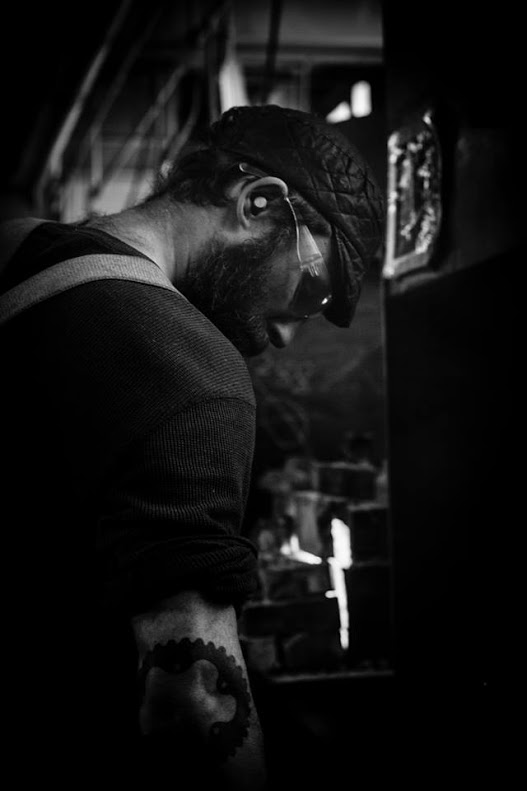
Artist statement:
I strive to explore the tension between industry and the organic. I choose forged steel as my primary method. I do this because forged steel retains an industrial weight as it simultaneously can be made plastic and non linear. Within this merging duality I find a larger narrative. These feelings resonate with my own interests in understanding how we as a people seek to find balance in the world. A balance of our own.
The industrial ruins that dot the American landscape inspire some forms in my work. Other forms are directly related to anatomy and the human body. A recent body of work explores the aesthetic nature of graffiti that dominates these industrial ruins. It is my goal to explore the flux of human impact on the natural world and to comment on our social and physical impact through this exploration.
Zachary Lihatsh is an artist, designer, and blacksmith. Born and raised in New Hampshire, Zach later settled in Arizona where he established his studio. He received his undergraduate degree form Prescott College in northern Arizona and is currently an MFA candidate at Southern Illinois University in Carbondale, Illinois. He has taught blacksmithing at high school and college levels as well as assisting at the Penland School of craft in North Carolina. He has exhibited work nationally and internationally. His Public art commissions can be seen in Tucson, Arizona and at The University of Gothenburg, Sweden.
www.zachlihatsh.com
ZACH LIHATSH open lecture on Oct 5 at 6 pm
Wednesday 05 October, 2016
Artist statement:
I strive to explore the tension between industry and the organic. I choose forged steel as my primary method. I do this because forged steel retains an industrial weight as it simultaneously can be made plastic and non linear. Within this merging duality I find a larger narrative. These feelings resonate with my own interests in understanding how we as a people seek to find balance in the world. A balance of our own.
The industrial ruins that dot the American landscape inspire some forms in my work. Other forms are directly related to anatomy and the human body. A recent body of work explores the aesthetic nature of graffiti that dominates these industrial ruins. It is my goal to explore the flux of human impact on the natural world and to comment on our social and physical impact through this exploration.
Zachary Lihatsh is an artist, designer, and blacksmith. Born and raised in New Hampshire, Zach later settled in Arizona where he established his studio. He received his undergraduate degree form Prescott College in northern Arizona and is currently an MFA candidate at Southern Illinois University in Carbondale, Illinois. He has taught blacksmithing at high school and college levels as well as assisting at the Penland School of craft in North Carolina. He has exhibited work nationally and internationally. His Public art commissions can be seen in Tucson, Arizona and at The University of Gothenburg, Sweden.
www.zachlihatsh.com
06.10.2016
Open Lecture Series: Lina Ghotmeh / DGT Architects. 6.10 at 6PM
On October 6th, the Open Lecture Series of the architecture faculty will host Lina Ghotmeh, one of the architects behind the mega-project of Estonian National Museum, to be opened for public on October 1st. Ghotmeh will share her story of how the Estonian National Museum was built – from the original concept to the grand opening, touching also upon the changes that took place during the ten years, and what the project means to her. The lecture will take place at Kanuti Gildi SAAL (Pikk 20, Tallinn) and is open for free to architecture students and professionals of the field as well as people interested in architecture.
Lina Ghotmeh is an architect, ‘distinction’ graduate from the American University of Beirut and the École Spéciale d’Architecture, Paris. Prior to establishing her office, she had worked between Paris, London and Beirut collaborating with Ateliers Jean Nouvel. In 2006, after winning the 1st Prize of the international competition of the Estonian National Museum, she established along with Dan Dorell and Tsuyoshi Tane DGT / Architects: an international design platform based in Paris. Lina practices a sensitive architecture through a multi‐disciplinary and research driven approach. She has received numerous awards, among which: the Areen and the Azar Awards prized along her studies, the French Ministry of Culture Architecture prize ‘’AJAP 2007‐08’’, and the French Architecture Academy Dejean Prize 2016.
In 2010, she was selected for the «10 for 2010 Visionary Architects for a new decade» by the European Architects Review and recently the Estonian National Museum has been awarded the GRAND PRIX AFEX. Lina is also actively involved in the academic world. She has taught Architecture as an Associate Professor at the École Spéciale d’Architecture (2008‐2015). She has also lectured, led workshops and been juror at architectural schools and institutions including Parsons School of Design, Paris; the Rhode Island School of Design, RISD, Providence; the Royal Academy of Arts in London and Columbia University in New York.
The Open Lecture Series of the Estonian Academy of Arts architecture faculty invites renowned architects, theoreticians, architecture critics and urbanists to Tallinn to speak about the latest ideas and points of view making ripples in architecture, design, city planning and critical thinking. The lectures are in English, free and open to anyone and especially intended for architecture students and professionals of the field as well as the general audience interested in matters concerning space.
Open Lecture Series is supported by Estonian Cultural Endowment and organised by the Estonian Academy of Arts architecture department.
Series curated by Sille Pihlak and Siim Tuksam (PART)
www.avatudloengud.ee
Facebook event: https://www.facebook.com/events/1240960255955870/
Open Lecture Series: Lina Ghotmeh / DGT Architects. 6.10 at 6PM
Thursday 06 October, 2016
On October 6th, the Open Lecture Series of the architecture faculty will host Lina Ghotmeh, one of the architects behind the mega-project of Estonian National Museum, to be opened for public on October 1st. Ghotmeh will share her story of how the Estonian National Museum was built – from the original concept to the grand opening, touching also upon the changes that took place during the ten years, and what the project means to her. The lecture will take place at Kanuti Gildi SAAL (Pikk 20, Tallinn) and is open for free to architecture students and professionals of the field as well as people interested in architecture.
Lina Ghotmeh is an architect, ‘distinction’ graduate from the American University of Beirut and the École Spéciale d’Architecture, Paris. Prior to establishing her office, she had worked between Paris, London and Beirut collaborating with Ateliers Jean Nouvel. In 2006, after winning the 1st Prize of the international competition of the Estonian National Museum, she established along with Dan Dorell and Tsuyoshi Tane DGT / Architects: an international design platform based in Paris. Lina practices a sensitive architecture through a multi‐disciplinary and research driven approach. She has received numerous awards, among which: the Areen and the Azar Awards prized along her studies, the French Ministry of Culture Architecture prize ‘’AJAP 2007‐08’’, and the French Architecture Academy Dejean Prize 2016.
In 2010, she was selected for the «10 for 2010 Visionary Architects for a new decade» by the European Architects Review and recently the Estonian National Museum has been awarded the GRAND PRIX AFEX. Lina is also actively involved in the academic world. She has taught Architecture as an Associate Professor at the École Spéciale d’Architecture (2008‐2015). She has also lectured, led workshops and been juror at architectural schools and institutions including Parsons School of Design, Paris; the Rhode Island School of Design, RISD, Providence; the Royal Academy of Arts in London and Columbia University in New York.
The Open Lecture Series of the Estonian Academy of Arts architecture faculty invites renowned architects, theoreticians, architecture critics and urbanists to Tallinn to speak about the latest ideas and points of view making ripples in architecture, design, city planning and critical thinking. The lectures are in English, free and open to anyone and especially intended for architecture students and professionals of the field as well as the general audience interested in matters concerning space.
Open Lecture Series is supported by Estonian Cultural Endowment and organised by the Estonian Academy of Arts architecture department.
Series curated by Sille Pihlak and Siim Tuksam (PART)
www.avatudloengud.ee
Facebook event: https://www.facebook.com/events/1240960255955870/
30.09.2016
Public talk by British artist Laura Buckley
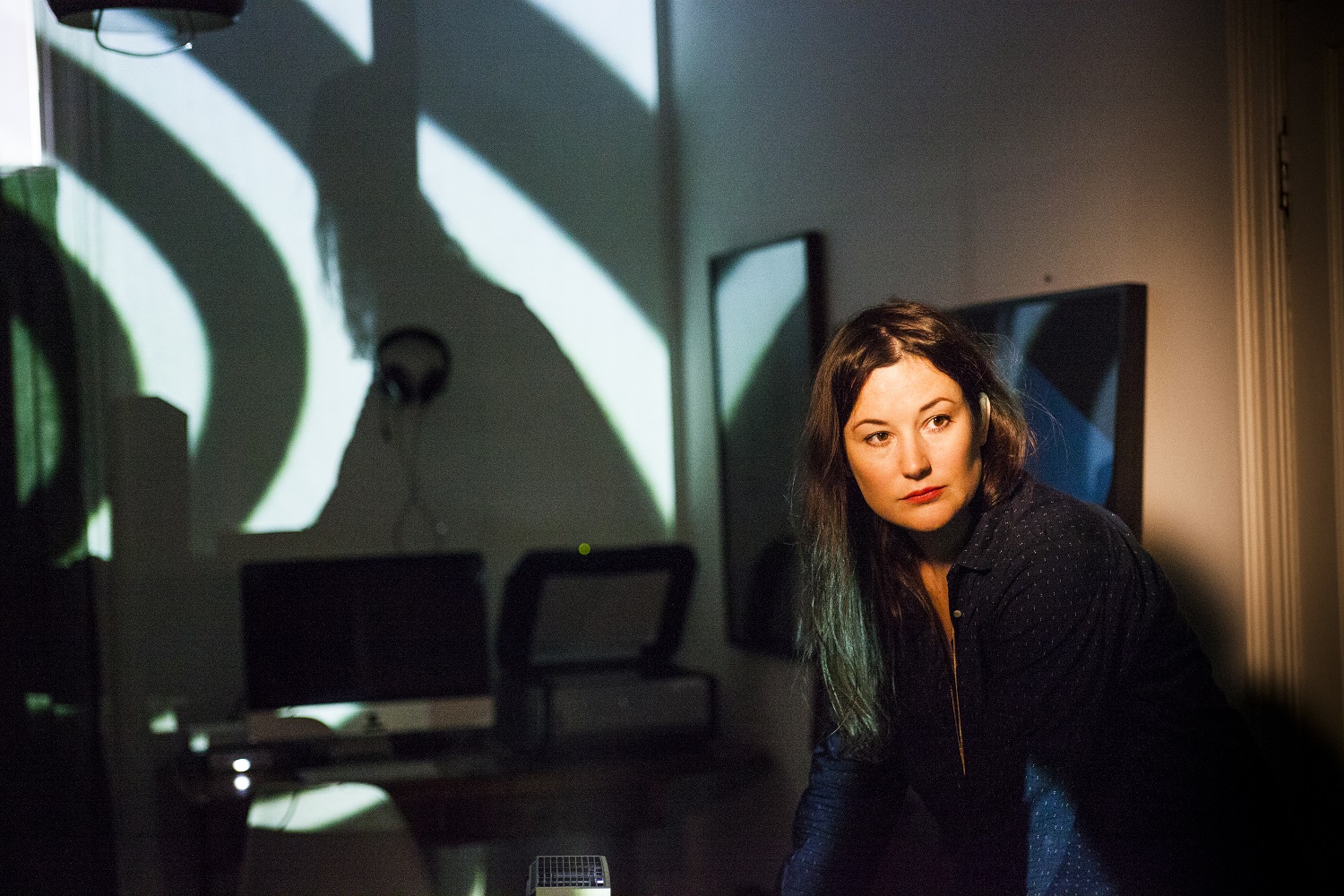
30 September 2016 at 4 pm, EKA Faculty of Fine Arts, Lembitu 10B, room no 136
On Friday, 30 September at 4 pm British artist Laura Buckley will speak about her works.
Laura Buckley is the main guest of the Kumu Art Film Festival KuFF, her film The Magic Know-How will be presented at the KuFF’s opening screening Moving Pictures: Artist’s Films from the Film London Jarman Award on 29 September 2016 at 7 pm in Kumu Auditorium.
Laura Buckley works expansively with moving image, sound, light, sculpture and digital print. Working with scanned imagery, her prints feed back into her projected videos which when combined with footage from life create highly abstracted environments. On entering Buckley’s installations a collective memory is evoked where various of states of mind are played out, from melancholy and anxiety to euphoria. Combining footage and audio from life with studio produced sound, the viewer is taken on a journey through a combination of parts intertwining personal, structural, and emotional dynamics.
Born 1977, Ireland, Buckley lives and works in London. Solo projects include Polarised (with Kim Coleman) at Block 336, Brixton (2016), Re-discovery 1 at Autocenter, Berlin (2014); The Magic Know-How at Site Gallery, Sheffield (2013); Fata Morgana at Cell Project Space, London (2012); Shields at the Zabludowicz Collection, Sarvisalo, Finland (2012); The Mean Reds at Supplement, London (2011); and Waterlilies at Mothers Tankstation, Dublin (2010). Her films have featured in screenings for MJ Gallery, Geneva (2014); Bold Tendencies, London (2013); and the Derek Jarman programme for Serpentine Gallery, London (2008). In 2010 Buckley was shortlisted for the Converse/Dazed Award and in 2014 she was shortlisted for the Jarman Award. Collaborative projects have included a live performance with Paul Purgas at the Whitechapel Gallery (2014), Slate with Dan Coopey at Turner Contemporary, Margate (2013); Bismuth Eyes with Andrew Spence at Cell Projects, London (2012) and Stage Frightwith Dave MacLean and Haroon Mirza at Rokeby, London (2009). Current projects include solo exhibitions at EIGEN+ART Lab, Berlin and Art House Foundation, London.
Vaata ka / See more at:
www.laurabuckley.com
https://vimeo.com/user10152368
Public talk by British artist Laura Buckley
Friday 30 September, 2016
30 September 2016 at 4 pm, EKA Faculty of Fine Arts, Lembitu 10B, room no 136
On Friday, 30 September at 4 pm British artist Laura Buckley will speak about her works.
Laura Buckley is the main guest of the Kumu Art Film Festival KuFF, her film The Magic Know-How will be presented at the KuFF’s opening screening Moving Pictures: Artist’s Films from the Film London Jarman Award on 29 September 2016 at 7 pm in Kumu Auditorium.
Laura Buckley works expansively with moving image, sound, light, sculpture and digital print. Working with scanned imagery, her prints feed back into her projected videos which when combined with footage from life create highly abstracted environments. On entering Buckley’s installations a collective memory is evoked where various of states of mind are played out, from melancholy and anxiety to euphoria. Combining footage and audio from life with studio produced sound, the viewer is taken on a journey through a combination of parts intertwining personal, structural, and emotional dynamics.
Born 1977, Ireland, Buckley lives and works in London. Solo projects include Polarised (with Kim Coleman) at Block 336, Brixton (2016), Re-discovery 1 at Autocenter, Berlin (2014); The Magic Know-How at Site Gallery, Sheffield (2013); Fata Morgana at Cell Project Space, London (2012); Shields at the Zabludowicz Collection, Sarvisalo, Finland (2012); The Mean Reds at Supplement, London (2011); and Waterlilies at Mothers Tankstation, Dublin (2010). Her films have featured in screenings for MJ Gallery, Geneva (2014); Bold Tendencies, London (2013); and the Derek Jarman programme for Serpentine Gallery, London (2008). In 2010 Buckley was shortlisted for the Converse/Dazed Award and in 2014 she was shortlisted for the Jarman Award. Collaborative projects have included a live performance with Paul Purgas at the Whitechapel Gallery (2014), Slate with Dan Coopey at Turner Contemporary, Margate (2013); Bismuth Eyes with Andrew Spence at Cell Projects, London (2012) and Stage Frightwith Dave MacLean and Haroon Mirza at Rokeby, London (2009). Current projects include solo exhibitions at EIGEN+ART Lab, Berlin and Art House Foundation, London.
Vaata ka / See more at:
www.laurabuckley.com
https://vimeo.com/user10152368
10.06.2016
TODAY AT TASE: Nicola Trezzi’s open lecture “Central Peripheries and Peripheral Centers: The New Paradigm”
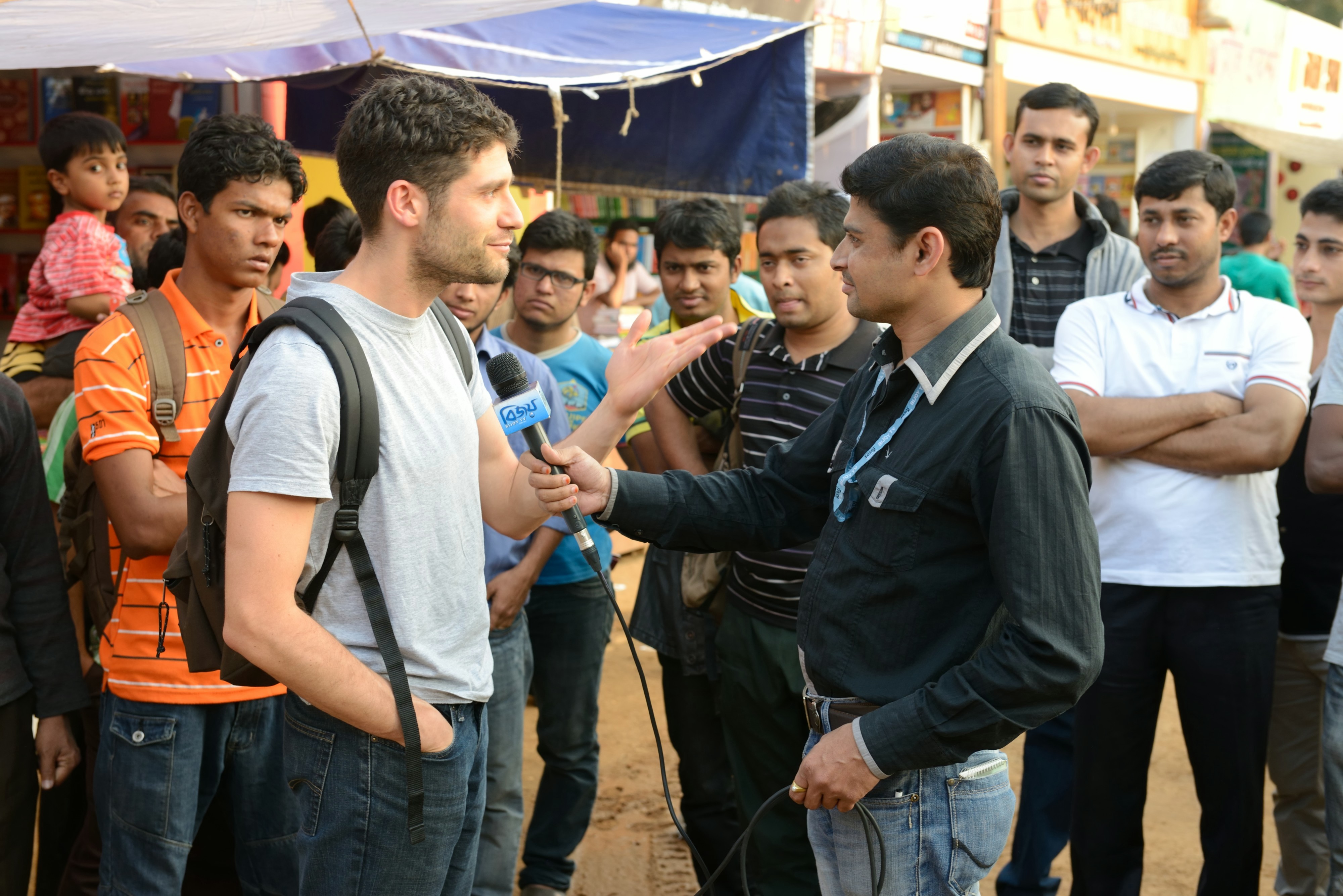
Nicola Trezzi’s lecture “Central Peripheries and Peripheral Centers: The New Paradigm”
Friday, June 10, 5 pm
Rauaniidi building
Kotzebue 1/ Põhja pst 7, Tallinn
IN ENGLISH!!
The lecture is held in lieu of the programme of TASE 2016 Degree Show
The lecture will investigate certain developments within the field of contemporary art and its connection to globalization. Following a series of recent events, specific situations and the structure of certain institutions and private identities, this new paradigm reconsiders the dichotomy “center” versus “periphery.”
The lecture takes the field of visual art as a study case, as a way to understand phenomena that go beyond its specificity (art, artists, museums, etc.) allowing a deeper understanding of reality at large.
Nicola Trezzi (Magenta, Italy, 1982) is an educator, exhibition maker and writer based in Tel Aviv. Until 2014 he was US editor at Flash Art International, New York Desk editor at Flash Art Italia, associate editor at Flash Art CZ&SK and consulting editor at Flash Art HU. Beside Flash Art, his writings appeared in Il Sole 24 Ore, Monopol, Flatt, erev-rav.com, biweekly.pl, White Fungus, in catalogues such as Joshua Neustein: Drawing the Margins (Jerusalem: Israel Museum), Postmonument (Carrara: The 14th Sculpture Biennial), Michal Helfman: Change (Tel Aviv: CCA), Ylva Ogland: She, an Introduction (Stockholm: Bonniers Konsthall) and Ido Bar-El: Bagatelle, Paintings, 1986–2015 (Tel Aviv Museum of Art) and in exhibition texts for Vibha Galhotra (Jack Shainman Gallery, New York) and Johan Creten (Galerie Perrotin, New York) and Matteo Callegari (Carl Kostyál, London). A staff member of the Prague Biennale Foundation from 2007 to 2014, he co-organized the following exhibitions: Painting Overall at the Prague Biennale 5, Four Rooms at the CCA in Warsaw, Modern Talking at the Muzeul National de Arta Cluj-Napoca, Circa 1986 at HVCCA in Peekskill NY, Champs-Élysées at Palais de Tokyo in Paris and Diagonal Histories—Imre Bak, Peter Halley—, at Art+Text in Budapest. He lectured at the Yale University School of Art (New Haven CT), SIAC (Chicago), iCI (New York), and at the Indonesian Institute of the Art (Yogyakarta). He is currently head of the MFA program at Bezalel Academy of Arts and Design in Jerusalem and Flash Art International’s contributing editor.
In addition to the lecture, Trezzi will visit different art institutions and artists’ studios in Tallinn.
Nicola Trezzi’s visit to Estonia is supported by ERASMUS+ International Credit Mobility.
Additional information:
Laura Toots
laura.toots@artun.ee
TODAY AT TASE: Nicola Trezzi’s open lecture “Central Peripheries and Peripheral Centers: The New Paradigm”
Friday 10 June, 2016
Nicola Trezzi’s lecture “Central Peripheries and Peripheral Centers: The New Paradigm”
Friday, June 10, 5 pm
Rauaniidi building
Kotzebue 1/ Põhja pst 7, Tallinn
IN ENGLISH!!
The lecture is held in lieu of the programme of TASE 2016 Degree Show
The lecture will investigate certain developments within the field of contemporary art and its connection to globalization. Following a series of recent events, specific situations and the structure of certain institutions and private identities, this new paradigm reconsiders the dichotomy “center” versus “periphery.”
The lecture takes the field of visual art as a study case, as a way to understand phenomena that go beyond its specificity (art, artists, museums, etc.) allowing a deeper understanding of reality at large.
Nicola Trezzi (Magenta, Italy, 1982) is an educator, exhibition maker and writer based in Tel Aviv. Until 2014 he was US editor at Flash Art International, New York Desk editor at Flash Art Italia, associate editor at Flash Art CZ&SK and consulting editor at Flash Art HU. Beside Flash Art, his writings appeared in Il Sole 24 Ore, Monopol, Flatt, erev-rav.com, biweekly.pl, White Fungus, in catalogues such as Joshua Neustein: Drawing the Margins (Jerusalem: Israel Museum), Postmonument (Carrara: The 14th Sculpture Biennial), Michal Helfman: Change (Tel Aviv: CCA), Ylva Ogland: She, an Introduction (Stockholm: Bonniers Konsthall) and Ido Bar-El: Bagatelle, Paintings, 1986–2015 (Tel Aviv Museum of Art) and in exhibition texts for Vibha Galhotra (Jack Shainman Gallery, New York) and Johan Creten (Galerie Perrotin, New York) and Matteo Callegari (Carl Kostyál, London). A staff member of the Prague Biennale Foundation from 2007 to 2014, he co-organized the following exhibitions: Painting Overall at the Prague Biennale 5, Four Rooms at the CCA in Warsaw, Modern Talking at the Muzeul National de Arta Cluj-Napoca, Circa 1986 at HVCCA in Peekskill NY, Champs-Élysées at Palais de Tokyo in Paris and Diagonal Histories—Imre Bak, Peter Halley—, at Art+Text in Budapest. He lectured at the Yale University School of Art (New Haven CT), SIAC (Chicago), iCI (New York), and at the Indonesian Institute of the Art (Yogyakarta). He is currently head of the MFA program at Bezalel Academy of Arts and Design in Jerusalem and Flash Art International’s contributing editor.
In addition to the lecture, Trezzi will visit different art institutions and artists’ studios in Tallinn.
Nicola Trezzi’s visit to Estonia is supported by ERASMUS+ International Credit Mobility.
Additional information:
Laura Toots
laura.toots@artun.ee
10.05.2016
Urban Studies research studio presents: The Zone
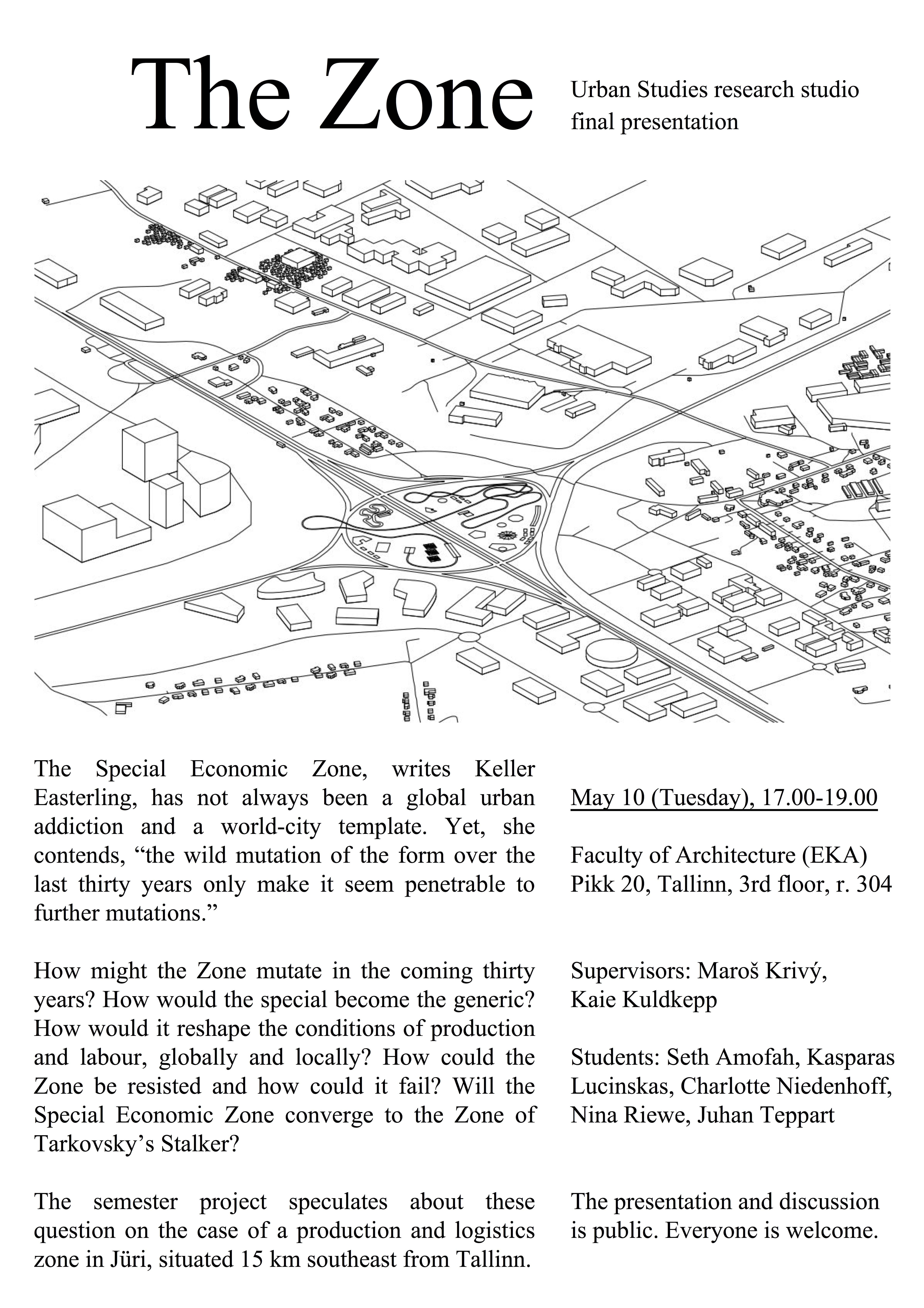
You are cordially invited to the final presentation of the Urban Studies research studio The Zone.
The presentation will take place on May 10 (Tuesday), 17.00-19.00.
The venue is Faculty of Architecture (EKA), Pikk 20, Tallinn, 3rd floor, r. 304.
The Special Economic Zone, writes Keller Easterling, has not always been a global urban addiction and a world-city template. Yet, she contends, “the wild mutation of the form over the last thirty years only make it seem penetrable to further mutations.”
How might the Zone mutate in the coming thirty years? How would the special become the generic? How would it reshape the conditions of production and labour, globally and locally? How could the Zone be resisted and how could it fail? Will the Special Economic Zone converge to the Zone of Tarkovsky’s Stalker?
The semester project speculates about these question on the case of a production and logistics zone in Jüri, situated 15 km southeast from Tallinn.
Supervisors: Maroš Krivý, Kaie Kuldkepp
Students: Seth Amofah, Kasparas Lucinskas, Charlotte Niedenhoff, Nina Riewe, Juhan Teppart
The presentation and discussion is public. Everyone is welcome.
Maroš Krivý
Professor of Urban Studies
Faculty of Architecture, Estonian Academy of Arts
Kaie Kuldkepp
guest lecturer
Faculty of Architecture, Estonian Academy of Arts
urban designer, landscape architect @ NÜÜD architects
Urban Studies research studio presents: The Zone
Tuesday 10 May, 2016
You are cordially invited to the final presentation of the Urban Studies research studio The Zone.
The presentation will take place on May 10 (Tuesday), 17.00-19.00.
The venue is Faculty of Architecture (EKA), Pikk 20, Tallinn, 3rd floor, r. 304.
The Special Economic Zone, writes Keller Easterling, has not always been a global urban addiction and a world-city template. Yet, she contends, “the wild mutation of the form over the last thirty years only make it seem penetrable to further mutations.”
How might the Zone mutate in the coming thirty years? How would the special become the generic? How would it reshape the conditions of production and labour, globally and locally? How could the Zone be resisted and how could it fail? Will the Special Economic Zone converge to the Zone of Tarkovsky’s Stalker?
The semester project speculates about these question on the case of a production and logistics zone in Jüri, situated 15 km southeast from Tallinn.
Supervisors: Maroš Krivý, Kaie Kuldkepp
Students: Seth Amofah, Kasparas Lucinskas, Charlotte Niedenhoff, Nina Riewe, Juhan Teppart
The presentation and discussion is public. Everyone is welcome.
Maroš Krivý
Professor of Urban Studies
Faculty of Architecture, Estonian Academy of Arts
Kaie Kuldkepp
guest lecturer
Faculty of Architecture, Estonian Academy of Arts
urban designer, landscape architect @ NÜÜD architects
26.04.2016
Open Lecture: Samson Shafran, Shenkar College, Israel: 3D Modeling and Printing – New Technologies and Developments in Design, Software Applications and Manufacturing
Samson Shafran’s open lecture about 3D printing and modeling will be held on
26.04.2016 from 9-12 at Estonia pst 7, rm 405. Everyone’s welcome!
The lecture is titled “3D Modeling and Printing – New Technologies and Developments in Design, Software Applications and Manufacturing”
– An exploration on how 3D Modeling has shaped a multitude of Design segments, from Fashion Design to Architecture during the last decade.
– Practical examples of the use of 3D Modeling software in Design Development.
– New Trends, Attitudes and Developments in the field of 3D Printing, along with Current and Possible Research Fields.
– Sourcing of suitable Aids, Models, Techniques, Software and Manufacturing in 3D Modeling field.
Samson Shafran
After Receiving a Degree in Fashion Design form University of Westminster, Samson Shafran worked as a free-lance Fashion Textile Designer with variety of companies based in London, Los-Angeles and Singapore.
Since his return to Israel in 2007, Samson Shafran has been teaching at Shenkar College of Engineering and Design at Textile Design as well as Interior Building and Environment Design departments, at a variety of courses, majority of which concentrate on the implementation of Computer Design Software into the students creative development and workflow.
Open Lecture: Samson Shafran, Shenkar College, Israel: 3D Modeling and Printing – New Technologies and Developments in Design, Software Applications and Manufacturing
Tuesday 26 April, 2016
Samson Shafran’s open lecture about 3D printing and modeling will be held on
26.04.2016 from 9-12 at Estonia pst 7, rm 405. Everyone’s welcome!
The lecture is titled “3D Modeling and Printing – New Technologies and Developments in Design, Software Applications and Manufacturing”
– An exploration on how 3D Modeling has shaped a multitude of Design segments, from Fashion Design to Architecture during the last decade.
– Practical examples of the use of 3D Modeling software in Design Development.
– New Trends, Attitudes and Developments in the field of 3D Printing, along with Current and Possible Research Fields.
– Sourcing of suitable Aids, Models, Techniques, Software and Manufacturing in 3D Modeling field.
Samson Shafran
After Receiving a Degree in Fashion Design form University of Westminster, Samson Shafran worked as a free-lance Fashion Textile Designer with variety of companies based in London, Los-Angeles and Singapore.
Since his return to Israel in 2007, Samson Shafran has been teaching at Shenkar College of Engineering and Design at Textile Design as well as Interior Building and Environment Design departments, at a variety of courses, majority of which concentrate on the implementation of Computer Design Software into the students creative development and workflow.
20.04.2016
Open Lecture: Dorothea von Hantelmann „Why exhibitions became a modern ritual (and what they tell us about the society in which they take place) “
Institute of Art History and Visual Culture and Centre for Contemporary Arts Estonia present
public lecture on April 20, 18.00 at Arhitektuurikeskus (Põhja pst 27a, Tallinn)
Dorothea von Hantelmann „Why exhibitions became a modern ritual (and what they tell us about the society in which they take place) “
Hantelmann will hold a seminar on April 21, 10.00 at Institute of Art History and Visual Culture (Suur-Kloostri 11). Registration and reading materials: karin.nugis@artun.ee
Tate Modern’s Turbine Hall tells us as much about the state of Western society in 2015 as the Crystal Palace reflected mid-19th century productivism, or as early modern curiosity cabinets connect to the rise of consumer culture. Art institutions are mirrors of the socio-economic order of their time, whose basic parameters they practice and enact. We can retrace the entire history of individualisation by following the increase of wall space between paintings in 19th and 20th century galleries. We can comprehend the transition of early market societies into consumer societies alongside the transformation of 19th century museums into white cubes. And we can analyse the contemporary experience society on the basis of the way it transforms the white cube into time-based experiential spaces. Art institutions are deeply linked to the values and categories that constitute a given time, which is why they have to keep transforming in order to adjust and to remain what they always have been: a contemporary ritual. Looking at art spaces from the 16th century to the present day as a series of decisive moments of transformation, we may find that the transformations of our epoch are asking for a new kind of ritual, after that of the exhibition.
Dorothea von Hantelmann was documenta Professor at the Art Academy/University of Kassel where she lectured on the history and meaning of documenta and established the constitution of a documenta research institute. Her main fields of research are contemporary art and theory as well as the history and theory of exhibitions. She is currently working on a book that explores art exhibitions as ritual spaces in which fundamental values and categories of modern, liberal and market based societies historically have been, and continue to be practised and reflected. She is author of How to Do Things with Art, a book on performativity within contemporary art.
Open Lecture: Dorothea von Hantelmann „Why exhibitions became a modern ritual (and what they tell us about the society in which they take place) “
Wednesday 20 April, 2016
Institute of Art History and Visual Culture and Centre for Contemporary Arts Estonia present
public lecture on April 20, 18.00 at Arhitektuurikeskus (Põhja pst 27a, Tallinn)
Dorothea von Hantelmann „Why exhibitions became a modern ritual (and what they tell us about the society in which they take place) “
Hantelmann will hold a seminar on April 21, 10.00 at Institute of Art History and Visual Culture (Suur-Kloostri 11). Registration and reading materials: karin.nugis@artun.ee
Tate Modern’s Turbine Hall tells us as much about the state of Western society in 2015 as the Crystal Palace reflected mid-19th century productivism, or as early modern curiosity cabinets connect to the rise of consumer culture. Art institutions are mirrors of the socio-economic order of their time, whose basic parameters they practice and enact. We can retrace the entire history of individualisation by following the increase of wall space between paintings in 19th and 20th century galleries. We can comprehend the transition of early market societies into consumer societies alongside the transformation of 19th century museums into white cubes. And we can analyse the contemporary experience society on the basis of the way it transforms the white cube into time-based experiential spaces. Art institutions are deeply linked to the values and categories that constitute a given time, which is why they have to keep transforming in order to adjust and to remain what they always have been: a contemporary ritual. Looking at art spaces from the 16th century to the present day as a series of decisive moments of transformation, we may find that the transformations of our epoch are asking for a new kind of ritual, after that of the exhibition.
Dorothea von Hantelmann was documenta Professor at the Art Academy/University of Kassel where she lectured on the history and meaning of documenta and established the constitution of a documenta research institute. Her main fields of research are contemporary art and theory as well as the history and theory of exhibitions. She is currently working on a book that explores art exhibitions as ritual spaces in which fundamental values and categories of modern, liberal and market based societies historically have been, and continue to be practised and reflected. She is author of How to Do Things with Art, a book on performativity within contemporary art.
01.04.2016
Art & Anthropology Round Table
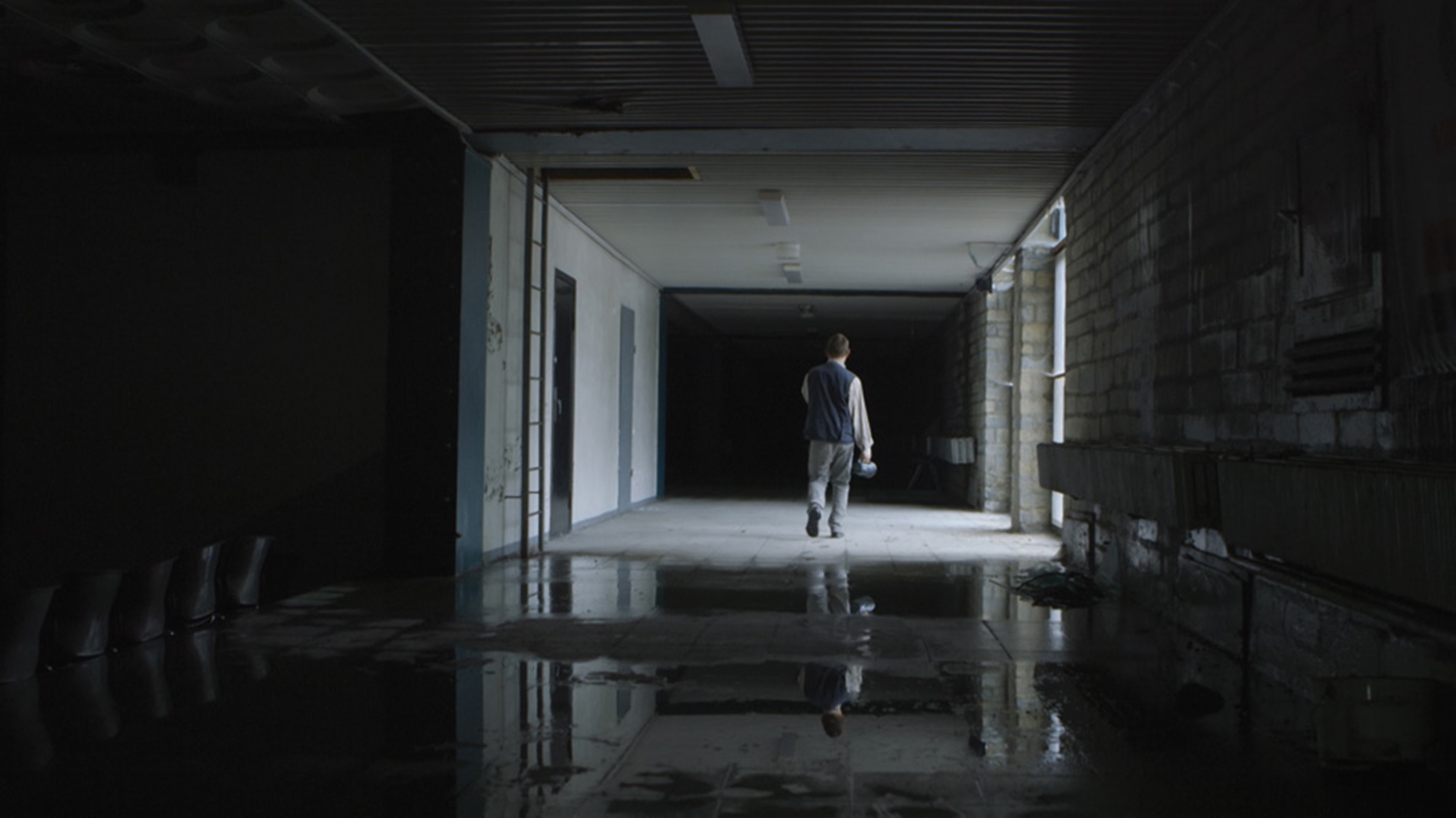
For the finissage of the “Place Oddity” exhibition, the curators Francisco Martínez and Lilli-Krõõt Repnau, and their guests, Liina Siib, Patrick Laviolette, Marika Agu, Flo Kasearu and Mihkel Kleis, will reflect about the communicating vessels between contemporary art, urban ethnography and material culture.
The event will take place in the EAA Gallery, the 1st of April at 17:00.
Art & Anthropology Round Table
Friday 01 April, 2016
For the finissage of the “Place Oddity” exhibition, the curators Francisco Martínez and Lilli-Krõõt Repnau, and their guests, Liina Siib, Patrick Laviolette, Marika Agu, Flo Kasearu and Mihkel Kleis, will reflect about the communicating vessels between contemporary art, urban ethnography and material culture.
The event will take place in the EAA Gallery, the 1st of April at 17:00.
26.02.2016
Wild Talks at Interior Architecture Department
This Friday, we kick off WILD TALKs, the new public lecture series of our department. The speakers of the series could be characterised by two main threads of action. Some of them have created as much havoc as an elk would, wandering into a city, just by ignoring general customs and habits. Others have unearthed things about life by closely studying the periphery. Summing this up, we believe that these speakers have the potential to spark inspiration in not only interior architecture students, but anyone with any relationship to space around them.
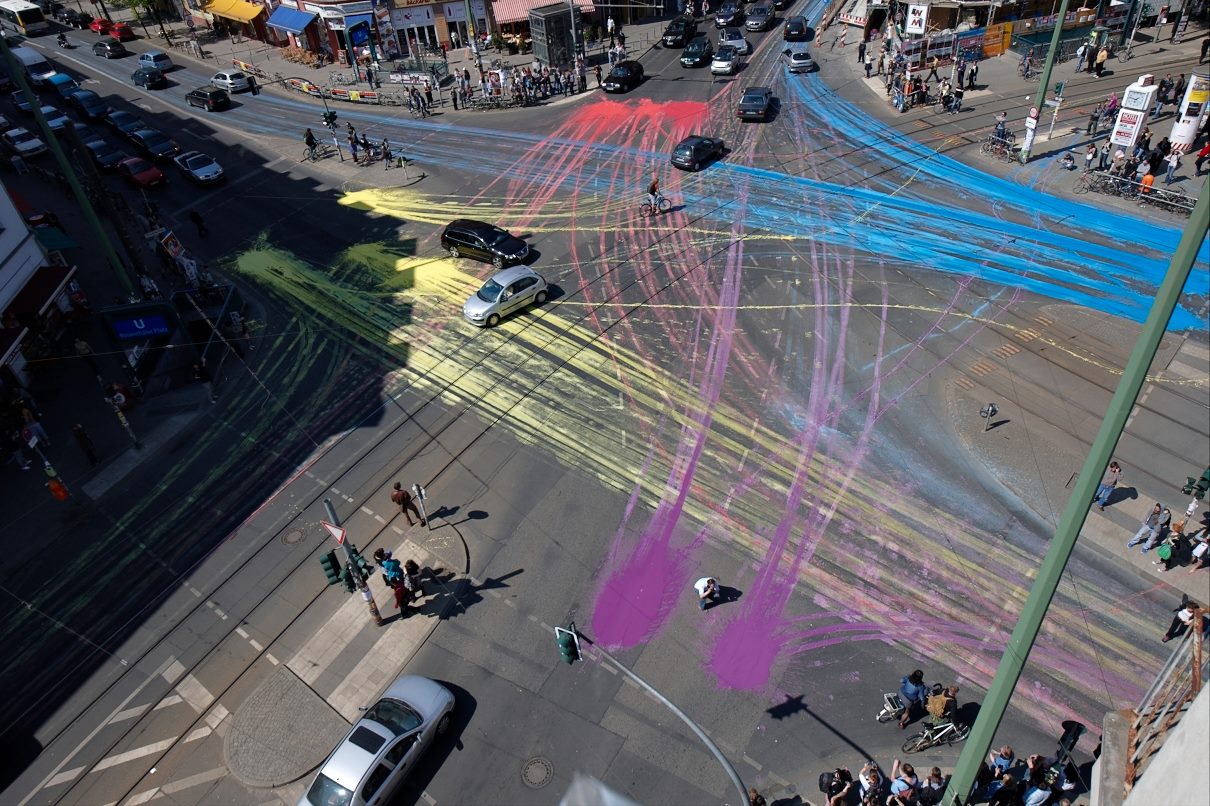
First on the WILD TALKs stage will be Berlin-based Dutch guerilla artist IEPE RUBINGH who dumped 500 litres of paint on Rosenthaler Platz, turning the intersection into a huge canvas and making Berliners guess for months whether this was a ‘Guerrilla Advertising Campaign’ or an artwork. Additionally, he is the inventor of the hybrid sport ‘Chess Boxing’ and is the director of the World Chess Boxing Organisation, with clubs in Siberia, London, Los Angeles and Berlin.
In addition to being the opening speaker for WILD TALKs, Rubingh will also run a workshop for the MA course Wild Studio at the interior architecture department.
WILD TALKs is supported by Astelpajunaps and Valmiermuiža. All talks will be in English.
Wild Talks at Interior Architecture Department
Friday 26 February, 2016
This Friday, we kick off WILD TALKs, the new public lecture series of our department. The speakers of the series could be characterised by two main threads of action. Some of them have created as much havoc as an elk would, wandering into a city, just by ignoring general customs and habits. Others have unearthed things about life by closely studying the periphery. Summing this up, we believe that these speakers have the potential to spark inspiration in not only interior architecture students, but anyone with any relationship to space around them.
First on the WILD TALKs stage will be Berlin-based Dutch guerilla artist IEPE RUBINGH who dumped 500 litres of paint on Rosenthaler Platz, turning the intersection into a huge canvas and making Berliners guess for months whether this was a ‘Guerrilla Advertising Campaign’ or an artwork. Additionally, he is the inventor of the hybrid sport ‘Chess Boxing’ and is the director of the World Chess Boxing Organisation, with clubs in Siberia, London, Los Angeles and Berlin.
In addition to being the opening speaker for WILD TALKs, Rubingh will also run a workshop for the MA course Wild Studio at the interior architecture department.
WILD TALKs is supported by Astelpajunaps and Valmiermuiža. All talks will be in English.
27.01.2016 — 26.05.2016
Art History & Centre of Contemporary Art Open Lecture Series
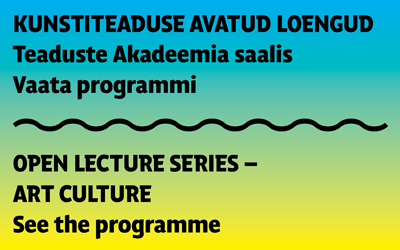
Insitute of Art History and Centre of Contemporary Art, Estonia
Open Lecture Series 2016
- 27. January
Joanna Figiel
(City University London)
- 17. February
Orit Gat
(Rhizome)
- 31. March
Carolyn Christov-Bakargiev
(Galleria Civica d’Arte Moderna & Castello di Rivoli )
- 20. April
Dorothea von Hantelmann
(Berlin)
- 26. May
Jörg Heiser
(frieze d/e)
The lectures take place at the Academy of Sciences main hall at Kohtu 6, Tallinn
Start at 6 pm
Supported by Cultural Endowment of Estonia
Art History & Centre of Contemporary Art Open Lecture Series
Wednesday 27 January, 2016 — Thursday 26 May, 2016
Insitute of Art History and Centre of Contemporary Art, Estonia
Open Lecture Series 2016
- 27. January
Joanna Figiel
(City University London)
- 17. February
Orit Gat
(Rhizome)
- 31. March
Carolyn Christov-Bakargiev
(Galleria Civica d’Arte Moderna & Castello di Rivoli )
- 20. April
Dorothea von Hantelmann
(Berlin)
- 26. May
Jörg Heiser
(frieze d/e)
The lectures take place at the Academy of Sciences main hall at Kohtu 6, Tallinn
Start at 6 pm
Supported by Cultural Endowment of Estonia