Workshop for the supervisors of artistic doctoral theses

01.02.2024 — 02.02.2024

Workshop for the supervisors of artistic doctoral theses

On 1–2 February 2024, a workshop to support the supervisors of artistic doctoral theses will be held in cooperation with the Estonian Academy of Arts, Estonian Academy of Music and Theatre and Baltic Film, Media and Arts School (BFM).
The workshop will be conducted by Prof. Leena Rouhiainen (University of the Arts Helsinki)
The workshop will take place at the Estonian Academy of Arts (room A501)

Please register by 30 January HERE.

February 1, 2024
10.15–10.30 Welcome coffee
10.30–12.00 The degree requirements of the Doctoral Programme of Artistic Research in Performing Arts, Theatre Academy, Uniarts Helsinki

  • Theatre Academy’s definition of artistic research
  • The examination and publishing process of the artistic doctoral research
  • How to structure and expose the artistic doctoral research (artistic components, publishing opportunities)

12.00–12.45 Lunch break

12.45–14.00 The curriculum of the Theatre Academy’s doctoral programme

  • How the doctoral programme and curriculum supports the transition from artist into artist-researcher and the engagement of the doctoral candidate with the doctoral and research community of the Theatre Academy and wider Uniarts
  • 1st year mentoring/contact teacher, orientation ABCD/EFGH/XYZ, annual teaching weeks focusing on the first two years of study

14.00–14.30 Coffee break

14.30–16/16.30 Formal parameters of supervision at the Theatre Academy’s doctoral programme

  • The instructions, supervisor agreement, responsibilities, ethical guidelines and review, supervision process and supervision training

17.30 Premiere of “Creative Science” series of short films introducing Estonian artist-researchers
SuperNova Cinema, NOVA Building of BFM (Narva mnt 27), 4th floor, room N406
Before the films Prof. Leena Rouhiainen’s short lecture “Notes on Artistic Research”.

February 2, 2024

09.00–11.00 Practical considerations in supervision

  • Individual aspects of supervision – the supervisor doctoral student relationship, ethical review and research ethics.

11.00–12.00 Lunch break

12.00–13.30 Practical considerations in supervision

  • Supporting doctoral candidates in the final phase, other items on best practices and challenges

13.30–14.00 Coffee break
14.00–15.30 Conclusions and future steps

Contact:
Irene Hütsi
Coordinator of Doctoral School
irene.hutsi@artun.ee


Workshop is co-financed by European Union, activity “Cooperation between universities to promote doctoral studies”.


Posted by Irene Hütsi — Permalink

Workshop for the supervisors of artistic doctoral theses

Thursday 01 February, 2024 — Friday 02 February, 2024

On 1–2 February 2024, a workshop to support the supervisors of artistic doctoral theses will be held in cooperation with the Estonian Academy of Arts, Estonian Academy of Music and Theatre and Baltic Film, Media and Arts School (BFM).
The workshop will be conducted by Prof. Leena Rouhiainen (University of the Arts Helsinki)
The workshop will take place at the Estonian Academy of Arts (room A501)

Please register by 30 January HERE.

February 1, 2024
10.15–10.30 Welcome coffee
10.30–12.00 The degree requirements of the Doctoral Programme of Artistic Research in Performing Arts, Theatre Academy, Uniarts Helsinki

  • Theatre Academy’s definition of artistic research
  • The examination and publishing process of the artistic doctoral research
  • How to structure and expose the artistic doctoral research (artistic components, publishing opportunities)

12.00–12.45 Lunch break

12.45–14.00 The curriculum of the Theatre Academy’s doctoral programme

  • How the doctoral programme and curriculum supports the transition from artist into artist-researcher and the engagement of the doctoral candidate with the doctoral and research community of the Theatre Academy and wider Uniarts
  • 1st year mentoring/contact teacher, orientation ABCD/EFGH/XYZ, annual teaching weeks focusing on the first two years of study

14.00–14.30 Coffee break

14.30–16/16.30 Formal parameters of supervision at the Theatre Academy’s doctoral programme

  • The instructions, supervisor agreement, responsibilities, ethical guidelines and review, supervision process and supervision training

17.30 Premiere of “Creative Science” series of short films introducing Estonian artist-researchers
SuperNova Cinema, NOVA Building of BFM (Narva mnt 27), 4th floor, room N406
Before the films Prof. Leena Rouhiainen’s short lecture “Notes on Artistic Research”.

February 2, 2024

09.00–11.00 Practical considerations in supervision

  • Individual aspects of supervision – the supervisor doctoral student relationship, ethical review and research ethics.

11.00–12.00 Lunch break

12.00–13.30 Practical considerations in supervision

  • Supporting doctoral candidates in the final phase, other items on best practices and challenges

13.30–14.00 Coffee break
14.00–15.30 Conclusions and future steps

Contact:
Irene Hütsi
Coordinator of Doctoral School
irene.hutsi@artun.ee


Workshop is co-financed by European Union, activity “Cooperation between universities to promote doctoral studies”.


Posted by Irene Hütsi — Permalink

24.01.2024 — 17.02.2024

Melnikova, Keskküla, Monko, Daniliauskaitė at Draakon Gallery

On Wednesday, January 24 at 6 pm we welcome you to the opening of the exhibition Swirling, Twirling, Spinning curated by Merilin Talumaa.

The exhibition includes works by Daria Melnikova, Helena Keskküla, Marge Monko and Viktorija Daniliauskaitė.

The exhibition Swirling, Twirling, Spinning unites artists across generations in an empowering context, drawing inspiration from the ideas of Lithuanian-American archaeologist and anthropologist Marija Gimbutas. Her profound research brought attention to the ancient cultures of the Baltic region and the broader Indo-European world, exploring archaeological artefacts, linguistics, ethnography, and folklore. Gimbutas posited a thesis that prehistoric European culture centered around the worship of a Mother Goddess, as the giver of all life. A spiritual sense of connectedness was artfully expressed through a sophisticated symbol system and an abundance of ritual objects. Nature and body were honored in Europe for tens of thousands of years. Whereas women had an especially strong position in societies across Eastern and Central Europe – a tendency no longer necessarily evident today.

Swirling, Twirling, Spinning poetically weaves a narrative that bridges ancient myths and beliefs, natural cycles, and the transformative power of feminine energy across different cultures and times. Gimbutas, who having opened the treasure trove of prehistory, inspired a belief in a peaceful existence in our time – to bring back to life suppressed vital elements, such as the earth, the body (health), the feminine, and the subconscious. Participating artists, through imaginative and fictitious narratives, share personal stories and cultural myths that also reflect the influence of Gimbutas’ theories on ancient symbolism. Their works echo these concepts through a contemporary lens, incorporating elements such as spirals, circles, and motifs such as snakes and birds – symbols rooted in ancient European matriarchal cultures that continue to resonate in Baltic art and culture.

The exhibition contemplates on reimagining a world centered around goddess worship, with its emphasis on embracing womanhood, preserving nature, and forsaking warfare. Could this theoretical concept transcend into the tangible reality of our future society? Swirling, Twirling, Spinning seamlessly intertwines historical narratives and mythology, immersing us in the themes that Marija Gimbutas ignited: the celebration of life’s cycles, constant renewal, the sanctity of the female body, and the spirituality inherent in these concepts. Gimbutas’ exploration of the spiritual dimensions of a harmonious Old Europe and her vision for a New Europe free from dominance and warfare, feels remarkably pertinent in our contemporary world.

First exhibition around the heritage of Marija Gimbutas took place in L’Atlas Gallery in Paris, France (7 November 2023–3 January 2024). The cycle of exhibitions is foreseen to continue with an upcoming show in La Traverse in Marseille, France (27 August–26 October 2024).

Marija Gimbutas (1921–1994) was a Lithuanian-American archaeologist and anthropologist. She contributed to what is considered to be one of the most significant academic watershed moments in women’s studies with her archaeological and philosophical work on Neolithic culture and religion. Gimbutas is best known for her research into the Neolithic and Bronze Age cultures of “Old Europe,” a term she introduced. Old Europe referred to both the geographical area and social structures that existed before the Indo-European influence. Gimbutas unequivocally established the existence of a Goddess religion who is the most persistent feature in the archaeological record of the ancient world. The Goddess in all her manifestations was a symbol of the unity of all life in nature. Gimbutas’ discoveries took on great symbolic importance for feminists across various disciplines who found, in her vision of a peaceful, nature-revering society, a sense of hope for the future based on this foundation in the distant past.

Roots to Routes is an initiative created by curators Merilin Talumaa, Maija Rudovska and Justė Kostikovaitė, gathering a community of artists, curators and cultural producers whose trajectories are connected to the Baltic states region. Acting as a nomadic agency, its goal is to support and make visible artistic practices beyond cultural and (geo)political borders. An important part of the collaboration is to create and develop possible joint projects, aiming to build sustainable networks and forms of cooperation between various art scenes.

https://roots2routes.org/

Exhibitions in Draakon gallery are supported by the Cultural Endowment of Estonia, Estonian Ministry of Culture and Liviko AS.

Daria Melnikova is an artist from Riga, Latvia. Her work results from a meditative study of daily routine, clichés, architectural details and mere casual moments attempting to reconstruct their inner logic as well as to bring to light private experiences that once made them possible and necessary. Melnikova runs a journeying platform called Palette that functions as a bar. Between 2022–2023, Palette used a seasonal venue – a kiosk as a part of the urban environment – an intervention in the garden meadow of the Sporta Pils dārzi in Riga. The project activated a work of art as a meeting point, where the artist meets visitors in non-institutional and informal settings. Melnikova has held solo shows at Gallery Vartai in Vilnius (2020); Karlin Studios in Prague (2019); PLATO in Ostrava (2019); Kulturfolger in Zurich (2018); Kim? in Riga (2017, 2014, 2011); and has participated in group shows at L’Atlas in Paris (2023); KHB in Bratislava (2019); Kiasma in Helsinki (2018); Rupert in Vilnius (2018); Silberkuppe in Berlin (2017); Art in General in New York (2015); Garage Museum of Contemporary Art in Moscow (2014). Her works are included in the collection of Kiasma Museum of Contemporary Art in Helsinki, Finland; Latvian National Museum of Art, Riga; Latvia; Zuzeum Collection in Riga, Latvia; among other public and private collections. https://dariamelnikova.com/
Viktorija Daniliauskaitė is a visual artist born in Yakutsk, Russia. She is living and working in Vilnius, Lithuania. Having graduated from the Lithuanian Art Institute (today, the Vilnius Academy of Arts) in 1974, Daniliauskaitė immediately discarded the art clichés proposed by official art and got immersed in the search for her individual style, discovering the inexhaustible sources of folk art and new art forms. Till today, she is often expressing her artistic visions through linocut. The tradition of linocut is often related with folk engravings and the postwar school of Lithuanian graphic art; however, the artist intuitively realised that this technique contains yet unexplored possibilities of expression. While connecting the heritage of folk art with 20th century modernism and postmodernism, Daniliauskaitė built a bridge between the old tradition and contemporary modern art. She recently participated in a group exhibition in L’Atlas, Paris (2023). She is participating in an upcoming group exhibition in MO Museum, Vilnius (2024). Her works belong to the National Museum of Lithuania, Vilnius; MO Museum, Vilnius; among other public and private collections.
Merilin Talumaa is a curator, art historian and cultural manager who lives and works in Paris and Tallinn. She has graduated from the Department of Art History and Visual Culture at the Estonian Academy of Arts. She is also a graduate of Environmental studies from University of Tartu. Her practice has evolved around research about artists’ studio and work environments and notions of migration and belonging. Her recent on-going projects include Roots to Routes (since 2020) – a curatorial initiative gathering a community of artists, curators and cultural producers. Prior to the book „Your Time Is My Time”, Mousse Publishing, 2023, she compiled and edited the book „Artists’ spaces : 16 studio visits”, Estonian Academy of Arts Press, 2017 (both together with Annika Toots). https://roots2routes.org/
Helena Keskküla is an Estonian artist who lives and works in Amsterdam. Her previous work centres around video, performance and installation. Humor, insecurities and failures play an important role in Keskküla’s work, which she uses to speak about universal issues. She has graduated from the sculpture and installation department of the Estonian Academy of Arts, Gerrit Rietveld’s VAV – moving image department, and Sandberg Institute’s master’s programme in fine arts. During the last three years, Kesküla has focused her practice on mythology and stone carving, while forging connections with performance and modern materials.
Marge Monko is an artist living and working in Tallinn, Estonia. She has studied in Estonian Academy of Arts (MA in Photography, 2008), and in University of Applied Arts in Vienna. In 2013-2015 she participated in a studio program in HISK (Higher Institute for Contemporary Art), Ghent, Belgium. She works as a professor in the Department of Photography at the Estonian Academy of Arts. Marge Monko uses photography, video, and installation. Her works are inspired by historical images and theories of psychoanalysis, feminism, and visual culture. Monko’s works can be found in private and public collections (e.g MUMOK – Museum of Modern Art in Vienna; Folkwang Museum, Essen; Muzeum Sztuki Łódź, Poland; FRAC Lorrain, France; Fotomuseum Winterthur, Switzerland; Estonian Art Museum). In 2012, she was awarded Henkel.Art.Award for Eastern and Central European artists. Monko has been selected for the residencies in ISCP (International Studio & Curatorial Program), New York (2015); KulturKonakt Austria, Vienna (2016), ParaSite, Hong Kong (2017) and Videobrasil, São Paulo (2018). Her recent exhibitions include a.o. Modern Love in Tallinn Art Hall and National Museum of Contemporary Art Athens (2021-23), Great Pretender in Kai Art Center (2021), Tallinn; Stones Against Diamonds in Museum Folkwang (2019); Crush in Para Site Hong Kong (2018), RIBOCA Riga International Biennial for Contemporary Art (2018); It Won’t Be Long Now, Comrades! in Framer Framed, Amsterdam (2017). www.margemonko.com
Posted by Andres Lõo — Permalink

Melnikova, Keskküla, Monko, Daniliauskaitė at Draakon Gallery

Wednesday 24 January, 2024 — Saturday 17 February, 2024

On Wednesday, January 24 at 6 pm we welcome you to the opening of the exhibition Swirling, Twirling, Spinning curated by Merilin Talumaa.

The exhibition includes works by Daria Melnikova, Helena Keskküla, Marge Monko and Viktorija Daniliauskaitė.

The exhibition Swirling, Twirling, Spinning unites artists across generations in an empowering context, drawing inspiration from the ideas of Lithuanian-American archaeologist and anthropologist Marija Gimbutas. Her profound research brought attention to the ancient cultures of the Baltic region and the broader Indo-European world, exploring archaeological artefacts, linguistics, ethnography, and folklore. Gimbutas posited a thesis that prehistoric European culture centered around the worship of a Mother Goddess, as the giver of all life. A spiritual sense of connectedness was artfully expressed through a sophisticated symbol system and an abundance of ritual objects. Nature and body were honored in Europe for tens of thousands of years. Whereas women had an especially strong position in societies across Eastern and Central Europe – a tendency no longer necessarily evident today.

Swirling, Twirling, Spinning poetically weaves a narrative that bridges ancient myths and beliefs, natural cycles, and the transformative power of feminine energy across different cultures and times. Gimbutas, who having opened the treasure trove of prehistory, inspired a belief in a peaceful existence in our time – to bring back to life suppressed vital elements, such as the earth, the body (health), the feminine, and the subconscious. Participating artists, through imaginative and fictitious narratives, share personal stories and cultural myths that also reflect the influence of Gimbutas’ theories on ancient symbolism. Their works echo these concepts through a contemporary lens, incorporating elements such as spirals, circles, and motifs such as snakes and birds – symbols rooted in ancient European matriarchal cultures that continue to resonate in Baltic art and culture.

The exhibition contemplates on reimagining a world centered around goddess worship, with its emphasis on embracing womanhood, preserving nature, and forsaking warfare. Could this theoretical concept transcend into the tangible reality of our future society? Swirling, Twirling, Spinning seamlessly intertwines historical narratives and mythology, immersing us in the themes that Marija Gimbutas ignited: the celebration of life’s cycles, constant renewal, the sanctity of the female body, and the spirituality inherent in these concepts. Gimbutas’ exploration of the spiritual dimensions of a harmonious Old Europe and her vision for a New Europe free from dominance and warfare, feels remarkably pertinent in our contemporary world.

First exhibition around the heritage of Marija Gimbutas took place in L’Atlas Gallery in Paris, France (7 November 2023–3 January 2024). The cycle of exhibitions is foreseen to continue with an upcoming show in La Traverse in Marseille, France (27 August–26 October 2024).

Marija Gimbutas (1921–1994) was a Lithuanian-American archaeologist and anthropologist. She contributed to what is considered to be one of the most significant academic watershed moments in women’s studies with her archaeological and philosophical work on Neolithic culture and religion. Gimbutas is best known for her research into the Neolithic and Bronze Age cultures of “Old Europe,” a term she introduced. Old Europe referred to both the geographical area and social structures that existed before the Indo-European influence. Gimbutas unequivocally established the existence of a Goddess religion who is the most persistent feature in the archaeological record of the ancient world. The Goddess in all her manifestations was a symbol of the unity of all life in nature. Gimbutas’ discoveries took on great symbolic importance for feminists across various disciplines who found, in her vision of a peaceful, nature-revering society, a sense of hope for the future based on this foundation in the distant past.

Roots to Routes is an initiative created by curators Merilin Talumaa, Maija Rudovska and Justė Kostikovaitė, gathering a community of artists, curators and cultural producers whose trajectories are connected to the Baltic states region. Acting as a nomadic agency, its goal is to support and make visible artistic practices beyond cultural and (geo)political borders. An important part of the collaboration is to create and develop possible joint projects, aiming to build sustainable networks and forms of cooperation between various art scenes.

https://roots2routes.org/

Exhibitions in Draakon gallery are supported by the Cultural Endowment of Estonia, Estonian Ministry of Culture and Liviko AS.

Daria Melnikova is an artist from Riga, Latvia. Her work results from a meditative study of daily routine, clichés, architectural details and mere casual moments attempting to reconstruct their inner logic as well as to bring to light private experiences that once made them possible and necessary. Melnikova runs a journeying platform called Palette that functions as a bar. Between 2022–2023, Palette used a seasonal venue – a kiosk as a part of the urban environment – an intervention in the garden meadow of the Sporta Pils dārzi in Riga. The project activated a work of art as a meeting point, where the artist meets visitors in non-institutional and informal settings. Melnikova has held solo shows at Gallery Vartai in Vilnius (2020); Karlin Studios in Prague (2019); PLATO in Ostrava (2019); Kulturfolger in Zurich (2018); Kim? in Riga (2017, 2014, 2011); and has participated in group shows at L’Atlas in Paris (2023); KHB in Bratislava (2019); Kiasma in Helsinki (2018); Rupert in Vilnius (2018); Silberkuppe in Berlin (2017); Art in General in New York (2015); Garage Museum of Contemporary Art in Moscow (2014). Her works are included in the collection of Kiasma Museum of Contemporary Art in Helsinki, Finland; Latvian National Museum of Art, Riga; Latvia; Zuzeum Collection in Riga, Latvia; among other public and private collections. https://dariamelnikova.com/
Viktorija Daniliauskaitė is a visual artist born in Yakutsk, Russia. She is living and working in Vilnius, Lithuania. Having graduated from the Lithuanian Art Institute (today, the Vilnius Academy of Arts) in 1974, Daniliauskaitė immediately discarded the art clichés proposed by official art and got immersed in the search for her individual style, discovering the inexhaustible sources of folk art and new art forms. Till today, she is often expressing her artistic visions through linocut. The tradition of linocut is often related with folk engravings and the postwar school of Lithuanian graphic art; however, the artist intuitively realised that this technique contains yet unexplored possibilities of expression. While connecting the heritage of folk art with 20th century modernism and postmodernism, Daniliauskaitė built a bridge between the old tradition and contemporary modern art. She recently participated in a group exhibition in L’Atlas, Paris (2023). She is participating in an upcoming group exhibition in MO Museum, Vilnius (2024). Her works belong to the National Museum of Lithuania, Vilnius; MO Museum, Vilnius; among other public and private collections.
Merilin Talumaa is a curator, art historian and cultural manager who lives and works in Paris and Tallinn. She has graduated from the Department of Art History and Visual Culture at the Estonian Academy of Arts. She is also a graduate of Environmental studies from University of Tartu. Her practice has evolved around research about artists’ studio and work environments and notions of migration and belonging. Her recent on-going projects include Roots to Routes (since 2020) – a curatorial initiative gathering a community of artists, curators and cultural producers. Prior to the book „Your Time Is My Time”, Mousse Publishing, 2023, she compiled and edited the book „Artists’ spaces : 16 studio visits”, Estonian Academy of Arts Press, 2017 (both together with Annika Toots). https://roots2routes.org/
Helena Keskküla is an Estonian artist who lives and works in Amsterdam. Her previous work centres around video, performance and installation. Humor, insecurities and failures play an important role in Keskküla’s work, which she uses to speak about universal issues. She has graduated from the sculpture and installation department of the Estonian Academy of Arts, Gerrit Rietveld’s VAV – moving image department, and Sandberg Institute’s master’s programme in fine arts. During the last three years, Kesküla has focused her practice on mythology and stone carving, while forging connections with performance and modern materials.
Marge Monko is an artist living and working in Tallinn, Estonia. She has studied in Estonian Academy of Arts (MA in Photography, 2008), and in University of Applied Arts in Vienna. In 2013-2015 she participated in a studio program in HISK (Higher Institute for Contemporary Art), Ghent, Belgium. She works as a professor in the Department of Photography at the Estonian Academy of Arts. Marge Monko uses photography, video, and installation. Her works are inspired by historical images and theories of psychoanalysis, feminism, and visual culture. Monko’s works can be found in private and public collections (e.g MUMOK – Museum of Modern Art in Vienna; Folkwang Museum, Essen; Muzeum Sztuki Łódź, Poland; FRAC Lorrain, France; Fotomuseum Winterthur, Switzerland; Estonian Art Museum). In 2012, she was awarded Henkel.Art.Award for Eastern and Central European artists. Monko has been selected for the residencies in ISCP (International Studio & Curatorial Program), New York (2015); KulturKonakt Austria, Vienna (2016), ParaSite, Hong Kong (2017) and Videobrasil, São Paulo (2018). Her recent exhibitions include a.o. Modern Love in Tallinn Art Hall and National Museum of Contemporary Art Athens (2021-23), Great Pretender in Kai Art Center (2021), Tallinn; Stones Against Diamonds in Museum Folkwang (2019); Crush in Para Site Hong Kong (2018), RIBOCA Riga International Biennial for Contemporary Art (2018); It Won’t Be Long Now, Comrades! in Framer Framed, Amsterdam (2017). www.margemonko.com
Posted by Andres Lõo — Permalink

17.01.2024 — 26.01.2024

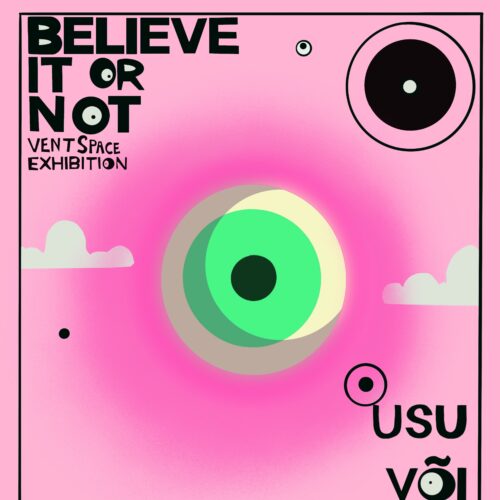
Nua Collective at Vent Space

BLACKOUT

Opening 17th January 2024 at 7pm (EET)
Running until January 26th 2024

Scattered around the world, Nua Collective are a group of professional visual artists that collaborate together to create, share and support one another in their journey as artists. Blackout marks their first physical exhibition and they are delighted to continue their international tour in Vent Space.

Presenting the works of 13 Nua Collective artists, the Blackout series looks at climate change through a particular lens—blackout. Or the loss of self security that comes from our reliance on unreliable energy. The works wrestle with our human responses to the insecurity inflicted by the anthropomorphic blackout. This exhibition of lino prints that are unique and in their creation and processing have already travelled the globe and will also feature the premiere of the Blackout Documentary screened at the space throughout the exhibition run.

Together Nua Collective artists make an inquiry about our climate catastrophe and the energy crisis that we continue to face.

Posted by Andres Lõo — Permalink

Nua Collective at Vent Space

Wednesday 17 January, 2024 — Friday 26 January, 2024

BLACKOUT

Opening 17th January 2024 at 7pm (EET)
Running until January 26th 2024

Scattered around the world, Nua Collective are a group of professional visual artists that collaborate together to create, share and support one another in their journey as artists. Blackout marks their first physical exhibition and they are delighted to continue their international tour in Vent Space.

Presenting the works of 13 Nua Collective artists, the Blackout series looks at climate change through a particular lens—blackout. Or the loss of self security that comes from our reliance on unreliable energy. The works wrestle with our human responses to the insecurity inflicted by the anthropomorphic blackout. This exhibition of lino prints that are unique and in their creation and processing have already travelled the globe and will also feature the premiere of the Blackout Documentary screened at the space throughout the exhibition run.

Together Nua Collective artists make an inquiry about our climate catastrophe and the energy crisis that we continue to face.

Posted by Andres Lõo — Permalink

12.01.2024

Open Architecture Lecture: Büro Bietenhader Moroder

Open architecture lecture “Dumb Emancipatory Housing. Dumb Emancipatory City Planning”: Sebastian Bietenhader and Matthias Moroder / Büro Bietenhader Moroder

On January 12 at 6 pm in room A-400

The lecture is held in English, is free and open to all interested parties.

The open lecture will finish the “Dumb emancipatory housing Workshop” held by EASA (European Architecture Student Assembly) on January 8 – 12. The workshop at EKA is supported by Cultural Endowment of Estonia.

Sebastian Bietenhader and Matthias Moroder have been working together as Büro Bietenhader Moroder since 2015. Büro Bietenhader Moroder deals with copyness as a positive formal property of architecture, which makes it possible to work formally against the neoliberal architecture of differentiation, flexibilization and individualization. By simultaneously maximizing the formal relations of architectural settings to one another, which is conceptually defined as copyness, Büro Bietenhader Moroder opens up a re-reading of the formal characteristics of social housing of French and Russian revolutionary architecture and that of Red Vienna.

Cities are starting again to build housing as builder-owners to counter the suffocation of urban life through real-estate speculation. This new public housing needs its own architecture. However, the historical formal and aesthetic distinctions between public and free market housing have been lost, all housing mimics or is luxury housing.

In the search for an intrinsically public housing architecture Büro Bietenhader Moroder has discovered a totally overlooked formal quality of architecture: Maximalist intentional sameness, termed dumb copyness. Dumb copyness is fundamentally different than mere serial repetition. Instead, it relies on formal qualities that enhance the maximum sameness of rooms, flats, entire housing blocks or urban settings far beyond mere industrial or functionalist seriality.

Hereby methodological rigor is central. Through a rejection of creative ad-hoc-subversion, deviation on every level, – the ubiquitous demand for ‘smartness’ –, a methodical planning can be re-established that achieves a directness that is greatly and blatantly dumb.

Guided by this focus Büro Bietenhader Moroder seeks to rediscover and reclaim the historical forms and aesthetics of pre-WWII public housing, such as Russian revolutionary architecture and that built by Red Vienna from 1919 to 1934. In this period, we find specific formal articulations of a non-functionalist public housing architecture that is almost forgotten and that gives shape to a collective life that is affordable and emancipatory. Through this critical historical re-reading we are developing a design method for emancipatory housing that is so directly public, so clear and basic that it is dumb.

Sebastian Bietenhader and Matthias Moroder have been working together as Büro Bietenhader Moroder since 2015. Büro Bietenhader Moroder deals with copyness as a positive formal property of architecture, which makes it possible to work formally against the neoliberal architecture of differentiation, flexibilization and individualization. By simultaneously maximizing the formal relations of architectural settings to one another, which is conceptually defined as copyness, Büro Bietenhader Moroder opens up a re-reading of the formal characteristics of social housing of French and Russian revolutionary architecture and that of Red Vienna.


Sebastian Bietenhader studied architecture at the ETH Zurich (BSc.) and at the Harvard GSD, as well as history and philosophy of knowledge, also at the ETH Zurich (MSc.), where he did a thesis on the development of the computer modelling space, which will be essential for BIM. He headed the student discussion group “Ambitus”. He is a regular guest critic at the ETH and has been teaching architecture at various (non)- institutions.

Matthias Moroder studied architecture (AA Dipl.) at the Architectural Association in London, art history (BA) and philosophy (BA) at the University of Vienna and history and theory of architecture (MAS) at the ETH Zurich. Besides the work as Büro Bietenhader Moroder, since 2018 he is co-leading MAGAZIN, an independent exhibition space for architecture in Vienna. He is currently a PhD candidate at the department of art history of the University of Vienna and has been teaching architecture and architectural history and theory at various (non)- institutions. Matthias is also co-founder of the Vienna Architecture Summer School.


Posted by Tiina Tammet — Permalink

Open Architecture Lecture: Büro Bietenhader Moroder

Friday 12 January, 2024

Open architecture lecture “Dumb Emancipatory Housing. Dumb Emancipatory City Planning”: Sebastian Bietenhader and Matthias Moroder / Büro Bietenhader Moroder

On January 12 at 6 pm in room A-400

The lecture is held in English, is free and open to all interested parties.

The open lecture will finish the “Dumb emancipatory housing Workshop” held by EASA (European Architecture Student Assembly) on January 8 – 12. The workshop at EKA is supported by Cultural Endowment of Estonia.

Sebastian Bietenhader and Matthias Moroder have been working together as Büro Bietenhader Moroder since 2015. Büro Bietenhader Moroder deals with copyness as a positive formal property of architecture, which makes it possible to work formally against the neoliberal architecture of differentiation, flexibilization and individualization. By simultaneously maximizing the formal relations of architectural settings to one another, which is conceptually defined as copyness, Büro Bietenhader Moroder opens up a re-reading of the formal characteristics of social housing of French and Russian revolutionary architecture and that of Red Vienna.

Cities are starting again to build housing as builder-owners to counter the suffocation of urban life through real-estate speculation. This new public housing needs its own architecture. However, the historical formal and aesthetic distinctions between public and free market housing have been lost, all housing mimics or is luxury housing.

In the search for an intrinsically public housing architecture Büro Bietenhader Moroder has discovered a totally overlooked formal quality of architecture: Maximalist intentional sameness, termed dumb copyness. Dumb copyness is fundamentally different than mere serial repetition. Instead, it relies on formal qualities that enhance the maximum sameness of rooms, flats, entire housing blocks or urban settings far beyond mere industrial or functionalist seriality.

Hereby methodological rigor is central. Through a rejection of creative ad-hoc-subversion, deviation on every level, – the ubiquitous demand for ‘smartness’ –, a methodical planning can be re-established that achieves a directness that is greatly and blatantly dumb.

Guided by this focus Büro Bietenhader Moroder seeks to rediscover and reclaim the historical forms and aesthetics of pre-WWII public housing, such as Russian revolutionary architecture and that built by Red Vienna from 1919 to 1934. In this period, we find specific formal articulations of a non-functionalist public housing architecture that is almost forgotten and that gives shape to a collective life that is affordable and emancipatory. Through this critical historical re-reading we are developing a design method for emancipatory housing that is so directly public, so clear and basic that it is dumb.

Sebastian Bietenhader and Matthias Moroder have been working together as Büro Bietenhader Moroder since 2015. Büro Bietenhader Moroder deals with copyness as a positive formal property of architecture, which makes it possible to work formally against the neoliberal architecture of differentiation, flexibilization and individualization. By simultaneously maximizing the formal relations of architectural settings to one another, which is conceptually defined as copyness, Büro Bietenhader Moroder opens up a re-reading of the formal characteristics of social housing of French and Russian revolutionary architecture and that of Red Vienna.


Sebastian Bietenhader studied architecture at the ETH Zurich (BSc.) and at the Harvard GSD, as well as history and philosophy of knowledge, also at the ETH Zurich (MSc.), where he did a thesis on the development of the computer modelling space, which will be essential for BIM. He headed the student discussion group “Ambitus”. He is a regular guest critic at the ETH and has been teaching architecture at various (non)- institutions.

Matthias Moroder studied architecture (AA Dipl.) at the Architectural Association in London, art history (BA) and philosophy (BA) at the University of Vienna and history and theory of architecture (MAS) at the ETH Zurich. Besides the work as Büro Bietenhader Moroder, since 2018 he is co-leading MAGAZIN, an independent exhibition space for architecture in Vienna. He is currently a PhD candidate at the department of art history of the University of Vienna and has been teaching architecture and architectural history and theory at various (non)- institutions. Matthias is also co-founder of the Vienna Architecture Summer School.


Posted by Tiina Tammet — Permalink

06.01.2024 — 07.02.2024

Tim Daniel Suvi & Anu Antsi at Galerii Metropol

Tim Daniel Suvi & Anu Antsi “Still Alive”* at Galerii Metropol.
For the first exhibition of the year, Metropol gallery has invited two very different artists at the beginning of their creative careers, who did not know each other before, to collaborate on joint exhibition.. Both deal with complex situations in the human mind – concerns with mental health, how it effects soul and body, and dealing with the consequences. The title of the exhibition suggests that a positive outcome is possible and that art may even play a decisive role in this.
Tim Daniel is a Russian born in Estonia who chose Suvi (“summer” in English) as his last name. At the moment, he is a sculpture and installation student at the Estonian Academy of Arts. He uses art mainly for therapeutic purposes (he compares his subconscious creative process to taking out the garbage from the soul).
In Metropol he presents a set of works summarizing a long and difficult chapter in the artist’s life.
“I learned how delicate the human psyche can be. I could no longer distinguish between reality and delusional fantasy. I fell into a hell of my own making. I’ve climbed out of there. I’m still alive.”
Expressively symbolistic paintings and sculptures form an assemblage visualizing the opposite extremes.
Anu Antsi is only a 10th grade student of Tallinn Art Gymnasium, but she has made an artistically mature choice to use the best tools of conceptual art to address her fears that have been paralyzing her life. Her photo- and video installation is a new version of her graduation work in Lihula School of Music and Art, She associates fears with uncontrollable repetitive dreams that follow you to the wakefulness and begin to determine your functioning in normal situations.
We invite you to inspect the exhibition and compare your own mental health situation to the ones on display.
Poster design by Tim Daniel Suvi.
Metropol Gallery is located in Tallinn ta Vana-Kalamaja street 46.
To visit the exhibition after the opening, contact the artists directly or arrange your visit with the gallery beforehand by calling +372 5217649 or +372 53750662 and ring the doorbell on arrival. You can also send a message via social media.
More information available:
Tim Daniel Suvi 55500347, tim.suvi@gmail.cominstagram.com/tim_suvi_art/
Anu Antsi anuantsi@gmail.com
Kaarel Kütas +372 5217649, kaarel.kytas@gmail.com or Triinu Jürves triyrves@gmail.com
FB: Metropol galerii
IG: metropolkapp
Metropol in NOBA art map: noba.ac/et/galerii/galerii-metropol-6m2-metropol-kapp/
* still alive – common expession in English as well as a cult-like song sounding during the closing credits of the video game “Portal” (2007)
Posted by Andres Lõo — Permalink

Tim Daniel Suvi & Anu Antsi at Galerii Metropol

Saturday 06 January, 2024 — Wednesday 07 February, 2024

Tim Daniel Suvi & Anu Antsi “Still Alive”* at Galerii Metropol.
For the first exhibition of the year, Metropol gallery has invited two very different artists at the beginning of their creative careers, who did not know each other before, to collaborate on joint exhibition.. Both deal with complex situations in the human mind – concerns with mental health, how it effects soul and body, and dealing with the consequences. The title of the exhibition suggests that a positive outcome is possible and that art may even play a decisive role in this.
Tim Daniel is a Russian born in Estonia who chose Suvi (“summer” in English) as his last name. At the moment, he is a sculpture and installation student at the Estonian Academy of Arts. He uses art mainly for therapeutic purposes (he compares his subconscious creative process to taking out the garbage from the soul).
In Metropol he presents a set of works summarizing a long and difficult chapter in the artist’s life.
“I learned how delicate the human psyche can be. I could no longer distinguish between reality and delusional fantasy. I fell into a hell of my own making. I’ve climbed out of there. I’m still alive.”
Expressively symbolistic paintings and sculptures form an assemblage visualizing the opposite extremes.
Anu Antsi is only a 10th grade student of Tallinn Art Gymnasium, but she has made an artistically mature choice to use the best tools of conceptual art to address her fears that have been paralyzing her life. Her photo- and video installation is a new version of her graduation work in Lihula School of Music and Art, She associates fears with uncontrollable repetitive dreams that follow you to the wakefulness and begin to determine your functioning in normal situations.
We invite you to inspect the exhibition and compare your own mental health situation to the ones on display.
Poster design by Tim Daniel Suvi.
Metropol Gallery is located in Tallinn ta Vana-Kalamaja street 46.
To visit the exhibition after the opening, contact the artists directly or arrange your visit with the gallery beforehand by calling +372 5217649 or +372 53750662 and ring the doorbell on arrival. You can also send a message via social media.
More information available:
Tim Daniel Suvi 55500347, tim.suvi@gmail.cominstagram.com/tim_suvi_art/
Anu Antsi anuantsi@gmail.com
Kaarel Kütas +372 5217649, kaarel.kytas@gmail.com or Triinu Jürves triyrves@gmail.com
FB: Metropol galerii
IG: metropolkapp
Metropol in NOBA art map: noba.ac/et/galerii/galerii-metropol-6m2-metropol-kapp/
* still alive – common expession in English as well as a cult-like song sounding during the closing credits of the video game “Portal” (2007)
Posted by Andres Lõo — Permalink

19.02.2024 — 18.03.2024

Preparation for doctoral studies 2024

A preparatory course for those interested in pursuing doctoral studies in practice-based and/or artistic research in EKA will take place 19.02–18.03.
The course will take place on-site at the EKA, there is no possibility to participate online.

The course focuses on planning and composing a creative research proposal, introduces doctoral studies at EKA, completed and ongoing doctoral theses, and helps clarify how to interconnect research problems, methods, and creative practice.

The course consists of four seminars and a consultation where you can get individual feedback on your project. The course will be led by Dr. Jaana Päeva, Head of the PhD Programme in Art and Design, and Dr. Liina Unt. Dr. Kristi Kuusk will join them for consultations.

The course is supported by Fine Arts faculty’s “PhD Vitamin”, which will bring together experts from artistic and practice-based research and prospective doctoral candidates.


Timetable

19.02 17:30-19:00 Introduction to artistic and practice-based research (EKA, room A501)
20.02 17:30-19:00 Research problem and framework. Example of practice-based research (art) – Britta Benno (EKA, room A302)
26.02 17:30-19:00 Integrating theory and practice. Example of practice-based research (design) – Arife Dila Demir (EKA, room A501)
27.02 17:30-19:00 Research question and methods. Example of practice-based research (architecture) – Karin Bachmann (EKA, room A-501)
04.03 10:00-14:45 “PhD Vitamin” lectures, room A501
05.03 11:00-13:00 “PhD Vitamin” consultations (with pre-registration), room A501
18.03 17:30-19:00 Individual consultations (EKA, room A202 and A401)

To participate, please send a short introduction (max 1.5 pages) to irene.hutsi@artun.ee by 12.02. The text should address your motivation, previous experience and the potential topic of your research. The number of places is limited, the acceptance will be confirmed by 14.02. The course will be held in English.

Additional info:

Online info session: doctoral studies at EKA

Conditions for admission to doctoral studies

Estonian Artistic Research Framework Agreement

Posted by Irene Hütsi — Permalink

Preparation for doctoral studies 2024

Monday 19 February, 2024 — Monday 18 March, 2024

A preparatory course for those interested in pursuing doctoral studies in practice-based and/or artistic research in EKA will take place 19.02–18.03.
The course will take place on-site at the EKA, there is no possibility to participate online.

The course focuses on planning and composing a creative research proposal, introduces doctoral studies at EKA, completed and ongoing doctoral theses, and helps clarify how to interconnect research problems, methods, and creative practice.

The course consists of four seminars and a consultation where you can get individual feedback on your project. The course will be led by Dr. Jaana Päeva, Head of the PhD Programme in Art and Design, and Dr. Liina Unt. Dr. Kristi Kuusk will join them for consultations.

The course is supported by Fine Arts faculty’s “PhD Vitamin”, which will bring together experts from artistic and practice-based research and prospective doctoral candidates.


Timetable

19.02 17:30-19:00 Introduction to artistic and practice-based research (EKA, room A501)
20.02 17:30-19:00 Research problem and framework. Example of practice-based research (art) – Britta Benno (EKA, room A302)
26.02 17:30-19:00 Integrating theory and practice. Example of practice-based research (design) – Arife Dila Demir (EKA, room A501)
27.02 17:30-19:00 Research question and methods. Example of practice-based research (architecture) – Karin Bachmann (EKA, room A-501)
04.03 10:00-14:45 “PhD Vitamin” lectures, room A501
05.03 11:00-13:00 “PhD Vitamin” consultations (with pre-registration), room A501
18.03 17:30-19:00 Individual consultations (EKA, room A202 and A401)

To participate, please send a short introduction (max 1.5 pages) to irene.hutsi@artun.ee by 12.02. The text should address your motivation, previous experience and the potential topic of your research. The number of places is limited, the acceptance will be confirmed by 14.02. The course will be held in English.

Additional info:

Online info session: doctoral studies at EKA

Conditions for admission to doctoral studies

Estonian Artistic Research Framework Agreement

Posted by Irene Hütsi — Permalink

11.01.2024 — 14.02.2024

Leon Höllhumer “Voyage” at EKA Gallery 12.01.–14.02.2024

VOYAGE
Leon Höllhumer
12.01.–14.02.2024
Opening: 11.01. at 7 pm

Höllhumer’s films are created through performative film shoots – live events as a total spectacle where mundane preparations alternate with intense and brutal sessions. The performances are characterized by the use of different set pieces that may come from everyday life, trying to capture the essence of masquerades.

Leon Höllhumer (b. 1986 in Austria) works as an artist, choreographer and filmmaker in Vienna. He studied Contextual painting with Ashley Hans Scheirl at the Academy of Fine Arts. As a multimedia artist focusing on performance, sculpture, photography and film, he has shown his work since 2014 at numerous exhibitions and institutions in Austria and abroad.

The project is supported by the Cultural Endowment of Estonia and Põhjala Brewery.

EKA Gallery
Kotzebue 7, Tallinn
Open Tue–Sat 12–18, free entry

More info:
eka.galerii@artun.ee

Posted by Pire Sova — Permalink

Leon Höllhumer “Voyage” at EKA Gallery 12.01.–14.02.2024

Thursday 11 January, 2024 — Wednesday 14 February, 2024

VOYAGE
Leon Höllhumer
12.01.–14.02.2024
Opening: 11.01. at 7 pm

Höllhumer’s films are created through performative film shoots – live events as a total spectacle where mundane preparations alternate with intense and brutal sessions. The performances are characterized by the use of different set pieces that may come from everyday life, trying to capture the essence of masquerades.

Leon Höllhumer (b. 1986 in Austria) works as an artist, choreographer and filmmaker in Vienna. He studied Contextual painting with Ashley Hans Scheirl at the Academy of Fine Arts. As a multimedia artist focusing on performance, sculpture, photography and film, he has shown his work since 2014 at numerous exhibitions and institutions in Austria and abroad.

The project is supported by the Cultural Endowment of Estonia and Põhjala Brewery.

EKA Gallery
Kotzebue 7, Tallinn
Open Tue–Sat 12–18, free entry

More info:
eka.galerii@artun.ee

Posted by Pire Sova — Permalink

16.01.2024

Open Lecture: Michaela Režová

Open Lecture
 Blood-sweat-tears-love-animation

Animation at UMPRUM in Prague

Michaela Režová  

The Department of Animation and Film at the University of Art, Architecture and Design in Prague is the oldest in the Czech Republic, founded in 1951. The department has a rich history and is known for its exploration of formal intersections and experimentation with audiovisual works. In a lecture by Michaela Režová, a filmmaker and studio lecturer, the evolution of the studio’s history over the past 70 years will be discussed, along with the changes in teaching and curriculum. Režová, herself a graduate of the department, is known for her work in the animated documentary genre, with a focus on different forms within that genre. She has collaborated with Czech Radio and worked as a creative director on various projects, including a permanent exhibition at the National Museum in Prague. The lecture will be followed by the screening of short films.


Blood-sweat-tears-love-animation / Animation at UMPRUM in Prague
The Animation and Film Department at the Academy of Art, Architecture, and Design in Prague, established in 1951, holds the distinction of being the oldest in the Czech Republic. While it cherishes and builds upon traditions, the department actively explores formal crossovers and possibilities for experimenting with audiovisual works. Lecture will present 70 years and their transformations. How did the research of the studio’s history unfold? What have we discovered? And what does the teaching and curriculum look like today? This will be presented by Michaela Režová, a filmmaker and lecturer from the studio. In conclusion, a presentation of short films will follow.


bio

Michaela Režová is a filmmaker and director whose work primarily focuses on the genre of animated documentary and its various forms. In 2017, she graduated from UMPRUM with a specialization in animation and film. Her diploma project, the short film Chase (2017), brings to life the glory days of Czechoslovak hockey, exploring both its triumphs and darker moments. In 2018, she collaborated with Czech Radio on the film Gambler. Between 2020 and 2022, she was the curator for the exhibition ANIMATION 70 (celebrating the 70th anniversary of the animation studio at UMPRUM) and also she was the editor of a publication bearing the same name.
As a creative director, she worked on a 360° video for the permanent exhibition History of the 20th Century at the National Museum in Prague and on six films for the exhibition Design and Transformation: Stories of Czech Design 1990-2020. She stands behind the platform f-a-t.cz which works under the motto “From animators to animators” and brings content from animation world. Currently she is also a lecturer at UMPRUM.


Posted by Andres Lõo — Permalink

Open Lecture: Michaela Režová

Tuesday 16 January, 2024

Open Lecture
 Blood-sweat-tears-love-animation

Animation at UMPRUM in Prague

Michaela Režová  

The Department of Animation and Film at the University of Art, Architecture and Design in Prague is the oldest in the Czech Republic, founded in 1951. The department has a rich history and is known for its exploration of formal intersections and experimentation with audiovisual works. In a lecture by Michaela Režová, a filmmaker and studio lecturer, the evolution of the studio’s history over the past 70 years will be discussed, along with the changes in teaching and curriculum. Režová, herself a graduate of the department, is known for her work in the animated documentary genre, with a focus on different forms within that genre. She has collaborated with Czech Radio and worked as a creative director on various projects, including a permanent exhibition at the National Museum in Prague. The lecture will be followed by the screening of short films.


Blood-sweat-tears-love-animation / Animation at UMPRUM in Prague
The Animation and Film Department at the Academy of Art, Architecture, and Design in Prague, established in 1951, holds the distinction of being the oldest in the Czech Republic. While it cherishes and builds upon traditions, the department actively explores formal crossovers and possibilities for experimenting with audiovisual works. Lecture will present 70 years and their transformations. How did the research of the studio’s history unfold? What have we discovered? And what does the teaching and curriculum look like today? This will be presented by Michaela Režová, a filmmaker and lecturer from the studio. In conclusion, a presentation of short films will follow.


bio

Michaela Režová is a filmmaker and director whose work primarily focuses on the genre of animated documentary and its various forms. In 2017, she graduated from UMPRUM with a specialization in animation and film. Her diploma project, the short film Chase (2017), brings to life the glory days of Czechoslovak hockey, exploring both its triumphs and darker moments. In 2018, she collaborated with Czech Radio on the film Gambler. Between 2020 and 2022, she was the curator for the exhibition ANIMATION 70 (celebrating the 70th anniversary of the animation studio at UMPRUM) and also she was the editor of a publication bearing the same name.
As a creative director, she worked on a 360° video for the permanent exhibition History of the 20th Century at the National Museum in Prague and on six films for the exhibition Design and Transformation: Stories of Czech Design 1990-2020. She stands behind the platform f-a-t.cz which works under the motto “From animators to animators” and brings content from animation world. Currently she is also a lecturer at UMPRUM.


Posted by Andres Lõo — Permalink

29.12.2023 — 22.01.2024

Sten Saarits at Hobusepea Gallery

On Friday, December 29 at 6 pm we open the solo exhibition “It will take approximately 25 minutes to experience this exhibition, we apologize for any inconvenience” by Sten Saarits. The exhibition will remain open until January 22, 2024.

How much of our valuable time do we unconsciously give for nothing, without receiving anything in return.. Like drifting obliviously, without noticing the surroundings and those around us. The desire to belong is fundamentally a basic human need. Studies suggest that the craving for social interactions arise from the same region of the brain where our need for food is felt, and when we are excluded, the experience is processed in the same brain region responsible for the sensation of physical pain.. And then we activate. Like toys with new batteries. Panic-induced false belonging sets in, and smart devices play a significant role in fulfilling the basic need for connection. The somewhat unsettling sense of non-belonging paves the way for digital non-spaces and fantastic, theatrical realms within it. Humans have the essential need to observe and be observed.. To be seen, heard and considered by others. It is safe to move in packs, each one still lonely, eyes staring to the non-world.. because the possibility for non-world is always present; it is nowhere and belongs to no one.. There is no accountability, neither for actions nor for consequences, I do not participate, I am just an observer.. Slightly calming, somewhat entertaining, but excellent for passing the time.

Our desire to belong pushes us to action, but it cannot happen without sacrifice. Am I willing though.. These are my experiences, my belongings, my people, my thoughts and feelings.. What if the new ones are not coming.. Will I remain stranded here, idle and free-falling in the middle world.. And so we turn, cautiously testing our trust, and walking into the future.. We sort of slowly begin to move, and then we circle back to a core familiar to us.. There is a sense of security when we know that we are for a fact present in a specific place, at least physically. “I’ll wear a reflective vest as well – so if I happen to wander too far, would you mind calling me back, okay?” If someone generous in real life would put these dots down for us, there would be a clear objective and it would be easy.. no need to think much ourselves. And so it often is, that we let our lives be curated by someone else’s dots.. thinking that these are our own choices.

Kristel Saan

Special thanks to Erko Ever, Carmen Kalata, Egle Ehtjen, Madli Kadakas, Tiina Vändre, Mart Joost, Kert Viiart, Kristel Saan, Sirje ja Rein Kuusik, Kertu Rooma ja T1 Keskus.

Exhibition is supported by: Estonian Cultural Endowment

Exhibitions in Hobusepea gallery are supported by the Cultural Endowment of Estonia, Estonian Ministry of Culture and Liviko AS.

Posted by Andres Lõo — Permalink

Sten Saarits at Hobusepea Gallery

Friday 29 December, 2023 — Monday 22 January, 2024

On Friday, December 29 at 6 pm we open the solo exhibition “It will take approximately 25 minutes to experience this exhibition, we apologize for any inconvenience” by Sten Saarits. The exhibition will remain open until January 22, 2024.

How much of our valuable time do we unconsciously give for nothing, without receiving anything in return.. Like drifting obliviously, without noticing the surroundings and those around us. The desire to belong is fundamentally a basic human need. Studies suggest that the craving for social interactions arise from the same region of the brain where our need for food is felt, and when we are excluded, the experience is processed in the same brain region responsible for the sensation of physical pain.. And then we activate. Like toys with new batteries. Panic-induced false belonging sets in, and smart devices play a significant role in fulfilling the basic need for connection. The somewhat unsettling sense of non-belonging paves the way for digital non-spaces and fantastic, theatrical realms within it. Humans have the essential need to observe and be observed.. To be seen, heard and considered by others. It is safe to move in packs, each one still lonely, eyes staring to the non-world.. because the possibility for non-world is always present; it is nowhere and belongs to no one.. There is no accountability, neither for actions nor for consequences, I do not participate, I am just an observer.. Slightly calming, somewhat entertaining, but excellent for passing the time.

Our desire to belong pushes us to action, but it cannot happen without sacrifice. Am I willing though.. These are my experiences, my belongings, my people, my thoughts and feelings.. What if the new ones are not coming.. Will I remain stranded here, idle and free-falling in the middle world.. And so we turn, cautiously testing our trust, and walking into the future.. We sort of slowly begin to move, and then we circle back to a core familiar to us.. There is a sense of security when we know that we are for a fact present in a specific place, at least physically. “I’ll wear a reflective vest as well – so if I happen to wander too far, would you mind calling me back, okay?” If someone generous in real life would put these dots down for us, there would be a clear objective and it would be easy.. no need to think much ourselves. And so it often is, that we let our lives be curated by someone else’s dots.. thinking that these are our own choices.

Kristel Saan

Special thanks to Erko Ever, Carmen Kalata, Egle Ehtjen, Madli Kadakas, Tiina Vändre, Mart Joost, Kert Viiart, Kristel Saan, Sirje ja Rein Kuusik, Kertu Rooma ja T1 Keskus.

Exhibition is supported by: Estonian Cultural Endowment

Exhibitions in Hobusepea gallery are supported by the Cultural Endowment of Estonia, Estonian Ministry of Culture and Liviko AS.

Posted by Andres Lõo — Permalink

18.12.2023

Night of Antropocene, EKA ART AND DESGIN MA STUDENTS at Kanuti Gildi SAAL

18.00–18.30
Performative gathering “ “
Yuko Kinouchi, Tea Lemberpuu, Jane Muts, Maria Elise Remme, Jake Rhys Shepherd, Elo Vahtrik

We warmly invite you to slow down with us through a guided participatory gathering.

We were searching for a pause, stillness. So we ran through forests, we slept in caves, we followed the waters. Everything to escape the noise man has created. The rumor about the man-made room for silence reached our ears. We met John. He told us that after a while all you hear is the blood running within you. Heartbeat and all the sounds we were made of. There are things we can’t turn off.

In “ “ we ask you to join us to slow down, pause, and turn the attention within.

P.S. We ask you to leave your shoes and phone outside the room on arrival.

18.30–20.00
Workshop “Leaf Pounding”
Chloé Geinoz, Sven-Aleksander Mantsik, Vitor Pascal, Liza Tsindelian

The ‘Leaf pounding’ (this is the name of the technique of hammering plants onto paper or fabric in order to print them on it) project is a printing workshop using ecological and sustainable materials.

Our workshop is based on the different practices of the people in the group. It was important for us that everyone’s personal artistic touch could be found in the project: Liza uses second-hand materials, Chloé uses plants a lot, Vitor and Sven have a practice linked to printing techniques and critical text.

18.30–20.00
Installation “I Like Earth and Earth Likes Me”
Eleftheria Kofidou, Jana Mätas, Caroline Pajusaar, KitKit Para, Kadri Vahar, Edgar Volkov

The vertebral column is the main supporting structure of the body and mind, as the nerve cells within the spinal cord carry all the signals that are required to sustain the organism. These interlinked systems – all connected with our spine – control our every activity; our waking, dreaming, and sleeping and our stability depends on their successful collaboration. Our tired bones are only resting when lying on this soil, yet the Earth’s skin is becoming more and more occupied. What would become of our body landscapes after all? Our artificial remains shall be Earth’s new spine.

18.30–20.00
“Can I speak to the manager? It’s about the anthropocene”
Yvette Bathgate, Mihhail Boitsov, Katariina Kesküla, Merilin Põldsam, Kristi Vendelin

Collectively we explore interconnection through the process of binding; artworks, papers and text. A short manifesto style text, alongside five artworks will bind our individual expressions together and will be presented in installation and hand bound booklet formats.

The works have been made as part of the “Art in the Age of the Anthropocene” course for the EKA Contemporary Art and Design & Crafts MA students (instructors Sandra Kossorotova, Linda Kaljundi).

Posted by Andres Lõo — Permalink

Night of Antropocene, EKA ART AND DESGIN MA STUDENTS at Kanuti Gildi SAAL

Monday 18 December, 2023

18.00–18.30
Performative gathering “ “
Yuko Kinouchi, Tea Lemberpuu, Jane Muts, Maria Elise Remme, Jake Rhys Shepherd, Elo Vahtrik

We warmly invite you to slow down with us through a guided participatory gathering.

We were searching for a pause, stillness. So we ran through forests, we slept in caves, we followed the waters. Everything to escape the noise man has created. The rumor about the man-made room for silence reached our ears. We met John. He told us that after a while all you hear is the blood running within you. Heartbeat and all the sounds we were made of. There are things we can’t turn off.

In “ “ we ask you to join us to slow down, pause, and turn the attention within.

P.S. We ask you to leave your shoes and phone outside the room on arrival.

18.30–20.00
Workshop “Leaf Pounding”
Chloé Geinoz, Sven-Aleksander Mantsik, Vitor Pascal, Liza Tsindelian

The ‘Leaf pounding’ (this is the name of the technique of hammering plants onto paper or fabric in order to print them on it) project is a printing workshop using ecological and sustainable materials.

Our workshop is based on the different practices of the people in the group. It was important for us that everyone’s personal artistic touch could be found in the project: Liza uses second-hand materials, Chloé uses plants a lot, Vitor and Sven have a practice linked to printing techniques and critical text.

18.30–20.00
Installation “I Like Earth and Earth Likes Me”
Eleftheria Kofidou, Jana Mätas, Caroline Pajusaar, KitKit Para, Kadri Vahar, Edgar Volkov

The vertebral column is the main supporting structure of the body and mind, as the nerve cells within the spinal cord carry all the signals that are required to sustain the organism. These interlinked systems – all connected with our spine – control our every activity; our waking, dreaming, and sleeping and our stability depends on their successful collaboration. Our tired bones are only resting when lying on this soil, yet the Earth’s skin is becoming more and more occupied. What would become of our body landscapes after all? Our artificial remains shall be Earth’s new spine.

18.30–20.00
“Can I speak to the manager? It’s about the anthropocene”
Yvette Bathgate, Mihhail Boitsov, Katariina Kesküla, Merilin Põldsam, Kristi Vendelin

Collectively we explore interconnection through the process of binding; artworks, papers and text. A short manifesto style text, alongside five artworks will bind our individual expressions together and will be presented in installation and hand bound booklet formats.

The works have been made as part of the “Art in the Age of the Anthropocene” course for the EKA Contemporary Art and Design & Crafts MA students (instructors Sandra Kossorotova, Linda Kaljundi).

Posted by Andres Lõo — Permalink