
Events
30.10.2026 Curatorial tours at the exhibition “A chair, a door, a rose, a spoon” at EKA Gallery Friday 30 October, 2026 Craft Studies
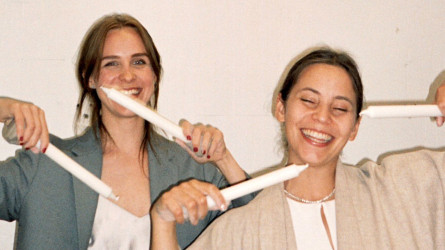
The curators of the exhibition “A chair, a door, a rose, a spoon” Kati Saarits and Hannah Segerkrantz will lead two guided tours on Friday, October 30 at EKA Gallery:
– At 6.30–7.15 pm in Estonian
– At 7.15–8 pm in English
Participation is free of charge.
Read more about the exhibition here.
The exhibition will remain open until November 22.
10.11.2026 Symposium “Urbanites in the Countryside: The Life and Afterlife of Postwar Summer Houses” Tuesday 10 November, 2026 Faculty of Art and Culture
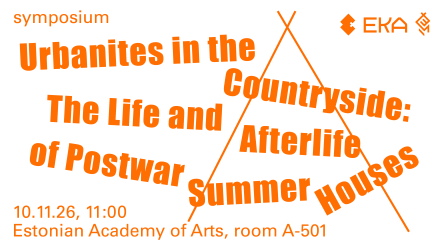
Following the Second World War, an increase in leisure time led to the extensive construction of summer houses on the outskirts of major European cities. The construction of small cabins became especially widespread in socialist countries, where the proliferation of second homes was closely linked to the development of large-scale housing estates. These modest, architect-designed but often self-built structures demonstrate how urbanised societies combined progressive, future-oriented aspirations with a nostalgic attachment to rural life, retaining traces of traditional ways of living, land use, and community life. Over time, summer house areas have become a distinctive layer of the peri-urban landscape, where historical patterns of seasonal living are increasingly transformed by suburbanisation.
Bringing together perspectives from architectural history, cultural studies and museum studies from the Baltic and Nordic regions, this symposium will explore the architecture, spatial practices and cultural meanings of summer houses and garden plots throughout the 20th century and beyond. It will examine how these practices and meanings were created, and how they have evolved or are being reinterpreted as lived heritage and within museums and other curated contexts.
The symposium is part of the joint research project “Urbanites in the Country: A Spatio-Cultural Analysis of the Summer House”, conducted by the Estonian Academy of Arts, the Estonian National Museum, and the Estonian Open Air Museum. The project is funded by the Estonian Ministry of Culture (research grant KUM-TA64).
PROGRAMME
11:00 Epp Lankots. Introduction
11:15 Mart Kalm. Searching for Weekend Houses in Interwar Estonia
11:45 Epp Lankots. Separately Together: Holidaying in a Row House
12:15 Tiina Tammet. Landscape Architects Shaping the Gardens of Soviet ‘Summurbia’
12:45 Lunch
13:30 Anu Kannike, Anu Järs. Making Do, Making Space: Creativity and Constraint in Soviet Estonian Summer Houses
14:00 Matas Šiupšinskas. 600 Square Meters of Care: Collective Gardening in Lithuania
14:30 Piia Tammpuu. Approaching the Soviet-Era Summer House Through the ‘Archive’
15:00 Mikko Teräsvirta. Step Inside a Finnish Summer Cottage: The Making of the New Exhibit in Seurasaari Open-Air Museum
15:30 Discussion and closing remarks
Symposium is free to participate, but please register HERE.
27.10.2026 — 22.11.2026 Group exhibition “A chair, a door, a rose, a spoon” at EKA Gallery 27.10.–22.11.2026 Tuesday 27 October, 2026 — Sunday 22 November, 2026 Craft Studies
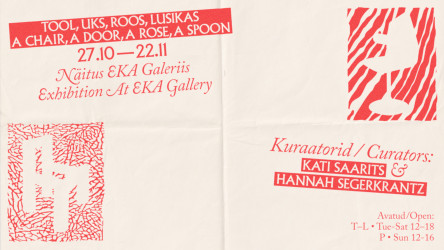
“A chair, a door, a rose, a spoon”
EKA Gallery 27.10.–22.11.2026
Open Tue–Sat 12–6 pm Sun 12–4 pm, free entry
Opening: Thu, 29.10. at 6 pm
Curatorial tours: Fri 30.10. at 6.30 pm (in Estonian) and 7.15 pm (in English)
The group exhibition “A chair, a door, a rose, a spoon”, curated by Kati Saarits and Hannah Segerkrantz, stems from their shared interest in practices that move between craft, applied arts and design. Gathering works from artists, designers and makers based in the Baltics and Finland, the exhibition places contemporary pieces in relationships with selected objects from local museum collections.
Functional objects tend to need bodies around them. A chair expects weight, a door ought to be opened, a rose longs for a vase, a spoon needs a hand. These things have been made to be used, looked at, lived with, inherited, displayed, collected, owned. Their functions accumulate and recede. And sometimes use remains only as a memory of use, or as a possibility.
Decorative objects have historically existed to attract, to impress, to seduce, be adorned, touched and possessed. Their beauty has never been supplementary to function, sometimes beauty was the function. Such objects were made by hands that also thought of them as pictures. Objects that served a purpose and, at the same time, refused to be reduced to it.
The exhibition “A chair, a door, a rose, a spoon” begins somewhere inside these distinctions focusing on applied arts, as if application were a compromise rather than a form of thought. These are not contradictions to be resolved, they are how the objects argue their existence. Rather than approaching craft through heritage or technique alone, this exhibition brings together designers, artists and makers whose works exist in the overlap of these practices, carrying both use-value and decorative autonomy, and asking to be read on both terms simultaneously.
A chair is hung on the peg rail, a door is opened, roses are brought inside, a spoon is placed on the table.
Participating artists and designers: Anna Larionova, Aleš Rezler, Artek, Brit Pavelson, Bruno Tomberg Studio, Carlo Raymann, Carmen Kremm, Claudia Lepik, Darja Popolitova, Garbage Kids, Hannah Segerkrantz, Helena Keskküla, Heli Juuti, Helle Gans, Hertta Kiiski & Janne Punkari, Johanna Adojaan, Juss Heinsalu, Kaisa Sööt, Katahana, Kati Saarits, Katrin Kask, Kay Shek, Kirsikka Tuuli, Kärt Ojavee, Maarja Mäemets, Maile Grünberg, Mariam Mestvirishvili, Marite Kuus-Hill, Mona Sofia Tahk, Muusa Stuudio, Paul Flanders, Rait Lõhmus, Rita Vaali, Santeri Mortti, Tatu Laakso, Tea Tammelaan, Teresa RA, Veera Gontsugova, Viieline, Vilius Dringelis, Ville Aakula and Yrjö Kukkapuro (Artek 2nd Cycle)
Curators: Kati Saarits, Hannah Segerkrantz
Exhibition design: Kadri Villand
Technical support: Ats Kruusing, Asmus Soodla
Graphic design: Simon Janson
Exhibition team: Kaisa Maasik-Koplimets, Aleksander Metsamärt, Valve Saarma, Marily Simenson-Plasko, Andreas Vrettos, Hanna Õunapuu
Thanks to: Estonian Museum of Architecture, Estonian Museum of Applied Art and Design, EKA Museum
The exhibition is supported by Cultural Endowment of Estonia, Embassy of Finland, Tallinn City and Sadolin Estonia.
Opening drinks from mirai™ and Põhjala Brewery.
13.10.2026 Urban Studies’ Detour “Weaving Shtromka” Tuesday 13 October, 2026 Urban Studies
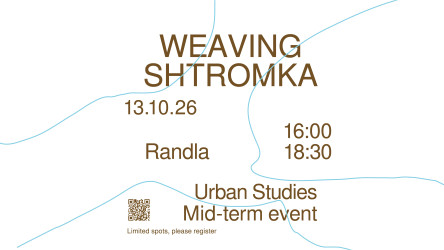
You are warmly invited by EKA Urban Studies to our “Studio 1” mid-term event “Weaving Shtromka”.
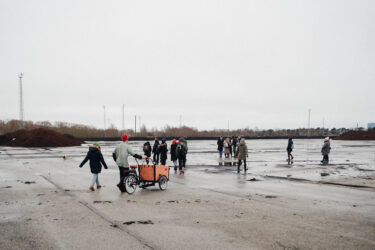
We will be taking you on a detour around the neighbourhood of Shtromka, together we’ll explore its urban fabric and how its past, present and future are woven together. At the end of the detour there will be a weaving workshop.
When? Tuesday, 13th October 2026, starting at 16:00 (please arrive 10 minutes before)
Where? Randla Bus Stop, Tallinn (next to Stroomi Keskus)
What to bring? your cutlery & cup
The programme will run until around 18:30 and will be followed by food and drinks (vegan options).
We’re excited to spend next Tuesday together, weaving Shtromka 🙂
The spots are limited, please register here or at the link in the IG stories.
30.10.2026 EKA 112 | Reunion, Auction, Party Friday 30 October, 2026
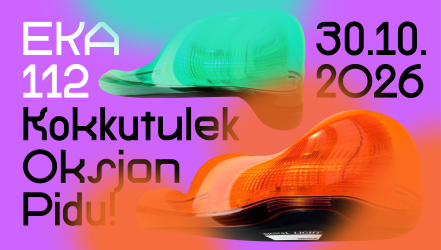
EKA is celebrating its 112th birthday on Friday, 30 October with an auction, an alumni reunion and a party. All former and current members of the EKA community are warmly invited to join the celebrations!
- 17.00 We will open the “60 Years of Design Education” exhibition.
- 18.00 A ceremony will be held to honour this year’s EKA honorary members and Alumni of the Year.
- Special guided tours will be held at the EKA Gallery exhibition “A chair, a door, a rose, a spoon”, and at the “60 Years of Design Education” exhibition in the foyer and the library.
- 18:30 – Guided tour in Estonian of “A chair, a door, a rose, a spoon” (curators Kati Saarits and Hannah Segerkrantz)
- 19:15 – Guided tour in English of “A chair, a door, a rose, a spoon” (curators Kati Saarits and Hannah Segerkrantz)
- 20.00 Led by Siim Raie, our now-traditional charity auction will feature works by EKA alumni, staff and students. In a nod to the number 112, this year’s auction is titled “Art to the Rescue!” Half of the proceeds will go towards scholarships for EKA students, while the other half will go to the artist. Find the artworks here.
And of course, no birthday party would be complete without good food and drinks, birthday cake, live music and the legendary Helina Risti karaoke.
Throughout the evening, several departments across the EKA building will open their doors to alumni.
A pop-up shop selling EKA merchandise and books from EKA Press will also be open. Alumni will also have the opportunity to order their EKA graduation ring at the party.
Under the banner of 112 we thank everyone who always comes to our aid and we offer our support to those who need it most right now. We invite the EKA community and friends to support our partner university, the Lviv National Academy of Arts (LNAA), which is raising funds to strengthen the energy resilience of its student residence.
More additions to the programme are on the way, with the full schedule to be announced soon!
See you at EKA’s 112th birthday party!
16.10.2026 — 18.10.2026 Getriin Kotsar & Maria Helena Seppik „home.house.hardcore.“ at EKA Gallery 16.–18.10.2026 Friday 16 October, 2026 — Sunday 18 October, 2026 Contemporary Art
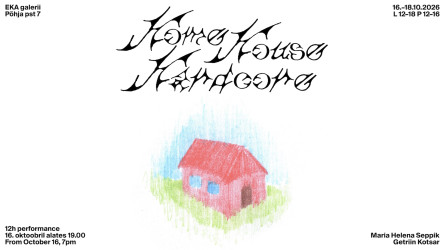
Getriin Kotsar & Maria Helena Seppik
“home.house.hardcore.”
EKA Gallery 16.–18.10.2026
The project “home.house.hardcore.” focuses on the possibility of creating a sanctuary, driven by a lack of security, stability, and opportunity. The young artists are interested in how to create a space for a few days that resembles a home in the best sense of the word—a place that is safe and warm. The entire work stems from the artists’ interest in fragility, an unstable world, and crumbling materiality. Together with visitors, both the performance and the installation seek ways to maintain a sense of hope and security, even in the face of challenging circumstances.
The performance lasts for 12 hours, beginning at 7 pm on October 16 and concluding at 7 am on the morning of October 17. The installation is open to the public during EKA Gallery’s regular opening hours on October 17 and 18 (Sat 12–6 pm and Sun 12–4 pm).
Performance artists: Getriin Kotsar, Maria Helena Seppik
Sound design: Kaur Tõra
Graphic design: Simon Janson
Technical support: Ats Kruusing
The project is supported by the Cultural Endowment of Estonia, Tallinn City, Uuskasutuskeskus and Sadolin Estonia.
Drinks served during the performance from mirai™ and Põhjala Brewery.
08.10.2026 — 09.10.2026 5th Conference of Baltic Art Historians: Art History in Uncertain Times Thursday 08 October, 2026 — Friday 09 October, 2026 Institute of Art History and Visual Culture
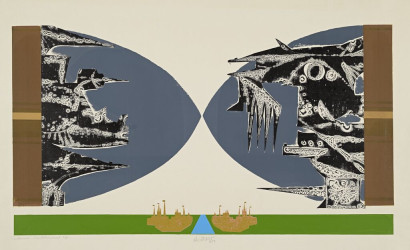
Conference of The Estonian Society of Art Historians and Curators
8–9 October, 2026
Estonian Academy of Arts, Põhja pst 7, Tallinn
Room A101
The conference aims to explore the voice of art history in relation to both contemporary and historical cultural, social, and political processes. We encourage participants to reflect on the role of art history as a discipline, as well as on the responsibilities of art historians and curators as individuals engaged in public discourse. What is the value of their expertise? How does it relate to power structures and public debate? What roles do traditional and emerging art historical methodologies play in addressing current issues? In what ways are scholarly and curatorial practices shaped by, or actively engaged with, broader social movements and political ideologies?
The conference continues the series of Baltic art historians’ conferences, including Geographies of Art History in the Baltic Region (Tallinn, 2009), (Un)blocked Memory: Writing Art History in the Baltic Countries (Kaunas, 2011), Representing Art History in the Baltic Countries: Experiences and Prospects (Riga, 2016), and Baltic Art Histories: Roles, References, Relations (Vilnius, 2024).
The conference is organized by the Estonian Association of Art Historians and Curators. The main organizer of the conference is Anu Allas, the committee includes Emili Kelle, Hanna Õunapuu, Merike Kurisoo, and Liisa Kaljula.
Programme
Thursday, 8 October
10.30 Gathering and opening words (Liisa Kaljula, Anu Allas)
11.00–12.30 I Panel: Art and Power
Chair Gregor Taul
Baiba Vanaga (Latvian National Museum of Art)
Wilhelm Neumann and the Riga City Art Museum during World War I
Jovita Jankauskienė (Independent researcher, Kaunas)
The Heteronomisation of the Art Field in Authoritarian Lithuania: Cultural Policy, Censorship, and Regimes of Recognition
Giedrė Jankevičiūtė (Lithuanian Institute for Culture Research)
Lithuanian Art under the Sign of Hakenkreuz
12.30–13.30 Lunch
13.30–15.00 II Panel: Continuous Past
Chair Margaret Tali
Ieva Astahovska (Latvian Centre for Contemporary Art)
Decoloniality, Monuments, and Erasing or Understanding the Past
Anu Allas (Estonian Academy of Arts)
Revisiting “Thinking Pictures”: Bildstreit on the Background of War
Ramutė Rachlevičiūtė (Vilnius Academy of Arts)
What Form did Lithuanian Surrealism Take, and How does it Manifest Itself Today?
15.00–15.30 Coffee break
15.30–17.00 III Panel: Activating Archives
Chair Ingrid Ruudi
Kai Stahl (University of Turku)
Additional Insights into the History of Estonian Art: The Three Mei Sisters and their Oeuvre
Laine Kristberga (University of Latvia)
Writing the History of What Was Not Supposed to Exist: Performance Art, Canon Formation, and Historiographic Silence in Soviet Latvia
Andra Silapētere (Latvian Centre for Contemporary Art)
Safety Zones and Shifting Timelines
18.00 Open Lecture
Chair Anu Allas
Curating Socialism. Sven Spieker (University of California) in conversation with Anders Härm (Estonian Academy of Arts / Kumu Art Museum)
Friday, 9 October
11.00–12.30 IV Panel: Negotiating Knowledge
Chair Epp Lankots
Andres Kurg (Estonian Academy of Arts)
Architectural Historian in Uncertain Times: Jean-Louis Cohen and Cold War Asymmetries
Virve Sarapik (Estonian Academy of Art)
Negotiating the Canon: Soviet Encyclopedias and the Production of Art Historical Knowledge
Krista Kodres (Estonian Academy of Arts)
(Art) History and “Postmodernism”: Epistemological Uncertainty in the Uncertain 1990s
12.30–13.30 Lunch
13.30–15.00 V Panel: Creative Interventions
Chair Magdaleena Maasik
Linara Dovydaitytė (Vytautas Magnus University)
Emotional Heritage: Affective Encounters with a Dissonant Past in a Museum
Linda Kaljundi (Estonian Academy of Arts)
How to Reframe Monuments – and/or the Practices of Art History and Curating?
Agnė Narušytė (Lithuanian Culture Research Institute)
Artists and Art Historians at War: The Case of Three Films by Darius Žiūra from Ukraine
15.00–15.30 Coffee break
15.30–17.00 Roundtable on Art History Writing in the Baltics
Chair Liisa Kaljula
Kristiāna Ābele (Art Academy of Latvia), Krista Kodres (Estonian Academy of Arts), Giedrė Jankevičiūtė (Lithuanian Institute for Culture Research)
01.10.2026 — 03.10.2026 Conference “Giving Voice to Museum Collections: Finno-Ugric and Sámi Heritage Today” Thursday 01 October, 2026 — Saturday 03 October, 2026 Institute of Art History and Visual Culture
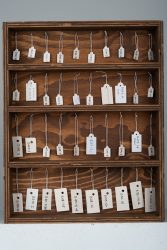
The collections of Finno-Ugric and Sámi heritage in Estonian museums are shaped by long and sometimes contested histories. They preserve not only material objects, but also forgotten narratives: Indigenous knowledge, relationships and voices that have largely remained undocumented or marginalised.
This conference seeks to examine the histories of these collections, and, most importantly, to explore their future: how they can be activated in new and empowering ways to uncover hidden stories, amplify marginalised voices, and generate new knowledge.
We aim to create a space for discussion on rethinking collections and their futures. Particular attention will be paid to the authors, donors, and collecting practices behind the objects, as well as on consciously engaging with institutional and cultural amnesia.
How can the collections be used as a starting point for exploring new possibilities and horizons? How can we develop new ways of knowledge creation, grounded in context-sensitive and collaborative thinking, and enabling more inclusive and non-hierarchical engagement with Finno-Ugric and Indigenous themes?
A central focus of the conference is a comparative approach to decolonisation, addressing its meanings and practices across different contexts, including Sámi, Estonian and broader Eurasian frameworks, as well as in relation to specific Finno-Ugric collections. By bringing these perspectives into dialogue with global decolonial theory and practice, we seek to highlight regional particularities and to explore how this region can contribute to expanding and diversifying understandings of colonial histories and decolonial thought.
Special attention is given to the creators of the works held in museum collections and to artistic research as a practice for exploring how interdisciplinary approaches can help spotlight marginalised voices and open up new ways of engaging with and interpreting collections.
The three-day conference is organised into thematic sections, in which scholars and artists from different fields address the historical and contemporary meanings of collections, and creating and communicating future-oriented knowledge.
The conference is being jointly organised by the Estonian Academy of Arts, the Art Museum of Estonia and the Estonian National Museum.
1 October
Venue: Kumu Art Museum (Weizenbergi 34 / Valge 1, Tallinn)
18:00 Opening of the exhibition Expedition: Finno-Ugrians and the Power of Images in the atrium of the Kumu Art Museum
2 October
Venue: Estonian Academy of Arts (Põhja pst 7, Tallinn), A-101 auditorium
10:00–10:15 Opening remarks
Panel I
10:15–11:45 Collaborating with Collections
Svetlana Karm (Estonian National Museum) and Piret Koosa (Estonian National Museum). Materialising Kinship? Ambivalences in Finno-Ugric Collecting Laur Vallikivi (University of Tartu). Gods, Idols, and Museum Objects: The Lives of khekheq in the Nenets Tundra
Bart Pushaw (University of Tennessee at Chattanooga). From Reactive to Reciprocal: Indigenous Belongings and the Past-Present-Future
Discussant and moderator: Linda Kaljundi (Estonian Academy of Arts)
Panel II
12:00–13:00 Ethnographic Film
Stephan Dudeck (University of Tartu, University of Lapland, Vilnius University, Foundation for Siberian Cultures) and Liivo Niglas (University of Tartu). Collaborative Practices in the Lennart Meri Film Project The Sons of Torum
Alo Paistik (Film-maker and researcher, Goethe-Universität Frankfurt). Archival Isthmus, Notes on Returning Images
Discussant and moderator: Terje Toomistu (University of Tartu, Tallinn University)
13:00–14:00 Lunch Break
Panel III
14:00–14:45 Oil Landscapes: Extraction, Labour and Indigenous Struggle
Katherine Zubovich (University of Buffalo). Late Soviet Petroscapes: Estonian Materials and Builders in the Oil Town of Kogalym
Discussant and moderator: Andres Kurg (Estonian Academy of Arts)
14:45–15:00 Coffee break
15:00–15:30 Anders Kreuger (Kunsthalle Kohta, Helsinki) Is there a future for ethno-futurism?
Panel Discussion 15:30–17:00: Practices of Change: Art – Research – Activism
Marika Alver (Artist group SLED)
Jaanika Vider (Tallinn University)
Eero Ehanti (National Museum of Finland)
Discussant and moderator: Anders Kreuger (Kunsthalle Kohta, Helsinki)
3 October
Venue: Estonian National Museum (Muuseumi tee 2, Tartu), Moora auditorium
15:45–16:45 Panel discussion: What is an artist doing in collections? Practices, prospects and problems
Artists, film-makers and researchers:
Karl Joonas Alamaa
Jaanus Samma
Alo Paistik
Discussant and moderator: Eva Toulouze (University of Tartu)
12.01.2027 Urban Studies MSc programme online info session 2027 Tuesday 12 January, 2027 Urban Studies
EKA Urban Studies MSc programme invites prospective master’s students to join the programme’s online info session on Tuesday, January 12, 2027 at 17:00 EET (local Estonian time).
This online info session will be a good opportunity to hear more about the curriculum, and to meet and ask questions directly from people behind the Urban Studies programme. The info session will be hosted online over Zoom.
If you would like to attend, please register online through the form below. A link to attend will be e-mailed shortly before the event begins.
REGISTER HERE
More information about Urban Studies MSc programme:
- https://www.artun.ee/urban-studies
- https://www.facebook.com/urbantallinn
- https://www.instagram.com/ekaurbanstudies
Next admissions period starts on the 1st of February 2026 and application deadline is 2nd of March 2026 at 3pm EET (local Estonian time).
01.10.2026 Open Architecture Lecture: Aljeandro Aravena Thursday 01 October, 2026 Architecture and Urban Design
This autumn’s Open Architecture Lecture Series is curated by Mira Samonig, a doctoral student at the EKA Faculty of Architecture and one of the curators of the 2026 Tallinn Architecture Biennale, under the overarching title Standby.
This autumn open lecture series brings together practitioners and scholars attentive to public agency and to the way standardised spaces of power and capital can be pixelated. Standby considers how space and architecture are never fully revolutionary in themselves, just as they are neither merely static backdrops. The series looks at spaces in which social, political and material capacities are maintained in suspended readiness and not exhausted by programmed function; invited lecturers speak to what these practices are and what they might become across architecture, urbanism, design and theory.
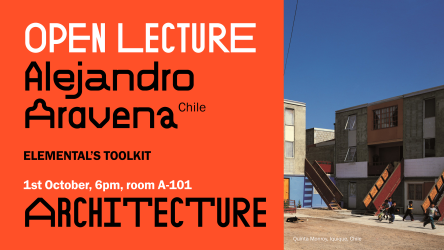
World-renowned architect Alejandro Aravena will open this autumn’s lecture series on 1 October at 6 pm in the EKA Auditorium with his lecture “Elemental’s Toolkit”.
Alejandro Aravena is a Chilean architect, co-founder and partner of the Santiago-based studio Elemental. In 2016, he was awarded the Pritzker Architecture Prize and appointed Director of the Venice Biennale the same year, previously he taught at Harvard Graduate School of Design. His architectural work is particularly defined by socially engaged and incremental housing approaches that address economic inequality in urban spaces. Elemental is internationally recognised for their design of structurally complete “half a good houses” as a strategy that enables low-cost housing to be built on more expensive land closer to economic opportunity. Drawing from a wide portfolio of completed projects, Aravena will introduce his architectural practice and emphasise architecture as an enabling framework for collective agency.
The lecture is free of charge and will be held in English.
Previous Open Architecture Lectures are available to watch at www.avatudloengud.ee.
The lecture is a collaboration between the EKA Faculty of Architecture and TAB 2026, kindly supported by the Embassy of Chile to Finland and Estonia. The lecture series is supported by the Estonian Cultural Endowment.