
Events
11.09.2025 — 21.09.2025
Public program at the exhibition “30×30” at EKA Gallery
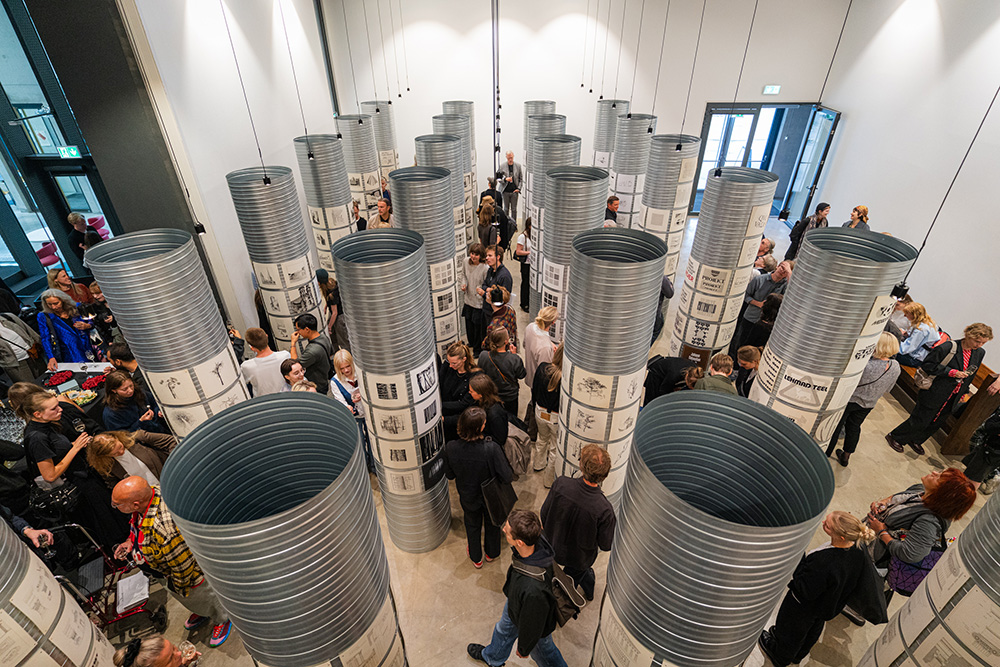
Public program at the exhibition “30×30” at EKA Gallery
Participation in the events is free!
Thursday, September 11 at 4–6 pm
Event “And this is not all…”
Drawing lesson with Malle Jürgenson, head of the Interior Architecture Department (on the second floor of EKA Gallery, in Estonian)
NB! The number of participants is limited, register here.
Sunday, September 14
At 1 pm, guided tour led by curators Madli Kaljuste and Paco Ulman (in Estonian)
At 2 pm, curatorial tour (in English)
Sunday, September 21 at 3–5 pm
A discussion, where topics that arose during the planning of the exhibition and during the exhibition will be discussed.
Read more about the exhibition here.
Public program at the exhibition “30×30” at EKA Gallery
Thursday 11 September, 2025 — Sunday 21 September, 2025
Public program at the exhibition “30×30” at EKA Gallery
Participation in the events is free!
Thursday, September 11 at 4–6 pm
Event “And this is not all…”
Drawing lesson with Malle Jürgenson, head of the Interior Architecture Department (on the second floor of EKA Gallery, in Estonian)
NB! The number of participants is limited, register here.
Sunday, September 14
At 1 pm, guided tour led by curators Madli Kaljuste and Paco Ulman (in Estonian)
At 2 pm, curatorial tour (in English)
Sunday, September 21 at 3–5 pm
A discussion, where topics that arose during the planning of the exhibition and during the exhibition will be discussed.
Read more about the exhibition here.
11.09.2025
Artist talk and opening of Liisa Kruusmägi’s and Lukas Weidinger’s joint work at EKA Billboard Gallery
The opening of the joint work “Weather As a Conversation Topic” by Liisa Kruusmägi and Lukas Weidinger will take place on Thursday, September 11 at 6 pm in front of the EKA Billboard Gallery. During the event an artist talk will also take place. The event will be held in English and will be moderated by David Schilter. In case of bad weather, the conversation will take place indoors. The artwork is visible round the clock until October 26.
Read more about the exhibition here.
Artist talk and opening of Liisa Kruusmägi’s and Lukas Weidinger’s joint work at EKA Billboard Gallery
Thursday 11 September, 2025
The opening of the joint work “Weather As a Conversation Topic” by Liisa Kruusmägi and Lukas Weidinger will take place on Thursday, September 11 at 6 pm in front of the EKA Billboard Gallery. During the event an artist talk will also take place. The event will be held in English and will be moderated by David Schilter. In case of bad weather, the conversation will take place indoors. The artwork is visible round the clock until October 26.
Read more about the exhibition here.
01.09.2025 — 02.09.2025
EKA Back-to-School Sale
EKA Back-to-School Sale will take place on 1–2 September in the EKA lobby. You can find EKA merch, including sustainably produced sweatshirts, T-shirts, socks, erasers, pens and pencils, but also professional art supplies, such as paints, pens, sketching paper etc. from Gallery-G and Skizze Vunder shops.
The EKA Back-to-School Sale is open on Monday and Tuesday from 12pm to 4pm.
EKA Back-to-School Sale
Monday 01 September, 2025 — Tuesday 02 September, 2025
EKA Back-to-School Sale will take place on 1–2 September in the EKA lobby. You can find EKA merch, including sustainably produced sweatshirts, T-shirts, socks, erasers, pens and pencils, but also professional art supplies, such as paints, pens, sketching paper etc. from Gallery-G and Skizze Vunder shops.
The EKA Back-to-School Sale is open on Monday and Tuesday from 12pm to 4pm.
29.09.2025 — 05.10.2025
EKA Design Week
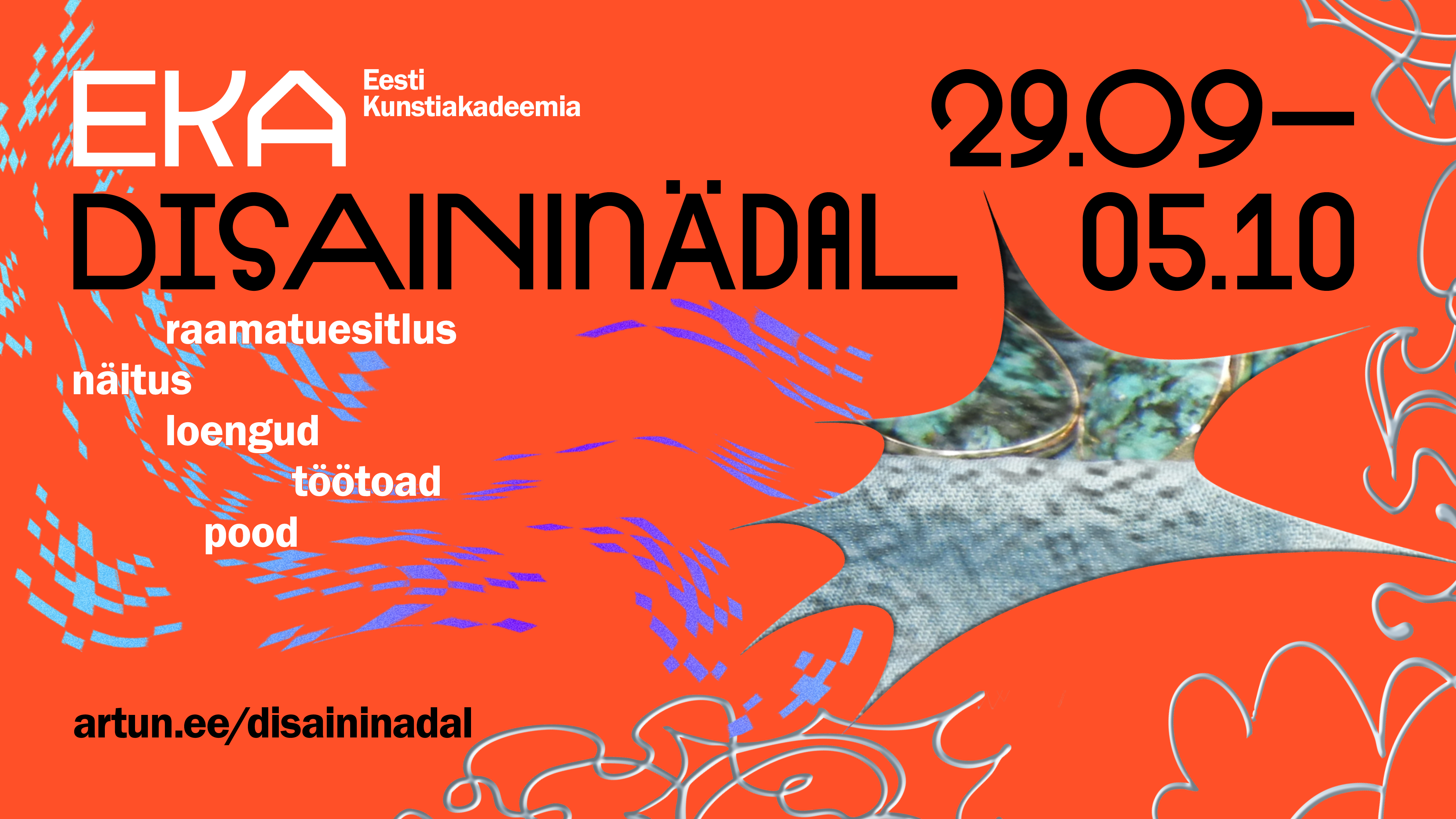
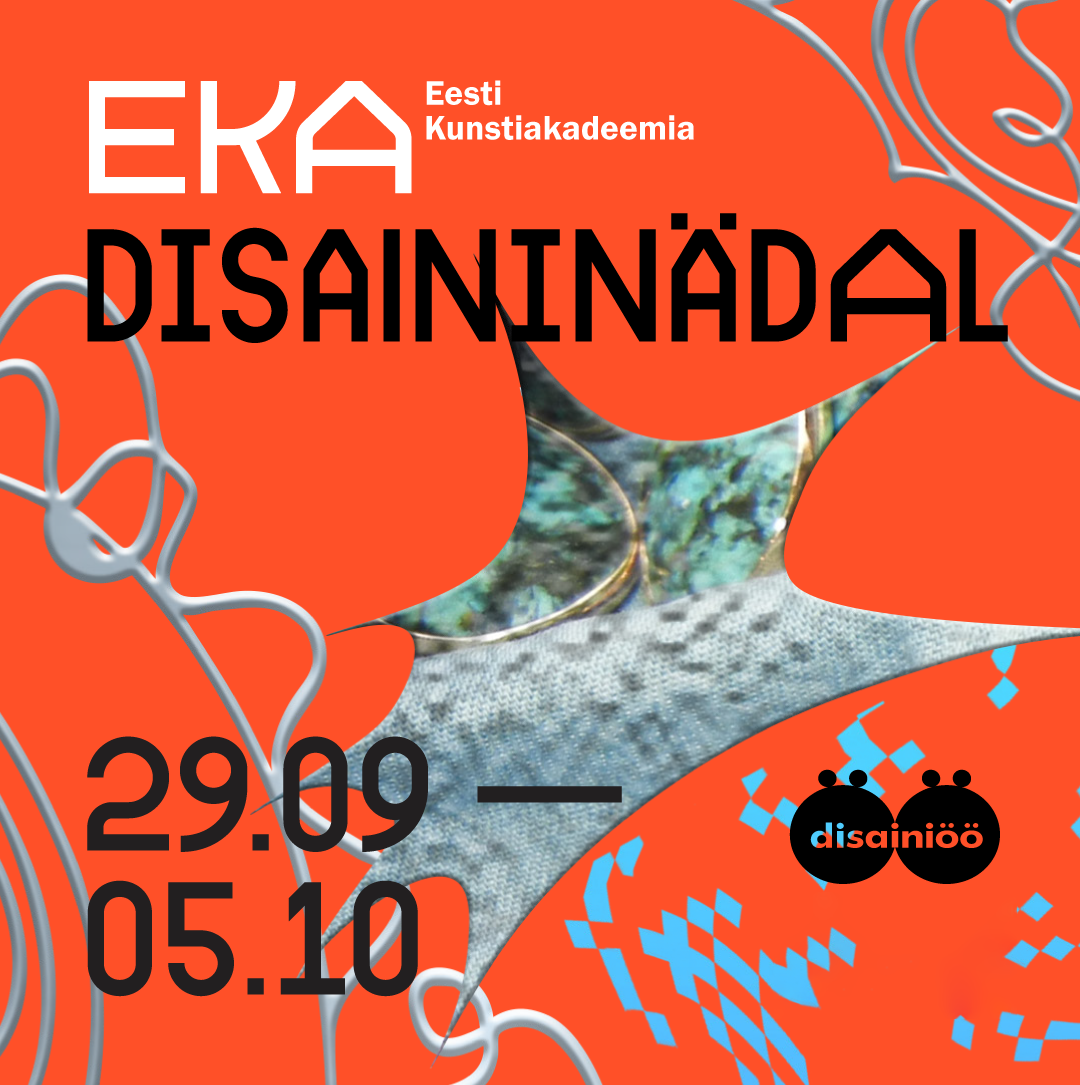
EKA invites you from September 29 to October 5 on a journey through different layers of young design.
The exhibition and event program bring together the heritage of EKA’s design past, the diversity of the present, and future directions, opening doors to fresh ideas and creative courage.
During EKA Design Week, a variety of events will take place:
Public lectures and discussion evenings – inspiring meetings where designers, faculty, and students discuss the role and meaning of design in today’s world.
Design workshops – our students and faculty offer the opportunity to experience the design creation process firsthand and explore new knowledge and skills in various fields. Workshops are open to all interested in contemporary design thinking and practical experimentation.
Pop-up shop – The pop-up shop offers visitors a rare chance to purchase unique products, support the journey of young designers, and take home a piece of EKA’s creative energy. Get young and fresh design directly from the creators.
Come and experience the vibrant and ever-changing landscape of young design – look back, be present, and peek into the future.
The EKA Design Week schedule:
September 29 – October 5 – Exhibition “Lines of the Past, Directions for the Future”
Open Mon–Fri 10:00–19:00, Sat–Sun 10:00–15:00 at EKA White House, Kotzebue 10.
Exhibition opening: September 29 at 16:00.
September 29 – October 5 – Design & Innovation Program 10th Anniversary Exhibition
Open Mon–Fri 10:00–19:00, Sat–Sun 10:00–15:00 at EKA White House, Kotzebue 10.
September 30 – October 1 – Two-day social design workshop “Designing Our Future for All”
Day 1: 09:45–13:00, Day 2: 14:00–17:15 + independent work between the two days.
Location: EKA White House, Kotzebue 10.
Workshop will be held in English.
Detailed description and schedule of the workshop.
REGISTER HERE.
September 30 at 17:30 – ERKI Fashion Show Discussion Evening
The discussion evening brings together the organizers, designers, and alumni of the ERKI Fashion Show to discuss the significance of the runway, behind-the-scenes stories of the creative process, and ERKI’s role in the Estonian design landscape. This is an opportunity to hear inspiring experiences, ask questions, and see how young fashion designers bring their ideas to life.
Location: EKA Main Building Foyer, Põhja pst 10.
The event will be in Estonian.
September 30, 14:00–16:00 – Open Workshop “Gardenly Slowness”
Instructors: Marta Põldma and Jane Remm (places are full).
Location: EKA White House Monumental Studio, Kotzebue 10.
(Join the waiting list, the event will be in Estonian.)
October 1 at 17:30 – Open Lecture “Creative Design Research: Body-Inclusive Play for Children and Their Grandparents Living Far Away”
Lecturer: Kristi Kuusk.
Location: EKA Foyer, Põhja pst 7
The lecture will be held in English.
October 2 at 18:00 – LEIDA Article Collection Presentation
Introduction of a new edition gathering reflections and analyses in the field of design.
Location: EKA Foyer, Põhja pst 7
(Please RSVP)
October 7 at 19:00 – Design and Innovation Program 10th Anniversary Celebration
Location: EKA White House Monumental Studio (invitation only)
EKA Design Week Facebook event here.
EKA Design Week
Monday 29 September, 2025 — Sunday 05 October, 2025
EKA invites you from September 29 to October 5 on a journey through different layers of young design.
The exhibition and event program bring together the heritage of EKA’s design past, the diversity of the present, and future directions, opening doors to fresh ideas and creative courage.
During EKA Design Week, a variety of events will take place:
Public lectures and discussion evenings – inspiring meetings where designers, faculty, and students discuss the role and meaning of design in today’s world.
Design workshops – our students and faculty offer the opportunity to experience the design creation process firsthand and explore new knowledge and skills in various fields. Workshops are open to all interested in contemporary design thinking and practical experimentation.
Pop-up shop – The pop-up shop offers visitors a rare chance to purchase unique products, support the journey of young designers, and take home a piece of EKA’s creative energy. Get young and fresh design directly from the creators.
Come and experience the vibrant and ever-changing landscape of young design – look back, be present, and peek into the future.
The EKA Design Week schedule:
September 29 – October 5 – Exhibition “Lines of the Past, Directions for the Future”
Open Mon–Fri 10:00–19:00, Sat–Sun 10:00–15:00 at EKA White House, Kotzebue 10.
Exhibition opening: September 29 at 16:00.
September 29 – October 5 – Design & Innovation Program 10th Anniversary Exhibition
Open Mon–Fri 10:00–19:00, Sat–Sun 10:00–15:00 at EKA White House, Kotzebue 10.
September 30 – October 1 – Two-day social design workshop “Designing Our Future for All”
Day 1: 09:45–13:00, Day 2: 14:00–17:15 + independent work between the two days.
Location: EKA White House, Kotzebue 10.
Workshop will be held in English.
Detailed description and schedule of the workshop.
REGISTER HERE.
September 30 at 17:30 – ERKI Fashion Show Discussion Evening
The discussion evening brings together the organizers, designers, and alumni of the ERKI Fashion Show to discuss the significance of the runway, behind-the-scenes stories of the creative process, and ERKI’s role in the Estonian design landscape. This is an opportunity to hear inspiring experiences, ask questions, and see how young fashion designers bring their ideas to life.
Location: EKA Main Building Foyer, Põhja pst 10.
The event will be in Estonian.
September 30, 14:00–16:00 – Open Workshop “Gardenly Slowness”
Instructors: Marta Põldma and Jane Remm (places are full).
Location: EKA White House Monumental Studio, Kotzebue 10.
(Join the waiting list, the event will be in Estonian.)
October 1 at 17:30 – Open Lecture “Creative Design Research: Body-Inclusive Play for Children and Their Grandparents Living Far Away”
Lecturer: Kristi Kuusk.
Location: EKA Foyer, Põhja pst 7
The lecture will be held in English.
October 2 at 18:00 – LEIDA Article Collection Presentation
Introduction of a new edition gathering reflections and analyses in the field of design.
Location: EKA Foyer, Põhja pst 7
(Please RSVP)
October 7 at 19:00 – Design and Innovation Program 10th Anniversary Celebration
Location: EKA White House Monumental Studio (invitation only)
EKA Design Week Facebook event here.
28.08.2025
75 years of teaching architecture in EKA!
The Estonian Academy of Arts has been training architects for 75 years!
We will celebrate this at the Faculty of Architecture throughout the upcoming academic year.
You are invited to the opening of the anniversary year on August 28, 2025 in the EKA auditorium:
at 6:00 PM, with opening remarks and speeches, we will open the new newspaper of the Faculty of Architecture “c400”. Editors-in-chief Diana Drobot and Linda Li Arro.
at 6:30 PM, we will take a look at the longest-established architectural subject “30 x 30”, of which the curators of the exhibition, doctoral student Paco Ernest Ulman and Madli Kaljuste, will provide a historical overview.
at 7:00 PM, we will open the exhibition “30 x 30. Exhibition from the graphic arts archive of the EKA Department of Architecture” in the EKA Gallery.
You are welcome to join us!
75 years of teaching architecture in EKA!
Thursday 28 August, 2025
The Estonian Academy of Arts has been training architects for 75 years!
We will celebrate this at the Faculty of Architecture throughout the upcoming academic year.
You are invited to the opening of the anniversary year on August 28, 2025 in the EKA auditorium:
at 6:00 PM, with opening remarks and speeches, we will open the new newspaper of the Faculty of Architecture “c400”. Editors-in-chief Diana Drobot and Linda Li Arro.
at 6:30 PM, we will take a look at the longest-established architectural subject “30 x 30”, of which the curators of the exhibition, doctoral student Paco Ernest Ulman and Madli Kaljuste, will provide a historical overview.
at 7:00 PM, we will open the exhibition “30 x 30. Exhibition from the graphic arts archive of the EKA Department of Architecture” in the EKA Gallery.
You are welcome to join us!
05.09.2025
Narva Art Residency 10
Welcome to celebrate the 10th anniversary of the Narva Art Residency!
September 5, 2025:
12.00 – Arrival at NART (Joala 18), welcome coffee and snacks. We will introduce the current activities and future plans of the house and the art residency.
13.00 – Lunch and bus tour of Narva city. On the tour, we will see, for example, the newly completed sculpture by Ihor Tkachevkõi (Ukr) in Stockholm Square and the dedication of the NART boat in the Venice of Narva.
15.00 – Official anniversary program at the director’s villa, or NART: we will present the video made for the anniversary, offer cake and sparkling wine, discuss the social dimension of art and create a direct connection with former residents from around the world.
17.00 – Art tour at the Kreenholm factory.
19.00 … – Free time. Those who wish to attend can take part in the Station Narva festival concerts at Narva Museum or join the evening gathering at NART.
The anniversary coincides with the Station Narva music festival taking place on the same weekend. On Friday, there is Future Day, the program of which partly coincides with the anniversary program. During the weekend, guests will also be able to attend several events organized by NART, such as the Narva Venice Annuale or the Day of the Single-Tree Pilot with boat rides, the ceremonial opening of a work by a Ukrainian sculptor to the city’s residents, the Kreenholm Community Garden Harvest Party and house tours. In other words, there is a reason to stay longer.
Please register by September 1st by filling out the form here: https://forms.gle/zidoyoBbvjXMz4vK6.
In the form, you can indicate whether you want to come from Tallinn to Narva and/or back by shared bus. We cannot offer overnight accommodation to everyone, but if you plan to stay, let us know and we will try to find a solution.
If you have already confirmed your participation, we still ask you to fill out the registration form so that we can take into account your food and program preferences. The anniversary event is supported by the Cultural Endowment of Estonia and the British Council.
Narva Art Residency 10
Friday 05 September, 2025
Welcome to celebrate the 10th anniversary of the Narva Art Residency!
September 5, 2025:
12.00 – Arrival at NART (Joala 18), welcome coffee and snacks. We will introduce the current activities and future plans of the house and the art residency.
13.00 – Lunch and bus tour of Narva city. On the tour, we will see, for example, the newly completed sculpture by Ihor Tkachevkõi (Ukr) in Stockholm Square and the dedication of the NART boat in the Venice of Narva.
15.00 – Official anniversary program at the director’s villa, or NART: we will present the video made for the anniversary, offer cake and sparkling wine, discuss the social dimension of art and create a direct connection with former residents from around the world.
17.00 – Art tour at the Kreenholm factory.
19.00 … – Free time. Those who wish to attend can take part in the Station Narva festival concerts at Narva Museum or join the evening gathering at NART.
The anniversary coincides with the Station Narva music festival taking place on the same weekend. On Friday, there is Future Day, the program of which partly coincides with the anniversary program. During the weekend, guests will also be able to attend several events organized by NART, such as the Narva Venice Annuale or the Day of the Single-Tree Pilot with boat rides, the ceremonial opening of a work by a Ukrainian sculptor to the city’s residents, the Kreenholm Community Garden Harvest Party and house tours. In other words, there is a reason to stay longer.
Please register by September 1st by filling out the form here: https://forms.gle/zidoyoBbvjXMz4vK6.
In the form, you can indicate whether you want to come from Tallinn to Narva and/or back by shared bus. We cannot offer overnight accommodation to everyone, but if you plan to stay, let us know and we will try to find a solution.
If you have already confirmed your participation, we still ask you to fill out the registration form so that we can take into account your food and program preferences. The anniversary event is supported by the Cultural Endowment of Estonia and the British Council.
29.08.2025
Opening ceremony of the 2025/26 academic year
On Friday, August 29th, starting at 12:00, the opening ceremony of the 2025/26 academic year will be held. The ceremony takes place in the main hall (A101) and lasts approximately 1.5 hours.
Opening ceremony of the 2025/26 academic year
Friday 29 August, 2025
On Friday, August 29th, starting at 12:00, the opening ceremony of the 2025/26 academic year will be held. The ceremony takes place in the main hall (A101) and lasts approximately 1.5 hours.
23.08.2025 — 24.08.2025
VARES “Material Purgatory” Residency Finishing
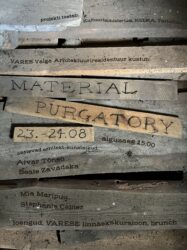
23.-24. August in Valga
Yet another residency is coming to an end and we invite everyone to participate in the closing event of “Material Purgatory” residency and together with us celebrate the last weekends of summer in VARES.
In the beginning of July, four architects and artists – Beate Zavadska, Aivar Tõnso, Mia Maripuu and Stephanie Cellier – gathered in VARES to rummage through the sheds, attics and garages of our house and Valga, searching for poetry, potential and creative application of materials that are spending their retirement in forgotten storage spaces. Materials piles, where there is not enough stuff for starting a new project, but enough to not be thrown out. The quartet, who spent six weeks in Valga, have dissected this topic from different perspectives, have been exploring the installations of local material collectors-self-builders, playing with the peculiar sounds of found materials and mapping the nature of material storage spaces.
Now we invite you to come and participate in the residency’s public event for the weekend, where the program will include presentations of the residents’ thoughts and installations, lectures by guest speakers, VARES tour of Valga on bikes and the cozy VARESE pop-up bar in the Supibasiilika.
PROGRAM:
SATURDAY 23.08:
15:00 Introduction of the residents works
17:00 Lecture / presentation by stuudio Kollektiir (Mari Uibo and Rait Lõhmus)
21:00 Concert and VARES bar (Riia 5, Kreisihoone courtyard)
SUNDAY 24.08
11:00 VARES bunch in the residency courtyard, Uus 35. Bring something for the table!
13:00 VARES bike tour of Valga (max 10 people due to limit of bikes, more can join with their own bicycles)
A more detailed program will be gradually published on our website and social media channels. Registration form for guests wishing to stay overnight HERE.
Residency partners and supporters: European Culture Capital Tartu 2024, Estonian Culture Ministry, Estonian Culture Endowment, Valga county.
See you on August 23-24 in Valga! All friends and family are welcome!
VARES “Material Purgatory” Residency Finishing
Saturday 23 August, 2025 — Sunday 24 August, 2025
23.-24. August in Valga
Yet another residency is coming to an end and we invite everyone to participate in the closing event of “Material Purgatory” residency and together with us celebrate the last weekends of summer in VARES.
In the beginning of July, four architects and artists – Beate Zavadska, Aivar Tõnso, Mia Maripuu and Stephanie Cellier – gathered in VARES to rummage through the sheds, attics and garages of our house and Valga, searching for poetry, potential and creative application of materials that are spending their retirement in forgotten storage spaces. Materials piles, where there is not enough stuff for starting a new project, but enough to not be thrown out. The quartet, who spent six weeks in Valga, have dissected this topic from different perspectives, have been exploring the installations of local material collectors-self-builders, playing with the peculiar sounds of found materials and mapping the nature of material storage spaces.
Now we invite you to come and participate in the residency’s public event for the weekend, where the program will include presentations of the residents’ thoughts and installations, lectures by guest speakers, VARES tour of Valga on bikes and the cozy VARESE pop-up bar in the Supibasiilika.
PROGRAM:
SATURDAY 23.08:
15:00 Introduction of the residents works
17:00 Lecture / presentation by stuudio Kollektiir (Mari Uibo and Rait Lõhmus)
21:00 Concert and VARES bar (Riia 5, Kreisihoone courtyard)
SUNDAY 24.08
11:00 VARES bunch in the residency courtyard, Uus 35. Bring something for the table!
13:00 VARES bike tour of Valga (max 10 people due to limit of bikes, more can join with their own bicycles)
A more detailed program will be gradually published on our website and social media channels. Registration form for guests wishing to stay overnight HERE.
Residency partners and supporters: European Culture Capital Tartu 2024, Estonian Culture Ministry, Estonian Culture Endowment, Valga county.
See you on August 23-24 in Valga! All friends and family are welcome!
04.09.2025
Estonian Academy of Arts Science Cafe: Keep the Church in the Village. How to use Heritage?
Estonian Academy of Arts Science Cafe is hosting a roundtable talk on the changing roles of religious and industrial buildings in contemporary Europe on the 4th of September from 1 to 3 pm at the Narva Art Residency (NART, Joala 18) as part of the Station Narva festival.
The event will be held both onsite and online from HERE.
Estonian Academy of Arts Science Cafe focuses on the shifting roles of religious and industrial buildings in contemporary Europe. As congregations shrink and industries relocate, churches and factories alike are increasingly left vacant, raising complex questions about reuse, heritage, and identity. The discussion will address how these spaces are being reimagined—as museums, cultural centres, or residential developments—and what this reveals about broader societal transformations in both secular and post-industrial contexts.
The discussion will feature musicologist and journalist Brigitta Davidjants, associate professor of social innovation at the University of Tartu Marko Uibu, Auxiliary Bishop of the Patriarchate of Lisbon (Portugal) and Associate Professor at the Portuguese Catholic University – Faculty of Theology Alexandre Palma. The talk will be moderated by art historian and semiotician Gregor Taul.
The event requires pre-registration by August 29. A free bus service is provided from Tallinn to Narva and back, departing from EKA. More information is available upon pre-registration.
After the Science Café, you are welcome to attend the Station Narva opening concert featuring Estonian Voices at 5:30 PM in the Rugodivi Culture House, Grand Hall. Admission is free, and doors open at 5:00 PM.
More information: triin.kao@artun.ee
Facebook event.
The event will take place under the auspices of the Transform4Europe Alliance — a collaborative network of 11 European universities focused on climate change, digitalisation, and social challenges — and is co-funded by the Erasmus+ Programme of the European Union.
*
The English saying “keep the church in the village” means “do not cause an uproar.” There are similar sayings in German, French and many other European languages. With some differences, they denote that the church forms the centre of community, the basis of identity, but also, in a figurative sense, the embodiment of common sense. Despite the geographical scope and cultural differences in Catholic, Orthodox and Lutheran countries this has been the case in all of Europe. However, recent times have brought changes. Industrialisation, secular modernisation and large-scale urban planning schemes have shifted the principles of how communities are formed. This was especially so in the fundamentally atheist Soviet Union. For example in Soviet Estonia only a few religious edifices were erected between 1944 and 1991.
The number of church-goers has also declined. As a result some churches have lost their congregations. This has raised the question of how to treat the disused churches? The situation resembles that of the post-industrial shift. Starting from the 1970s European manufacturers have left the continent in search of cheaper labour and thus the abandoned factories have made way for the birth of ‘creative cities’ – we have seen empty factories first used as squats and informal project spaces, then as gentrified creative quarters and eventually becoming expensive lofts. As for the repurposed religious buildings there are more thought-provoking examples where former religious buildings have been turned into museums, bookshops, concert halls or even swimming pools. As adaptive reuse of spaces and materials is becoming a legislative requirement in Europe, we will see more such examples in the near future.
At the backdrop of a contemporary music festival, Narva’s fabled industrial legacy and the crossroads of divergent (religious) identities this roundtable will look at both historic case studies and current disputes concerning religious and industrial heritage in Europe.
*
Brigitta Davidjants is a journalist and researcher at Estonian Academy of Music and Theatre, Estonia. In her academic research, she looks at national identity constructions and the marginalities of subcultures.
Marko Uibu is an Estonian social scientist and Associate Professor of Social Innovation at the Institute of Social Studies, University of Tartu. His 2016 doctoral dissertation in University of Tartu was called “Religiosity as Cultural Toolbox: a Study of Estonian New Spirituality”.
Alexandre Palma is a theologian, Auxiliary Bishop and university professor. He is an assistant professor at the Catholic University (courses: Mystery of God; Christology; and Theology of Religions) and a researcher at the CITER – Research Center for Theology and Religion Studies. He also serves as Auxiliary Bishop of the Patriarchate of Lisbon (Portugal) and is a member of the European Society for Catholic Theology and of the Seminar of young scientists of the Lisbon Academy of Sciences.
Gregor Taul is a teacher, critic, and curator based in Tallinn, working as an associate professor in the Departments of Interior Architecture and General Theory Classes at the Estonian Academy of Arts. In his academic research, he focuses on art in public space, with a particular interest in Soviet-era monuments and murals as well as contemporary public art commissions.
Estonian Academy of Arts Science Cafe: Keep the Church in the Village. How to use Heritage?
Thursday 04 September, 2025
Estonian Academy of Arts Science Cafe is hosting a roundtable talk on the changing roles of religious and industrial buildings in contemporary Europe on the 4th of September from 1 to 3 pm at the Narva Art Residency (NART, Joala 18) as part of the Station Narva festival.
The event will be held both onsite and online from HERE.
Estonian Academy of Arts Science Cafe focuses on the shifting roles of religious and industrial buildings in contemporary Europe. As congregations shrink and industries relocate, churches and factories alike are increasingly left vacant, raising complex questions about reuse, heritage, and identity. The discussion will address how these spaces are being reimagined—as museums, cultural centres, or residential developments—and what this reveals about broader societal transformations in both secular and post-industrial contexts.
The discussion will feature musicologist and journalist Brigitta Davidjants, associate professor of social innovation at the University of Tartu Marko Uibu, Auxiliary Bishop of the Patriarchate of Lisbon (Portugal) and Associate Professor at the Portuguese Catholic University – Faculty of Theology Alexandre Palma. The talk will be moderated by art historian and semiotician Gregor Taul.
The event requires pre-registration by August 29. A free bus service is provided from Tallinn to Narva and back, departing from EKA. More information is available upon pre-registration.
After the Science Café, you are welcome to attend the Station Narva opening concert featuring Estonian Voices at 5:30 PM in the Rugodivi Culture House, Grand Hall. Admission is free, and doors open at 5:00 PM.
More information: triin.kao@artun.ee
Facebook event.
The event will take place under the auspices of the Transform4Europe Alliance — a collaborative network of 11 European universities focused on climate change, digitalisation, and social challenges — and is co-funded by the Erasmus+ Programme of the European Union.
*
The English saying “keep the church in the village” means “do not cause an uproar.” There are similar sayings in German, French and many other European languages. With some differences, they denote that the church forms the centre of community, the basis of identity, but also, in a figurative sense, the embodiment of common sense. Despite the geographical scope and cultural differences in Catholic, Orthodox and Lutheran countries this has been the case in all of Europe. However, recent times have brought changes. Industrialisation, secular modernisation and large-scale urban planning schemes have shifted the principles of how communities are formed. This was especially so in the fundamentally atheist Soviet Union. For example in Soviet Estonia only a few religious edifices were erected between 1944 and 1991.
The number of church-goers has also declined. As a result some churches have lost their congregations. This has raised the question of how to treat the disused churches? The situation resembles that of the post-industrial shift. Starting from the 1970s European manufacturers have left the continent in search of cheaper labour and thus the abandoned factories have made way for the birth of ‘creative cities’ – we have seen empty factories first used as squats and informal project spaces, then as gentrified creative quarters and eventually becoming expensive lofts. As for the repurposed religious buildings there are more thought-provoking examples where former religious buildings have been turned into museums, bookshops, concert halls or even swimming pools. As adaptive reuse of spaces and materials is becoming a legislative requirement in Europe, we will see more such examples in the near future.
At the backdrop of a contemporary music festival, Narva’s fabled industrial legacy and the crossroads of divergent (religious) identities this roundtable will look at both historic case studies and current disputes concerning religious and industrial heritage in Europe.
*
Brigitta Davidjants is a journalist and researcher at Estonian Academy of Music and Theatre, Estonia. In her academic research, she looks at national identity constructions and the marginalities of subcultures.
Marko Uibu is an Estonian social scientist and Associate Professor of Social Innovation at the Institute of Social Studies, University of Tartu. His 2016 doctoral dissertation in University of Tartu was called “Religiosity as Cultural Toolbox: a Study of Estonian New Spirituality”.
Alexandre Palma is a theologian, Auxiliary Bishop and university professor. He is an assistant professor at the Catholic University (courses: Mystery of God; Christology; and Theology of Religions) and a researcher at the CITER – Research Center for Theology and Religion Studies. He also serves as Auxiliary Bishop of the Patriarchate of Lisbon (Portugal) and is a member of the European Society for Catholic Theology and of the Seminar of young scientists of the Lisbon Academy of Sciences.
Gregor Taul is a teacher, critic, and curator based in Tallinn, working as an associate professor in the Departments of Interior Architecture and General Theory Classes at the Estonian Academy of Arts. In his academic research, he focuses on art in public space, with a particular interest in Soviet-era monuments and murals as well as contemporary public art commissions.
15.09.2025
EKA’s Competition of Applied Research and Development Projects 2025
Each year, the Estonian Academy of Arts Research and Development Office, in conjunction with the Tallinn Strategic Management Office, holds an applied research and development projects competition to motivate the Academy’s members to apply to a greater extent the results of their academic and research work in the public, business and third sectors; to increase the quality and extent of knowledge services provided by the Academy to society and businesses and to raise public awareness of the application of the Academy’s know-how in the economy and society.
The main prize of the competition, provided by the City of Tallinn, is 1000€. The total prize fund is up to 3600€, and at least two prizes will be awarded. If numerous outstanding works are submitted for the competition, additional work(s) will be awarded.
The competition welcomes submissions from:
– Course or graduation projects by EKA students that have a practical application, for example if the results could potentially be used by a company or another organization.
– Research or project work by EKA staff and researchers that has practical applicability beyond the academic environment.
The works must be completed between 01.09.2024–31.08.2025.
To submit a project to the competition a completed form together with additional materials must be sent to koostoo@artun.ee no later than 15 September 2025. The e-mail addresses of all authors of the work must be included among the e-mail recipients.
The competition is co-funded by the City of Tallinn.
See last year’s winners HERE (short clips).
Materials for applying:
Procedure for Competition of Applied Research and Development Works
EKA’s Competition of Applied Research and Development Projects 2025
Monday 15 September, 2025
Each year, the Estonian Academy of Arts Research and Development Office, in conjunction with the Tallinn Strategic Management Office, holds an applied research and development projects competition to motivate the Academy’s members to apply to a greater extent the results of their academic and research work in the public, business and third sectors; to increase the quality and extent of knowledge services provided by the Academy to society and businesses and to raise public awareness of the application of the Academy’s know-how in the economy and society.
The main prize of the competition, provided by the City of Tallinn, is 1000€. The total prize fund is up to 3600€, and at least two prizes will be awarded. If numerous outstanding works are submitted for the competition, additional work(s) will be awarded.
The competition welcomes submissions from:
– Course or graduation projects by EKA students that have a practical application, for example if the results could potentially be used by a company or another organization.
– Research or project work by EKA staff and researchers that has practical applicability beyond the academic environment.
The works must be completed between 01.09.2024–31.08.2025.
To submit a project to the competition a completed form together with additional materials must be sent to koostoo@artun.ee no later than 15 September 2025. The e-mail addresses of all authors of the work must be included among the e-mail recipients.
The competition is co-funded by the City of Tallinn.
See last year’s winners HERE (short clips).
Materials for applying:
Procedure for Competition of Applied Research and Development Works