
Open Lectures
21.10.2025
Open Webinar: Riikka Räisanen “Chemistry behind natural Colour Palette”
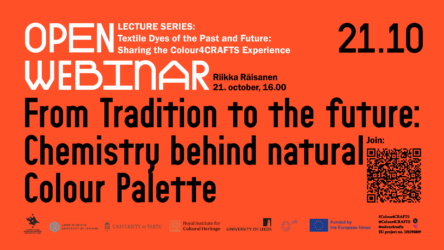
21.10 16.00
Riikka Räisanen (Professor, University of Helsinki, Colour4CRAFTS consortium leader)
“From Tradition to the future: Chemistry behind natural Colour Palette” (In English, online)
Societies are stretching towards greater sustainability and textile colouration has been in discussion as it is one of the industries which uses vast amounts of energy and water resources and pollutes environment through poor control of colouration processes. Also, the aim to pull away from fossil resources has driven research to studies of natural and bio-based solutions in materials and dyeing. Before the mid 19th century, and the revolution of colour chemistry designing synthetic dyes, natural sources offered the only colourants in use. Currently natural dyes have become more popular among designers and craft practitioners. In my lecture I will showcase some of the recent research done in the area of bio-based colourants and novel solutions how to apply them in different materials and final products. Focus is especially laid in proceedings of the EU-Horizon funded Colour4CRAFTS project and its multidisciplinary teams which include researchers from archaeology, history, textile technology and craft, chemistry, design and futures studies.
Riikka Räisanen, University of Helsinki, Professor. Riikka Räisänen is a professor in craft science and craft pedagogy in the University of Helsinki. Her background is in chemistry and natural sciences, craft studies and education. She has over twenty years of experience in research of natural colourants and textiles, and has published numerous articles and books on the topic. In 2016 she was awarded with the Silver Medal of the Society of Dyers and Colourists (UK) for the research in the field of natural colourants. She is the Colour4CRAFTS consortium leader.
–
The lecture is part of a series “Textile Dyes of the Past and Future: sharing the Colour4CRAFTS Experience” begins, initiated by the EU Horizon project Colour4CRAFTS.
The webinar series brings together EU Horizon project Colour4CRAFTS members and important guests to discuss and share their knowledge on textile dyes of the past and future. The series is brought together by the University of Tartu and Viljandi Culture Academy in collaboration with the Estonian Academy of Arts.
EU Horizon project Colour4CRAFTS combines a multidisciplinary team of experts from research institutes and R&D companies to carry out studies of bio-based textile colouration in traditional historic perspective and in combination with cutting-edge technologies of colourants biosynthesis and waterless applications techniques. Colour4CRAFTS members are the University of Helsinki, University of Lapland, University of Tartu, KIK-IRPA, University of Leeds and PILI Bio.
Open Webinar: Riikka Räisanen “Chemistry behind natural Colour Palette”
Tuesday 21 October, 2025
21.10 16.00
Riikka Räisanen (Professor, University of Helsinki, Colour4CRAFTS consortium leader)
“From Tradition to the future: Chemistry behind natural Colour Palette” (In English, online)
Societies are stretching towards greater sustainability and textile colouration has been in discussion as it is one of the industries which uses vast amounts of energy and water resources and pollutes environment through poor control of colouration processes. Also, the aim to pull away from fossil resources has driven research to studies of natural and bio-based solutions in materials and dyeing. Before the mid 19th century, and the revolution of colour chemistry designing synthetic dyes, natural sources offered the only colourants in use. Currently natural dyes have become more popular among designers and craft practitioners. In my lecture I will showcase some of the recent research done in the area of bio-based colourants and novel solutions how to apply them in different materials and final products. Focus is especially laid in proceedings of the EU-Horizon funded Colour4CRAFTS project and its multidisciplinary teams which include researchers from archaeology, history, textile technology and craft, chemistry, design and futures studies.
Riikka Räisanen, University of Helsinki, Professor. Riikka Räisänen is a professor in craft science and craft pedagogy in the University of Helsinki. Her background is in chemistry and natural sciences, craft studies and education. She has over twenty years of experience in research of natural colourants and textiles, and has published numerous articles and books on the topic. In 2016 she was awarded with the Silver Medal of the Society of Dyers and Colourists (UK) for the research in the field of natural colourants. She is the Colour4CRAFTS consortium leader.
–
The lecture is part of a series “Textile Dyes of the Past and Future: sharing the Colour4CRAFTS Experience” begins, initiated by the EU Horizon project Colour4CRAFTS.
The webinar series brings together EU Horizon project Colour4CRAFTS members and important guests to discuss and share their knowledge on textile dyes of the past and future. The series is brought together by the University of Tartu and Viljandi Culture Academy in collaboration with the Estonian Academy of Arts.
EU Horizon project Colour4CRAFTS combines a multidisciplinary team of experts from research institutes and R&D companies to carry out studies of bio-based textile colouration in traditional historic perspective and in combination with cutting-edge technologies of colourants biosynthesis and waterless applications techniques. Colour4CRAFTS members are the University of Helsinki, University of Lapland, University of Tartu, KIK-IRPA, University of Leeds and PILI Bio.
22.10.2025
Artist Talks: James Prevett and Maarit Bau
 .
. 
Artist talks with James Prevett and Maarit Bau Mustonen on October 22 at 5:45 p.m. in room A501 at EKA
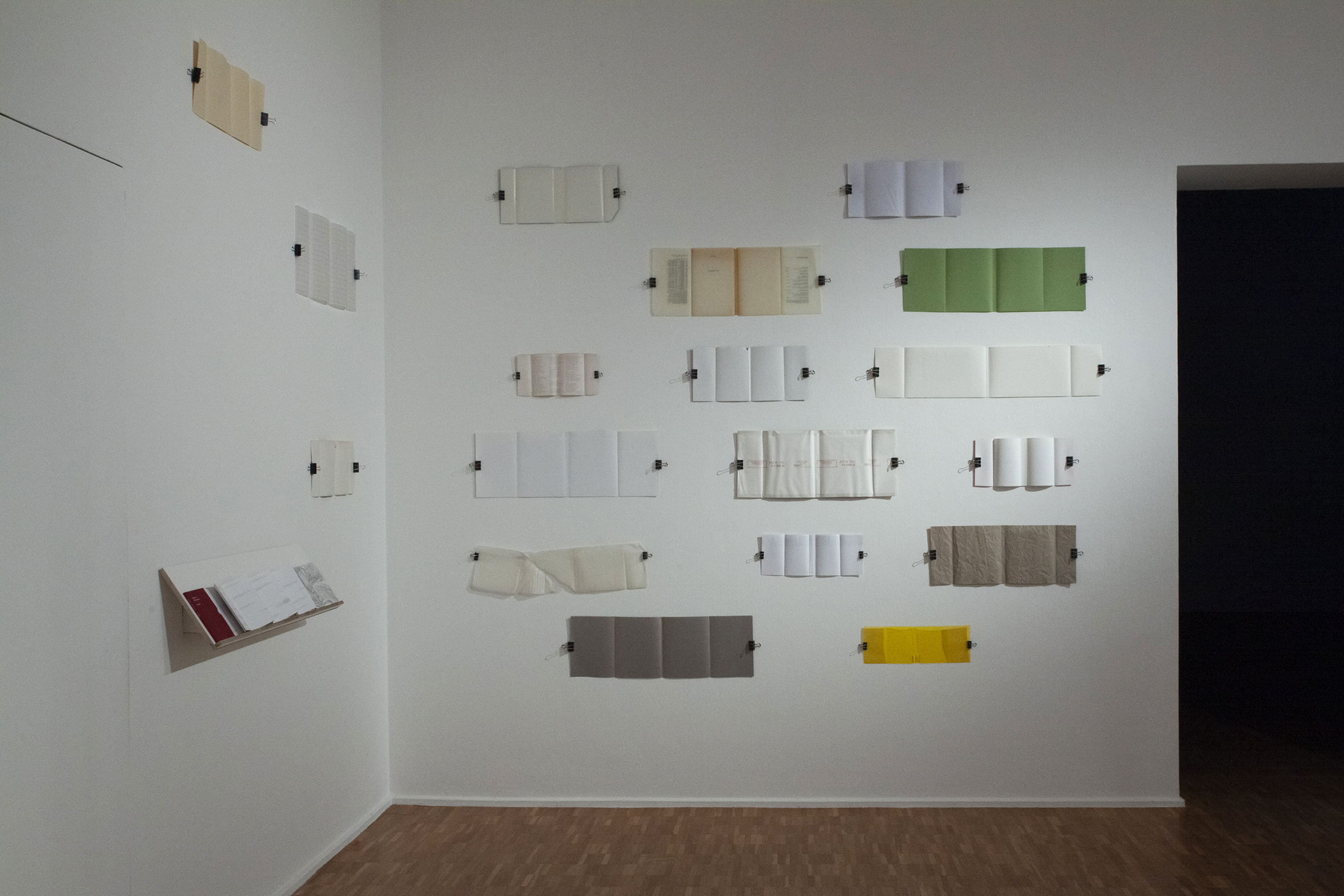
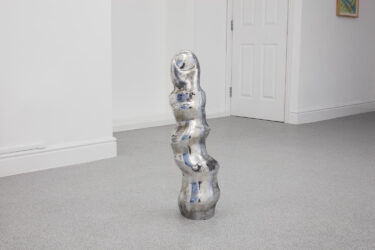
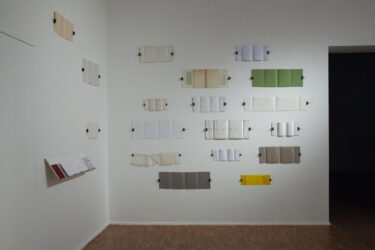
On October 22, 2025, at 5:45 p.m., artist talks with James Prevetti and Maarit Bau Mustonen will take place in room A-501 at EKA. The artists have been invited to conduct a master class for students in the EKA photography department. All interested parties are welcome to attend the talks!
James Prevett is a British artist and teacher living in Helsinki since 2013. His practice involves studio based making and social sculpture. Both explore the idea and experience of bodies, personal and/or collective, physical and/or metaphorical. He often works with other people to bring an open-ended poly-vocal approach to art making. This includes projects like the Nomadic Sculptures, Out of Office (OOO) Radio and The Organic Sound Society. His sees his teaching is a part of this process exploring practice-based and collective inquiries. He is a Lecturer in Sculpture at the Academy of Fine Arts of Uniarts Helsinki and spends his free time in radio, books and walking his dog Lulu.
Maarit Bau Mustonen is a visual artist and independent publisher based in Helsinki. Her practice encompasses text, installation, lens-based media, and performance, presented in the form of exhibitions and artist publications. With a background in literature and communication, she often explores themes of language, publishing and translation. By engaging with the materiality of text and its relation to image and body, her work enters into dialogue with poetry. Collaborations with other artists lead to multidisciplinary and polyphonic projects. She is the co-founder, together with graphic designer Arja Karhumaa, of Multipöly (2021–), a collective focused on experimental publishing.
https://maaritbaumustonen.com/
Artist Talks: James Prevett and Maarit Bau
Wednesday 22 October, 2025
.
Artist talks with James Prevett and Maarit Bau Mustonen on October 22 at 5:45 p.m. in room A501 at EKA
On October 22, 2025, at 5:45 p.m., artist talks with James Prevetti and Maarit Bau Mustonen will take place in room A-501 at EKA. The artists have been invited to conduct a master class for students in the EKA photography department. All interested parties are welcome to attend the talks!
James Prevett is a British artist and teacher living in Helsinki since 2013. His practice involves studio based making and social sculpture. Both explore the idea and experience of bodies, personal and/or collective, physical and/or metaphorical. He often works with other people to bring an open-ended poly-vocal approach to art making. This includes projects like the Nomadic Sculptures, Out of Office (OOO) Radio and The Organic Sound Society. His sees his teaching is a part of this process exploring practice-based and collective inquiries. He is a Lecturer in Sculpture at the Academy of Fine Arts of Uniarts Helsinki and spends his free time in radio, books and walking his dog Lulu.
Maarit Bau Mustonen is a visual artist and independent publisher based in Helsinki. Her practice encompasses text, installation, lens-based media, and performance, presented in the form of exhibitions and artist publications. With a background in literature and communication, she often explores themes of language, publishing and translation. By engaging with the materiality of text and its relation to image and body, her work enters into dialogue with poetry. Collaborations with other artists lead to multidisciplinary and polyphonic projects. She is the co-founder, together with graphic designer Arja Karhumaa, of Multipöly (2021–), a collective focused on experimental publishing.
https://maaritbaumustonen.com/
15.10.2025
Slideshow #6: Grey Area: Dexter Sinister
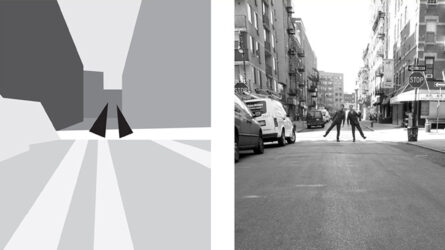
Slideshow #6: Grey Area
Dexter Sinister
Wednesday, 15 October 2025, 17:30h
A-101
About Dexter Sinister
Dexter Sinister is the compound working name of David Reinfurt and Stuart Bailey. In 2000 David formed the design studio O-R-G and Stuart co-founded the arts journal Dot Dot Dot. In 2006 they jointly established Dexter Sinister as a ‘just-in-time workshop and occasional bookstore’ on New York City’s Lower East Side. Together with Angie Keefer in 2011 they founded the publishing/archiving platform The Serving Library (www.servinglibrary.
Slideshow #6: Grey Area: Dexter Sinister
Wednesday 15 October, 2025
Slideshow #6: Grey Area
Dexter Sinister
Wednesday, 15 October 2025, 17:30h
A-101
About Dexter Sinister
Dexter Sinister is the compound working name of David Reinfurt and Stuart Bailey. In 2000 David formed the design studio O-R-G and Stuart co-founded the arts journal Dot Dot Dot. In 2006 they jointly established Dexter Sinister as a ‘just-in-time workshop and occasional bookstore’ on New York City’s Lower East Side. Together with Angie Keefer in 2011 they founded the publishing/archiving platform The Serving Library (www.servinglibrary.
14.10.2025
A *Co-* Program for Graphic Design: David Reinfurt
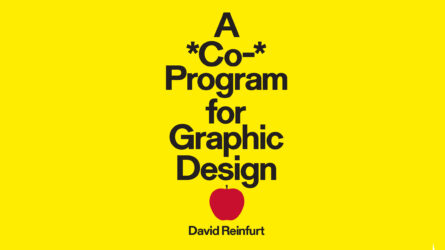
A *Co-* Program for Graphic Design
David Reinfurt
Tuesday, 14 October 2025, 17:30h
A-501
About David Reinfurt
David Reinfurt is 1/2 of Dexter Sinister, 1/4 of The Serving Library, and 1/1 of O-R-G inc. Dexter Sinister began as a workshop on Manhattan’s Lower East Side and branched into projects with and for contemporary art institutions. The Serving Library publishes a journal, maintains an artwork collection, and circulates PDFs online. O-R-G is a small software company. Reinfurt was a 2010 USA Rockefeller Fellow and 2017 Rome Prize Fellow in Design. He is Professor of the Practice in Visual Arts at Princeton University.
This event is presented by the MA in Graphic Design at the Estonian Academy of Arts
A *Co-* Program for Graphic Design: David Reinfurt
Tuesday 14 October, 2025
A *Co-* Program for Graphic Design
David Reinfurt
Tuesday, 14 October 2025, 17:30h
A-501
About David Reinfurt
David Reinfurt is 1/2 of Dexter Sinister, 1/4 of The Serving Library, and 1/1 of O-R-G inc. Dexter Sinister began as a workshop on Manhattan’s Lower East Side and branched into projects with and for contemporary art institutions. The Serving Library publishes a journal, maintains an artwork collection, and circulates PDFs online. O-R-G is a small software company. Reinfurt was a 2010 USA Rockefeller Fellow and 2017 Rome Prize Fellow in Design. He is Professor of the Practice in Visual Arts at Princeton University.
This event is presented by the MA in Graphic Design at the Estonian Academy of Arts
14.10.2025
Open Lecture: “The Dye-World of the Past: Estonian Archaeological and Historical Textiles”
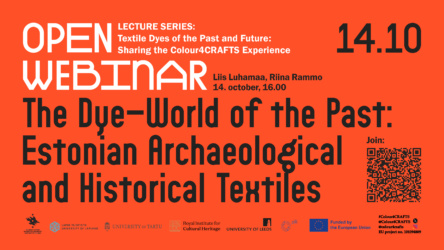
A new lecture series “Textile Dyes of the Past and Future: sharing the Colour4CRAFTS Experience” begins, initiated by the EU Horizon project Colour4CRAFTS.
First Webinar on October 14th, 16:00
Riina Rammo (Associate professor of Archaeology, Tartu University, Colour4CRAFTS) Liis Luhamaa (Textile specialist, Tartu University, Colour4CRAFTS)
“The Dye-World of the Past: Estonian Archaeological and Historical Textiles” (online)
In the first part of the lecture, Riina Rammo provides an overview of Estonian archaeological textile finds and the dyes used in them. The discussion begins with the Viking Age (800–1050), as the earliest finds date from this period, and continues up to the 17th century.
In the second part, Liis Luhamaa introduces the world of natural dyes and textile dyeing techniques based on written records and historical textiles from the 18th to 20th centuries. The talk will cover both local dyes and those that arrived from distant lands and found use here.
Liis Luhamaa, University of Tartu, Textile Specialist. Liis Luhamaa is a craft specialist and practical dyer with a background in biology and environmental technology. In addition, she holds a Master’s degree from the Department of Native Crafts at the Viljandi Culture Academy of the University of Tartu. She is also engaged with the topic of Estonian traditional costumes and conducts research on historical clothing. She is member of the EU Horizon project Colour4CRAFTS team.
Riina Rammo, University of Tartu, Associate Professor. Riina Rammo is an archaeologist working as an Associate Professor in the Department of Archaeology at the University of Tartu. Her primary research interest lies in archaeological textiles, with a particular focus on technology, clothing, and issues related to preservation. She is the leader of Colour4CRAFTS University of Tartu team.
The webinar series brings together EU Horizon project Colour4CRAFTS members and important guests to discuss and share their knowledge on textile dyes of the past and future. The series is brought together by the University of Tartu and Viljandi Culture Academy in collaboration with the Estonian Academy of Arts.
EU Horizon project Colour4CRAFTS combines a multidisciplinary team of experts from research institutes and R&D companies to carry out studies of bio-based textile colouration in traditional historic perspective and in combination with cutting-edge technologies of colourants biosynthesis and waterless applications techniques. Colour4CRAFTS members are the University of Helsinki, University of Lapland, University of Tartu, KIK-IRPA, University of Leeds and PILI Bio.
Open Lecture: “The Dye-World of the Past: Estonian Archaeological and Historical Textiles”
Tuesday 14 October, 2025
A new lecture series “Textile Dyes of the Past and Future: sharing the Colour4CRAFTS Experience” begins, initiated by the EU Horizon project Colour4CRAFTS.
First Webinar on October 14th, 16:00
Riina Rammo (Associate professor of Archaeology, Tartu University, Colour4CRAFTS) Liis Luhamaa (Textile specialist, Tartu University, Colour4CRAFTS)
“The Dye-World of the Past: Estonian Archaeological and Historical Textiles” (online)
In the first part of the lecture, Riina Rammo provides an overview of Estonian archaeological textile finds and the dyes used in them. The discussion begins with the Viking Age (800–1050), as the earliest finds date from this period, and continues up to the 17th century.
In the second part, Liis Luhamaa introduces the world of natural dyes and textile dyeing techniques based on written records and historical textiles from the 18th to 20th centuries. The talk will cover both local dyes and those that arrived from distant lands and found use here.
Liis Luhamaa, University of Tartu, Textile Specialist. Liis Luhamaa is a craft specialist and practical dyer with a background in biology and environmental technology. In addition, she holds a Master’s degree from the Department of Native Crafts at the Viljandi Culture Academy of the University of Tartu. She is also engaged with the topic of Estonian traditional costumes and conducts research on historical clothing. She is member of the EU Horizon project Colour4CRAFTS team.
Riina Rammo, University of Tartu, Associate Professor. Riina Rammo is an archaeologist working as an Associate Professor in the Department of Archaeology at the University of Tartu. Her primary research interest lies in archaeological textiles, with a particular focus on technology, clothing, and issues related to preservation. She is the leader of Colour4CRAFTS University of Tartu team.
The webinar series brings together EU Horizon project Colour4CRAFTS members and important guests to discuss and share their knowledge on textile dyes of the past and future. The series is brought together by the University of Tartu and Viljandi Culture Academy in collaboration with the Estonian Academy of Arts.
EU Horizon project Colour4CRAFTS combines a multidisciplinary team of experts from research institutes and R&D companies to carry out studies of bio-based textile colouration in traditional historic perspective and in combination with cutting-edge technologies of colourants biosynthesis and waterless applications techniques. Colour4CRAFTS members are the University of Helsinki, University of Lapland, University of Tartu, KIK-IRPA, University of Leeds and PILI Bio.
14.10.2025
Open Lecture: Saúl Baeza “What if We Kissed under the Watchful Eye of the Surveillance State?”
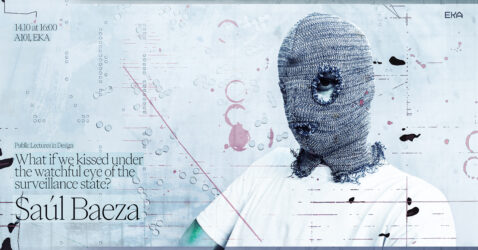
On October 14 at 16:00 in room A101, Saúl Baeza will give a public lecture titled “What if we kissed under the watchful eye of the surveillance state?”. The lecture is part of the Faculty of Design’s public lecture series “Public Lectures in Design: Adjusting Perspectives,” curated by Stella Runnel and Taavi Hallimäe.
The lecture will explore the creative intersections of algorithmic resistance and material cultures through two projects: DOES and VISIONS BY. Drawing on the work of DOES, Baeza will share his motivations for subverting biometric technologies, addressing matters such as agency, resistance, (dis)empowerment, identity, participation, discipline or desire, tailoring algorithms to suit my own demands, repurposing them for uses beyond their original intentions. Building on VISIONS BY Magazine, he will explore the social impact and perception of materials and their importance in activating and dynamizing cultures and socioeconomic systems through a critical and speculative research lens.
The public lectures are open to students, faculty, as well as anyone else interested in design!
Saúl Baeza is DOES and MAYBE Creative Director and VISIONS BY Magazine Founder and Editor-in-chief. While lecturing at Elisava Barcelona University of Design and Engineering he also researches functional and digital identities with the “Making With…” Research Group (TU Eindhoven Research) and “Futures Now” Research Group (Elisava Research). Saúl is the Co-Director of the Master in Design For Emergent Futures (MDEF), organised by the Institute for Advanced Architecture of Catalonia (IAAC) and Elisava Barcelona School of Design and Engineering, in collaboration with the Fab Academy. Saúl has been visiting professor and lecturer at international universities, educational institutions and cultural venues such as Harvard GSD, Central Saint Martins and London College of Communication (UAL), Institute for advanced Architecture of Catalonia (IAAC), RMIT University Melbourne, Rhode Island School of Design, Pascual Bravo University in Medellín, Sónar+D, Victoria&Albert Museum, BASE, CCCB and DHUB, among others.
Open Lecture: Saúl Baeza “What if We Kissed under the Watchful Eye of the Surveillance State?”
Tuesday 14 October, 2025
On October 14 at 16:00 in room A101, Saúl Baeza will give a public lecture titled “What if we kissed under the watchful eye of the surveillance state?”. The lecture is part of the Faculty of Design’s public lecture series “Public Lectures in Design: Adjusting Perspectives,” curated by Stella Runnel and Taavi Hallimäe.
The lecture will explore the creative intersections of algorithmic resistance and material cultures through two projects: DOES and VISIONS BY. Drawing on the work of DOES, Baeza will share his motivations for subverting biometric technologies, addressing matters such as agency, resistance, (dis)empowerment, identity, participation, discipline or desire, tailoring algorithms to suit my own demands, repurposing them for uses beyond their original intentions. Building on VISIONS BY Magazine, he will explore the social impact and perception of materials and their importance in activating and dynamizing cultures and socioeconomic systems through a critical and speculative research lens.
The public lectures are open to students, faculty, as well as anyone else interested in design!
Saúl Baeza is DOES and MAYBE Creative Director and VISIONS BY Magazine Founder and Editor-in-chief. While lecturing at Elisava Barcelona University of Design and Engineering he also researches functional and digital identities with the “Making With…” Research Group (TU Eindhoven Research) and “Futures Now” Research Group (Elisava Research). Saúl is the Co-Director of the Master in Design For Emergent Futures (MDEF), organised by the Institute for Advanced Architecture of Catalonia (IAAC) and Elisava Barcelona School of Design and Engineering, in collaboration with the Fab Academy. Saúl has been visiting professor and lecturer at international universities, educational institutions and cultural venues such as Harvard GSD, Central Saint Martins and London College of Communication (UAL), Institute for advanced Architecture of Catalonia (IAAC), RMIT University Melbourne, Rhode Island School of Design, Pascual Bravo University in Medellín, Sónar+D, Victoria&Albert Museum, BASE, CCCB and DHUB, among others.
30.09.2025
Open Lecture: Patricia Moore “The More Things Change”
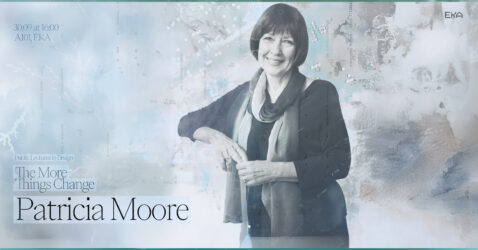
On September 30 at 16:00 in room A101, Patricia Moore will give a public lecture titled “The More Things Change”. The lecture is part of the Faculty of Design’s public lecture series “Public Lectures in Design: Adjusting Perspectives,” curated by Stella Runnel and Taavi Hallimäe.
Patricia Moore is an internationally renowned designer and gerontologist, serving as a leading authority on consumer lifespan behaviors and requirements. For a period of four years (1979–1982), in an exceptional and daring experiment, Moore traveled throughout the United States and Canada disguised as women more than eighty years of age. With her body altered to simulate the normal sensory changes associated with aging, she was able to respond to people, products, and environments as an elder.
The public lecture is open to students, faculty, as well as anyone else interested in design!
Patricia Moore holds undergraduate degrees in Industrial and Communication Design from the Rochester Institute of Technology (Awarded “Alumna of the Year” 1984), completion of Advanced Studies in Biomechanics at NY University’s Medical School; graduate degrees in Psychology and Gerontology, Columbia University.
Moore’s broad range of experience includes Communication Design, Design Research, Environmental Design, Package Design, Product Design, Service Design, Transportation Design, UX Design, Market Analysis, and Product Positioning. Clients include: AT&T, Baxter Healthcare, BOEING, Canadair, Citibank, Colgate Palmolive, FORD Motor Company, General Electric, Hill-Rom, Herman Miller Healthcare, Hong Kong Mass Transit, Honolulu Light Rail, Japan Mass Transit, Johnson & Johnson, SC Johnson Wax Company, Kimberly Clark Corporation, Kaiser Permanente, Kraft General Foods, LG Electronics, LOrad, Lowe’s, NASA, NEC, Norelco NA, Merck, Sharp and Dohme, Marriott, Maytag, Monsanto, OXO, Pfizer, Playtex, Procter & Gamble, Schering-Plough, Searle Labs, Seoul Design City Project, Sky Train Phoenix AZ, Sunbeam, 3M, Toyota Motor Corp, Valley Metro Rail, Walgreen’s, and Whirlpool.
Since 1990, Moore has designed more than 300 Physical Medicine & Rehabilitation Environments for healthcare facilities throughout North America, Europe, China and Japan. A frequent international lecturer and media guest, Moore is the author of numerous articles and the books DISGUISED: A True Story, Ageing, Ingenuity & Design [2015], and OUCH! Why Bad Design Hurts [in works].
Open Lecture: Patricia Moore “The More Things Change”
Tuesday 30 September, 2025
On September 30 at 16:00 in room A101, Patricia Moore will give a public lecture titled “The More Things Change”. The lecture is part of the Faculty of Design’s public lecture series “Public Lectures in Design: Adjusting Perspectives,” curated by Stella Runnel and Taavi Hallimäe.
Patricia Moore is an internationally renowned designer and gerontologist, serving as a leading authority on consumer lifespan behaviors and requirements. For a period of four years (1979–1982), in an exceptional and daring experiment, Moore traveled throughout the United States and Canada disguised as women more than eighty years of age. With her body altered to simulate the normal sensory changes associated with aging, she was able to respond to people, products, and environments as an elder.
The public lecture is open to students, faculty, as well as anyone else interested in design!
Patricia Moore holds undergraduate degrees in Industrial and Communication Design from the Rochester Institute of Technology (Awarded “Alumna of the Year” 1984), completion of Advanced Studies in Biomechanics at NY University’s Medical School; graduate degrees in Psychology and Gerontology, Columbia University.
Moore’s broad range of experience includes Communication Design, Design Research, Environmental Design, Package Design, Product Design, Service Design, Transportation Design, UX Design, Market Analysis, and Product Positioning. Clients include: AT&T, Baxter Healthcare, BOEING, Canadair, Citibank, Colgate Palmolive, FORD Motor Company, General Electric, Hill-Rom, Herman Miller Healthcare, Hong Kong Mass Transit, Honolulu Light Rail, Japan Mass Transit, Johnson & Johnson, SC Johnson Wax Company, Kimberly Clark Corporation, Kaiser Permanente, Kraft General Foods, LG Electronics, LOrad, Lowe’s, NASA, NEC, Norelco NA, Merck, Sharp and Dohme, Marriott, Maytag, Monsanto, OXO, Pfizer, Playtex, Procter & Gamble, Schering-Plough, Searle Labs, Seoul Design City Project, Sky Train Phoenix AZ, Sunbeam, 3M, Toyota Motor Corp, Valley Metro Rail, Walgreen’s, and Whirlpool.
Since 1990, Moore has designed more than 300 Physical Medicine & Rehabilitation Environments for healthcare facilities throughout North America, Europe, China and Japan. A frequent international lecturer and media guest, Moore is the author of numerous articles and the books DISGUISED: A True Story, Ageing, Ingenuity & Design [2015], and OUCH! Why Bad Design Hurts [in works].
21.10.2025
KVI Open Lecture: “Decolonial Museology Re-centered: Thinking Theory and Practice through East-Central Europe”
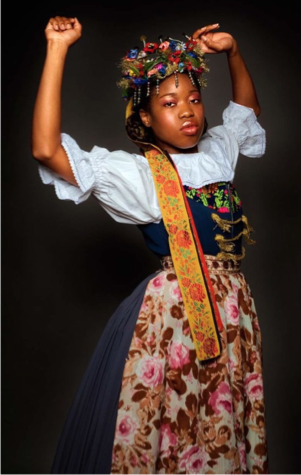
Decolonization has become an important keyword and marker of change in contemporary museum landscape. But how could we understand and embed it in the Estonian context?
On Tuesday, October 21st at 6PM Estonian Academy of Arts will host a public event that will focus on the meanings of decolonization in museums by bringing together local, regional and international perspectives and by juxtaposing recent developments in the Estonian and Polish museum fields.
The questions that will serve as the starting point for the event are: How has decolonization been conceptualized in relation to Eastern European museums? What are positive examples and chosen approaches in recent exhibition practices? How do the perspectives of museum staff, audience and researchers differ from each other?
The event will start with a short lecture by Erica Lehrer, it will continue with responses by Joanna Wawrzyniak and Mariann Raisma and a discussion with the audience on the meanings of the decolonial approach in Estonian and Eastern European museum contexts. Moderated by Margaret Tali.
Erica Lehrer is a sociocultural anthropologist, historian, and curator. She is a Professor in the History Department and held the Canada Research Chair in Museum and Heritage Studies (2007-2017) at Concordia University, Montreal,
where she is also Founding Director of the Curating and Public Scholarship Lab (CaPSL). She is the author of Jewish Poland Revisited: Heritage Tourism in Unquiet Places (2013); and co-editor of Terribly Close: Polish Vernacular Artists Face the Holocaust (2023); My Museum, A Museum About Me (2023); Curatorial Dreams: Critics Imagine Exhibitions (2016); Jewish Space in Contemporary Poland (2015); and Curating Difficult Knowledge: Violent Pasts in Public Places (2011), among others, as well as numerous articles. She is Principal Investigator on the international team project Thinking Through the Museum: A Partnership Approach to Curating Difficult Knowledge in Public (2021-2028).
Joanna Wawrzyniak is a university professor of sociology and the founding director of the Center for Research on Social Memory at the University of Warsaw. She has a long-standing experience in oral history and museum research. Her current projects relate to the memories of socialism, neoliberal transformation, deindustrialization, and decolonization of heritage. She is the past President of Memory Studies Association (2024-2025) and vice-Chair of the COST Action Slow Memory: Transformative Practices for Times of Uneven and Accelerating Change. Her most recent books include co-edited Remembering the Neoliberal Turn: Economic Change and Collective Memory in Eastern Europe after 1989 (Routledge 2023), Regions of Memory: Transnational Formations (Palgrave 2022) and co-authored Cuts: Oral History of Transformation (in Polish, Krytyka Polityczna 2020). She co-edited special issues for, among others, Memory Studies, Contemporary European History, and East European Politics and Societies.
Mariann Raisma is the director of the University of Tartu Museum. She has written articles about the history of Estonian museums but also about the future; she has also been a lecturer of museology and curator of exhibitions. She has defended her doctoral thesis on the subject “The Power of the Museum. Shaping Collective Memory in Estonia during the Turning Points of the 20th Century”
Margaret Tali is assistant professor in Tallinn university, whose research focuses on the history of Estonian museums and practices of collecting. She is the author of “Absence and Difficult Knowledge in Contemporary Art Museums” (2017) and co-curator of the project “Communicating Difficult Pasts” (2019-2024).
Talk is held in collaboration with the Embassy of Canada and the Estonian Doctoral School of Humanities and Arts (Project “Cooperation between universities to promote doctoral studies” (2021-2027.4.04.24-0003) is co-funded by the European Union). Co-funded by Erasmus+.


KVI Open Lecture: “Decolonial Museology Re-centered: Thinking Theory and Practice through East-Central Europe”
Tuesday 21 October, 2025
Decolonization has become an important keyword and marker of change in contemporary museum landscape. But how could we understand and embed it in the Estonian context?
On Tuesday, October 21st at 6PM Estonian Academy of Arts will host a public event that will focus on the meanings of decolonization in museums by bringing together local, regional and international perspectives and by juxtaposing recent developments in the Estonian and Polish museum fields.
The questions that will serve as the starting point for the event are: How has decolonization been conceptualized in relation to Eastern European museums? What are positive examples and chosen approaches in recent exhibition practices? How do the perspectives of museum staff, audience and researchers differ from each other?
The event will start with a short lecture by Erica Lehrer, it will continue with responses by Joanna Wawrzyniak and Mariann Raisma and a discussion with the audience on the meanings of the decolonial approach in Estonian and Eastern European museum contexts. Moderated by Margaret Tali.
Erica Lehrer is a sociocultural anthropologist, historian, and curator. She is a Professor in the History Department and held the Canada Research Chair in Museum and Heritage Studies (2007-2017) at Concordia University, Montreal,
where she is also Founding Director of the Curating and Public Scholarship Lab (CaPSL). She is the author of Jewish Poland Revisited: Heritage Tourism in Unquiet Places (2013); and co-editor of Terribly Close: Polish Vernacular Artists Face the Holocaust (2023); My Museum, A Museum About Me (2023); Curatorial Dreams: Critics Imagine Exhibitions (2016); Jewish Space in Contemporary Poland (2015); and Curating Difficult Knowledge: Violent Pasts in Public Places (2011), among others, as well as numerous articles. She is Principal Investigator on the international team project Thinking Through the Museum: A Partnership Approach to Curating Difficult Knowledge in Public (2021-2028).
Joanna Wawrzyniak is a university professor of sociology and the founding director of the Center for Research on Social Memory at the University of Warsaw. She has a long-standing experience in oral history and museum research. Her current projects relate to the memories of socialism, neoliberal transformation, deindustrialization, and decolonization of heritage. She is the past President of Memory Studies Association (2024-2025) and vice-Chair of the COST Action Slow Memory: Transformative Practices for Times of Uneven and Accelerating Change. Her most recent books include co-edited Remembering the Neoliberal Turn: Economic Change and Collective Memory in Eastern Europe after 1989 (Routledge 2023), Regions of Memory: Transnational Formations (Palgrave 2022) and co-authored Cuts: Oral History of Transformation (in Polish, Krytyka Polityczna 2020). She co-edited special issues for, among others, Memory Studies, Contemporary European History, and East European Politics and Societies.
Mariann Raisma is the director of the University of Tartu Museum. She has written articles about the history of Estonian museums but also about the future; she has also been a lecturer of museology and curator of exhibitions. She has defended her doctoral thesis on the subject “The Power of the Museum. Shaping Collective Memory in Estonia during the Turning Points of the 20th Century”
Margaret Tali is assistant professor in Tallinn university, whose research focuses on the history of Estonian museums and practices of collecting. She is the author of “Absence and Difficult Knowledge in Contemporary Art Museums” (2017) and co-curator of the project “Communicating Difficult Pasts” (2019-2024).
Talk is held in collaboration with the Embassy of Canada and the Estonian Doctoral School of Humanities and Arts (Project “Cooperation between universities to promote doctoral studies” (2021-2027.4.04.24-0003) is co-funded by the European Union). Co-funded by Erasmus+.
16.10.2025
KVI + ARH open lecture: Leslie Kern “Towards a Feminist City”
How have cities failed women, and what can we do to make them work better for everyone? This talk explores the history and impact of male-centered urban design practices in areas such as mobility, care work, and safety. Using principles inspired by feminist theory and feminist urban planning practices, we will consider a range of ways that cities around the world are implementing more just, equitable, and sustainable approaches to city building.
Leslie Kern, PhD, is the author of three books about cities, including Gentrification Is Inevitable And Other Lies and Feminist City: Claiming Space in a Man-Made World. Her latest book, with Dr. Roberta Hawkins, is Higher Expectations: How to Survive Academia, Make it Better for Others, and Transform the University. She was an associate professor of geography and environment and women’s and gender studies at Mount Allison University from 2009-2024. Leslie’s writing has appeared in The Guardian, Vox, Bloomberg CityLab, and Refinery29. She is also an academic career coach, helping academics find meaning and joy in their work.
2025/2026 open lecture series in held in collaboration of the Faculty of Architecture and the Institute of Art History and Visual Culture.
The lecture series is supported by:
KVI + ARH open lecture: Leslie Kern “Towards a Feminist City”
Thursday 16 October, 2025
How have cities failed women, and what can we do to make them work better for everyone? This talk explores the history and impact of male-centered urban design practices in areas such as mobility, care work, and safety. Using principles inspired by feminist theory and feminist urban planning practices, we will consider a range of ways that cities around the world are implementing more just, equitable, and sustainable approaches to city building.
Leslie Kern, PhD, is the author of three books about cities, including Gentrification Is Inevitable And Other Lies and Feminist City: Claiming Space in a Man-Made World. Her latest book, with Dr. Roberta Hawkins, is Higher Expectations: How to Survive Academia, Make it Better for Others, and Transform the University. She was an associate professor of geography and environment and women’s and gender studies at Mount Allison University from 2009-2024. Leslie’s writing has appeared in The Guardian, Vox, Bloomberg CityLab, and Refinery29. She is also an academic career coach, helping academics find meaning and joy in their work.
2025/2026 open lecture series in held in collaboration of the Faculty of Architecture and the Institute of Art History and Visual Culture.
The lecture series is supported by:
17.09.2025
Open Design Lecture: Leyla Acaroglu “Design as Tool for Systems Intervention”
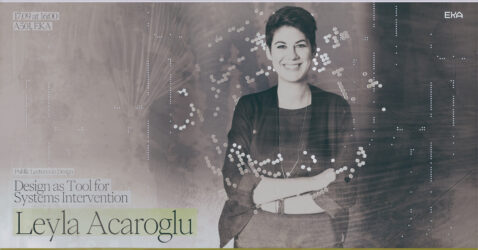
On September 17 at 16:00 in room A501, Leyla Acaroglu will give a public lecture titled “Design as Tool for Systems Intervention”. The lecture is part of the Faculty of Design’s public lecture series “Public Lectures in Design: Adjusting Perspectives,” curated by Stella Runnel and Taavi Hallimäe.
Designer, sociologist, and educational entrepreneur Leyla Acaroglu brings a wealth of creative flair to sustainability and the circular economy. As a provocateur in these fields, she invites audiences to rethink the challenges we face. This public lecture highlights how Acaroglu has built a career by leveraging her design practice as a powerful tool for change.
The public lectures are open to students, faculty, as well as anyone else interested in design!
Dr. Leyla Acaroglu is an internationally respected expert in sustainability and the circular economy, an educational entrepreneur and an award-winning creative change-maker. As a designer and sociologist, she weaves systems thinking, sustainability sciences, and creative approaches to develop global interventions in education, communication, business, and design. For her work in advancing science and innovation in sustainability, she was named Champion of the Earth by the United Nations, a Change-Maker by LinkedIn, and is a mainstage TED speaker who leads presentations with leaders around the world on activating positive change for a sustainable, circular and regenerative future. As an educational entrepreneur, she founded The UnSchool, an experimental knowledge lab for adults, Circular Futures, a circular economy sustainability training platform and developed the Disruptive Design Method. Leyla also created the Circular Classroom for Finland and the Anatomy of Action in collaboration with the UNEP.
Open Design Lecture: Leyla Acaroglu “Design as Tool for Systems Intervention”
Wednesday 17 September, 2025
On September 17 at 16:00 in room A501, Leyla Acaroglu will give a public lecture titled “Design as Tool for Systems Intervention”. The lecture is part of the Faculty of Design’s public lecture series “Public Lectures in Design: Adjusting Perspectives,” curated by Stella Runnel and Taavi Hallimäe.
Designer, sociologist, and educational entrepreneur Leyla Acaroglu brings a wealth of creative flair to sustainability and the circular economy. As a provocateur in these fields, she invites audiences to rethink the challenges we face. This public lecture highlights how Acaroglu has built a career by leveraging her design practice as a powerful tool for change.
The public lectures are open to students, faculty, as well as anyone else interested in design!
Dr. Leyla Acaroglu is an internationally respected expert in sustainability and the circular economy, an educational entrepreneur and an award-winning creative change-maker. As a designer and sociologist, she weaves systems thinking, sustainability sciences, and creative approaches to develop global interventions in education, communication, business, and design. For her work in advancing science and innovation in sustainability, she was named Champion of the Earth by the United Nations, a Change-Maker by LinkedIn, and is a mainstage TED speaker who leads presentations with leaders around the world on activating positive change for a sustainable, circular and regenerative future. As an educational entrepreneur, she founded The UnSchool, an experimental knowledge lab for adults, Circular Futures, a circular economy sustainability training platform and developed the Disruptive Design Method. Leyla also created the Circular Classroom for Finland and the Anatomy of Action in collaboration with the UNEP.