
Academic Affairs OfficeAccessory DesignAnimationArchitecture and Urban DesignArt EducationCenter for Flat TechnologiesCeramicsCultural Heritage and ConservationDepartmentsDesign and Technology FuturesDoctoral SchoolDrawingFacilities and WorkshopsFaculty of ArchitectureFaculty of Art and CultureFaculty of DesignFaculty of Fine ArtsFashion DesignFinancial DepartmentGalleryGlass ArtGraphic ArtGraphic DesignInstallation and SculptureInstitute of Art History and Visual CultureInternational OfficeIT OfficeJewellery and BlacksmithingLandscape ArchitectureLibraryLinnaehitus @enMaking SpaceNew MediaOffice of the RectorateOpen AcademyPaintingPerforming ArtsPhotographyProduct DesignRectorateResearch and Development OfficeScenographySupport UnitsTextile DesignUncategorizedUrban PlanningUrban Studies
Category: Narva Art Residency
09.11.2023
NART Open Lecture: Sasha Rotts and Ola Lewczyk
Narva Art Residency
In the fall of 2023, international artists from NART will be giving three lectures at the Estonian Academy of Arts, and the second event in this series is coming soon. The artists will talk about what everyday life is like in an art residency and present their work. The lecture will take place on Thursday, November 9th at 17:45 in room A-101. The event will be in English and is free of charge.
The November lecture will be delivered by Polish ceramicist Ola Lewczyk and Helsinki-based textile artist Sasha Rotts. During her art residency, Ola plans to explore the memory of Neolithic-era Narva ceramics and build a temporary ceramics kiln. Sasha, who was at the residency for the first time in May 2022, co-created a pop-up exhibition titled “Solid Plot” at the Kreenholm factory this summer, in collaboration with Hilda Karha.
Posted by Maarja Pabut — Permalink
NART Open Lecture: Sasha Rotts and Ola Lewczyk
Thursday 09 November, 2023
Narva Art Residency
In the fall of 2023, international artists from NART will be giving three lectures at the Estonian Academy of Arts, and the second event in this series is coming soon. The artists will talk about what everyday life is like in an art residency and present their work. The lecture will take place on Thursday, November 9th at 17:45 in room A-101. The event will be in English and is free of charge.
The November lecture will be delivered by Polish ceramicist Ola Lewczyk and Helsinki-based textile artist Sasha Rotts. During her art residency, Ola plans to explore the memory of Neolithic-era Narva ceramics and build a temporary ceramics kiln. Sasha, who was at the residency for the first time in May 2022, co-created a pop-up exhibition titled “Solid Plot” at the Kreenholm factory this summer, in collaboration with Hilda Karha.
Posted by Maarja Pabut — Permalink
21.09.2023
NART Open Lecture: Motohara & Kabo and Wardega & Zeckel
Narva Art Residency
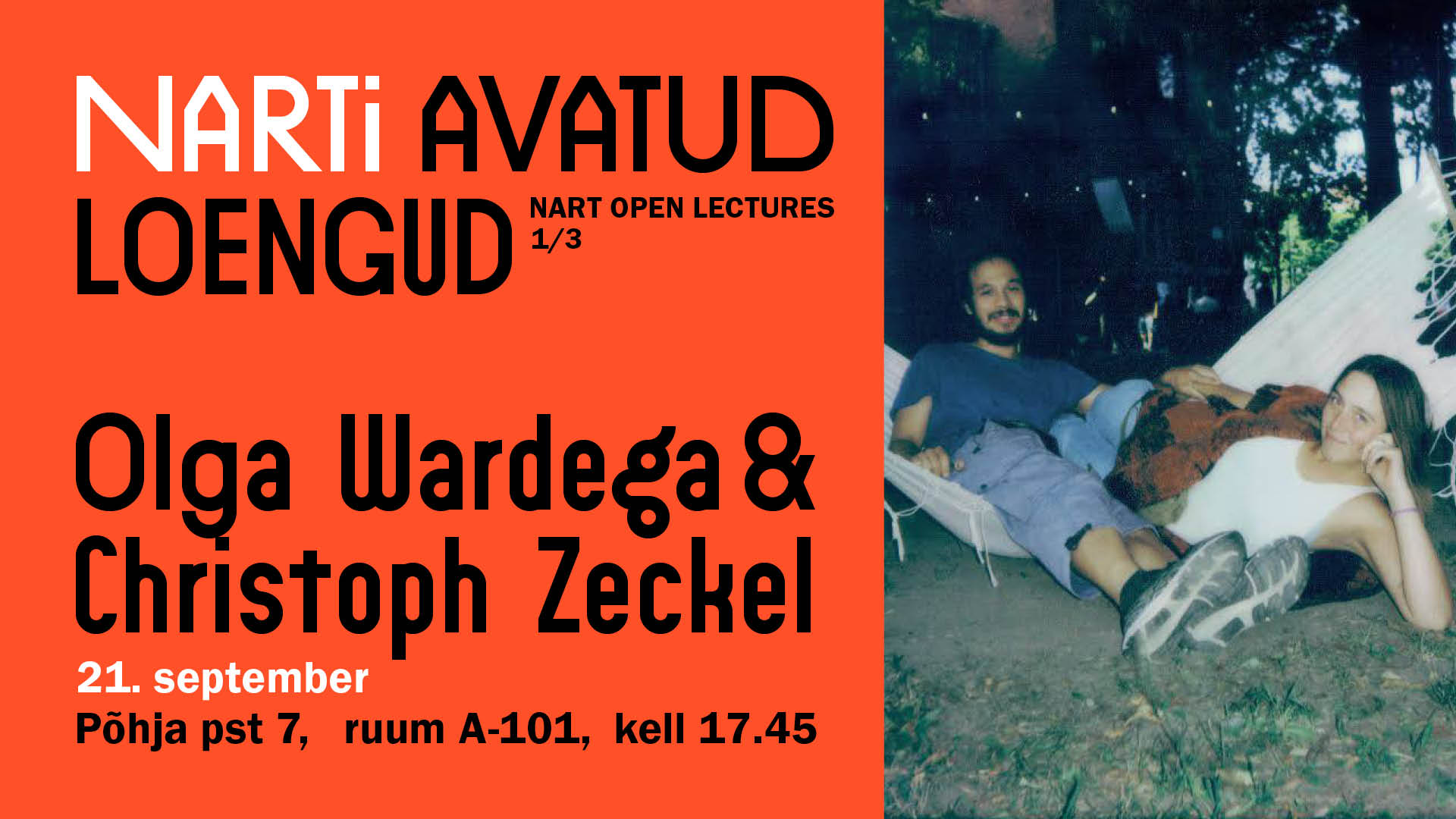
21 September at 17.45 (room A-101).
The first lecture will be given by two artists’ duos.
During their residency, Japanese duo Reico Motohara and Kabo invite people to cook with them to get to know the participants better and learn about their stories.
Olga Wardega and Christoph Zeckel created an audiovisual installatsion at Kreenholm factory for the Station Narva festival. The artists explored what meaning this place has in the memories of Narva people and what happens when nature takes over.
–
In autumn 2023, international artists from the Narva Art Residency will give three lectures at the Estonian Academy of Arts.
They will talk about the practicalities of being a professional artist, what the daily life of an art residency is like and how to get involved in the opportunities offered to artists. Of course, they will also introduce their own creative work.
Lectures take place on three Thursdays at 17.45. They are free of charge and open to all!
The lectures will be held in English.
Posted by Andres Lõo — Permalink
NART Open Lecture: Motohara & Kabo and Wardega & Zeckel
Thursday 21 September, 2023
Narva Art Residency
21 September at 17.45 (room A-101).
The first lecture will be given by two artists’ duos.
During their residency, Japanese duo Reico Motohara and Kabo invite people to cook with them to get to know the participants better and learn about their stories.
Olga Wardega and Christoph Zeckel created an audiovisual installatsion at Kreenholm factory for the Station Narva festival. The artists explored what meaning this place has in the memories of Narva people and what happens when nature takes over.
–
In autumn 2023, international artists from the Narva Art Residency will give three lectures at the Estonian Academy of Arts.
They will talk about the practicalities of being a professional artist, what the daily life of an art residency is like and how to get involved in the opportunities offered to artists. Of course, they will also introduce their own creative work.
Lectures take place on three Thursdays at 17.45. They are free of charge and open to all!
The lectures will be held in English.
Posted by Andres Lõo — Permalink
08.09.2017 — 08.10.2017
London-based Estonian artist Maria Kapajeva’s largest solo exhibition thus far, entitled The Dream is Wonderful, Yet Unclear, is opening at EAA Narva Art Residency.
Narva Art Residency
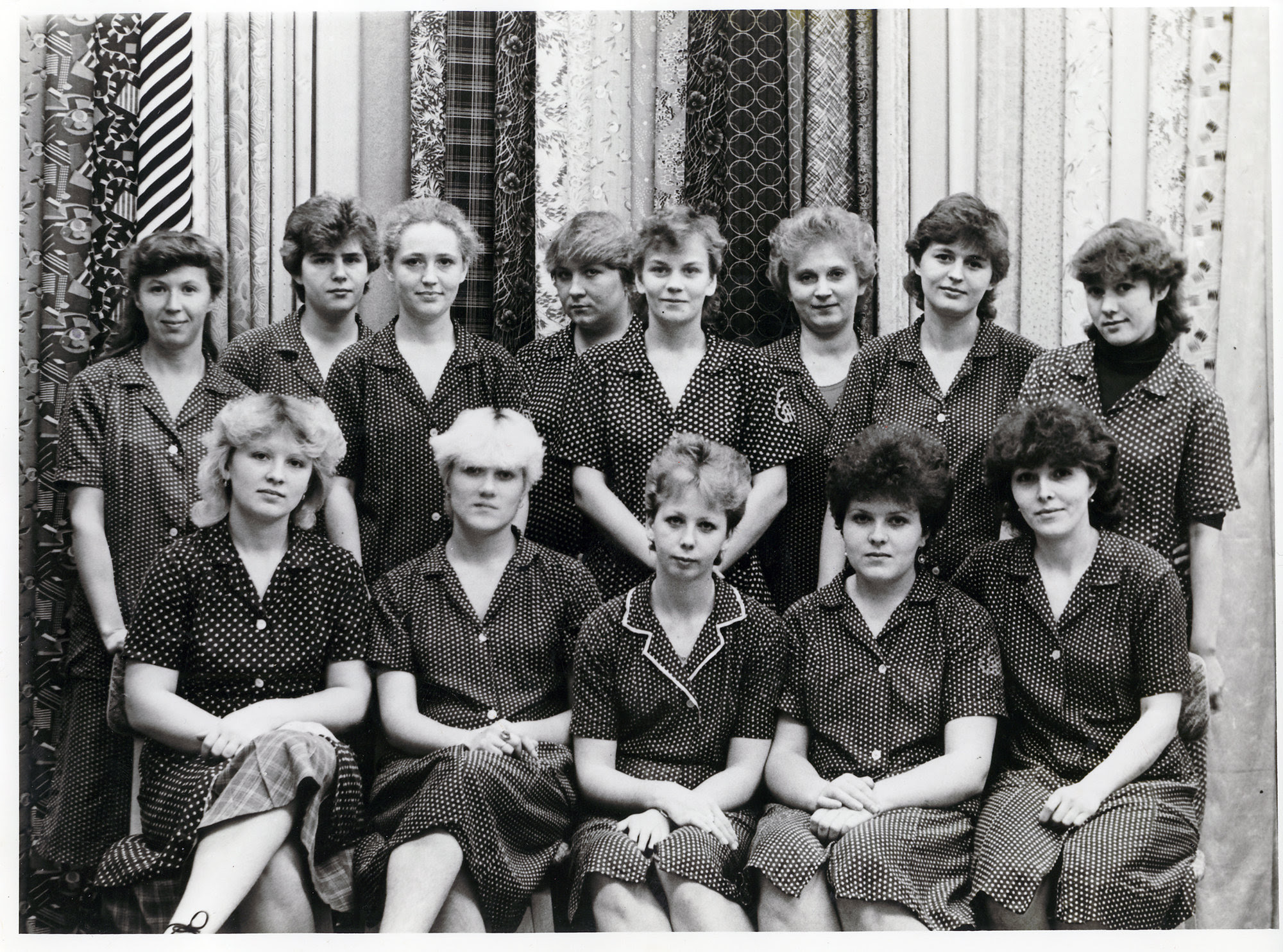
resAs part of the Tallinn Photomonth programme, London-based Estonian artist Maria
Kapajeva returns to Narva Art Residency with a solo exhibition studying the social
legacy of Krenholm. For 150 years, Krenholm – the textile manufacture that was
declared bankrupt in 2010 – was the most important enterprise in Narva, shaping the
social and cultural as well as architectural atmosphere of the city. The exhibition
focuses on the mill in the late socialist period, when its workshops employed a
collective of 12,000 mainly female workers.
Inspiration for the exhibition was drawn from interviews conducted with former
workers of the mill and from the digitised family albums, diaries, and memorabilia
gathered by the artist during these interviews. By placing this material into the context
of a multimedia contemporary art exhibition, Kapajeva makes the history of the local
working class visible and enhances it with all of the artistic means at her disposal. The
viewer is presented a mill that is filled with lively female collectives and the deafening
rhythm of the looms, but which still seems like a bright and distant dream in today’s
competitive world, where the collective spirit and sense of togetherness between
women is challenged by the individualist and competition-based aims of global
capitalism.
Maria Kapajeva is a London-based Estonian artist who was born in Narva and has
exhibited her work internationally for the last 10 years. As the daughter of a designer
at Krenholm, she spent her childhood at the mill, drawing fabric patterns and
dreaming about the profession of a textile artist. The current exhibition thus takes a
distinctly personal approach, although the main topics of Kapajeva’s art are also
present: appropriation of found objects and highlighting of peripheral histories, use of
textile techniques and focusing on the representation of women, heightened sensitivity
towards social and political matters, and specifically East European feminism.
The exhibition takes its name from March of Enthusiasts, the signature song from the
soundtrack of the Soviet film The Bright Way (1940). This musical film, which starred
the Soviet cinema icon Ljubov Orlova in the role of a female weaver, inspired one of
the Krenholm’s weavers to seek employment at the mill after World War II. The
opening work of the exhibition, which bears the same name and performs reenactments
of the famous film, compares a woman’s loneliness then and now and
presents to the public for the first time the collaboration of Maria Kapajeva and dance
artist Maarja Tõnisson in the abandoned interior spaces of the former textile mill.
The exhibition is curated by Tallinn-based Liisa Kaljula, whose interests include
socialist-era art and post-socialist contemporary art dealing with the recent history of
its own region.
The exhibition is accompanied by a diverse trilingual public programme, including
Maria Kapajeva’s master class, artist talks, and curator’s tour, as well as an
educational programme for the schools of Narva and a lecture by Reverse Resources
on contemporary global textile production.
The opening of the exhibition will take place 8 September at 6 pm on the ground floor
of the Narva Art Residency at Joala 18.
On 8 September a special coach will be organized from Tallinn to Narva for the
opening of the exhibition. The coach leaves at 2 pm from the Russian Cultural Centre
at Mere pst 5. For further information and registration: koordinaator@fotokuu.ee.
The exhibition is sponsored by the Cultural Endowment of Estonia, Estonian Academy
of Arts, and Narva Gate OÜ. The entire public programme is supported by The British
Council in Estonia.
Maria Kapajeva’s solo exhibition, The Dream is Wonderful, Yet Unclear, will be open at
the Narva Art Residency until 8 October 2017 (T–S 12–6 pm).
Further information:
Liisa Kaljula
Exhibition curator
5162688
Maria Kapajeva
www.mariakapajeva.com
Tallinn Photomonth
www.fotokuu.ee
Posted by Solveig Jahnke — Permalink
London-based Estonian artist Maria Kapajeva’s largest solo exhibition thus far, entitled The Dream is Wonderful, Yet Unclear, is opening at EAA Narva Art Residency.
Friday 08 September, 2017 — Sunday 08 October, 2017
Narva Art Residency
resAs part of the Tallinn Photomonth programme, London-based Estonian artist Maria
Kapajeva returns to Narva Art Residency with a solo exhibition studying the social
legacy of Krenholm. For 150 years, Krenholm – the textile manufacture that was
declared bankrupt in 2010 – was the most important enterprise in Narva, shaping the
social and cultural as well as architectural atmosphere of the city. The exhibition
focuses on the mill in the late socialist period, when its workshops employed a
collective of 12,000 mainly female workers.
Inspiration for the exhibition was drawn from interviews conducted with former
workers of the mill and from the digitised family albums, diaries, and memorabilia
gathered by the artist during these interviews. By placing this material into the context
of a multimedia contemporary art exhibition, Kapajeva makes the history of the local
working class visible and enhances it with all of the artistic means at her disposal. The
viewer is presented a mill that is filled with lively female collectives and the deafening
rhythm of the looms, but which still seems like a bright and distant dream in today’s
competitive world, where the collective spirit and sense of togetherness between
women is challenged by the individualist and competition-based aims of global
capitalism.
Maria Kapajeva is a London-based Estonian artist who was born in Narva and has
exhibited her work internationally for the last 10 years. As the daughter of a designer
at Krenholm, she spent her childhood at the mill, drawing fabric patterns and
dreaming about the profession of a textile artist. The current exhibition thus takes a
distinctly personal approach, although the main topics of Kapajeva’s art are also
present: appropriation of found objects and highlighting of peripheral histories, use of
textile techniques and focusing on the representation of women, heightened sensitivity
towards social and political matters, and specifically East European feminism.
The exhibition takes its name from March of Enthusiasts, the signature song from the
soundtrack of the Soviet film The Bright Way (1940). This musical film, which starred
the Soviet cinema icon Ljubov Orlova in the role of a female weaver, inspired one of
the Krenholm’s weavers to seek employment at the mill after World War II. The
opening work of the exhibition, which bears the same name and performs reenactments
of the famous film, compares a woman’s loneliness then and now and
presents to the public for the first time the collaboration of Maria Kapajeva and dance
artist Maarja Tõnisson in the abandoned interior spaces of the former textile mill.
The exhibition is curated by Tallinn-based Liisa Kaljula, whose interests include
socialist-era art and post-socialist contemporary art dealing with the recent history of
its own region.
The exhibition is accompanied by a diverse trilingual public programme, including
Maria Kapajeva’s master class, artist talks, and curator’s tour, as well as an
educational programme for the schools of Narva and a lecture by Reverse Resources
on contemporary global textile production.
The opening of the exhibition will take place 8 September at 6 pm on the ground floor
of the Narva Art Residency at Joala 18.
On 8 September a special coach will be organized from Tallinn to Narva for the
opening of the exhibition. The coach leaves at 2 pm from the Russian Cultural Centre
at Mere pst 5. For further information and registration: koordinaator@fotokuu.ee.
The exhibition is sponsored by the Cultural Endowment of Estonia, Estonian Academy
of Arts, and Narva Gate OÜ. The entire public programme is supported by The British
Council in Estonia.
Maria Kapajeva’s solo exhibition, The Dream is Wonderful, Yet Unclear, will be open at
the Narva Art Residency until 8 October 2017 (T–S 12–6 pm).
Further information:
Liisa Kaljula
Exhibition curator
5162688
Maria Kapajeva
www.mariakapajeva.com
Tallinn Photomonth
www.fotokuu.ee
Posted by Solveig Jahnke — Permalink