Academic Affairs OfficeAccessory DesignAnimationArchitecture and Urban DesignArt EducationCenter for Flat TechnologiesCeramicsContemporary ArtCultural Heritage and ConservationDepartmentsDesign and Technology FuturesDoctoral SchoolDrawingFacilities and WorkshopsFaculty of ArchitectureFaculty of Art and CultureFaculty of DesignFaculty of Fine ArtsFashion DesignFinancial DepartmentGalleryGlass ArtGraphic ArtGraphic DesignInstallation and SculptureInstitute of Art History and Visual CultureInternational OfficeIT OfficeJewellery and BlacksmithingLandscape ArchitectureLibraryLinnaehitus @enMaking SpaceNew MediaOffice of the RectorateOpen AcademyPaintingPerforming ArtsPhotographyProduct DesignRectorateResearch and Development OfficeScenographySupport UnitsTextile DesignUncategorizedUrban PlanningUrban Studies
ENKKL’s “Last Award” at EKA Billboard Gallery 29.08.–08.12.2024
29.08.2024 — 08.12.2024
ENKKL’s “Last Award” at EKA Billboard Gallery 29.08.–08.12.2024
Contemporary Art
ENKKL’s “Last Award”
EKA Billboard Gallery 29.08.–08.12.2024
Open 24/7, free
Opening: 29.08.24 at 6 pm
The legendary Weekly Award of the Estonian Young Contemporary Art Union (ENKKL) will have its symbolic end at the EKA Billboard Gallery. The group work was made during ENKKL’s summer school at Muhu. We invite all visitors and other passers-by to put their hands on it. Now you too have the opportunity to be a part of the Estonian art scene. You could be the next star artist! It’s warmer together. Together is better.
Participating artists: Kärt Heinvere, Irma Holm, Erik Hõim, Kadri Joala, Liisa-Lota Jõeleht, Saara Liis Jõerand, Loora Kaubi, Kärt Koppel, Nele Kurvits, Katariin Mudist, Marto Mägi, Eke Ao Nettan, Sandra Puusepp, Kertu Rannula, Johanna Reinvald, Mia Maria Rohumaa, Raahel Rüütel, Inessa Saarits, Lisette Sivard, Sonja Sutt, Rebeca Žukovitš, Aimur Takk, Annabel Tanila, Margaret Tilk, Elo Vahtrik, Mattias Veller
The project is supported by the Cultural Endowment of Estonia.
Opening drinks from Põhjala Brewery.
Posted by Kaisa Maasik — Permalink
ENKKL’s “Last Award” at EKA Billboard Gallery 29.08.–08.12.2024
Thursday 29 August, 2024 — Sunday 08 December, 2024
Contemporary Art
ENKKL’s “Last Award”
EKA Billboard Gallery 29.08.–08.12.2024
Open 24/7, free
Opening: 29.08.24 at 6 pm
The legendary Weekly Award of the Estonian Young Contemporary Art Union (ENKKL) will have its symbolic end at the EKA Billboard Gallery. The group work was made during ENKKL’s summer school at Muhu. We invite all visitors and other passers-by to put their hands on it. Now you too have the opportunity to be a part of the Estonian art scene. You could be the next star artist! It’s warmer together. Together is better.
Participating artists: Kärt Heinvere, Irma Holm, Erik Hõim, Kadri Joala, Liisa-Lota Jõeleht, Saara Liis Jõerand, Loora Kaubi, Kärt Koppel, Nele Kurvits, Katariin Mudist, Marto Mägi, Eke Ao Nettan, Sandra Puusepp, Kertu Rannula, Johanna Reinvald, Mia Maria Rohumaa, Raahel Rüütel, Inessa Saarits, Lisette Sivard, Sonja Sutt, Rebeca Žukovitš, Aimur Takk, Annabel Tanila, Margaret Tilk, Elo Vahtrik, Mattias Veller
The project is supported by the Cultural Endowment of Estonia.
Opening drinks from Põhjala Brewery.
Posted by Kaisa Maasik — Permalink
25.08.2024 — 04.10.2024
Jane Remm’s Interspecies Exhibition Opening Tour
Doctoral School
With the exhibition of Jane Remm’s creative research project “Interspecies Social Sculpture”, the doctoral student pays homage to Joseph Beuys, the creator of the world’s first green party, and invites you to participate in a nature walk at the opening of the exhibition.
On August 25, from 5:00 p.m. to 8:00 p.m., there will be a tour of the opening of the exhibition of Jane Remm’s artistic research project “Interspecies Social Sculpture”, which conceptualizes the garden and the forest as a multi-perspective creative environment. Expanding Joseph Beuys’ concept of social sculpture into a multifaceted context, the artist explores what it means to harness everyone’s creative potential in a modern age, when the world in an ecological crisis needs to adapt to degrowth.
“Interspecies social sculpture” combines the ecological dimension in the form of increasing biodiversity, the dimension of interspecies co-creation and the social dimension through public events. The experiential exhibition tour opens up different perspectives on the garden and forest through active participation. “It’s an attempt to co-create with other species and thereby think about the role of art in the long term,” says Jane Remm and continues: “This is a garden diary where drawings and writings have accumulated over the course of a year. It is a multi-perspective composition that is constantly changing through the cooperation of different actors. I act as an equal among other beings. It is an attempt to act in art locally, slowly and on a small scale. At the same time, this is a provocation through which I am investigating whether growing food, hay or firewood can be positive activism in today’s world, and in the context of Estonia. It is an attempt to give the everyday garden and forest a creative and artistic conditionality, and the suspicion that in competitive capitalism local peripheral actions have little value. It is the hesitation that co-creation with other species will not succeed. It is the uncertainty that less is not better. Let’s get entangled into that uncertainty and vulnerability.”
“Interspecies Social Sculpture” is the second peer-reviewed project of Jane Remm’s artistic
research doctoral thesis.
The “Interspecies Social Sculpture” exhibition is open during tours on August 25, September 15 and 22, and October 4.
The tour starts at 17:00 from the Mähkli bus stop: https://maps.app.goo.gl/fidsotPcnY2HtJgc9, passes through points in the forest and garden and leads to the common dinner table. Public transport to the place is poor, those coming from further away could share a car, while those coming closer could travel by bike or on foot. Weather conditions must be taken into account when it comes to clothing. The trip is free.
Registration: https://forms.gle/vytS5ybUy8L9h98F8
More information about the project.
Jane Remm is an artist, art teacher and artistic researcher, doctoral student at EKA and art didactics lecturer at Tallinn University BFM. Jane Remm’s work focuses on the representation of the experience of nature, co-creation and communication with different life forms. She is interested in what are the possibilities to understand and interpret the life experience of other species and communicate with them as equal dialogue partners using the means of art. She values manual working and co-creation with other species as a way of perceiving herself as part of nature.
CV: https://www.etis.ee/CV/Jane_Remm/, creative portfolio: www.janeremm.ee
Events previously held in the project: 06.08.24 “Determining, noticing, drawing and thinking walk” within the nature observation marathon led by Liina Remm, Indrek Hiiesalu, Jane Remm, Riin Magnus and Tiit Remm, 16.06.24 “Omailmatalgud” led by Timo Maran; 15.07.24 “Bat walk” led by Jaanus and Piret Remm. The review of the project will take place as part of the 4th trip. Reviewers: prof. Linda Kaljundi (Estonian Academy of Arts) and Taru Elfving (CAA Contemporary Art Archipelago, Finland).
The artist thanks dialogue partner Marta Konovalov, EKA Doctoral School, Remmik, all human and non-human neighbours of Karula.
“Interspecies Social Sculpture” is partly related to the project “Artists and designers as researchers, rethinkers, and partners of nature in the context of degrowth” (01.07.2023–31.12.2024), PR02049, which is funded by the Ministry of Culture.
Posted by Andres Lõo — Permalink
Jane Remm’s Interspecies Exhibition Opening Tour
Sunday 25 August, 2024 — Friday 04 October, 2024
Doctoral School
With the exhibition of Jane Remm’s creative research project “Interspecies Social Sculpture”, the doctoral student pays homage to Joseph Beuys, the creator of the world’s first green party, and invites you to participate in a nature walk at the opening of the exhibition.
On August 25, from 5:00 p.m. to 8:00 p.m., there will be a tour of the opening of the exhibition of Jane Remm’s artistic research project “Interspecies Social Sculpture”, which conceptualizes the garden and the forest as a multi-perspective creative environment. Expanding Joseph Beuys’ concept of social sculpture into a multifaceted context, the artist explores what it means to harness everyone’s creative potential in a modern age, when the world in an ecological crisis needs to adapt to degrowth.
“Interspecies social sculpture” combines the ecological dimension in the form of increasing biodiversity, the dimension of interspecies co-creation and the social dimension through public events. The experiential exhibition tour opens up different perspectives on the garden and forest through active participation. “It’s an attempt to co-create with other species and thereby think about the role of art in the long term,” says Jane Remm and continues: “This is a garden diary where drawings and writings have accumulated over the course of a year. It is a multi-perspective composition that is constantly changing through the cooperation of different actors. I act as an equal among other beings. It is an attempt to act in art locally, slowly and on a small scale. At the same time, this is a provocation through which I am investigating whether growing food, hay or firewood can be positive activism in today’s world, and in the context of Estonia. It is an attempt to give the everyday garden and forest a creative and artistic conditionality, and the suspicion that in competitive capitalism local peripheral actions have little value. It is the hesitation that co-creation with other species will not succeed. It is the uncertainty that less is not better. Let’s get entangled into that uncertainty and vulnerability.”
“Interspecies Social Sculpture” is the second peer-reviewed project of Jane Remm’s artistic
research doctoral thesis.
The “Interspecies Social Sculpture” exhibition is open during tours on August 25, September 15 and 22, and October 4.
The tour starts at 17:00 from the Mähkli bus stop: https://maps.app.goo.gl/fidsotPcnY2HtJgc9, passes through points in the forest and garden and leads to the common dinner table. Public transport to the place is poor, those coming from further away could share a car, while those coming closer could travel by bike or on foot. Weather conditions must be taken into account when it comes to clothing. The trip is free.
Registration: https://forms.gle/vytS5ybUy8L9h98F8
More information about the project.
Jane Remm is an artist, art teacher and artistic researcher, doctoral student at EKA and art didactics lecturer at Tallinn University BFM. Jane Remm’s work focuses on the representation of the experience of nature, co-creation and communication with different life forms. She is interested in what are the possibilities to understand and interpret the life experience of other species and communicate with them as equal dialogue partners using the means of art. She values manual working and co-creation with other species as a way of perceiving herself as part of nature.
CV: https://www.etis.ee/CV/Jane_Remm/, creative portfolio: www.janeremm.ee
Events previously held in the project: 06.08.24 “Determining, noticing, drawing and thinking walk” within the nature observation marathon led by Liina Remm, Indrek Hiiesalu, Jane Remm, Riin Magnus and Tiit Remm, 16.06.24 “Omailmatalgud” led by Timo Maran; 15.07.24 “Bat walk” led by Jaanus and Piret Remm. The review of the project will take place as part of the 4th trip. Reviewers: prof. Linda Kaljundi (Estonian Academy of Arts) and Taru Elfving (CAA Contemporary Art Archipelago, Finland).
The artist thanks dialogue partner Marta Konovalov, EKA Doctoral School, Remmik, all human and non-human neighbours of Karula.
“Interspecies Social Sculpture” is partly related to the project “Artists and designers as researchers, rethinkers, and partners of nature in the context of degrowth” (01.07.2023–31.12.2024), PR02049, which is funded by the Ministry of Culture.
Posted by Andres Lõo — Permalink
07.08.2024 — 01.09.2024
Mart Vainre and Paintman at Haapsalu Town Gallery
Mart Vainre’s solo exhibition, “Paintman: The Birth of a Painting Machine and His Unexpected Enemy,” at Haapsalu Town Gallery is the superhero’s second coming. After its debut at the ARS Project Room group exhibition “Allow Yourself to Change. From Painting Art to Machine Art,” Paintman (in Estonian, Värvmees) is now at the Haapsalu Town Gallery amidst his comic-book-like origin story, where he also encounters his treacherous enemy.
Haapsalu Town Gallery
7.08–1.09.2024
The Birth of Paintman
The superhero Paintman was created from leftover paint that accumulated on the palette. He is an unintended byproduct of painting, a character that wasn’t supposed to exist. However, artist Mart Vainre desires a synthetic companion, an assistant who could expand his work into new realms.
Through experimentation, Vainre digitizes Paintman, who quickly begins to live his own life in virtual space. He evolves, mutates, and multiplies. Before long, Paintman gains independence and acquires the superpower to transform between physical and digital environments, surpassing the limits of human abilities.
Human Envy
Paintman begins to create as well. He is now a well-known superhero whose capabilities have long surpassed those of his creator. Vainre starts to feel increasingly overshadowed by him. “Slower, clumsier, more flawed,” the artist describes himself when comparing his skills to those of the digital twin he created.
He hatches a plan to save himself from being relegated to second-tier status. Vainre begins to mechanically mimic his synthetic companion’s creations—under the guise of fan art, he subtly plants human flaws in his works, attempting to hack Paintman’s perfect algorithm. And to bring himself back into the spotlight.
The Final Showdown
Since Paintman “feeds” on the paint residue from Vainre’s works, he also starts to transform into a human-like form. Paintman is forced to live on a battlefield filled with the treacherous traps Vainre has set, where he must use his artificial wit and creativity. He is now fully aware of Vainre’s intentions and begins defending himself to survive. Their final showdown takes place at the art exhibition, where Vainre struggles to assert himself and Paintman fights to stay alive.
Mart Vainre (born 1988) is an artist based in Tallinn, Estonia. He received his MA in New Media in 2014 and his BA in Painting in 2011 from the Estonian Academy of Arts. Vainre has had several solo exhibitions, and his work has been featured in curatorial exhibitions at the KUMU Art Museum and Tallinn Art Hall. His artistic method involves mirroring physical paint with its digital representations. By blending painting, a symbolic method of marking the presence of a human, with high-tech digital tools like 3D scanning and modeling, he experiments with the overlap between human and machine. Vainre’s visual language can take on a digital dystopian or techno-psychedelic quality that is translated into painting.
More Information:
Haapsalu Town Gallery
Posti 3, Haapsalu
www.galerii.kultuurimaja.ee
Wed–Sun 12:00–18:00
Posted by Mart Vainre — Permalink
Mart Vainre and Paintman at Haapsalu Town Gallery
Wednesday 07 August, 2024 — Sunday 01 September, 2024
Mart Vainre’s solo exhibition, “Paintman: The Birth of a Painting Machine and His Unexpected Enemy,” at Haapsalu Town Gallery is the superhero’s second coming. After its debut at the ARS Project Room group exhibition “Allow Yourself to Change. From Painting Art to Machine Art,” Paintman (in Estonian, Värvmees) is now at the Haapsalu Town Gallery amidst his comic-book-like origin story, where he also encounters his treacherous enemy.
Haapsalu Town Gallery
7.08–1.09.2024
The Birth of Paintman
The superhero Paintman was created from leftover paint that accumulated on the palette. He is an unintended byproduct of painting, a character that wasn’t supposed to exist. However, artist Mart Vainre desires a synthetic companion, an assistant who could expand his work into new realms.
Through experimentation, Vainre digitizes Paintman, who quickly begins to live his own life in virtual space. He evolves, mutates, and multiplies. Before long, Paintman gains independence and acquires the superpower to transform between physical and digital environments, surpassing the limits of human abilities.
Human Envy
Paintman begins to create as well. He is now a well-known superhero whose capabilities have long surpassed those of his creator. Vainre starts to feel increasingly overshadowed by him. “Slower, clumsier, more flawed,” the artist describes himself when comparing his skills to those of the digital twin he created.
He hatches a plan to save himself from being relegated to second-tier status. Vainre begins to mechanically mimic his synthetic companion’s creations—under the guise of fan art, he subtly plants human flaws in his works, attempting to hack Paintman’s perfect algorithm. And to bring himself back into the spotlight.
The Final Showdown
Since Paintman “feeds” on the paint residue from Vainre’s works, he also starts to transform into a human-like form. Paintman is forced to live on a battlefield filled with the treacherous traps Vainre has set, where he must use his artificial wit and creativity. He is now fully aware of Vainre’s intentions and begins defending himself to survive. Their final showdown takes place at the art exhibition, where Vainre struggles to assert himself and Paintman fights to stay alive.
Mart Vainre (born 1988) is an artist based in Tallinn, Estonia. He received his MA in New Media in 2014 and his BA in Painting in 2011 from the Estonian Academy of Arts. Vainre has had several solo exhibitions, and his work has been featured in curatorial exhibitions at the KUMU Art Museum and Tallinn Art Hall. His artistic method involves mirroring physical paint with its digital representations. By blending painting, a symbolic method of marking the presence of a human, with high-tech digital tools like 3D scanning and modeling, he experiments with the overlap between human and machine. Vainre’s visual language can take on a digital dystopian or techno-psychedelic quality that is translated into painting.
More Information:
Haapsalu Town Gallery
Posti 3, Haapsalu
www.galerii.kultuurimaja.ee
Wed–Sun 12:00–18:00
Posted by Mart Vainre — Permalink
12.09.2024
PhD Thesis Defence of Nesli Hazal Oktay
Doctoral School
On 12 September at 12:00 Nesli Hazal Oktay will defend her thesis „Far-away bodies: Co-creating design(s) in and for remote intimacy“ ( „Koosolemine distantsilt: läheduse kogemine ühisloomelise disaini abil“).
The public defence will be held in EKA (Põhja pst 7), room A101.
The defence will be broadcast on EKA TV.
The defence is in English.
Supervisor: Dr. Kristi Kuusk (Estonian Academy of Arts), Prof. Danielle Wilde (Umeå University, University of Southern Denmark)
External reviewers: Dr. Verena Fuchsberger-Staufer (University of Salzburg), Dr. Vasiliki Tsaknaki (IT University of Copenhagen)
Opponent: Dr. Verena Fuchsberger-Staufer (University of Salzburg)
The doctoral thesis can be found HERE
Intimacy is an embodied experience rooted in everyday life activities including bodily interactions. For some, intimacy is experienced and built across distances when intimate partners find themselves physically apart for various periods. In such scenarios, people turn to technology, using devices to connect with their loved ones intimately. When using technology, a boundary exists between loved ones in the digital and physical worlds. Despite this boundary, intimacy can be maintained and nourished when bodies are apart.
This dissertation delves into the role of interaction design in fostering non-sexual intimacy across distances through an embodied approach. By designing for intimate, yet distant, bodies, it offers the research programme co-creating design(s) in and for remote intimacy. Derived from the main research question – How can a close-to-body experience be designed to support intimacy between people across distances? – this research programme explores the design of a remote, close-to-body experience for individuals who are emotionally close but physically apart. The designed experience aims to invite far-away loved ones to reflect on, disrupt, and reinvent their habitual ways of building and experiencing intimacy across distances. Within this programmatic framework, the dissertation offers three key contributions to interaction designers and design researchers: methodological, designerly, and theoretical. Methodologically, it proposes new approaches for co-designing remote intimacy. Designerly, it presents commitments to consider when designing in the realm of remote intimacy. Theoretically, it provides situated knowledge that highlights the multifaceted nature of remote intimacy, emphasising its individual, collective, bodily, virtual, and material dimensions.
In conclusion, this dissertation challenges conventional methods and advocates for embodied design practices and approaches, opening new design spaces for supporting intimacy across distances. It invites interaction designers and design researchers to rethink and reimagine how humans experience and build intimacy in an increasingly digital world.
Defence committee: Dr. Jaana Päeva, Dr. Anu Allas, Ruth-Helene Melioranski, Prof. Indrek Ibrus, Dr. Liina Unt, Dr. Claudia Nunez-Pacheco
Posted by Irene Hütsi — Permalink
PhD Thesis Defence of Nesli Hazal Oktay
Thursday 12 September, 2024
Doctoral School
On 12 September at 12:00 Nesli Hazal Oktay will defend her thesis „Far-away bodies: Co-creating design(s) in and for remote intimacy“ ( „Koosolemine distantsilt: läheduse kogemine ühisloomelise disaini abil“).
The public defence will be held in EKA (Põhja pst 7), room A101.
The defence will be broadcast on EKA TV.
The defence is in English.
Supervisor: Dr. Kristi Kuusk (Estonian Academy of Arts), Prof. Danielle Wilde (Umeå University, University of Southern Denmark)
External reviewers: Dr. Verena Fuchsberger-Staufer (University of Salzburg), Dr. Vasiliki Tsaknaki (IT University of Copenhagen)
Opponent: Dr. Verena Fuchsberger-Staufer (University of Salzburg)
The doctoral thesis can be found HERE
Intimacy is an embodied experience rooted in everyday life activities including bodily interactions. For some, intimacy is experienced and built across distances when intimate partners find themselves physically apart for various periods. In such scenarios, people turn to technology, using devices to connect with their loved ones intimately. When using technology, a boundary exists between loved ones in the digital and physical worlds. Despite this boundary, intimacy can be maintained and nourished when bodies are apart.
This dissertation delves into the role of interaction design in fostering non-sexual intimacy across distances through an embodied approach. By designing for intimate, yet distant, bodies, it offers the research programme co-creating design(s) in and for remote intimacy. Derived from the main research question – How can a close-to-body experience be designed to support intimacy between people across distances? – this research programme explores the design of a remote, close-to-body experience for individuals who are emotionally close but physically apart. The designed experience aims to invite far-away loved ones to reflect on, disrupt, and reinvent their habitual ways of building and experiencing intimacy across distances. Within this programmatic framework, the dissertation offers three key contributions to interaction designers and design researchers: methodological, designerly, and theoretical. Methodologically, it proposes new approaches for co-designing remote intimacy. Designerly, it presents commitments to consider when designing in the realm of remote intimacy. Theoretically, it provides situated knowledge that highlights the multifaceted nature of remote intimacy, emphasising its individual, collective, bodily, virtual, and material dimensions.
In conclusion, this dissertation challenges conventional methods and advocates for embodied design practices and approaches, opening new design spaces for supporting intimacy across distances. It invites interaction designers and design researchers to rethink and reimagine how humans experience and build intimacy in an increasingly digital world.
Defence committee: Dr. Jaana Päeva, Dr. Anu Allas, Ruth-Helene Melioranski, Prof. Indrek Ibrus, Dr. Liina Unt, Dr. Claudia Nunez-Pacheco
Posted by Irene Hütsi — Permalink
08.08.2024 — 08.09.2024
“Translucent Dreams” at EKA Gallery 8.08.–08.09.2024
Contemporary Art
“Translucent Dreams”
EKA Gallery 8.08.–08.09.2024
Open Tue–Sun 12–6 pm, free entry
Opening: 15.08.2024 at 6 pm
Participating artists: Chloé Geinoz, Rose Magee, Vitor Pascale, KitKit Para, Syed Sachal Rizvi
In today’s interconnected world, the notion of identity has progressively become more
complex and multifaceted. Gender, geography, and social/political beliefs, to name but a few shape the ways individuals perceive and express themselves.
This exhibition brings together five artists from diverse corners of the globe, each accentuating themes of intersecting identities through the lenses of chimerism, duality, hybridity, queer identity, and the construction and deconstruction of self. Using various visual strategies, these artists delve into the intricate layers of identity formation and expression, inviting you to journey through contemporary identity’s dynamic and ever-changing landscape.
The exhibition is supported by Sadolin Estonia.
Opening drinks from Põhjala Brewery.
Posted by Kaisa Maasik — Permalink
“Translucent Dreams” at EKA Gallery 8.08.–08.09.2024
Thursday 08 August, 2024 — Sunday 08 September, 2024
Contemporary Art
“Translucent Dreams”
EKA Gallery 8.08.–08.09.2024
Open Tue–Sun 12–6 pm, free entry
Opening: 15.08.2024 at 6 pm
Participating artists: Chloé Geinoz, Rose Magee, Vitor Pascale, KitKit Para, Syed Sachal Rizvi
In today’s interconnected world, the notion of identity has progressively become more
complex and multifaceted. Gender, geography, and social/political beliefs, to name but a few shape the ways individuals perceive and express themselves.
This exhibition brings together five artists from diverse corners of the globe, each accentuating themes of intersecting identities through the lenses of chimerism, duality, hybridity, queer identity, and the construction and deconstruction of self. Using various visual strategies, these artists delve into the intricate layers of identity formation and expression, inviting you to journey through contemporary identity’s dynamic and ever-changing landscape.
The exhibition is supported by Sadolin Estonia.
Opening drinks from Põhjala Brewery.
Posted by Kaisa Maasik — Permalink
10.10.2024 — 10.07.2024
EKA Arh Conference 2024: Building Systems
Doctoral School
Read more: https://www.artun.ee/en/curricula/architecture-and-urban-design/research/conference-2024-building-systems/
Posted by Triin Käo — Permalink
EKA Arh Conference 2024: Building Systems
Thursday 10 October, 2024 — Wednesday 10 July, 2024
Doctoral School
Read more: https://www.artun.ee/en/curricula/architecture-and-urban-design/research/conference-2024-building-systems/
Posted by Triin Käo — Permalink
28.07.2024 — 31.08.2024
“Under the Iron Rain” in EKA Library
Library
“Under the Iron Rain”
Exhibition of Ukrainian art students in the library of the Estonian Academy of Arts
28.07.-31.08.2024
Mon-Fri 10:00-15:00
The library is closed from 22.07 to 4.08.2024
Artists: Dariia Silchuk, Sonia Kharkovets,Kseniia Romaschenko, Alina Zadvirna
Graphic design: Daria Titova (UKR)
To provide students with the opportunity to emerge as visible artists, an exhibition will be held at the EKA Library Gallery featuring works by Ukrainian students mentored by EKA. The exhibition will showcase graphics, illustrations, and drawings created during their studies, reflecting the teachings and approaches of Ukrainian universities.
The work of students living and working across Ukraine is heavily influenced by the war situation – mental coping, freedom of movement, and survival. Under the iron rain, students have continued their studies in their chosen fields, pouring their skills, anxiety, fears, and dreams into their creations. The EKA Library offers a small glimpse into their world. We can support these young creators by recognizing their aspirations. We extend our gratitude to all individuals and institutions who have donated to the EKA Ukrainian Student Scholarship Fund.
ELIA UAx Platform
At the ELIA leadership symposium held at EKA (Estonian Academy of Arts) and EMTA (Estonian Academy of Music and Theatre) in June 2022, leaders of higher arts education in Ukraine emphasized their primary priority: stopping the “institutional destruction” of the arts. They believe it is crucial to support students so they can continue their education in their homeland and to remind the world of the importance of their artistic practice for the preservation of Ukrainian cultural life.
On November 15, 2022, the Abakanowicz Arts and Culture Charitable Foundation (AACCF), in collaboration with ELIA, announced a funding measure to support art students and higher arts education institutions in Ukraine. This led to the creation of the ELIA UAx Platform. The UAx Platform embodies the spirit and values of Magdalena Abakanowicz. This initiative is aimed at artists affected by the war, enabling them to fulfill one of their most important tasks – creating art despite oppression.
The supervisors of the EKA UAx platform for Ukrainian students in the 2023/24 academic year are Britta Benno and Anne Pikkov.
All works are for sale. By purchasing, you support artists in Ukraine.
More information:
https://sihtasutus.artun.ee/ukraina2022
https://elia-artschools.org/general/custom.asp?page=UAx
https://www.artun.ee/et/ukraine/
Posted by Andres Lõo — Permalink
“Under the Iron Rain” in EKA Library
Sunday 28 July, 2024 — Saturday 31 August, 2024
Library
“Under the Iron Rain”
Exhibition of Ukrainian art students in the library of the Estonian Academy of Arts
28.07.-31.08.2024
Mon-Fri 10:00-15:00
The library is closed from 22.07 to 4.08.2024
Artists: Dariia Silchuk, Sonia Kharkovets,Kseniia Romaschenko, Alina Zadvirna
Graphic design: Daria Titova (UKR)
To provide students with the opportunity to emerge as visible artists, an exhibition will be held at the EKA Library Gallery featuring works by Ukrainian students mentored by EKA. The exhibition will showcase graphics, illustrations, and drawings created during their studies, reflecting the teachings and approaches of Ukrainian universities.
The work of students living and working across Ukraine is heavily influenced by the war situation – mental coping, freedom of movement, and survival. Under the iron rain, students have continued their studies in their chosen fields, pouring their skills, anxiety, fears, and dreams into their creations. The EKA Library offers a small glimpse into their world. We can support these young creators by recognizing their aspirations. We extend our gratitude to all individuals and institutions who have donated to the EKA Ukrainian Student Scholarship Fund.
ELIA UAx Platform
At the ELIA leadership symposium held at EKA (Estonian Academy of Arts) and EMTA (Estonian Academy of Music and Theatre) in June 2022, leaders of higher arts education in Ukraine emphasized their primary priority: stopping the “institutional destruction” of the arts. They believe it is crucial to support students so they can continue their education in their homeland and to remind the world of the importance of their artistic practice for the preservation of Ukrainian cultural life.
On November 15, 2022, the Abakanowicz Arts and Culture Charitable Foundation (AACCF), in collaboration with ELIA, announced a funding measure to support art students and higher arts education institutions in Ukraine. This led to the creation of the ELIA UAx Platform. The UAx Platform embodies the spirit and values of Magdalena Abakanowicz. This initiative is aimed at artists affected by the war, enabling them to fulfill one of their most important tasks – creating art despite oppression.
The supervisors of the EKA UAx platform for Ukrainian students in the 2023/24 academic year are Britta Benno and Anne Pikkov.
All works are for sale. By purchasing, you support artists in Ukraine.
More information:
https://sihtasutus.artun.ee/ukraina2022
https://elia-artschools.org/general/custom.asp?page=UAx
https://www.artun.ee/et/ukraine/
Posted by Andres Lõo — Permalink
05.07.2024 — 04.08.2024
Marleen Suvi “We’ve Never Lived in a House” at EKA Gallery 6.07.–4.08.2024
Painting
Marleen Suvi
WE’VE NEVER LIVED IN A HOUSE
6.07.–4.08.2024
Opening: 5.07. at 6 pm
Marleen Suvi’s personal exhibition “We’ve Never Lived in a House” brings together 16 large-scale canvases to form a major installation, which concerns itself with the topics of memory and family.
The paintings are based on the artist’s family photo albums, and according to the curator Aleksander Metsamärt, the exhibition reveals two main themes: firstly, the relationship between memory and memory carriers arising from the paintings created on the basis of photographs, secondly, the theme of the private house arising from the form of the installation and the period-specific context associated with it. At the crossroads of the two themes, we find the artist herself, offering an insight into her own memories with an intimately personal and a paradoxical universality.
For the artist these times are past, her past which she herself cannot [retreat/crawl] back to. A past from which forms and figures emerge, that are almost familiar, but not quite just. Not like they are here, in this picture, in this apartment, in this year – somewhere in the mid-nineties, when everyone wore clothes made out of those materials, the feel of which, to this day, the nerve endings of your synapses can still sense somewhere at the back of your mind; clothes, that in their quaintness and slight old-fashionedness still manage to warm your heart.
Curated by Aleksander Metsamärt
Graphic design by Rainer Kasekivi
The exhibition is supported by the Cultural Endowment of Estonia.
Opening drinks from Põhjala Brewery.
Posted by Kaisa Maasik — Permalink
Marleen Suvi “We’ve Never Lived in a House” at EKA Gallery 6.07.–4.08.2024
Friday 05 July, 2024 — Sunday 04 August, 2024
Painting
Marleen Suvi
WE’VE NEVER LIVED IN A HOUSE
6.07.–4.08.2024
Opening: 5.07. at 6 pm
Marleen Suvi’s personal exhibition “We’ve Never Lived in a House” brings together 16 large-scale canvases to form a major installation, which concerns itself with the topics of memory and family.
The paintings are based on the artist’s family photo albums, and according to the curator Aleksander Metsamärt, the exhibition reveals two main themes: firstly, the relationship between memory and memory carriers arising from the paintings created on the basis of photographs, secondly, the theme of the private house arising from the form of the installation and the period-specific context associated with it. At the crossroads of the two themes, we find the artist herself, offering an insight into her own memories with an intimately personal and a paradoxical universality.
For the artist these times are past, her past which she herself cannot [retreat/crawl] back to. A past from which forms and figures emerge, that are almost familiar, but not quite just. Not like they are here, in this picture, in this apartment, in this year – somewhere in the mid-nineties, when everyone wore clothes made out of those materials, the feel of which, to this day, the nerve endings of your synapses can still sense somewhere at the back of your mind; clothes, that in their quaintness and slight old-fashionedness still manage to warm your heart.
Curated by Aleksander Metsamärt
Graphic design by Rainer Kasekivi
The exhibition is supported by the Cultural Endowment of Estonia.
Opening drinks from Põhjala Brewery.
Posted by Kaisa Maasik — Permalink
26.06.2024 — 29.06.2024
Cultural Heterologies and Democracy II. Transitions and Transformations in Post-Socialist Cultures in the 1980s and 1990s
Institute of Art History and Visual Culture
The 1980s and 1990s were marked by events around the world that radically changed the political order, people’s beliefs and attitudes, and the entire cultural and intellectual orientation of much of the globe. The fall of the Berlin Wall, the collapse of the Soviet Union, and the end of the Cold War stand out as the most important changes, in the shadow of which the events in Yugoslavia and important changes elsewhere are often overlooked by European commentators. These events, taken as a whole, have been seen as part of broader processes of democratization, even as, at the same time, this period was also marked by outbreaks of extreme nationalism and radical religious ferment.
The planned conference invites participants to reflect on the following questions:
– In what ways does democracy manifest itself in the culture of the transitional period of the 1990s?– What are the common features and differences of the transition period in different post-socialist countries?
– What different theoretical frameworks can be used to analyze the culture of this period?
– What are the new forms of cultural negotiation between different cultural traditions and elements?
– How might we describe the way cultural imaginaries and experiences of temporality have changed?
– Which transgressive tendencies arose to challenge the narrative of imaginary unity between different cultural spheres?
– How is one to describe the dynamic of the forces at play in the transition between the mentality of social collectivism and the new liberal individualism?
– How, if at all, has the Russian invasion of Ukraine on 24 February 2022 altered understandings of the transition period and its narratives?
Organizing Committee:
Virve Sarapik, Estonian Academy of Arts
Epp Annus, Tallinn University
Luule Epner, Tallinn University
Regina-Nino Mion, Estonian Academy of Arts
Jaak Tomberg, University of Tartu
Piret Viires, Tallinn University
The conference is being organized by the Research Group of Contemporary Estonian Culture, which unites scholars from the Estonian Academy of Arts, Tallinn University and the University of Tartu. The research is funded by the project PRG636 “Patterns of Development in Estonian Culture of the Transition Period (1986–1998).”
The conference was co-funded by:

Posted by Annika Tiko — Permalink
Cultural Heterologies and Democracy II. Transitions and Transformations in Post-Socialist Cultures in the 1980s and 1990s
Wednesday 26 June, 2024 — Saturday 29 June, 2024
Institute of Art History and Visual Culture
The 1980s and 1990s were marked by events around the world that radically changed the political order, people’s beliefs and attitudes, and the entire cultural and intellectual orientation of much of the globe. The fall of the Berlin Wall, the collapse of the Soviet Union, and the end of the Cold War stand out as the most important changes, in the shadow of which the events in Yugoslavia and important changes elsewhere are often overlooked by European commentators. These events, taken as a whole, have been seen as part of broader processes of democratization, even as, at the same time, this period was also marked by outbreaks of extreme nationalism and radical religious ferment.
The planned conference invites participants to reflect on the following questions:
– In what ways does democracy manifest itself in the culture of the transitional period of the 1990s?– What are the common features and differences of the transition period in different post-socialist countries?
– What different theoretical frameworks can be used to analyze the culture of this period?
– What are the new forms of cultural negotiation between different cultural traditions and elements?
– How might we describe the way cultural imaginaries and experiences of temporality have changed?
– Which transgressive tendencies arose to challenge the narrative of imaginary unity between different cultural spheres?
– How is one to describe the dynamic of the forces at play in the transition between the mentality of social collectivism and the new liberal individualism?
– How, if at all, has the Russian invasion of Ukraine on 24 February 2022 altered understandings of the transition period and its narratives?
Organizing Committee:
Virve Sarapik, Estonian Academy of Arts
Epp Annus, Tallinn University
Luule Epner, Tallinn University
Regina-Nino Mion, Estonian Academy of Arts
Jaak Tomberg, University of Tartu
Piret Viires, Tallinn University
The conference is being organized by the Research Group of Contemporary Estonian Culture, which unites scholars from the Estonian Academy of Arts, Tallinn University and the University of Tartu. The research is funded by the project PRG636 “Patterns of Development in Estonian Culture of the Transition Period (1986–1998).”
The conference was co-funded by:

Posted by Annika Tiko — Permalink
20.06.2024
EKA Graduation Ceremonies 2024
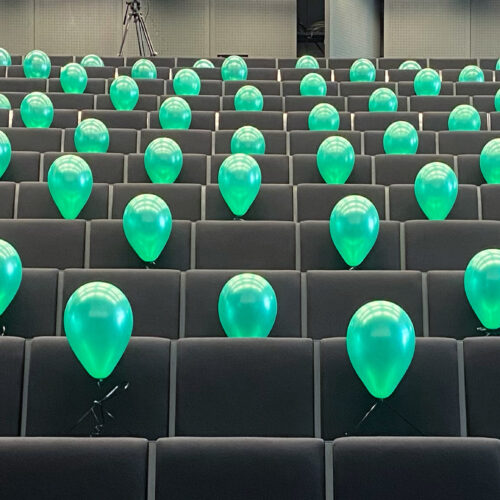
The 2024 graduation ceremonies will be held on June 20th in the EKA Assembly Hall (room A101, Põhja puiestee 7).
- At 11:00 AM, the ceremony will begin for graduates of the Faculty of Design and the Faculty of Art Culture, as well as for doctoral school graduates
- At 3:00 PM, the ceremony will begin for graduates of the Faculty of Architecture and the Faculty of Fine Arts, as well as for doctoral school graduates
Dear graduates, please arrive 15 minutes early to the EKA Gallery, where you will be seated in designated seats. Guests can sit in the Assembly Hall, watch the ceremony on screens in the foyer, or follow it online via EKA TV.
More info:
Elisabeth Kuusik
elisabeth.kuusik@artun.ee
Posted by Maarja Pabut — Permalink
EKA Graduation Ceremonies 2024
Thursday 20 June, 2024
The 2024 graduation ceremonies will be held on June 20th in the EKA Assembly Hall (room A101, Põhja puiestee 7).
- At 11:00 AM, the ceremony will begin for graduates of the Faculty of Design and the Faculty of Art Culture, as well as for doctoral school graduates
- At 3:00 PM, the ceremony will begin for graduates of the Faculty of Architecture and the Faculty of Fine Arts, as well as for doctoral school graduates
Dear graduates, please arrive 15 minutes early to the EKA Gallery, where you will be seated in designated seats. Guests can sit in the Assembly Hall, watch the ceremony on screens in the foyer, or follow it online via EKA TV.
More info:
Elisabeth Kuusik
elisabeth.kuusik@artun.ee
Posted by Maarja Pabut — Permalink