Alice Kask and Neeme Külm at the Tartu Art House

17.11.2023 — 17.12.2023

Alice Kask and Neeme Külm at the Tartu Art House

On Friday, 17 November at 5:00 p.m. Alice Kask and Neeme Külm will open their joint exhibition “Something Righter in This” in the large gallery of the Tartu Art House. 

The exhibition is seemingly a continuation of the show “In Vanity Alone”, which Alice and Neeme organised in the Tallinn City Gallery a year ago. At the same time, it is also not. While the selection at that time was firmly orchestrated by Neeme, who worked as a demiurge transforming the comprehensible space into an incomprehensible one, today the roles have been switched and Alice has reclaimed the space which she had surrendered to Neeme, filling it with her large paintings. Neeme has handed over the reins saying: “Let grace accompany our actions”.

In the gallery, the artists still work independently and on their own, sometimes in a hectic manner, but mostly very self-confidently. Their work, despite differences in their thinking, actions and choices of media, still, miraculously, function together as a strong whole. The powerful symbolism with which they work does not shatter, but increases this unity.

Neeme sows wedges into the walls like budding flowers, replaces the alarm button with pearls for his sweetheart, opens a cello case like a confession and fills an archaic confessional with texts from his journal. Hidden behind the declarations of love and the hints of reconciliation, he also gently establishes himself and keeps a watchful eye over the whole space. The gaze is casual but still present, because somebody has to gaze.

The unmistakable Alice, who only dares to speak about herself, transforms her paintings into the attributes of femininity, concentrating on a lone figure, on a single item, but full of tension and on a grandiose scale. Ruthlessly precise in what she is trying to show, straightforward in concealing what deserves to be hidden. Only nature is left outside Alice’s penetrating gaze: she looks at it from a distance and sees it as something bigger than herself. The dark and dreary elements can only be captured vaguely, recorded only from a distance. So complicated and, at the same time, also so simple. As sincere as possible.

“A certain uncompromising discomfort for the inevitable corporeality of human consciousness” is present in the “striking spatial-poetic ping-pong” which accompanies the exhibition of Alice Kask and Neeme Külm. These were the words of the art critic Hanno Soans a year ago and, lo and behold, they indeed still hold true.

Alice Kask (b. 1976) graduated in 2002 from the master’s programme in painting of the Estonian Academy of Arts. Since her major solo exhibition at the Contemporary Art Museum of Estonian (2016), she has recently shown her works at the Helsinki Art Hall (2018) and Rüki Gallery (2020). In 2008, she had a solo exhibition in the Tartu Art Museum. Among other accolades, in 2003 she received the Konrad Mägi Award.

Neeme Külm (b. 1974) graduated in 1998 from the Department of Sculpture of the Estonian Academy of Arts and studied in 2003–2005 in the master’s programme of interdisciplinary arts at the same school. His most powerful solo exhibitions took place in the first half of the 2010s and his more recent group shows have existed on the border between architecture and visual arts. Külm was one of the founders of the Contemporary Art Museum of Estonia.

The artists thank: Tamara Luuk, Kadri Villand, Johann Tanel Möldre, Lepo Külm, Berit Teeäär, Tiit Talvaru, Hilkka Hiiop and Päär Keedus.

The exhibition is supported by the Cultural Endowment of Estonia.

The exhibition is open until 17 December.

*A bus will run from Tallinn to the opening of the exhibition. More information and registration here: https://forms.gle/xmanLQ1YxnixyuKv5

www.kunstimaja.ee

facebook.com/kunstimaja

Tartu Art House (Vanemuise 26, Tartu, Estonia) Wed–Mon 12–18. Exhibitions are free of charge.

The exhibitions of the Tartu Art House are supported by the Tartu town government and the Cultural Endowment of Estonia.

Posted by Andres Lõo — Permalink

Alice Kask and Neeme Külm at the Tartu Art House

Friday 17 November, 2023 — Sunday 17 December, 2023

On Friday, 17 November at 5:00 p.m. Alice Kask and Neeme Külm will open their joint exhibition “Something Righter in This” in the large gallery of the Tartu Art House. 

The exhibition is seemingly a continuation of the show “In Vanity Alone”, which Alice and Neeme organised in the Tallinn City Gallery a year ago. At the same time, it is also not. While the selection at that time was firmly orchestrated by Neeme, who worked as a demiurge transforming the comprehensible space into an incomprehensible one, today the roles have been switched and Alice has reclaimed the space which she had surrendered to Neeme, filling it with her large paintings. Neeme has handed over the reins saying: “Let grace accompany our actions”.

In the gallery, the artists still work independently and on their own, sometimes in a hectic manner, but mostly very self-confidently. Their work, despite differences in their thinking, actions and choices of media, still, miraculously, function together as a strong whole. The powerful symbolism with which they work does not shatter, but increases this unity.

Neeme sows wedges into the walls like budding flowers, replaces the alarm button with pearls for his sweetheart, opens a cello case like a confession and fills an archaic confessional with texts from his journal. Hidden behind the declarations of love and the hints of reconciliation, he also gently establishes himself and keeps a watchful eye over the whole space. The gaze is casual but still present, because somebody has to gaze.

The unmistakable Alice, who only dares to speak about herself, transforms her paintings into the attributes of femininity, concentrating on a lone figure, on a single item, but full of tension and on a grandiose scale. Ruthlessly precise in what she is trying to show, straightforward in concealing what deserves to be hidden. Only nature is left outside Alice’s penetrating gaze: she looks at it from a distance and sees it as something bigger than herself. The dark and dreary elements can only be captured vaguely, recorded only from a distance. So complicated and, at the same time, also so simple. As sincere as possible.

“A certain uncompromising discomfort for the inevitable corporeality of human consciousness” is present in the “striking spatial-poetic ping-pong” which accompanies the exhibition of Alice Kask and Neeme Külm. These were the words of the art critic Hanno Soans a year ago and, lo and behold, they indeed still hold true.

Alice Kask (b. 1976) graduated in 2002 from the master’s programme in painting of the Estonian Academy of Arts. Since her major solo exhibition at the Contemporary Art Museum of Estonian (2016), she has recently shown her works at the Helsinki Art Hall (2018) and Rüki Gallery (2020). In 2008, she had a solo exhibition in the Tartu Art Museum. Among other accolades, in 2003 she received the Konrad Mägi Award.

Neeme Külm (b. 1974) graduated in 1998 from the Department of Sculpture of the Estonian Academy of Arts and studied in 2003–2005 in the master’s programme of interdisciplinary arts at the same school. His most powerful solo exhibitions took place in the first half of the 2010s and his more recent group shows have existed on the border between architecture and visual arts. Külm was one of the founders of the Contemporary Art Museum of Estonia.

The artists thank: Tamara Luuk, Kadri Villand, Johann Tanel Möldre, Lepo Külm, Berit Teeäär, Tiit Talvaru, Hilkka Hiiop and Päär Keedus.

The exhibition is supported by the Cultural Endowment of Estonia.

The exhibition is open until 17 December.

*A bus will run from Tallinn to the opening of the exhibition. More information and registration here: https://forms.gle/xmanLQ1YxnixyuKv5

www.kunstimaja.ee

facebook.com/kunstimaja

Tartu Art House (Vanemuise 26, Tartu, Estonia) Wed–Mon 12–18. Exhibitions are free of charge.

The exhibitions of the Tartu Art House are supported by the Tartu town government and the Cultural Endowment of Estonia.

Posted by Andres Lõo — Permalink

17.11.2023 — 17.12.2023

Keiu Maasik at the Tartu Art House

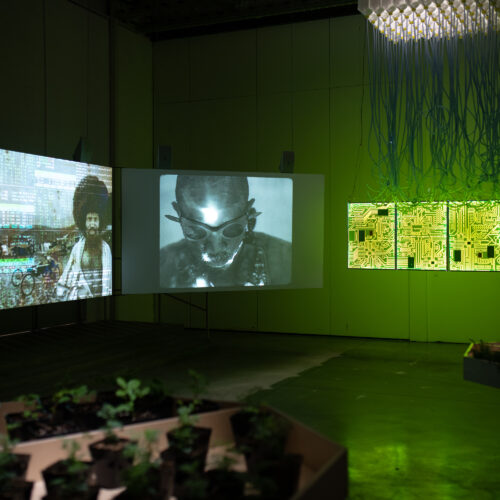
On Friday, 17 November at 5:00 p.m. Keiu Maasik will open her solo exhibition “Meadows of Change, a Place Called Home” in the monumental gallery of the Tartu Art House. 

The exhibition is about life in virtual reality and reflects on the possibility that human life may move there in the future. It also deals with the fear that this could happen and what we as humans would lose as a result.

For the past few years, the artist buried herself in the world of computer games and spent as much of her free time as possible in the virtual world. It seemed to be an acceptable thought exercise for her that in the future human life would move to the virtual world. One of the games she immersed herself in for several months was Red Dead Redemption 2. She felt like there was no other place she would rather be than in the world of RDR2. The game takes place in 1899 in America. The story follows the ventures of a gang of outlaws at a time when the Wild West is fading and civilization is encroaching. Their time is coming to an end and fear is in the air ahead of inevitable changes.

“I felt similar fear last year when I encountered a herd of wild horses. A rumble could be heard in the distance, and the ground beneath me shook gently. At some point, about twenty horses came into view, galloping at full speed through sea water. The horses and the powerful scenery seen in the game now seemed hollow in comparison. I want the world to move forward, but I don’t want to lose the galloping horses roaming about freely,” the artist explains.

Keiu Maasik (b. 1992) graduated from the Estonian Academy of Arts with a bachelor’s degree in photography and a master’s degree in contemporary art. In 2019, she received the EKA Young Artist Award. In 2018, she received the Wiiralt scholarship and was the laureate of the competition Young Tartu of the Tartu Art Museum. In her work, she discusses the impact of documentation on memory, identity and relationships between people.

Graphic design: Anna Kaarma

The artist’s gratitude to: Madis Kurss and Kaisa Maasik 

The exhibition is supported by the Cultural Endowment of Estonia.

The exhibition is open until 17 December.

www.kunstimaja.ee

facebook.com/kunstimaja

Tartu Art House (Vanemuise 26, Tartu, Estonia) Wed–Mon 12–18. Exhibitions are free of charge.

The exhibitions of the Tartu Art House are supported by the Tartu town government and the Cultural Endowment of Estonia.

Posted by Andres Lõo — Permalink

Keiu Maasik at the Tartu Art House

Friday 17 November, 2023 — Sunday 17 December, 2023

On Friday, 17 November at 5:00 p.m. Keiu Maasik will open her solo exhibition “Meadows of Change, a Place Called Home” in the monumental gallery of the Tartu Art House. 

The exhibition is about life in virtual reality and reflects on the possibility that human life may move there in the future. It also deals with the fear that this could happen and what we as humans would lose as a result.

For the past few years, the artist buried herself in the world of computer games and spent as much of her free time as possible in the virtual world. It seemed to be an acceptable thought exercise for her that in the future human life would move to the virtual world. One of the games she immersed herself in for several months was Red Dead Redemption 2. She felt like there was no other place she would rather be than in the world of RDR2. The game takes place in 1899 in America. The story follows the ventures of a gang of outlaws at a time when the Wild West is fading and civilization is encroaching. Their time is coming to an end and fear is in the air ahead of inevitable changes.

“I felt similar fear last year when I encountered a herd of wild horses. A rumble could be heard in the distance, and the ground beneath me shook gently. At some point, about twenty horses came into view, galloping at full speed through sea water. The horses and the powerful scenery seen in the game now seemed hollow in comparison. I want the world to move forward, but I don’t want to lose the galloping horses roaming about freely,” the artist explains.

Keiu Maasik (b. 1992) graduated from the Estonian Academy of Arts with a bachelor’s degree in photography and a master’s degree in contemporary art. In 2019, she received the EKA Young Artist Award. In 2018, she received the Wiiralt scholarship and was the laureate of the competition Young Tartu of the Tartu Art Museum. In her work, she discusses the impact of documentation on memory, identity and relationships between people.

Graphic design: Anna Kaarma

The artist’s gratitude to: Madis Kurss and Kaisa Maasik 

The exhibition is supported by the Cultural Endowment of Estonia.

The exhibition is open until 17 December.

www.kunstimaja.ee

facebook.com/kunstimaja

Tartu Art House (Vanemuise 26, Tartu, Estonia) Wed–Mon 12–18. Exhibitions are free of charge.

The exhibitions of the Tartu Art House are supported by the Tartu town government and the Cultural Endowment of Estonia.

Posted by Andres Lõo — Permalink

14.11.2023 — 12.12.2023

Exhibition: Narratives from Prolonged Engagements

Posted by Irene Hütsi — Permalink

Exhibition: Narratives from Prolonged Engagements

Tuesday 14 November, 2023 — Tuesday 12 December, 2023

Posted by Irene Hütsi — Permalink

12.11.2023

Zody Burke: Queering the Bimbo

Queering the Bimbo

Recently, we have borne witness to a resurgence of the bimbo archetype within popular culture. Despite its rooting in a non-gendered etymology, the term ‘bimbo’ is understood to be a slur aimed at attractive women who are deemed lascivious; their proclivity inherently paired with stupidity. Visually, the bimbo plays by the rules and expectations of patriarchy; women’s bodies are often the only thing rendered visible among the multitude of their human experience. Contrary to the lack of intelligence implied by the bimbo archetype, however, there are many examples to be seen of cultural figures embodying & using the shortcomings of the archetype to flip the script on contemporary gender discourse. From the failings of neoliberal girlboss feminism to the failings of binary views of womanhood, artists are beginning to utilize the bimbo trope to express a cognitive dissonance underpinning the expectations of femininity (and, by extension, masculinity) in the contemporary sphere.

Within this workshop, we will examine the phenomenon of performing hyperfemininity using cultural case studies and examples in contemporary art. We will discuss hyperfemininity’s capacity-versus-limitations to affect change within uneven hierarchies, and speculate on the bimbo archetype’s potential as a transformative/subversive subject and a conduit for queer/femme empowerment. As the verb form of queer, queering can refer to the act of taking something and looking at it through a lens that makes it strange or troubles it in some way. Can the bimbo be queered? Is this already happening?

Following the presentation and an open discussion, Zody Burke will guide a workshop using epoxy clay, for participants to create personal artworks. The participants will be guided to work with the medium that the artist often uses in her own works. The same materials are used in her installation at the Photo month´s main exhibition, Trance.

The workshop is limited to 12 participants, so we encourage you to register quickly to make sure you get a spot. The registration form can be found here: https://forms.gle/S3PyjvSWyAsAS1CDA

12.11 at 14.00 in Lasnamäe Pavilion

Discussion part at 14:00

Workshop part: 15:30

Posted by Andres Lõo — Permalink

Zody Burke: Queering the Bimbo

Sunday 12 November, 2023

Queering the Bimbo

Recently, we have borne witness to a resurgence of the bimbo archetype within popular culture. Despite its rooting in a non-gendered etymology, the term ‘bimbo’ is understood to be a slur aimed at attractive women who are deemed lascivious; their proclivity inherently paired with stupidity. Visually, the bimbo plays by the rules and expectations of patriarchy; women’s bodies are often the only thing rendered visible among the multitude of their human experience. Contrary to the lack of intelligence implied by the bimbo archetype, however, there are many examples to be seen of cultural figures embodying & using the shortcomings of the archetype to flip the script on contemporary gender discourse. From the failings of neoliberal girlboss feminism to the failings of binary views of womanhood, artists are beginning to utilize the bimbo trope to express a cognitive dissonance underpinning the expectations of femininity (and, by extension, masculinity) in the contemporary sphere.

Within this workshop, we will examine the phenomenon of performing hyperfemininity using cultural case studies and examples in contemporary art. We will discuss hyperfemininity’s capacity-versus-limitations to affect change within uneven hierarchies, and speculate on the bimbo archetype’s potential as a transformative/subversive subject and a conduit for queer/femme empowerment. As the verb form of queer, queering can refer to the act of taking something and looking at it through a lens that makes it strange or troubles it in some way. Can the bimbo be queered? Is this already happening?

Following the presentation and an open discussion, Zody Burke will guide a workshop using epoxy clay, for participants to create personal artworks. The participants will be guided to work with the medium that the artist often uses in her own works. The same materials are used in her installation at the Photo month´s main exhibition, Trance.

The workshop is limited to 12 participants, so we encourage you to register quickly to make sure you get a spot. The registration form can be found here: https://forms.gle/S3PyjvSWyAsAS1CDA

12.11 at 14.00 in Lasnamäe Pavilion

Discussion part at 14:00

Workshop part: 15:30

Posted by Andres Lõo — Permalink

07.11.2023 — 03.01.2024

“Breathing Through the Eyes” at L’Atlas in Paris

Artists: Aili Vint (EE), Daria Melnikova (LV), Kristel Saan (EE), Kristina Õllek (EE), Monika Varšavskaja (EE/FR), Morta Jonynaitė (LT), Viktorija Daniliauskaitė (LT)

Curator: Merilin Talumaa (EE)

The exhibition Breathing Through the Eyes at L’Atlas in Paris gathers together different generations of artists from the Baltic countries, most of them presenting their work in Paris for the first time.

The exhibition touches subtly on the ideas of Lithuanian-American archaeologist and anthropologist Marija Gimbutas, whose profound research brought attention to the ancient cultures of the Baltic region and the broader Indo-European world, especially well described in her book The Balts (1963). The exhibition takes its inspiration from Gimbutas’ ideas which have influenced contemporary perspectives on heritage, indigenous identities, and the relationship between humans and nature in the Baltic Sea area.

Research on the cross-disciplines of archaeological artefacts, linguistics, ethnography and folklore led Gimbutas to posit the thesis that prehistoric European culture was female-centred and worshipped a Mother Goddess as the giver of all life. The Goddess’ power was in water and stone, in cave and tomb, in animals and birds, in hills, trees and flowers. A spiritual sense of connectedness was artfully expressed through a sophisticated symbol system and an abundance of ritual objects. Nature and body (especially the female body) were honoured in Europe for tens of thousands of years. Women had an especially strong position in societies across Eastern and Central Europe – a tendency no longer necessarily evident today.

The exhibition Breathing through the eyes poetically comments on the fragile materiality of our being, multiple identities, the process of change and new environmental sensibility. Gimbutas, who having opened the treasure trove of prehistory, inspired a belief in a peaceful existence in our time – to bring back to life suppressed vital elements, such as the earth, the body (health), the feminine, and the subconscious. Participating artists, through imaginative and fictitious narratives, share personal stories and beliefs that also reflect the influence of Gimbutas’ theories on ancient symbolism. Their works echo these concepts through a contemporary lens, incorporating elements such as spirals, circles, and motifs such as snakes and birds – symbols rooted in ancient European matriarchal cultures that continue to resonate in Baltic art and culture.

The exhibition directs us to consider how we might reimagine a world centred around goddess worship, with its emphasis on preserving nature, nurturing existence, and forsaking warfare. Could this theoretical concept transcend into the tangible reality of our future society? Breathing through the eyes seamlessly intertwines historical narratives, cultural myths, and potential scenarios, immersing us in the themes that Marija Gimbutas ignited: the celebration of life’s cycles, the sanctity of the female body and labour, and the spirituality inherent in these concepts. Gimbutas’ exploration of the spiritual dimensions of a harmonious Old Europe and her vision for a New Europe free from dominance and warfare feels remarkably pertinent in our contemporary world.

Gastronomic performance: Monika Varšavskaja (EE/FR)

Exhibition setup: Daria Melnikova (LV)

Communication visuals: Gaile Pranckunaite (LT)

Exhibition stays open until December 22, 2023.

L’Atlas
4 Cour de l’île Louviers, 75004 Paris

Opening hours: Tuesday—Saturday, 12pm—7pm

Free entrance

Marija Gimbutas (1921–1994) was a Lithuanian-American archaeologist and anthropologist. She contributed to what is considered to be one of the most significant academic watershed moments in women’s studies with her archaeological and philosophical work on Neolithic culture and religion. Gimbutas is best known for her research into the Neolithic and Bronze Age cultures of “Old Europe,” a term she introduced. Old Europe referred to both the geographical area and social structures that existed before the Indo-European influence. Gimbutas unequivocally established the existence of a Goddess religion who is the most persistent feature in the archaeological record of the ancient world. The Goddess in all her manifestations was a symbol of the unity of all life in nature. ​​Gimbutas’ discoveries took on great symbolic importance for feminists across various disciplines who found, in her vision of a peaceful, nature-revering society, a sense of hope for the future based on this foundation in the distant past.

Posted by Andres Lõo — Permalink

“Breathing Through the Eyes” at L’Atlas in Paris

Tuesday 07 November, 2023 — Wednesday 03 January, 2024

Artists: Aili Vint (EE), Daria Melnikova (LV), Kristel Saan (EE), Kristina Õllek (EE), Monika Varšavskaja (EE/FR), Morta Jonynaitė (LT), Viktorija Daniliauskaitė (LT)

Curator: Merilin Talumaa (EE)

The exhibition Breathing Through the Eyes at L’Atlas in Paris gathers together different generations of artists from the Baltic countries, most of them presenting their work in Paris for the first time.

The exhibition touches subtly on the ideas of Lithuanian-American archaeologist and anthropologist Marija Gimbutas, whose profound research brought attention to the ancient cultures of the Baltic region and the broader Indo-European world, especially well described in her book The Balts (1963). The exhibition takes its inspiration from Gimbutas’ ideas which have influenced contemporary perspectives on heritage, indigenous identities, and the relationship between humans and nature in the Baltic Sea area.

Research on the cross-disciplines of archaeological artefacts, linguistics, ethnography and folklore led Gimbutas to posit the thesis that prehistoric European culture was female-centred and worshipped a Mother Goddess as the giver of all life. The Goddess’ power was in water and stone, in cave and tomb, in animals and birds, in hills, trees and flowers. A spiritual sense of connectedness was artfully expressed through a sophisticated symbol system and an abundance of ritual objects. Nature and body (especially the female body) were honoured in Europe for tens of thousands of years. Women had an especially strong position in societies across Eastern and Central Europe – a tendency no longer necessarily evident today.

The exhibition Breathing through the eyes poetically comments on the fragile materiality of our being, multiple identities, the process of change and new environmental sensibility. Gimbutas, who having opened the treasure trove of prehistory, inspired a belief in a peaceful existence in our time – to bring back to life suppressed vital elements, such as the earth, the body (health), the feminine, and the subconscious. Participating artists, through imaginative and fictitious narratives, share personal stories and beliefs that also reflect the influence of Gimbutas’ theories on ancient symbolism. Their works echo these concepts through a contemporary lens, incorporating elements such as spirals, circles, and motifs such as snakes and birds – symbols rooted in ancient European matriarchal cultures that continue to resonate in Baltic art and culture.

The exhibition directs us to consider how we might reimagine a world centred around goddess worship, with its emphasis on preserving nature, nurturing existence, and forsaking warfare. Could this theoretical concept transcend into the tangible reality of our future society? Breathing through the eyes seamlessly intertwines historical narratives, cultural myths, and potential scenarios, immersing us in the themes that Marija Gimbutas ignited: the celebration of life’s cycles, the sanctity of the female body and labour, and the spirituality inherent in these concepts. Gimbutas’ exploration of the spiritual dimensions of a harmonious Old Europe and her vision for a New Europe free from dominance and warfare feels remarkably pertinent in our contemporary world.

Gastronomic performance: Monika Varšavskaja (EE/FR)

Exhibition setup: Daria Melnikova (LV)

Communication visuals: Gaile Pranckunaite (LT)

Exhibition stays open until December 22, 2023.

L’Atlas
4 Cour de l’île Louviers, 75004 Paris

Opening hours: Tuesday—Saturday, 12pm—7pm

Free entrance

Marija Gimbutas (1921–1994) was a Lithuanian-American archaeologist and anthropologist. She contributed to what is considered to be one of the most significant academic watershed moments in women’s studies with her archaeological and philosophical work on Neolithic culture and religion. Gimbutas is best known for her research into the Neolithic and Bronze Age cultures of “Old Europe,” a term she introduced. Old Europe referred to both the geographical area and social structures that existed before the Indo-European influence. Gimbutas unequivocally established the existence of a Goddess religion who is the most persistent feature in the archaeological record of the ancient world. The Goddess in all her manifestations was a symbol of the unity of all life in nature. ​​Gimbutas’ discoveries took on great symbolic importance for feminists across various disciplines who found, in her vision of a peaceful, nature-revering society, a sense of hope for the future based on this foundation in the distant past.

Posted by Andres Lõo — Permalink

23.11.2023 — 28.11.2023

Inessa Saarits’ “Total Jellification” at Vent Space

All the artworks in the exhibition “Total Jellification” are made of the same material – agar, a type of jelly that is made from seaweed. It is a natural material used for making desserts, puddings and custards, it is also used in microbiology for cultivating bacteria.

The exhibition “Total Jellification” is inspired by a phenomenon of jellification of the seas. A paper called “Jellification of Marine Ecosystems as a Likely Consequence of Overfishing Small Pelagic Fishes: Lessons from the Benguela” studies the consequences of overfishing in South Africa. Overfishing small pelagic fishes increases the biomass of jellyfishes. These small fishes can eat parts of jellyfish when they are not yet fully developed, but as they grow bigger, jellyfishes have virtually no predators. Thus the small fishes are important in managing the population of jellyfishes. The marine ecosystem has been completely transformed from the start of commercial fishing. But this isn’t only a problem for South Africa, the same processes have been discovered all around the globe and encounters with jellyfishes have also increased in the Baltic sea.

In this exhibition, jellification has been taken literally. Vent space has been transformed into an experimental space, where the possibilities of agar are explored. Agar jelly has been casted, moulded, dried, cut and for the opening the artist herself will also be jellified. The exhibition is an exploration of a quickly changing future, how to deal with the rapidly jellifying world.

The exhibition is supported by the Cultural Endowment of Estonia, Põhjala and Karksi Brewery.

Posted by Andres Lõo — Permalink

Inessa Saarits’ “Total Jellification” at Vent Space

Thursday 23 November, 2023 — Tuesday 28 November, 2023

All the artworks in the exhibition “Total Jellification” are made of the same material – agar, a type of jelly that is made from seaweed. It is a natural material used for making desserts, puddings and custards, it is also used in microbiology for cultivating bacteria.

The exhibition “Total Jellification” is inspired by a phenomenon of jellification of the seas. A paper called “Jellification of Marine Ecosystems as a Likely Consequence of Overfishing Small Pelagic Fishes: Lessons from the Benguela” studies the consequences of overfishing in South Africa. Overfishing small pelagic fishes increases the biomass of jellyfishes. These small fishes can eat parts of jellyfish when they are not yet fully developed, but as they grow bigger, jellyfishes have virtually no predators. Thus the small fishes are important in managing the population of jellyfishes. The marine ecosystem has been completely transformed from the start of commercial fishing. But this isn’t only a problem for South Africa, the same processes have been discovered all around the globe and encounters with jellyfishes have also increased in the Baltic sea.

In this exhibition, jellification has been taken literally. Vent space has been transformed into an experimental space, where the possibilities of agar are explored. Agar jelly has been casted, moulded, dried, cut and for the opening the artist herself will also be jellified. The exhibition is an exploration of a quickly changing future, how to deal with the rapidly jellifying world.

The exhibition is supported by the Cultural Endowment of Estonia, Põhjala and Karksi Brewery.

Posted by Andres Lõo — Permalink

16.11.2023

Open lecture: Philipp Teufel “Exhibition Design. Exhibiting Design. Exhibiting Happiness”

On November 16 at 6 p.m Philipp Teufel from Düsseldorf will explore the questions of exhibiting design with the lecture “Exhibition Design. Exhibiting Design. Exhibiting Happiness”

The lecture gives a visual insight into the Master’s programme Exhibition design – EDI and a first glimpse of the latest project together with the Estonian Academy of Arts – a concept for the traveling exhibition ”Japanese Happiness”.

EDI, the Exhibition Design Institute of the Düsseldorf University of Applied Sciences, is a joint institute of the departments of architecture and design that bundles research foci and academic work on the topics of exhibition design, scenic design and museum design. The Exhibition Design programme deals with the broad panorama of design in relation to communication in space in the context of exhibitions.

One focus of the institute is on the history of exhibitions and their design, especially in a socio-cultural context. The second focus is on the exhibiting of design. Questions in exhibiting design are: How does one deal with the decontextualisation of the exhibited? What conflicts arise when exhibiting design, when concepts meet concepts and design meets design? How can design objects communicate with the exhibition visitor? Are design exhibitions only elitist events by designers for designers? What are the objectives, ideas, concepts of design exhibitions? How to make sensual and haptic qualities of design objects accessible?

Professor Philipp Teufel studied visual communication and scenography at the HfG Gmünd University of Applied Sciences in Schwäbisch Gmünd. From 1985 to 1995, he was a partner at the conceptdesign agency in Frankfurt am Main. Until 2007, Teufel was a partner at the nowakteufelknyrim design studio, and from 2008 to 2017, he was managing director of the malsyteufel studio. As artistic consultant for scenography, he supported the Humboldt Forum in the Berlin Palace from 2010 to 2015. Philipp Teufel has been teaching and researching in the field of 3D communication at Hochschule Düsseldorf – University of Applied Sciences for more than 25 years and is currently a member of the Federal

Ministry of Finance’s Art Advisory Board. He has also been a jury member of Red Dot since 2015 and currently curates and designs exhibitions on the Anthropocene and on green urban living (“Grüntopia” and “Transition Now”).

Everyone from the fields of architecture, design, art, media and art research interested in the questions of exhibition design and exhibiting design are welcome to join! The lecture will be in English and is free of charge.


Further information:

Gregor Taul
gregor.taul@artun.ee
Lecturer
Department of Interior Architecture
Faculty of Architecture
Estonian Academy of Arts

Posted by Gregor Taul — Permalink

Open lecture: Philipp Teufel “Exhibition Design. Exhibiting Design. Exhibiting Happiness”

Thursday 16 November, 2023

On November 16 at 6 p.m Philipp Teufel from Düsseldorf will explore the questions of exhibiting design with the lecture “Exhibition Design. Exhibiting Design. Exhibiting Happiness”

The lecture gives a visual insight into the Master’s programme Exhibition design – EDI and a first glimpse of the latest project together with the Estonian Academy of Arts – a concept for the traveling exhibition ”Japanese Happiness”.

EDI, the Exhibition Design Institute of the Düsseldorf University of Applied Sciences, is a joint institute of the departments of architecture and design that bundles research foci and academic work on the topics of exhibition design, scenic design and museum design. The Exhibition Design programme deals with the broad panorama of design in relation to communication in space in the context of exhibitions.

One focus of the institute is on the history of exhibitions and their design, especially in a socio-cultural context. The second focus is on the exhibiting of design. Questions in exhibiting design are: How does one deal with the decontextualisation of the exhibited? What conflicts arise when exhibiting design, when concepts meet concepts and design meets design? How can design objects communicate with the exhibition visitor? Are design exhibitions only elitist events by designers for designers? What are the objectives, ideas, concepts of design exhibitions? How to make sensual and haptic qualities of design objects accessible?

Professor Philipp Teufel studied visual communication and scenography at the HfG Gmünd University of Applied Sciences in Schwäbisch Gmünd. From 1985 to 1995, he was a partner at the conceptdesign agency in Frankfurt am Main. Until 2007, Teufel was a partner at the nowakteufelknyrim design studio, and from 2008 to 2017, he was managing director of the malsyteufel studio. As artistic consultant for scenography, he supported the Humboldt Forum in the Berlin Palace from 2010 to 2015. Philipp Teufel has been teaching and researching in the field of 3D communication at Hochschule Düsseldorf – University of Applied Sciences for more than 25 years and is currently a member of the Federal

Ministry of Finance’s Art Advisory Board. He has also been a jury member of Red Dot since 2015 and currently curates and designs exhibitions on the Anthropocene and on green urban living (“Grüntopia” and “Transition Now”).

Everyone from the fields of architecture, design, art, media and art research interested in the questions of exhibition design and exhibiting design are welcome to join! The lecture will be in English and is free of charge.


Further information:

Gregor Taul
gregor.taul@artun.ee
Lecturer
Department of Interior Architecture
Faculty of Architecture
Estonian Academy of Arts

Posted by Gregor Taul — Permalink

09.11.2023

NART Open Lecture: Sasha Rotts and Ola Lewczyk

In the fall of 2023, international artists from NART will be giving three lectures at the Estonian Academy of Arts, and the second event in this series is coming soon. The artists will talk about what everyday life is like in an art residency and present their work. The lecture will take place on Thursday, November 9th at 17:45 in room A-101. The event will be in English and is free of charge.

The November lecture will be delivered by Polish ceramicist Ola Lewczyk and Helsinki-based textile artist Sasha Rotts. During her art residency, Ola plans to explore the memory of Neolithic-era Narva ceramics and build a temporary ceramics kiln. Sasha, who was at the residency for the first time in May 2022, co-created a pop-up exhibition titled “Solid Plot” at the Kreenholm factory this summer, in collaboration with Hilda Karha.

Posted by Maarja Pabut — Permalink

NART Open Lecture: Sasha Rotts and Ola Lewczyk

Thursday 09 November, 2023

In the fall of 2023, international artists from NART will be giving three lectures at the Estonian Academy of Arts, and the second event in this series is coming soon. The artists will talk about what everyday life is like in an art residency and present their work. The lecture will take place on Thursday, November 9th at 17:45 in room A-101. The event will be in English and is free of charge.

The November lecture will be delivered by Polish ceramicist Ola Lewczyk and Helsinki-based textile artist Sasha Rotts. During her art residency, Ola plans to explore the memory of Neolithic-era Narva ceramics and build a temporary ceramics kiln. Sasha, who was at the residency for the first time in May 2022, co-created a pop-up exhibition titled “Solid Plot” at the Kreenholm factory this summer, in collaboration with Hilda Karha.

Posted by Maarja Pabut — Permalink

21.11.2023

Book launch: Urbanizing Suburbia

Urbanizing Suburbia book launch

BOOK LAUNCH: Urbanizing Suburbia: Hyper-Gentrification, the Financialization of Housing and the Remaking of the Outer European City

Location: EKA Lobby, Canteen

Time: 21.11.2023 @ 18:00

Urbanizing Suburbia considers three current and related processes underway in global cities: the hyper-gentrification of inner cities, the financialization of housing, and the structural changes occurring in the outer city. Rocketing housing prices have displaced residents from inner cities and created a rent gap in outer cities. Increasingly, municipalities, developers, and displaced residents search for opportunities in the suburban belts. Changes in demographics, densities, live/work ratios, and tenures are remaking outer cities, rendering them less and less suburban. The book examines these changes by looking at four key European cities: Amsterdam, Berlin, London, and Stockholm. It is a first attempt at understanding the three processes discussed here within one comprehensive explanatory framework.

Editors are EKA adjunct staff teaching at the faculty of Architecture Tahl Kaminer, Leonard Ma and Helen Runting.

EKA Prof of Urban Studies Maroš Krivy has contributed in the book with one chapter.

Urbanizing Suburbia is published by JOVIS (De Gruyter) and the publication is supported by EKA. EKA urban studies students have been part of collecting materials for the book.

The presentation will be followed by a panel discussion moderated by Kaja Pae. 

It is possible to buy the book at the presentation.

Posted by Tiina Tammet — Permalink

Book launch: Urbanizing Suburbia

Tuesday 21 November, 2023

Urbanizing Suburbia book launch

BOOK LAUNCH: Urbanizing Suburbia: Hyper-Gentrification, the Financialization of Housing and the Remaking of the Outer European City

Location: EKA Lobby, Canteen

Time: 21.11.2023 @ 18:00

Urbanizing Suburbia considers three current and related processes underway in global cities: the hyper-gentrification of inner cities, the financialization of housing, and the structural changes occurring in the outer city. Rocketing housing prices have displaced residents from inner cities and created a rent gap in outer cities. Increasingly, municipalities, developers, and displaced residents search for opportunities in the suburban belts. Changes in demographics, densities, live/work ratios, and tenures are remaking outer cities, rendering them less and less suburban. The book examines these changes by looking at four key European cities: Amsterdam, Berlin, London, and Stockholm. It is a first attempt at understanding the three processes discussed here within one comprehensive explanatory framework.

Editors are EKA adjunct staff teaching at the faculty of Architecture Tahl Kaminer, Leonard Ma and Helen Runting.

EKA Prof of Urban Studies Maroš Krivy has contributed in the book with one chapter.

Urbanizing Suburbia is published by JOVIS (De Gruyter) and the publication is supported by EKA. EKA urban studies students have been part of collecting materials for the book.

The presentation will be followed by a panel discussion moderated by Kaja Pae. 

It is possible to buy the book at the presentation.

Posted by Tiina Tammet — Permalink

09.11.2023 — 11.11.2023

where does the sun go? at Vent Space

Don’t you wonder what’s inside? I have an idea. It appeared in the last dream. I changed something, but you can change it back. Where does the sun go? It tends to hide between the lines.

Pauline Creuzé is an artist from France. She works with video and site-specific video installation. With the artist collective À VENIR, she has been producing group exhibitions in empty urban spaces between 2017 and 2021.

kacper krajewski is an interdisciplinary Polish artist based in Tromsø, Norway. Kacper navigates the intricate intersections of biology and technology, compulsively challenging notions of consciousness, perception and corporeality. Guided by a queer perspective, they delve into the depths of embodied existence.

Gregor is a musician and artist from Eupen, a small city in the east of Belgium. Gregor combines different techniques to create immersive changes of perspective, often through compositions dictated by algorithmic approaches.

Py Tenor is an artist from Sweden based in Tromsø. Using installation and wearable sculpture, she works with recognizable material and situations, focusing on sensory and tactile experiences.
Sondre Sjølie is an artist from Nes municipality in Norway, currently taking a bachelor’s in fine arts in Tromsø. His works are often based in narrative and absurd storytelling, inspired by underground comics, humour and tragedy.

where does the sun go? is a collective exhibition by students of Tromsø Academy of Arts.

Event on Facebook

Vent Space is at Vabaduse väljak 6-8

Posted by Andres Lõo — Permalink

where does the sun go? at Vent Space

Thursday 09 November, 2023 — Saturday 11 November, 2023

Don’t you wonder what’s inside? I have an idea. It appeared in the last dream. I changed something, but you can change it back. Where does the sun go? It tends to hide between the lines.

Pauline Creuzé is an artist from France. She works with video and site-specific video installation. With the artist collective À VENIR, she has been producing group exhibitions in empty urban spaces between 2017 and 2021.

kacper krajewski is an interdisciplinary Polish artist based in Tromsø, Norway. Kacper navigates the intricate intersections of biology and technology, compulsively challenging notions of consciousness, perception and corporeality. Guided by a queer perspective, they delve into the depths of embodied existence.

Gregor is a musician and artist from Eupen, a small city in the east of Belgium. Gregor combines different techniques to create immersive changes of perspective, often through compositions dictated by algorithmic approaches.

Py Tenor is an artist from Sweden based in Tromsø. Using installation and wearable sculpture, she works with recognizable material and situations, focusing on sensory and tactile experiences.
Sondre Sjølie is an artist from Nes municipality in Norway, currently taking a bachelor’s in fine arts in Tromsø. His works are often based in narrative and absurd storytelling, inspired by underground comics, humour and tragedy.

where does the sun go? is a collective exhibition by students of Tromsø Academy of Arts.

Event on Facebook

Vent Space is at Vabaduse väljak 6-8

Posted by Andres Lõo — Permalink