
In May 2026, the Association for the Advancement of Baltic Studies announced this year’s Vilis Vītols Article Award laureates. Among them, Estonian architectural historian, our Senior Researcher Ingrid Ruudi stood out, whose research on Tallinn’s central city square received international recognition and brought into focus the meaning of public space in contemporary society.
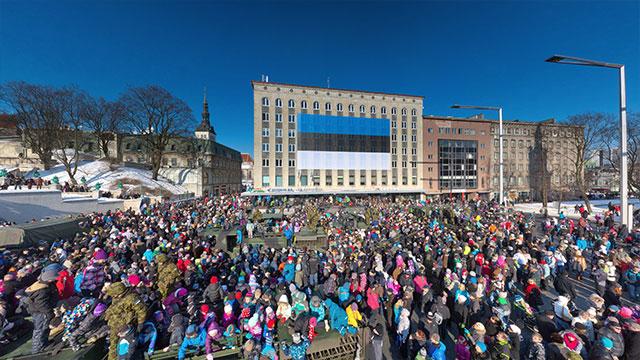
Ruudi’s article “Tallinn Freedom Square as a heterogeneous public space”, published in the Journal of Baltic Studies, focuses on the meaning of Freedom Square in urban space. In her view, the square is not just an architectural object, but a dynamic environment where historical stratifications, political symbols and everyday urban life intersect.
Ruudi shows how the same space can have very different meanings at different times and for different users. Freedom Square functions both as a stage for national events and as an everyday meeting place where people move, stop and experience the city. This ambiguity makes it an ideal research object through which to analyze broader social processes.
Although the main prizes for 2024 and 2025 went to other scholars – including Karl Stuklis and Erfan Fatehi with their co-authors – the AABS committee highlighted the special contribution of Ruudi’s work to urban studies. Being recognized in this competition means that her research is placed at a very high level in the international research space.
The Vītols Article Prize, awarded to the best works published in the Journal of Baltic Studies, is one of the most important awards in the field of Baltic studies. The prize values research that helps to make sense of the social, cultural and historical developments of the region.
Ruudi’s research confirms that even a specific place can open up a broader picture of society. Her analysis of Tallinn’s central square is not limited to the Estonian context, but speaks to the international research community, offering new ways to understand the role of public space in shaping identity and collective memory.
Such an approach helps to strengthen the visibility of Estonian science and shows that local topics can have global significance. Ingrid Ruudi’s recognition is therefore not only a personal recognition, but also a sign that research on Estonian urban space has reached the center of international debate.