Maret Sarapu’s solo exhibition ‘Free and Held’ at Draakon Gallery

07.02.2023 — 04.03.2023

Maret Sarapu’s solo exhibition ‘Free and Held’ at Draakon Gallery

MARET SARAPU
FREE AND HELD
08.02.–04.03.2023
Draakoni gallery 
 
Curators: Kaisa Maasik and Berit Kaschan
Graphic design: Pamela Sume

On Tuesday, 7 February at 18.00 Maret Sarapu opens her solo exhibition Free and Held at Draakoni gallery. The exhibition is open until 4 March.

Maret Sarapu’s seventh solo exhibition looks at the question of how to be free and held. Through five artworks, the artist maps quotidian rituals and symbols, activities and stories that help to ensure our mental sharpness, emotional well-being and a sense of safety in everyday life. That is, focal points that help us make sense of life, prevent crises and find strength in the everyday.

The conceptual centre of the exhibition is simultaneously poetic and practical – on the one side, it allows the viewer to make their own everyday life more poetic and start consciously and playfully mapping out activities, events and ideas that provide support and strength. On the other side, this kind of poetisation has a thoroughly practical effect – conceptualisation and structuring of our routines grounds us and plays a significant role in achieving emotional well-being and maintaining our joie de vivre.

At the exhibition, the artist displays installations and objects: wall panels with nature motifs, mosaic trophies, glass “breaths” and sand boxes reminiscent of Japanese gardens on walls and around the exhibition space. Alongside these objects, the exhibition includes a set of postcards, inviting the viewer to discover their own everyday and internal landscapes through exercises of creative writing.

As part of Free and Held three thematic creative writing workshops led by Berit Kaschan will take place at Draakoni gallery. The workshops will be held on three consecutive Tuesdays – on 14, 21 and 28 February from 18.00 to 20.00.

Pre-registration is required.
Please register to the workshop no later than 12 February: kaisamaasik@gmail.com.

Participation fee: 10€.
Size of the group: 10 participants.
The workshop will be conducted in Estonian.

The exhibition is supported by the Estonian Ministry of Culture, the Cultural Endowment of Estonia and Liviko AS.

Thank you: Karel Koplimets, Maarin Ektermann and Prologue School, Sven Sapelson, Tiina Sarapu, Kairi Orgusaar, Kaie Vakepea

Maret Sarapu (1978) is an artist based in Tallinn. She has graduated from the Department of Glass Art at the Estonian Academy of Arts (BA 2002, MA 2005) and taken part in numerous courses and art residencies both in Estonia and abroad. In her work, Sarapu is mostly inspired by everyday life and often uses nature motifs and repetition. Recently, her experiments with form and concept have led her towards methods like automatic and stream of consciousness writing. Often, the aim is to achieve mental well-being and find harmony between intelligence and emotions. Her alternating process (thinking, writing, working in the studio) and collaboration with material lead to results that give both the artist and the viewer a possibility to make conclusions and generalisations.

Posted by Kaisa Maasik — Permalink

Maret Sarapu’s solo exhibition ‘Free and Held’ at Draakon Gallery

Tuesday 07 February, 2023 — Saturday 04 March, 2023

MARET SARAPU
FREE AND HELD
08.02.–04.03.2023
Draakoni gallery 
 
Curators: Kaisa Maasik and Berit Kaschan
Graphic design: Pamela Sume

On Tuesday, 7 February at 18.00 Maret Sarapu opens her solo exhibition Free and Held at Draakoni gallery. The exhibition is open until 4 March.

Maret Sarapu’s seventh solo exhibition looks at the question of how to be free and held. Through five artworks, the artist maps quotidian rituals and symbols, activities and stories that help to ensure our mental sharpness, emotional well-being and a sense of safety in everyday life. That is, focal points that help us make sense of life, prevent crises and find strength in the everyday.

The conceptual centre of the exhibition is simultaneously poetic and practical – on the one side, it allows the viewer to make their own everyday life more poetic and start consciously and playfully mapping out activities, events and ideas that provide support and strength. On the other side, this kind of poetisation has a thoroughly practical effect – conceptualisation and structuring of our routines grounds us and plays a significant role in achieving emotional well-being and maintaining our joie de vivre.

At the exhibition, the artist displays installations and objects: wall panels with nature motifs, mosaic trophies, glass “breaths” and sand boxes reminiscent of Japanese gardens on walls and around the exhibition space. Alongside these objects, the exhibition includes a set of postcards, inviting the viewer to discover their own everyday and internal landscapes through exercises of creative writing.

As part of Free and Held three thematic creative writing workshops led by Berit Kaschan will take place at Draakoni gallery. The workshops will be held on three consecutive Tuesdays – on 14, 21 and 28 February from 18.00 to 20.00.

Pre-registration is required.
Please register to the workshop no later than 12 February: kaisamaasik@gmail.com.

Participation fee: 10€.
Size of the group: 10 participants.
The workshop will be conducted in Estonian.

The exhibition is supported by the Estonian Ministry of Culture, the Cultural Endowment of Estonia and Liviko AS.

Thank you: Karel Koplimets, Maarin Ektermann and Prologue School, Sven Sapelson, Tiina Sarapu, Kairi Orgusaar, Kaie Vakepea

Maret Sarapu (1978) is an artist based in Tallinn. She has graduated from the Department of Glass Art at the Estonian Academy of Arts (BA 2002, MA 2005) and taken part in numerous courses and art residencies both in Estonia and abroad. In her work, Sarapu is mostly inspired by everyday life and often uses nature motifs and repetition. Recently, her experiments with form and concept have led her towards methods like automatic and stream of consciousness writing. Often, the aim is to achieve mental well-being and find harmony between intelligence and emotions. Her alternating process (thinking, writing, working in the studio) and collaboration with material lead to results that give both the artist and the viewer a possibility to make conclusions and generalisations.

Posted by Kaisa Maasik — Permalink

01.02.2023 — 25.02.2023

Group exhibition ‘The Weak Fins of My Few Skills’ at Pärnu City Gallery

Group exhibition ‘The Weak Fins of My Few Skills’

Pärnu City Gallery
Uus tn 4, Pärnu
2.–25.02.2023

The opening of the group exhibition ‘The Weak Fins of My Few Skills’ will take place on Wednesday, February 1st at 18.00 at Pärnu City Gallery.

The group exhibition ‘The Weak Fins of My Few Skills’ doesn’t seek to give an exhaustive answer to the question of how to live. Rather, it tries its best not to sink while exercising empathy towards its favorite subject – the “water”. According to David Foster Wallace’s famous speech ‘This Is Water’, the “water” in the parable above means nothing more than the most obvious and important realities of our existence, which are nonetheless the hardest to see and talk about. To avoid becoming a living corpse in the daily grind, one must manage the hard-wired human setting of seeing oneself as the center of the world and actively choose to think differently. To choose to look at the “water” anew.

Participating artists: Laura De Jaeger, Joosep Kivimäe, Johannes Luik, Kaisa Maasik, Tiiu Maasik, Eva Mustonen and Mathias Väärsi
Project manager: Elo Meier
Graphic design: Pamela Sume

Supporters: Eesti Kultuurkapitali kujutava ja rakenduskunsti sihtkapital ja Pärnumaa ekspertgrupp, Jaanihanso Siidrivabrik, PERI AS, Pizzakiosk, Pärnu Linn

We thank: Estonia Medical Spa & Hotel, Karel Koplimets, Kusja, Mariel Värk, Nienke Fransen, Pärnu Jahtklubi, Villa Wesset

Posted by Kaisa Maasik — Permalink

Group exhibition ‘The Weak Fins of My Few Skills’ at Pärnu City Gallery

Wednesday 01 February, 2023 — Saturday 25 February, 2023

Group exhibition ‘The Weak Fins of My Few Skills’

Pärnu City Gallery
Uus tn 4, Pärnu
2.–25.02.2023

The opening of the group exhibition ‘The Weak Fins of My Few Skills’ will take place on Wednesday, February 1st at 18.00 at Pärnu City Gallery.

The group exhibition ‘The Weak Fins of My Few Skills’ doesn’t seek to give an exhaustive answer to the question of how to live. Rather, it tries its best not to sink while exercising empathy towards its favorite subject – the “water”. According to David Foster Wallace’s famous speech ‘This Is Water’, the “water” in the parable above means nothing more than the most obvious and important realities of our existence, which are nonetheless the hardest to see and talk about. To avoid becoming a living corpse in the daily grind, one must manage the hard-wired human setting of seeing oneself as the center of the world and actively choose to think differently. To choose to look at the “water” anew.

Participating artists: Laura De Jaeger, Joosep Kivimäe, Johannes Luik, Kaisa Maasik, Tiiu Maasik, Eva Mustonen and Mathias Väärsi
Project manager: Elo Meier
Graphic design: Pamela Sume

Supporters: Eesti Kultuurkapitali kujutava ja rakenduskunsti sihtkapital ja Pärnumaa ekspertgrupp, Jaanihanso Siidrivabrik, PERI AS, Pizzakiosk, Pärnu Linn

We thank: Estonia Medical Spa & Hotel, Karel Koplimets, Kusja, Mariel Värk, Nienke Fransen, Pärnu Jahtklubi, Villa Wesset

Posted by Kaisa Maasik — Permalink

21.02.2023

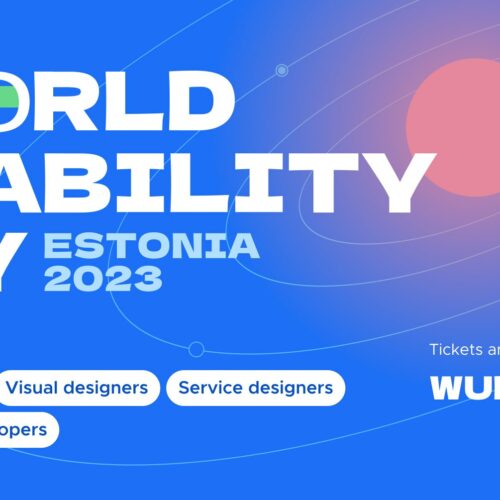
Sensorial Design: Feel, Move, Interact

SD Event

EKA’s Sensorial Design Research group is organizing a design research event at the Estonian Academy of Arts (EKA) aiming to bring knowledge of international researchers to students, researchers, and educators of EKA on the 21st of February 2023.

During this event, two Art and Design PhD students of EKA, Arife Dila Demir and Nesli Hazal Oktay, welcome their peer reviewers and external PhD supervisors to EKA as speakers. Four speakers present their design research work, inviting the audience to discussion. The event is open to the public with a requirement to register. 

It is possible to participate both on-site at EKA (room A101) and watch the broadcast http://tv.artun.ee/.

Schedule (All times are Estonian) 

10:30 – 10:45 – Coffee

10:45 – 11:00 – Welcoming words

11:00 – 11:30 – Hsuan-Hsiu Hung, Estonian Academy of Arts

11:30 – 12:00 – Verena Fuchsberger, University of Salzburg, Austria

12:00 – 12:30 – Panel discussion: Hsuan-Hsiu Hung & Verena Fuchsberger, Moderator: Nesli Hazal Oktay

12:30 – 14:00 – Break for Lunch

14:00 – 14:30 – Claudia Núñez-Pacheco, KTH Royal Institute of Technology, Sweden

14:30 – 15:00 – Nithikul Nimkulrat, OCAD University, Canada

15:00 – 15:30 – Panel discussion: Claudia Núñez-Pacheco & Nithikul Nimkulrat, Moderator: Arife Dila Demir

The presenters: 

Hsuan-Hsiu Hung is a movement and dance artist from Taiwan. Her creative practice weaves together Qigong, somatics, visual art, contemplative practices and contemporary dance. In her creative research, she has been exploring the unfolding experiences of self as well as relationships with others (including the environment) through improvisational movement and dance. Since 2020, she has been invited by Mind and Life Europe to organise European Summer Research Institute and co-facilitate contemplative movement practices with philosophers, neuroscientists, researchers and contemplative practitioners in the Buddhist tradition. Currently, she is also a research assistant at the Faculty of Design of the Estonian Academy of Arts.

Verena Fuchsberger is a Postdoc at the Center for Human-Computer Interaction, University of Salzburg. She has completed her Master’s Degree in Educational Sciences and Psychology at the University of Innsbruck and finished her PhD in HCI at the University of Salzburg. Some of her recent publications include “Heterogeneity in making: Findings, approaches, and reflections on inclusivity in making and makerspaces” (with D. Smit, N. França, C. Gerdenitsch, O. Jaques, J. Kowolik, G. Regal, and E. Roodbergen in Frontiers in Human Dynamics, 2023).

Claudia Núñez-Pacheco is an interaction design researcher and artist, currently working as a postdoctoral researcher at both the division of Media Technology and Interaction Design and Digital Futures at KTH Royal Institute of Technology, Sweden. She holds a PhD and a Master’s degree from the Sydney School of Design at the University of Sydney, in the area of interaction design. Her research investigates how bodily self-awareness can be used as a tool for human self-discovery as well as a generative crafting material for the design of aesthetic experiences.

Nithikul Nimkulrat is a textile artist, designer, researcher, and educator originally from Bangkok, Thailand. Nithikul was educated as an industrial designer (BID) with knowledge of architectural design at Chulalongkorn University in Bangkok. Having worked as a designer in the textile industry in Thailand for three years, she relocated to Helsinki to pursue studies at Aalto University School of Arts, Design and Architecture where she earned a Master of Arts in textile art and design in 2002 and a Doctor of Arts in design in 2009. Currently, she is the Acting Chair of the Material Art & Design program.

Read more about Sensorial Design here 

REGISTER HERE

Posted by Andres Lõo — Permalink

Sensorial Design: Feel, Move, Interact

Tuesday 21 February, 2023

SD Event

EKA’s Sensorial Design Research group is organizing a design research event at the Estonian Academy of Arts (EKA) aiming to bring knowledge of international researchers to students, researchers, and educators of EKA on the 21st of February 2023.

During this event, two Art and Design PhD students of EKA, Arife Dila Demir and Nesli Hazal Oktay, welcome their peer reviewers and external PhD supervisors to EKA as speakers. Four speakers present their design research work, inviting the audience to discussion. The event is open to the public with a requirement to register. 

It is possible to participate both on-site at EKA (room A101) and watch the broadcast http://tv.artun.ee/.

Schedule (All times are Estonian) 

10:30 – 10:45 – Coffee

10:45 – 11:00 – Welcoming words

11:00 – 11:30 – Hsuan-Hsiu Hung, Estonian Academy of Arts

11:30 – 12:00 – Verena Fuchsberger, University of Salzburg, Austria

12:00 – 12:30 – Panel discussion: Hsuan-Hsiu Hung & Verena Fuchsberger, Moderator: Nesli Hazal Oktay

12:30 – 14:00 – Break for Lunch

14:00 – 14:30 – Claudia Núñez-Pacheco, KTH Royal Institute of Technology, Sweden

14:30 – 15:00 – Nithikul Nimkulrat, OCAD University, Canada

15:00 – 15:30 – Panel discussion: Claudia Núñez-Pacheco & Nithikul Nimkulrat, Moderator: Arife Dila Demir

The presenters: 

Hsuan-Hsiu Hung is a movement and dance artist from Taiwan. Her creative practice weaves together Qigong, somatics, visual art, contemplative practices and contemporary dance. In her creative research, she has been exploring the unfolding experiences of self as well as relationships with others (including the environment) through improvisational movement and dance. Since 2020, she has been invited by Mind and Life Europe to organise European Summer Research Institute and co-facilitate contemplative movement practices with philosophers, neuroscientists, researchers and contemplative practitioners in the Buddhist tradition. Currently, she is also a research assistant at the Faculty of Design of the Estonian Academy of Arts.

Verena Fuchsberger is a Postdoc at the Center for Human-Computer Interaction, University of Salzburg. She has completed her Master’s Degree in Educational Sciences and Psychology at the University of Innsbruck and finished her PhD in HCI at the University of Salzburg. Some of her recent publications include “Heterogeneity in making: Findings, approaches, and reflections on inclusivity in making and makerspaces” (with D. Smit, N. França, C. Gerdenitsch, O. Jaques, J. Kowolik, G. Regal, and E. Roodbergen in Frontiers in Human Dynamics, 2023).

Claudia Núñez-Pacheco is an interaction design researcher and artist, currently working as a postdoctoral researcher at both the division of Media Technology and Interaction Design and Digital Futures at KTH Royal Institute of Technology, Sweden. She holds a PhD and a Master’s degree from the Sydney School of Design at the University of Sydney, in the area of interaction design. Her research investigates how bodily self-awareness can be used as a tool for human self-discovery as well as a generative crafting material for the design of aesthetic experiences.

Nithikul Nimkulrat is a textile artist, designer, researcher, and educator originally from Bangkok, Thailand. Nithikul was educated as an industrial designer (BID) with knowledge of architectural design at Chulalongkorn University in Bangkok. Having worked as a designer in the textile industry in Thailand for three years, she relocated to Helsinki to pursue studies at Aalto University School of Arts, Design and Architecture where she earned a Master of Arts in textile art and design in 2002 and a Doctor of Arts in design in 2009. Currently, she is the Acting Chair of the Material Art & Design program.

Read more about Sensorial Design here 

REGISTER HERE

Posted by Andres Lõo — Permalink

26.01.2023

To walk a secant line (?) – Athens meets Tallinn; Tallinn meets Athens

If two points on a circle are a map, a secant line establishes a relationship between the points as two places, connecting them spatially and interrogating their position with respect to each other, juxtaposing them.


After spending three weeks in Athens Estonian Academy of Arts urban studies, animation, architecture, fine arts and graphic design students propose to connect the two geographical locations, Athens and Tallinn, by starting to walk and test the bridging line between two peripheries rarely thought together in the European context.


What is the Union between these geographically so distant cities? How do they feel when experienced side by side, when one melts into the other and vice versa? Can we learn more about the circle by looking at the two points simultaneously?


Join them online: http://urbanisms-of-migration.hotglue.me/ as they walk the two cityscapes together, digging a interactive “hole” into the (dis)common ground of two capitals on the EU’s southern and northeastern borders.


The event is hosted by MA-students of the first ever student-led course of the Estonian Academy of Arts, Tallinn, in collaboration with Communitism, Athens.


Students: Viktor Kudriashov, Diana Drobot, Paul Simon, Luca Liese Ritter, Nabeel Imtiaz, Sachal Rizvi, Christian Hörner, Inês Machado Sales Grade Pinto, Aurelijus Čiupas, Pietro Ercolino Vizzardelli Barcucci, Siew Ching An, Kaja Likar.


Student-lead course “Urbanisms of Migration: Researching the Periphery of the European Union” is supervised by Urban studies second year students:
Blog: https://padlet.com/urbanperipheries/athens
Posted by Keiti Kljavin — Permalink

To walk a secant line (?) – Athens meets Tallinn; Tallinn meets Athens

Thursday 26 January, 2023

If two points on a circle are a map, a secant line establishes a relationship between the points as two places, connecting them spatially and interrogating their position with respect to each other, juxtaposing them.


After spending three weeks in Athens Estonian Academy of Arts urban studies, animation, architecture, fine arts and graphic design students propose to connect the two geographical locations, Athens and Tallinn, by starting to walk and test the bridging line between two peripheries rarely thought together in the European context.


What is the Union between these geographically so distant cities? How do they feel when experienced side by side, when one melts into the other and vice versa? Can we learn more about the circle by looking at the two points simultaneously?


Join them online: http://urbanisms-of-migration.hotglue.me/ as they walk the two cityscapes together, digging a interactive “hole” into the (dis)common ground of two capitals on the EU’s southern and northeastern borders.


The event is hosted by MA-students of the first ever student-led course of the Estonian Academy of Arts, Tallinn, in collaboration with Communitism, Athens.


Students: Viktor Kudriashov, Diana Drobot, Paul Simon, Luca Liese Ritter, Nabeel Imtiaz, Sachal Rizvi, Christian Hörner, Inês Machado Sales Grade Pinto, Aurelijus Čiupas, Pietro Ercolino Vizzardelli Barcucci, Siew Ching An, Kaja Likar.


Student-lead course “Urbanisms of Migration: Researching the Periphery of the European Union” is supervised by Urban studies second year students:
Blog: https://padlet.com/urbanperipheries/athens
Posted by Keiti Kljavin — Permalink

21.01.2023 — 29.01.2023

Body and Identity

The pop-up exhibition opened at NART on 21st of January investigates the possibilities of including the body and related identity markers (age, gender, sexuality, ethnicity, social class, etc.) in the creative process.

The display is the outcome of the “Body & Identity”  course run at the Design Department at the Estonian Academy of Arts in autumn 2022. The students were guided through several layers, or membranes, as we called them,  determining one’s identity, from body and gender up to our contemporary identities in the digital realm.

By actively combining theory, workshops and personal practice, the students were familiarised with how identity-related categories, whether as culturally constructed and historically changing phenomenons or quests for personal style, could be inscribed in and communicated through design and/or arts. Working with relevant literature and constant analysis led to various projects in which the students explored how their favoured medium could be expressed via the given subject matter.

Artists: Karolin Kärm, Rita RebaineLonks, Otto Antson, Kadri Vahar, Epp Vislapuu, Katrin-Maria Terras, Ieva Laskevičiūtė (LTU), Matthieu Champion (FRA)

Curators: Annamari Vänskä (FIN), Piret Puppart

Posted by Andres Lõo — Permalink

Body and Identity

Saturday 21 January, 2023 — Sunday 29 January, 2023

The pop-up exhibition opened at NART on 21st of January investigates the possibilities of including the body and related identity markers (age, gender, sexuality, ethnicity, social class, etc.) in the creative process.

The display is the outcome of the “Body & Identity”  course run at the Design Department at the Estonian Academy of Arts in autumn 2022. The students were guided through several layers, or membranes, as we called them,  determining one’s identity, from body and gender up to our contemporary identities in the digital realm.

By actively combining theory, workshops and personal practice, the students were familiarised with how identity-related categories, whether as culturally constructed and historically changing phenomenons or quests for personal style, could be inscribed in and communicated through design and/or arts. Working with relevant literature and constant analysis led to various projects in which the students explored how their favoured medium could be expressed via the given subject matter.

Artists: Karolin Kärm, Rita RebaineLonks, Otto Antson, Kadri Vahar, Epp Vislapuu, Katrin-Maria Terras, Ieva Laskevičiūtė (LTU), Matthieu Champion (FRA)

Curators: Annamari Vänskä (FIN), Piret Puppart

Posted by Andres Lõo — Permalink

21.02.2023

PhD Thesis Defence of Anders Härm

Anders Härm, PhD candidate of the Estonian Academy of Arts, curriculum of Art History and Visual Culture, will defend his thesis „Disobedient Bodies. The Radical Performative Practices in Art and Culture of the 20th and 21st Centuries“ on 21st of February 2023 at 15.30 at Põhja pst 7, room A501.
The defense can be watched in EKA TV.

External reviewers: Dr. Madli Pesti (Estonian Academy of Music and Theatre), Dr. Jaak Tomberg (University of Tartu).
Opponent: Dr. Madli Pesti

The defense will be held in Estonian.

Members of the Defence Committee: Prof. Krista Kodres, Prof. Virve Sarapik, Dr. Anu Allas, Dr. Anneli Randla, Dr. Luule Epner, Prof. Marek Tamm, Prof. Eneken Laanes.

Please find the PhD thesis HERE.


Posted by Irene Hütsi — Permalink

PhD Thesis Defence of Anders Härm

Tuesday 21 February, 2023

Anders Härm, PhD candidate of the Estonian Academy of Arts, curriculum of Art History and Visual Culture, will defend his thesis „Disobedient Bodies. The Radical Performative Practices in Art and Culture of the 20th and 21st Centuries“ on 21st of February 2023 at 15.30 at Põhja pst 7, room A501.
The defense can be watched in EKA TV.

External reviewers: Dr. Madli Pesti (Estonian Academy of Music and Theatre), Dr. Jaak Tomberg (University of Tartu).
Opponent: Dr. Madli Pesti

The defense will be held in Estonian.

Members of the Defence Committee: Prof. Krista Kodres, Prof. Virve Sarapik, Dr. Anu Allas, Dr. Anneli Randla, Dr. Luule Epner, Prof. Marek Tamm, Prof. Eneken Laanes.

Please find the PhD thesis HERE.


Posted by Irene Hütsi — Permalink

20.02.2023 — 17.03.2023

Preparation for doctoral studies

A preparatory course for those interested in pursuing doctoral studies in practice based and/or artistic research in EKA will take place 20.02–17.03. Practice based and artistic research are based on the professional activity of the artist, designer and/or architect and result in new knowledge in the form of creative practice (ouvre, creative process, product, service, etc.) and written dissertation. The course introduces doctoral studies in EKA, its ongoing research and provides tips and guidelines for writing a doctoral project.

The course consists of seven meetings: four seminars, two thematic days and a final seminar where it is possible to get individual feedback on your project. The course will be led by Dr. Liina Unt, Head of the PhD Programme in Art and Design, Dr. Jaana Päeva, other lecturers include PhD students Ulvi Haagensen, Nesli Oktay and the guest lecturers on the thematic days.

The first thematic day, 21 February, focuses on design. The presenters include Dr. Oscar Tomico (ELISAVA School of Design and Engineering, Eindhoven University of Technology), Dr. Verena Fuchsberger (University of Salzburg), Dr. Claudia Núñez-Pacheco (KTH Royal Institute of Technology), Dr. Nithikul Nimkulrat (OCAD University).

The traditional PhD Vitamin, on 10 March, will bring together experts from artistic and practice-based research and prospective doctoral candidates.

SCHEDULE
20.02 17.30-19.00
21.02 10.30-17.00 thematic day “Sensorial Design: Feel, Move, Interact!”
28.02 17.30-19.00
02.03 17.30-19.00
06.03 17.30-19.00
10.03 thematic day “PhD Vitamin” (info coming soon)
17.03 17.30-19.00

To participate, please send a short introduction (max 1.5 pages) to irene.hutsi@artun.ee by 13.02. The text should address your motivation, previous experience and the potential topic of your research. The number of places is limited, the acceptance will be confirmed by 15.02. The course will be held in English.

Meetings will take place in EKA at room A501 (except thematic days).

Additional info:

Info session on 8 February: doctoral studies at EKA

Conditions for admission to doctoral studies

Estonian Artistic Research Framework Agreement

Posted by Irene Hütsi — Permalink

Preparation for doctoral studies

Monday 20 February, 2023 — Friday 17 March, 2023

A preparatory course for those interested in pursuing doctoral studies in practice based and/or artistic research in EKA will take place 20.02–17.03. Practice based and artistic research are based on the professional activity of the artist, designer and/or architect and result in new knowledge in the form of creative practice (ouvre, creative process, product, service, etc.) and written dissertation. The course introduces doctoral studies in EKA, its ongoing research and provides tips and guidelines for writing a doctoral project.

The course consists of seven meetings: four seminars, two thematic days and a final seminar where it is possible to get individual feedback on your project. The course will be led by Dr. Liina Unt, Head of the PhD Programme in Art and Design, Dr. Jaana Päeva, other lecturers include PhD students Ulvi Haagensen, Nesli Oktay and the guest lecturers on the thematic days.

The first thematic day, 21 February, focuses on design. The presenters include Dr. Oscar Tomico (ELISAVA School of Design and Engineering, Eindhoven University of Technology), Dr. Verena Fuchsberger (University of Salzburg), Dr. Claudia Núñez-Pacheco (KTH Royal Institute of Technology), Dr. Nithikul Nimkulrat (OCAD University).

The traditional PhD Vitamin, on 10 March, will bring together experts from artistic and practice-based research and prospective doctoral candidates.

SCHEDULE
20.02 17.30-19.00
21.02 10.30-17.00 thematic day “Sensorial Design: Feel, Move, Interact!”
28.02 17.30-19.00
02.03 17.30-19.00
06.03 17.30-19.00
10.03 thematic day “PhD Vitamin” (info coming soon)
17.03 17.30-19.00

To participate, please send a short introduction (max 1.5 pages) to irene.hutsi@artun.ee by 13.02. The text should address your motivation, previous experience and the potential topic of your research. The number of places is limited, the acceptance will be confirmed by 15.02. The course will be held in English.

Meetings will take place in EKA at room A501 (except thematic days).

Additional info:

Info session on 8 February: doctoral studies at EKA

Conditions for admission to doctoral studies

Estonian Artistic Research Framework Agreement

Posted by Irene Hütsi — Permalink

20.01.2023 — 30.04.2023

Forecast and Fantasy: Architecture Without Borders, 1960s–1980s

Futuristic fantasies that were manifested in architecture and art from the 1960s to the 1980s.

On Friday, January 20 an exhibition „Forecast and Fantasy: Architecture Without Borders, 1960s–1980s“ will be opened in Rotermann Salt Storage.

This exhibition stages a meeting point for scientific predictions and futuristic fantasies that were manifested in architecture and art from the 1960s to the 1980s.

Bringing together authors from Eastern Europe and the West, the exhibition will display works that emerged from the new technological reality that followed the Second World War, and which took it along unexpected paths: foreseeing the replacement of work with games and collective pleasures in computerised societies, turning away from the overarching machine logic and replacing it with myths and romantic ideas of the human being, or looking for traces of other civilizations from space, instead of conquering it. A utopia of quantification and of scientific planning, of the separation of life and work, was replaced by a striving towards harmony between the machine and nature, the mind and the body. These projects are extensions of a technologicised world, ironic and absurd situations that present a critique of rationalism and speak of the contradictions of late modern society, demonstrating at the same time both its intellectual horizons and the limits of its utopian fantasies.

The exhibition will present works of the following architects, artists and groups: Archizoom, Yuri Avvakumov, Alexander Brodsky & Ilya Utkin, Igor Dřevíkovský & David Vávra, Dvizhenie, Stano Filko, István B. Gellér, Anna Halprin, Zdeněk Hölzel & Jan Kerel, Jozef Jankovič, NER, Tiit Kaljundi, Jevgeni Klimov, Mari Kurismaa, Kai Koppel, Vilen Künnapu, Leonhard Lapin, Hardijs Lediņš, Avo-Himm Looveer, Kirmo Mikkola, Stefan Müller, Jüri Okas, OHO, Ain Padrik, Alessandro Poli, László Rajk, Toomas Rein, Sirje Runge, Superstudio, Tõnis Vint, and others. The photo kit can be downloaded from here.

Curators of the exhibition are Andres Kurg and Mari Laanemets, their assistent is Kristina Papstel. Design is by Kaisa Sööt and Indrek Sirkel. This exhibition has been produced in collaboration with the Estonian Academy of Arts and its research was supported by the Estonian Research Council grant (PRG530).

The director of the Estonian Museum of Architecture Triin Ojari states, that for the Estonian Museum of Architecture, it has been an exceptional loan process, because the exhibited works come from nearly 30 different national and private collections in Europe and Canada. Bringing all the threads together has been a real detective work for the curators. „We are happy to say that the Estonian Museum of Architecture is a reliable partner for several of the world’s top museums and collections, such as the Tate, the Neues Museum in Nuremberg, the Canadian Center for Architecture, Drawing Matter and the Museum Folkwang in Essen.

The exhibition places the Estonian architecture of the 1970s-1980 into international context and does it visually very effectively, comparing the works of our artists and architects not only with Russian paper architects, but also with Polish, Czech, Italian, Latvian and several other authors. The exhibition blurs the line between art and architecture, which both contribute equally to the visions of the future.

The curators of the exhibition, Andres Kurg and Mari Laanemets have collaborated earlier on such exhibitions as “Environment, Projects, Concepts: Architects of the Tallinn School, 1972-1985” (Museum of Estonian Architecture, 2008) and “Our Metamorphic Futures: Design, Technical Aesthetics and Experimental Architecture in the Soviet Union” (Vilnius National Gallery and Estonian Museum of Applied Art and Design, 2011-2012).

Andres Kurg is professor of architectural history and theory at the Estonian Academy of Arts. His research focuses on architecture and design in the Soviet Union in the 1960s-1980s in relation to changes in technology and everyday life, and to alternative art practices.

Mari Laanemets is senior researcher at the Estonian Academy of Arts. Her research focuses on 1960s and 1970s alternative art in the Soviet Union and its intersections with architecture and design practices, on post-war abstractionism and the aesthetics of modernisation in Eastern Europe.

The exhibition in the Estonian Museum of Architecture in the Rotermann Salt Storage is open until April 30, 2023.

Info

Facebook

Posted by Andres Lõo — Permalink

Forecast and Fantasy: Architecture Without Borders, 1960s–1980s

Friday 20 January, 2023 — Sunday 30 April, 2023

Futuristic fantasies that were manifested in architecture and art from the 1960s to the 1980s.

On Friday, January 20 an exhibition „Forecast and Fantasy: Architecture Without Borders, 1960s–1980s“ will be opened in Rotermann Salt Storage.

This exhibition stages a meeting point for scientific predictions and futuristic fantasies that were manifested in architecture and art from the 1960s to the 1980s.

Bringing together authors from Eastern Europe and the West, the exhibition will display works that emerged from the new technological reality that followed the Second World War, and which took it along unexpected paths: foreseeing the replacement of work with games and collective pleasures in computerised societies, turning away from the overarching machine logic and replacing it with myths and romantic ideas of the human being, or looking for traces of other civilizations from space, instead of conquering it. A utopia of quantification and of scientific planning, of the separation of life and work, was replaced by a striving towards harmony between the machine and nature, the mind and the body. These projects are extensions of a technologicised world, ironic and absurd situations that present a critique of rationalism and speak of the contradictions of late modern society, demonstrating at the same time both its intellectual horizons and the limits of its utopian fantasies.

The exhibition will present works of the following architects, artists and groups: Archizoom, Yuri Avvakumov, Alexander Brodsky & Ilya Utkin, Igor Dřevíkovský & David Vávra, Dvizhenie, Stano Filko, István B. Gellér, Anna Halprin, Zdeněk Hölzel & Jan Kerel, Jozef Jankovič, NER, Tiit Kaljundi, Jevgeni Klimov, Mari Kurismaa, Kai Koppel, Vilen Künnapu, Leonhard Lapin, Hardijs Lediņš, Avo-Himm Looveer, Kirmo Mikkola, Stefan Müller, Jüri Okas, OHO, Ain Padrik, Alessandro Poli, László Rajk, Toomas Rein, Sirje Runge, Superstudio, Tõnis Vint, and others. The photo kit can be downloaded from here.

Curators of the exhibition are Andres Kurg and Mari Laanemets, their assistent is Kristina Papstel. Design is by Kaisa Sööt and Indrek Sirkel. This exhibition has been produced in collaboration with the Estonian Academy of Arts and its research was supported by the Estonian Research Council grant (PRG530).

The director of the Estonian Museum of Architecture Triin Ojari states, that for the Estonian Museum of Architecture, it has been an exceptional loan process, because the exhibited works come from nearly 30 different national and private collections in Europe and Canada. Bringing all the threads together has been a real detective work for the curators. „We are happy to say that the Estonian Museum of Architecture is a reliable partner for several of the world’s top museums and collections, such as the Tate, the Neues Museum in Nuremberg, the Canadian Center for Architecture, Drawing Matter and the Museum Folkwang in Essen.

The exhibition places the Estonian architecture of the 1970s-1980 into international context and does it visually very effectively, comparing the works of our artists and architects not only with Russian paper architects, but also with Polish, Czech, Italian, Latvian and several other authors. The exhibition blurs the line between art and architecture, which both contribute equally to the visions of the future.

The curators of the exhibition, Andres Kurg and Mari Laanemets have collaborated earlier on such exhibitions as “Environment, Projects, Concepts: Architects of the Tallinn School, 1972-1985” (Museum of Estonian Architecture, 2008) and “Our Metamorphic Futures: Design, Technical Aesthetics and Experimental Architecture in the Soviet Union” (Vilnius National Gallery and Estonian Museum of Applied Art and Design, 2011-2012).

Andres Kurg is professor of architectural history and theory at the Estonian Academy of Arts. His research focuses on architecture and design in the Soviet Union in the 1960s-1980s in relation to changes in technology and everyday life, and to alternative art practices.

Mari Laanemets is senior researcher at the Estonian Academy of Arts. Her research focuses on 1960s and 1970s alternative art in the Soviet Union and its intersections with architecture and design practices, on post-war abstractionism and the aesthetics of modernisation in Eastern Europe.

The exhibition in the Estonian Museum of Architecture in the Rotermann Salt Storage is open until April 30, 2023.

Info

Facebook

Posted by Andres Lõo — Permalink

30.01.2023

Exhibition Histories and the Roles of Documentation: Writing Ukrainian Art History from Scratch

This event will bring together current research on writing Ukrainian art history of the 20th century from scratch, since an art historical canon has not yet been produced for this period. Focusing on the Soviet and post-soviet eras, art historians Lizaveta GermanOlga Balashova and Svitlana Biedarieva will present their ongoing research and reflect on how museums, exhibitions and artists have conceptualized these periods in art history writing until now. How has the National Art Museum of Ukraine—which is currently closed due to war—written and presented 20th-century Ukrainian art history? What can we learn from histories of exhibitions? What could parallels with other former post-Soviet countries, such as the Baltic States, contribute to revisiting this period? How is Ukraine to rewrite its art history after the war? Artist and researcher Andrij Bojarov will act as a respondent and Margaret Tali will moderate.This hybrid event will be hosted by the Institute of Art History in the Estonian Academy of Arts.

(Not) permanent exhibition at the National Art Museum of Ukraine

Olga Balashova

At the time of the gallery’s closure, the exhibition on the second floor of the National Art Museum in Kyiv was dedicated to 20th-century Ukrainian art. In the absence of a written history of art, we were always referring to this second floor for an up-to-date understanding of this history. Despite this influential role, however, the second-floor exhibition responded to the influence of external contexts, with the core museum team changing it three times during the past 20 years. The first non-Soviet exhibition had a strong national idea behind it, with a central narrative built around the Ukrainian Academy of Art, created in 1917 in the Ukrainian People’s Republic, and artists who were looking for peculiarities of the “Ukrainian style.” In the second exhibition, created after the Revolution of Dignity in 2014, the narration was more open for international interpretation, with a central focus on the avant-garde. The most recent change took place in 2020, just months before Covid-19 hit, with the narration dedicated to the idea of Modernism. The exhibition contained not only positive storytelling but also critical views of historical events and related art movements. After the war, the second-floor exhibition should change again. So far, it is difficult to say in which direction it will unfold, but it needs to include expertise from previous exhibitions and to consider the new post-war context.


We learn what we exhibit what we learn: Looking at art history from the perspective of exhibitions

Lizaveta German

Offering another perspective on how a particular art historical narrative can be (re)written, this presentation will focus on exhibition history as a method and elaborate on cases from two periods in Ukraine: the 1960s and the 1990s. Based on long-term research on both periods, Lizaveta will discuss how one can navigate through gaps in knowledge and lack of physical material, as well as how (and if) apocrypha can stimulate an alternative view of art history.

From this perspective, the former period—namely, the unofficial art of the so-called Ukrainian Sixtiers generation—can be roughly described as a period known through works which could never have been exhibited under the political circumstances of their time. Nor could they have been acquired for museum collections or entered the private art market, which generally didn’t exist in the USSR. As a result, monographic collections of the works of a number of the generation’s key artists have been well preserved in family estates and can be accessed for research. Yet, they have never been seen as subjects of a shared public discourse and have never been viewed as particles of the same space of artistic thought and vision by an external audience. While a good number of artworks from the 1990s—the period inaugurating the recent history of state independence—have long been scattered across anonymous public collections inside and outside Ukraine, others have physically disappeared due to their ephemeral nature or have remained beyond public and scholarly physical reach. Yet, there are somewhat chaotic but curious private documentary archives that cover the first curatorial endeavors to exhibit 1990s art in various non-institutional contexts. Today, this period can be interpreted through the way the art was presented rather than through the actual works.

Documenting Russia’s war on Ukraine in art, 2014–2022

Svitlana Biedarieva

The tensions related to the political changes and the war in Ukraine have provided an important background for a shift towards documentary practices in Ukrainian art after 2014, including film, video work, reportage, artist’s diaries and photography. The presentation will focus on the processes of documentation and creation of artistic archives following the beginning of the war through the full-scale invasion of Ukraine by Russia from 2014. The presentation explores the changes in documentation practices with the recent escalation of violence and the simultaneous transformation of artists’ perspectives on war atrocities, historical memory, trauma and decoloniality. The presentation draws on the interdisciplinary approaches of the film researcher Erika Balsom, the curator Okwui Enwezor and the artist Hito Steyerl to analyze the transformative role of documentary art as a form that emerges in a state of war-related violence and mirrors the effects of the political and economic crisis. It is based on research conducted for the book Contemporary Ukrainian and Baltic Art: Political and Social Perspectives, 1991–2021, edited by Biedarieva (ibidem Press, 2021). This recently published text is the first comparative volume to focus on the reflections of postcolonial transformation, contested history and resistance in Ukraine and the Baltic states (Estonia, Latvia and Lithuania), examining how these topics have been documented and interpreted in the art of these countries.

Olga Balashova is an art historian, curator and critic and the head of the Museum of Contemporary Art NGO in Kyiv.

Lizaveta German is a curator and art historian as well as a co-founder of The Naked Room, Kyiv, and co-curator of the Ukrainian Pavilion, 59th Venice Biennial.

Svitlana Biedarieva is an art historian with a focus on contemporary Ukrainian art, decoloniality and Russia’s war on Ukraine, and is the editor of Contemporary Ukrainian and Baltic Art: Political and Social Perspectives, 1991–2021(2021) and At the Front Line: Ukrainian Art, 2013–2019 (2020).

Andrij Bojarov is a Ukrainian Estonian visual artist, independent curator and researcher who has, from the early 2000s, focused on exploring neglected histories of avant-garde art in the central European context, expanding and blending artistic and curatorial work with research practices.

Margaret Tali is an art historian and co-initiator of the project Communicating Difficult Pasts, which has brought together scholars and artists to revisit the 20th-century past in the broader Baltic region.

Lizaveta German and Olga Balashova are currently visiting researchers at EKA with support of the Estonian Research Council.

Posted by Annika Toots — Permalink

Exhibition Histories and the Roles of Documentation: Writing Ukrainian Art History from Scratch

Monday 30 January, 2023

This event will bring together current research on writing Ukrainian art history of the 20th century from scratch, since an art historical canon has not yet been produced for this period. Focusing on the Soviet and post-soviet eras, art historians Lizaveta GermanOlga Balashova and Svitlana Biedarieva will present their ongoing research and reflect on how museums, exhibitions and artists have conceptualized these periods in art history writing until now. How has the National Art Museum of Ukraine—which is currently closed due to war—written and presented 20th-century Ukrainian art history? What can we learn from histories of exhibitions? What could parallels with other former post-Soviet countries, such as the Baltic States, contribute to revisiting this period? How is Ukraine to rewrite its art history after the war? Artist and researcher Andrij Bojarov will act as a respondent and Margaret Tali will moderate.This hybrid event will be hosted by the Institute of Art History in the Estonian Academy of Arts.

(Not) permanent exhibition at the National Art Museum of Ukraine

Olga Balashova

At the time of the gallery’s closure, the exhibition on the second floor of the National Art Museum in Kyiv was dedicated to 20th-century Ukrainian art. In the absence of a written history of art, we were always referring to this second floor for an up-to-date understanding of this history. Despite this influential role, however, the second-floor exhibition responded to the influence of external contexts, with the core museum team changing it three times during the past 20 years. The first non-Soviet exhibition had a strong national idea behind it, with a central narrative built around the Ukrainian Academy of Art, created in 1917 in the Ukrainian People’s Republic, and artists who were looking for peculiarities of the “Ukrainian style.” In the second exhibition, created after the Revolution of Dignity in 2014, the narration was more open for international interpretation, with a central focus on the avant-garde. The most recent change took place in 2020, just months before Covid-19 hit, with the narration dedicated to the idea of Modernism. The exhibition contained not only positive storytelling but also critical views of historical events and related art movements. After the war, the second-floor exhibition should change again. So far, it is difficult to say in which direction it will unfold, but it needs to include expertise from previous exhibitions and to consider the new post-war context.


We learn what we exhibit what we learn: Looking at art history from the perspective of exhibitions

Lizaveta German

Offering another perspective on how a particular art historical narrative can be (re)written, this presentation will focus on exhibition history as a method and elaborate on cases from two periods in Ukraine: the 1960s and the 1990s. Based on long-term research on both periods, Lizaveta will discuss how one can navigate through gaps in knowledge and lack of physical material, as well as how (and if) apocrypha can stimulate an alternative view of art history.

From this perspective, the former period—namely, the unofficial art of the so-called Ukrainian Sixtiers generation—can be roughly described as a period known through works which could never have been exhibited under the political circumstances of their time. Nor could they have been acquired for museum collections or entered the private art market, which generally didn’t exist in the USSR. As a result, monographic collections of the works of a number of the generation’s key artists have been well preserved in family estates and can be accessed for research. Yet, they have never been seen as subjects of a shared public discourse and have never been viewed as particles of the same space of artistic thought and vision by an external audience. While a good number of artworks from the 1990s—the period inaugurating the recent history of state independence—have long been scattered across anonymous public collections inside and outside Ukraine, others have physically disappeared due to their ephemeral nature or have remained beyond public and scholarly physical reach. Yet, there are somewhat chaotic but curious private documentary archives that cover the first curatorial endeavors to exhibit 1990s art in various non-institutional contexts. Today, this period can be interpreted through the way the art was presented rather than through the actual works.

Documenting Russia’s war on Ukraine in art, 2014–2022

Svitlana Biedarieva

The tensions related to the political changes and the war in Ukraine have provided an important background for a shift towards documentary practices in Ukrainian art after 2014, including film, video work, reportage, artist’s diaries and photography. The presentation will focus on the processes of documentation and creation of artistic archives following the beginning of the war through the full-scale invasion of Ukraine by Russia from 2014. The presentation explores the changes in documentation practices with the recent escalation of violence and the simultaneous transformation of artists’ perspectives on war atrocities, historical memory, trauma and decoloniality. The presentation draws on the interdisciplinary approaches of the film researcher Erika Balsom, the curator Okwui Enwezor and the artist Hito Steyerl to analyze the transformative role of documentary art as a form that emerges in a state of war-related violence and mirrors the effects of the political and economic crisis. It is based on research conducted for the book Contemporary Ukrainian and Baltic Art: Political and Social Perspectives, 1991–2021, edited by Biedarieva (ibidem Press, 2021). This recently published text is the first comparative volume to focus on the reflections of postcolonial transformation, contested history and resistance in Ukraine and the Baltic states (Estonia, Latvia and Lithuania), examining how these topics have been documented and interpreted in the art of these countries.

Olga Balashova is an art historian, curator and critic and the head of the Museum of Contemporary Art NGO in Kyiv.

Lizaveta German is a curator and art historian as well as a co-founder of The Naked Room, Kyiv, and co-curator of the Ukrainian Pavilion, 59th Venice Biennial.

Svitlana Biedarieva is an art historian with a focus on contemporary Ukrainian art, decoloniality and Russia’s war on Ukraine, and is the editor of Contemporary Ukrainian and Baltic Art: Political and Social Perspectives, 1991–2021(2021) and At the Front Line: Ukrainian Art, 2013–2019 (2020).

Andrij Bojarov is a Ukrainian Estonian visual artist, independent curator and researcher who has, from the early 2000s, focused on exploring neglected histories of avant-garde art in the central European context, expanding and blending artistic and curatorial work with research practices.

Margaret Tali is an art historian and co-initiator of the project Communicating Difficult Pasts, which has brought together scholars and artists to revisit the 20th-century past in the broader Baltic region.

Lizaveta German and Olga Balashova are currently visiting researchers at EKA with support of the Estonian Research Council.

Posted by Annika Toots — Permalink

22.01.2023 — 23.04.2023

Holger Loodus in Kai Art Center

Holger Loodus’ solo exhibition will be on view from January 22 to April 23, 2023. ‘18 Moments of Spring‘ is the first presentation of his new work in Kai. 
Loodus, working with painting and media art, is showing two video installations that provide a comprehensive spatial experience. In contrast to the constant haste and fragmentation of contemporary life, Loodus strives to slow down and while doing so, also shares his ideas and methods with the viewers.
The reference in the exhibition title to the Soviet-era television series Seventeen Moments of Spring (1973, directed by Tatyana Lioznova) is not accidental. The particular visual philosophy of the series is akin to the creative creed of the pioneers of ‘slow cinema’ like Andrey Tarkovsky or Ingmar Bergman. If not directly in this type of artistic legacy, the roots of Holger Loodus’ work can be found in a related worldview – a conviction that visual art is an independent language that can be used to address even the most complex of topics and a desire to move toward a slowed down thinking process, where a whole world can be found in a single drop of water.
Holger Loodus is a musician, painter, multimedia and installation artist, as well as a lecturer at the Estonian Academy of Arts. His work is characterized by the construction of strange situations that at times strive toward fantastical realities or alternative histories. In order to do this, he uses analytical and poetic-philosophical visual means – from hyperrealist painting to mechanisms he has constructed himself and from video to staged installations. In 2018, Loodus participated in the exhibition of the Köler Prize nominees at the Contemporary Art Museum of Estonia and was awarded the People’s Choice Award. Since 2010, he has exhibited in group and solo exhibitions in Estonia, Lithuania, Finland and Germany, his most recent solo exhibitions took place at Kogo Gallery in Tartu (2021), Turku Art Museum (2019) and the Tallinn Art Hall Gallery (2017).
The Exhibition is open Wed—Sun at 12—18
Tickets are 10€/6€
Exhibition team: Karin Laansoo, Kadri Laas-Lepasepp, Kadi-Ell Tähiste, Katrin Tomiste, Kärt Koppel, Maija-Britta Laast
Exhibition design: Holger Loodus, Tõnu Narro
Installation: Technical Director – Tõnu Narro, Mihkel Lember + Erik Liiv, Marten Esko
Text author: Elnara Taidre
Graphic Design: Henri Kutsar
Supporters: Cultural Endowment of Estonia, Tallinn Culture & Sports Department, Vestman Energia, Estonian Centre of Folk Culture, AkzoNobel
Special thanks: Katrin Enni, Kaie Loodus, Keiu Krikmann, Rein Loodus, Georg Kaasik, Aksel Haagensen, Hilde Methi, Martijn van Nieuwenhuyzen, Raili Keiv, Tanel Paliale, Andres Teiss, Valge Kuup, Põhjala pruulikoda
Posted by Andres Lõo — Permalink

Holger Loodus in Kai Art Center

Sunday 22 January, 2023 — Sunday 23 April, 2023

Holger Loodus’ solo exhibition will be on view from January 22 to April 23, 2023. ‘18 Moments of Spring‘ is the first presentation of his new work in Kai. 
Loodus, working with painting and media art, is showing two video installations that provide a comprehensive spatial experience. In contrast to the constant haste and fragmentation of contemporary life, Loodus strives to slow down and while doing so, also shares his ideas and methods with the viewers.
The reference in the exhibition title to the Soviet-era television series Seventeen Moments of Spring (1973, directed by Tatyana Lioznova) is not accidental. The particular visual philosophy of the series is akin to the creative creed of the pioneers of ‘slow cinema’ like Andrey Tarkovsky or Ingmar Bergman. If not directly in this type of artistic legacy, the roots of Holger Loodus’ work can be found in a related worldview – a conviction that visual art is an independent language that can be used to address even the most complex of topics and a desire to move toward a slowed down thinking process, where a whole world can be found in a single drop of water.
Holger Loodus is a musician, painter, multimedia and installation artist, as well as a lecturer at the Estonian Academy of Arts. His work is characterized by the construction of strange situations that at times strive toward fantastical realities or alternative histories. In order to do this, he uses analytical and poetic-philosophical visual means – from hyperrealist painting to mechanisms he has constructed himself and from video to staged installations. In 2018, Loodus participated in the exhibition of the Köler Prize nominees at the Contemporary Art Museum of Estonia and was awarded the People’s Choice Award. Since 2010, he has exhibited in group and solo exhibitions in Estonia, Lithuania, Finland and Germany, his most recent solo exhibitions took place at Kogo Gallery in Tartu (2021), Turku Art Museum (2019) and the Tallinn Art Hall Gallery (2017).
The Exhibition is open Wed—Sun at 12—18
Tickets are 10€/6€
Exhibition team: Karin Laansoo, Kadri Laas-Lepasepp, Kadi-Ell Tähiste, Katrin Tomiste, Kärt Koppel, Maija-Britta Laast
Exhibition design: Holger Loodus, Tõnu Narro
Installation: Technical Director – Tõnu Narro, Mihkel Lember + Erik Liiv, Marten Esko
Text author: Elnara Taidre
Graphic Design: Henri Kutsar
Supporters: Cultural Endowment of Estonia, Tallinn Culture & Sports Department, Vestman Energia, Estonian Centre of Folk Culture, AkzoNobel
Special thanks: Katrin Enni, Kaie Loodus, Keiu Krikmann, Rein Loodus, Georg Kaasik, Aksel Haagensen, Hilde Methi, Martijn van Nieuwenhuyzen, Raili Keiv, Tanel Paliale, Andres Teiss, Valge Kuup, Põhjala pruulikoda
Posted by Andres Lõo — Permalink