
Exhibitions
12.06.2022 — 16.06.2022
Kertu Rannula “Snapchat dystoopia”
KERTU RANNULA
“SNAPCHAT DYSTOOPIA”
12/06/2022 – 16/07/2022
Kanal gallery
While analyzing the essence of social media’s beauty filters, the relation between the filter and the user is under observation – is a beauty filter a sticky parasite who is made to be a part of the system, which splits our self-image and profits from our insecurities, or is it a symbiosis, where a filter is soon becoming a part of our daily beauty routine?
When Photoshop or 3D-technologies are still mainly for the tech-savvy, beauty filters that circulate on all social media platforms, allow self-modification with only a single touch. From pure entertainment to a powerful tool, filters have made manipulating with our reality easier than ever before.
Filters, that distort faces and bodies, are widely spread in typical social media users but also within famous influencers. In China, even posting an unedited photo of a friend, is considered a violation of the social norm; and going to a plastic surgeon with an edited selfie has become so frequent that this state of mind has led to a new termin called “Snapchat dysmorphia”.
In the background of the blurred lines of real and virtual world, the exhibition addresses the affect that social media filters have on our daily lives and behaviour.
The centre that connects the installative works together is the artist’s own face. The face has become a moldable material which transforms through different mediums. Visitors are invited to step into an alternative reality, where the bodily roles of the human and the filter have been reversed in the exhibition room.
Kertu Rannula (b. 1997) lives and works in Tallinn. Through site specific photo- and video installations, she is researching the relationships, signs and symbols of the contemporary human and culture. Rannula holds a Bachelor’s degree in photography from the Estonian Academy of Arts. She has also studied liberal arts in Iceland University of the Arts and sculpture and installation in Belgium PXL University of Applied Sciences and Arts. Rannula has participated in shows in Estonia and abroad. In 2020, she took part of ISSP Riga Residency.
Graphic designer: Henri Kutsar
Supporters: Estonian Cultural Endowment, Võru city
Thanks: Alari Toomsalu, Siim Asmer, Ago Paabusk, Kairit Onno
KANAL GALLERY
Thu–Sat 12–18
www.liivaate.ee
Facebook, Instagram @kanalgalerii
More information:
Stella Mõttus
Kanal Gallery’s gallerist
stella.mottus@gmail.com
+372 55 999 609
Kertu Rannula “Snapchat dystoopia”
Sunday 12 June, 2022 — Thursday 16 June, 2022
KERTU RANNULA
“SNAPCHAT DYSTOOPIA”
12/06/2022 – 16/07/2022
Kanal gallery
While analyzing the essence of social media’s beauty filters, the relation between the filter and the user is under observation – is a beauty filter a sticky parasite who is made to be a part of the system, which splits our self-image and profits from our insecurities, or is it a symbiosis, where a filter is soon becoming a part of our daily beauty routine?
When Photoshop or 3D-technologies are still mainly for the tech-savvy, beauty filters that circulate on all social media platforms, allow self-modification with only a single touch. From pure entertainment to a powerful tool, filters have made manipulating with our reality easier than ever before.
Filters, that distort faces and bodies, are widely spread in typical social media users but also within famous influencers. In China, even posting an unedited photo of a friend, is considered a violation of the social norm; and going to a plastic surgeon with an edited selfie has become so frequent that this state of mind has led to a new termin called “Snapchat dysmorphia”.
In the background of the blurred lines of real and virtual world, the exhibition addresses the affect that social media filters have on our daily lives and behaviour.
The centre that connects the installative works together is the artist’s own face. The face has become a moldable material which transforms through different mediums. Visitors are invited to step into an alternative reality, where the bodily roles of the human and the filter have been reversed in the exhibition room.
Kertu Rannula (b. 1997) lives and works in Tallinn. Through site specific photo- and video installations, she is researching the relationships, signs and symbols of the contemporary human and culture. Rannula holds a Bachelor’s degree in photography from the Estonian Academy of Arts. She has also studied liberal arts in Iceland University of the Arts and sculpture and installation in Belgium PXL University of Applied Sciences and Arts. Rannula has participated in shows in Estonia and abroad. In 2020, she took part of ISSP Riga Residency.
Graphic designer: Henri Kutsar
Supporters: Estonian Cultural Endowment, Võru city
Thanks: Alari Toomsalu, Siim Asmer, Ago Paabusk, Kairit Onno
KANAL GALLERY
Thu–Sat 12–18
www.liivaate.ee
Facebook, Instagram @kanalgalerii
More information:
Stella Mõttus
Kanal Gallery’s gallerist
stella.mottus@gmail.com
+372 55 999 609
01.06.2022 — 27.06.2022
Riin Maide “It’s Like I Barely See”
Riin Maide’s personal exhibition “It’s Like I Barely See” in Hobusepea gallery. Exhibition will be open until June 27, 2022.
Windows covered by transparent plastic and scaffolding are normally the signs of something new or fresh arriving soon in an urban environment. Similarly to curtains, these elements denote certain anticipation and will be forgotten when they open up new views.
“It’s Like I Barely See” is pays homage to forgotten architecture. While depicting fragile phenomena in urban space, such as framework and construction, the artist attempts to stretch the temporary into something endless.
Riin Maide (b. 1997) lives and works in Tallinn. Through playful installations and staged environments Maide studies the themes of memory and presence. In Riin Maide’s artwork, the emphasis lies on site-specific art, ephemerality and graphic image. As an artist, curator and performer, Maide has participated in exhibition and performance art projects both in Estonia and abroad. She has obtained BA degree in the department of graphic art at the Estonian Academy of Arts and taken additional courses in the department of scenography, faculty of alternative and puppet theatre in DAMU, Prague. In 2020, Maide received the Young Artist Award of the Estonian Academy of Arts and Edmund Valtman grant.
The artist expresses her gratitude to: Rain Kilkson, Cristo Madissoo, department of graphic art at the Estonian Academy of Arts.
Exhibition is supported by the Cultural Endowment of Estonia.
Exhibitions in Hobusepea gallery are supported by the Cultural Endowment of Estonia, Estonian Ministry of Culture and Liviko Ltd.
Riin Maide “It’s Like I Barely See”
Wednesday 01 June, 2022 — Monday 27 June, 2022
Riin Maide’s personal exhibition “It’s Like I Barely See” in Hobusepea gallery. Exhibition will be open until June 27, 2022.
Windows covered by transparent plastic and scaffolding are normally the signs of something new or fresh arriving soon in an urban environment. Similarly to curtains, these elements denote certain anticipation and will be forgotten when they open up new views.
“It’s Like I Barely See” is pays homage to forgotten architecture. While depicting fragile phenomena in urban space, such as framework and construction, the artist attempts to stretch the temporary into something endless.
Riin Maide (b. 1997) lives and works in Tallinn. Through playful installations and staged environments Maide studies the themes of memory and presence. In Riin Maide’s artwork, the emphasis lies on site-specific art, ephemerality and graphic image. As an artist, curator and performer, Maide has participated in exhibition and performance art projects both in Estonia and abroad. She has obtained BA degree in the department of graphic art at the Estonian Academy of Arts and taken additional courses in the department of scenography, faculty of alternative and puppet theatre in DAMU, Prague. In 2020, Maide received the Young Artist Award of the Estonian Academy of Arts and Edmund Valtman grant.
The artist expresses her gratitude to: Rain Kilkson, Cristo Madissoo, department of graphic art at the Estonian Academy of Arts.
Exhibition is supported by the Cultural Endowment of Estonia.
Exhibitions in Hobusepea gallery are supported by the Cultural Endowment of Estonia, Estonian Ministry of Culture and Liviko Ltd.
11.06.2022 — 07.07.2022
Brit Pavelson and Cloe Jancis: Self-Portrait as a Dancer and a Revolutionary
Opening of the exhibition Self-Portrait as a Dancer and a Revolutionary by Brit Pavelson and Cloe Jancis at Võru Showcase
The opening of the duo show entitled Self-Portrait as a Dancer and a Revolutionary by Brit Pavelson and Cloe Jancis will take place on 11 June at 5 pm at Võru Showcase. The exhibition playfully addresses topics such as women’s everyday roles and the spaces in which these roles are expressed. What are the roles that permeate through the definition of a parent, a partner and an artist? How can we best cope with the emotional states that different roles make us feel? Which domestic practices are considered “feminine” and what is their social or artistic value?
The title of the exhibition refers to a false citation by the anarchist activist, feminist, writer and teacher Emma Goldman (1869–1940), which has achieved mythical status today: “If I can’t dance, I don’t want to be part of your revolution.” The sentence refers to Goldman’s reaction when she was criticised for dancing joyfully at parties, arguing that agitators should not engage in such frivolous activities. Goldman’s quote is eloquent because many phenomena or common practices are still today called “feminine,” which aims to deem them of lower value. Following Goldman’s example, contemporary women’s rights activists should not choose between dancing and revolution, everyday joys and political activism, but they should instead find individual ways to intertwine these worlds, empower themselves and others, and shift values.
Curators: Brigit Arop and Sigrid Liira
Graphic design: Elisabeth Juusu
A bus starting from Tallinn and stopping also in Tartu will come to Võru on 12th of June. More info here (only in Estonian unfortunately).
The exhibition takes place in three cities during 2022, starting at the Galerie Showcase (Place aux Herbes, 38000) in Grenoble, France. In summer, the exhibition will arrive in Tallinn and Võru, Estonia.
The exhibition is open 24/7 and will remain open until 7 July.v Event on Facebook
Sponsors: The Cultural Endowment of Estonia, Võru City, Võru rannabangalo
Special thanks: Camille Laurelli, Laura Kuusk, Koit Randmäe, Silver Marge
Contact for information:
Brigit Arop
curator
+372 5621 6259
brigit.arop@artun.ee
Brit Pavelson and Cloe Jancis: Self-Portrait as a Dancer and a Revolutionary
Saturday 11 June, 2022 — Thursday 07 July, 2022
Opening of the exhibition Self-Portrait as a Dancer and a Revolutionary by Brit Pavelson and Cloe Jancis at Võru Showcase
The opening of the duo show entitled Self-Portrait as a Dancer and a Revolutionary by Brit Pavelson and Cloe Jancis will take place on 11 June at 5 pm at Võru Showcase. The exhibition playfully addresses topics such as women’s everyday roles and the spaces in which these roles are expressed. What are the roles that permeate through the definition of a parent, a partner and an artist? How can we best cope with the emotional states that different roles make us feel? Which domestic practices are considered “feminine” and what is their social or artistic value?
The title of the exhibition refers to a false citation by the anarchist activist, feminist, writer and teacher Emma Goldman (1869–1940), which has achieved mythical status today: “If I can’t dance, I don’t want to be part of your revolution.” The sentence refers to Goldman’s reaction when she was criticised for dancing joyfully at parties, arguing that agitators should not engage in such frivolous activities. Goldman’s quote is eloquent because many phenomena or common practices are still today called “feminine,” which aims to deem them of lower value. Following Goldman’s example, contemporary women’s rights activists should not choose between dancing and revolution, everyday joys and political activism, but they should instead find individual ways to intertwine these worlds, empower themselves and others, and shift values.
Curators: Brigit Arop and Sigrid Liira
Graphic design: Elisabeth Juusu
A bus starting from Tallinn and stopping also in Tartu will come to Võru on 12th of June. More info here (only in Estonian unfortunately).
The exhibition takes place in three cities during 2022, starting at the Galerie Showcase (Place aux Herbes, 38000) in Grenoble, France. In summer, the exhibition will arrive in Tallinn and Võru, Estonia.
The exhibition is open 24/7 and will remain open until 7 July.v Event on Facebook
Sponsors: The Cultural Endowment of Estonia, Võru City, Võru rannabangalo
Special thanks: Camille Laurelli, Laura Kuusk, Koit Randmäe, Silver Marge
Contact for information:
Brigit Arop
curator
+372 5621 6259
brigit.arop@artun.ee
03.06.2022 — 11.06.2022
EKA GD MA graduation exhibition Silence After Early Hours
Silence After Early Hours
(first-ever) EKA GD MA Graduation Show
4–11 June 2022, 1–7pm
Do you know the feeling? The feeling you have after leaving a long and eventful party minutes after the sunrise? The feeling of sneaking to the door past drunken animals and sleeping unfortunates, the feeling of smoke-filled air and a sticky floor that by now looks almost glazed in a varnish of liquor. The feeling of opening the doors and getting slammed in the face by a blinding ray of sunshine, the feeling of the first lungful breath you take, and being almost surprised the air can smell so good. the feeling of guilt as you stumble and hobble, shuffle, and dodder your way home as others have just woken up and are in a fast-paced manner gracefully heading to work? That’s now, we are leaving and returning to the places and lives we left behind. An exhausting end before a new beginning or the silence after early hours.
Vernissage: June 3, 6:30–9 pm
Finissage: June 11, 9 pm–midnight
Class of 2022
Alejandro Bellón Ample, Louise Borinski, Aleksandrs Breže, Paula Buškevica, Björn Giesecke, Otso Peräsaari, Diandra Rebase, Katarina Sarap
Estonian Academy of Arts, Tallinn
MA in Graphic Design
EKA GD MA graduation exhibition Silence After Early Hours
Friday 03 June, 2022 — Saturday 11 June, 2022
Silence After Early Hours
(first-ever) EKA GD MA Graduation Show
4–11 June 2022, 1–7pm
Do you know the feeling? The feeling you have after leaving a long and eventful party minutes after the sunrise? The feeling of sneaking to the door past drunken animals and sleeping unfortunates, the feeling of smoke-filled air and a sticky floor that by now looks almost glazed in a varnish of liquor. The feeling of opening the doors and getting slammed in the face by a blinding ray of sunshine, the feeling of the first lungful breath you take, and being almost surprised the air can smell so good. the feeling of guilt as you stumble and hobble, shuffle, and dodder your way home as others have just woken up and are in a fast-paced manner gracefully heading to work? That’s now, we are leaving and returning to the places and lives we left behind. An exhausting end before a new beginning or the silence after early hours.
Vernissage: June 3, 6:30–9 pm
Finissage: June 11, 9 pm–midnight
Class of 2022
Alejandro Bellón Ample, Louise Borinski, Aleksandrs Breže, Paula Buškevica, Björn Giesecke, Otso Peräsaari, Diandra Rebase, Katarina Sarap
Estonian Academy of Arts, Tallinn
MA in Graphic Design
03.05.2022 — 15.06.2022
The Seaweed Ceremony
The exhibition “The Seaweed Ceremony” will be opened on June 3 at 7 pm in Tallinn, at the Sepikoja Gallery of Põhjala Factory (Marati 5).
The exhibition “The Seaweed Ceremony” focuses on the aquatic environment and seaweed species, which are an integral part of this fragile ecosystem. Combining existing knowledge of aquatic organisms with design research, the exhibition treats seaweed caringly and respectfully, through ritual-like gestures. In this way, students from the universities of Iceland, Finland and Estonia show works based on the local context in the “The Seaweed Ceremony”, which reflect on the symbiotic interaction of man and the environment – the post-anthropocentric symbioscene.
“The Seaweed Ceremony” focuses on the conscious design approach that seaweed as an underused but highly economically exploited bioresource, with the aim of reaching both for the development of renewable bioresources and for their industrialization.
In the last decade, seaweed has been explored as a potential resource for new materials. Seaweed is also known as “green gold”, the biofuel of the future and an alternative to animal protein on the human food plate. In order for these high expectations to be realized in the long run, we need a radical change in our way of thinking, learning from the mysterious mechanisms of the water world and the combinations of different species, moving towards a restorative, supportive and nourishing model.
Julia Lohmann, professor and multidisciplinary designer at Aalto University, writes: “Seaweed becomes more than just a resource, but also our method and muse”.
Seaweed, a large heterogeneous group of organisms capable of photosynthetic activity in seawater, are considered to be the most untapped bioresource. The DiMa Sustainable Design Laboratory of the Estonian Academy of Arts has been dealing with local seaweed as one of its focus topics since 2015. The local seaweed has been tested as a raw material for the production of various bioplastics, as a nutrient-rich food as well as as a possible wastewater-draining biomass.
Students from universities participating in the exhibition:
Aalto University
Aura Latva-Somppi, Élise Piquemal, Elsa Tölli, Nina Naveršnik, Zoë Robertson, Vihar Kotecha
Listaháskóli Íslands
Arngrímur Guðmundsson, Birna Sísí Jóhannsdóttir, Bryndís Magnúsdóttir, Elín Dagný Kristinsdóttir, Emma Kristina A. Herrera, Helgi Jóhannsson, Jón Sölvi Walderhaug Eiríksson, Marsibil Sól Þ. Blöndal, Mekkín Guðmundsdóttir, Salóme Bregt Hollanders
Estonian Academy of Arts
Cärol Ott, Indre Spitryte, Karl-Christoph Rebane, Karolin Kärm, Katarina Kruus, Kristiina Jeromans, Marion Laev
Supervisors:
Aalto University
Anna van der Lei, Julia Lohmann
ListahAskóli Íslands
Tinna Gunnarsdottir, Rúna Thors, Lee Lorenzo Lynch, Agnar Jón Egilsson, Johanna Seelemann
Estonian Academy of Arts
Annika Kaldoja, Kärt Ojavee
Elisabeth Perk and Roger Matthias Laas, 2nd year students of EKA Interior Architecture, designed the design of the exhibition and the complete solution of the space. The course was supervised by Kaisa Sööt and Adam Kaarma.
The exhibition is open from 04.06 to 15.06.2022
Mon-Fri 10.00–17.00; Sat-Sun 12.00–17-00
Põhjala Factory Sepikoja Gallery (Marati 5)
The exhibition is supported by the Estonian Cultural Endowment’s Architecture Endowment and the Nordic Council of Ministers
The Seaweed Ceremony
Tuesday 03 May, 2022 — Wednesday 15 June, 2022
The exhibition “The Seaweed Ceremony” will be opened on June 3 at 7 pm in Tallinn, at the Sepikoja Gallery of Põhjala Factory (Marati 5).
The exhibition “The Seaweed Ceremony” focuses on the aquatic environment and seaweed species, which are an integral part of this fragile ecosystem. Combining existing knowledge of aquatic organisms with design research, the exhibition treats seaweed caringly and respectfully, through ritual-like gestures. In this way, students from the universities of Iceland, Finland and Estonia show works based on the local context in the “The Seaweed Ceremony”, which reflect on the symbiotic interaction of man and the environment – the post-anthropocentric symbioscene.
“The Seaweed Ceremony” focuses on the conscious design approach that seaweed as an underused but highly economically exploited bioresource, with the aim of reaching both for the development of renewable bioresources and for their industrialization.
In the last decade, seaweed has been explored as a potential resource for new materials. Seaweed is also known as “green gold”, the biofuel of the future and an alternative to animal protein on the human food plate. In order for these high expectations to be realized in the long run, we need a radical change in our way of thinking, learning from the mysterious mechanisms of the water world and the combinations of different species, moving towards a restorative, supportive and nourishing model.
Julia Lohmann, professor and multidisciplinary designer at Aalto University, writes: “Seaweed becomes more than just a resource, but also our method and muse”.
Seaweed, a large heterogeneous group of organisms capable of photosynthetic activity in seawater, are considered to be the most untapped bioresource. The DiMa Sustainable Design Laboratory of the Estonian Academy of Arts has been dealing with local seaweed as one of its focus topics since 2015. The local seaweed has been tested as a raw material for the production of various bioplastics, as a nutrient-rich food as well as as a possible wastewater-draining biomass.
Students from universities participating in the exhibition:
Aalto University
Aura Latva-Somppi, Élise Piquemal, Elsa Tölli, Nina Naveršnik, Zoë Robertson, Vihar Kotecha
Listaháskóli Íslands
Arngrímur Guðmundsson, Birna Sísí Jóhannsdóttir, Bryndís Magnúsdóttir, Elín Dagný Kristinsdóttir, Emma Kristina A. Herrera, Helgi Jóhannsson, Jón Sölvi Walderhaug Eiríksson, Marsibil Sól Þ. Blöndal, Mekkín Guðmundsdóttir, Salóme Bregt Hollanders
Estonian Academy of Arts
Cärol Ott, Indre Spitryte, Karl-Christoph Rebane, Karolin Kärm, Katarina Kruus, Kristiina Jeromans, Marion Laev
Supervisors:
Aalto University
Anna van der Lei, Julia Lohmann
ListahAskóli Íslands
Tinna Gunnarsdottir, Rúna Thors, Lee Lorenzo Lynch, Agnar Jón Egilsson, Johanna Seelemann
Estonian Academy of Arts
Annika Kaldoja, Kärt Ojavee
Elisabeth Perk and Roger Matthias Laas, 2nd year students of EKA Interior Architecture, designed the design of the exhibition and the complete solution of the space. The course was supervised by Kaisa Sööt and Adam Kaarma.
The exhibition is open from 04.06 to 15.06.2022
Mon-Fri 10.00–17.00; Sat-Sun 12.00–17-00
Põhjala Factory Sepikoja Gallery (Marati 5)
The exhibition is supported by the Estonian Cultural Endowment’s Architecture Endowment and the Nordic Council of Ministers
25.05.2022 — 26.06.2022
Maria Izabella Lehtsaar “your brain is a bedroom” / “turvaliselt lilla”
Opening: 25/05/22 6pm (EET)
Open until: 26/07/22
First, find yourself a comfortable place to relax and close your eyes. Take a deep breath through your nose, hold it for a moment, and then exhale slowly through your mouth. As you relax, try to focus on easing the tension in your body. Feel it leaving as you breathe out. Now, try to allow yourself to imagine a safe space. What is it like? What is the first location that comes to your mind? Maybe it’s a quiet field or a room full of kittens. As you meditate, you can envision and move through it. This can be a little challenging at first, but once you perfect it, going to your safe space can become a calming routine. No one can enter without your permission. This is where you can feel protected. As you come back, you can perfect it to your taste and allow it to shape as you see fit. Picture the tiniest details. What can you hear? How do all the different textures feel? Do you notice any smells? Allow yourself to relax as you breathe in and out. Remember that you can leave any time. You are in control.
A mental safe space or mind sanctuary is a cerebral location that you envision to boost your meditation or to reduce stress. Generally, the term safe space refers to a space created for marginalized people to come together and share their experiences with oppression. It can also indicate that the space has zero tolerance for violence, hate speech and harassment.
“Your brain is a bedroom” is a project that explores the idea of a safe space. This space was first created in 2020 when, in the middle of the pandemic, the artist Maria Izabella Lehtsaar started questioning the safety of one’s home. How does one cope in an unsafe environment and how to make it as secure as possible? Lehtsaar found we can mostly create it through online spaces and the mental safe space exercise. In that sense, we can consider the closet metaphor a notional space to keep one’s identity hidden for safety reasons because of social condemnation. In this version of a safe space, you can relax and play dress up.
post-gallery.online exhibitions are supported by Cultural Endowment of Estonia
Maria Izabella Lehtsaar is an artist based in Tallinn, who works primarily with queer experience and mental health topics, often playing with the fine line between reality and fantasy. Their works and motifs are at times modest, loud and captivating. In their work they blend pop culture aesthetics and sensitive black-and-white graphics, combining them in practice with textiles, drawing and text.
Lehtsaar is currently studying for a Master’s degree in contemporary art at the Estonian Academy of Arts, and has graduated with a bachelor’s degree in printmaking in 2020. Their recent exhibitions include the The Youth Exhibition of 18th Tallinn Print Triennial “SLOW MANOEUVRES”, 2022 (EKKM, curated by Riin Maide and Brit Kikas) and “Resemblance Through Contact. Grammar of Imprint”, 2020 (Tartu Art House and EKA Gallery, curated by Liina Siib and Maria Erikson). Lehtsaar was awarded the Edmund Valtman Fund scholarship of 2021.
Maria Izabella Lehtsaar “your brain is a bedroom” / “turvaliselt lilla”
Wednesday 25 May, 2022 — Sunday 26 June, 2022
Opening: 25/05/22 6pm (EET)
Open until: 26/07/22
First, find yourself a comfortable place to relax and close your eyes. Take a deep breath through your nose, hold it for a moment, and then exhale slowly through your mouth. As you relax, try to focus on easing the tension in your body. Feel it leaving as you breathe out. Now, try to allow yourself to imagine a safe space. What is it like? What is the first location that comes to your mind? Maybe it’s a quiet field or a room full of kittens. As you meditate, you can envision and move through it. This can be a little challenging at first, but once you perfect it, going to your safe space can become a calming routine. No one can enter without your permission. This is where you can feel protected. As you come back, you can perfect it to your taste and allow it to shape as you see fit. Picture the tiniest details. What can you hear? How do all the different textures feel? Do you notice any smells? Allow yourself to relax as you breathe in and out. Remember that you can leave any time. You are in control.
A mental safe space or mind sanctuary is a cerebral location that you envision to boost your meditation or to reduce stress. Generally, the term safe space refers to a space created for marginalized people to come together and share their experiences with oppression. It can also indicate that the space has zero tolerance for violence, hate speech and harassment.
“Your brain is a bedroom” is a project that explores the idea of a safe space. This space was first created in 2020 when, in the middle of the pandemic, the artist Maria Izabella Lehtsaar started questioning the safety of one’s home. How does one cope in an unsafe environment and how to make it as secure as possible? Lehtsaar found we can mostly create it through online spaces and the mental safe space exercise. In that sense, we can consider the closet metaphor a notional space to keep one’s identity hidden for safety reasons because of social condemnation. In this version of a safe space, you can relax and play dress up.
post-gallery.online exhibitions are supported by Cultural Endowment of Estonia
Maria Izabella Lehtsaar is an artist based in Tallinn, who works primarily with queer experience and mental health topics, often playing with the fine line between reality and fantasy. Their works and motifs are at times modest, loud and captivating. In their work they blend pop culture aesthetics and sensitive black-and-white graphics, combining them in practice with textiles, drawing and text.
Lehtsaar is currently studying for a Master’s degree in contemporary art at the Estonian Academy of Arts, and has graduated with a bachelor’s degree in printmaking in 2020. Their recent exhibitions include the The Youth Exhibition of 18th Tallinn Print Triennial “SLOW MANOEUVRES”, 2022 (EKKM, curated by Riin Maide and Brit Kikas) and “Resemblance Through Contact. Grammar of Imprint”, 2020 (Tartu Art House and EKA Gallery, curated by Liina Siib and Maria Erikson). Lehtsaar was awarded the Edmund Valtman Fund scholarship of 2021.
31.05.2022 — 25.06.2022
Sirja-Liisa Eelma & Tiina Sarapu “Black Mirror”
Sirja-Liisa Eelma and Tiina Sarapu will open their co-exhibition Black Mirror in Draakon gallery at 5pm on Tuesday, May 31st 2022.
Exhibition will be open until June 25, 2022.
Black surface absorbs light and colours; while looking at black surface, one can see info infinity, unknowing, solitude and protective tenderness. Mirror gives you the honest truth. The danger to get stuck in reflections and in the reflections of reflections is as big as the temptation to touch the snoozing screen of a smartphone in order to open completely different kind of worlds.
Landscape painter of 17th century Claude Lorrain made use of black mirror as an optical aid. Compared to a clear mirror, the details are more subtle and the reflection of black mirror is more simplified. The black reflection brings forth the tonal range as well as reduces the intensity of tones.
The encounter of the reflecting and painted worlds refers to the multilayeredness of existence. The layer of glass in front of the painting is protecting the artwork but also creating the distance between the painting and the viewer. This way, the viewer misses the opportunity of directly experiencing the materiality, fragrance and smell of the paint. The reflections, flickers of light and shadows of the glass function either as disturbance or as an unstable and captivating finesse on the surface of painting.
Sirja-Liisa Eelma (b. 1973) is a conceptual painter whose visual language is characterized by visually minimalistic structures. Her painting series, based on the slow transformation of a repetitive image, focus on the themes of emptiness, ambivalence of meanings as well as defining the visible and the invisible.
Sirja-Liisa Eelma has graduated from the department of painting at the Estonian Academy of Arts (MA, 1996). Since 2018, she has been studying in the doctoral school of the Estonian Academy of Arts. In 2016, her artistic practice was recognized with Konrad Mägi Award. Eelma’s artworks belong both to private collections as well as the collection of the Art Museum of Estonia. She has held numerous personal exhibitions as well as participated in group and curatorial exhibitions both in Estonia and abroad.
Tiina Sarapu‘s (b. 1971) artistic practice can be characterized by minimalistic approach towards form. The perfectly composed form is almost always extremely simple and well interpreted. While having been exhibiting her artwork mainly as an installation artist during the past few years, Sarapu has often transferred the meanings of an initial idea to various contexts (several installations with music stands and mirrors), created illusory spaces, visualized sounds, extended the borders of perception. As an conceptual artist, Tiina Sarapu is using glass in order to express the idea of the multilayeredness of life while working with the oppositions present in glass as a material. (Reeli Kõiv)
Tiina Sarapu has obtained MA degree in the department of glass art at the Estonian Academy of Arts in 1996. In 1996–2017, she was teaching in the same department and in 2003-2017 worked there as an associate professor. Sarapu has participated in numerous exhibitions, symposiums and workshops both in Estonia and abroad. She has received acknowledgement in international competitions of glass art. Sarapu’s artwork belongs to the collections of several museums and private collectors. She received the honorary title of Acknowledged Glass Artist 2005–2005 and Acknowledged Glass Artist 2018–2019; in 2007, Sarapu received Kristjan Raud Art Award, in 2019 she deserved the Annual Award of the Cultural Endowment of Estonia and was awarded the Artist Laureate Salary in 2021–2023.
Exhibitions in Draakon gallery are supported by the Cultural Endowment of Estonia, Estonian
Sirja-Liisa Eelma & Tiina Sarapu “Black Mirror”
Tuesday 31 May, 2022 — Saturday 25 June, 2022
Sirja-Liisa Eelma and Tiina Sarapu will open their co-exhibition Black Mirror in Draakon gallery at 5pm on Tuesday, May 31st 2022.
Exhibition will be open until June 25, 2022.
Black surface absorbs light and colours; while looking at black surface, one can see info infinity, unknowing, solitude and protective tenderness. Mirror gives you the honest truth. The danger to get stuck in reflections and in the reflections of reflections is as big as the temptation to touch the snoozing screen of a smartphone in order to open completely different kind of worlds.
Landscape painter of 17th century Claude Lorrain made use of black mirror as an optical aid. Compared to a clear mirror, the details are more subtle and the reflection of black mirror is more simplified. The black reflection brings forth the tonal range as well as reduces the intensity of tones.
The encounter of the reflecting and painted worlds refers to the multilayeredness of existence. The layer of glass in front of the painting is protecting the artwork but also creating the distance between the painting and the viewer. This way, the viewer misses the opportunity of directly experiencing the materiality, fragrance and smell of the paint. The reflections, flickers of light and shadows of the glass function either as disturbance or as an unstable and captivating finesse on the surface of painting.
Sirja-Liisa Eelma (b. 1973) is a conceptual painter whose visual language is characterized by visually minimalistic structures. Her painting series, based on the slow transformation of a repetitive image, focus on the themes of emptiness, ambivalence of meanings as well as defining the visible and the invisible.
Sirja-Liisa Eelma has graduated from the department of painting at the Estonian Academy of Arts (MA, 1996). Since 2018, she has been studying in the doctoral school of the Estonian Academy of Arts. In 2016, her artistic practice was recognized with Konrad Mägi Award. Eelma’s artworks belong both to private collections as well as the collection of the Art Museum of Estonia. She has held numerous personal exhibitions as well as participated in group and curatorial exhibitions both in Estonia and abroad.
Tiina Sarapu‘s (b. 1971) artistic practice can be characterized by minimalistic approach towards form. The perfectly composed form is almost always extremely simple and well interpreted. While having been exhibiting her artwork mainly as an installation artist during the past few years, Sarapu has often transferred the meanings of an initial idea to various contexts (several installations with music stands and mirrors), created illusory spaces, visualized sounds, extended the borders of perception. As an conceptual artist, Tiina Sarapu is using glass in order to express the idea of the multilayeredness of life while working with the oppositions present in glass as a material. (Reeli Kõiv)
Tiina Sarapu has obtained MA degree in the department of glass art at the Estonian Academy of Arts in 1996. In 1996–2017, she was teaching in the same department and in 2003-2017 worked there as an associate professor. Sarapu has participated in numerous exhibitions, symposiums and workshops both in Estonia and abroad. She has received acknowledgement in international competitions of glass art. Sarapu’s artwork belongs to the collections of several museums and private collectors. She received the honorary title of Acknowledged Glass Artist 2005–2005 and Acknowledged Glass Artist 2018–2019; in 2007, Sarapu received Kristjan Raud Art Award, in 2019 she deserved the Annual Award of the Cultural Endowment of Estonia and was awarded the Artist Laureate Salary in 2021–2023.
Exhibitions in Draakon gallery are supported by the Cultural Endowment of Estonia, Estonian
27.05.2022 — 09.06.2022
Olev Kuma “Transmission”
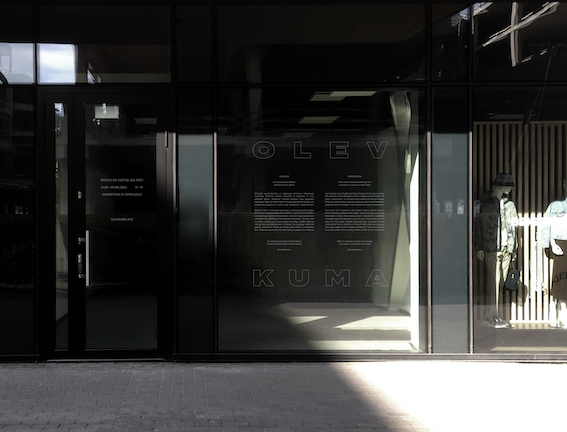
TRANSMISSION
the process of passing something from one person or place to another
(Oxford English Dictionary)
Last decades have brought significant changes to the consciousness. We encounter more messages and the images are ever faster. The series „Transmission“ on the other hand consists of very slow images. These are layered allover abstract paintings, which open themselves gradually and form bridges to the unconscious space of experience.
Such works are in essence a veil between dreams and the material world, inspiring connection with deeper, daily untouched inner world. Minimalist in form, from distance even monochrome meditative rectangles allow the meaning to be born only in accordance with the input from the viewer. Thereby these paintings are about the very same person that is standing in front of them, creating a personal and unique stage for their thoughts and feelings. The meaning is born when the content of the painting and the content of the viewer meet.
When an explosion explodes hard enough,
dust wakes up and thinks about itself.
@JarodAnderson
The exhibition is open on 27.05—09.06 daily 11—19
The exhibition is a part of Estonian Academy of Arts’ graduation show TASE ’22
The artist would like to thank the EKA painting department and Estmak Capital.
Olev Kuma “Transmission”
Friday 27 May, 2022 — Thursday 09 June, 2022
TRANSMISSION
the process of passing something from one person or place to another
(Oxford English Dictionary)
Last decades have brought significant changes to the consciousness. We encounter more messages and the images are ever faster. The series „Transmission“ on the other hand consists of very slow images. These are layered allover abstract paintings, which open themselves gradually and form bridges to the unconscious space of experience.
Such works are in essence a veil between dreams and the material world, inspiring connection with deeper, daily untouched inner world. Minimalist in form, from distance even monochrome meditative rectangles allow the meaning to be born only in accordance with the input from the viewer. Thereby these paintings are about the very same person that is standing in front of them, creating a personal and unique stage for their thoughts and feelings. The meaning is born when the content of the painting and the content of the viewer meet.
When an explosion explodes hard enough,
dust wakes up and thinks about itself.
@JarodAnderson
The exhibition is open on 27.05—09.06 daily 11—19
The exhibition is a part of Estonian Academy of Arts’ graduation show TASE ’22
The artist would like to thank the EKA painting department and Estmak Capital.
27.05.2022 — 09.06.2022
Kaia Ansip and Yufang Hu graduation exhibition
Invitation to the opening of the exhibition of Kaia Ansip and Yufang Hu, MA students of Jewelery and Blacksmithing, May 27, 6 pm at Rotermanni 7
The exhibition is part of the TASE’22 Grad Show.
The exhibition is open until June 9.
Kaia Ansip and Yufang Hu graduation exhibition
Friday 27 May, 2022 — Thursday 09 June, 2022
Invitation to the opening of the exhibition of Kaia Ansip and Yufang Hu, MA students of Jewelery and Blacksmithing, May 27, 6 pm at Rotermanni 7
The exhibition is part of the TASE’22 Grad Show.
The exhibition is open until June 9.
04.06.2022
TASE FILM 2022
TASE FILM on June 4 at 5 pm at EKA auditorium (A101) once again.
TASE FILM is an event which happens every year in the context of EKA’s graduate student exhibition, TASE. It offers a programme full of different videos and short films made by students of EKA.
TASE FILM 2022 explores the dream world and reality. The programme consists of two chapters, the first of which takes a look at socially relevant topics such as overconsumption and the tireless construction of shopping malls, and an insight into the work of food couriers. In addition, there are video pieces that look at everyday life around us. In the second part, surreal and abstract videos are presented, including documentaries of performances, dream landscapes and questions of identity.
The programme lasts about 2 hours.
Participating artists:
Aap Kaur Suvi | Potato, Seagulls, Reeds and cars
Camilla Prey | Blaue Stunde
Ditiya Ferdous | Family 1
Ivor Lõõbas | Tradition
Jamie Avis | The Wave
John Quirk | HIDE
Kadri Joala | Autoportree
Karl Joonas Alamaa, Lisette Sivard, Andreas Kübar | ONLY BASIC FASHION SHOW
Kush, Paul Simon, Timothee | TXMALL
Lauri Lest | Moulded
Maria Naulainen | KIHA
Martina Maria Semenzato | ALBAIONES
Moritz Simon | Sand, Stone
Paulina Schroeder, Christian Horner, Nabeel Imtiaz | Looking of Action
Santiago Ordoñez | The station´s seat
Xingpei Shen | Lotus Lantern
Event is free of charge!
Film programme curators: Johanna Kuzmenko, Lígia Fernandes
Location: Estonian Academy of Arts (Põhja pst 7), A-101
TASE FILM 2022
Saturday 04 June, 2022
TASE FILM on June 4 at 5 pm at EKA auditorium (A101) once again.
TASE FILM is an event which happens every year in the context of EKA’s graduate student exhibition, TASE. It offers a programme full of different videos and short films made by students of EKA.
TASE FILM 2022 explores the dream world and reality. The programme consists of two chapters, the first of which takes a look at socially relevant topics such as overconsumption and the tireless construction of shopping malls, and an insight into the work of food couriers. In addition, there are video pieces that look at everyday life around us. In the second part, surreal and abstract videos are presented, including documentaries of performances, dream landscapes and questions of identity.
The programme lasts about 2 hours.
Participating artists:
Aap Kaur Suvi | Potato, Seagulls, Reeds and cars
Camilla Prey | Blaue Stunde
Ditiya Ferdous | Family 1
Ivor Lõõbas | Tradition
Jamie Avis | The Wave
John Quirk | HIDE
Kadri Joala | Autoportree
Karl Joonas Alamaa, Lisette Sivard, Andreas Kübar | ONLY BASIC FASHION SHOW
Kush, Paul Simon, Timothee | TXMALL
Lauri Lest | Moulded
Maria Naulainen | KIHA
Martina Maria Semenzato | ALBAIONES
Moritz Simon | Sand, Stone
Paulina Schroeder, Christian Horner, Nabeel Imtiaz | Looking of Action
Santiago Ordoñez | The station´s seat
Xingpei Shen | Lotus Lantern
Event is free of charge!
Film programme curators: Johanna Kuzmenko, Lígia Fernandes
Location: Estonian Academy of Arts (Põhja pst 7), A-101