
Academic Affairs OfficeAccessory DesignAnimationArchitecture and Urban DesignArt EducationCenter for Flat TechnologiesCeramicsContemporary ArtCultural Heritage and ConservationDepartmentsDesign and Technology FuturesDoctoral SchoolDrawingFacilities and WorkshopsFaculty of ArchitectureFaculty of Art and CultureFaculty of DesignFaculty of Fine ArtsFashion DesignFinancial DepartmentGalleryGlass ArtGraphic ArtGraphic DesignInstallation and SculptureInstitute of Art History and Visual CultureInternational OfficeIT OfficeJewellery and BlacksmithingLandscape ArchitectureLibraryLinnaehitus @enMaking SpaceNew MediaOffice of the RectorateOpen AcademyPaintingPerforming ArtsPhotographyProduct DesignRectorateResearch and Development OfficeScenographySupport UnitsTextile DesignUncategorizedUrban PlanningUrban Studies
Denisa Štefanigová “Beyond the Blue Yonder” at EKA Gallery 16.02.–16.03.2023
16.02.2023 — 16.03.2023
Denisa Štefanigová “Beyond the Blue Yonder” at EKA Gallery 16.02.–16.03.2023
Contemporary Art
Beyond the Blue Yonder
Denisa Štefanigová in collaboration with Johanna Ruukholm and Marleen Suvi, curated by Yilin Ma.
16.02–16.03.2023
Opening: 16.02, 5 pm
In Štefanigová’s Beyond the Blue Yonder exhibition, humans are melting, becoming tides into other creatures to coexist together, in the same body. Culture historian Astrida Neimanis writes on ”Hydrofeminism; Or, On Becoming a Body of Water”, how the space between ourselves and our others are at once as distant as the primaeval sea, yet also closer than our skin.
Current in Štefanigová’s practice, is the fluidity between human and nonhuman subjects, where no living being is separated nor untouched from others. Like water connecting us all and ensuring we are always in a state of becoming as it travels in our bodies, in Beyond the Blue Yonder Štefanigová’s works are blending into new boundaries. Through works especially made for the exhibition, Beyond the Blue Yonder studies the possibilities of fluidity and fusing into each other, very much like boundless water crashing into itself in our bodies.
When looking at Štefanigová’s work through connections, you can see how they are formed and how unavoidably they reach out to every corner of our own private lives in good or in bad. Neimanis writes how “Despite the fact that we are all watery bodies, leaking into and sponging off of one another, we resist total dissolution, material annihilation. Or more aptly, we postpone it: ashes to ashes, water to water”; this is evident in Štefanigová’s work where water, air, or anything that bounds us together, works as a communicator between our bodies, connecting us and facilitates bodies into being. Doing so, it shows all the things from the past to the present. Our bodies are holding the past, and simultaneously are on the verge of the future. The space of constant becoming that is trying to find its own, but without the naivety of being born again.
There is also something queer about the way Štefanigová’s approach to challenge boundaries between human and nonhuman, and everything that sets them apart socially and environmentally. As bell hooks writes ”queer as not who you’re having sex with, that can be a dimension of it, but queer as being about the self that is at odds with everything around it and has to invent and create and find a place to speak and to thrive and to love”.
Štefanigová’s technique holds water in an important role — from working with acrylics that water controls from how the water dries to the canvas, Štefanigová’s one line technique awakes something watery in the paintings; a reflection, that’s on a constant move. Installing these 31 pieces of paintings next to each other, Štefanigová is creating a wave that flows through the space.
The exhibition consists of paintings and an installation by Denisa Štefanigová, as well as sculptures by Marleen Suvi. A limited amount of catalogues that examine the exhibition through a dialogue between the artists Denisa Štefanigová and the curator Yilin Ma is designed by Johanna Ruukholm.
Denisa Štefanigová (she/her) (b.1995) is a Czech artist who mainly works in painting. She recently graduated from the Master’s Program in Contemporary Art at the Estonian Academy of Arts (EKA). She also holds a bachelor’s degree from the Technical University, Faculty of Fine Arts (FaVU), during her studies she also attended the Faculty de Bellas Artes in Bilbao. In 2021, Štefanigová was one of the 15 finalists for the Young Painter Award for the Baltic countries. Her recent exhibitions include MO Museum, Vilnius, and Hobusepea, and Hoib Gallery, both in Tallinn. Her works are represented in the KogArt collection based in Hungary and in SYNLAB based in Tallinn. This year, she will have a solo exhibition in Tallinn, Prague, and then one group show with the Hungarian artist Asztrid Csatlós in Brno.
Marleen Suvi (b. 1998) (she/her)has graduated from the department of painting in the faculty of fine art at the Estonian Academy of Arts (2020) and is currently acquiring a MA degree in the contemporary art program at the Estonian Academy of Arts. Marleen Suvi is examining the interwovenness between the body and the human soul. At the moment she is working with ideas such as whether it is possible to meet yourself, how to let go of your selfishness and what it means to depict yourself in a sexual way. Most of her works are autoportraits. While writing haikus, the artist contemplates empty phrases, which arise from subconsciousness that sometimes seems to belong to someone else. She prefers to work with oil on canvas and glass. Among her recently held exhibitions are ‘‘A Visitor’’ (Hobusepea Gallery, 2022) and ‘‘So That the Body Does not Forget’’ (Vent Space Project Room, 2021).
Johanna Ruukholm (she/her) (b. 1996) is a graphic designer and artist. She is part of a design duo Jojo&me. Her graphic works vary from websites to illustrated visuals and she enjoys telling stories through characters in colourful and enigmatic worlds. Besides working with a computer and pencils, she creates ceramic sculptures and everyday objects under a brand called Nestworkers. She is also one of the curators of the club event series HoneyCombat, which takes place in Tallinn.
Yilin Ma (they/them) (b.1995) is a Helsinki based curator and writer, who works in intersections of literature and visual culture with a focus on East-Asian queer diaspora narratives and queer- feminist way of understanding the spaces in between lyrical and material. Currently they are attending The Praxis Master’s Programme in Exhibition Studies at The University of Arts in Helsinki.
The exhibition is supported by the Cultural Endowment of Estonia and the Estonian Academy of Arts
Opening drinks by Punch
Posted by Pire Sova — Permalink
Denisa Štefanigová “Beyond the Blue Yonder” at EKA Gallery 16.02.–16.03.2023
Thursday 16 February, 2023 — Thursday 16 March, 2023
Contemporary Art
Beyond the Blue Yonder
Denisa Štefanigová in collaboration with Johanna Ruukholm and Marleen Suvi, curated by Yilin Ma.
16.02–16.03.2023
Opening: 16.02, 5 pm
In Štefanigová’s Beyond the Blue Yonder exhibition, humans are melting, becoming tides into other creatures to coexist together, in the same body. Culture historian Astrida Neimanis writes on ”Hydrofeminism; Or, On Becoming a Body of Water”, how the space between ourselves and our others are at once as distant as the primaeval sea, yet also closer than our skin.
Current in Štefanigová’s practice, is the fluidity between human and nonhuman subjects, where no living being is separated nor untouched from others. Like water connecting us all and ensuring we are always in a state of becoming as it travels in our bodies, in Beyond the Blue Yonder Štefanigová’s works are blending into new boundaries. Through works especially made for the exhibition, Beyond the Blue Yonder studies the possibilities of fluidity and fusing into each other, very much like boundless water crashing into itself in our bodies.
When looking at Štefanigová’s work through connections, you can see how they are formed and how unavoidably they reach out to every corner of our own private lives in good or in bad. Neimanis writes how “Despite the fact that we are all watery bodies, leaking into and sponging off of one another, we resist total dissolution, material annihilation. Or more aptly, we postpone it: ashes to ashes, water to water”; this is evident in Štefanigová’s work where water, air, or anything that bounds us together, works as a communicator between our bodies, connecting us and facilitates bodies into being. Doing so, it shows all the things from the past to the present. Our bodies are holding the past, and simultaneously are on the verge of the future. The space of constant becoming that is trying to find its own, but without the naivety of being born again.
There is also something queer about the way Štefanigová’s approach to challenge boundaries between human and nonhuman, and everything that sets them apart socially and environmentally. As bell hooks writes ”queer as not who you’re having sex with, that can be a dimension of it, but queer as being about the self that is at odds with everything around it and has to invent and create and find a place to speak and to thrive and to love”.
Štefanigová’s technique holds water in an important role — from working with acrylics that water controls from how the water dries to the canvas, Štefanigová’s one line technique awakes something watery in the paintings; a reflection, that’s on a constant move. Installing these 31 pieces of paintings next to each other, Štefanigová is creating a wave that flows through the space.
The exhibition consists of paintings and an installation by Denisa Štefanigová, as well as sculptures by Marleen Suvi. A limited amount of catalogues that examine the exhibition through a dialogue between the artists Denisa Štefanigová and the curator Yilin Ma is designed by Johanna Ruukholm.
Denisa Štefanigová (she/her) (b.1995) is a Czech artist who mainly works in painting. She recently graduated from the Master’s Program in Contemporary Art at the Estonian Academy of Arts (EKA). She also holds a bachelor’s degree from the Technical University, Faculty of Fine Arts (FaVU), during her studies she also attended the Faculty de Bellas Artes in Bilbao. In 2021, Štefanigová was one of the 15 finalists for the Young Painter Award for the Baltic countries. Her recent exhibitions include MO Museum, Vilnius, and Hobusepea, and Hoib Gallery, both in Tallinn. Her works are represented in the KogArt collection based in Hungary and in SYNLAB based in Tallinn. This year, she will have a solo exhibition in Tallinn, Prague, and then one group show with the Hungarian artist Asztrid Csatlós in Brno.
Marleen Suvi (b. 1998) (she/her)has graduated from the department of painting in the faculty of fine art at the Estonian Academy of Arts (2020) and is currently acquiring a MA degree in the contemporary art program at the Estonian Academy of Arts. Marleen Suvi is examining the interwovenness between the body and the human soul. At the moment she is working with ideas such as whether it is possible to meet yourself, how to let go of your selfishness and what it means to depict yourself in a sexual way. Most of her works are autoportraits. While writing haikus, the artist contemplates empty phrases, which arise from subconsciousness that sometimes seems to belong to someone else. She prefers to work with oil on canvas and glass. Among her recently held exhibitions are ‘‘A Visitor’’ (Hobusepea Gallery, 2022) and ‘‘So That the Body Does not Forget’’ (Vent Space Project Room, 2021).
Johanna Ruukholm (she/her) (b. 1996) is a graphic designer and artist. She is part of a design duo Jojo&me. Her graphic works vary from websites to illustrated visuals and she enjoys telling stories through characters in colourful and enigmatic worlds. Besides working with a computer and pencils, she creates ceramic sculptures and everyday objects under a brand called Nestworkers. She is also one of the curators of the club event series HoneyCombat, which takes place in Tallinn.
Yilin Ma (they/them) (b.1995) is a Helsinki based curator and writer, who works in intersections of literature and visual culture with a focus on East-Asian queer diaspora narratives and queer- feminist way of understanding the spaces in between lyrical and material. Currently they are attending The Praxis Master’s Programme in Exhibition Studies at The University of Arts in Helsinki.
The exhibition is supported by the Cultural Endowment of Estonia and the Estonian Academy of Arts
Opening drinks by Punch
Posted by Pire Sova — Permalink
10.02.2023 — 18.02.2023
Sound Art Festival “Walls Have Ears”
Contemporary Art
The international sound-art festival, held every two years at the ARS Art Factory, will showcase sonic creations by various artists. The festival aims to introduce and promote sonic culture through a variety of exhibitions and live performances. The exhibitions, held in three spaces simultaneously, will feature interactive, participatory, perceptual, site-specific, and conceptual pieces.
Artists
Participants in the sound art exhibition of 2023:
Therese Frisk (SE), Kaisa Maasik & Gerda Nurk (EE), Kat Austen (DE/GB), Katrin Enni (EE), Madlen Hirtentreu (EE), Mari-Liis Rebane, Jaanika Arum & Helen Västrik (EE), Taavi Suisalu (EE)
Performing artists:
Sabotanic Garden (FI), Yuri Landmann (NL), Simonas Nekrošius (LT), THRVS (Matthias Kampf, AT), Sister Clara (IT), Katrin Enni (EE), SSSS (Sten Saarits ja Sven Sosnitski, EE), Mari-Liis Rebane, Jaanika Arum & Helen Västrik (EE), Erik Alalooga (EE), Janno Bergmann (EE)
Programme
Sound Art Exhibition 11 – 18.02.2023. Every day 13:00 – 19:00
Friday 10.02
Sound Art Exhibition opening at 18:00 (Exhibition will remain open 10 – 18.02.2023)
Opening performance/installation at studio 98 by Erik Alalooga & Janno Bergmann
Tuesday 15.02 / Performance night vol. 1
Sister Clara (PT/DE) – ARS Project Space
Friday 17.02 / Performance night vol. 2
SSSS (EE) – Studio 98
Helen Västrik (EE), Jaanika Arum (EE), Mari-Liis Rebane (EE) – ARS Project Space
Katrin Enni (EE) – Studio 53
Simonas Nekrošius (LT) – Studio 98
After event at Burgerbox: Katja Adrikova (EE)
Saturday 18.02 / Performance night vol. 3
Yuri Landmann (NL) – Studio 98
THRVS (Matthias Kampf, AT) – Studio 98
Erik Alalooga (EE) – Studio 53
Sabotanic Garden (FI) – Studio 98
After event at Burgerbox
Organisers: Erik Alalooga, Sten Saarits
Graphic design: Kert Viiart
Installation assist: Ian Simon Märjama
The Festival is supported by Cultural Endowment of Estonia, Estonian Artists’ Association, ARS Art Factory
Posted by Andres Lõo — Permalink
Sound Art Festival “Walls Have Ears”
Friday 10 February, 2023 — Saturday 18 February, 2023
Contemporary Art
The international sound-art festival, held every two years at the ARS Art Factory, will showcase sonic creations by various artists. The festival aims to introduce and promote sonic culture through a variety of exhibitions and live performances. The exhibitions, held in three spaces simultaneously, will feature interactive, participatory, perceptual, site-specific, and conceptual pieces.
Artists
Participants in the sound art exhibition of 2023:
Therese Frisk (SE), Kaisa Maasik & Gerda Nurk (EE), Kat Austen (DE/GB), Katrin Enni (EE), Madlen Hirtentreu (EE), Mari-Liis Rebane, Jaanika Arum & Helen Västrik (EE), Taavi Suisalu (EE)
Performing artists:
Sabotanic Garden (FI), Yuri Landmann (NL), Simonas Nekrošius (LT), THRVS (Matthias Kampf, AT), Sister Clara (IT), Katrin Enni (EE), SSSS (Sten Saarits ja Sven Sosnitski, EE), Mari-Liis Rebane, Jaanika Arum & Helen Västrik (EE), Erik Alalooga (EE), Janno Bergmann (EE)
Programme
Sound Art Exhibition 11 – 18.02.2023. Every day 13:00 – 19:00
Friday 10.02
Sound Art Exhibition opening at 18:00 (Exhibition will remain open 10 – 18.02.2023)
Opening performance/installation at studio 98 by Erik Alalooga & Janno Bergmann
Tuesday 15.02 / Performance night vol. 1
Sister Clara (PT/DE) – ARS Project Space
Friday 17.02 / Performance night vol. 2
SSSS (EE) – Studio 98
Helen Västrik (EE), Jaanika Arum (EE), Mari-Liis Rebane (EE) – ARS Project Space
Katrin Enni (EE) – Studio 53
Simonas Nekrošius (LT) – Studio 98
After event at Burgerbox: Katja Adrikova (EE)
Saturday 18.02 / Performance night vol. 3
Yuri Landmann (NL) – Studio 98
THRVS (Matthias Kampf, AT) – Studio 98
Erik Alalooga (EE) – Studio 53
Sabotanic Garden (FI) – Studio 98
After event at Burgerbox
Organisers: Erik Alalooga, Sten Saarits
Graphic design: Kert Viiart
Installation assist: Ian Simon Märjama
The Festival is supported by Cultural Endowment of Estonia, Estonian Artists’ Association, ARS Art Factory
Posted by Andres Lõo — Permalink
09.02.2023
Service Design Strategies and Innovations (SDSI) Info Session
Faculty of Design
On February 9 at 15:00 EKA, the Latvian Academy of Arts and the University of Lapland joint curriculum Service Design Strategies and Innovations (SDSI) online information session.
You’ll meet representatives from Latvia, Estonia and Finland who will be answering your questions.
Admission is open until February 28.
Online applications are submitted through Dreamapply: https://apply.sdsi.ma/
More information on the program and admission is on our webpage: https://www.sdsi.ma/
For any urgent matters, you are welcome to contact us via email at info@sdsi.ma or messenger chat.
Posted by Andres Lõo — Permalink
Service Design Strategies and Innovations (SDSI) Info Session
Thursday 09 February, 2023
Faculty of Design
On February 9 at 15:00 EKA, the Latvian Academy of Arts and the University of Lapland joint curriculum Service Design Strategies and Innovations (SDSI) online information session.
You’ll meet representatives from Latvia, Estonia and Finland who will be answering your questions.
Admission is open until February 28.
Online applications are submitted through Dreamapply: https://apply.sdsi.ma/
More information on the program and admission is on our webpage: https://www.sdsi.ma/
For any urgent matters, you are welcome to contact us via email at info@sdsi.ma or messenger chat.
Posted by Andres Lõo — Permalink
03.02.2023 — 10.02.2023
GD Exhibition “Cabinet of Curiosities from Mythonia”
Faculty of Design
“Cabinet of Curiosities from Mythonia”
Graphic design II BA students’ exhibition on EKA 2nd floor open area gallery.
We cordially invite you this Friday to the exhibition of the graphic design II course workshop “Cabinet of Curiosities from Mythonia” supervised by Norman Orro.
Looking through an auto-anthropological lens the course went on a field trip to gather samples and inspiration from the largest souvenir shop in Tallinn, crafting mythical ephemera-sculptures to fill a contemporary Wunderkammer.
Exhibition will be open until 10th of February.
Posted by Andres Lõo — Permalink
GD Exhibition “Cabinet of Curiosities from Mythonia”
Friday 03 February, 2023 — Friday 10 February, 2023
Faculty of Design
“Cabinet of Curiosities from Mythonia”
Graphic design II BA students’ exhibition on EKA 2nd floor open area gallery.
We cordially invite you this Friday to the exhibition of the graphic design II course workshop “Cabinet of Curiosities from Mythonia” supervised by Norman Orro.
Looking through an auto-anthropological lens the course went on a field trip to gather samples and inspiration from the largest souvenir shop in Tallinn, crafting mythical ephemera-sculptures to fill a contemporary Wunderkammer.
Exhibition will be open until 10th of February.
Posted by Andres Lõo — Permalink
28.02.2023
Berit Kaschan’s writing course at Draakon Gallery
Berit Kaschan will lead a thematic writing course for three times at Maret Sarapu’s exhibition ‘Free and Held’.
The workshop is available for preregistration and will take place on three consecutive Tuesdays – 14.02, 21.02. ja 28.02. kell 18.00–20.00.
Please register for the course by filling the form on the previous Sunday prior to the course at the latest. The participation fee is 10 euros. The group size is limited to 10 participants. The workshop is held in Estonian.
Posted by Kaisa Maasik — Permalink
Berit Kaschan’s writing course at Draakon Gallery
Tuesday 28 February, 2023
Berit Kaschan will lead a thematic writing course for three times at Maret Sarapu’s exhibition ‘Free and Held’.
The workshop is available for preregistration and will take place on three consecutive Tuesdays – 14.02, 21.02. ja 28.02. kell 18.00–20.00.
Please register for the course by filling the form on the previous Sunday prior to the course at the latest. The participation fee is 10 euros. The group size is limited to 10 participants. The workshop is held in Estonian.
Posted by Kaisa Maasik — Permalink
21.02.2023
Berit Kaschan’s writing course at Draakon Gallery
Berit Kaschan will lead a thematic writing course for three times at Maret Sarapu’s exhibition ‘Free and Held’.
The workshop is available for preregistration and will take place on three consecutive Tuesdays – 14.02, 21.02. ja 28.02. kell 18.00–20.00.
Please register for the course by filling the form on the previous Sunday prior to the course at the latest. The participation fee is 10 euros. The group size is limited to 10 participants. The workshop is held in Estonian.
Posted by Kaisa Maasik — Permalink
Berit Kaschan’s writing course at Draakon Gallery
Tuesday 21 February, 2023
Berit Kaschan will lead a thematic writing course for three times at Maret Sarapu’s exhibition ‘Free and Held’.
The workshop is available for preregistration and will take place on three consecutive Tuesdays – 14.02, 21.02. ja 28.02. kell 18.00–20.00.
Please register for the course by filling the form on the previous Sunday prior to the course at the latest. The participation fee is 10 euros. The group size is limited to 10 participants. The workshop is held in Estonian.
Posted by Kaisa Maasik — Permalink
14.02.2023
Berit Kaschan’s writing course at Draakon Gallery
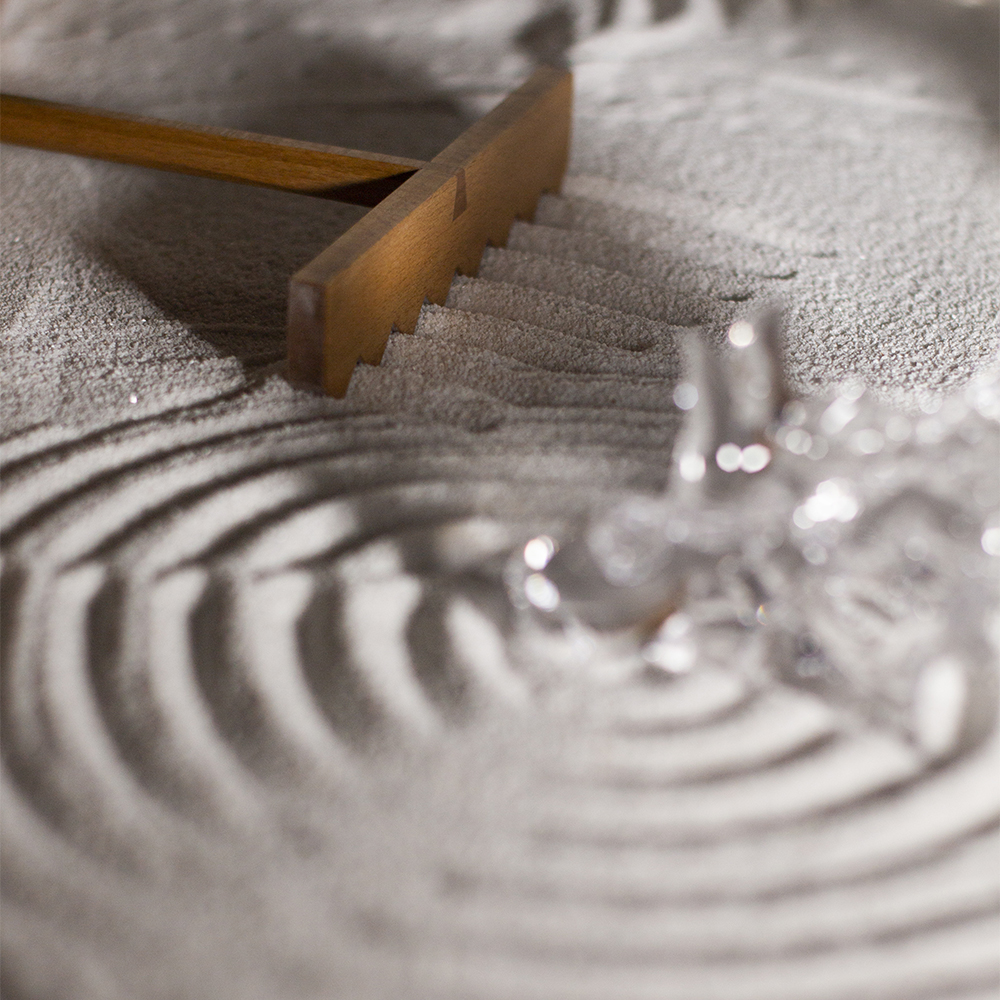
Berit Kaschan will lead a thematic writing course for three times at Maret Sarapu’s exhibition ‘Free and Held’.
The workshop is available for preregistration and will take place on three consecutive Tuesdays – 14.02, 21.02. ja 28.02. kell 18.00–20.00.
Please register for the course by filling the form on the previous Sunday prior to the course at the latest. The participation fee is 10 euros. The group size is limited to 10 participants. The workshop is held in Estonian.
Posted by Kaisa Maasik — Permalink
Berit Kaschan’s writing course at Draakon Gallery
Tuesday 14 February, 2023
Berit Kaschan will lead a thematic writing course for three times at Maret Sarapu’s exhibition ‘Free and Held’.
The workshop is available for preregistration and will take place on three consecutive Tuesdays – 14.02, 21.02. ja 28.02. kell 18.00–20.00.
Please register for the course by filling the form on the previous Sunday prior to the course at the latest. The participation fee is 10 euros. The group size is limited to 10 participants. The workshop is held in Estonian.
Posted by Kaisa Maasik — Permalink
07.02.2023 — 04.03.2023
Maret Sarapu’s solo exhibition ‘Free and Held’ at Draakon Gallery
Glass Art
MARET SARAPU
FREE AND HELD
08.02.–04.03.2023
Draakoni gallery
Curators: Kaisa Maasik and Berit Kaschan
Graphic design: Pamela Sume
On Tuesday, 7 February at 18.00 Maret Sarapu opens her solo exhibition Free and Held at Draakoni gallery. The exhibition is open until 4 March.
Maret Sarapu’s seventh solo exhibition looks at the question of how to be free and held. Through five artworks, the artist maps quotidian rituals and symbols, activities and stories that help to ensure our mental sharpness, emotional well-being and a sense of safety in everyday life. That is, focal points that help us make sense of life, prevent crises and find strength in the everyday.
The conceptual centre of the exhibition is simultaneously poetic and practical – on the one side, it allows the viewer to make their own everyday life more poetic and start consciously and playfully mapping out activities, events and ideas that provide support and strength. On the other side, this kind of poetisation has a thoroughly practical effect – conceptualisation and structuring of our routines grounds us and plays a significant role in achieving emotional well-being and maintaining our joie de vivre.
At the exhibition, the artist displays installations and objects: wall panels with nature motifs, mosaic trophies, glass “breaths” and sand boxes reminiscent of Japanese gardens on walls and around the exhibition space. Alongside these objects, the exhibition includes a set of postcards, inviting the viewer to discover their own everyday and internal landscapes through exercises of creative writing.
As part of Free and Held three thematic creative writing workshops led by Berit Kaschan will take place at Draakoni gallery. The workshops will be held on three consecutive Tuesdays – on 14, 21 and 28 February from 18.00 to 20.00.
Pre-registration is required.
Please register to the workshop no later than 12 February: kaisamaasik@gmail.com.
Participation fee: 10€.
Size of the group: 10 participants.
The workshop will be conducted in Estonian.
The exhibition is supported by the Estonian Ministry of Culture, the Cultural Endowment of Estonia and Liviko AS.
Thank you: Karel Koplimets, Maarin Ektermann and Prologue School, Sven Sapelson, Tiina Sarapu, Kairi Orgusaar, Kaie Vakepea
Maret Sarapu (1978) is an artist based in Tallinn. She has graduated from the Department of Glass Art at the Estonian Academy of Arts (BA 2002, MA 2005) and taken part in numerous courses and art residencies both in Estonia and abroad. In her work, Sarapu is mostly inspired by everyday life and often uses nature motifs and repetition. Recently, her experiments with form and concept have led her towards methods like automatic and stream of consciousness writing. Often, the aim is to achieve mental well-being and find harmony between intelligence and emotions. Her alternating process (thinking, writing, working in the studio) and collaboration with material lead to results that give both the artist and the viewer a possibility to make conclusions and generalisations.
Posted by Kaisa Maasik — Permalink
Maret Sarapu’s solo exhibition ‘Free and Held’ at Draakon Gallery
Tuesday 07 February, 2023 — Saturday 04 March, 2023
Glass Art
MARET SARAPU
FREE AND HELD
08.02.–04.03.2023
Draakoni gallery
Curators: Kaisa Maasik and Berit Kaschan
Graphic design: Pamela Sume
On Tuesday, 7 February at 18.00 Maret Sarapu opens her solo exhibition Free and Held at Draakoni gallery. The exhibition is open until 4 March.
Maret Sarapu’s seventh solo exhibition looks at the question of how to be free and held. Through five artworks, the artist maps quotidian rituals and symbols, activities and stories that help to ensure our mental sharpness, emotional well-being and a sense of safety in everyday life. That is, focal points that help us make sense of life, prevent crises and find strength in the everyday.
The conceptual centre of the exhibition is simultaneously poetic and practical – on the one side, it allows the viewer to make their own everyday life more poetic and start consciously and playfully mapping out activities, events and ideas that provide support and strength. On the other side, this kind of poetisation has a thoroughly practical effect – conceptualisation and structuring of our routines grounds us and plays a significant role in achieving emotional well-being and maintaining our joie de vivre.
At the exhibition, the artist displays installations and objects: wall panels with nature motifs, mosaic trophies, glass “breaths” and sand boxes reminiscent of Japanese gardens on walls and around the exhibition space. Alongside these objects, the exhibition includes a set of postcards, inviting the viewer to discover their own everyday and internal landscapes through exercises of creative writing.
As part of Free and Held three thematic creative writing workshops led by Berit Kaschan will take place at Draakoni gallery. The workshops will be held on three consecutive Tuesdays – on 14, 21 and 28 February from 18.00 to 20.00.
Pre-registration is required.
Please register to the workshop no later than 12 February: kaisamaasik@gmail.com.
Participation fee: 10€.
Size of the group: 10 participants.
The workshop will be conducted in Estonian.
The exhibition is supported by the Estonian Ministry of Culture, the Cultural Endowment of Estonia and Liviko AS.
Thank you: Karel Koplimets, Maarin Ektermann and Prologue School, Sven Sapelson, Tiina Sarapu, Kairi Orgusaar, Kaie Vakepea
Maret Sarapu (1978) is an artist based in Tallinn. She has graduated from the Department of Glass Art at the Estonian Academy of Arts (BA 2002, MA 2005) and taken part in numerous courses and art residencies both in Estonia and abroad. In her work, Sarapu is mostly inspired by everyday life and often uses nature motifs and repetition. Recently, her experiments with form and concept have led her towards methods like automatic and stream of consciousness writing. Often, the aim is to achieve mental well-being and find harmony between intelligence and emotions. Her alternating process (thinking, writing, working in the studio) and collaboration with material lead to results that give both the artist and the viewer a possibility to make conclusions and generalisations.
Posted by Kaisa Maasik — Permalink
01.02.2023 — 25.02.2023
Group exhibition ‘The Weak Fins of My Few Skills’ at Pärnu City Gallery
Contemporary Art
Group exhibition ‘The Weak Fins of My Few Skills’
Pärnu City Gallery
Uus tn 4, Pärnu
2.–25.02.2023
The opening of the group exhibition ‘The Weak Fins of My Few Skills’ will take place on Wednesday, February 1st at 18.00 at Pärnu City Gallery.
The group exhibition ‘The Weak Fins of My Few Skills’ doesn’t seek to give an exhaustive answer to the question of how to live. Rather, it tries its best not to sink while exercising empathy towards its favorite subject – the “water”. According to David Foster Wallace’s famous speech ‘This Is Water’, the “water” in the parable above means nothing more than the most obvious and important realities of our existence, which are nonetheless the hardest to see and talk about. To avoid becoming a living corpse in the daily grind, one must manage the hard-wired human setting of seeing oneself as the center of the world and actively choose to think differently. To choose to look at the “water” anew.
Participating artists: Laura De Jaeger, Joosep Kivimäe, Johannes Luik, Kaisa Maasik, Tiiu Maasik, Eva Mustonen and Mathias Väärsi
Project manager: Elo Meier
Graphic design: Pamela Sume
Supporters: Eesti Kultuurkapitali kujutava ja rakenduskunsti sihtkapital ja Pärnumaa ekspertgrupp, Jaanihanso Siidrivabrik, PERI AS, Pizzakiosk, Pärnu Linn
We thank: Estonia Medical Spa & Hotel, Karel Koplimets, Kusja, Mariel Värk, Nienke Fransen, Pärnu Jahtklubi, Villa Wesset
Posted by Kaisa Maasik — Permalink
Group exhibition ‘The Weak Fins of My Few Skills’ at Pärnu City Gallery
Wednesday 01 February, 2023 — Saturday 25 February, 2023
Contemporary Art
Group exhibition ‘The Weak Fins of My Few Skills’
Pärnu City Gallery
Uus tn 4, Pärnu
2.–25.02.2023
The opening of the group exhibition ‘The Weak Fins of My Few Skills’ will take place on Wednesday, February 1st at 18.00 at Pärnu City Gallery.
The group exhibition ‘The Weak Fins of My Few Skills’ doesn’t seek to give an exhaustive answer to the question of how to live. Rather, it tries its best not to sink while exercising empathy towards its favorite subject – the “water”. According to David Foster Wallace’s famous speech ‘This Is Water’, the “water” in the parable above means nothing more than the most obvious and important realities of our existence, which are nonetheless the hardest to see and talk about. To avoid becoming a living corpse in the daily grind, one must manage the hard-wired human setting of seeing oneself as the center of the world and actively choose to think differently. To choose to look at the “water” anew.
Participating artists: Laura De Jaeger, Joosep Kivimäe, Johannes Luik, Kaisa Maasik, Tiiu Maasik, Eva Mustonen and Mathias Väärsi
Project manager: Elo Meier
Graphic design: Pamela Sume
Supporters: Eesti Kultuurkapitali kujutava ja rakenduskunsti sihtkapital ja Pärnumaa ekspertgrupp, Jaanihanso Siidrivabrik, PERI AS, Pizzakiosk, Pärnu Linn
We thank: Estonia Medical Spa & Hotel, Karel Koplimets, Kusja, Mariel Värk, Nienke Fransen, Pärnu Jahtklubi, Villa Wesset
Posted by Kaisa Maasik — Permalink
21.02.2023
Sensorial Design: Feel, Move, Interact
Design Research Group
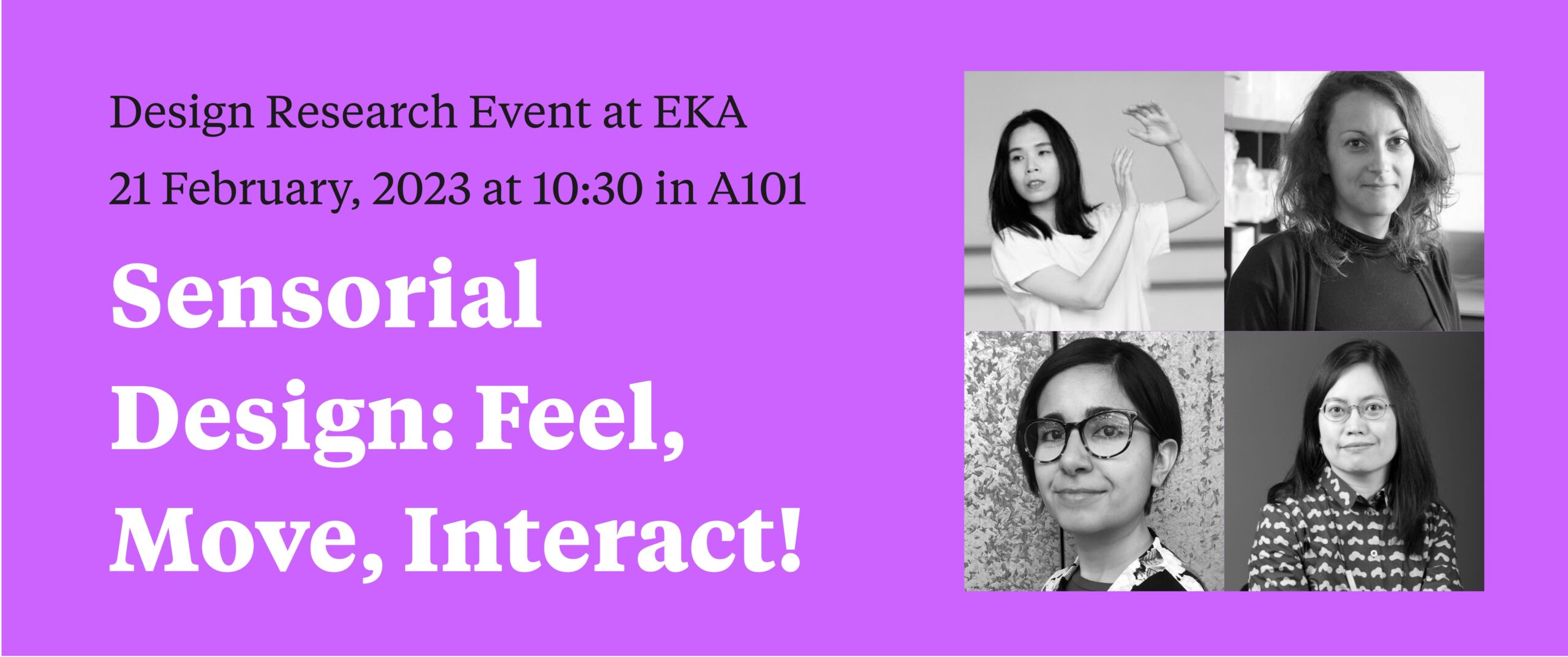
EKA’s Sensorial Design Research group is organizing a design research event at the Estonian Academy of Arts (EKA) aiming to bring knowledge of international researchers to students, researchers, and educators of EKA on the 21st of February 2023.
During this event, two Art and Design PhD students of EKA, Arife Dila Demir and Nesli Hazal Oktay, welcome their peer reviewers and external PhD supervisors to EKA as speakers. Four speakers present their design research work, inviting the audience to discussion. The event is open to the public with a requirement to register.
It is possible to participate both on-site at EKA (room A101) and watch the broadcast http://tv.artun.ee/.
Schedule (All times are Estonian)
10:30 – 10:45 – Coffee
10:45 – 11:00 – Welcoming words
11:00 – 11:30 – Hsuan-Hsiu Hung, Estonian Academy of Arts
11:30 – 12:00 – Verena Fuchsberger, University of Salzburg, Austria
12:00 – 12:30 – Panel discussion: Hsuan-Hsiu Hung & Verena Fuchsberger, Moderator: Nesli Hazal Oktay
12:30 – 14:00 – Break for Lunch
14:00 – 14:30 – Claudia Núñez-Pacheco, KTH Royal Institute of Technology, Sweden
14:30 – 15:00 – Nithikul Nimkulrat, OCAD University, Canada
15:00 – 15:30 – Panel discussion: Claudia Núñez-Pacheco & Nithikul Nimkulrat, Moderator: Arife Dila Demir
The presenters:
Hsuan-Hsiu Hung is a movement and dance artist from Taiwan. Her creative practice weaves together Qigong, somatics, visual art, contemplative practices and contemporary dance. In her creative research, she has been exploring the unfolding experiences of self as well as relationships with others (including the environment) through improvisational movement and dance. Since 2020, she has been invited by Mind and Life Europe to organise European Summer Research Institute and co-facilitate contemplative movement practices with philosophers, neuroscientists, researchers and contemplative practitioners in the Buddhist tradition. Currently, she is also a research assistant at the Faculty of Design of the Estonian Academy of Arts.
️Verena Fuchsberger is a Postdoc at the Center for Human-Computer Interaction, University of Salzburg. She has completed her Master’s Degree in Educational Sciences and Psychology at the University of Innsbruck and finished her PhD in HCI at the University of Salzburg. Some of her recent publications include “Heterogeneity in making: Findings, approaches, and reflections on inclusivity in making and makerspaces” (with D. Smit, N. França, C. Gerdenitsch, O. Jaques, J. Kowolik, G. Regal, and E. Roodbergen in Frontiers in Human Dynamics, 2023).
️Claudia Núñez-Pacheco is an interaction design researcher and artist, currently working as a postdoctoral researcher at both the division of Media Technology and Interaction Design and Digital Futures at KTH Royal Institute of Technology, Sweden. She holds a PhD and a Master’s degree from the Sydney School of Design at the University of Sydney, in the area of interaction design. Her research investigates how bodily self-awareness can be used as a tool for human self-discovery as well as a generative crafting material for the design of aesthetic experiences.
️Nithikul Nimkulrat is a textile artist, designer, researcher, and educator originally from Bangkok, Thailand. Nithikul was educated as an industrial designer (BID) with knowledge of architectural design at Chulalongkorn University in Bangkok. Having worked as a designer in the textile industry in Thailand for three years, she relocated to Helsinki to pursue studies at Aalto University School of Arts, Design and Architecture where she earned a Master of Arts in textile art and design in 2002 and a Doctor of Arts in design in 2009. Currently, she is the Acting Chair of the Material Art & Design program.
Read more about Sensorial Design here
Posted by Andres Lõo — Permalink
Sensorial Design: Feel, Move, Interact
Tuesday 21 February, 2023
Design Research Group
EKA’s Sensorial Design Research group is organizing a design research event at the Estonian Academy of Arts (EKA) aiming to bring knowledge of international researchers to students, researchers, and educators of EKA on the 21st of February 2023.
During this event, two Art and Design PhD students of EKA, Arife Dila Demir and Nesli Hazal Oktay, welcome their peer reviewers and external PhD supervisors to EKA as speakers. Four speakers present their design research work, inviting the audience to discussion. The event is open to the public with a requirement to register.
It is possible to participate both on-site at EKA (room A101) and watch the broadcast http://tv.artun.ee/.
Schedule (All times are Estonian)
10:30 – 10:45 – Coffee
10:45 – 11:00 – Welcoming words
11:00 – 11:30 – Hsuan-Hsiu Hung, Estonian Academy of Arts
11:30 – 12:00 – Verena Fuchsberger, University of Salzburg, Austria
12:00 – 12:30 – Panel discussion: Hsuan-Hsiu Hung & Verena Fuchsberger, Moderator: Nesli Hazal Oktay
12:30 – 14:00 – Break for Lunch
14:00 – 14:30 – Claudia Núñez-Pacheco, KTH Royal Institute of Technology, Sweden
14:30 – 15:00 – Nithikul Nimkulrat, OCAD University, Canada
15:00 – 15:30 – Panel discussion: Claudia Núñez-Pacheco & Nithikul Nimkulrat, Moderator: Arife Dila Demir
The presenters:
Hsuan-Hsiu Hung is a movement and dance artist from Taiwan. Her creative practice weaves together Qigong, somatics, visual art, contemplative practices and contemporary dance. In her creative research, she has been exploring the unfolding experiences of self as well as relationships with others (including the environment) through improvisational movement and dance. Since 2020, she has been invited by Mind and Life Europe to organise European Summer Research Institute and co-facilitate contemplative movement practices with philosophers, neuroscientists, researchers and contemplative practitioners in the Buddhist tradition. Currently, she is also a research assistant at the Faculty of Design of the Estonian Academy of Arts.
️Verena Fuchsberger is a Postdoc at the Center for Human-Computer Interaction, University of Salzburg. She has completed her Master’s Degree in Educational Sciences and Psychology at the University of Innsbruck and finished her PhD in HCI at the University of Salzburg. Some of her recent publications include “Heterogeneity in making: Findings, approaches, and reflections on inclusivity in making and makerspaces” (with D. Smit, N. França, C. Gerdenitsch, O. Jaques, J. Kowolik, G. Regal, and E. Roodbergen in Frontiers in Human Dynamics, 2023).
️Claudia Núñez-Pacheco is an interaction design researcher and artist, currently working as a postdoctoral researcher at both the division of Media Technology and Interaction Design and Digital Futures at KTH Royal Institute of Technology, Sweden. She holds a PhD and a Master’s degree from the Sydney School of Design at the University of Sydney, in the area of interaction design. Her research investigates how bodily self-awareness can be used as a tool for human self-discovery as well as a generative crafting material for the design of aesthetic experiences.
️Nithikul Nimkulrat is a textile artist, designer, researcher, and educator originally from Bangkok, Thailand. Nithikul was educated as an industrial designer (BID) with knowledge of architectural design at Chulalongkorn University in Bangkok. Having worked as a designer in the textile industry in Thailand for three years, she relocated to Helsinki to pursue studies at Aalto University School of Arts, Design and Architecture where she earned a Master of Arts in textile art and design in 2002 and a Doctor of Arts in design in 2009. Currently, she is the Acting Chair of the Material Art & Design program.
Read more about Sensorial Design here
Posted by Andres Lõo — Permalink