
Academic Affairs OfficeAccessory DesignAnimationArchitecture and Urban DesignArt EducationCenter for Flat TechnologiesCeramicsContemporary ArtCultural Heritage and ConservationDepartmentsDesign and Technology FuturesDoctoral SchoolDrawingFacilities and WorkshopsFaculty of ArchitectureFaculty of Art and CultureFaculty of DesignFaculty of Fine ArtsFashion DesignFinancial DepartmentGalleryGlass ArtGraphic ArtGraphic DesignInstallation and SculptureInstitute of Art History and Visual CultureInternational OfficeIT OfficeJewellery and BlacksmithingLandscape ArchitectureLibraryLinnaehitus @enMaking SpaceNew MediaOffice of the RectorateOpen AcademyPaintingPerforming ArtsPhotographyProduct DesignRectorateResearch and Development OfficeScenographySupport UnitsTextile DesignUncategorizedUrban PlanningUrban Studies
EKA GD MA graduation exhibition Silence After Early Hours
03.06.2022 — 11.06.2022
EKA GD MA graduation exhibition Silence After Early Hours
Graphic Design
Silence After Early Hours
(first-ever) EKA GD MA Graduation Show
4–11 June 2022, 1–7pm
Do you know the feeling? The feeling you have after leaving a long and eventful party minutes after the sunrise? The feeling of sneaking to the door past drunken animals and sleeping unfortunates, the feeling of smoke-filled air and a sticky floor that by now looks almost glazed in a varnish of liquor. The feeling of opening the doors and getting slammed in the face by a blinding ray of sunshine, the feeling of the first lungful breath you take, and being almost surprised the air can smell so good. the feeling of guilt as you stumble and hobble, shuffle, and dodder your way home as others have just woken up and are in a fast-paced manner gracefully heading to work? That’s now, we are leaving and returning to the places and lives we left behind. An exhausting end before a new beginning or the silence after early hours.
Vernissage: June 3, 6:30–9 pm
Finissage: June 11, 9 pm–midnight
Class of 2022
Alejandro Bellón Ample, Louise Borinski, Aleksandrs Breže, Paula Buškevica, Björn Giesecke, Otso Peräsaari, Diandra Rebase, Katarina Sarap
Estonian Academy of Arts, Tallinn
MA in Graphic Design
Posted by Andres Lõo — Permalink
EKA GD MA graduation exhibition Silence After Early Hours
Friday 03 June, 2022 — Saturday 11 June, 2022
Graphic Design
Silence After Early Hours
(first-ever) EKA GD MA Graduation Show
4–11 June 2022, 1–7pm
Do you know the feeling? The feeling you have after leaving a long and eventful party minutes after the sunrise? The feeling of sneaking to the door past drunken animals and sleeping unfortunates, the feeling of smoke-filled air and a sticky floor that by now looks almost glazed in a varnish of liquor. The feeling of opening the doors and getting slammed in the face by a blinding ray of sunshine, the feeling of the first lungful breath you take, and being almost surprised the air can smell so good. the feeling of guilt as you stumble and hobble, shuffle, and dodder your way home as others have just woken up and are in a fast-paced manner gracefully heading to work? That’s now, we are leaving and returning to the places and lives we left behind. An exhausting end before a new beginning or the silence after early hours.
Vernissage: June 3, 6:30–9 pm
Finissage: June 11, 9 pm–midnight
Class of 2022
Alejandro Bellón Ample, Louise Borinski, Aleksandrs Breže, Paula Buškevica, Björn Giesecke, Otso Peräsaari, Diandra Rebase, Katarina Sarap
Estonian Academy of Arts, Tallinn
MA in Graphic Design
Posted by Andres Lõo — Permalink
03.05.2022 — 15.06.2022
The Seaweed Ceremony
Faculty of Design
The exhibition “The Seaweed Ceremony” will be opened on June 3 at 7 pm in Tallinn, at the Sepikoja Gallery of Põhjala Factory (Marati 5).
The exhibition “The Seaweed Ceremony” focuses on the aquatic environment and seaweed species, which are an integral part of this fragile ecosystem. Combining existing knowledge of aquatic organisms with design research, the exhibition treats seaweed caringly and respectfully, through ritual-like gestures. In this way, students from the universities of Iceland, Finland and Estonia show works based on the local context in the “The Seaweed Ceremony”, which reflect on the symbiotic interaction of man and the environment – the post-anthropocentric symbioscene.
“The Seaweed Ceremony” focuses on the conscious design approach that seaweed as an underused but highly economically exploited bioresource, with the aim of reaching both for the development of renewable bioresources and for their industrialization.
In the last decade, seaweed has been explored as a potential resource for new materials. Seaweed is also known as “green gold”, the biofuel of the future and an alternative to animal protein on the human food plate. In order for these high expectations to be realized in the long run, we need a radical change in our way of thinking, learning from the mysterious mechanisms of the water world and the combinations of different species, moving towards a restorative, supportive and nourishing model.
Julia Lohmann, professor and multidisciplinary designer at Aalto University, writes: “Seaweed becomes more than just a resource, but also our method and muse”.
Seaweed, a large heterogeneous group of organisms capable of photosynthetic activity in seawater, are considered to be the most untapped bioresource. The DiMa Sustainable Design Laboratory of the Estonian Academy of Arts has been dealing with local seaweed as one of its focus topics since 2015. The local seaweed has been tested as a raw material for the production of various bioplastics, as a nutrient-rich food as well as as a possible wastewater-draining biomass.
Students from universities participating in the exhibition:
Aalto University
Aura Latva-Somppi, Élise Piquemal, Elsa Tölli, Nina Naveršnik, Zoë Robertson, Vihar Kotecha
Listaháskóli Íslands
Arngrímur Guðmundsson, Birna Sísí Jóhannsdóttir, Bryndís Magnúsdóttir, Elín Dagný Kristinsdóttir, Emma Kristina A. Herrera, Helgi Jóhannsson, Jón Sölvi Walderhaug Eiríksson, Marsibil Sól Þ. Blöndal, Mekkín Guðmundsdóttir, Salóme Bregt Hollanders
Estonian Academy of Arts
Cärol Ott, Indre Spitryte, Karl-Christoph Rebane, Karolin Kärm, Katarina Kruus, Kristiina Jeromans, Marion Laev
Supervisors:
Aalto University
Anna van der Lei, Julia Lohmann
ListahAskóli Íslands
Tinna Gunnarsdottir, Rúna Thors, Lee Lorenzo Lynch, Agnar Jón Egilsson, Johanna Seelemann
Estonian Academy of Arts
Annika Kaldoja, Kärt Ojavee
Elisabeth Perk and Roger Matthias Laas, 2nd year students of EKA Interior Architecture, designed the design of the exhibition and the complete solution of the space. The course was supervised by Kaisa Sööt and Adam Kaarma.
The exhibition is open from 04.06 to 15.06.2022
Mon-Fri 10.00–17.00; Sat-Sun 12.00–17-00
Põhjala Factory Sepikoja Gallery (Marati 5)
The exhibition is supported by the Estonian Cultural Endowment’s Architecture Endowment and the Nordic Council of Ministers
Posted by Andres Lõo — Permalink
The Seaweed Ceremony
Tuesday 03 May, 2022 — Wednesday 15 June, 2022
Faculty of Design
The exhibition “The Seaweed Ceremony” will be opened on June 3 at 7 pm in Tallinn, at the Sepikoja Gallery of Põhjala Factory (Marati 5).
The exhibition “The Seaweed Ceremony” focuses on the aquatic environment and seaweed species, which are an integral part of this fragile ecosystem. Combining existing knowledge of aquatic organisms with design research, the exhibition treats seaweed caringly and respectfully, through ritual-like gestures. In this way, students from the universities of Iceland, Finland and Estonia show works based on the local context in the “The Seaweed Ceremony”, which reflect on the symbiotic interaction of man and the environment – the post-anthropocentric symbioscene.
“The Seaweed Ceremony” focuses on the conscious design approach that seaweed as an underused but highly economically exploited bioresource, with the aim of reaching both for the development of renewable bioresources and for their industrialization.
In the last decade, seaweed has been explored as a potential resource for new materials. Seaweed is also known as “green gold”, the biofuel of the future and an alternative to animal protein on the human food plate. In order for these high expectations to be realized in the long run, we need a radical change in our way of thinking, learning from the mysterious mechanisms of the water world and the combinations of different species, moving towards a restorative, supportive and nourishing model.
Julia Lohmann, professor and multidisciplinary designer at Aalto University, writes: “Seaweed becomes more than just a resource, but also our method and muse”.
Seaweed, a large heterogeneous group of organisms capable of photosynthetic activity in seawater, are considered to be the most untapped bioresource. The DiMa Sustainable Design Laboratory of the Estonian Academy of Arts has been dealing with local seaweed as one of its focus topics since 2015. The local seaweed has been tested as a raw material for the production of various bioplastics, as a nutrient-rich food as well as as a possible wastewater-draining biomass.
Students from universities participating in the exhibition:
Aalto University
Aura Latva-Somppi, Élise Piquemal, Elsa Tölli, Nina Naveršnik, Zoë Robertson, Vihar Kotecha
Listaháskóli Íslands
Arngrímur Guðmundsson, Birna Sísí Jóhannsdóttir, Bryndís Magnúsdóttir, Elín Dagný Kristinsdóttir, Emma Kristina A. Herrera, Helgi Jóhannsson, Jón Sölvi Walderhaug Eiríksson, Marsibil Sól Þ. Blöndal, Mekkín Guðmundsdóttir, Salóme Bregt Hollanders
Estonian Academy of Arts
Cärol Ott, Indre Spitryte, Karl-Christoph Rebane, Karolin Kärm, Katarina Kruus, Kristiina Jeromans, Marion Laev
Supervisors:
Aalto University
Anna van der Lei, Julia Lohmann
ListahAskóli Íslands
Tinna Gunnarsdottir, Rúna Thors, Lee Lorenzo Lynch, Agnar Jón Egilsson, Johanna Seelemann
Estonian Academy of Arts
Annika Kaldoja, Kärt Ojavee
Elisabeth Perk and Roger Matthias Laas, 2nd year students of EKA Interior Architecture, designed the design of the exhibition and the complete solution of the space. The course was supervised by Kaisa Sööt and Adam Kaarma.
The exhibition is open from 04.06 to 15.06.2022
Mon-Fri 10.00–17.00; Sat-Sun 12.00–17-00
Põhjala Factory Sepikoja Gallery (Marati 5)
The exhibition is supported by the Estonian Cultural Endowment’s Architecture Endowment and the Nordic Council of Ministers
Posted by Andres Lõo — Permalink
25.05.2022 — 26.06.2022
Maria Izabella Lehtsaar “your brain is a bedroom” / “turvaliselt lilla”
Contemporary Art
Opening: 25/05/22 6pm (EET)
Open until: 26/07/22
First, find yourself a comfortable place to relax and close your eyes. Take a deep breath through your nose, hold it for a moment, and then exhale slowly through your mouth. As you relax, try to focus on easing the tension in your body. Feel it leaving as you breathe out. Now, try to allow yourself to imagine a safe space. What is it like? What is the first location that comes to your mind? Maybe it’s a quiet field or a room full of kittens. As you meditate, you can envision and move through it. This can be a little challenging at first, but once you perfect it, going to your safe space can become a calming routine. No one can enter without your permission. This is where you can feel protected. As you come back, you can perfect it to your taste and allow it to shape as you see fit. Picture the tiniest details. What can you hear? How do all the different textures feel? Do you notice any smells? Allow yourself to relax as you breathe in and out. Remember that you can leave any time. You are in control.
A mental safe space or mind sanctuary is a cerebral location that you envision to boost your meditation or to reduce stress. Generally, the term safe space refers to a space created for marginalized people to come together and share their experiences with oppression. It can also indicate that the space has zero tolerance for violence, hate speech and harassment.
“Your brain is a bedroom” is a project that explores the idea of a safe space. This space was first created in 2020 when, in the middle of the pandemic, the artist Maria Izabella Lehtsaar started questioning the safety of one’s home. How does one cope in an unsafe environment and how to make it as secure as possible? Lehtsaar found we can mostly create it through online spaces and the mental safe space exercise. In that sense, we can consider the closet metaphor a notional space to keep one’s identity hidden for safety reasons because of social condemnation. In this version of a safe space, you can relax and play dress up.
post-gallery.online exhibitions are supported by Cultural Endowment of Estonia
Maria Izabella Lehtsaar is an artist based in Tallinn, who works primarily with queer experience and mental health topics, often playing with the fine line between reality and fantasy. Their works and motifs are at times modest, loud and captivating. In their work they blend pop culture aesthetics and sensitive black-and-white graphics, combining them in practice with textiles, drawing and text.
Lehtsaar is currently studying for a Master’s degree in contemporary art at the Estonian Academy of Arts, and has graduated with a bachelor’s degree in printmaking in 2020. Their recent exhibitions include the The Youth Exhibition of 18th Tallinn Print Triennial “SLOW MANOEUVRES”, 2022 (EKKM, curated by Riin Maide and Brit Kikas) and “Resemblance Through Contact. Grammar of Imprint”, 2020 (Tartu Art House and EKA Gallery, curated by Liina Siib and Maria Erikson). Lehtsaar was awarded the Edmund Valtman Fund scholarship of 2021.
Posted by Andres Lõo — Permalink
Maria Izabella Lehtsaar “your brain is a bedroom” / “turvaliselt lilla”
Wednesday 25 May, 2022 — Sunday 26 June, 2022
Contemporary Art
Opening: 25/05/22 6pm (EET)
Open until: 26/07/22
First, find yourself a comfortable place to relax and close your eyes. Take a deep breath through your nose, hold it for a moment, and then exhale slowly through your mouth. As you relax, try to focus on easing the tension in your body. Feel it leaving as you breathe out. Now, try to allow yourself to imagine a safe space. What is it like? What is the first location that comes to your mind? Maybe it’s a quiet field or a room full of kittens. As you meditate, you can envision and move through it. This can be a little challenging at first, but once you perfect it, going to your safe space can become a calming routine. No one can enter without your permission. This is where you can feel protected. As you come back, you can perfect it to your taste and allow it to shape as you see fit. Picture the tiniest details. What can you hear? How do all the different textures feel? Do you notice any smells? Allow yourself to relax as you breathe in and out. Remember that you can leave any time. You are in control.
A mental safe space or mind sanctuary is a cerebral location that you envision to boost your meditation or to reduce stress. Generally, the term safe space refers to a space created for marginalized people to come together and share their experiences with oppression. It can also indicate that the space has zero tolerance for violence, hate speech and harassment.
“Your brain is a bedroom” is a project that explores the idea of a safe space. This space was first created in 2020 when, in the middle of the pandemic, the artist Maria Izabella Lehtsaar started questioning the safety of one’s home. How does one cope in an unsafe environment and how to make it as secure as possible? Lehtsaar found we can mostly create it through online spaces and the mental safe space exercise. In that sense, we can consider the closet metaphor a notional space to keep one’s identity hidden for safety reasons because of social condemnation. In this version of a safe space, you can relax and play dress up.
post-gallery.online exhibitions are supported by Cultural Endowment of Estonia
Maria Izabella Lehtsaar is an artist based in Tallinn, who works primarily with queer experience and mental health topics, often playing with the fine line between reality and fantasy. Their works and motifs are at times modest, loud and captivating. In their work they blend pop culture aesthetics and sensitive black-and-white graphics, combining them in practice with textiles, drawing and text.
Lehtsaar is currently studying for a Master’s degree in contemporary art at the Estonian Academy of Arts, and has graduated with a bachelor’s degree in printmaking in 2020. Their recent exhibitions include the The Youth Exhibition of 18th Tallinn Print Triennial “SLOW MANOEUVRES”, 2022 (EKKM, curated by Riin Maide and Brit Kikas) and “Resemblance Through Contact. Grammar of Imprint”, 2020 (Tartu Art House and EKA Gallery, curated by Liina Siib and Maria Erikson). Lehtsaar was awarded the Edmund Valtman Fund scholarship of 2021.
Posted by Andres Lõo — Permalink
31.05.2022 — 25.06.2022
Sirja-Liisa Eelma & Tiina Sarapu “Black Mirror”
Glass Art
Sirja-Liisa Eelma and Tiina Sarapu will open their co-exhibition Black Mirror in Draakon gallery at 5pm on Tuesday, May 31st 2022.
Exhibition will be open until June 25, 2022.
Black surface absorbs light and colours; while looking at black surface, one can see info infinity, unknowing, solitude and protective tenderness. Mirror gives you the honest truth. The danger to get stuck in reflections and in the reflections of reflections is as big as the temptation to touch the snoozing screen of a smartphone in order to open completely different kind of worlds.
Landscape painter of 17th century Claude Lorrain made use of black mirror as an optical aid. Compared to a clear mirror, the details are more subtle and the reflection of black mirror is more simplified. The black reflection brings forth the tonal range as well as reduces the intensity of tones.
The encounter of the reflecting and painted worlds refers to the multilayeredness of existence. The layer of glass in front of the painting is protecting the artwork but also creating the distance between the painting and the viewer. This way, the viewer misses the opportunity of directly experiencing the materiality, fragrance and smell of the paint. The reflections, flickers of light and shadows of the glass function either as disturbance or as an unstable and captivating finesse on the surface of painting.
Sirja-Liisa Eelma (b. 1973) is a conceptual painter whose visual language is characterized by visually minimalistic structures. Her painting series, based on the slow transformation of a repetitive image, focus on the themes of emptiness, ambivalence of meanings as well as defining the visible and the invisible.
Sirja-Liisa Eelma has graduated from the department of painting at the Estonian Academy of Arts (MA, 1996). Since 2018, she has been studying in the doctoral school of the Estonian Academy of Arts. In 2016, her artistic practice was recognized with Konrad Mägi Award. Eelma’s artworks belong both to private collections as well as the collection of the Art Museum of Estonia. She has held numerous personal exhibitions as well as participated in group and curatorial exhibitions both in Estonia and abroad.
Tiina Sarapu‘s (b. 1971) artistic practice can be characterized by minimalistic approach towards form. The perfectly composed form is almost always extremely simple and well interpreted. While having been exhibiting her artwork mainly as an installation artist during the past few years, Sarapu has often transferred the meanings of an initial idea to various contexts (several installations with music stands and mirrors), created illusory spaces, visualized sounds, extended the borders of perception. As an conceptual artist, Tiina Sarapu is using glass in order to express the idea of the multilayeredness of life while working with the oppositions present in glass as a material. (Reeli Kõiv)
Tiina Sarapu has obtained MA degree in the department of glass art at the Estonian Academy of Arts in 1996. In 1996–2017, she was teaching in the same department and in 2003-2017 worked there as an associate professor. Sarapu has participated in numerous exhibitions, symposiums and workshops both in Estonia and abroad. She has received acknowledgement in international competitions of glass art. Sarapu’s artwork belongs to the collections of several museums and private collectors. She received the honorary title of Acknowledged Glass Artist 2005–2005 and Acknowledged Glass Artist 2018–2019; in 2007, Sarapu received Kristjan Raud Art Award, in 2019 she deserved the Annual Award of the Cultural Endowment of Estonia and was awarded the Artist Laureate Salary in 2021–2023.
Exhibitions in Draakon gallery are supported by the Cultural Endowment of Estonia, Estonian
Posted by Andres Lõo — Permalink
Sirja-Liisa Eelma & Tiina Sarapu “Black Mirror”
Tuesday 31 May, 2022 — Saturday 25 June, 2022
Glass Art
Sirja-Liisa Eelma and Tiina Sarapu will open their co-exhibition Black Mirror in Draakon gallery at 5pm on Tuesday, May 31st 2022.
Exhibition will be open until June 25, 2022.
Black surface absorbs light and colours; while looking at black surface, one can see info infinity, unknowing, solitude and protective tenderness. Mirror gives you the honest truth. The danger to get stuck in reflections and in the reflections of reflections is as big as the temptation to touch the snoozing screen of a smartphone in order to open completely different kind of worlds.
Landscape painter of 17th century Claude Lorrain made use of black mirror as an optical aid. Compared to a clear mirror, the details are more subtle and the reflection of black mirror is more simplified. The black reflection brings forth the tonal range as well as reduces the intensity of tones.
The encounter of the reflecting and painted worlds refers to the multilayeredness of existence. The layer of glass in front of the painting is protecting the artwork but also creating the distance between the painting and the viewer. This way, the viewer misses the opportunity of directly experiencing the materiality, fragrance and smell of the paint. The reflections, flickers of light and shadows of the glass function either as disturbance or as an unstable and captivating finesse on the surface of painting.
Sirja-Liisa Eelma (b. 1973) is a conceptual painter whose visual language is characterized by visually minimalistic structures. Her painting series, based on the slow transformation of a repetitive image, focus on the themes of emptiness, ambivalence of meanings as well as defining the visible and the invisible.
Sirja-Liisa Eelma has graduated from the department of painting at the Estonian Academy of Arts (MA, 1996). Since 2018, she has been studying in the doctoral school of the Estonian Academy of Arts. In 2016, her artistic practice was recognized with Konrad Mägi Award. Eelma’s artworks belong both to private collections as well as the collection of the Art Museum of Estonia. She has held numerous personal exhibitions as well as participated in group and curatorial exhibitions both in Estonia and abroad.
Tiina Sarapu‘s (b. 1971) artistic practice can be characterized by minimalistic approach towards form. The perfectly composed form is almost always extremely simple and well interpreted. While having been exhibiting her artwork mainly as an installation artist during the past few years, Sarapu has often transferred the meanings of an initial idea to various contexts (several installations with music stands and mirrors), created illusory spaces, visualized sounds, extended the borders of perception. As an conceptual artist, Tiina Sarapu is using glass in order to express the idea of the multilayeredness of life while working with the oppositions present in glass as a material. (Reeli Kõiv)
Tiina Sarapu has obtained MA degree in the department of glass art at the Estonian Academy of Arts in 1996. In 1996–2017, she was teaching in the same department and in 2003-2017 worked there as an associate professor. Sarapu has participated in numerous exhibitions, symposiums and workshops both in Estonia and abroad. She has received acknowledgement in international competitions of glass art. Sarapu’s artwork belongs to the collections of several museums and private collectors. She received the honorary title of Acknowledged Glass Artist 2005–2005 and Acknowledged Glass Artist 2018–2019; in 2007, Sarapu received Kristjan Raud Art Award, in 2019 she deserved the Annual Award of the Cultural Endowment of Estonia and was awarded the Artist Laureate Salary in 2021–2023.
Exhibitions in Draakon gallery are supported by the Cultural Endowment of Estonia, Estonian
Posted by Andres Lõo — Permalink
31.05.2022
Discussion: “What kind of design writing do we need?”
Faculty of Design
Sandra Nuut, Urmas Lüüs, Karin Vicente and Jüri Kermik talk about writing about design.
The conversation will be moderated by Taavi Hallimäe.
The discussion will be held in Estonian.
What approaches to design do we need, what do the designer need?
Who is the reader we should keep in mind when writing about design?
What kind of design should we write about at all?
What can be done with design writing, but what the design itself is not always capable of?
Do we need descriptive, evaluative, experiential, or interpretive design criticism?
The event will also introduce the new journal of the Faculty of Design of EKA, Leida the first issue of which will be published in the autumn.
Posted by Andres Lõo — Permalink
Discussion: “What kind of design writing do we need?”
Tuesday 31 May, 2022
Faculty of Design
Sandra Nuut, Urmas Lüüs, Karin Vicente and Jüri Kermik talk about writing about design.
The conversation will be moderated by Taavi Hallimäe.
The discussion will be held in Estonian.
What approaches to design do we need, what do the designer need?
Who is the reader we should keep in mind when writing about design?
What kind of design should we write about at all?
What can be done with design writing, but what the design itself is not always capable of?
Do we need descriptive, evaluative, experiential, or interpretive design criticism?
The event will also introduce the new journal of the Faculty of Design of EKA, Leida the first issue of which will be published in the autumn.
Posted by Andres Lõo — Permalink
27.05.2022 — 09.06.2022
Olev Kuma “Transmission”
Painting
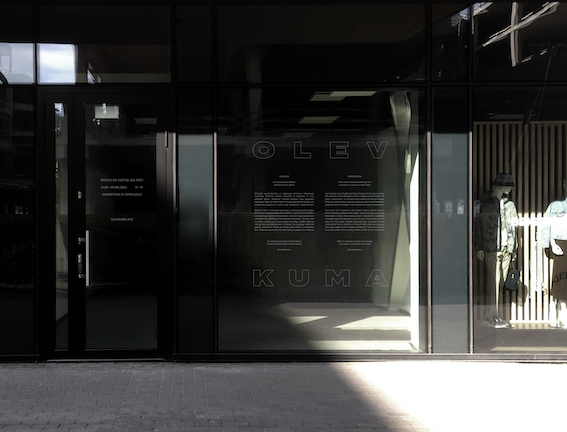
TRANSMISSION
the process of passing something from one person or place to another
(Oxford English Dictionary)
Last decades have brought significant changes to the consciousness. We encounter more messages and the images are ever faster. The series „Transmission“ on the other hand consists of very slow images. These are layered allover abstract paintings, which open themselves gradually and form bridges to the unconscious space of experience.
Such works are in essence a veil between dreams and the material world, inspiring connection with deeper, daily untouched inner world. Minimalist in form, from distance even monochrome meditative rectangles allow the meaning to be born only in accordance with the input from the viewer. Thereby these paintings are about the very same person that is standing in front of them, creating a personal and unique stage for their thoughts and feelings. The meaning is born when the content of the painting and the content of the viewer meet.
When an explosion explodes hard enough,
dust wakes up and thinks about itself.
@JarodAnderson
The exhibition is open on 27.05—09.06 daily 11—19
The exhibition is a part of Estonian Academy of Arts’ graduation show TASE ’22
The artist would like to thank the EKA painting department and Estmak Capital.
Posted by Andres Lõo — Permalink
Olev Kuma “Transmission”
Friday 27 May, 2022 — Thursday 09 June, 2022
Painting
TRANSMISSION
the process of passing something from one person or place to another
(Oxford English Dictionary)
Last decades have brought significant changes to the consciousness. We encounter more messages and the images are ever faster. The series „Transmission“ on the other hand consists of very slow images. These are layered allover abstract paintings, which open themselves gradually and form bridges to the unconscious space of experience.
Such works are in essence a veil between dreams and the material world, inspiring connection with deeper, daily untouched inner world. Minimalist in form, from distance even monochrome meditative rectangles allow the meaning to be born only in accordance with the input from the viewer. Thereby these paintings are about the very same person that is standing in front of them, creating a personal and unique stage for their thoughts and feelings. The meaning is born when the content of the painting and the content of the viewer meet.
When an explosion explodes hard enough,
dust wakes up and thinks about itself.
@JarodAnderson
The exhibition is open on 27.05—09.06 daily 11—19
The exhibition is a part of Estonian Academy of Arts’ graduation show TASE ’22
The artist would like to thank the EKA painting department and Estmak Capital.
Posted by Andres Lõo — Permalink
27.05.2022 — 09.06.2022
Kaia Ansip and Yufang Hu graduation exhibition
Jewellery and Blacksmithing
Invitation to the opening of the exhibition of Kaia Ansip and Yufang Hu, MA students of Jewelery and Blacksmithing, May 27, 6 pm at Rotermanni 7
The exhibition is part of the TASE’22 Grad Show.
The exhibition is open until June 9.
Posted by Andres Lõo — Permalink
Kaia Ansip and Yufang Hu graduation exhibition
Friday 27 May, 2022 — Thursday 09 June, 2022
Jewellery and Blacksmithing
Invitation to the opening of the exhibition of Kaia Ansip and Yufang Hu, MA students of Jewelery and Blacksmithing, May 27, 6 pm at Rotermanni 7
The exhibition is part of the TASE’22 Grad Show.
The exhibition is open until June 9.
Posted by Andres Lõo — Permalink
04.06.2022
TASE FILM 2022
TASE
TASE FILM on June 4 at 5 pm at EKA auditorium (A101) once again.
TASE FILM is an event which happens every year in the context of EKA’s graduate student exhibition, TASE. It offers a programme full of different videos and short films made by students of EKA.
TASE FILM 2022 explores the dream world and reality. The programme consists of two chapters, the first of which takes a look at socially relevant topics such as overconsumption and the tireless construction of shopping malls, and an insight into the work of food couriers. In addition, there are video pieces that look at everyday life around us. In the second part, surreal and abstract videos are presented, including documentaries of performances, dream landscapes and questions of identity.
The programme lasts about 2 hours.
Participating artists:
Aap Kaur Suvi | Potato, Seagulls, Reeds and cars
Camilla Prey | Blaue Stunde
Ditiya Ferdous | Family 1
Ivor Lõõbas | Tradition
Jamie Avis | The Wave
John Quirk | HIDE
Kadri Joala | Autoportree
Karl Joonas Alamaa, Lisette Sivard, Andreas Kübar | ONLY BASIC FASHION SHOW
Kush, Paul Simon, Timothee | TXMALL
Lauri Lest | Moulded
Maria Naulainen | KIHA
Martina Maria Semenzato | ALBAIONES
Moritz Simon | Sand, Stone
Paulina Schroeder, Christian Horner, Nabeel Imtiaz | Looking of Action
Santiago Ordoñez | The station´s seat
Xingpei Shen | Lotus Lantern
Event is free of charge!
Film programme curators: Johanna Kuzmenko, Lígia Fernandes
Location: Estonian Academy of Arts (Põhja pst 7), A-101
Posted by Andres Lõo — Permalink
TASE FILM 2022
Saturday 04 June, 2022
TASE
TASE FILM on June 4 at 5 pm at EKA auditorium (A101) once again.
TASE FILM is an event which happens every year in the context of EKA’s graduate student exhibition, TASE. It offers a programme full of different videos and short films made by students of EKA.
TASE FILM 2022 explores the dream world and reality. The programme consists of two chapters, the first of which takes a look at socially relevant topics such as overconsumption and the tireless construction of shopping malls, and an insight into the work of food couriers. In addition, there are video pieces that look at everyday life around us. In the second part, surreal and abstract videos are presented, including documentaries of performances, dream landscapes and questions of identity.
The programme lasts about 2 hours.
Participating artists:
Aap Kaur Suvi | Potato, Seagulls, Reeds and cars
Camilla Prey | Blaue Stunde
Ditiya Ferdous | Family 1
Ivor Lõõbas | Tradition
Jamie Avis | The Wave
John Quirk | HIDE
Kadri Joala | Autoportree
Karl Joonas Alamaa, Lisette Sivard, Andreas Kübar | ONLY BASIC FASHION SHOW
Kush, Paul Simon, Timothee | TXMALL
Lauri Lest | Moulded
Maria Naulainen | KIHA
Martina Maria Semenzato | ALBAIONES
Moritz Simon | Sand, Stone
Paulina Schroeder, Christian Horner, Nabeel Imtiaz | Looking of Action
Santiago Ordoñez | The station´s seat
Xingpei Shen | Lotus Lantern
Event is free of charge!
Film programme curators: Johanna Kuzmenko, Lígia Fernandes
Location: Estonian Academy of Arts (Põhja pst 7), A-101
Posted by Andres Lõo — Permalink
27.05.2022 — 09.06.2022
BA graduation exhibition TASE’22 by the students of department of photography
Photography
You are welcome to the BA graduation exhibition of the department of photography of Estonian Academy of Arts in ARS Art Factory (Pärnu Road 154) at 18:00 on May 27th.
This year, a record number of BA students will graduate from the department of photography. Their graduate exhibition presents diverse artist statements and formats – from music videos and staged photographs to charcoal drawings and sculptures.
Exhibition is open from May 28 – June 9, 2022, every day 12:00–18:00 in ARS Art Factory.
Website: tase.artun.ee
Participating artists: Andra Junalainen, Elo Vahtrik, Imbi Sõber, Ivor Lõõbas, Jana Mätas, Joosep Kivimäe, Kertu Rannula, Laura Maala, Laura Ruuder, Markus Mikk, Meel Paliale
Supervisors: Marge Monko, Laura Kuusk, Reimo Võsa-Tangsoo
Public defence of the graduation works will take place at 10:00 on June 3rd in ARS Art Factory.
Assessment jury:
Kristi Kongi, associate professor and head of curriculum of the painting department of Estonian Academy of Arts (Tallinn, Estonia);
Liina Siib, professor and head of curriculum of the department of graphic art of Estonian Academy of Arts (Tallinn, Estonia);
Taavi Talve, head of curriculum and head of the department of sculpture and installation of Estonian Academy of Arts (Tallinn, Estonia);
Tuukka Kaila, artist, lecturer (Helsinki, Finland)
Exhibition is supported by: Cultural Endowment of Estonia, Punch Drinks, Põhjala Brewery, Tiks Wine Bar (cheaper drinks with EKA student card in the bar), Kuma Kombucha, Anora.
Posted by Maris Karjatse — Permalink
BA graduation exhibition TASE’22 by the students of department of photography
Friday 27 May, 2022 — Thursday 09 June, 2022
Photography
You are welcome to the BA graduation exhibition of the department of photography of Estonian Academy of Arts in ARS Art Factory (Pärnu Road 154) at 18:00 on May 27th.
This year, a record number of BA students will graduate from the department of photography. Their graduate exhibition presents diverse artist statements and formats – from music videos and staged photographs to charcoal drawings and sculptures.
Exhibition is open from May 28 – June 9, 2022, every day 12:00–18:00 in ARS Art Factory.
Website: tase.artun.ee
Participating artists: Andra Junalainen, Elo Vahtrik, Imbi Sõber, Ivor Lõõbas, Jana Mätas, Joosep Kivimäe, Kertu Rannula, Laura Maala, Laura Ruuder, Markus Mikk, Meel Paliale
Supervisors: Marge Monko, Laura Kuusk, Reimo Võsa-Tangsoo
Public defence of the graduation works will take place at 10:00 on June 3rd in ARS Art Factory.
Assessment jury:
Kristi Kongi, associate professor and head of curriculum of the painting department of Estonian Academy of Arts (Tallinn, Estonia);
Liina Siib, professor and head of curriculum of the department of graphic art of Estonian Academy of Arts (Tallinn, Estonia);
Taavi Talve, head of curriculum and head of the department of sculpture and installation of Estonian Academy of Arts (Tallinn, Estonia);
Tuukka Kaila, artist, lecturer (Helsinki, Finland)
Exhibition is supported by: Cultural Endowment of Estonia, Punch Drinks, Põhjala Brewery, Tiks Wine Bar (cheaper drinks with EKA student card in the bar), Kuma Kombucha, Anora.
Posted by Maris Karjatse — Permalink
30.05.2022
Urban Studies Master’s Thesis Presentation and Defence
Urban Studies
10:00-10:10 Introductions
10:10-11:10 (EEST)
Luisa Fernanda Ayla Torres
Precariousness in the Transformation of Labour: Through Working Class Identity in the city of Turin
Between the 1960s and 1980s, nine million Italians migrated from the agricultural regions of Italy to the productive areas of Turin, shaping the periphery of the city from a rural to an industrial area. The Post-War economic boom provided jobs in the northern plants, giving life to a workers’ hegemony and demographic, social, and cultural transformation. This socioeconomic transformation that affected the organisation of workers, labour, political activity, and society in general, was manifested in two cases. The Palace of Labour, an avant-garde building intended to celebrate the struggles of the working class with an exhibition focused on “man and his progress”, and the case of Mirafiori Sud, a working class neighbourhood symbolising the association of workers. In this way, this thesis explores the identity of the working class in the contemporary city of Turin, where security in neoliberal times no longer needs the scope of the protective techniques of the liberal social State, and as a consequence precarization is now the norm. This is reflected in the transformation of labour manifesting itsel through productive connection with others, where labour is not purely characterised by the increasing capitalization of social life but is effectively reflected with others, producing new social relations.
Examined by Alberto Vanolo (University of Turin) and Aro Velmet (University of Southern California)
11.15-12:15 (EEST)
Mira Samonig
the matter of right-wing populism in Polish LGBT-free zones; towards a with-standing xenourbanism?
Almost a third of Poland had been declared an ‘LGBT-free zone’ in 2020, stigmatizing the LGBTIQP+ community as a threat to Polish identity; this labeling remains a reality for many Polish towns. In this thesis, I am turning towards the concept of the ‘LGBT-free zones’ as a case to investigate the material reality of right-wing populism. I seek to develop a third position to a historical or new materialist understanding in order to investigate such material reality. By that, the ways values find physical expression and thus possibly mobilize oppressive attitudes into ever new futures ahead are traced. It becomes quite evident that the way structures of oppression are advanced and maintained within the public realm exists quite dominantly in everyday narratives. In a bottom-up manner, right-wing populism is advanced on the street; yet, it is by far not perceived by everyone. This marks the entry point for sketching out a possible approach to how the discipline of urbanism could position itself in social struggles. Drawing on Helen Hester’s Xenofeminism, the thesis introduces the concept of xenourbanism describing urbanism based on the conceptual notion of solidarity without sameness. I argue that the notion of xeno- as a prefix attached to urbanism focuses on an inherent transformational potential within the current, rendering a perceived unarming reality into a weapon of contestation and by that suggesting trajectories away from paralyzing no-alternative narratives.
Examined by Piotr Plucienniczak (Warsaw Academy of Fine Arts) and Helen Runting (Secretary)
12:25-13:35 (EEST)
Zahaan Khan
Tourism-Led Gentrification: The Case of Dal Lake in Kashmir
The dissertation explores tourism-led gentrification, its causes and the impact on the communities living in and around the ecologically-sensitive region of Dal Lake in Kashmir. The dissertation employs methodological triangulation using interviews, survey and policy document analysis, as methods. The policy document in question is the Srinagar Master Plan 2035 issued by the Srinagar Development Authority. Analysing the correlation between tourism and gentrification in a conflict-torn region and using displacement as a conceptual lens, the thesis maps the socio-cultural and economic aspects of touristification especially in relation to the everyday lives of the communities. The dissertation employs a two-pronged analytical approach by using two categories – land milieu and water milieu – to foreground the patterns and impact of gentrification in and around the lake. The analysis of the land milieu concerns itself with a detailed exploration into Boulevard, the long promenade along the lake’s periphery. It further discusses holiday rentals and issues of mobility and maps the city’s land-use patterns particularly in relation to expansion along the lake’s periphery. The study of the water milieu, on the other hand, is an exploration into the historical houseboats of Kashmir and the local hanji (or haenz) community; foregrounding the issues concerning policies of renovation and relocation of
houseboats. The dissertation also delves into the government’s land use and tourism-driven development plans around the lake, especially post abrogation of
Article 370 of the Indian constitution that gave ‘special status’ to the region.
Examined by Dr Mathew Varghese (Mahatma Gandhi University) and Karlis Ratnieks (EKA)
13:35-14:25 Lunch
14:25-15:25 (EEST)
Egemen Mercanlioglu
THE WORK OF A RIFT: Kanal İstanbul and Turkey’s Authoritarian Neoliberalism
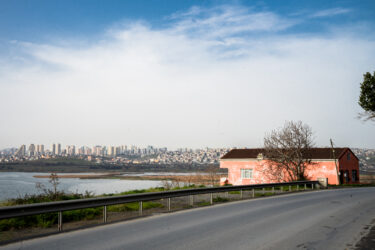
Turkey under the leadership of Recep Tayyip Erdoğan and his Adalet ve Kalkınma Partisi was touted as a paragon of neoliberalism and a burgeoning democracy until the late-2000s. Two decades later, the positive portrayals of the country have decidedly shifted. Turkey is now considered to have retreated from neoliberalism; an emblematic case of authoritarian turn. However, this thesis rethinks authoritarian governance as the kernel of the Erdoğan-led AKP’s brand of neoliberalism. It does so by focusing on a to-be-built urban megaproject, Kanal İstanbul—a 45-kilometer long man-made waterway, aiming to locate İstanbul as a signature node in the global web of flooding money and commodities. Using the megaproject as a lens, the thesis shows how neoliberal reforms in the early-2000s have propelled İstanbul and the construction sector as financial growth generating engines of the country. Subsequently, these
reforms have buttressed contemporary coercive governance structure and a megaproject spree in the city. Finally, the thesis briefly explores a recent but growing counter-hegemonic contestation against Erdoğan and his Kanal İstanbul, posed by the mayor of İstanbul. The thesis does not give a final verdict but explores whether or not this challenge proposes an alternative to authoritarian neoliberalism.
Examined by Dr Cemal Burak Tansel (Newcastle University) and Mattias Malk (EKA)
15:30-16:30 (EEST)
Deniz Taskin
Architecture as a Practice of Care: Case Studies of Women’s Care-Based Architecture Practices
Care as a concept is becoming more crucial in architecture and urban practice as a result of
the COVID-19 pandemic’s unpredictable spatial, social, and political circumstances. The
attitude of urbanized capitalism towards contemporary urban problems and its refusal to
acknowledge the urgency of the climate crisis result in uncaring urban practices. The
important position of architecture as a measure for assessing our place in the ecosystem and
the role of architects and related disciplines in determining with whom we live together
requires them to reconsider the values and priorities that drive their practice.
This thesis unpacks care as a concept and ethical practice through a feminist lens by
focusing on the notion of “configuration of care,” which refers to how architects express their
ethical and political objectives by arranging human and nonhuman materials to achieve
caring relationships in urban spaces. (Suchman 2012). It does so by focusing on the practices
of women from the field of architecture and related disciplines whose contemporary practice
foregrounds care and employs feminist care ethics: Careful Mapping by Spolka, Performing
Architherapy by Erika Henriksson, Mutfak (Kitchen) by Merve Bedir, The Blind Alley by
Elin Strand Ruin. The thesis explores certain commonalities and recurring patterns of thought
in how the practitioners’ encounter and apply feminist care ethics. Finally, it discusses the
potential and limits of incorporating feminist care ethics into architecture practice, as well as
the potential for architectural practice to become care practice.
Examined by Agata Marzecova (EKA) and Henriette Steiner (University of Copenhagen)
Posted by Kaija-Luisa Kurik — Permalink
Urban Studies Master’s Thesis Presentation and Defence
Monday 30 May, 2022
Urban Studies
10:00-10:10 Introductions
10:10-11:10 (EEST)
Luisa Fernanda Ayla Torres
Precariousness in the Transformation of Labour: Through Working Class Identity in the city of Turin
Between the 1960s and 1980s, nine million Italians migrated from the agricultural regions of Italy to the productive areas of Turin, shaping the periphery of the city from a rural to an industrial area. The Post-War economic boom provided jobs in the northern plants, giving life to a workers’ hegemony and demographic, social, and cultural transformation. This socioeconomic transformation that affected the organisation of workers, labour, political activity, and society in general, was manifested in two cases. The Palace of Labour, an avant-garde building intended to celebrate the struggles of the working class with an exhibition focused on “man and his progress”, and the case of Mirafiori Sud, a working class neighbourhood symbolising the association of workers. In this way, this thesis explores the identity of the working class in the contemporary city of Turin, where security in neoliberal times no longer needs the scope of the protective techniques of the liberal social State, and as a consequence precarization is now the norm. This is reflected in the transformation of labour manifesting itsel through productive connection with others, where labour is not purely characterised by the increasing capitalization of social life but is effectively reflected with others, producing new social relations.
Examined by Alberto Vanolo (University of Turin) and Aro Velmet (University of Southern California)
11.15-12:15 (EEST)
Mira Samonig
the matter of right-wing populism in Polish LGBT-free zones; towards a with-standing xenourbanism?
Almost a third of Poland had been declared an ‘LGBT-free zone’ in 2020, stigmatizing the LGBTIQP+ community as a threat to Polish identity; this labeling remains a reality for many Polish towns. In this thesis, I am turning towards the concept of the ‘LGBT-free zones’ as a case to investigate the material reality of right-wing populism. I seek to develop a third position to a historical or new materialist understanding in order to investigate such material reality. By that, the ways values find physical expression and thus possibly mobilize oppressive attitudes into ever new futures ahead are traced. It becomes quite evident that the way structures of oppression are advanced and maintained within the public realm exists quite dominantly in everyday narratives. In a bottom-up manner, right-wing populism is advanced on the street; yet, it is by far not perceived by everyone. This marks the entry point for sketching out a possible approach to how the discipline of urbanism could position itself in social struggles. Drawing on Helen Hester’s Xenofeminism, the thesis introduces the concept of xenourbanism describing urbanism based on the conceptual notion of solidarity without sameness. I argue that the notion of xeno- as a prefix attached to urbanism focuses on an inherent transformational potential within the current, rendering a perceived unarming reality into a weapon of contestation and by that suggesting trajectories away from paralyzing no-alternative narratives.
Examined by Piotr Plucienniczak (Warsaw Academy of Fine Arts) and Helen Runting (Secretary)
12:25-13:35 (EEST)
Zahaan Khan
Tourism-Led Gentrification: The Case of Dal Lake in Kashmir
The dissertation explores tourism-led gentrification, its causes and the impact on the communities living in and around the ecologically-sensitive region of Dal Lake in Kashmir. The dissertation employs methodological triangulation using interviews, survey and policy document analysis, as methods. The policy document in question is the Srinagar Master Plan 2035 issued by the Srinagar Development Authority. Analysing the correlation between tourism and gentrification in a conflict-torn region and using displacement as a conceptual lens, the thesis maps the socio-cultural and economic aspects of touristification especially in relation to the everyday lives of the communities. The dissertation employs a two-pronged analytical approach by using two categories – land milieu and water milieu – to foreground the patterns and impact of gentrification in and around the lake. The analysis of the land milieu concerns itself with a detailed exploration into Boulevard, the long promenade along the lake’s periphery. It further discusses holiday rentals and issues of mobility and maps the city’s land-use patterns particularly in relation to expansion along the lake’s periphery. The study of the water milieu, on the other hand, is an exploration into the historical houseboats of Kashmir and the local hanji (or haenz) community; foregrounding the issues concerning policies of renovation and relocation of
houseboats. The dissertation also delves into the government’s land use and tourism-driven development plans around the lake, especially post abrogation of
Article 370 of the Indian constitution that gave ‘special status’ to the region.
Examined by Dr Mathew Varghese (Mahatma Gandhi University) and Karlis Ratnieks (EKA)
13:35-14:25 Lunch
14:25-15:25 (EEST)
Egemen Mercanlioglu
THE WORK OF A RIFT: Kanal İstanbul and Turkey’s Authoritarian Neoliberalism
Turkey under the leadership of Recep Tayyip Erdoğan and his Adalet ve Kalkınma Partisi was touted as a paragon of neoliberalism and a burgeoning democracy until the late-2000s. Two decades later, the positive portrayals of the country have decidedly shifted. Turkey is now considered to have retreated from neoliberalism; an emblematic case of authoritarian turn. However, this thesis rethinks authoritarian governance as the kernel of the Erdoğan-led AKP’s brand of neoliberalism. It does so by focusing on a to-be-built urban megaproject, Kanal İstanbul—a 45-kilometer long man-made waterway, aiming to locate İstanbul as a signature node in the global web of flooding money and commodities. Using the megaproject as a lens, the thesis shows how neoliberal reforms in the early-2000s have propelled İstanbul and the construction sector as financial growth generating engines of the country. Subsequently, these
reforms have buttressed contemporary coercive governance structure and a megaproject spree in the city. Finally, the thesis briefly explores a recent but growing counter-hegemonic contestation against Erdoğan and his Kanal İstanbul, posed by the mayor of İstanbul. The thesis does not give a final verdict but explores whether or not this challenge proposes an alternative to authoritarian neoliberalism.
Examined by Dr Cemal Burak Tansel (Newcastle University) and Mattias Malk (EKA)
15:30-16:30 (EEST)
Deniz Taskin
Architecture as a Practice of Care: Case Studies of Women’s Care-Based Architecture Practices
Care as a concept is becoming more crucial in architecture and urban practice as a result of
the COVID-19 pandemic’s unpredictable spatial, social, and political circumstances. The
attitude of urbanized capitalism towards contemporary urban problems and its refusal to
acknowledge the urgency of the climate crisis result in uncaring urban practices. The
important position of architecture as a measure for assessing our place in the ecosystem and
the role of architects and related disciplines in determining with whom we live together
requires them to reconsider the values and priorities that drive their practice.
This thesis unpacks care as a concept and ethical practice through a feminist lens by
focusing on the notion of “configuration of care,” which refers to how architects express their
ethical and political objectives by arranging human and nonhuman materials to achieve
caring relationships in urban spaces. (Suchman 2012). It does so by focusing on the practices
of women from the field of architecture and related disciplines whose contemporary practice
foregrounds care and employs feminist care ethics: Careful Mapping by Spolka, Performing
Architherapy by Erika Henriksson, Mutfak (Kitchen) by Merve Bedir, The Blind Alley by
Elin Strand Ruin. The thesis explores certain commonalities and recurring patterns of thought
in how the practitioners’ encounter and apply feminist care ethics. Finally, it discusses the
potential and limits of incorporating feminist care ethics into architecture practice, as well as
the potential for architectural practice to become care practice.
Examined by Agata Marzecova (EKA) and Henriette Steiner (University of Copenhagen)
Posted by Kaija-Luisa Kurik — Permalink