
Open Lectures
15.01.2020 — 17.01.2020
Paul Bush: screenings and open lectures
The experimental stop frame animation filmmaker Paul Bush will give three open lectures and will show his works next week from Wednesday to Friday in EKA.
Falling in Love with the Frame
On Wednesday, January 15th at 19:00-21:00 in EKA auditorium A101
“This talk will look at my passage from artist to experimental filmmaker and finally to animation director, and the pains and special pleasures of working frame by frame.”
The Art of Stupidity
On Thursday, January 16th at 17:30-18:30 in EKA room A302
“Pushkin wrote that poetry has to be a little bit stupid. On the eve of the UK leaving Europe this is the perfect moment to examine the British nation’s love of stupidity – for good or ill.”
In the Hinterland of Narrative
On Friday, January 17th at at 17:30-18:30 in EKA room A302
“An attempt to undermine all the rules for storytelling you may ever have heard and an exhortation to move into the unexplored territory of narrative.”
Paul Bush
Paul Bush is a filmmaker most well-known for experimental stop frame animation. He has made numerous short and medium length films including The Cows Drama (1984), His Comedy (1994), Rumour of True Things (1996), Furniture Poetry (1999), Dr Jekyll and Mr Hyde (2001) and While Darwin Sleeps (2004). He has won many awards and his films have been shown in festivals, cinemas, galleries and on television all round the world. Last year he had retrospective programmes in Taiwan, Brussels, Madrid, Bucharest and Lisbon. He has directed commercials and his clients include Philips and National Panasonic. He has written four feature length screenplays one of which he directed and was released in UK cinemas to critical acclaim in 2013.
He began teaching film in 1981 and established a film workshop in South London. He taught on the visual arts course at Goldsmiths between 1995 and 2001 and at the National Film and Television School since 2003. Bush has lectured, run workshops and tutored at numerous art and film courses around the world including Harvard, Luzern University, Centro Sperimentali di Cinematografia in Italy and The Animation Workshop in Denmark.
“Bush is part scavenger, part inventor. Nothing is out of bounds and everything is worth trying. This is what makes Bush’s work so welcoming; you never know what you’re in for but you know it will be smart, funny, provocative and unique.” (Chris Robinson – Director, Ottawa International Animation Festival)
The lectures will be in English.
Paul Bush: screenings and open lectures
Wednesday 15 January, 2020 — Friday 17 January, 2020
The experimental stop frame animation filmmaker Paul Bush will give three open lectures and will show his works next week from Wednesday to Friday in EKA.
Falling in Love with the Frame
On Wednesday, January 15th at 19:00-21:00 in EKA auditorium A101
“This talk will look at my passage from artist to experimental filmmaker and finally to animation director, and the pains and special pleasures of working frame by frame.”
The Art of Stupidity
On Thursday, January 16th at 17:30-18:30 in EKA room A302
“Pushkin wrote that poetry has to be a little bit stupid. On the eve of the UK leaving Europe this is the perfect moment to examine the British nation’s love of stupidity – for good or ill.”
In the Hinterland of Narrative
On Friday, January 17th at at 17:30-18:30 in EKA room A302
“An attempt to undermine all the rules for storytelling you may ever have heard and an exhortation to move into the unexplored territory of narrative.”
Paul Bush
Paul Bush is a filmmaker most well-known for experimental stop frame animation. He has made numerous short and medium length films including The Cows Drama (1984), His Comedy (1994), Rumour of True Things (1996), Furniture Poetry (1999), Dr Jekyll and Mr Hyde (2001) and While Darwin Sleeps (2004). He has won many awards and his films have been shown in festivals, cinemas, galleries and on television all round the world. Last year he had retrospective programmes in Taiwan, Brussels, Madrid, Bucharest and Lisbon. He has directed commercials and his clients include Philips and National Panasonic. He has written four feature length screenplays one of which he directed and was released in UK cinemas to critical acclaim in 2013.
He began teaching film in 1981 and established a film workshop in South London. He taught on the visual arts course at Goldsmiths between 1995 and 2001 and at the National Film and Television School since 2003. Bush has lectured, run workshops and tutored at numerous art and film courses around the world including Harvard, Luzern University, Centro Sperimentali di Cinematografia in Italy and The Animation Workshop in Denmark.
“Bush is part scavenger, part inventor. Nothing is out of bounds and everything is worth trying. This is what makes Bush’s work so welcoming; you never know what you’re in for but you know it will be smart, funny, provocative and unique.” (Chris Robinson – Director, Ottawa International Animation Festival)
The lectures will be in English.
15.01.2020
International Inspiration #3: Anna Novikov
The series of open lectures titled “International Inspiration”, co-organized by the Center for Contemporary Arts Estonia and the Institute of Art History and Visual Culture at the Estonian Academy of Arts, is proud to host our next guest, dr Anna Novikov. On January 15th, she will give a lecture titled “Nation is the New Black: Patriotic Fashion and Performance in the Post-Communist States” at EKA, starting at 18:00 in the room A501. The lecture will focus on the transnational revival of patriotic attire linked to patriotic performance that became fashionable in the Post-Communist states of Eastern-Central Europe and Central Asia in the last decade. Dr Novikov will examine visual and ideological links between media, dress, performance and the current development of patriotic fashion and performance in these areas.
The open lecture is followed by a seminar “”My Body is My Runestick and My Tattoos Tell My Story”: Performing Self-Barbarization in the Digital Age” held on January 16 in room A301, starting at 18:00. The seminar will focus on the broader trend in current popular culture of celebrating what the “civilized” Western cultural narrative has previously regarded as “barbarian”, and seeking to return to authenticity, albeit in reconstructed or borrowed forms.
Dr Anna Novikov, originally from Israel, lives and works in Greifswald in Germany, studying the broader sociopolitical context of fashion, including the recent rise in nationalism in Central and Eastern Europe, and its impact on the issues of fashion and identity.
The lecture series is supported by the Cultural Endowment of Estonia.
International Inspiration #3: Anna Novikov
Wednesday 15 January, 2020
The series of open lectures titled “International Inspiration”, co-organized by the Center for Contemporary Arts Estonia and the Institute of Art History and Visual Culture at the Estonian Academy of Arts, is proud to host our next guest, dr Anna Novikov. On January 15th, she will give a lecture titled “Nation is the New Black: Patriotic Fashion and Performance in the Post-Communist States” at EKA, starting at 18:00 in the room A501. The lecture will focus on the transnational revival of patriotic attire linked to patriotic performance that became fashionable in the Post-Communist states of Eastern-Central Europe and Central Asia in the last decade. Dr Novikov will examine visual and ideological links between media, dress, performance and the current development of patriotic fashion and performance in these areas.
The open lecture is followed by a seminar “”My Body is My Runestick and My Tattoos Tell My Story”: Performing Self-Barbarization in the Digital Age” held on January 16 in room A301, starting at 18:00. The seminar will focus on the broader trend in current popular culture of celebrating what the “civilized” Western cultural narrative has previously regarded as “barbarian”, and seeking to return to authenticity, albeit in reconstructed or borrowed forms.
Dr Anna Novikov, originally from Israel, lives and works in Greifswald in Germany, studying the broader sociopolitical context of fashion, including the recent rise in nationalism in Central and Eastern Europe, and its impact on the issues of fashion and identity.
The lecture series is supported by the Cultural Endowment of Estonia.
19.12.2019
OPEN LECTURE ON ARCHITECTURE: Lydia Kallipoliti
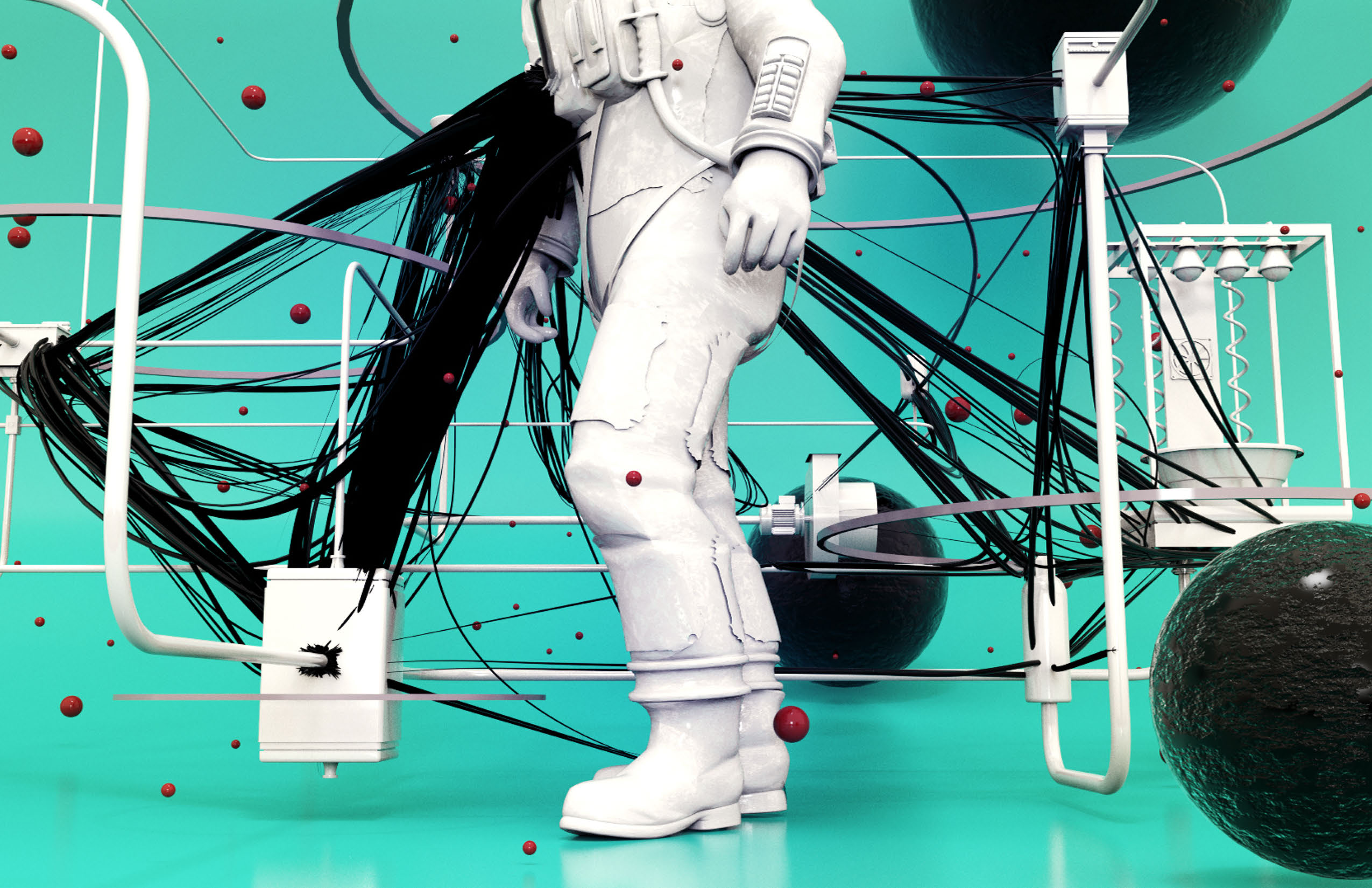
Open Lecture about closed systems by Lydia Kallipoliti
The next lecturer of the Open Lecture Series this autumn will be New York based Greek architect Lydia Kallipoliti – she investigates the architecture of closed worlds and asks, what is the power of shit. Kallipoliti will be stepping on the stage of the main auditorium of the new EKA building on the 19th of december at 6 pm.
Lydia Kallipoliti is an architect, engineer and scholar whose research focuses on the intersections of architecture, technology and environmental politics. She is an Assistant Professor at the Cooper Union in New York. She has also taught at Rensselaer Polytechnic Institute, where she directed the Master of Science Program, at Syracuse University, Columbia University [GSAPP] and Pratt Institute.
Her work has been published and exhibited widely including the Venice Biennial, the Istanbul Design Biennial, the Shenzhen Biennial, the Onassis Cultural Center, the Royal Academy of British Architects and the Storefront for Art and Architecture. She is the author of the awarded book The Architecture of Closed Worlds, Or, What is the Power of Shit (Lars Muller Publishers, 2018), the History of Ecological Design for Oxford English Encyclopedia of Environmental Science and the editor of EcoRedux, a special issue of Architectural Design magazine (AD, 2010). Kallipoliti holds a Diploma in Architecture and Engineering from the Aristotle University of Thessaloniki, Greece, a Master of Science [SMArchS] in design and building technology from MIT and a PhD in history and theory of architecture from Princeton University. She is the principal of ANAcycle thinktank, which has been named leading innovator in sustainable design in Build’s 2019 awards.
In her lecture, Kallipoliti will explore a genealogy of contained microcosms with the ambition to replicate the earth in its totality; a series of living experiments that forge a synthetic naturalism, where the laws of nature and metabolism are displaced from the domain of wilderness to the domain of cities and buildings. Beyond technical concerns, closed worlds distill architectural concerns related to habitation: first an integrated structure where humans, their physiology of ingestion and excretion, become combustion devices, tied to the system with umbilical cords; second, closed worlds are giant stomachs; they are inhabitable machines that digest resources and are sometimes disobedient; at times they digest, while at other times they vomit.
The Faculty of Architecture of the Estonian Academy of Arts has curated the Open Lectures on Architecture series since 2012 – each year, a dozen architects, urbanists, both practicing as well as academics, introduce their work and field of research to the audience in Tallinn. All lectures are in English, free and open to everyone.
The series is funded by the Estonian Cultural Endowment.
Curators: Sille Pihlak, Johan Tali
www.avatudloengud.ee
www.facebook.com/EKAarhitektuur/
More info:
E-mail: arhitektuur@artun.ee
Tel. +372 642 0071
OPEN LECTURE ON ARCHITECTURE: Lydia Kallipoliti
Thursday 19 December, 2019
Open Lecture about closed systems by Lydia Kallipoliti
The next lecturer of the Open Lecture Series this autumn will be New York based Greek architect Lydia Kallipoliti – she investigates the architecture of closed worlds and asks, what is the power of shit. Kallipoliti will be stepping on the stage of the main auditorium of the new EKA building on the 19th of december at 6 pm.
Lydia Kallipoliti is an architect, engineer and scholar whose research focuses on the intersections of architecture, technology and environmental politics. She is an Assistant Professor at the Cooper Union in New York. She has also taught at Rensselaer Polytechnic Institute, where she directed the Master of Science Program, at Syracuse University, Columbia University [GSAPP] and Pratt Institute.
Her work has been published and exhibited widely including the Venice Biennial, the Istanbul Design Biennial, the Shenzhen Biennial, the Onassis Cultural Center, the Royal Academy of British Architects and the Storefront for Art and Architecture. She is the author of the awarded book The Architecture of Closed Worlds, Or, What is the Power of Shit (Lars Muller Publishers, 2018), the History of Ecological Design for Oxford English Encyclopedia of Environmental Science and the editor of EcoRedux, a special issue of Architectural Design magazine (AD, 2010). Kallipoliti holds a Diploma in Architecture and Engineering from the Aristotle University of Thessaloniki, Greece, a Master of Science [SMArchS] in design and building technology from MIT and a PhD in history and theory of architecture from Princeton University. She is the principal of ANAcycle thinktank, which has been named leading innovator in sustainable design in Build’s 2019 awards.
In her lecture, Kallipoliti will explore a genealogy of contained microcosms with the ambition to replicate the earth in its totality; a series of living experiments that forge a synthetic naturalism, where the laws of nature and metabolism are displaced from the domain of wilderness to the domain of cities and buildings. Beyond technical concerns, closed worlds distill architectural concerns related to habitation: first an integrated structure where humans, their physiology of ingestion and excretion, become combustion devices, tied to the system with umbilical cords; second, closed worlds are giant stomachs; they are inhabitable machines that digest resources and are sometimes disobedient; at times they digest, while at other times they vomit.
The Faculty of Architecture of the Estonian Academy of Arts has curated the Open Lectures on Architecture series since 2012 – each year, a dozen architects, urbanists, both practicing as well as academics, introduce their work and field of research to the audience in Tallinn. All lectures are in English, free and open to everyone.
The series is funded by the Estonian Cultural Endowment.
Curators: Sille Pihlak, Johan Tali
www.avatudloengud.ee
www.facebook.com/EKAarhitektuur/
More info:
E-mail: arhitektuur@artun.ee
Tel. +372 642 0071
20.11.2019
Open lecture on architecture: MALENE FREUDEDAL-PEDERSEN
The Faculty of Architecture of EKA is glad to ask you to join an open lecture by Malene Freudendal-Pedersen – a professor in urban planning at Aalborg University. In her lecture “Cities, Mobilities, Futures” she talks about planning the city keeping cycling in mind. Freudendal-Pedersen will be stepping on the stage of the main auditorium of the new EKA building on the 20th of November at 10 am. Lecture is free of charge and open to everyone.
Malene Freudendal-Pedersen is Professor in Urban Planning at Aalborg University and has a interdisciplinary background linking sociology, geography, urban planning and the sociology of technology.
Focus for her research is how mobilities frame and enable modern everyday life. How individuals experience, evaluate or describe their mobilities and what propels their actions is important to understand if we aim at more sustainable mobilities in the future. Specific transport modes have different values and importance in planning cities. Values or taken for granted knowledge about transport and mobilities produce path dependencies in everyday life mobilities that are also diffused into policy and planning systems. Her research addresses interrelations between social practice and transport modes and the role the for urban spaces and city life.
More info:
E-post: arhitektuur@artun.ee
Tel. +372 642 0071
Open lecture on architecture: MALENE FREUDEDAL-PEDERSEN
Wednesday 20 November, 2019
The Faculty of Architecture of EKA is glad to ask you to join an open lecture by Malene Freudendal-Pedersen – a professor in urban planning at Aalborg University. In her lecture “Cities, Mobilities, Futures” she talks about planning the city keeping cycling in mind. Freudendal-Pedersen will be stepping on the stage of the main auditorium of the new EKA building on the 20th of November at 10 am. Lecture is free of charge and open to everyone.
Malene Freudendal-Pedersen is Professor in Urban Planning at Aalborg University and has a interdisciplinary background linking sociology, geography, urban planning and the sociology of technology.
Focus for her research is how mobilities frame and enable modern everyday life. How individuals experience, evaluate or describe their mobilities and what propels their actions is important to understand if we aim at more sustainable mobilities in the future. Specific transport modes have different values and importance in planning cities. Values or taken for granted knowledge about transport and mobilities produce path dependencies in everyday life mobilities that are also diffused into policy and planning systems. Her research addresses interrelations between social practice and transport modes and the role the for urban spaces and city life.
More info:
E-post: arhitektuur@artun.ee
Tel. +372 642 0071
28.11.2019
OPEN LECTURE ON ARCHITECTURE: Ross Exo Adams
The Inevitability of Urbanization: Open Lecture by Ross Exo Adams
The next lecturer of the Open Lecture Series this autumn will be London based architect, urbanist and historian Ross Exo Adams, who will talk about the inevitability of urbanization. Adams will be stepping on the stage of the main auditorium of the new EKA building on the 28th of November at 6 pm.
Ross Exo Adams is Assistant Professor and Co-Director of Architecture at Bard College. He is the author of Circulation and Urbanization (Sage, 2019) and has written widely on the intersections of architecture and urbanism with geographies and histories of power. His research has been supported by fellowships and grants from the Royal Institute of British Architects, The London Consortium, Iowa State University and The MacDowell Colony.
To speak about an urbanized planet today is at once to utter an unthinkable reality and to name the inevitability of a process we take to be rooted in the human condition itself. As we confront this situation today, we are met with questions of how we urbanize—sustainable urbanism, resilient urbanism, adaptation regimes, development as improvement, etc.—almost never asking why we must urbanize in the first place. In his talk, Adams argues that the inevitability of urbanization is based in part on the way in which we have historically overlooked the emergence of the urban itself, treating it instead as a natural outcome of human co-existence. By suggesting a genealogical account of the formation of this space-process in parallel to the rise of the modern state, its colonial outposts and the capitalist order it gave rise to, he attempts to open a space in which we might challenge the inevitability of an urban future. Now more than ever, as we confront endgame thresholds and the countless injustices of limitless growth, we need to find ways to ask: if not the urban, then what?
The Faculty of Architecture of the Estonian Academy of Arts has curated the Open Lectures on Architecture series since 2012 – each year, a dozen architects, urbanists, both practicing as well as academics, introduce their work and field of research to the audience in Tallinn. All lectures are in English, free and open to everyone.
The series is funded by the Estonian Cultural Endowment.
Curators: Sille Pihlak, Johan Tali
www.avatudloengud.ee
www.facebook.com/EKAarhitektuur/
More info:
Kadi Karine
E-mail: arhitektuur@artun.ee
Tel. +372 642 0071
OPEN LECTURE ON ARCHITECTURE: Ross Exo Adams
Thursday 28 November, 2019
The Inevitability of Urbanization: Open Lecture by Ross Exo Adams
The next lecturer of the Open Lecture Series this autumn will be London based architect, urbanist and historian Ross Exo Adams, who will talk about the inevitability of urbanization. Adams will be stepping on the stage of the main auditorium of the new EKA building on the 28th of November at 6 pm.
Ross Exo Adams is Assistant Professor and Co-Director of Architecture at Bard College. He is the author of Circulation and Urbanization (Sage, 2019) and has written widely on the intersections of architecture and urbanism with geographies and histories of power. His research has been supported by fellowships and grants from the Royal Institute of British Architects, The London Consortium, Iowa State University and The MacDowell Colony.
To speak about an urbanized planet today is at once to utter an unthinkable reality and to name the inevitability of a process we take to be rooted in the human condition itself. As we confront this situation today, we are met with questions of how we urbanize—sustainable urbanism, resilient urbanism, adaptation regimes, development as improvement, etc.—almost never asking why we must urbanize in the first place. In his talk, Adams argues that the inevitability of urbanization is based in part on the way in which we have historically overlooked the emergence of the urban itself, treating it instead as a natural outcome of human co-existence. By suggesting a genealogical account of the formation of this space-process in parallel to the rise of the modern state, its colonial outposts and the capitalist order it gave rise to, he attempts to open a space in which we might challenge the inevitability of an urban future. Now more than ever, as we confront endgame thresholds and the countless injustices of limitless growth, we need to find ways to ask: if not the urban, then what?
The Faculty of Architecture of the Estonian Academy of Arts has curated the Open Lectures on Architecture series since 2012 – each year, a dozen architects, urbanists, both practicing as well as academics, introduce their work and field of research to the audience in Tallinn. All lectures are in English, free and open to everyone.
The series is funded by the Estonian Cultural Endowment.
Curators: Sille Pihlak, Johan Tali
www.avatudloengud.ee
www.facebook.com/EKAarhitektuur/
More info:
Kadi Karine
E-mail: arhitektuur@artun.ee
Tel. +372 642 0071
05.11.2019
Public talk by Flo Kasearu
Flo Kasearu (b. 1985) :
I was born in Soviet Union but grew up in Estonia. I studied painting (2004-2008) and photography (2008-2013) at the Estonian Academy of Arts.
In 2006-2007 I was an exchange student at the Rebecca Horn studio at Berlin University of the Arts, where I started doing performance and video art. I work and live in Flo Kasearu House Museum in Tallinn, Estonia.
The nature of my works is seasonal and explorative, in that each project begins as an open-ended game. No favourite theme or a medium. I am interested in grassroots level, private and public space, vertical vs horizontal relationships, monumental vs unstable. I value irony more than aesthetics. So far I have played with private and public space, freedom, economic depression, patriotism and nationalism, domestic violence…
More info: www.flokasearu.eu
The talk is in English and is part of the EKA Contemporary Art MA (MACA) programme’s public lecture series ART TALKS.
Everybody is welcome to join!
Public talk by Flo Kasearu
Tuesday 05 November, 2019
Flo Kasearu (b. 1985) :
I was born in Soviet Union but grew up in Estonia. I studied painting (2004-2008) and photography (2008-2013) at the Estonian Academy of Arts.
In 2006-2007 I was an exchange student at the Rebecca Horn studio at Berlin University of the Arts, where I started doing performance and video art. I work and live in Flo Kasearu House Museum in Tallinn, Estonia.
The nature of my works is seasonal and explorative, in that each project begins as an open-ended game. No favourite theme or a medium. I am interested in grassroots level, private and public space, vertical vs horizontal relationships, monumental vs unstable. I value irony more than aesthetics. So far I have played with private and public space, freedom, economic depression, patriotism and nationalism, domestic violence…
More info: www.flokasearu.eu
The talk is in English and is part of the EKA Contemporary Art MA (MACA) programme’s public lecture series ART TALKS.
Everybody is welcome to join!
07.11.2019
OPEN LECTURE ON ARCHITECTURE: Helena Mattsson
Aesthetics, spatial practices and the 1980s neoliberalization: Open Lecture by Helena Mattsson
The first lecturer of the Open Lecture Series this autumn will be Helena Mattsson, Professor in History and Theory at KTH School of Architecture. In her lecture The Politics of the Archive: Aesthetics, spatial practices and the 1980s neoliberalization, she sets the historical foundation for our neoliberal and capitalist cityscape. Mattsson will be stepping on the stage of the main auditorium of the new EKA building on the 7th of November at 6 pm.
Helena Mattsson is Professor in History and Theory of Architecture at KTH School of Architecture. She is the co-editor of Swedish Modernism: Architecture, Consumption, and the Welfare State and the forthcoming Neoliberalism on the Ground: Architecture and transformation from the 1960s to the present. She is a member of the editorial board of Journal of Architecture. Her research deals with the 20th century theory on welfare state architecture and contemporary architectural history with a special focus on the interdependency between politics, economy and spatial organizations. Another focus for the research is methods of historiography, and investigations into participatory history writing.
Today’s social and political landscape of the welfare state is in a period of radical transformation, a process often labeled as neoliberalization. The role architecture and spatial practices play in this landscape have radically changed, with the separation between spatial dimensions and the administrative state apparatus. This shift calls for new conceptualizations of architecture as a discipline and how it operates. Her lecture discusses the contemporary architectural history of neoliberalization and revisits the archives of the emerging constellations of spatial practices and politics in the 1980s.
The Faculty of Architecture of the Estonian Academy of Arts has curated the Open Lectures on Architecture series since 2012 – each year, a dozen architects, urbanists, both practicing as well as academics, introduce their work and field of research to the audience in Tallinn. All lectures are in English, free and open to everyone.
The series is funded by the Estonian Cultural Endowment.
Curators: Sille Pihlak, Johan Tali
www.avatudloengud.ee
www.facebook.com/EKAarhitektuur/
OPEN LECTURE ON ARCHITECTURE: Helena Mattsson
Thursday 07 November, 2019
Aesthetics, spatial practices and the 1980s neoliberalization: Open Lecture by Helena Mattsson
The first lecturer of the Open Lecture Series this autumn will be Helena Mattsson, Professor in History and Theory at KTH School of Architecture. In her lecture The Politics of the Archive: Aesthetics, spatial practices and the 1980s neoliberalization, she sets the historical foundation for our neoliberal and capitalist cityscape. Mattsson will be stepping on the stage of the main auditorium of the new EKA building on the 7th of November at 6 pm.
Helena Mattsson is Professor in History and Theory of Architecture at KTH School of Architecture. She is the co-editor of Swedish Modernism: Architecture, Consumption, and the Welfare State and the forthcoming Neoliberalism on the Ground: Architecture and transformation from the 1960s to the present. She is a member of the editorial board of Journal of Architecture. Her research deals with the 20th century theory on welfare state architecture and contemporary architectural history with a special focus on the interdependency between politics, economy and spatial organizations. Another focus for the research is methods of historiography, and investigations into participatory history writing.
Today’s social and political landscape of the welfare state is in a period of radical transformation, a process often labeled as neoliberalization. The role architecture and spatial practices play in this landscape have radically changed, with the separation between spatial dimensions and the administrative state apparatus. This shift calls for new conceptualizations of architecture as a discipline and how it operates. Her lecture discusses the contemporary architectural history of neoliberalization and revisits the archives of the emerging constellations of spatial practices and politics in the 1980s.
The Faculty of Architecture of the Estonian Academy of Arts has curated the Open Lectures on Architecture series since 2012 – each year, a dozen architects, urbanists, both practicing as well as academics, introduce their work and field of research to the audience in Tallinn. All lectures are in English, free and open to everyone.
The series is funded by the Estonian Cultural Endowment.
Curators: Sille Pihlak, Johan Tali
www.avatudloengud.ee
www.facebook.com/EKAarhitektuur/
30.10.2019
EKA 105 open lecture: Reinhold Martin
The new honorary doctor of Estonian Academy of Arts, prof Reinhold Martin (Columbia University) will give an open lecture “Order and Disorder: On Knowledge, Society, and Architecture.”
Reinhold Martin about the lecture:
This talk will consider the interplay of order and disorder, mediated by architecture. Order, in the sense we will explore, makes the world knowable and governable, through the suppression, management, or containment of disorder, which includes entropy or breakdown as well as willful disruption. Architecture, as one of many media, rather than simply a representation or an instrument, operates topologically and epistemologically, arranging and rearranging insides and outsides, drawing and redrawing lines. The lines we will consider distribute forms of knowledge, and the things they seek to know and govern, simultaneously joining what they distinguish. To trace this, the talk will sketch one particular genealogical sequence through the design of campuses, both corporate and academic, beginning on the US side of the Cold War. The larger aim will be to rethink the problem of order and disorder at the intersection of knowledge, society, and architecture, with specific reference to the political economy of design as a will-to-order of its own.
EKA 105 open lecture: Reinhold Martin
Wednesday 30 October, 2019
The new honorary doctor of Estonian Academy of Arts, prof Reinhold Martin (Columbia University) will give an open lecture “Order and Disorder: On Knowledge, Society, and Architecture.”
Reinhold Martin about the lecture:
This talk will consider the interplay of order and disorder, mediated by architecture. Order, in the sense we will explore, makes the world knowable and governable, through the suppression, management, or containment of disorder, which includes entropy or breakdown as well as willful disruption. Architecture, as one of many media, rather than simply a representation or an instrument, operates topologically and epistemologically, arranging and rearranging insides and outsides, drawing and redrawing lines. The lines we will consider distribute forms of knowledge, and the things they seek to know and govern, simultaneously joining what they distinguish. To trace this, the talk will sketch one particular genealogical sequence through the design of campuses, both corporate and academic, beginning on the US side of the Cold War. The larger aim will be to rethink the problem of order and disorder at the intersection of knowledge, society, and architecture, with specific reference to the political economy of design as a will-to-order of its own.
30.10.2019
EKA 105 open lecture: Griselda Pollock
The honorary doctor Griselda Pollock will give an open lecture “From Alain Resnais’s Van Gogh (1948) to Julian Schnabel’s At Eternity’s Gate (2018): Why are we still Loving Vincent (2017)?”
Griselda Pollock about the lecture:
“The first exhibition I ever saw, I think, was of the work of Vincent van Gogh in 1961. I forgot about that first encounter until 1990, when, at a conference on the centenary of his death, I delivered a deconstructionist paper tracing the construction of ‘Van Gogh’ over the twentieth century. My research into his exhibition history revealed that the show in Toronto in 1961 was part of a specific post-war series of exhibitions when VG’swork was sent around the world, ensuring this artist’s spectacular place in the twentieth century’s cultural imagination as ‘the modern artist’. I also realized that this buried memory of an exhibition visited in 1961 with my art-loving mother, who died three years later, may have been the unconscious prompt for my choice, in 1972, of Van Gogh as my PhD dissertation topic.
Over my fifty-years, I have struggled against ‘the myth of Van Gogh’ in many publications and exhibition projects. In this lecture, I will return to one of the earliest films made about the artist by French documentarist Alain Resnais in black and white in 1948 and to the animated film Loving Vincent and the American painter Julian Schnabel’s personal homage, At Eternity’s Gate. What are the different concepts of art and artist this mythic ‘Vincent’/’Van Gogh’ has mirrored? What are the art histories I have tried to create to challenge their potency, affect, and dangers? Why does this myth and image persist and entrance?”
EKA 105 open lecture: Griselda Pollock
Wednesday 30 October, 2019
The honorary doctor Griselda Pollock will give an open lecture “From Alain Resnais’s Van Gogh (1948) to Julian Schnabel’s At Eternity’s Gate (2018): Why are we still Loving Vincent (2017)?”
Griselda Pollock about the lecture:
“The first exhibition I ever saw, I think, was of the work of Vincent van Gogh in 1961. I forgot about that first encounter until 1990, when, at a conference on the centenary of his death, I delivered a deconstructionist paper tracing the construction of ‘Van Gogh’ over the twentieth century. My research into his exhibition history revealed that the show in Toronto in 1961 was part of a specific post-war series of exhibitions when VG’swork was sent around the world, ensuring this artist’s spectacular place in the twentieth century’s cultural imagination as ‘the modern artist’. I also realized that this buried memory of an exhibition visited in 1961 with my art-loving mother, who died three years later, may have been the unconscious prompt for my choice, in 1972, of Van Gogh as my PhD dissertation topic.
Over my fifty-years, I have struggled against ‘the myth of Van Gogh’ in many publications and exhibition projects. In this lecture, I will return to one of the earliest films made about the artist by French documentarist Alain Resnais in black and white in 1948 and to the animated film Loving Vincent and the American painter Julian Schnabel’s personal homage, At Eternity’s Gate. What are the different concepts of art and artist this mythic ‘Vincent’/’Van Gogh’ has mirrored? What are the art histories I have tried to create to challenge their potency, affect, and dangers? Why does this myth and image persist and entrance?”
22.10.2019
Arist talk by Anne Pöhlmann
Tuesday, 22nd of October at 17.00 the artist Anne Pöhlmann will hold a public presentation of her artistic practice in room A501 at the Estonian Academy of Arts.
Anne Pöhlmann (b.1978) is a Düsselforf based contemporary artist, who’s work reflects the ever-changing conditions of the medium of digital photography.
She researches, among other things, the influence of software formulating photographic images, as well as the way we see photographs on monitors. The material translation of digital images into photo prints is a conceptual matter in Anne Pöhlmann’s practice. Her photographs range from urban architecture and natural landscapes to portraits and abstract compositions. They manifest as architecture-related installations of posters or banners that she prints on textiles. In these installations, the architectural space functions both as a spatial screen and layout location.
More recently, Pöhlmann prints her photos on various materials, like silk or cotton. The prints are subsequently sewn together with other prints into photo-fabrics and often combined with vintage textiles from the artist collection.
In works such as Japan Room (2019), Anne Pöhlmann presents folded photographs and photo-fabrics as fluid architectural formations, where the printed image merges with its carrier. Parallel Anne Pöhlmann has developed photographic works that represent an artistically subjective approach to the documentation of works of art and exhibition architecture. The artist published the resulting photographic series or sequences in the form of photo essays. In 2012 together with Diango Hernández, she founded the artist platform Lonelyfingers. Her work has received several awards and has been shown internationally in solo and group exhibitions. From 2018 to 2019, she has held a position as a visiting professor for photography at Art Academy (HBK) Braunschweig, Germany. Before that, she worked as a visiting lecturer at Folkwang University of the Arts in Essen, Germany. She regularly participates in workshops, lectures, and conferences at various international institutions.
Anne Pöhlmann was invited to Tallinn on behalf of the Department of Photography of Estonian Academy of Arts. During 21.–25th of October, she is giving a workshop in the Photography Department.
The lecture is in English.
Facebook event: https://www.facebook.com/events/681705208987400/
For more info about Anne Pöhlmann: http://www.annepoehlmann.net/
Arist talk by Anne Pöhlmann
Tuesday 22 October, 2019
Tuesday, 22nd of October at 17.00 the artist Anne Pöhlmann will hold a public presentation of her artistic practice in room A501 at the Estonian Academy of Arts.
Anne Pöhlmann (b.1978) is a Düsselforf based contemporary artist, who’s work reflects the ever-changing conditions of the medium of digital photography.
She researches, among other things, the influence of software formulating photographic images, as well as the way we see photographs on monitors. The material translation of digital images into photo prints is a conceptual matter in Anne Pöhlmann’s practice. Her photographs range from urban architecture and natural landscapes to portraits and abstract compositions. They manifest as architecture-related installations of posters or banners that she prints on textiles. In these installations, the architectural space functions both as a spatial screen and layout location.
More recently, Pöhlmann prints her photos on various materials, like silk or cotton. The prints are subsequently sewn together with other prints into photo-fabrics and often combined with vintage textiles from the artist collection.
In works such as Japan Room (2019), Anne Pöhlmann presents folded photographs and photo-fabrics as fluid architectural formations, where the printed image merges with its carrier. Parallel Anne Pöhlmann has developed photographic works that represent an artistically subjective approach to the documentation of works of art and exhibition architecture. The artist published the resulting photographic series or sequences in the form of photo essays. In 2012 together with Diango Hernández, she founded the artist platform Lonelyfingers. Her work has received several awards and has been shown internationally in solo and group exhibitions. From 2018 to 2019, she has held a position as a visiting professor for photography at Art Academy (HBK) Braunschweig, Germany. Before that, she worked as a visiting lecturer at Folkwang University of the Arts in Essen, Germany. She regularly participates in workshops, lectures, and conferences at various international institutions.
Anne Pöhlmann was invited to Tallinn on behalf of the Department of Photography of Estonian Academy of Arts. During 21.–25th of October, she is giving a workshop in the Photography Department.
The lecture is in English.
Facebook event: https://www.facebook.com/events/681705208987400/
For more info about Anne Pöhlmann: http://www.annepoehlmann.net/