Academic Affairs OfficeAccessory DesignAnimationArchitecture and Urban DesignArt EducationCenter for Flat TechnologiesCeramicsContemporary ArtCultural Heritage and ConservationDepartmentsDesign and Technology FuturesDoctoral SchoolDrawingFacilities and WorkshopsFaculty of ArchitectureFaculty of Art and CultureFaculty of DesignFaculty of Fine ArtsFashion DesignFinancial DepartmentGalleryGlass ArtGraphic ArtGraphic DesignInstallation and SculptureInstitute of Art History and Visual CultureInternational OfficeIT OfficeJewellery and BlacksmithingLandscape ArchitectureLibraryLinnaehitus @enMaking SpaceNew MediaOffice of the RectorateOpen AcademyPaintingPerforming ArtsPhotographyProduct DesignRectorateResearch and Development OfficeScenographySupport UnitsTextile DesignUncategorizedUrban PlanningUrban Studies
Rethinking Gentrification from the Frontier: Berlin-Schöneweide
16.12.2019
Rethinking Gentrification from the Frontier: Berlin-Schöneweide
Architecture and Urban Design
Urban Studies, resesarch studio presentation.
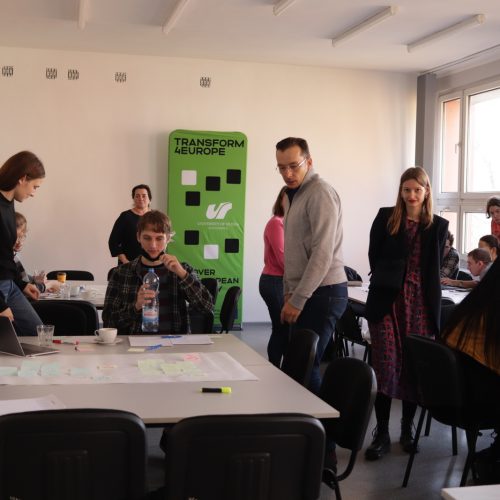
While few outside Berlin know where Schöneweide is, new developments led by the likes of Bryan Adams and Olafur Eliasson position the neighbourhood as a silent frontier of gentrification dynamics in the city. This research studio explores ongoing transformation of this former industrial area, once the base of the famous AEG electrical company. Contra the commonplace reading of gentrification through the lens of ‘hipster’ culture, the studio underlines the roles of state, finance and real estate as drivers of neighbourhood change and displacement. Investigating dynamics of gentrification at the urban edge, the case of Schöneweide serves as an entry point into a wider debate on how diverse groups are vested in reclaiming cities and its intersection with the official political structures – it necessitates rethinking the role of city planners as mediators between the public and private interests.
Posted by Keiti Kljavin — Permalink
Rethinking Gentrification from the Frontier: Berlin-Schöneweide
Monday 16 December, 2019
Architecture and Urban Design
Urban Studies, resesarch studio presentation.
While few outside Berlin know where Schöneweide is, new developments led by the likes of Bryan Adams and Olafur Eliasson position the neighbourhood as a silent frontier of gentrification dynamics in the city. This research studio explores ongoing transformation of this former industrial area, once the base of the famous AEG electrical company. Contra the commonplace reading of gentrification through the lens of ‘hipster’ culture, the studio underlines the roles of state, finance and real estate as drivers of neighbourhood change and displacement. Investigating dynamics of gentrification at the urban edge, the case of Schöneweide serves as an entry point into a wider debate on how diverse groups are vested in reclaiming cities and its intersection with the official political structures – it necessitates rethinking the role of city planners as mediators between the public and private interests.
Posted by Keiti Kljavin — Permalink
20.12.2019 — 31.01.2020
“Wack Dystopia” at EKA Billboard Gallery 20.11.2018–31.01.2019
Gallery
Graphic design 3rd years students present their project “Wack Dystopia” at EKA Billboard Gallery
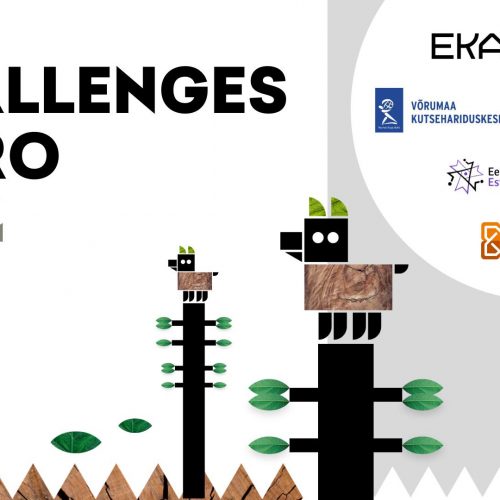
On November 20 at 8 PM 3rd-year graphic design students will present their project “Wack Dystopia” at the EKA Billboard Gallery. The course is supervised by Norman Orro. EKA Billboard gallery is located outside on Kotzebue street. The exhibition will remain open until January 31.
In 2015, Mark Fisher coined the term “boring dystopia” to describe the mundane underbelly of the hypercapitalist London society. The first “Blade Runner” movie is already set in history, in November 2019.
Now on the brink of 2020, we live in a WACK DYSTOPIA where truth seems debatable and most news is underlined with the hashtag #notonion.
WACK DYSTOPIA is life in a glimmering technocracy, haunted by a medieval mindset.
WACK DYSTOPIA is a gut feeling, that nothing makes sense anymore.
WACK DYSTOPIA is not a forecast, but a critique of the present.
The metamodern condition finds us in limbo between utopias and dystopias. Both are simplistic caricatures and neither seem real or attainable. To move forward we first have to look truth in the eye. To get real we need to look to the absurd…
In the words of Aldous Huxley ”The trouble with fiction… is that it makes too much sense. Reality never makes sense.”
Participating students: Adam Asztalos, Kersti Heile, Elisabeth Juusu, Roven Jõekäär, Karmo Järv, Anneli Kripsaar, Syret Kärt, Liisi Lasn, Sigrid Liira, Laura Martens, Mikk Tanel Oja, Aliz Stocker, and Johann Georg Villmann
Headline font: Aliz Stocker
Supervisor: Norman Orro
Posted by Pire Sova — Permalink
“Wack Dystopia” at EKA Billboard Gallery 20.11.2018–31.01.2019
Friday 20 December, 2019 — Friday 31 January, 2020
Gallery
Graphic design 3rd years students present their project “Wack Dystopia” at EKA Billboard Gallery
On November 20 at 8 PM 3rd-year graphic design students will present their project “Wack Dystopia” at the EKA Billboard Gallery. The course is supervised by Norman Orro. EKA Billboard gallery is located outside on Kotzebue street. The exhibition will remain open until January 31.
In 2015, Mark Fisher coined the term “boring dystopia” to describe the mundane underbelly of the hypercapitalist London society. The first “Blade Runner” movie is already set in history, in November 2019.
Now on the brink of 2020, we live in a WACK DYSTOPIA where truth seems debatable and most news is underlined with the hashtag #notonion.
WACK DYSTOPIA is life in a glimmering technocracy, haunted by a medieval mindset.
WACK DYSTOPIA is a gut feeling, that nothing makes sense anymore.
WACK DYSTOPIA is not a forecast, but a critique of the present.
The metamodern condition finds us in limbo between utopias and dystopias. Both are simplistic caricatures and neither seem real or attainable. To move forward we first have to look truth in the eye. To get real we need to look to the absurd…
In the words of Aldous Huxley ”The trouble with fiction… is that it makes too much sense. Reality never makes sense.”
Participating students: Adam Asztalos, Kersti Heile, Elisabeth Juusu, Roven Jõekäär, Karmo Järv, Anneli Kripsaar, Syret Kärt, Liisi Lasn, Sigrid Liira, Laura Martens, Mikk Tanel Oja, Aliz Stocker, and Johann Georg Villmann
Headline font: Aliz Stocker
Supervisor: Norman Orro
Posted by Pire Sova — Permalink
27.12.2019
Netti Nüganen’s vlog-performance “The Story…” at EKA Gallery 27.12.2019 at 8 pm
Gallery
Vlog-performance “THE STORY: chatty get ready, what I eat, workouts (realistic day-in-a-life)” by Netti Nüganen on December 27 at 8 PM at EKA Gallery
A vlog-performance, “The Story…” follows a journey of a character who takes on a trip to ungraspable and alienating lands. Surrounded by the heat and landscapes of California, the protagonist shares with the audience her most banal, trivial and expectable everyday actions. But somehow, by highlighting this banality, something magical is created – a parallel universe where the experience of the known everyday is turned upside down into absurdity, becoming perhaps more relatable than the reality itself. Appearing both in the video and on stage, the character watches the audience watching her throughout these familiar, yet alienating situations.
Netti Nüganen has graduated from the choreography department in SNDO, Amsterdam. Through her video and stage works, she tells stories about characters like a weightlifter, a teenager vlogger, a detective or a cowboy, approaching their banal habits through mystification. While finding comfort in contradictions, displacement, and pluralism, she treats everything known with careful deconstruction and everything unknown with vigilant attention.
Video montage by Ando Naulainen and Netti Nüganen
The performance is in English
Doors: 8 pm
Performance: 8.30 pm
The entrance is from Kotzebue street
Posted by Pire Sova — Permalink
Netti Nüganen’s vlog-performance “The Story…” at EKA Gallery 27.12.2019 at 8 pm
Friday 27 December, 2019
Gallery
Vlog-performance “THE STORY: chatty get ready, what I eat, workouts (realistic day-in-a-life)” by Netti Nüganen on December 27 at 8 PM at EKA Gallery
A vlog-performance, “The Story…” follows a journey of a character who takes on a trip to ungraspable and alienating lands. Surrounded by the heat and landscapes of California, the protagonist shares with the audience her most banal, trivial and expectable everyday actions. But somehow, by highlighting this banality, something magical is created – a parallel universe where the experience of the known everyday is turned upside down into absurdity, becoming perhaps more relatable than the reality itself. Appearing both in the video and on stage, the character watches the audience watching her throughout these familiar, yet alienating situations.
Netti Nüganen has graduated from the choreography department in SNDO, Amsterdam. Through her video and stage works, she tells stories about characters like a weightlifter, a teenager vlogger, a detective or a cowboy, approaching their banal habits through mystification. While finding comfort in contradictions, displacement, and pluralism, she treats everything known with careful deconstruction and everything unknown with vigilant attention.
Video montage by Ando Naulainen and Netti Nüganen
The performance is in English
Doors: 8 pm
Performance: 8.30 pm
The entrance is from Kotzebue street
Posted by Pire Sova — Permalink
06.12.2019 — 19.12.2019
Students of Photography ask what the mid-twenties pretend to think about?
Photography
What the mid-twenties pretend to think about?
This Friday 6th of December at 20 the students of Estonian Academy of Arts photography department open the exhibition “Mid-twenties pretend they got it” at Vent Space gallery (Vabaduse väljak 6 back yard).
The exhibition is a conclusion of the working period that was marked by searching visual expression to the perception of one’s environment. The shared experiences and values in social space are interwined into several questions that the authors solve in the gallery space through the works in photographic, video and installative media.
How do we feel in the mental and physical space? What is individual and collective perception? What are the rules settled in this space? Are these rules functional? How can we change them? What is the information space we are located in? Which are the possibilities to use this space of exhibition?
Participating artists: Kristiina Aarna, Mark Cavanagh, Levent Efe, Stina Isabel Gavrilin, Inger-Liis Heinsoo, Zoe Komkommer, Kristina Kuzemko, Una Laurencic, Jana Mätas, Anna Tamm, Kertu Rannula, Diana Olesjuk, Laura Ruuder, Carolin Saage, Hans Jakob Väär.
Curators/guides: Kristiina Hansen, Sigrid Viir, Johannes Säre ja Laura Kuusk.
Vent Space gallery is located at Vabaduse väljak 6 yard in Tallinn.
The exhibition is open from 7.12-19.12 every day 12-19. Opening on 6.12 at 20.00.
On Friday, December 13th as part of the exhibition “Mid-twenties pretend they got it”, Kristiina Aarna will show her work ”Akadeemia tee 4” in the city space. Photo projection will be exhibited on December 13 at 5 pm – 7 pm at the rear wall of Akadeemia road 4 building.
Kristiina Aarna
”Akadeemia tee 4”
Art creates the public sphere, but what exactly does this mean? The first micro-district of Mustamäe was built in 1963. Thousands of people became fortunate enough to have access to warm water and a private kitchen. The plan for modernisation envisaged the creation of a residential environment, which people would not have to leave and where they would spend all of their free time. The 1960s also brought with them a great era for monumental painting in Estonia during which the first prefabricated residential buildings were decorated with pictures. These pictures represented both the synthesis of various Soviet art forms as well as an attempt by local artists to add diversity and variegation to the disjointed humdrum houses. The end walls of the prefabricated buildings on Akadeemia received optimistic sgraffitos by Valli Lember-Bogatkina, Margareta Fuks and Enn Põldroos, two of which are now hidden under a layer of insulation. The aim of my work is to produce a one-time photo-projection on the end wall of Akadeemia 4, thus making the hidden art visible again.
The exhibition “Mid-twenties pretend they got it” is open from 7.12.19–19.12.19 every day at 12-19.
Posted by Mart Vainre — Permalink
Students of Photography ask what the mid-twenties pretend to think about?
Friday 06 December, 2019 — Thursday 19 December, 2019
Photography
What the mid-twenties pretend to think about?
This Friday 6th of December at 20 the students of Estonian Academy of Arts photography department open the exhibition “Mid-twenties pretend they got it” at Vent Space gallery (Vabaduse väljak 6 back yard).
The exhibition is a conclusion of the working period that was marked by searching visual expression to the perception of one’s environment. The shared experiences and values in social space are interwined into several questions that the authors solve in the gallery space through the works in photographic, video and installative media.
How do we feel in the mental and physical space? What is individual and collective perception? What are the rules settled in this space? Are these rules functional? How can we change them? What is the information space we are located in? Which are the possibilities to use this space of exhibition?
Participating artists: Kristiina Aarna, Mark Cavanagh, Levent Efe, Stina Isabel Gavrilin, Inger-Liis Heinsoo, Zoe Komkommer, Kristina Kuzemko, Una Laurencic, Jana Mätas, Anna Tamm, Kertu Rannula, Diana Olesjuk, Laura Ruuder, Carolin Saage, Hans Jakob Väär.
Curators/guides: Kristiina Hansen, Sigrid Viir, Johannes Säre ja Laura Kuusk.
Vent Space gallery is located at Vabaduse väljak 6 yard in Tallinn.
The exhibition is open from 7.12-19.12 every day 12-19. Opening on 6.12 at 20.00.
On Friday, December 13th as part of the exhibition “Mid-twenties pretend they got it”, Kristiina Aarna will show her work ”Akadeemia tee 4” in the city space. Photo projection will be exhibited on December 13 at 5 pm – 7 pm at the rear wall of Akadeemia road 4 building.
Kristiina Aarna
”Akadeemia tee 4”
Art creates the public sphere, but what exactly does this mean? The first micro-district of Mustamäe was built in 1963. Thousands of people became fortunate enough to have access to warm water and a private kitchen. The plan for modernisation envisaged the creation of a residential environment, which people would not have to leave and where they would spend all of their free time. The 1960s also brought with them a great era for monumental painting in Estonia during which the first prefabricated residential buildings were decorated with pictures. These pictures represented both the synthesis of various Soviet art forms as well as an attempt by local artists to add diversity and variegation to the disjointed humdrum houses. The end walls of the prefabricated buildings on Akadeemia received optimistic sgraffitos by Valli Lember-Bogatkina, Margareta Fuks and Enn Põldroos, two of which are now hidden under a layer of insulation. The aim of my work is to produce a one-time photo-projection on the end wall of Akadeemia 4, thus making the hidden art visible again.
The exhibition “Mid-twenties pretend they got it” is open from 7.12.19–19.12.19 every day at 12-19.
Posted by Mart Vainre — Permalink
09.12.2019 — 16.03.2019
ERKI Fashion Show to announce competition for 2020
ERKi Fashion Show
It is time to seek out the brightest ideas, because ERKI Fashion Show 2020 is on its way. Estonian Academy of Arts once again presents the biggest fashion event in Estonia, which is a platform for young fashion designers. It helps to encourage young people to present their unique creations to the public. ERKI is hoping to see creative and aspiring young people with crazy and enormously ambitious designs.
Estonian Academy of Arts announces the design competition for ERKI Fashion Show 2020. The collection can have more than one author and everyone can participate if they have graduated from high school and are currently registered in a university, vocational school or college. The ERKI Fashion Show regulation also allows to apply if studies have been completed less than 3 years ago.
The closing date for the competition is March 16, 2020. Those who were selected for the fashion show will be contacted within the following week, not later than on March 23, 2020.
ERKI Fashion Show 2020 will take place on May 23 and the competition for submitting designs begins today, December 9. Designs must be submitted to the guard desk in the lobby of Estonian Academy of Arts or mailed to the address Põhja Puiestee 7. The closing date for the competition is 16 March at 19:00.
Roots of the ERKI Moeshow go back to the early 1980s, when art students organized first theatrical fashion show to shock the audience.
Since then the event has continuously grown, being today a jumping-board for future Estonian fashion creators and also bringing each year to the podium some guest designers from abroad. Our goals are to invest into Estonian talent and its reaching international arena and also with our passionate activities to develop specific fields and society as a whole.
Rules and Regulations
artun.ee/erki-regulations
ERKI website: artun.ee/erki-fashion-show
ERKI on Facebook & Instagram
#ERKIMoeshow
Posted by Mart Vainre — Permalink
ERKI Fashion Show to announce competition for 2020
Monday 09 December, 2019 — Saturday 16 March, 2019
ERKi Fashion Show
It is time to seek out the brightest ideas, because ERKI Fashion Show 2020 is on its way. Estonian Academy of Arts once again presents the biggest fashion event in Estonia, which is a platform for young fashion designers. It helps to encourage young people to present their unique creations to the public. ERKI is hoping to see creative and aspiring young people with crazy and enormously ambitious designs.
Estonian Academy of Arts announces the design competition for ERKI Fashion Show 2020. The collection can have more than one author and everyone can participate if they have graduated from high school and are currently registered in a university, vocational school or college. The ERKI Fashion Show regulation also allows to apply if studies have been completed less than 3 years ago.
The closing date for the competition is March 16, 2020. Those who were selected for the fashion show will be contacted within the following week, not later than on March 23, 2020.
ERKI Fashion Show 2020 will take place on May 23 and the competition for submitting designs begins today, December 9. Designs must be submitted to the guard desk in the lobby of Estonian Academy of Arts or mailed to the address Põhja Puiestee 7. The closing date for the competition is 16 March at 19:00.
Roots of the ERKI Moeshow go back to the early 1980s, when art students organized first theatrical fashion show to shock the audience.
Since then the event has continuously grown, being today a jumping-board for future Estonian fashion creators and also bringing each year to the podium some guest designers from abroad. Our goals are to invest into Estonian talent and its reaching international arena and also with our passionate activities to develop specific fields and society as a whole.
Rules and Regulations
artun.ee/erki-regulations
ERKI website: artun.ee/erki-fashion-show
ERKI on Facebook & Instagram
#ERKIMoeshow
Posted by Mart Vainre — Permalink
06.12.2019 — 29.12.2019
Exhibition “Soft narratives”
Graphic Art
Group exhibition “Soft narratives”
December 6th – December 29th 2019
Kraam artist-run space
Address: Ülase 16 / Madara 22
Thursday to Saturday 4-7pm, Sunday 12-6pm
“Soft narratives”, a group exhibition by students from Graphic Art department, has an opening reception on December 6th at 6pm in Kraam artist-run space.
Artists: Adriaan De Geest, Mark Kristian Hiir, Hanneleele Kaldmaa, Brit Kikas, Jelizaveta Kukoleva, Maria Izabella Lehtsaar, Riin Maide, Liis-Marleen Verilaskja. Supervisor: Lilli-Krõõt Repnau
The exhibition deals with personal and collective memory and site-specific works were created specifically for this room. EKA graphics students’ works combine personal stories and different points of view at Polymer itself, finding eight different ways to fill temporary space with temporary interpretations.
Exhibition “Soft narratives” will be the last one at Kraam artist-run space.
On December 13 will be Kraam’s finishing party feat. Hello Killu, Riin Maide & Co., poetic-dramatic collective Las Cuervas Trágicas (Hanneleele and Kätlin Kaldmaa), Lilli-Krõõt Repnau. More information coming soon!
19 December at 16.00 the works participating will be publicly evaluated.
20.12-26.12 the gallery will be closed.
Exhibition stays open until 29th of December 2019.
** Photo: Maria Izabella Lehtsaar
Kraam artist-run space is supported by the Cultural Endowment of Estonia.
Additional info:
e-mail: kraamspace@gmail.com
Instagram
Kraam
Facebook
Posted by Maria Erikson — Permalink
Exhibition “Soft narratives”
Friday 06 December, 2019 — Sunday 29 December, 2019
Graphic Art
Group exhibition “Soft narratives”
December 6th – December 29th 2019
Kraam artist-run space
Address: Ülase 16 / Madara 22
Thursday to Saturday 4-7pm, Sunday 12-6pm
“Soft narratives”, a group exhibition by students from Graphic Art department, has an opening reception on December 6th at 6pm in Kraam artist-run space.
Artists: Adriaan De Geest, Mark Kristian Hiir, Hanneleele Kaldmaa, Brit Kikas, Jelizaveta Kukoleva, Maria Izabella Lehtsaar, Riin Maide, Liis-Marleen Verilaskja. Supervisor: Lilli-Krõõt Repnau
The exhibition deals with personal and collective memory and site-specific works were created specifically for this room. EKA graphics students’ works combine personal stories and different points of view at Polymer itself, finding eight different ways to fill temporary space with temporary interpretations.
Exhibition “Soft narratives” will be the last one at Kraam artist-run space.
On December 13 will be Kraam’s finishing party feat. Hello Killu, Riin Maide & Co., poetic-dramatic collective Las Cuervas Trágicas (Hanneleele and Kätlin Kaldmaa), Lilli-Krõõt Repnau. More information coming soon!
19 December at 16.00 the works participating will be publicly evaluated.
20.12-26.12 the gallery will be closed.
Exhibition stays open until 29th of December 2019.
** Photo: Maria Izabella Lehtsaar
Kraam artist-run space is supported by the Cultural Endowment of Estonia.
Additional info:
e-mail: kraamspace@gmail.com
Instagram
Kraam
Facebook
Posted by Maria Erikson — Permalink
19.12.2019
OPEN LECTURE ON ARCHITECTURE: Lydia Kallipoliti
Architecture and Urban Design
Open Lecture about closed systems by Lydia Kallipoliti
The next lecturer of the Open Lecture Series this autumn will be New York based Greek architect Lydia Kallipoliti – she investigates the architecture of closed worlds and asks, what is the power of shit. Kallipoliti will be stepping on the stage of the main auditorium of the new EKA building on the 19th of december at 6 pm.
Lydia Kallipoliti is an architect, engineer and scholar whose research focuses on the intersections of architecture, technology and environmental politics. She is an Assistant Professor at the Cooper Union in New York. She has also taught at Rensselaer Polytechnic Institute, where she directed the Master of Science Program, at Syracuse University, Columbia University [GSAPP] and Pratt Institute.
Her work has been published and exhibited widely including the Venice Biennial, the Istanbul Design Biennial, the Shenzhen Biennial, the Onassis Cultural Center, the Royal Academy of British Architects and the Storefront for Art and Architecture. She is the author of the awarded book The Architecture of Closed Worlds, Or, What is the Power of Shit (Lars Muller Publishers, 2018), the History of Ecological Design for Oxford English Encyclopedia of Environmental Science and the editor of EcoRedux, a special issue of Architectural Design magazine (AD, 2010). Kallipoliti holds a Diploma in Architecture and Engineering from the Aristotle University of Thessaloniki, Greece, a Master of Science [SMArchS] in design and building technology from MIT and a PhD in history and theory of architecture from Princeton University. She is the principal of ANAcycle thinktank, which has been named leading innovator in sustainable design in Build’s 2019 awards.
In her lecture, Kallipoliti will explore a genealogy of contained microcosms with the ambition to replicate the earth in its totality; a series of living experiments that forge a synthetic naturalism, where the laws of nature and metabolism are displaced from the domain of wilderness to the domain of cities and buildings. Beyond technical concerns, closed worlds distill architectural concerns related to habitation: first an integrated structure where humans, their physiology of ingestion and excretion, become combustion devices, tied to the system with umbilical cords; second, closed worlds are giant stomachs; they are inhabitable machines that digest resources and are sometimes disobedient; at times they digest, while at other times they vomit.
The Faculty of Architecture of the Estonian Academy of Arts has curated the Open Lectures on Architecture series since 2012 – each year, a dozen architects, urbanists, both practicing as well as academics, introduce their work and field of research to the audience in Tallinn. All lectures are in English, free and open to everyone.
The series is funded by the Estonian Cultural Endowment.
Curators: Sille Pihlak, Johan Tali
www.avatudloengud.ee
www.facebook.com/EKAarhitektuur/
More info:
E-mail: arhitektuur@artun.ee
Tel. +372 642 0071
Posted by Kadi Karine — Permalink
OPEN LECTURE ON ARCHITECTURE: Lydia Kallipoliti
Thursday 19 December, 2019
Architecture and Urban Design
Open Lecture about closed systems by Lydia Kallipoliti
The next lecturer of the Open Lecture Series this autumn will be New York based Greek architect Lydia Kallipoliti – she investigates the architecture of closed worlds and asks, what is the power of shit. Kallipoliti will be stepping on the stage of the main auditorium of the new EKA building on the 19th of december at 6 pm.
Lydia Kallipoliti is an architect, engineer and scholar whose research focuses on the intersections of architecture, technology and environmental politics. She is an Assistant Professor at the Cooper Union in New York. She has also taught at Rensselaer Polytechnic Institute, where she directed the Master of Science Program, at Syracuse University, Columbia University [GSAPP] and Pratt Institute.
Her work has been published and exhibited widely including the Venice Biennial, the Istanbul Design Biennial, the Shenzhen Biennial, the Onassis Cultural Center, the Royal Academy of British Architects and the Storefront for Art and Architecture. She is the author of the awarded book The Architecture of Closed Worlds, Or, What is the Power of Shit (Lars Muller Publishers, 2018), the History of Ecological Design for Oxford English Encyclopedia of Environmental Science and the editor of EcoRedux, a special issue of Architectural Design magazine (AD, 2010). Kallipoliti holds a Diploma in Architecture and Engineering from the Aristotle University of Thessaloniki, Greece, a Master of Science [SMArchS] in design and building technology from MIT and a PhD in history and theory of architecture from Princeton University. She is the principal of ANAcycle thinktank, which has been named leading innovator in sustainable design in Build’s 2019 awards.
In her lecture, Kallipoliti will explore a genealogy of contained microcosms with the ambition to replicate the earth in its totality; a series of living experiments that forge a synthetic naturalism, where the laws of nature and metabolism are displaced from the domain of wilderness to the domain of cities and buildings. Beyond technical concerns, closed worlds distill architectural concerns related to habitation: first an integrated structure where humans, their physiology of ingestion and excretion, become combustion devices, tied to the system with umbilical cords; second, closed worlds are giant stomachs; they are inhabitable machines that digest resources and are sometimes disobedient; at times they digest, while at other times they vomit.
The Faculty of Architecture of the Estonian Academy of Arts has curated the Open Lectures on Architecture series since 2012 – each year, a dozen architects, urbanists, both practicing as well as academics, introduce their work and field of research to the audience in Tallinn. All lectures are in English, free and open to everyone.
The series is funded by the Estonian Cultural Endowment.
Curators: Sille Pihlak, Johan Tali
www.avatudloengud.ee
www.facebook.com/EKAarhitektuur/
More info:
E-mail: arhitektuur@artun.ee
Tel. +372 642 0071
Posted by Kadi Karine — Permalink
14.12.2019
Beyond Borders: Moving through Maardu
Architecture and Urban Design
A lake and a port. Summer housing and mass housing. Metal, steel, automobiles, and the not-so distant memories of phosphorus mining. Beyond the towers of Vanalinn and the limestone of Lasnamäe exists this municipal assemblage that over 15,000 people call home.
Beyond Borders: Moving through Maardu is a public output & final grading of Estonian Academy of Arts Urban Studies Urbanisation studio “Tallinn–Maardu: expedition into the edge”, tutored by Andra Aaloe & Keiti Kljavin.
Whether or not you are familiar with Maardu, this festival of a kind will urge you to experience the area through various site-specific interventions exploring its physical and conceptual boundaries, the global and local activities that shape it, and the area’s relationship to neighbouring localities.
There will be a private bus service to transport guests to each event according to the programme below. To register for the tour bus that will travel to each exhibition of the festival, please email Lisa Rohrer at lisa.rohrer@artun.ee. You are also welcome to visit individual exhibits via your own transportation at the times displayed in the program schedule below. Please note that the private bus will not return to Tallinn, but public transportation runs between Maardu and Tallinn for our return trip.
Please dress warmly for outdoor weather and bring along snacks and refreshments! For more information check FB EVENT!
PROGRAMME SCHEDULE ON 14 DECEMBER 2019:
9:00–9:25 Urban artist in an urban field
(Last chance to use the loo) – Jesse Keddie
Photo Installation at Põhja pst 7 (Estonian Academy of Arts)
Stanely Kubrick said on the art of filmmaking “You may not have to know very much about anything else, but you must know about photography”. So what do I know? I know about filmmaking and I know about photography. On display at EKA will be the forgotten fields of Rootsi-Kallavere that embody how I express the world at large – it’s not what I’m doing in the space it’s what the space is doing through me.
9:30 Private bus service leaves from EKA, Tallinn
10.00–10:25 Occupying the void – Marina Pushkar
Walk and installation, starting point at Fosforiidi and Kroodi intersection.
The pedestrian tunnel connecting the Kroodi industrial park and the lake of Maardu facilitates the transition from the industrial realm to the prefigurative urban wilderness. Through a guided walk and installation, this project unveils the layers of human dominance in the process of occupying the space.
10:30–10:55 Stories from the other side – Alice Ashton
Expedition and participatory exercise at Vana-Narva maantee – Nurgatagune Puhvet, Vana Narva maantee
Vana-Narva maantee is a highway and an important geographical and infrastructural location for Maardu. It is also home to many diverse local activities and phenomena. Taking speculative fiction, installation, participatory art and postmodern and post-urban theory as a basis, Stories from the other side invites participants to consider how narratives, signs and momentalisation are didactic processes that shape urbanisation and the different lenses that Vana-Narva maantee can be seen through.
11:00–11:25 The last outpost – Ahmad Tahir
Walk-exercise, starting point at Madikse tee
The process of urbanisation reshapes the concept of the ‘hinterland’ as a warehouse that serves the capital. This curated walk in the backyards of the Kärmu industrial zone explores the role of the post-industrial town of Maardu in regional development, and the municipality’s future speculations in the neoliberal realm.
11:30–12:00 Walking along a life vein – Sarah Gerdiken
Guided walk
Walking the solid but disused line of railroad, the landscape surrounding us is united by different scales of human use joining together the travelers of its past, present and expected scenarios of the future. Wear your gloves and proper shoes!
12:05–12:30 AED – Annika Ülejõe
Installation at Kitsekakra 17, Muuga aedlinn
AED looks at the process of suburbanisation changing the dynamics of the once solely summerhouse area on the basis of a family archive. By revealing layers of history, the on-site intervention highlights both physical alteration of the area and the change in its social fabric.
12:35–13:00 Muuga muutub (Muuga Changes) – Deniz Taşkın
Interactive platform, Muuga aedlinn
For last decades Muuga aedlinn has been experiencing a profound change in its urban fabric and daily practices. An interactive platform is created for locals and visitors alike to archive the change in process, inviting old and new locals to spot the alteration of Muuga in order to be able to cope with it.
13:10–13:35 Muuga harbour: The Once Only Unicorn – Egemen Mercanlioglu
Performance-lecture on the roundabout of Laasti tee and Veose street
On an ambiguous roundabout that overlooks the Muuga Harbour, a (non)speculative story of the likely future development of the biggest cargo harbour in Estonia will be put across. Zooming out to grasp the patterns of globalisation-driven urbanisation process of Muuga and Estonia, the narration covers topics from the Rail Baltic to the digitalization. Travelling from Muuga to China and back to Muuga again, this story will help visitors to track the traces of urbanisation.
13:40–14:05 A lonesome hill – Oleksandr Nenenko
Performance/exhibition at Ringi 54D, Maardu
Courtyards of mass housing areas as enclosed places for meeting and daily practices accompany the processes around urban, from severe housing crisis to land use value. This project looks at the visible and non-visible changes of one courtyard in Kallavere by trying to answer a seemingly simple question: “why is the hill so lonely?”.
14:10–14:35 Walk around the image – Zahaan Khan
Guided walk, starting point at Ringi 54D, Maardu
In a heavily visual culture, images can act as representative symbols for a city. Through an investigative walk, this performance will look closer at the orthodox church of Archangel Michael in Maardu to understand how it became to be the centerpiece of the new image created for the city’s socio-cultural life in the past decade.
14:45–15:10 In memory of the City – Lisa Rohrer
Ceremonial performance, at Keemikute street (near the Maardu kalmistu bus stop)
The Maardu Cemetery functions as a hybrid space – it is a site for life and for death, for grief and for celebration of a memory, for spirituality and for pragmatism, for expressing emotion and for economic exchange. In light of postmodern scholarship from the late 20th century, this exhibition will consider the death of “the city” and witness the emergence of “the urban” at its passing.
15:15–15:40 New archives as karaoke – Wimke Dekker
Screening at Fortuna bar, Stardi 2, Maardu
A spiderweb of scales and structures, houses and containers, roads and electricity networks. The frames are given, but the people who are living in Maardu are what creates a process, a movement, a development. Combining new archives from the internet with fragments that show details of daily life, this film, shown at a local bar Fortuna, creates a new archive of the present.
Posted by Keiti Kljavin — Permalink
Beyond Borders: Moving through Maardu
Saturday 14 December, 2019
Architecture and Urban Design
A lake and a port. Summer housing and mass housing. Metal, steel, automobiles, and the not-so distant memories of phosphorus mining. Beyond the towers of Vanalinn and the limestone of Lasnamäe exists this municipal assemblage that over 15,000 people call home.
Beyond Borders: Moving through Maardu is a public output & final grading of Estonian Academy of Arts Urban Studies Urbanisation studio “Tallinn–Maardu: expedition into the edge”, tutored by Andra Aaloe & Keiti Kljavin.
Whether or not you are familiar with Maardu, this festival of a kind will urge you to experience the area through various site-specific interventions exploring its physical and conceptual boundaries, the global and local activities that shape it, and the area’s relationship to neighbouring localities.
There will be a private bus service to transport guests to each event according to the programme below. To register for the tour bus that will travel to each exhibition of the festival, please email Lisa Rohrer at lisa.rohrer@artun.ee. You are also welcome to visit individual exhibits via your own transportation at the times displayed in the program schedule below. Please note that the private bus will not return to Tallinn, but public transportation runs between Maardu and Tallinn for our return trip.
Please dress warmly for outdoor weather and bring along snacks and refreshments! For more information check FB EVENT!
PROGRAMME SCHEDULE ON 14 DECEMBER 2019:
9:00–9:25 Urban artist in an urban field
(Last chance to use the loo) – Jesse Keddie
Photo Installation at Põhja pst 7 (Estonian Academy of Arts)
Stanely Kubrick said on the art of filmmaking “You may not have to know very much about anything else, but you must know about photography”. So what do I know? I know about filmmaking and I know about photography. On display at EKA will be the forgotten fields of Rootsi-Kallavere that embody how I express the world at large – it’s not what I’m doing in the space it’s what the space is doing through me.
9:30 Private bus service leaves from EKA, Tallinn
10.00–10:25 Occupying the void – Marina Pushkar
Walk and installation, starting point at Fosforiidi and Kroodi intersection.
The pedestrian tunnel connecting the Kroodi industrial park and the lake of Maardu facilitates the transition from the industrial realm to the prefigurative urban wilderness. Through a guided walk and installation, this project unveils the layers of human dominance in the process of occupying the space.
10:30–10:55 Stories from the other side – Alice Ashton
Expedition and participatory exercise at Vana-Narva maantee – Nurgatagune Puhvet, Vana Narva maantee
Vana-Narva maantee is a highway and an important geographical and infrastructural location for Maardu. It is also home to many diverse local activities and phenomena. Taking speculative fiction, installation, participatory art and postmodern and post-urban theory as a basis, Stories from the other side invites participants to consider how narratives, signs and momentalisation are didactic processes that shape urbanisation and the different lenses that Vana-Narva maantee can be seen through.
11:00–11:25 The last outpost – Ahmad Tahir
Walk-exercise, starting point at Madikse tee
The process of urbanisation reshapes the concept of the ‘hinterland’ as a warehouse that serves the capital. This curated walk in the backyards of the Kärmu industrial zone explores the role of the post-industrial town of Maardu in regional development, and the municipality’s future speculations in the neoliberal realm.
11:30–12:00 Walking along a life vein – Sarah Gerdiken
Guided walk
Walking the solid but disused line of railroad, the landscape surrounding us is united by different scales of human use joining together the travelers of its past, present and expected scenarios of the future. Wear your gloves and proper shoes!
12:05–12:30 AED – Annika Ülejõe
Installation at Kitsekakra 17, Muuga aedlinn
AED looks at the process of suburbanisation changing the dynamics of the once solely summerhouse area on the basis of a family archive. By revealing layers of history, the on-site intervention highlights both physical alteration of the area and the change in its social fabric.
12:35–13:00 Muuga muutub (Muuga Changes) – Deniz Taşkın
Interactive platform, Muuga aedlinn
For last decades Muuga aedlinn has been experiencing a profound change in its urban fabric and daily practices. An interactive platform is created for locals and visitors alike to archive the change in process, inviting old and new locals to spot the alteration of Muuga in order to be able to cope with it.
13:10–13:35 Muuga harbour: The Once Only Unicorn – Egemen Mercanlioglu
Performance-lecture on the roundabout of Laasti tee and Veose street
On an ambiguous roundabout that overlooks the Muuga Harbour, a (non)speculative story of the likely future development of the biggest cargo harbour in Estonia will be put across. Zooming out to grasp the patterns of globalisation-driven urbanisation process of Muuga and Estonia, the narration covers topics from the Rail Baltic to the digitalization. Travelling from Muuga to China and back to Muuga again, this story will help visitors to track the traces of urbanisation.
13:40–14:05 A lonesome hill – Oleksandr Nenenko
Performance/exhibition at Ringi 54D, Maardu
Courtyards of mass housing areas as enclosed places for meeting and daily practices accompany the processes around urban, from severe housing crisis to land use value. This project looks at the visible and non-visible changes of one courtyard in Kallavere by trying to answer a seemingly simple question: “why is the hill so lonely?”.
14:10–14:35 Walk around the image – Zahaan Khan
Guided walk, starting point at Ringi 54D, Maardu
In a heavily visual culture, images can act as representative symbols for a city. Through an investigative walk, this performance will look closer at the orthodox church of Archangel Michael in Maardu to understand how it became to be the centerpiece of the new image created for the city’s socio-cultural life in the past decade.
14:45–15:10 In memory of the City – Lisa Rohrer
Ceremonial performance, at Keemikute street (near the Maardu kalmistu bus stop)
The Maardu Cemetery functions as a hybrid space – it is a site for life and for death, for grief and for celebration of a memory, for spirituality and for pragmatism, for expressing emotion and for economic exchange. In light of postmodern scholarship from the late 20th century, this exhibition will consider the death of “the city” and witness the emergence of “the urban” at its passing.
15:15–15:40 New archives as karaoke – Wimke Dekker
Screening at Fortuna bar, Stardi 2, Maardu
A spiderweb of scales and structures, houses and containers, roads and electricity networks. The frames are given, but the people who are living in Maardu are what creates a process, a movement, a development. Combining new archives from the internet with fragments that show details of daily life, this film, shown at a local bar Fortuna, creates a new archive of the present.
Posted by Keiti Kljavin — Permalink
07.11.2019
Vent Space – Opening of the new season – 7.11.2019
Vent Space Blog
The opening of Vent Space’s new season was the party to bring about the fall of autumn. Two artworks displayed were a room installation consisting of dried up leaves filling the whole floor of the gallery and a printed work „Leftovers“ by Misa Asunama. The installation of autumn leaves collected by the Vent Space team really was a show stopping piece. It truly came into its own during the party. As people were crushing up the leaves underneath their boot heels and the DJ was playing, the situation grew into something of a spontaneous happening or a ritualistic destruction of the fall.
„Leftovers“ by Misa Asunama was a more quiet piece. The four graphic prints gave a good counterbalance to the naturalistic glamour of the leaf covered floor. Depicting the seasons changing through the aesthetics of fragmentarity, momentarity and movement, the overall feeling walking away from the work was overwhelmingly refreshing. Here credit has to be given to both the artist and the curator Angela Ramirez. The artwork not losing its effect is truly a feat considering that, without clever placement of the different prints composing the piece, the artwork had to contend with both the party happening right besides it and the massive installation of leaves.
The party itself was wonderful. Speeches were given, dances were danced, good conversations were had and many drinks drunk. Overall the opening of the new season in Vent Space was a total success!
Posted by Sidney Lepp — Permalink
Vent Space – Opening of the new season – 7.11.2019
Thursday 07 November, 2019
Vent Space Blog
The opening of Vent Space’s new season was the party to bring about the fall of autumn. Two artworks displayed were a room installation consisting of dried up leaves filling the whole floor of the gallery and a printed work „Leftovers“ by Misa Asunama. The installation of autumn leaves collected by the Vent Space team really was a show stopping piece. It truly came into its own during the party. As people were crushing up the leaves underneath their boot heels and the DJ was playing, the situation grew into something of a spontaneous happening or a ritualistic destruction of the fall.
„Leftovers“ by Misa Asunama was a more quiet piece. The four graphic prints gave a good counterbalance to the naturalistic glamour of the leaf covered floor. Depicting the seasons changing through the aesthetics of fragmentarity, momentarity and movement, the overall feeling walking away from the work was overwhelmingly refreshing. Here credit has to be given to both the artist and the curator Angela Ramirez. The artwork not losing its effect is truly a feat considering that, without clever placement of the different prints composing the piece, the artwork had to contend with both the party happening right besides it and the massive installation of leaves.
The party itself was wonderful. Speeches were given, dances were danced, good conversations were had and many drinks drunk. Overall the opening of the new season in Vent Space was a total success!
Posted by Sidney Lepp — Permalink
05.12.2019 — 07.12.2019
Polygon Theatre to bring a play to Tallinn trams and invite audience members to take part in an excavation
Cultural Heritage and Conservation
On Thursday, 5 December, Tallinners will be invited to take part in TRAMWARM, a theatrical performance staged in Tallinn trams by Estonian Academy of Arts scenography students.
On Saturday, 7 December, EKA will host EXHUMATION, a play during which all audience members will be able to participate in an excavation. Both performances are free.
TRAMWARM
On Thursday, 5 December at 16.00, the performance will take place on trams running on line no. 1 and at the following stops: Põhja puiestee (15.30–16.00 and 17.02–17.22), Kadriorg (at 16.19–16.42) and Kopli (at 17.42–17.59).
TRAMWARM is inspired by the location of the new EKA building near the central train station and the tramway. Tram line no. 1 connects various districts, as well as three public universities. According to Aleksandra Ianchenko, who directed the play, the piece focuses on the topic of public space, privacy, home and cosiness, in addition to public transport. “Moving along the tram line, artists create a temporary home for themselves. They play gently but consciously, invisibly but at the same time traceably. Their strange behaviour, which still falls within the boundaries of the normal, invites us to look at the border between personal and public space, hospitality and hostility, and the ordinary and the special,” Ianchenko says, in describing the theme of the play.
EKA’s 1 st year scenography students: Milla Mona Andres, Linda Mai Kari, Anita Kremm, Liisamari Viik, Kristel Zimmer. The performers also include tram passengers, city dwellers and others.
Director: Aleksandra Ianchenko, junior researcher in PUTSPACE (a research project „Public Transport as Public Space in European Cities“, www.putspace.eu)
Stage manager / initiator: Erki Kasemets (Polygon Theatre)
EXHUMATION
On Saturday, 7 December at 16.00 at the third-floor public area (A300) at EKA, Põhja pst 7.
EXHUMATION is primarily about time and the preservation, prolongation and re-conceptualisation of material time stamps, including works of art, and everything that is directly touched upon by
conservators and restorers in their work. During the play, a mysterious dark plastic garbage bag is opened and its contents are explored following strict rules of procedure. Beforehand, it is only known that the bag contains remains of artefacts commemorating historic dates. In the course of delving into the bag, new and deeper layers of issues open up. From the realm of technical work, the journey continues to the philosophical vanishing point and finally finds its way back on the ground. The show ends with an inevitable decision – what will happen to the remnants that have come to light? What will become of them and how? All those present have the opportunity to actively participate in the excavation process.
Coordinator: prof. Hilkka Hiiop (Department of Cultural Heritage and Conservation, EKA)
Organising manager: Taavi Tiidor (Department of Cultural Heritage and Conservation, EKA)
Stage manager / initiator: Erki Kasemets (Polygon Theatre)
Polygon Theatre is a so-called environmental theatre that is open to immediate action; everything, including unplanned events, can become part of the performance. Polygon Theatre often mixes the roles of audience members and actors so that the viewer can become a performer and vice versa.
Posted by Mart Vainre — Permalink
Polygon Theatre to bring a play to Tallinn trams and invite audience members to take part in an excavation
Thursday 05 December, 2019 — Saturday 07 December, 2019
Cultural Heritage and Conservation
On Thursday, 5 December, Tallinners will be invited to take part in TRAMWARM, a theatrical performance staged in Tallinn trams by Estonian Academy of Arts scenography students.
On Saturday, 7 December, EKA will host EXHUMATION, a play during which all audience members will be able to participate in an excavation. Both performances are free.
TRAMWARM
On Thursday, 5 December at 16.00, the performance will take place on trams running on line no. 1 and at the following stops: Põhja puiestee (15.30–16.00 and 17.02–17.22), Kadriorg (at 16.19–16.42) and Kopli (at 17.42–17.59).
TRAMWARM is inspired by the location of the new EKA building near the central train station and the tramway. Tram line no. 1 connects various districts, as well as three public universities. According to Aleksandra Ianchenko, who directed the play, the piece focuses on the topic of public space, privacy, home and cosiness, in addition to public transport. “Moving along the tram line, artists create a temporary home for themselves. They play gently but consciously, invisibly but at the same time traceably. Their strange behaviour, which still falls within the boundaries of the normal, invites us to look at the border between personal and public space, hospitality and hostility, and the ordinary and the special,” Ianchenko says, in describing the theme of the play.
EKA’s 1 st year scenography students: Milla Mona Andres, Linda Mai Kari, Anita Kremm, Liisamari Viik, Kristel Zimmer. The performers also include tram passengers, city dwellers and others.
Director: Aleksandra Ianchenko, junior researcher in PUTSPACE (a research project „Public Transport as Public Space in European Cities“, www.putspace.eu)
Stage manager / initiator: Erki Kasemets (Polygon Theatre)
EXHUMATION
On Saturday, 7 December at 16.00 at the third-floor public area (A300) at EKA, Põhja pst 7.
EXHUMATION is primarily about time and the preservation, prolongation and re-conceptualisation of material time stamps, including works of art, and everything that is directly touched upon by
conservators and restorers in their work. During the play, a mysterious dark plastic garbage bag is opened and its contents are explored following strict rules of procedure. Beforehand, it is only known that the bag contains remains of artefacts commemorating historic dates. In the course of delving into the bag, new and deeper layers of issues open up. From the realm of technical work, the journey continues to the philosophical vanishing point and finally finds its way back on the ground. The show ends with an inevitable decision – what will happen to the remnants that have come to light? What will become of them and how? All those present have the opportunity to actively participate in the excavation process.
Coordinator: prof. Hilkka Hiiop (Department of Cultural Heritage and Conservation, EKA)
Organising manager: Taavi Tiidor (Department of Cultural Heritage and Conservation, EKA)
Stage manager / initiator: Erki Kasemets (Polygon Theatre)
Polygon Theatre is a so-called environmental theatre that is open to immediate action; everything, including unplanned events, can become part of the performance. Polygon Theatre often mixes the roles of audience members and actors so that the viewer can become a performer and vice versa.
Posted by Mart Vainre — Permalink