
Academic Affairs OfficeAccessory DesignAnimationArchitecture and Urban DesignArt EducationCenter for Flat TechnologiesCeramicsContemporary ArtCultural Heritage and ConservationDepartmentsDesign and Technology FuturesDoctoral SchoolDrawingFacilities and WorkshopsFaculty of ArchitectureFaculty of Art and CultureFaculty of DesignFaculty of Fine ArtsFashion DesignFinancial DepartmentGalleryGlass ArtGraphic ArtGraphic DesignInstallation and SculptureInstitute of Art History and Visual CultureInternational OfficeIT OfficeJewellery and BlacksmithingLandscape ArchitectureLibraryLinnaehitus @enMaking SpaceNew MediaOffice of the RectorateOpen AcademyPaintingPerforming ArtsPhotographyProduct DesignRectorateResearch and Development OfficeScenographySupport UnitsTextile DesignUncategorizedUrban PlanningUrban Studies
Craft Studies MA programme online info session
19.01.2023
Craft Studies MA programme online info session
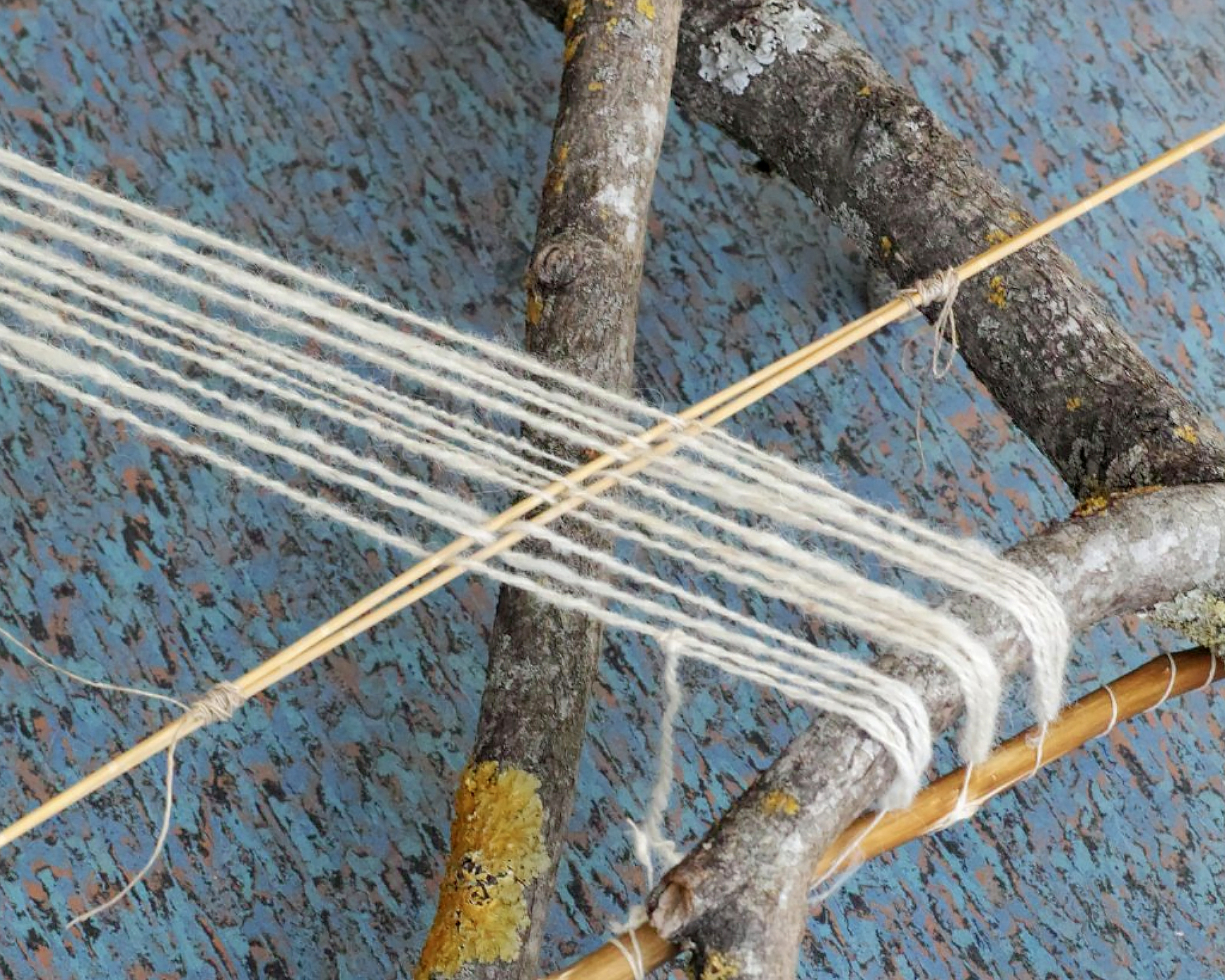
EKA Craft Studies MA programme invites prospective master’s students to join the programme’s online info session on Thursday, January 19, 2023 at 16:00 EET (local Estonian time).
This will be a good opportunity to hear more about the brand new curriculum, and to meet and ask questions from the people behind the programme.
The online info session will be hosted online over Zoom and the link will be e-mailed out to all registrants 2 hours before the start of the event. (ZOOMI LINK: https://zoom.us/j/91482491834)
If you would like to attend, please register online through the form below.
Register HERE
More information about the Craft Studies MA programme: https://www.artun.ee/en/curricula/craft-studies/overview/
Admissions period starts on the 1st of February 2023 and application deadline is 6th of March 2023.
Posted by Maarja Pabut — Permalink
Craft Studies MA programme online info session
Thursday 19 January, 2023
EKA Craft Studies MA programme invites prospective master’s students to join the programme’s online info session on Thursday, January 19, 2023 at 16:00 EET (local Estonian time).
This will be a good opportunity to hear more about the brand new curriculum, and to meet and ask questions from the people behind the programme.
The online info session will be hosted online over Zoom and the link will be e-mailed out to all registrants 2 hours before the start of the event. (ZOOMI LINK: https://zoom.us/j/91482491834)
If you would like to attend, please register online through the form below.
Register HERE
More information about the Craft Studies MA programme: https://www.artun.ee/en/curricula/craft-studies/overview/
Admissions period starts on the 1st of February 2023 and application deadline is 6th of March 2023.
Posted by Maarja Pabut — Permalink
15.12.2022 — 22.12.2022
Lara Brener at Vent Space Gallery
Contemporary Art
Lara Brener’s exhibition It Brittly Joints the Other’s
16.12.2022 – 22.12.2022
12:00 – 18:00
Vernissage on 15.12, 7 p.m.
It brittly joints the other’s is a reflection on the experience of translation and the meeting of displaced identities. Brener examines selftranslation, facing the other within and the border created through the contact between hybrid and ambiguous identities. The artist also reflects on displacement, playing with subtleties of text and exploring translation as the transposition of images and spaces, identities, languages, and experiences.
Lara Brener is an artist and educator from São Paulo, Brazil. She holds both a Bachelor and a Licentiate degree in Visual Arts from Fundação Armando Alvares Penteado (FAAP) and is currently enrolled in the Master of Contemporary Art program in the Estonian Academy of Arts (EKA). She participated in exhibitions in Brazil, Estonia, and Lithuania, and is also a teacher in Tallinn. In her practice, working mostly with text, printmaking, and photography, Brener builds cavernous images, dissolving narratives, with images boiling up but never being fully uncovered.
Posted by Andres Lõo — Permalink
Lara Brener at Vent Space Gallery
Thursday 15 December, 2022 — Thursday 22 December, 2022
Contemporary Art
Lara Brener’s exhibition It Brittly Joints the Other’s
16.12.2022 – 22.12.2022
12:00 – 18:00
Vernissage on 15.12, 7 p.m.
It brittly joints the other’s is a reflection on the experience of translation and the meeting of displaced identities. Brener examines selftranslation, facing the other within and the border created through the contact between hybrid and ambiguous identities. The artist also reflects on displacement, playing with subtleties of text and exploring translation as the transposition of images and spaces, identities, languages, and experiences.
Lara Brener is an artist and educator from São Paulo, Brazil. She holds both a Bachelor and a Licentiate degree in Visual Arts from Fundação Armando Alvares Penteado (FAAP) and is currently enrolled in the Master of Contemporary Art program in the Estonian Academy of Arts (EKA). She participated in exhibitions in Brazil, Estonia, and Lithuania, and is also a teacher in Tallinn. In her practice, working mostly with text, printmaking, and photography, Brener builds cavernous images, dissolving narratives, with images boiling up but never being fully uncovered.
Posted by Andres Lõo — Permalink
12.12.2022
Peer-review event of Marco Laimre’s exhibition
Doctoral School
The peer-review of Marco Laimre’s exhibition „Crawl out Through the Fallout“ will take place on 12 December 15.30 at EKKM.
„Crawl out Through the Fallout“ is a group exhibition, curated by Marco Laimre featuring works by five artists: Camille Laurelli, Keiu Maasik, Marco Laimre, Martin Buschmann ja Reimo Võsa-Tangsoo.
Exhibition is part of the doctoral thesis of Laimre. The thesis is supervised by Dr. Jaak Tomberg. The peer-reviewers of the exhibition are Dr. Roomet Jakapi and Indrek Grigor.
The exhibition is open until 18 December 2022.
Posted by Irene Hütsi — Permalink
Peer-review event of Marco Laimre’s exhibition
Monday 12 December, 2022
Doctoral School
The peer-review of Marco Laimre’s exhibition „Crawl out Through the Fallout“ will take place on 12 December 15.30 at EKKM.
„Crawl out Through the Fallout“ is a group exhibition, curated by Marco Laimre featuring works by five artists: Camille Laurelli, Keiu Maasik, Marco Laimre, Martin Buschmann ja Reimo Võsa-Tangsoo.
Exhibition is part of the doctoral thesis of Laimre. The thesis is supervised by Dr. Jaak Tomberg. The peer-reviewers of the exhibition are Dr. Roomet Jakapi and Indrek Grigor.
The exhibition is open until 18 December 2022.
Posted by Irene Hütsi — Permalink
06.12.2022
Grephic Design Exhibition “I Will Always Remember…”
Graphic Design
Graphic design 3rd year BA students invite everyone to the opening of their exhibition I Will Always Remember… on Tuesday, 6 December at 5 p.m.
The exhibition presents artworks that combine artificial and natural materials, resulting in a whole new world. Despite the wide spectrum of topics and personal points of departure, on closer inspection, the works have quite a bit in common.
Works are by Aleksander Alev, Elisabeth Järve, Emma Reim, Erik Merisalu, Karl Kevad, Katariina Kesküla, Katrin Kannu, Kaur Joonas Karu, Kertu Klementi, Csenge Kinga Kovács, Magnus Harjak, Steven Pikas.
The exhibition was created in the framework of a course supervised by Kaspar Sellin.
The exhibition is open on two days:
Tuesday, 6 December, 5–10 p.m.
Thursday, 8 December, 3–10 p.m.
Address: Tulika põik 4a, Tallinn
Find the Facebook event here. For more information, email sellin.kaspar@gmail.com
Posted by Andres Lõo — Permalink
Grephic Design Exhibition “I Will Always Remember…”
Tuesday 06 December, 2022
Graphic Design
Graphic design 3rd year BA students invite everyone to the opening of their exhibition I Will Always Remember… on Tuesday, 6 December at 5 p.m.
The exhibition presents artworks that combine artificial and natural materials, resulting in a whole new world. Despite the wide spectrum of topics and personal points of departure, on closer inspection, the works have quite a bit in common.
Works are by Aleksander Alev, Elisabeth Järve, Emma Reim, Erik Merisalu, Karl Kevad, Katariina Kesküla, Katrin Kannu, Kaur Joonas Karu, Kertu Klementi, Csenge Kinga Kovács, Magnus Harjak, Steven Pikas.
The exhibition was created in the framework of a course supervised by Kaspar Sellin.
The exhibition is open on two days:
Tuesday, 6 December, 5–10 p.m.
Thursday, 8 December, 3–10 p.m.
Address: Tulika põik 4a, Tallinn
Find the Facebook event here. For more information, email sellin.kaspar@gmail.com
Posted by Andres Lõo — Permalink
19.01.2023
The Art of Curriculum Planning: Introduction to the Curriculum Workshops
Academic Affairs Office
Dear curriculum leaders, lecturers, students and study specialists!
Teaching and study programs at EKA have received a very good evaluation from our graduates, but – keeping the curriculum at a very good level is a constant challenge. The curriculum in higher arts education is a comprehensive network of activities during which students shape their approach to creative practice. Designing learning paths and creating an inspiring learning environment in higher arts education is an art in itself. Questions like: what are the new approaches to the curriculum? How to create, find new and effective approaches to the formation of a creative practitioner? How to create a whole? Are waiting a response.
At EKA, we have conducted two curriculum analyses, from which we see the challenges at our curricula. Several curriculum teams have carried out systematic development in cooperation with the Department of Art Education, and based on this experience and in order to meet the challenges of curriculum quality, we have put together EKA curriculum development workshop program “The Art of Curriculum Planning”.
Therefore, we invite curriculum leaders, lecturers, students and curriculum support staff to participate in it.
The workshop will be supervised by Maria Jürimäe, lecturer in curriculum theory at the University of Tartu, and Anneli Porri, lecturer in art education at EKA.
The program will take place in two parts, it is important to join both of them:
1. introductory seminar – where we map the possibilities, educate the horizons;
2. practical curriculum workshops in faculties.
Participating in workshops provides practical help for curriculum management, curriculum development and analysis writing.
Let’s start with the introductory seminar “The Art of Designing a Curriculum” on Thursday, 19 January 2023 at 13.00-15.30, room A-501 (3 academic hours).
The aim of the seminar is to create a common understanding and find an agreement on the most important strategic learning goals of the ESA.
ENG will be provided if there is a need.
Please register to first seminar by January 10.
Posted by Kristiina Krabi — Permalink
The Art of Curriculum Planning: Introduction to the Curriculum Workshops
Thursday 19 January, 2023
Academic Affairs Office
Dear curriculum leaders, lecturers, students and study specialists!
Teaching and study programs at EKA have received a very good evaluation from our graduates, but – keeping the curriculum at a very good level is a constant challenge. The curriculum in higher arts education is a comprehensive network of activities during which students shape their approach to creative practice. Designing learning paths and creating an inspiring learning environment in higher arts education is an art in itself. Questions like: what are the new approaches to the curriculum? How to create, find new and effective approaches to the formation of a creative practitioner? How to create a whole? Are waiting a response.
At EKA, we have conducted two curriculum analyses, from which we see the challenges at our curricula. Several curriculum teams have carried out systematic development in cooperation with the Department of Art Education, and based on this experience and in order to meet the challenges of curriculum quality, we have put together EKA curriculum development workshop program “The Art of Curriculum Planning”.
Therefore, we invite curriculum leaders, lecturers, students and curriculum support staff to participate in it.
The workshop will be supervised by Maria Jürimäe, lecturer in curriculum theory at the University of Tartu, and Anneli Porri, lecturer in art education at EKA.
The program will take place in two parts, it is important to join both of them:
1. introductory seminar – where we map the possibilities, educate the horizons;
2. practical curriculum workshops in faculties.
Participating in workshops provides practical help for curriculum management, curriculum development and analysis writing.
Let’s start with the introductory seminar “The Art of Designing a Curriculum” on Thursday, 19 January 2023 at 13.00-15.30, room A-501 (3 academic hours).
The aim of the seminar is to create a common understanding and find an agreement on the most important strategic learning goals of the ESA.
ENG will be provided if there is a need.
Please register to first seminar by January 10.
Posted by Kristiina Krabi — Permalink
07.12.2022
Roundtable “Finding Leida”
Faculty of Design
Time: Wednesday, Dec 7 at 18:00
Place: A306, EKA
After publishing the first issue of Leida, Ruth-Helene Melioranski, Sean Yendrys, Kärt Ojavee and Tüüne-Kristin Vaikla are going to discuss the possible perspectives for the new journal. The roundtable will be moderated by Taavi Hallimäe.
The discussion is held in English.
Posted by Andres Lõo — Permalink
Roundtable “Finding Leida”
Wednesday 07 December, 2022
Faculty of Design
Time: Wednesday, Dec 7 at 18:00
Place: A306, EKA
After publishing the first issue of Leida, Ruth-Helene Melioranski, Sean Yendrys, Kärt Ojavee and Tüüne-Kristin Vaikla are going to discuss the possible perspectives for the new journal. The roundtable will be moderated by Taavi Hallimäe.
The discussion is held in English.
Posted by Andres Lõo — Permalink
08.12.2022
Photography Publication “Last Edit was Seconds Ago. BFO19”
Photography
The department of photography of the Estonian Academy of Arts presents a new publication Last Edit was Seconds Ago. BFO19 in EKA gallery at 18:00 on Thursday, December 8th, 2022.
The publication introduces the works of eleven BA students (BFO19) – Andra Junalainen,
Laura Ruuder, Ivor Lõõbas, Elo Vahtrik, Imbi Sõber, Meel Paliale, Markus Mikk, Joosep Kivimäe, Kertu Rannula, Jana Mätas, Laura Maala – who graduated from the Department of Photography at the Estonian Academy of Arts. The abbreviation BFO19 stands for the group of students who started their studies in the fall semester 2019.
The book includes a selection of images realized during their study period, exhibition views of graduation projects, short interviews with the students and an essay by Marge Monko, the professor of the department of photography.
The publication is designed by Alejandro Bellon Ample and Björn Giesecke who recently
obtained MA degree in the department of graphic design at EKA.
The discount price at the presentation will be 15 €, later 20 €.
Our gratitude goes to: Sean Yendrys, Laura Kuusk, Reimo Võsa-Tangsoo
Supporters: Hartwall Estonia, Põhjala Brewery
Posted by Andres Lõo — Permalink
Photography Publication “Last Edit was Seconds Ago. BFO19”
Thursday 08 December, 2022
Photography
The department of photography of the Estonian Academy of Arts presents a new publication Last Edit was Seconds Ago. BFO19 in EKA gallery at 18:00 on Thursday, December 8th, 2022.
The publication introduces the works of eleven BA students (BFO19) – Andra Junalainen,
Laura Ruuder, Ivor Lõõbas, Elo Vahtrik, Imbi Sõber, Meel Paliale, Markus Mikk, Joosep Kivimäe, Kertu Rannula, Jana Mätas, Laura Maala – who graduated from the Department of Photography at the Estonian Academy of Arts. The abbreviation BFO19 stands for the group of students who started their studies in the fall semester 2019.
The book includes a selection of images realized during their study period, exhibition views of graduation projects, short interviews with the students and an essay by Marge Monko, the professor of the department of photography.
The publication is designed by Alejandro Bellon Ample and Björn Giesecke who recently
obtained MA degree in the department of graphic design at EKA.
The discount price at the presentation will be 15 €, later 20 €.
Our gratitude goes to: Sean Yendrys, Laura Kuusk, Reimo Võsa-Tangsoo
Supporters: Hartwall Estonia, Põhjala Brewery
Posted by Andres Lõo — Permalink
06.12.2022
NO-THING: Theories and Urbanisms of the Void
Faculty of Architecture
Final review and zine launch
Welcome to the final review and launch of NO-ZINE #1: This is Not a Pizza, the final project of the Urban Studies studio NO-THING: Theories and Urbanisms of the Void.
The research studio critically examines the narratives of potentials and resistance that accompany the gaps, voids and wastelands of the city. Though the void at the heart of urban space appears to hold the promise of something public, shared and democratic, its “nothingness” also serves as a fertile ground for speculation. What might the contemporary valorization of nothing hold from the perspective that nothing is, in fact, something? Weaving science fiction, fake bootlegs, counterfeit ads, GAN prompts, and essays about entrepreneurs, swimming pools, and market stalls, NO-ZINE #1 investigates the contemporary city through the lens of its perceived other—its emptiness—to examine the processes and forces that shape the city today.
The final review will be followed by the launch of NO-ZINE #1: This Is Not a Pizza. A limited number of copies will be available for distribution.
Students: Christian Hörner, Jarþrúður Iða, Nabeel Imtaz, Carl-Magnus Meijer, Luca Ritter, Paul Simon, Nora Soo, Paula Viedenbauma
Final Critics: Maroš Krivý and Bettina Schwalm
Course tutors: Leonard Ma and Helen Runting
Graphic design support: Oliver Long
Posted by Andres Lõo — Permalink
NO-THING: Theories and Urbanisms of the Void
Tuesday 06 December, 2022
Faculty of Architecture
Final review and zine launch
Welcome to the final review and launch of NO-ZINE #1: This is Not a Pizza, the final project of the Urban Studies studio NO-THING: Theories and Urbanisms of the Void.
The research studio critically examines the narratives of potentials and resistance that accompany the gaps, voids and wastelands of the city. Though the void at the heart of urban space appears to hold the promise of something public, shared and democratic, its “nothingness” also serves as a fertile ground for speculation. What might the contemporary valorization of nothing hold from the perspective that nothing is, in fact, something? Weaving science fiction, fake bootlegs, counterfeit ads, GAN prompts, and essays about entrepreneurs, swimming pools, and market stalls, NO-ZINE #1 investigates the contemporary city through the lens of its perceived other—its emptiness—to examine the processes and forces that shape the city today.
The final review will be followed by the launch of NO-ZINE #1: This Is Not a Pizza. A limited number of copies will be available for distribution.
Students: Christian Hörner, Jarþrúður Iða, Nabeel Imtaz, Carl-Magnus Meijer, Luca Ritter, Paul Simon, Nora Soo, Paula Viedenbauma
Final Critics: Maroš Krivý and Bettina Schwalm
Course tutors: Leonard Ma and Helen Runting
Graphic design support: Oliver Long
Posted by Andres Lõo — Permalink
10.12.2022 — 05.02.2023
“On the Other Side of the Great Oblivion” in NART
The exhibition “On the Other Side of the Great Oblivion”, curated by Maria Helen Känd, will open at Narva Art Residence, exploring the feeling of emptiness and disconnection or being lifted into the air, brought about by forceful changes and movement from one phase of life to another.
Eike Eplik and Urmas Lüüs are known for their installational staging of the space, while Manfred Dubov and Angela Maasalu translate charged emotional states onto canvas.
The exhibition allows the viewer to perceive that everything happens in a constant state of in-betweenness. The present moment is split into two halves. We accommodate scenarios that are waiting to be fulfilled, offering a space for imagination and growing out of reach before they unfold and start to transform, decrease and warp once again. The uncanny, ritualistic, at times playful and somewhat humorous works strike a wedge into our consciousness. As the sharp blade of the sword falls behind us, the exhibition guides us through space-time continuums, within the reach of great powers, oblivion, reconciliation and dreams.
The title of the group exhibition is inspired by the Estonian poet Jaan Kaplinski’s poem from his collection “Raske on kergeks saada” (“It is Hard to Become Light”, 1982). The poetic self conveys a mystical experience of time and space, where the person has not yet received a time, a space or a name. For Kaplinski’s poetic self, the experience of the unknown is not one of misery or of a dark state of mind. On the contrary, letting go of the self brings enlightenment. Reaching the enlightened state, however, can be hard work, full of losses and renunciations.
The exhibition is opens 10 December 2022 at 4 pm and it stays open until 5 February 2023.
Opening times:
Thu, Fri 15.00–19.00, Sat 13:00–21:00, Sun 13.00–19.00
Graphic design: Henri Kutsar
Exhibition supported by: Cultural Endowment of Estonia, City of Narva, Water Fox OÜ
The artists participating in the exhibition are EKA alumni and lecturers, and the curator Maria Helen Känd is a curatorial student at EKA.
Posted by Andres Lõo — Permalink
“On the Other Side of the Great Oblivion” in NART
Saturday 10 December, 2022 — Sunday 05 February, 2023
The exhibition “On the Other Side of the Great Oblivion”, curated by Maria Helen Känd, will open at Narva Art Residence, exploring the feeling of emptiness and disconnection or being lifted into the air, brought about by forceful changes and movement from one phase of life to another.
Eike Eplik and Urmas Lüüs are known for their installational staging of the space, while Manfred Dubov and Angela Maasalu translate charged emotional states onto canvas.
The exhibition allows the viewer to perceive that everything happens in a constant state of in-betweenness. The present moment is split into two halves. We accommodate scenarios that are waiting to be fulfilled, offering a space for imagination and growing out of reach before they unfold and start to transform, decrease and warp once again. The uncanny, ritualistic, at times playful and somewhat humorous works strike a wedge into our consciousness. As the sharp blade of the sword falls behind us, the exhibition guides us through space-time continuums, within the reach of great powers, oblivion, reconciliation and dreams.
The title of the group exhibition is inspired by the Estonian poet Jaan Kaplinski’s poem from his collection “Raske on kergeks saada” (“It is Hard to Become Light”, 1982). The poetic self conveys a mystical experience of time and space, where the person has not yet received a time, a space or a name. For Kaplinski’s poetic self, the experience of the unknown is not one of misery or of a dark state of mind. On the contrary, letting go of the self brings enlightenment. Reaching the enlightened state, however, can be hard work, full of losses and renunciations.
The exhibition is opens 10 December 2022 at 4 pm and it stays open until 5 February 2023.
Opening times:
Thu, Fri 15.00–19.00, Sat 13:00–21:00, Sun 13.00–19.00
Graphic design: Henri Kutsar
Exhibition supported by: Cultural Endowment of Estonia, City of Narva, Water Fox OÜ
The artists participating in the exhibition are EKA alumni and lecturers, and the curator Maria Helen Känd is a curatorial student at EKA.
Posted by Andres Lõo — Permalink
08.12.2022
Conference: Defining Public in the Space
Faculty of Fine Arts
Mini-conference “Defining Public in the Space” will take place at the Estonian Academy of Arts on December 8th, 11 a.m. till 4 p.m.
The discussions will focus on the art in public space as a consideration of aesthetic and political decision-making and will discuss topics such as the responsibility of public space in shaping ethical values in society, the reflection of history, and the rights and freedom of author. Several international practitioners and experts in the field will give short presentations under the thematic blocks “Public Space as an Archive” and “Public Space and its Authors”.
The conference will take place within the framework of international collaborative project PARTGO. PARTGO is a joint programme of theoretical research and practical workshops between the Estonian Academy of Arts (EKA), the Dublin College of Art and Design (NCAD), the Moholy-Nagy University of Art and Design (MOME) and the Turku Academy of Arts (TUAS) focusing on the educational aspects of teaching public art. The project started in 2018 and named conference is one of its final events.
www.partgo.eu
Conference will be held in English and live streamed in EKA TV www.tv.artun.ee
Public Space as an Archive
Mini-presentations(10-15 min) of each speaker, followed by moderated discussion (1h)
11:00 opening words, Kirke Kangro
11:05 Andres Kurg – Maarjamäe: Two Ideologies of One Aesthetic
11:20 Linda Kaljundi – Museum Ethics in the Age of Decolonisation – Estonian and Eastern European perspectives
11:35 Marek Tamm – Lives and Afterlives of a Public Building: The Baltic Exchange
11:50-12:50 panel discussion, moderator Kirke Kangro
13:00-13:30 coffee break (30min)
Public Space and it’s Authors
13:30 Taavi Talve – Paldiski Project: Case Study
13:45 Villu Jaanisoo – Everything is Possible: Destruction and Eternal Life
14:00 Eglė Grėbliauskaitė – Let’s Not Forget Not to Remember
14:15 Yoko Alender – Urban Space and its Wounds
14:30-15:30 panel discussion, moderator Rebecca Duclos
Posted by Andres Lõo — Permalink
Conference: Defining Public in the Space
Thursday 08 December, 2022
Faculty of Fine Arts
Mini-conference “Defining Public in the Space” will take place at the Estonian Academy of Arts on December 8th, 11 a.m. till 4 p.m.
The discussions will focus on the art in public space as a consideration of aesthetic and political decision-making and will discuss topics such as the responsibility of public space in shaping ethical values in society, the reflection of history, and the rights and freedom of author. Several international practitioners and experts in the field will give short presentations under the thematic blocks “Public Space as an Archive” and “Public Space and its Authors”.
The conference will take place within the framework of international collaborative project PARTGO. PARTGO is a joint programme of theoretical research and practical workshops between the Estonian Academy of Arts (EKA), the Dublin College of Art and Design (NCAD), the Moholy-Nagy University of Art and Design (MOME) and the Turku Academy of Arts (TUAS) focusing on the educational aspects of teaching public art. The project started in 2018 and named conference is one of its final events.
www.partgo.eu
Conference will be held in English and live streamed in EKA TV www.tv.artun.ee
Public Space as an Archive
Mini-presentations(10-15 min) of each speaker, followed by moderated discussion (1h)
11:00 opening words, Kirke Kangro
11:05 Andres Kurg – Maarjamäe: Two Ideologies of One Aesthetic
11:20 Linda Kaljundi – Museum Ethics in the Age of Decolonisation – Estonian and Eastern European perspectives
11:35 Marek Tamm – Lives and Afterlives of a Public Building: The Baltic Exchange
11:50-12:50 panel discussion, moderator Kirke Kangro
13:00-13:30 coffee break (30min)
Public Space and it’s Authors
13:30 Taavi Talve – Paldiski Project: Case Study
13:45 Villu Jaanisoo – Everything is Possible: Destruction and Eternal Life
14:00 Eglė Grėbliauskaitė – Let’s Not Forget Not to Remember
14:15 Yoko Alender – Urban Space and its Wounds
14:30-15:30 panel discussion, moderator Rebecca Duclos
Posted by Andres Lõo — Permalink