
Academic Affairs OfficeAccessory DesignAnimationArchitecture and Urban DesignArt EducationCenter for Flat TechnologiesCeramicsContemporary ArtCultural Heritage and ConservationDepartmentsDesign and Technology FuturesDoctoral SchoolDrawingFacilities and WorkshopsFaculty of ArchitectureFaculty of Art and CultureFaculty of DesignFaculty of Fine ArtsFashion DesignFinancial DepartmentGalleryGlass ArtGraphic ArtGraphic DesignInstallation and SculptureInstitute of Art History and Visual CultureInternational OfficeIT OfficeJewellery and BlacksmithingLandscape ArchitectureLibraryLinnaehitus @enMaking SpaceNew MediaOffice of the RectorateOpen AcademyPaintingPerforming ArtsPhotographyProduct DesignRectorateResearch and Development OfficeScenographySupport UnitsTextile DesignUncategorizedUrban PlanningUrban Studies
Category: Faculty of Design
13.01.2026
Open Lecture: Alison J. Clarke “Design Anthropology: Its History and Its Discontents”
Faculty of Design
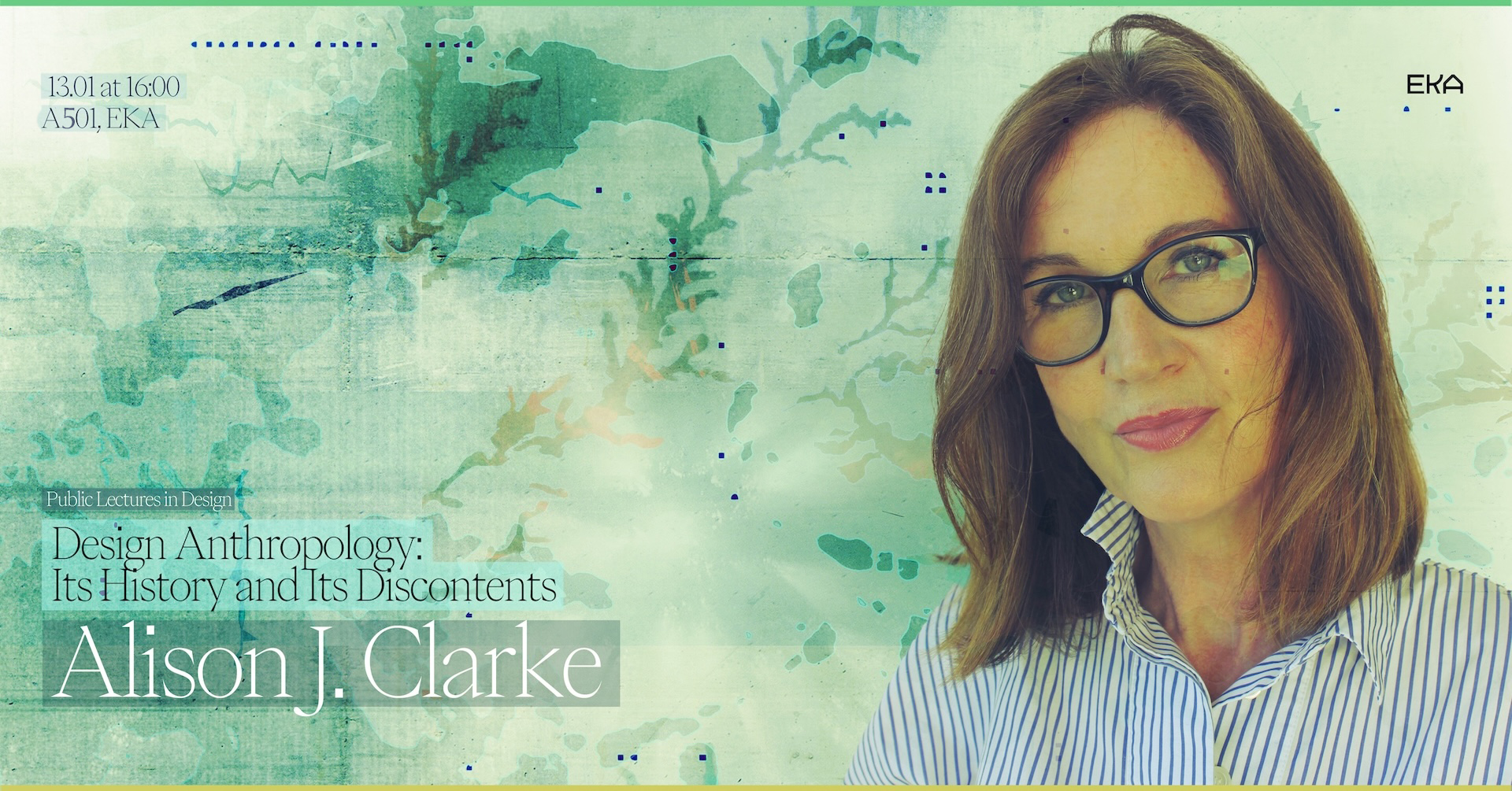

On January 13 at 16:00 in room A-501, Alison J. Clarke will give a public lecture titled “Design Anthropology: Its History and Its Discontents”. The lecture is part of the Faculty of Design’s public lecture series “Public Lectures in Design: Adjusting Perspectives,” curated by Stella Runnel and Taavi Hallimäe.
This talk explores the emergence of design anthropology as an approach that has gained popularity over the last two decades by melding social science and design practice. Clarke will argue the need to understand the phenomenon’s origins in the Cold War geopolitics of US expansionism, whereby it was applied as a political force to decolonized nations, in order to cast a critical eye over a contemporary practice that has come to operate as the invisible hand behind multiple facets of global life from health care provision, through to governance and data harnessing.
The public lectures are open to students, faculty, as well as anyone else interested in design!
Alison J. Clarke is a professor at the University of Applied Arts Vienna and the director of Papanek Foundation. As a design historian and social anthropologist, Clarke’s research deals with the intersection of these disciplines, specifically in terms of their shared focus on the politics of material culture and social relations. Her most recent monograph Victor Papanek: Designer for the Real World (MIT Press, 2021) explores the controversial origins of social design, casting a critical perspective on the origins of a movement that has claimed to promote social justice through people-centred approaches. Her present book and research project Design Anthropology: Decolonizing and Recolonizing the Material World (MIT Press) explores the blurred historical boundaries between design practice and anthropology, and the social consequences of the uptake of this melding in the contemporary corporate sector. Clarke’s research has been supported by the Graham Foundation, the Smithsonian Institution, the Austrian Science Fund and the Arts and Humanities Research Council, among others.
Posted by Andres Lõo — Permalink
Open Lecture: Alison J. Clarke “Design Anthropology: Its History and Its Discontents”
Tuesday 13 January, 2026
Faculty of Design
On January 13 at 16:00 in room A-501, Alison J. Clarke will give a public lecture titled “Design Anthropology: Its History and Its Discontents”. The lecture is part of the Faculty of Design’s public lecture series “Public Lectures in Design: Adjusting Perspectives,” curated by Stella Runnel and Taavi Hallimäe.
This talk explores the emergence of design anthropology as an approach that has gained popularity over the last two decades by melding social science and design practice. Clarke will argue the need to understand the phenomenon’s origins in the Cold War geopolitics of US expansionism, whereby it was applied as a political force to decolonized nations, in order to cast a critical eye over a contemporary practice that has come to operate as the invisible hand behind multiple facets of global life from health care provision, through to governance and data harnessing.
The public lectures are open to students, faculty, as well as anyone else interested in design!
Alison J. Clarke is a professor at the University of Applied Arts Vienna and the director of Papanek Foundation. As a design historian and social anthropologist, Clarke’s research deals with the intersection of these disciplines, specifically in terms of their shared focus on the politics of material culture and social relations. Her most recent monograph Victor Papanek: Designer for the Real World (MIT Press, 2021) explores the controversial origins of social design, casting a critical perspective on the origins of a movement that has claimed to promote social justice through people-centred approaches. Her present book and research project Design Anthropology: Decolonizing and Recolonizing the Material World (MIT Press) explores the blurred historical boundaries between design practice and anthropology, and the social consequences of the uptake of this melding in the contemporary corporate sector. Clarke’s research has been supported by the Graham Foundation, the Smithsonian Institution, the Austrian Science Fund and the Arts and Humanities Research Council, among others.
Posted by Andres Lõo — Permalink
02.12.2025
Open Lecture: “Bright Ecologies: Experiences, Forms, Materials”
Faculty of Design
On December 2 at 16:00 in room A101, Andrea Caretto and Raffaella Spagna will give a public lecture titled “Bright Ecologies: Experiences, Forms, Materials”. The lecture is part of the Faculty of Design’s public lecture series “Public Lectures in Design: Adjusting Perspectives,” curated by Stella Runnel and Taavi Hallimäe.
The Italian artist duo Caretto/Spagna approach art as a space for radical openness, undisciplined inquiry, and deep engagement with the Things of the World: earth, seeds, people, stones, museums, rivers, quarries, trees, micro-organisms, and more. Through the activation of a constellation of objects – small sculptures, drawings, plants, found objects, etc – drawn from their personal archive, the artists will invite the audience on an interactive journey into their artistic research.
The public lectures are open to students, faculty, as well as anyone else interested in design!
Andrea Caretto (Torino, 1970, Degree in Natural Sciences) and Raffaella Spagna (Rivoli, 1967, Degree in Architecture) have been working together since 2002, collaborating with public and private institutions in Italy and abroad. They live and work in Cambiano (TO).
Caretto and Spagna explore the complex web of relationships from which things emerge: the fluxes and cycles of matter and morphogenesis, the perception of the environment, the transformations of the landscape, the wild/cultivated relationship and the processes of domestication, the relationships between living/inhabiting/building. Their approach is based on an aptitude for “presence” and experience in the world, in close contact with matter in all its transformations and individualisations. An exercise of attention and care for things, understood as nodes in an interweave, which trains the ability to perceive everything that exists as a system of elements in continuous correspondence. They are among the founding members of the artists’ association Diogene in Torino, and Pianpicollo Selvatico ETS Foundation – center for research in the arts and the sciences, Levice (TO), and artistic consultants for Munlab Ecomuseo dell’Argilla in Cambiano (TO). They collaborate with the Department of Philosophy and Educational Sciences at the University of Torino and with Unidee Academy of Cittadellarte-Fondazione Pistoletto, Biella (IT).
Posted by Taavi Hallimäe — Permalink
Open Lecture: “Bright Ecologies: Experiences, Forms, Materials”
Tuesday 02 December, 2025
Faculty of Design
On December 2 at 16:00 in room A101, Andrea Caretto and Raffaella Spagna will give a public lecture titled “Bright Ecologies: Experiences, Forms, Materials”. The lecture is part of the Faculty of Design’s public lecture series “Public Lectures in Design: Adjusting Perspectives,” curated by Stella Runnel and Taavi Hallimäe.
The Italian artist duo Caretto/Spagna approach art as a space for radical openness, undisciplined inquiry, and deep engagement with the Things of the World: earth, seeds, people, stones, museums, rivers, quarries, trees, micro-organisms, and more. Through the activation of a constellation of objects – small sculptures, drawings, plants, found objects, etc – drawn from their personal archive, the artists will invite the audience on an interactive journey into their artistic research.
The public lectures are open to students, faculty, as well as anyone else interested in design!
Andrea Caretto (Torino, 1970, Degree in Natural Sciences) and Raffaella Spagna (Rivoli, 1967, Degree in Architecture) have been working together since 2002, collaborating with public and private institutions in Italy and abroad. They live and work in Cambiano (TO).
Caretto and Spagna explore the complex web of relationships from which things emerge: the fluxes and cycles of matter and morphogenesis, the perception of the environment, the transformations of the landscape, the wild/cultivated relationship and the processes of domestication, the relationships between living/inhabiting/building. Their approach is based on an aptitude for “presence” and experience in the world, in close contact with matter in all its transformations and individualisations. An exercise of attention and care for things, understood as nodes in an interweave, which trains the ability to perceive everything that exists as a system of elements in continuous correspondence. They are among the founding members of the artists’ association Diogene in Torino, and Pianpicollo Selvatico ETS Foundation – center for research in the arts and the sciences, Levice (TO), and artistic consultants for Munlab Ecomuseo dell’Argilla in Cambiano (TO). They collaborate with the Department of Philosophy and Educational Sciences at the University of Torino and with Unidee Academy of Cittadellarte-Fondazione Pistoletto, Biella (IT).
Posted by Taavi Hallimäe — Permalink
18.11.2025
Open Lecture: Bintan Titisari “Natural Dyes Ecosystem in Textile and Fashion Industry”
Faculty of Design
Teams link:
Bintan Titisari (Postdoctoral researcher, University of Leeds, Colour4CRAFTS)
“Natural dyes ecosystem in textile and fashion industry” (in English, online)
Description: Natural dyeing is one of the oldest traditions in European textiles, deeply tied to cultural heritage and local craftsmanship. Today, it is re-emerging as an important practice in the textile and fashion industries, extending from small workshops into larger-scale production. This lecture examines the broader ecosystem of natural dyes, exploring how they intersect with heritage, sustainability, design practice, and trend forecasting. The relationship between artisanal and industrial approaches can appear divided, yet each contributes valuable knowledge and innovation. By recognising these interconnections, we can better understand how natural dyes offer not only a link to tradition but also a pathway toward more sustainable and creative futures for fashion and textiles.
Bintan Titisari (PhD), University of Leeds, postdoctoral researcher. Bintan Titisari (PhD) is a postdoctoral researcher at the School of Design, University of Leeds. Her research interests are in the textile and fashion design industry, focusing on the interdisciplinary aspects of textile design, colourants, sustainable practices, and consumer behaviour. With over a decade of academic experience in Indonesia, Brunei, and the UK, she has taught and developed courses in sustainable fashion, craft design, resist dyeing, and smart textiles. In her textile-making practice, she combines natural dyes with the resist dyeing technique to create unique textiles. She is a member of the EU Horizon project Colour4CRAFTS.
–
The lecture is part of a series “Textile Dyes of the Past and Future: sharing the Colour4CRAFTS Experience” begins, initiated by the EU Horizon project Colour4CRAFTS.
The webinar series brings together EU Horizon project Colour4CRAFTS members and important guests to discuss and share their knowledge on textile dyes of the past and future. The series is brought together by the University of Tartu and Viljandi Culture Academy in collaboration with the Estonian Academy of Arts.
EU Horizon project Colour4CRAFTS combines a multidisciplinary team of experts from research institutes and R&D companies to carry out studies of bio-based textile colouration in traditional historic perspective and in combination with cutting-edge technologies of colourants biosynthesis and waterless applications techniques. Colour4CRAFTS members are the University of Helsinki, University of Lapland, University of Tartu, KIK-IRPA, University of Leeds and PILI Bio.
Posted by Andres Lõo — Permalink
Open Lecture: Bintan Titisari “Natural Dyes Ecosystem in Textile and Fashion Industry”
Tuesday 18 November, 2025
Faculty of Design
Teams link:
Bintan Titisari (Postdoctoral researcher, University of Leeds, Colour4CRAFTS)
“Natural dyes ecosystem in textile and fashion industry” (in English, online)
Description: Natural dyeing is one of the oldest traditions in European textiles, deeply tied to cultural heritage and local craftsmanship. Today, it is re-emerging as an important practice in the textile and fashion industries, extending from small workshops into larger-scale production. This lecture examines the broader ecosystem of natural dyes, exploring how they intersect with heritage, sustainability, design practice, and trend forecasting. The relationship between artisanal and industrial approaches can appear divided, yet each contributes valuable knowledge and innovation. By recognising these interconnections, we can better understand how natural dyes offer not only a link to tradition but also a pathway toward more sustainable and creative futures for fashion and textiles.
Bintan Titisari (PhD), University of Leeds, postdoctoral researcher. Bintan Titisari (PhD) is a postdoctoral researcher at the School of Design, University of Leeds. Her research interests are in the textile and fashion design industry, focusing on the interdisciplinary aspects of textile design, colourants, sustainable practices, and consumer behaviour. With over a decade of academic experience in Indonesia, Brunei, and the UK, she has taught and developed courses in sustainable fashion, craft design, resist dyeing, and smart textiles. In her textile-making practice, she combines natural dyes with the resist dyeing technique to create unique textiles. She is a member of the EU Horizon project Colour4CRAFTS.
–
The lecture is part of a series “Textile Dyes of the Past and Future: sharing the Colour4CRAFTS Experience” begins, initiated by the EU Horizon project Colour4CRAFTS.
The webinar series brings together EU Horizon project Colour4CRAFTS members and important guests to discuss and share their knowledge on textile dyes of the past and future. The series is brought together by the University of Tartu and Viljandi Culture Academy in collaboration with the Estonian Academy of Arts.
EU Horizon project Colour4CRAFTS combines a multidisciplinary team of experts from research institutes and R&D companies to carry out studies of bio-based textile colouration in traditional historic perspective and in combination with cutting-edge technologies of colourants biosynthesis and waterless applications techniques. Colour4CRAFTS members are the University of Helsinki, University of Lapland, University of Tartu, KIK-IRPA, University of Leeds and PILI Bio.
Posted by Andres Lõo — Permalink
11.11.2025
Open Lecture: Deb Bamford ”What Can We Learn from Using Mordants?”
Faculty of Design
11.11 16.00
Deb Bamford (doctoral researcher, University of Leeds, Colour4CRAFTS)
” What can we learn from using mordants?” (in English, online)
In natural dyeing, mordants are often required. These substances help dye molecules bind to the fiber and can influence the final hue. Their effectiveness depends on the type of fiber, the dye used, and the mordanting method. The most commonly used mordants are various metal salts, historically among which alum-based compounds are particularly popular. How do mordants work, and what should be considered when using them?
Deb Bamford, University of Leeds, doctoral researcher. Deb Bamford is a doctoral student at the University of Leeds, School of Design. Her research interests include history of dyes, dyeing and textiles. Her thesis title is “Investigations to improve the mordanting process for natural dyes on cotton and wool using aluminium salts or alternative bio-mordants”. She is a member of the EU Horizon project Colour4CRAFTS project.
The lecture is part of a series “Textile Dyes of the Past and Future: sharing the Colour4CRAFTS Experience” begins, initiated by the EU Horizon project Colour4CRAFTS.
The webinar series brings together EU Horizon project Colour4CRAFTS members and important guests to discuss and share their knowledge on textile dyes of the past and future. The series is brought together by the University of Tartu and Viljandi Culture Academy in collaboration with the Estonian Academy of Arts.
EU Horizon project Colour4CRAFTS combines a multidisciplinary team of experts from research institutes and R&D companies to carry out studies of bio-based textile colouration in traditional historic perspective and in combination with cutting-edge technologies of colourants biosynthesis and waterless applications techniques. Colour4CRAFTS members are the University of Helsinki, University of Lapland, University of Tartu, KIK-IRPA, University of Leeds and PILI Bio.
Posted by Andres Lõo — Permalink
Open Lecture: Deb Bamford ”What Can We Learn from Using Mordants?”
Tuesday 11 November, 2025
Faculty of Design
11.11 16.00
Deb Bamford (doctoral researcher, University of Leeds, Colour4CRAFTS)
” What can we learn from using mordants?” (in English, online)
In natural dyeing, mordants are often required. These substances help dye molecules bind to the fiber and can influence the final hue. Their effectiveness depends on the type of fiber, the dye used, and the mordanting method. The most commonly used mordants are various metal salts, historically among which alum-based compounds are particularly popular. How do mordants work, and what should be considered when using them?
Deb Bamford, University of Leeds, doctoral researcher. Deb Bamford is a doctoral student at the University of Leeds, School of Design. Her research interests include history of dyes, dyeing and textiles. Her thesis title is “Investigations to improve the mordanting process for natural dyes on cotton and wool using aluminium salts or alternative bio-mordants”. She is a member of the EU Horizon project Colour4CRAFTS project.
The lecture is part of a series “Textile Dyes of the Past and Future: sharing the Colour4CRAFTS Experience” begins, initiated by the EU Horizon project Colour4CRAFTS.
The webinar series brings together EU Horizon project Colour4CRAFTS members and important guests to discuss and share their knowledge on textile dyes of the past and future. The series is brought together by the University of Tartu and Viljandi Culture Academy in collaboration with the Estonian Academy of Arts.
EU Horizon project Colour4CRAFTS combines a multidisciplinary team of experts from research institutes and R&D companies to carry out studies of bio-based textile colouration in traditional historic perspective and in combination with cutting-edge technologies of colourants biosynthesis and waterless applications techniques. Colour4CRAFTS members are the University of Helsinki, University of Lapland, University of Tartu, KIK-IRPA, University of Leeds and PILI Bio.
Posted by Andres Lõo — Permalink
11.11.2025 — 07.12.2025
Exhibition “Invisible Stones. A Young Artist’s Look at Industry”
Faculty of Design
On November 11 at 5:00 p.m., an exhibition of biennial proportions will open in the Telliskivi Green Hall, where young artists from the Estonian Academy of Arts will explore how the relationship between industry and society has developed and changed over time. The exhibition features more than 100 artworks.
The exhibition “Invisible Stones. A Young Artist’s View of Industry” focuses on the dialogue between industry and society. The exhibition features over a hundred works that invite us to think about responsibility, sustainability and the impact of humans on the landscape.
The works were created during summer internships at the industrial landscapes of Viru Keemia Grupp in Ida-Viru County. The young artists’ gaze moves from poetic landscape views to intimate everyday stories – oil shale sometimes becomes a decorative wallpaper pattern in the living room, sometimes a monumental cathedral that records the layers of time.
The collaboration is motivated by the 100th anniversary of the Estonian shale oil industry. The exhibition invites the viewer to stop and reflect on the traces that work, landscape and people have left on each other and how their relationship could develop in the future.
The summer internship at the industrial landscapes of Viru Keemia Grupp took place in June and August 2025. A total of 65 students participated in the summer internship, including students from the departments of scenography, animation, graphics, sculpture, contemporary art, fashion and painting. The exhibition also presents the work of designers and applied artists.
Participating artists: Adele Sillat, Alexander Matthias Saage, Aliisa Ahtiainen, Anastasia Nikiforova, Anastasia Ananjeva, Anu Jakobson, Beata Batejev, Bob Bicknell-Knight, Darja Malõševa, Edvard Vellevoog, Emma Reti Tikenberg, Grete Kangro, Hannah Segerkrantz, Ivor Mikker, Karl Uustal, Kaspar Lesk, Kateryna Tyshchenko, Karolina Peterson, Kirke Kirt, Kirke Kits, Kristjan Tammjärv, Ksenia Verbeštšuk, Liisa Nurklik, Linda Teemägi, Lume Tuum, Maibrit Kaur, Marek Huntsaar, Maria-Eliise Muinaste, Marit Loitmets, Marta Huimerind, Marta Konovalov, Mia-Stella Aaslaid, Nora Schmelter, Oskar Vels, Patrick Soome, Paul Aadam Mikson, Piia Bianka Pere, Robin August Vöörmann, Rosa-Maria Nuutinen, Sander Haugas, Selene Taur, Stuudio Kollektiir, Stiina-Marie Sarevet, Taavi Teevet, Tauris Reose, Teresa RA, Veronika Pavliuk, Visa Nurmi, Yuna-Lee Pfau, Denis Kudrjašov
Exhibition curators: Lilian Hiob-Küttis, Kirke Kangro and Ruth Melioranski
Project team: Irina Bojenko, Kaia-Liisa Jõesalu, Kaja Krustok
Supervisors: Anita Kremm, Britta Benno, Charlotte Biszewski, Ene-Liis Semper, Francesco Rosso, Holger Loodus, John Grzinich, Karl Joonas Alamaa, Laura Põld, Lilli-Krõõt Repnau, Mark Raidpere, Mihkel Ilus, Taavi Talve, Viktor Gurov, Zody Burke, Björn Koop, Eve Margus, Heikki Zoova, Juss Heinsalu, Kaja Altvee, Kärt Ojavee, Lieven Lahaye, Linda Kaljundi, Nils Hint, Piret Hirv, Urmas Lüüs
Designer: Kati Saarits
The exhibition is open until December 7th.
Thu-Fri 12-7 PM
Sat-Sun 10-5 PM
Posted by Maarja Pabut — Permalink
Exhibition “Invisible Stones. A Young Artist’s Look at Industry”
Tuesday 11 November, 2025 — Sunday 07 December, 2025
Faculty of Design
On November 11 at 5:00 p.m., an exhibition of biennial proportions will open in the Telliskivi Green Hall, where young artists from the Estonian Academy of Arts will explore how the relationship between industry and society has developed and changed over time. The exhibition features more than 100 artworks.
The exhibition “Invisible Stones. A Young Artist’s View of Industry” focuses on the dialogue between industry and society. The exhibition features over a hundred works that invite us to think about responsibility, sustainability and the impact of humans on the landscape.
The works were created during summer internships at the industrial landscapes of Viru Keemia Grupp in Ida-Viru County. The young artists’ gaze moves from poetic landscape views to intimate everyday stories – oil shale sometimes becomes a decorative wallpaper pattern in the living room, sometimes a monumental cathedral that records the layers of time.
The collaboration is motivated by the 100th anniversary of the Estonian shale oil industry. The exhibition invites the viewer to stop and reflect on the traces that work, landscape and people have left on each other and how their relationship could develop in the future.
The summer internship at the industrial landscapes of Viru Keemia Grupp took place in June and August 2025. A total of 65 students participated in the summer internship, including students from the departments of scenography, animation, graphics, sculpture, contemporary art, fashion and painting. The exhibition also presents the work of designers and applied artists.
Participating artists: Adele Sillat, Alexander Matthias Saage, Aliisa Ahtiainen, Anastasia Nikiforova, Anastasia Ananjeva, Anu Jakobson, Beata Batejev, Bob Bicknell-Knight, Darja Malõševa, Edvard Vellevoog, Emma Reti Tikenberg, Grete Kangro, Hannah Segerkrantz, Ivor Mikker, Karl Uustal, Kaspar Lesk, Kateryna Tyshchenko, Karolina Peterson, Kirke Kirt, Kirke Kits, Kristjan Tammjärv, Ksenia Verbeštšuk, Liisa Nurklik, Linda Teemägi, Lume Tuum, Maibrit Kaur, Marek Huntsaar, Maria-Eliise Muinaste, Marit Loitmets, Marta Huimerind, Marta Konovalov, Mia-Stella Aaslaid, Nora Schmelter, Oskar Vels, Patrick Soome, Paul Aadam Mikson, Piia Bianka Pere, Robin August Vöörmann, Rosa-Maria Nuutinen, Sander Haugas, Selene Taur, Stuudio Kollektiir, Stiina-Marie Sarevet, Taavi Teevet, Tauris Reose, Teresa RA, Veronika Pavliuk, Visa Nurmi, Yuna-Lee Pfau, Denis Kudrjašov
Exhibition curators: Lilian Hiob-Küttis, Kirke Kangro and Ruth Melioranski
Project team: Irina Bojenko, Kaia-Liisa Jõesalu, Kaja Krustok
Supervisors: Anita Kremm, Britta Benno, Charlotte Biszewski, Ene-Liis Semper, Francesco Rosso, Holger Loodus, John Grzinich, Karl Joonas Alamaa, Laura Põld, Lilli-Krõõt Repnau, Mark Raidpere, Mihkel Ilus, Taavi Talve, Viktor Gurov, Zody Burke, Björn Koop, Eve Margus, Heikki Zoova, Juss Heinsalu, Kaja Altvee, Kärt Ojavee, Lieven Lahaye, Linda Kaljundi, Nils Hint, Piret Hirv, Urmas Lüüs
Designer: Kati Saarits
The exhibition is open until December 7th.
Thu-Fri 12-7 PM
Sat-Sun 10-5 PM
Posted by Maarja Pabut — Permalink
04.11.2025
Open Lecture: Sergio Dávila “Biosemiotics, Otherness, and the Ontological Turn”
Faculty of Design
On November 4 at 16:00 in room A101, Sergio Dávila will give a public lecture titled “Biosemiotics, Otherness, and the Ontological Turn”. The lecture is part of the Faculty of Design’s public lecture series “Public Lectures in Design: Adjusting Perspectives,” curated by Stella Runnel and Taavi Hallimäe.
Humanity faces a profound ecological and civilizational crisis that is not only environmental but also symbolic and ontological. Modern urban development and governance, driven by extractivist logics and capital accumulation, have treated the living world as a backdrop for human progress, erasing reciprocity with other forms of life. This prevailing anthropocentric worldview, placing humans and the economy at the center, has led to climate breakdown, biodiversity loss, and social alienation. In contrast, an alternative ecocentric paradigm is germinating, one that seeks not dominance but coexistence.
Biophilic governance is proposed as a framework for this transformative shift. Biophilic denotes an orientation of deep interdependence and care among all life, while governance here refers not merely to institutions and laws but to the collective practices, rituals, and decisions that shape our relationships with the living world. Biophilic governance is, in essence, a politics of making-with Earth, a practice of coexistence that extends care, communication, and even representation beyond the human realm. It aligns with Donna Haraway’s notion of sympoiesis (“making-with”) and Escobar’s call for ontological design, both of which advocate redefining human–nature relations in terms of interdependence rather than domination. It resonates as well with Bayo Akómoláfé’s provocative call for an “ontological mutiny,” a rebellion at the level of being, through which humanity might unlearn its delusions of separateness and experiment with new forms of earthly belonging.
This talk will be a place for sharing ideas about the spirit of our era. A positive view as a stand of resistance against cynicism, ecological anxiety, and despair. Participants will review some cases of biophilic governance and then be guided to develop their own public policies, strategies, actions, and proposals for public space as radical collaboration with other earth-beings.
The public lectures are open to students, faculty, as well as anyone else interested in design!
Sergio Dávila is a PhD candidate in Urban Studies at the Universidad Autónoma Metropolitana in Mexico City and an exchange researcher at the Estonian Academy of Arts. His work explores how cities can become spaces of coexistence between humans and other species through biophilic design, participatory processes, and creative governance. As a researcher, teacher, and frequent conference speaker, Sergio bridges design, ecology, and politics to imagine more-than-human futures for our urban environments.
Posted by Andres Lõo — Permalink
Open Lecture: Sergio Dávila “Biosemiotics, Otherness, and the Ontological Turn”
Tuesday 04 November, 2025
Faculty of Design
On November 4 at 16:00 in room A101, Sergio Dávila will give a public lecture titled “Biosemiotics, Otherness, and the Ontological Turn”. The lecture is part of the Faculty of Design’s public lecture series “Public Lectures in Design: Adjusting Perspectives,” curated by Stella Runnel and Taavi Hallimäe.
Humanity faces a profound ecological and civilizational crisis that is not only environmental but also symbolic and ontological. Modern urban development and governance, driven by extractivist logics and capital accumulation, have treated the living world as a backdrop for human progress, erasing reciprocity with other forms of life. This prevailing anthropocentric worldview, placing humans and the economy at the center, has led to climate breakdown, biodiversity loss, and social alienation. In contrast, an alternative ecocentric paradigm is germinating, one that seeks not dominance but coexistence.
Biophilic governance is proposed as a framework for this transformative shift. Biophilic denotes an orientation of deep interdependence and care among all life, while governance here refers not merely to institutions and laws but to the collective practices, rituals, and decisions that shape our relationships with the living world. Biophilic governance is, in essence, a politics of making-with Earth, a practice of coexistence that extends care, communication, and even representation beyond the human realm. It aligns with Donna Haraway’s notion of sympoiesis (“making-with”) and Escobar’s call for ontological design, both of which advocate redefining human–nature relations in terms of interdependence rather than domination. It resonates as well with Bayo Akómoláfé’s provocative call for an “ontological mutiny,” a rebellion at the level of being, through which humanity might unlearn its delusions of separateness and experiment with new forms of earthly belonging.
This talk will be a place for sharing ideas about the spirit of our era. A positive view as a stand of resistance against cynicism, ecological anxiety, and despair. Participants will review some cases of biophilic governance and then be guided to develop their own public policies, strategies, actions, and proposals for public space as radical collaboration with other earth-beings.
The public lectures are open to students, faculty, as well as anyone else interested in design!
Sergio Dávila is a PhD candidate in Urban Studies at the Universidad Autónoma Metropolitana in Mexico City and an exchange researcher at the Estonian Academy of Arts. His work explores how cities can become spaces of coexistence between humans and other species through biophilic design, participatory processes, and creative governance. As a researcher, teacher, and frequent conference speaker, Sergio bridges design, ecology, and politics to imagine more-than-human futures for our urban environments.
Posted by Andres Lõo — Permalink
21.10.2025 — 04.11.2025
Julia Maria Künnap “Travelling Light”
Faculty of Design



Julia Maria Künnap, “Travelling Light. A Study on the Movement of Light in Experimentally Cut Gemstones”
EKA Library 21.10-4.11.2025
This artistic research explores the fundamental principle of gemstone faceting — the refraction and reflection of light – in the combination of faceted and freeform elements. The aim of the exhibition is to demonstrate how individual reflective elements, through their mutual interaction, create the brilliance of a gemstone. To illustrate this theory, the exhibition presents both work in process and finished gems set in jewelry. The Exhibition is the First Creative Project of Doctoral Thesis “Playing with fire. Possibilities for designing four-dimensional gemstones by combining traditional faceting and free-form engraving. Time as a design element.” Supervisor Prof Krista Kodres
Julia Maria Künnap is a PhD student and junior researcher in Art and Design.
Posted by Andres Lõo — Permalink
Julia Maria Künnap “Travelling Light”
Tuesday 21 October, 2025 — Tuesday 04 November, 2025
Faculty of Design
Julia Maria Künnap, “Travelling Light. A Study on the Movement of Light in Experimentally Cut Gemstones”
EKA Library 21.10-4.11.2025
This artistic research explores the fundamental principle of gemstone faceting — the refraction and reflection of light – in the combination of faceted and freeform elements. The aim of the exhibition is to demonstrate how individual reflective elements, through their mutual interaction, create the brilliance of a gemstone. To illustrate this theory, the exhibition presents both work in process and finished gems set in jewelry. The Exhibition is the First Creative Project of Doctoral Thesis “Playing with fire. Possibilities for designing four-dimensional gemstones by combining traditional faceting and free-form engraving. Time as a design element.” Supervisor Prof Krista Kodres
Julia Maria Künnap is a PhD student and junior researcher in Art and Design.
Posted by Andres Lõo — Permalink
16.10.2025 — 11.01.2026
International Fashion Exhibition “Hõimulõim”
Faculty of Design


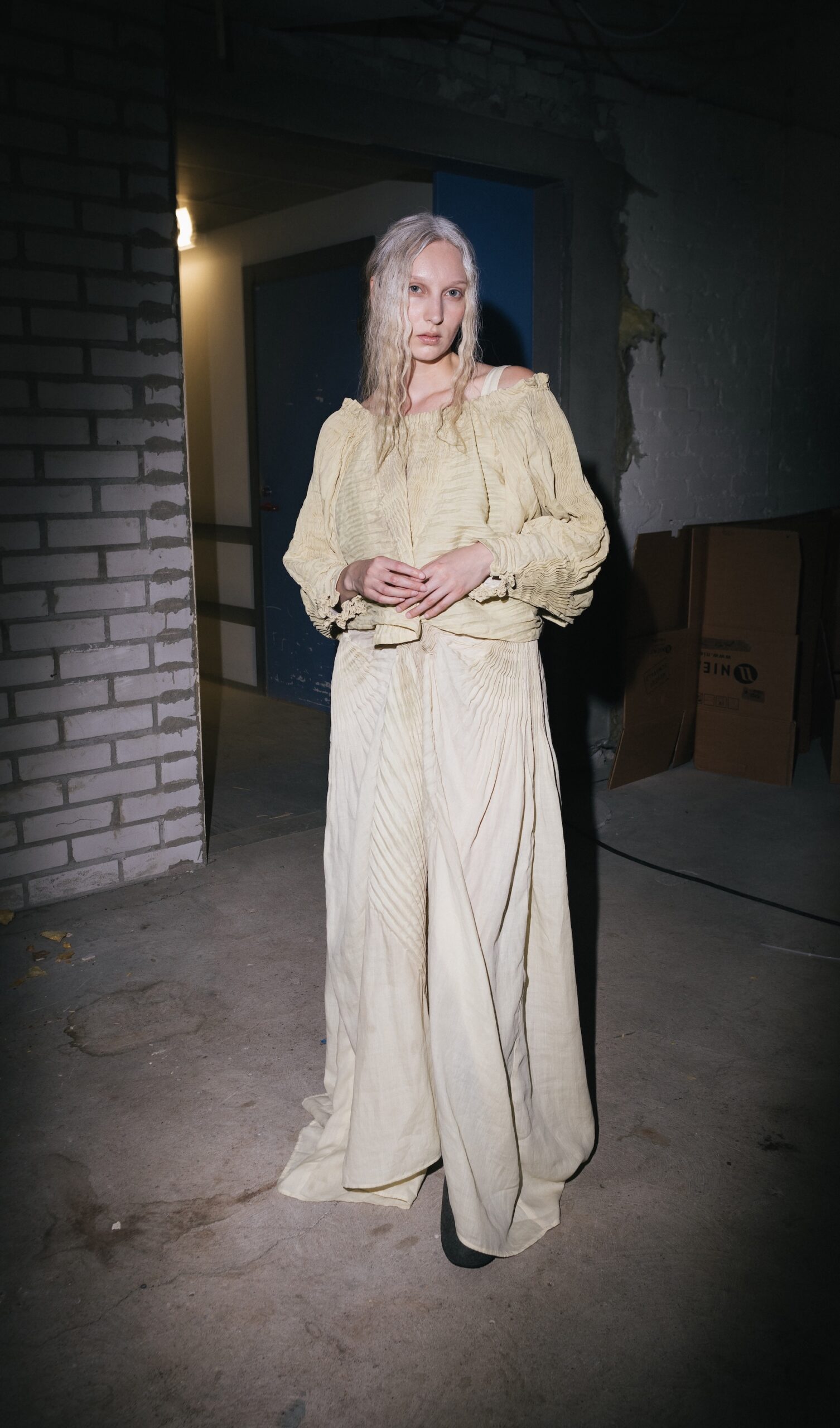
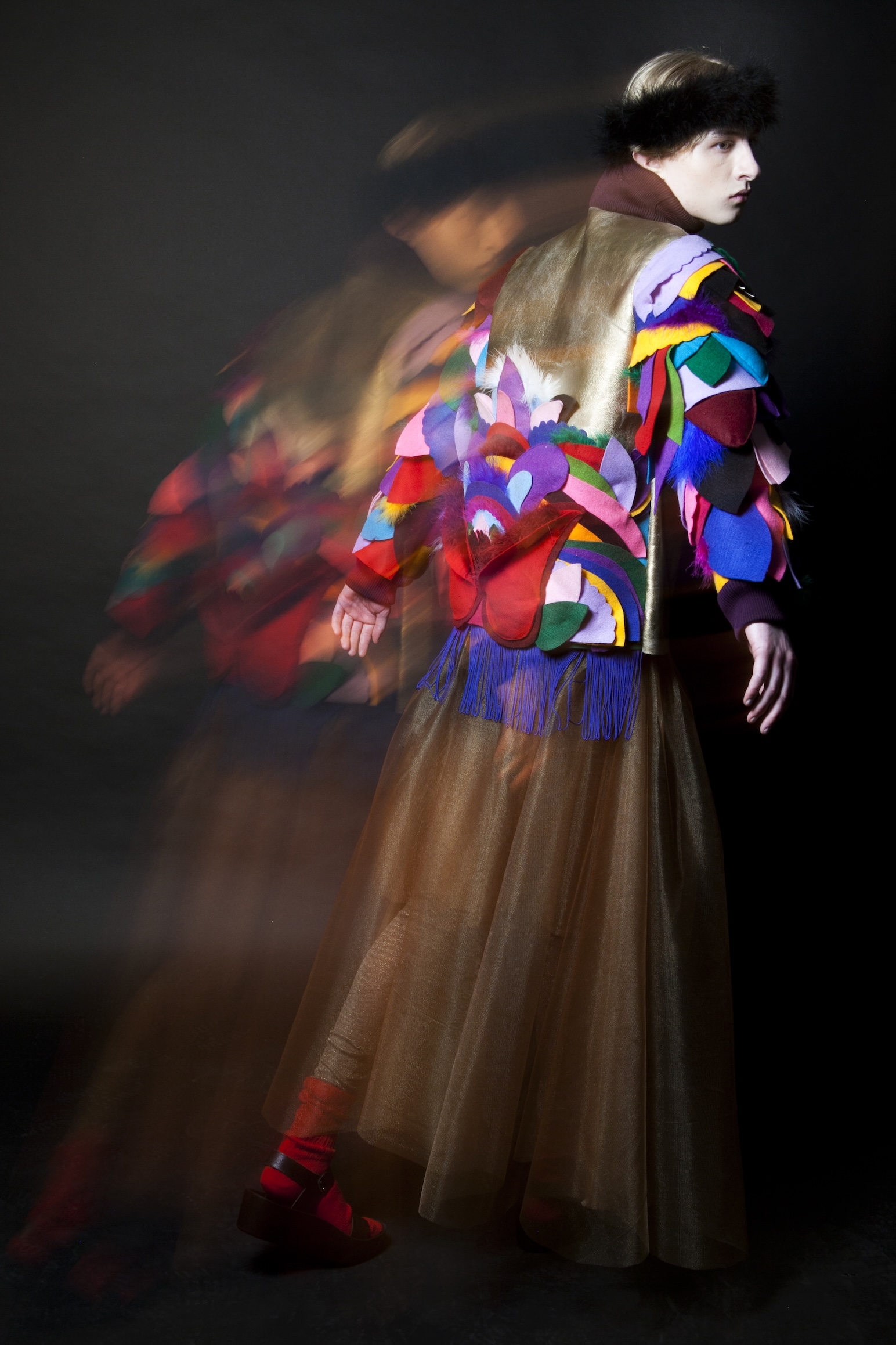
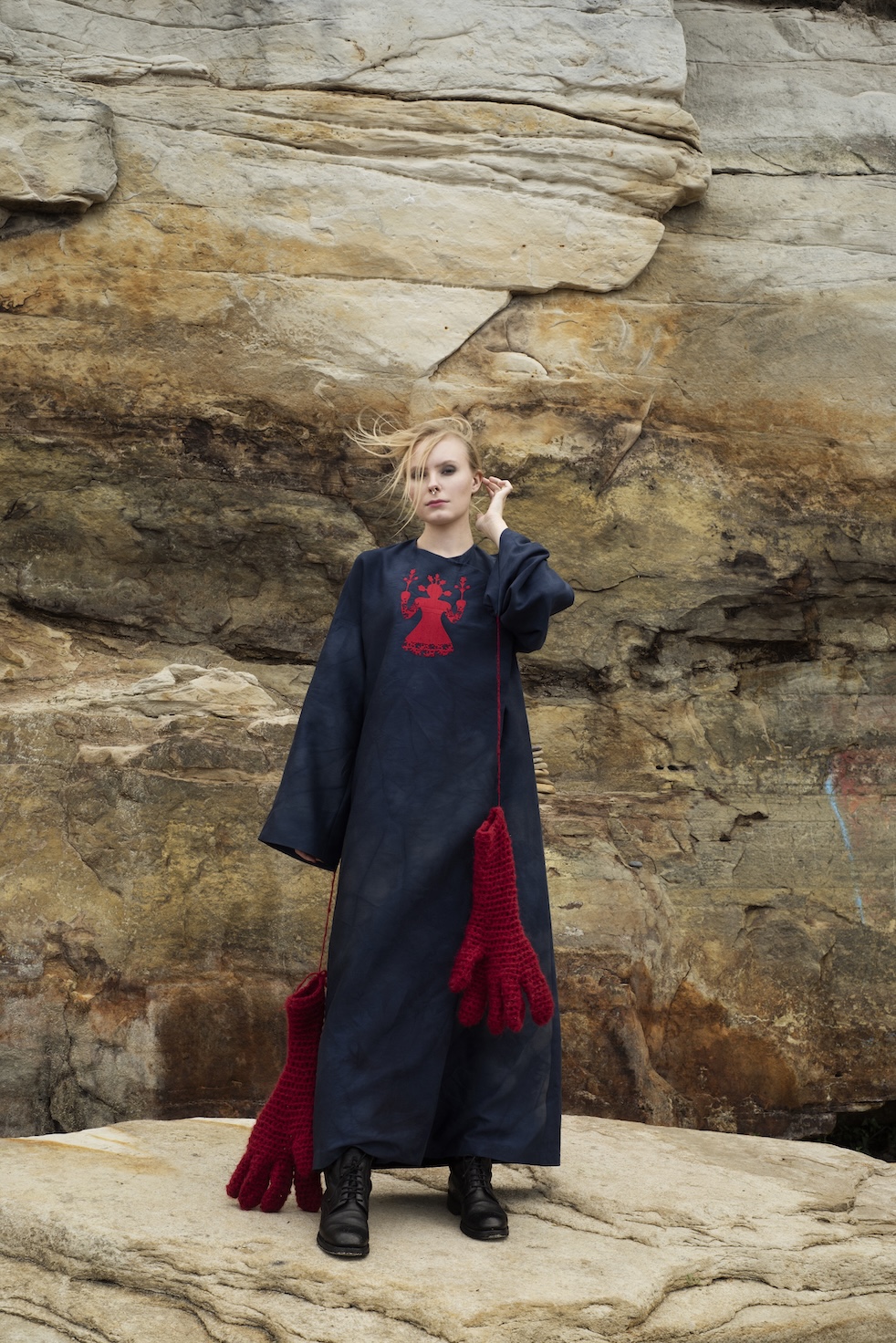
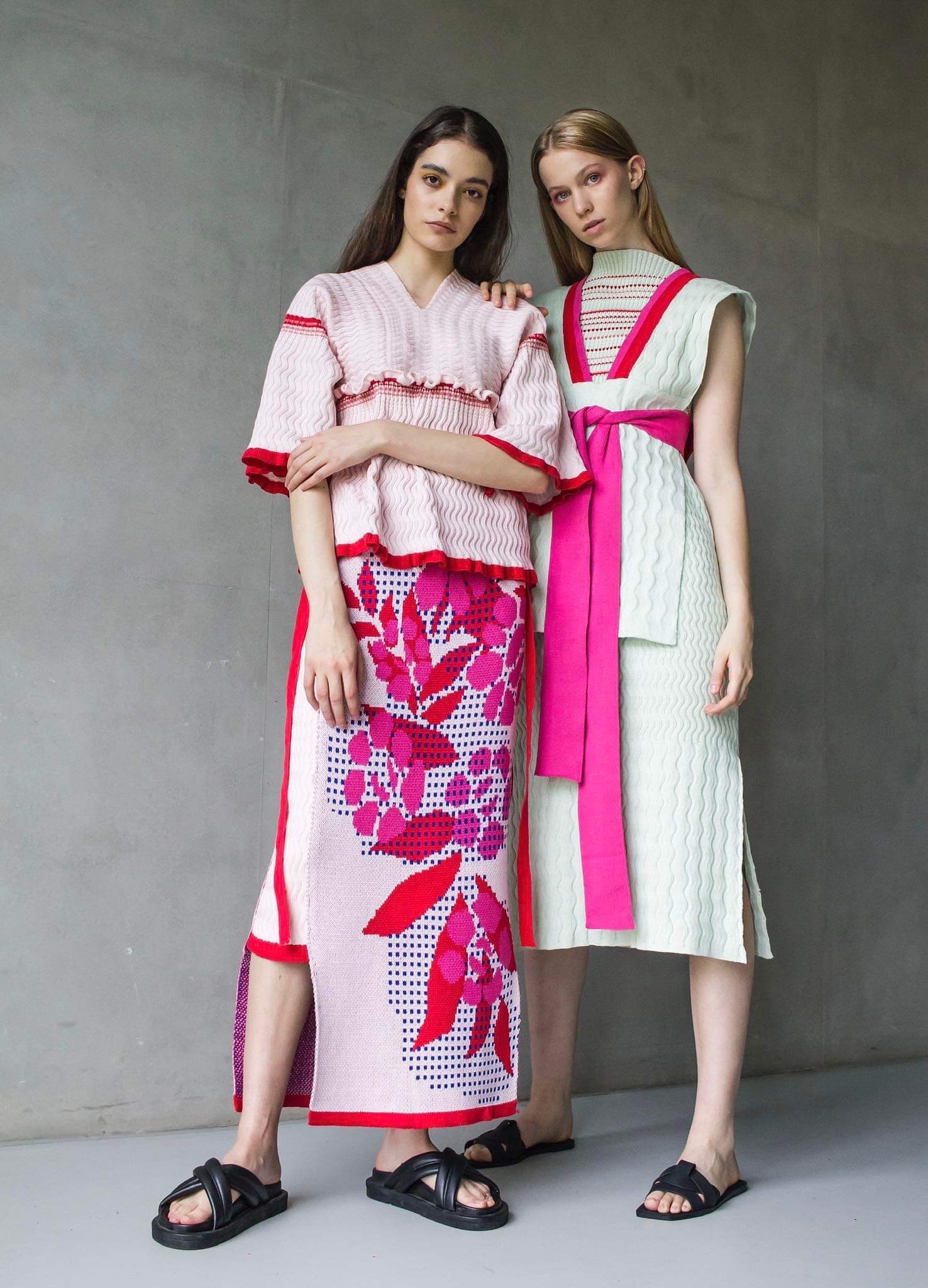
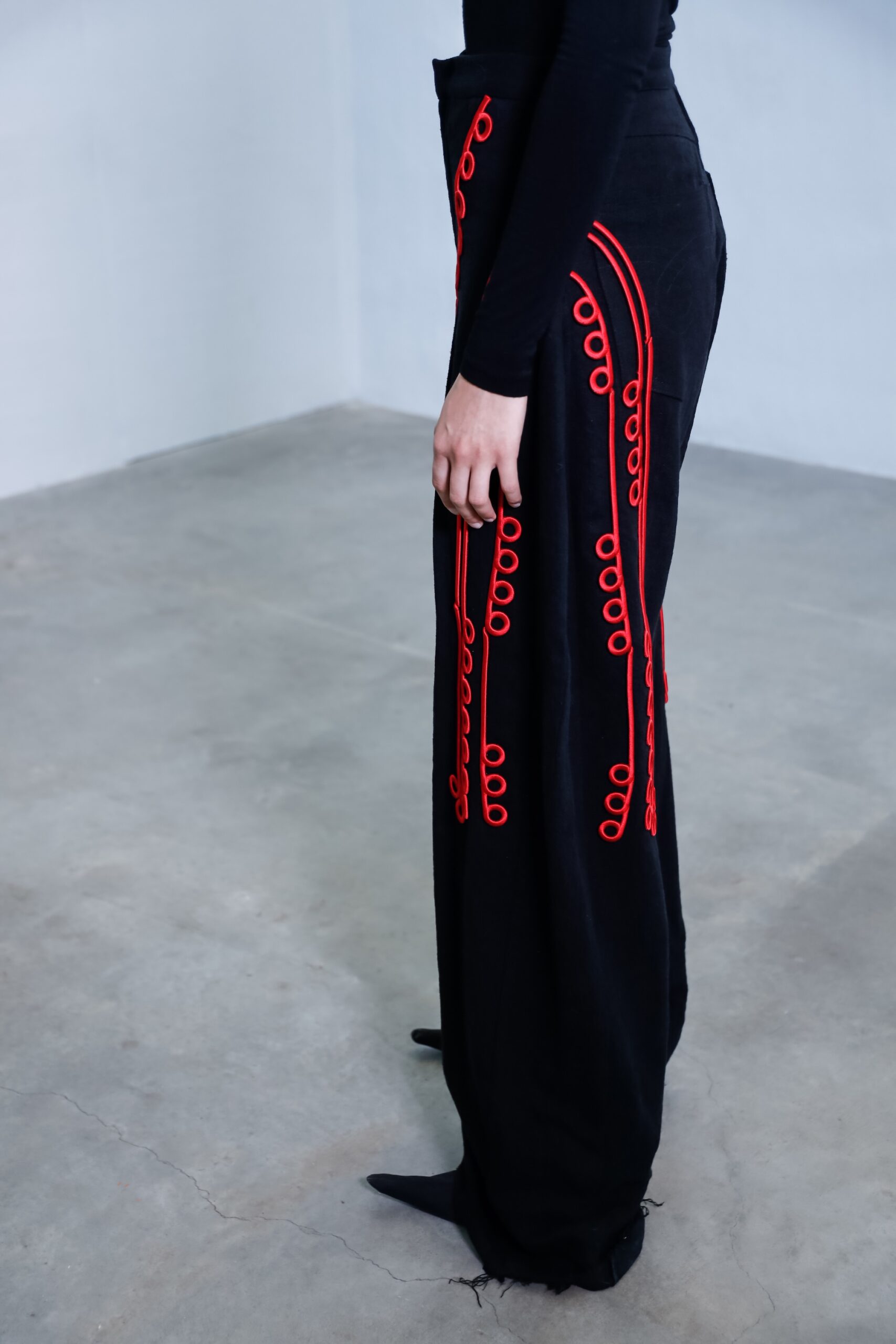
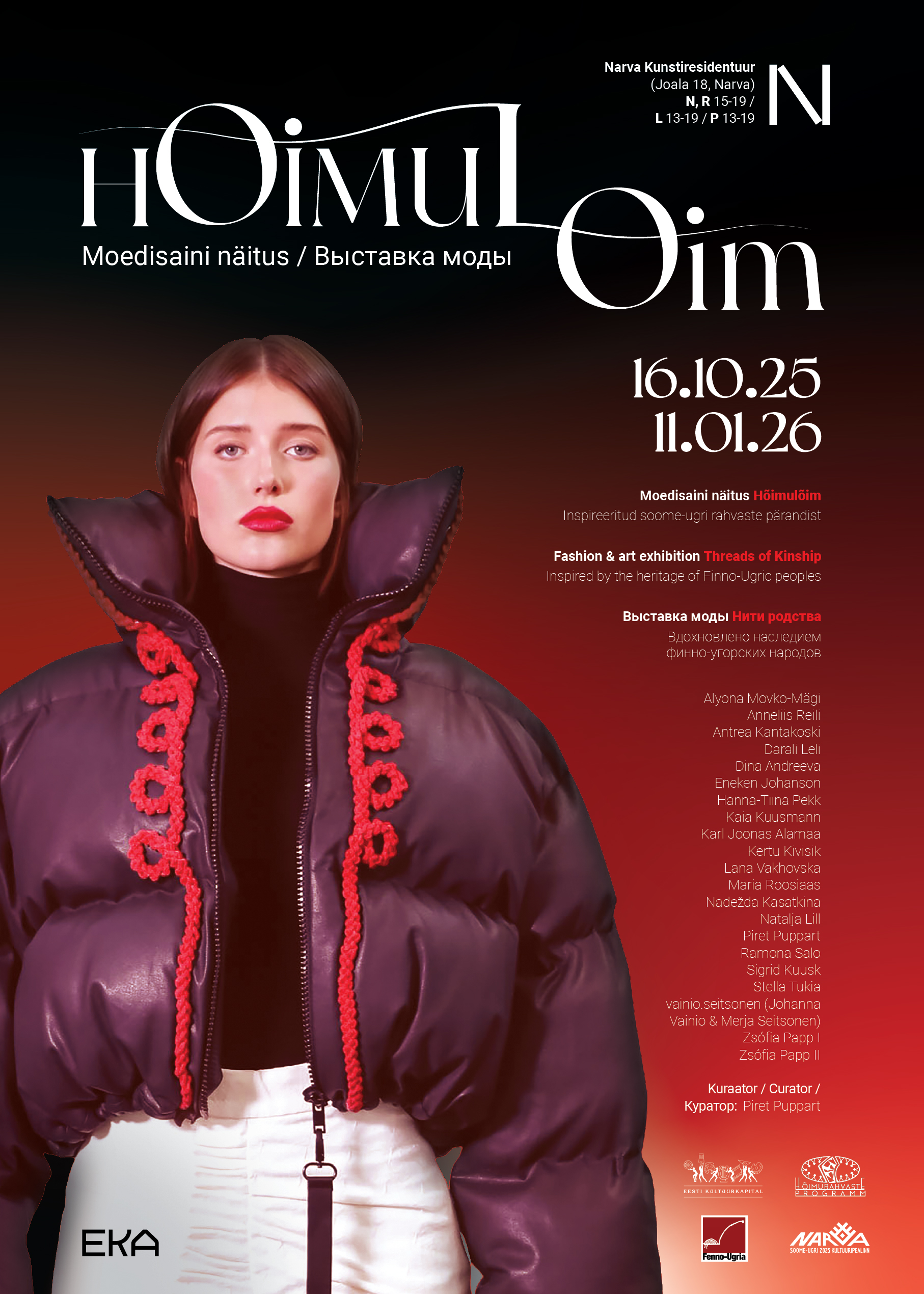
On October 16, Narva Art Residency will host the largest international fashion exhibition in Narva to date, “Hõimulõim (Tribal Thread),” led by the Fashion Design Department. The exhibition will open as part of the official program of “Narva Finno-Ugric Capital of Culture 2025” and will take place during the most important week of the tribal peoples’ calendar year, Tribal Week.
“Hõimulõim” is an exhibition that weaves Finno-Ugric tradition into contemporary fashion design. It is a tribute to a rich heritage, the survival of which depends on how skillfully we can bring it into our lives today. Tradition does not remain in a closet or archive – it only lives if we let it grow with time, wear it and love it.
The exhibition features the work of designers from nine Finno-Ugric peoples. The works of Sami, Khanty, Udmurt, Mari, Komi, Hungarian, Karelian, Finnish (including Ingrian) and Estonian (including Seto and Võro) creators highlight that clothing can be both a practical object and a carrier of identity and collective memory. Each author asks in their own way what it means to be a Finno-Ugric designer in the 21st century – how to weave one’s tradition into a modern form and what to tell the world about its multi-layered field of meaning. These works also open up ethical choices: what material to use, how to preserve local skills and how to tell the story of one’s people in a way that creates a dialogue even for those who were not born into this cultural space.
The “tribal thread” (hõimulõim) is an invisible but tenacious bond between Finno-Ugric peoples. It does not ask for national borders or political sentiment, but runs deep in the undercurrents – in language, patterns, songs, dance and beliefs”, says the exhibition curator Piret Puppart and adds: “In today’s world, where the song of some peoples is quieter than ever before and the weavers of many patterns have become isolated, this thread between tribal peoples is particularly fragile.”
Various social tensions are increasingly testing the survival of traditions and forcing us to look for ways to keep them alive for future generations. “Hõimulõim” invites us to notice that preserving culture is not only about preserving the past, but also about creating the future. It is an invitation to wear our heritage on a daily basis – be it a piece of jewelry, an object or an ornament – and to understand that every such choice strengthens the thread that connects us across borders and eras.
The exhibition’s interactive, technologically innovative experiences are also exciting. Visitors can discover patterns hidden in dresses created by Piret Puppart using magnets, as well as experience a hologram waterfall dedicated to the world of Votian patterns designed by artist Alyona Movko-Mägi. Hologram art is a little-known technique in the world of conjuring visual elements that cannot be touched with the hand, but can be touched virtually and with the eye. This is the first time this medium is coming to Narva in such a volume.
Finno-Ugric roots also have a wider international reach in the world of design and art than one might think. The Komi compass pattern has found its way into Kandinsky’s paintings, and Udmurt mannerisms into Tchaikovsky’s music. However, only recently was a designer with Karelian roots awarded the Diesel Design Award, while Izhor blood has dressed Estonian Olympic athletes in Athens. The representative of the Mari nationality was behind the knitting collections of the legendary Estonian brand Mosaic for years, and when wearing Adidas shoes, you can feel the Udmurt heart. The Diesel Design Award-winning collection and the best pieces from Helsinki Design Week are also coming to the exhibition that will open soon. The exhibition can be visited until January 11.
Curator: Piret Puppart
Artists: Antrea Kantakoski, vainio.seitonen (Johanna Vainio & Merja Seitsonen), Sigrid Kuusk, Ramona Salo, Dina Andreeva, Natalja Lill, Darali Leli, Eneken Johanson, Stella Tukia, Kaia Kuusmann, Zsófia Papp, Zsófia Papp, Maria Roosiaas, Hanna-Tiina Pekk, Anneliis Reili, Kertu Kivisik, Nadežda Kasatkina, Lana Vakhovska, Karl Joonas Alamaa, Piret Puppart and Alyona Movko-Mägi
Graphic design: Eva Sepping
Many thanks: Anna Kuznetsova, Muš Nadii, Nikolai Anisimov, Nikolay Kuznetsov, Barbi Pilvre, Jaak Prozes, Žanna Toht, Ekaterina Kuznetsova, Helena Schilf, Natalia Ermakov
Supporters: Estonian Academy of Arts, Fashion Design Department, Tribal Peoples Program, Cultural Endowment, NGO Fenno-Ugria, NART, Narva Finno-Ugric Capital of Culture 2025
Posted by Andres Lõo — Permalink
International Fashion Exhibition “Hõimulõim”
Thursday 16 October, 2025 — Sunday 11 January, 2026
Faculty of Design
On October 16, Narva Art Residency will host the largest international fashion exhibition in Narva to date, “Hõimulõim (Tribal Thread),” led by the Fashion Design Department. The exhibition will open as part of the official program of “Narva Finno-Ugric Capital of Culture 2025” and will take place during the most important week of the tribal peoples’ calendar year, Tribal Week.
“Hõimulõim” is an exhibition that weaves Finno-Ugric tradition into contemporary fashion design. It is a tribute to a rich heritage, the survival of which depends on how skillfully we can bring it into our lives today. Tradition does not remain in a closet or archive – it only lives if we let it grow with time, wear it and love it.
The exhibition features the work of designers from nine Finno-Ugric peoples. The works of Sami, Khanty, Udmurt, Mari, Komi, Hungarian, Karelian, Finnish (including Ingrian) and Estonian (including Seto and Võro) creators highlight that clothing can be both a practical object and a carrier of identity and collective memory. Each author asks in their own way what it means to be a Finno-Ugric designer in the 21st century – how to weave one’s tradition into a modern form and what to tell the world about its multi-layered field of meaning. These works also open up ethical choices: what material to use, how to preserve local skills and how to tell the story of one’s people in a way that creates a dialogue even for those who were not born into this cultural space.
The “tribal thread” (hõimulõim) is an invisible but tenacious bond between Finno-Ugric peoples. It does not ask for national borders or political sentiment, but runs deep in the undercurrents – in language, patterns, songs, dance and beliefs”, says the exhibition curator Piret Puppart and adds: “In today’s world, where the song of some peoples is quieter than ever before and the weavers of many patterns have become isolated, this thread between tribal peoples is particularly fragile.”
Various social tensions are increasingly testing the survival of traditions and forcing us to look for ways to keep them alive for future generations. “Hõimulõim” invites us to notice that preserving culture is not only about preserving the past, but also about creating the future. It is an invitation to wear our heritage on a daily basis – be it a piece of jewelry, an object or an ornament – and to understand that every such choice strengthens the thread that connects us across borders and eras.
The exhibition’s interactive, technologically innovative experiences are also exciting. Visitors can discover patterns hidden in dresses created by Piret Puppart using magnets, as well as experience a hologram waterfall dedicated to the world of Votian patterns designed by artist Alyona Movko-Mägi. Hologram art is a little-known technique in the world of conjuring visual elements that cannot be touched with the hand, but can be touched virtually and with the eye. This is the first time this medium is coming to Narva in such a volume.
Finno-Ugric roots also have a wider international reach in the world of design and art than one might think. The Komi compass pattern has found its way into Kandinsky’s paintings, and Udmurt mannerisms into Tchaikovsky’s music. However, only recently was a designer with Karelian roots awarded the Diesel Design Award, while Izhor blood has dressed Estonian Olympic athletes in Athens. The representative of the Mari nationality was behind the knitting collections of the legendary Estonian brand Mosaic for years, and when wearing Adidas shoes, you can feel the Udmurt heart. The Diesel Design Award-winning collection and the best pieces from Helsinki Design Week are also coming to the exhibition that will open soon. The exhibition can be visited until January 11.
Curator: Piret Puppart
Artists: Antrea Kantakoski, vainio.seitonen (Johanna Vainio & Merja Seitsonen), Sigrid Kuusk, Ramona Salo, Dina Andreeva, Natalja Lill, Darali Leli, Eneken Johanson, Stella Tukia, Kaia Kuusmann, Zsófia Papp, Zsófia Papp, Maria Roosiaas, Hanna-Tiina Pekk, Anneliis Reili, Kertu Kivisik, Nadežda Kasatkina, Lana Vakhovska, Karl Joonas Alamaa, Piret Puppart and Alyona Movko-Mägi
Graphic design: Eva Sepping
Many thanks: Anna Kuznetsova, Muš Nadii, Nikolai Anisimov, Nikolay Kuznetsov, Barbi Pilvre, Jaak Prozes, Žanna Toht, Ekaterina Kuznetsova, Helena Schilf, Natalia Ermakov
Supporters: Estonian Academy of Arts, Fashion Design Department, Tribal Peoples Program, Cultural Endowment, NGO Fenno-Ugria, NART, Narva Finno-Ugric Capital of Culture 2025
Posted by Andres Lõo — Permalink
15.10.2025
Slideshow #6: Grey Area: Dexter Sinister
Faculty of Design
Slideshow #6: Grey Area
Dexter Sinister
Wednesday, 15 October 2025, 17:30h
A-101
You find yourself somewhere in-between: a grey area on the mezzanine floor of a large public arts centre. The building was originally a sugar refinery, built in 1838. It evolved into low-cost housing occupied by factory workers and soldiers, artists and writers, and became a cultural hub. After falling into disrepair, the city of Ljubljana bought the property and restored it to its previous form, reopening as Cukrarna in 2021.
This intermediate space has lower ceilings than the white-cube gallery floors that sandwich it above and below. It wasn’t designed to be an exhibition space, but rather a place for events, conversations, gatherings, and other temporary activities. For the next year, it will be decorated and programmed by Dexter Sinister, the composite working name of David Reinfurt and Stuart Bertolotti-Bailey.
Look around: the room is lined with wall-to-wall medium-grey carpet and the walls are painted to match; windows are masked to modulate the sun and filter an even, grey light. It’s mostly empty except for a few bean bags and a couple of tables, all in matching grey as well. In this space, Dexter Sinister will present one video each month by a designer, artist, or group whose work exists somewhere in the middle of art and design, including a few of our own works.
As you enter on the left are a series of white rectangles, each painted according to a standard video aspect ratio. Projected into one of these, depending on when you are reading this, is a video.
About Dexter Sinister
Dexter Sinister is the compound working name of David Reinfurt and Stuart Bailey. In 2000 David formed the design studio O-R-G and Stuart co-founded the arts journal Dot Dot Dot. In 2006 they jointly established Dexter Sinister as a ‘just-in-time workshop and occasional bookstore’ on New York City’s Lower East Side. Together with Angie Keefer in 2011 they founded the publishing/archiving platform The Serving Library (www.servinglibrary.
About Slideshow
Slideshow is a lecture-to-book series inviting practicing graphic designers to talk about the research, references and working processes behind the making of their applied work. The series opens up the discussion and makes visible how graphic design practices engage in a research process. The series asks designers to unpack their work through reflecting on the material they engage with, informal encounters they might have, or processes they’ve experimented with. The series is organized and edited by Alexandra Margetic and Sean Yendrys, and published through the MA in Graphic Design at the Estonian Academy of Arts.
Posted by Andres Lõo — Permalink
Slideshow #6: Grey Area: Dexter Sinister
Wednesday 15 October, 2025
Faculty of Design
Slideshow #6: Grey Area
Dexter Sinister
Wednesday, 15 October 2025, 17:30h
A-101
You find yourself somewhere in-between: a grey area on the mezzanine floor of a large public arts centre. The building was originally a sugar refinery, built in 1838. It evolved into low-cost housing occupied by factory workers and soldiers, artists and writers, and became a cultural hub. After falling into disrepair, the city of Ljubljana bought the property and restored it to its previous form, reopening as Cukrarna in 2021.
This intermediate space has lower ceilings than the white-cube gallery floors that sandwich it above and below. It wasn’t designed to be an exhibition space, but rather a place for events, conversations, gatherings, and other temporary activities. For the next year, it will be decorated and programmed by Dexter Sinister, the composite working name of David Reinfurt and Stuart Bertolotti-Bailey.
Look around: the room is lined with wall-to-wall medium-grey carpet and the walls are painted to match; windows are masked to modulate the sun and filter an even, grey light. It’s mostly empty except for a few bean bags and a couple of tables, all in matching grey as well. In this space, Dexter Sinister will present one video each month by a designer, artist, or group whose work exists somewhere in the middle of art and design, including a few of our own works.
As you enter on the left are a series of white rectangles, each painted according to a standard video aspect ratio. Projected into one of these, depending on when you are reading this, is a video.
About Dexter Sinister
Dexter Sinister is the compound working name of David Reinfurt and Stuart Bailey. In 2000 David formed the design studio O-R-G and Stuart co-founded the arts journal Dot Dot Dot. In 2006 they jointly established Dexter Sinister as a ‘just-in-time workshop and occasional bookstore’ on New York City’s Lower East Side. Together with Angie Keefer in 2011 they founded the publishing/archiving platform The Serving Library (www.servinglibrary.
About Slideshow
Slideshow is a lecture-to-book series inviting practicing graphic designers to talk about the research, references and working processes behind the making of their applied work. The series opens up the discussion and makes visible how graphic design practices engage in a research process. The series asks designers to unpack their work through reflecting on the material they engage with, informal encounters they might have, or processes they’ve experimented with. The series is organized and edited by Alexandra Margetic and Sean Yendrys, and published through the MA in Graphic Design at the Estonian Academy of Arts.
Posted by Andres Lõo — Permalink
14.10.2025
A *Co-* Program for Graphic Design: David Reinfurt
Faculty of Design
A *Co-* Program for Graphic Design
David Reinfurt
Tuesday, 14 October 2025, 17:30h
A-501
From ancient Rome to outer space, A *Co-* Program for Graphic Design features contributions by Danielle Aubert, Tauba Auerbach, Barbara Glauber, Shannon Harvey, Adam Michaels, Philip Ording, Adam Pendleton, and others. This collective text expands David Reinfurt’s pragmatic and experimental pedagogy: weaving together multiple voices in a polyphonic approach to design history and teaching.
This book extends Reinfurt’s highly acclaimed A *New* Program for Graphic Design to include material from three new Princeton University courses. Designed for online teaching, these courses model a *co-*operative approach, taking on subjects from the Detroit Printing Co-op, Corita Kent, and Ray and Charles Eames to Enzo Mari, Marshall McLuhan, and Virgil Abloh.
A *Co-* Program for Graphic Design is published by Inventory Press, distributed by Distributed Art Publishers, and generously funded by the Barr Ferree Foundation Fund for Publications, Department of Art and Archaeology and the Lewis Center for the Arts, Princeton University.
About David Reinfurt
David Reinfurt is 1/2 of Dexter Sinister, 1/4 of The Serving Library, and 1/1 of O-R-G inc. Dexter Sinister began as a workshop on Manhattan’s Lower East Side and branched into projects with and for contemporary art institutions. The Serving Library publishes a journal, maintains an artwork collection, and circulates PDFs online. O-R-G is a small software company. Reinfurt was a 2010 USA Rockefeller Fellow and 2017 Rome Prize Fellow in Design. He is Professor of the Practice in Visual Arts at Princeton University.
This event is presented by the MA in Graphic Design at the Estonian Academy of Arts
Posted by Andres Lõo — Permalink
A *Co-* Program for Graphic Design: David Reinfurt
Tuesday 14 October, 2025
Faculty of Design
A *Co-* Program for Graphic Design
David Reinfurt
Tuesday, 14 October 2025, 17:30h
A-501
From ancient Rome to outer space, A *Co-* Program for Graphic Design features contributions by Danielle Aubert, Tauba Auerbach, Barbara Glauber, Shannon Harvey, Adam Michaels, Philip Ording, Adam Pendleton, and others. This collective text expands David Reinfurt’s pragmatic and experimental pedagogy: weaving together multiple voices in a polyphonic approach to design history and teaching.
This book extends Reinfurt’s highly acclaimed A *New* Program for Graphic Design to include material from three new Princeton University courses. Designed for online teaching, these courses model a *co-*operative approach, taking on subjects from the Detroit Printing Co-op, Corita Kent, and Ray and Charles Eames to Enzo Mari, Marshall McLuhan, and Virgil Abloh.
A *Co-* Program for Graphic Design is published by Inventory Press, distributed by Distributed Art Publishers, and generously funded by the Barr Ferree Foundation Fund for Publications, Department of Art and Archaeology and the Lewis Center for the Arts, Princeton University.
About David Reinfurt
David Reinfurt is 1/2 of Dexter Sinister, 1/4 of The Serving Library, and 1/1 of O-R-G inc. Dexter Sinister began as a workshop on Manhattan’s Lower East Side and branched into projects with and for contemporary art institutions. The Serving Library publishes a journal, maintains an artwork collection, and circulates PDFs online. O-R-G is a small software company. Reinfurt was a 2010 USA Rockefeller Fellow and 2017 Rome Prize Fellow in Design. He is Professor of the Practice in Visual Arts at Princeton University.
This event is presented by the MA in Graphic Design at the Estonian Academy of Arts
Posted by Andres Lõo — Permalink